


Login
Get Instant Pricing On 23,000+ Aircraft

>
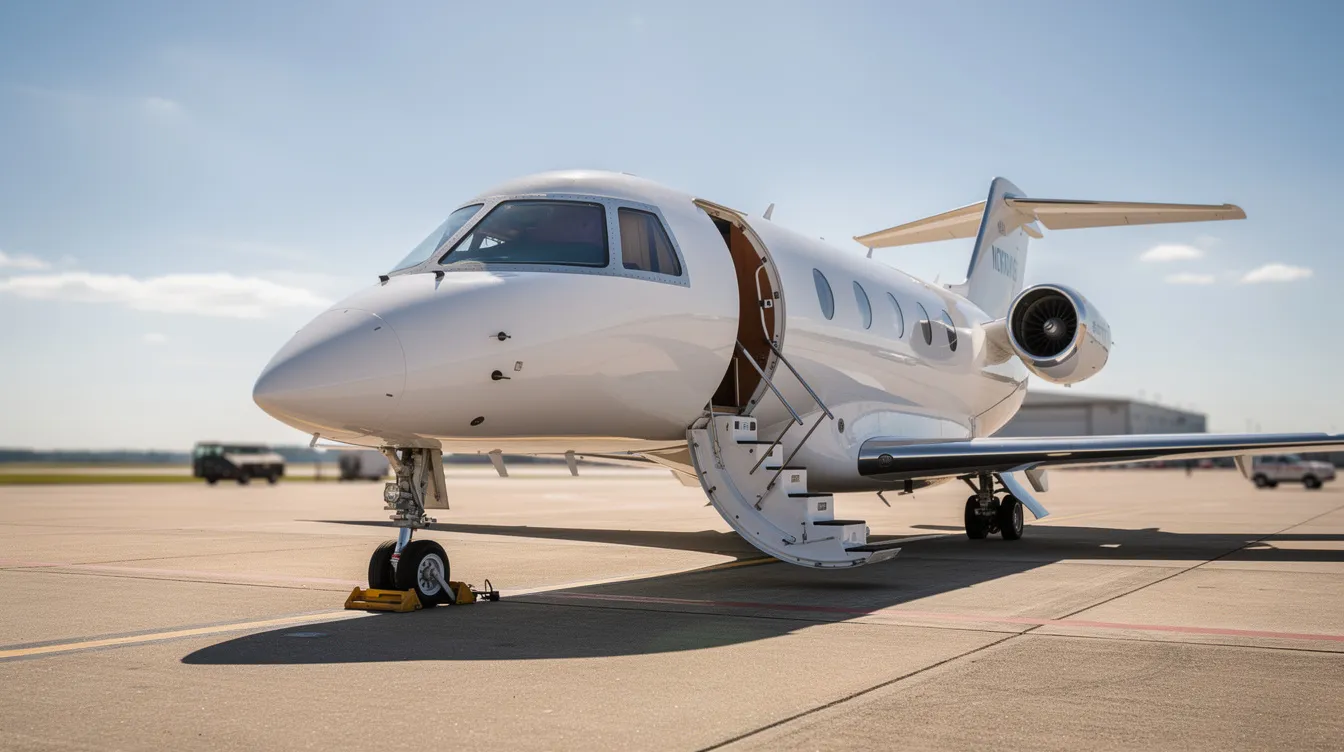
Taking your first private flight can feel unfamiliar, but the boarding process is far simpler than most people expect. This guide walks through every step of boarding a private jet—from arrival at the terminal to wheels up—so first-time private flyers know exactly what to expect when flying private through Jettly.
The private jet boarding process starts well before you reach the airport. When booking through Jettly, the platform collects passenger details, builds the manifest, and sends trip details including the FBO address and suggested arrival time. By the time you show up, check-in is largely pre-handled. You don't need a boarding pass. You show a government-issued photo ID, and you're through.
Contrast that with commercial flying. Commercial flights require arriving one to two hours early for domestic flights and two-plus hours for international trips. Passengers navigate long security lines, boarding groups, gate announcements, and luggage belts. Private jet boarding eliminates traditional airport bottlenecks. There is typically no assigned seating or boarding groups in private jet travel. Private jet boarding typically takes 5 to 30 minutes, and the entire experience is quieter and more personalized compared to commercial flights.
Here is the typical sequence:
Arrive at the fixed base operator (FBO) 15 to 30 minutes before departure (An FBO is a private terminal for private aviation, separate from the commercial terminal.)
Give your name and present your ID at reception
Relax in the lounge while the aircraft is prepared
Meet the flight crew at the aircraft
Receive a quick safety briefing
Board and depart
The private jet boarding process prioritizes efficiency, flexibility, and personalized service from start to finish.
Think of private aviation like a tailored car service. You choose the pickup time, the route, and who rides with you. Commercial travel is closer to a scheduled bus—fixed timetable, shared space, and someone else's rules.
The core differences go beyond comfort. Flying private means schedule flexibility, access to smaller airports closer to your final destination, and a private environment free of crowded terminals. You also gain access to private terminals and more flexible routing options that commercial airlines do not offer. Private jets can access around 5,000 airports in the U.S., compared to roughly 500 served by commercial airlines. That opens up routes and destinations that commercial jets simply cannot reach efficiently.
Private flying eliminates long security lines and crowded terminals. You can skip TSA queues entirely. But this is not just about luxury—it is about control. Private jet travel offers flexibility in scheduling and access to smaller regional and private airports, making it ideal for:
Last-minute business meeting travel requiring same-day travel
Multi-city trips completed in a single day
Family vacations to remote or seasonal destinations
Trips with complex ground transportation needs
International travel where customs clearance at the FBO saves hours
Jettly, as a digital marketplace, focuses on transparent pricing and fast matching of trip needs to the right private charter aircraft type and airport choice.
Private jet charter works on a simple principle: customers pay for charter flights on a per-trip basis, using brokers or platforms that source private aircraft from licensed operators. The traveler gets the aircraft, crew, and route they need without owning or maintaining anything.
Jettly is a charter broker and marketplace—not an aircraft operator. The platform connects travelers to over 20,000 private aircraft worldwide, all operated under regulated commercial certificates such as FAR Part 135 in the U.S. and equivalent rules internationally. Every flight provider on the platform holds an air operator certificate.
The main private aviation models include options like jet card programs alongside on-demand charter and fractional ownership:
On-demand charter: Book a single flight as needed. Best for travelers who fly occasionally.
Jet cards / memberships: Pre-purchase flight hours at fixed rates for priority access.
Fractional ownership: Own a share of a private aircraft, covering acquisition, maintenance, and depreciation. Distinct from full aircraft ownership and popularized by providers like NetJets, a leader in fractional private aviation.
Most first-time private flyers start with on-demand charter through a digital platform. Jettly provides instant pricing, options filtered by aircraft category, and a detailed itinerary email with the FBO address, show-time, and flight crew contact details before boarding day, along with resources on affordable private jet charter for cost-conscious travelers.
Choosing reputable companies and vetted operators is a core part of safety and reliability-especially for a first private flight — and understanding the wider landscape of charter airlines and private operators can help you compare options.
Booking a private jet often involves four simple steps. Here is how it typically works through Jettly:
Enter trip details: Input your route (e.g., New York Teterboro to Miami Opa-locka), dates, passenger count, luggage needs, and whether you are traveling with pets.
Compare options: Receive instant pricing across several aircraft types. Review cabin layouts, photos, and cost breakdowns—including aircraft cost, airport fees, and optional services.
Confirm and submit passenger details: Select your preferred aircraft, then provide full names, dates of birth, and passport details for international leg flights so the operator can prepare the manifest.
Arrange extras and pay: Add catering, ground transport, or special requests. Pay the deposit or full amount, then receive confirmation with FBO location, arrival time, and crew contacts.
For a deeper walkthrough, Jettly covers how to book a private jet step by step on its site.
The booking process also feeds directly into the boarding process. Since the manifest and itinerary are built digitally, the flight crew and FBO staff already know who is arriving and when. That is why check-in on the day itself takes minutes, not hours.
Jettly offers both on-demand booking and membership options, with transparent line-item quotes that mirror what you would see in a private jet charter cost estimator. Airport fees typically account for 10–20% of total charter costs, and those are included in the breakdown so there are no hidden fees.
The aircraft type you select directly affects cost, range, cabin space, luggage capacity, and even the boarding experience. Many private jets vary widely in size and capability, so matching the right category to your trip matters.
Here is a quick overview of the main categories Jettly offers:
|
Category |
Typical Seats |
Approx. Range (NM) |
Hourly Rate Range (U.S.) |
|---|---|---|---|
|
Turboprop |
6–9 |
1,000–1,800 |
$2,000–$4,000 |
|
Very Light / Light Jets |
4–8 |
1,100–2,100 |
$3,300–$5,700 |
|
Midsize Jets |
7–9 |
2,000–2,800 |
$6,000–$8,200 |
|
Super Midsize Jets |
8–10 |
3,200–4,000 |
$7,500–$10,500 |
|
Heavy / Ultra Long Range Jet |
10–19 |
3,800–7,700 |
$9,000–$22,000 |
|
Sources: Jet Alto; Jet and Beyond |
Private jet hourly rates range from $2,000 to $20,000 depending on category and route, and resources like Jettly's guide on how much to rent a private jet can help you understand what drives those numbers. Light jets typically cost $3,300 to $5,700 per flight hour.
Route length, number of passengers, and luggage (sports gear, golf clubs, ski equipment) all influence the recommended aircraft category. A two-hour charter flight like Los Angeles to Las Vegas suits a light jet—quick boarding via a compact airstair, modest baggage hold. A transatlantic trip like New York to London requires a heavy jet or ultra-long-range jet with spacious cabins, taller cabin ceilings, and a larger baggage hold.
Jettly's platform lets users compare aircraft classes, including photos, cabin layouts, and manufacture years, so travelers understand comfort and boarding logistics before the day arrives, and see how those choices affect one-flight charter cost for their specific route.
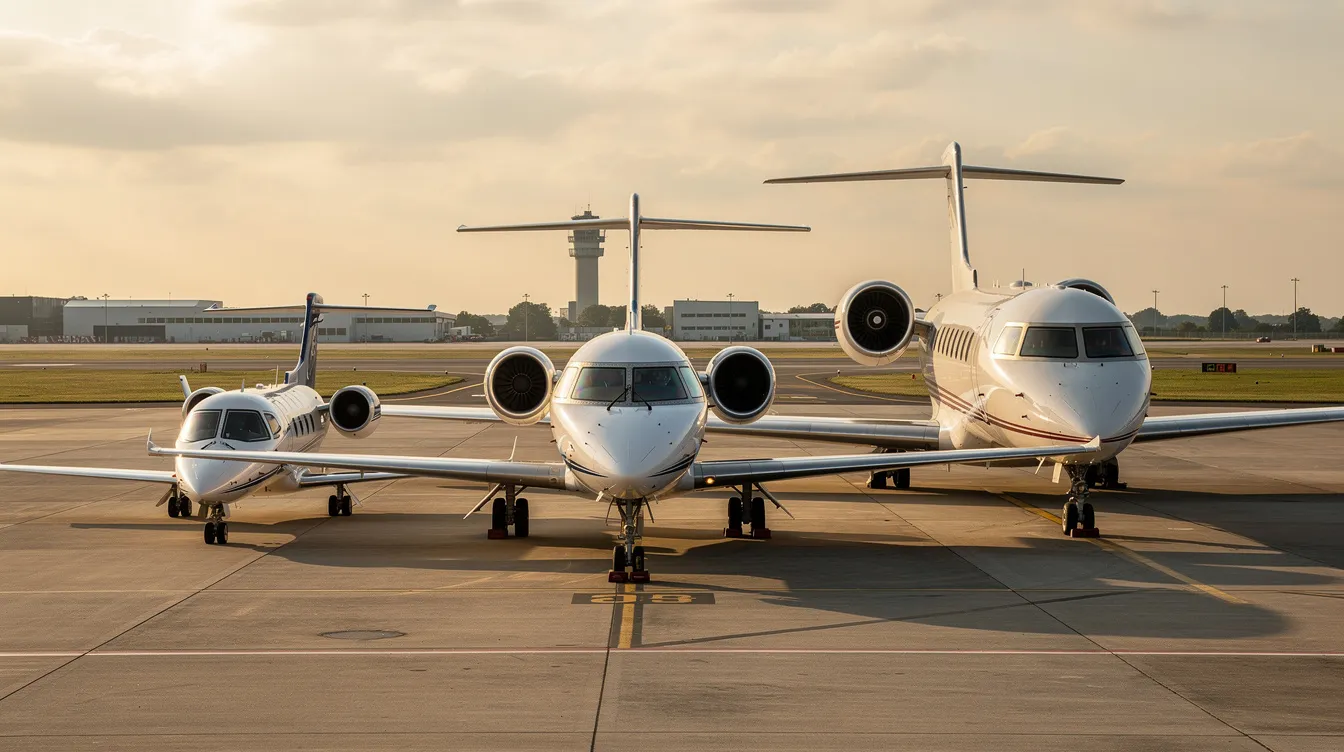
Here is what happens on the day of departure, step by step.
Step 1: Pre-arrival confirmation. The day before, Jettly or the operator sends a reminder with FBO details, suggested arrival time (typically 15 to 30 minutes before the scheduled departure), and any last-minute notes about weather or routing.
Step 2: Arrive at the FBO. Drive up, valet or self-park, and walk into the private terminal. Reception staff greet you by name, verify your ID, and tag your luggage or hand it directly to ground handling staff.
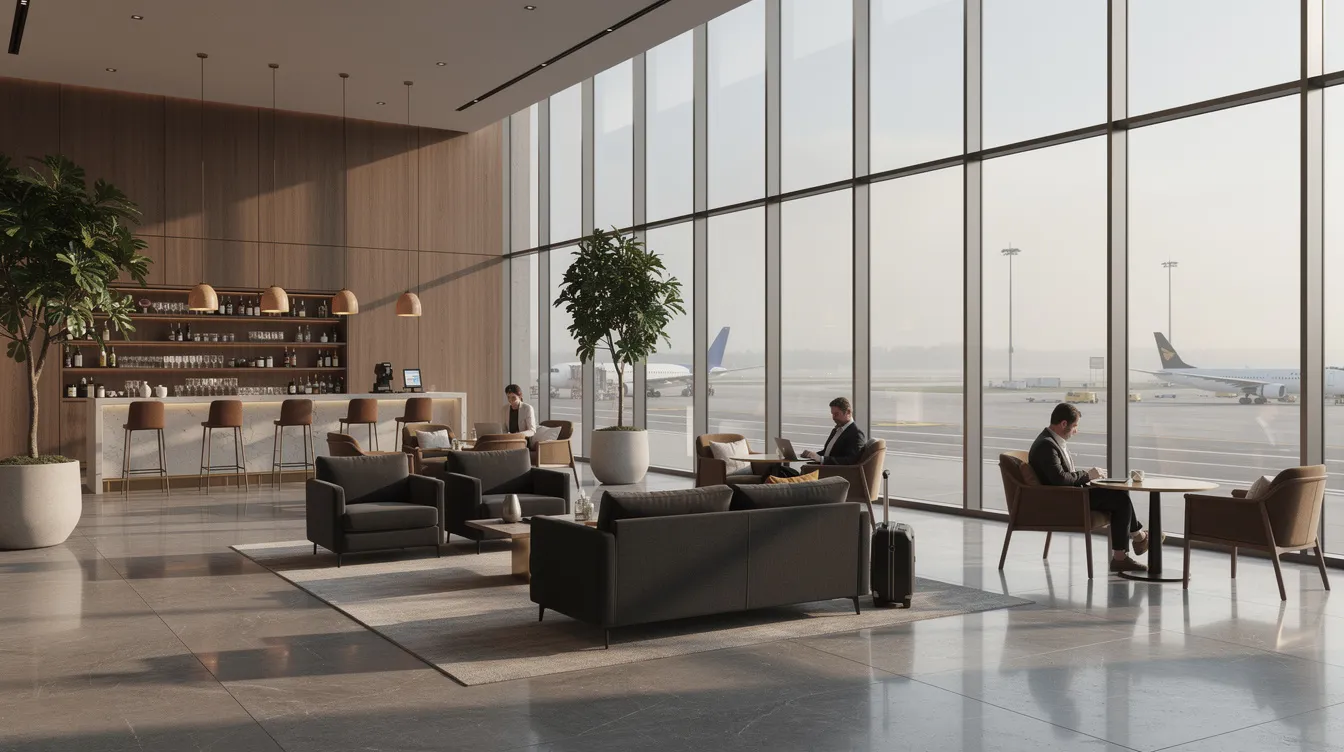
Step 3: Lounge. Private jet travelers can relax in a lounge while waiting for their flight. Most FBOs offer Wi-Fi, coffee, meeting rooms, and restrooms. Meanwhile, the aircraft is fueled, catered, and inspected.
Step 4: Walk to the aircraft. A staff member escorts passengers across the ramp or drives them by golf cart to the jet. Passengers can board directly from their vehicle to the aircraft at some FBOs where ramp access is available. The private jet boarding involves a direct transfer to the aircraft across the tarmac—no jet bridges, no gate agents.
Step 5: Board. The flight crew welcomes passengers at the aircraft stairs, confirms destination and conditions, and the quick safety briefing begins. Within minutes, you are settled, and the aircraft pushes back.
A fixed base operator (FBO) is a private terminal at an airport, completely separate from the commercial terminal. It is where most private flights begin and end.
FBOs are designed around a different kind of traveler. Typical features include quiet lounges, meeting rooms, showers at larger locations, dedicated crew areas, and on-site coordination for ground transport. FBOs provide luxury lounges and concierge services that remove the stress of commercial counterparts: no public boarding gates, no loud announcements, minimal foot traffic, and discreet security screening.
Well-known FBO locations include Signature Flight Support at Teterboro (KTEB) near New York and Miami's Opa-locka (KOPF)— both high-traffic hubs for private charter. For a deeper look at the FBO experience, Jettly covers how private terminals transform private aviation.
FBOs streamline the boarding process for private flights. Jettly selects and recommends FBOs based on a balance of proximity to city centers and exceptional service quality, so travelers spend less time on the ground and more time at their final destination.
You do not need a boarding pass for private flights. The manifest and itinerary generated during the charter booking act as the key documents. Private boarding does not require boarding passes or extensive TSA screening.
For domestic flights, you present a government-issued photo ID—a driver's license or national ID is sufficient. For international flights, a valid passport is required, along with any necessary visas. You present your government-issued ID to match a pre-cleared passenger manifest at the FBO.
Security at FBOs differs significantly from commercial travel. Security screening is quicker and less invasive than commercial travel. There are no TSA lines or invasive procedures required for private flights. Baggage screening may include visual inspection or trace screening rather than full X-ray and pat-down procedures. Security screening is quicker and more private at FBOs compared to anything on the commercial side.
For certain regions—U.S., Canada, Schengen—passenger information may be submitted electronically to authorities before departure, reducing on-site processing. Private aviation often allows for customs clearance at the FBO for international flights, saving significant time. For more detail on private plane international travel and what documentation is needed, Jettly has a dedicated guide.
Tip for first-time travelers: keep your passport or ID in a small personal item you carry into the cabin. It speeds up the boarding process and keeps documents accessible if needed on arrival.
For specifics on TSA and private aviation security, see Jettly's guide on whether private jets go through TSA.
Private jet passengers arrive 15 to 30 minutes before departure—not two hours early like commercial flights demand. That single difference saves hours on every trip.
Timing varies slightly by trip type:
Domestic flights (e.g., Toronto to Montreal): 15–20 minutes before wheels up
International flights (e.g., London to Geneva): 30–45 minutes to allow for customs clearance and documentation checks
International trips to destinations requiring visa processing: up to 60 minutes
Here is a mini timeline for a 09:00 scheduled departure:
|
Time |
Activity |
|---|---|
|
08:35 |
Arrive at FBO, present ID |
|
08:40 |
Relax in lounge |
|
08:50 |
Walk to aircraft, meet flight crew |
|
08:55 |
Safety briefing, settle in |
|
~09:05 |
Wheels up |
If passengers are running late, contacting the operator or Jettly support is essential. While flying private allows more flexibility—you can change your departure time on the same day if needed—adjustments depend on airport slots, air traffic control availability, and crew rest regulations. On tightly scheduled multi-leg flights, even small delays can cascade.
Baggage limits on private flights are driven by aircraft category and passenger count, not airline-wide rules. And soft bags are often easier to stow than hard-shell cases, especially on light jets with compact holds.
General baggage guidance:
|
Aircraft Category |
Typical Luggage Allowance |
|---|---|
|
Light jets |
1 medium suitcase + 1 personal item per passenger |
|
Midsize jets |
2–3 bags per passenger; moderate luggage capacity |
|
Heavy jets |
Multiple large cases + oversized items |
You can hand your luggage directly to the flight crew for immediate loading onto the aircraft. At the FBO, bags go straight from your hands (or vehicle trunk) to the aircraft hold. No carousel, no lost luggage, no tagging kiosks.
Common special items include skis for Aspen trips, golf clubs for Scottsdale or Scotland, sports gear, musical instruments, or medical equipment. Each requires advance notice so the operator can match the right aircraft type and confirm cargo volume, much like pilots and owners evaluating affordable aircraft choices consider load limits and mission profiles.
Pack valuables, medications, and key electronics in a small carry-on you keep in the cabin. Access to external baggage holds varies by aircraft type once airborne.
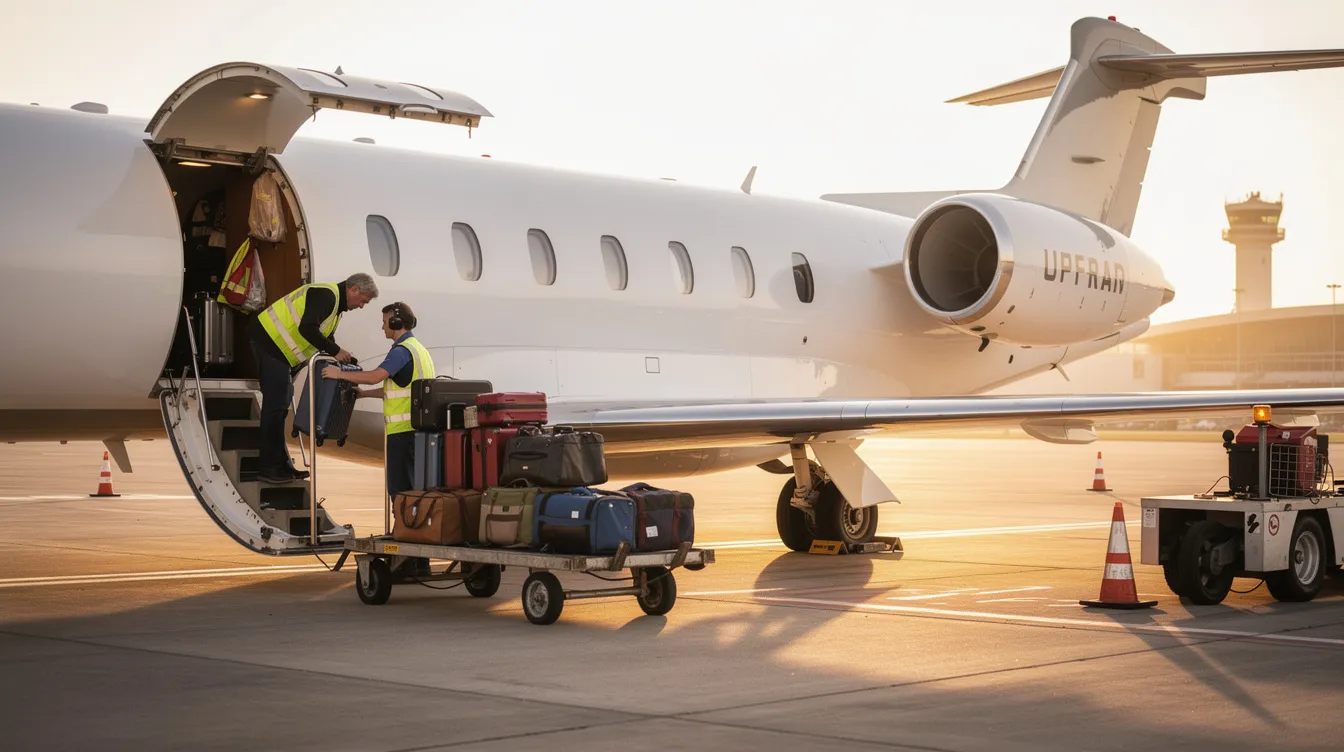
Boarding usually begins with a personal greeting at the aircraft stairs. The flight crew—typically a pilot in command (captain) and co-pilot, plus a cabin attendant on larger jets—address passengers by name and confirm the destination and weather conditions.
The quick safety briefing covers:
Seatbelt operation
Emergency exit locations
Life vests or rafts on overwater routes
Lavatory use
Any unique safety equipment specific to the aircraft type
First-time private flyers should feel comfortable asking questions about expected turbulence, flight time, or cruising altitude. The crew is there to provide personalized service, and a brief conversation before takeoff is normal.
During taxi, takeoff, and landing, conversation with pilots is limited so they can focus on procedures. Mid-flight, updates on timing or routing are easy to request. The transparency between passengers and crew is one of the clearest differences from commercial jets, where cockpit access is restricted entirely.
Once seated, the first 10–20 minutes typically involve settling in, storing personal items where the crew directs, and receiving a drink or light snack if catering was arranged.
Cabin features vary by aircraft category:
Light jets: Club seating for 4–6, fold-out tables, power outlets
Midsize jets and above: Divans, full worktables, Wi-Fi, enclosed lavatories
Heavy jets: Separate zones for meetings, rest, or family time; spacious cabins with standing headroom
Private jets often feature spacious leather seats that recline fully. Most modern private jets offer onboard Wi-Fi for connectivity, making it easy to work or stream during the flight. Catering options can include meals from favorite restaurants or custom requests—anything from simple coffee to full meals pre-selected during the booking process.
The cabin offers a private environment, allowing passengers to hold confidential business meetings, rest, or enjoy family time without nearby strangers, benefits that are often weighed alongside the overall cost of owning or accessing a private jet. For a closer look at what happens after takeoff, see Jettly's guide on the private jet in-flight experience.
Simple etiquette applies: store bags where the crew directs, keep your seatbelt on when seated unless instructed otherwise, and treat the crew with professional courtesy. Whether you are in business attire heading to a meeting or in casual clothes for a vacation, the experience adapts to you.
A key benefit of charter flights is seamless door-to-door travel with coordinated ground transportation on both ends.
Typical options include:
Chauffeured sedans or SUVs arranged through Jettly during the booking process
Ride-share pickups at the FBO
Personal drivers meeting the aircraft on the ramp (where permitted) or just outside the terminal
Jettly and its partners can match vehicles to group size and luggage—an SUV for ski trips with bulky gear, a sedan for solo business travel. On arrival, luggage is often transferred directly from the aircraft to the vehicle within minutes, with no carousel or public baggage hall involved.
On multi-leg flights—for example, visiting several European cities in two to three days—synchronized ground transport is essential to keeping the schedule smooth and making the most of every hour, just as choosing smart options for getting a seat on a private jet easily keeps the air portion of the journey efficient.

Empty leg flights are repositioning trips that occur when an aircraft must fly without passengers to its next job or back to base. Operators list these at discounted rates to offset the cost of flying empty, and some travelers even use crowdsourced private jet seat sharing to fill remaining seats and further reduce per-passenger cost.
Empty leg flights can be up to 75% cheaper than standard rates, though typical discounts range from 30–60% off one-way charter pricing. For example, a midsize empty leg from Houston to Aspen normally quoted at $19,500 might be offered at $8,500–$12,000, especially when you apply additional tips for booking the cheapest private jet flights.
The boarding process for empty leg flights is identical to standard charters: arrival at an FBO, ID check, lounge access, and direct escort to the jet. The difference is price, not service—an important distinction whether you are flying with a fractional provider like NetJets or booking a one-off empty leg through Jettly.
Key caveats:
Routes and schedules are fixed by the underlying charter
Cancellation risk exists if the primary client changes plans
Best suited for flexible leisure travelers
Other ways to manage cost include choosing a smaller aircraft category, flying from secondary airports with lower fees, or combining several short trips into one itinerary, and even buying just a seat on a private jet instead of chartering the whole aircraft. Jettly's platform allows users to browse empty leg flights alongside regular on-demand quotes to find what works for each trip.
Do I need to arrive early like a commercial flight? No. You typically arrive 15 to 30 minutes before departure at the FBO. For international trips, allow 30–45 minutes for customs clearance.
Is a boarding pass required? No boarding pass is required for private jet flights. The passenger manifest and itinerary from the booking serve as your documentation.
Can I bring my pet into the cabin? Yes. Passengers can bring pets in the cabin on private jets. Let Jettly know during booking so the operator can confirm any aircraft-specific guidelines.
What happens if I'm late? Contact Jettly or the operator immediately. Private flying offers more flexibility—departure times can sometimes shift—but changes depend on air traffic control slots and crew duty limits.
Do I still go through security? Security screening exists but is quicker and more discreet than commercial travel. You present your ID at the FBO; there are no TSA-style queues.
How much baggage can I bring, and who loads it? Luggage limits depend on the aircraft category and passenger count. You hand bags directly to ground handling staff or the flight crew, who load them onto the aircraft. No conveyor belts, no lost luggage risk.
How does the flight crew prepare before I arrive? The flight crew receives the passenger manifest and itinerary from Jettly's booking process in advance. They complete pre-flight inspections, file the flight plan, arrange catering, and brief on weather and routing—all before passengers reach the FBO.
Where can I learn more or start booking? Readers can find more information and start exploring charter flights at https://www.jettly.com.
Boarding a private jet comes down to short arrival windows, minimal formalities, direct boarding at FBOs, and personalized service from the moment you reach the private terminal. The entire private jet experience is often more streamlined than commercial air travel, and understanding the process removes nearly all uncertainty.
Knowing how the booking process works, what documentation to bring, which aircraft category fits your trip, and how ground transport connects on both ends turns a first private flight into a straightforward experience. Jettly's digital platform handles each step—from instant pricing and aircraft selection to FBO coordination and communication with the flight crew—whether it is a one-off charter or part of multiple-leg flights.
Compared to commercial travel, private jet travel saves hours on every trip, provides access to around 5,000 airports in the U.S. within a global fleet of private jets, and offers privacy and flexibility without long-term contracts or full aircraft ownership commitments. Private jets allow for a more personalized travel experience that adapts to the passenger, not the other way around.
Ready to experience private travel on your terms? Explore flight options, browse empty leg flights, or request a quote at https://www.jettly.com.
Share this post:
Jeff Ryan Serevilla
Sep 20, 2026
|
5
min read
Discover tips and trends in the industry.
5
min read
San Jose Private Jet Charter with Jettly
San Jose private jet charter services by Jettly offer a seamless travel experience for both business and leisure travelers. With access to over 20,000 aircraft and multiple airport options, Jettly ensures quick and efficient bookings, allowing travelers to maximize productivity and minimize travel stress.
Read More
5
min read
Pets on Private Jets in 2026: Size Limits, Crate vs. Cabin Rules, and International Paperwork
This comprehensive guide for pet owners covers everything you need to know about flying with pets on private jets in 2026. It details size limits, cabin versus crate rules, and essential international paperwork to ensure a smooth travel experience. Understanding these guidelines helps avoid surprises and keeps your pet comfortable during the journey.
Read MoreStay updated with our latest insights and tips to elevate your journey with us.
MEMBERSHIPS AND ASSOCIATIONS



Disclaimer: Jettly operates as a charter broker, offering access to a global digital jet charter marketplace. Jettly is not a direct air carrier and does not own or operate aircraft. All advertised flights are conducted by third-party air carriers that are fully licensed and hold the appropriate Part 135 or Part 121 certifications issued by the Federal Aviation Administration (FAA) or equivalent regulatory authorities under U.S. or foreign law. Jettly complies fully with the U.S. Department of Transportation's Part 295 and Part 298 Charter Broker regulations. Jettly does not carry additional liability insurance. Passengers are covered by aircraft operator insurance. TICO: 50023770


