



Login
Get Instant Pricing On 23,000+ Aircraft

>
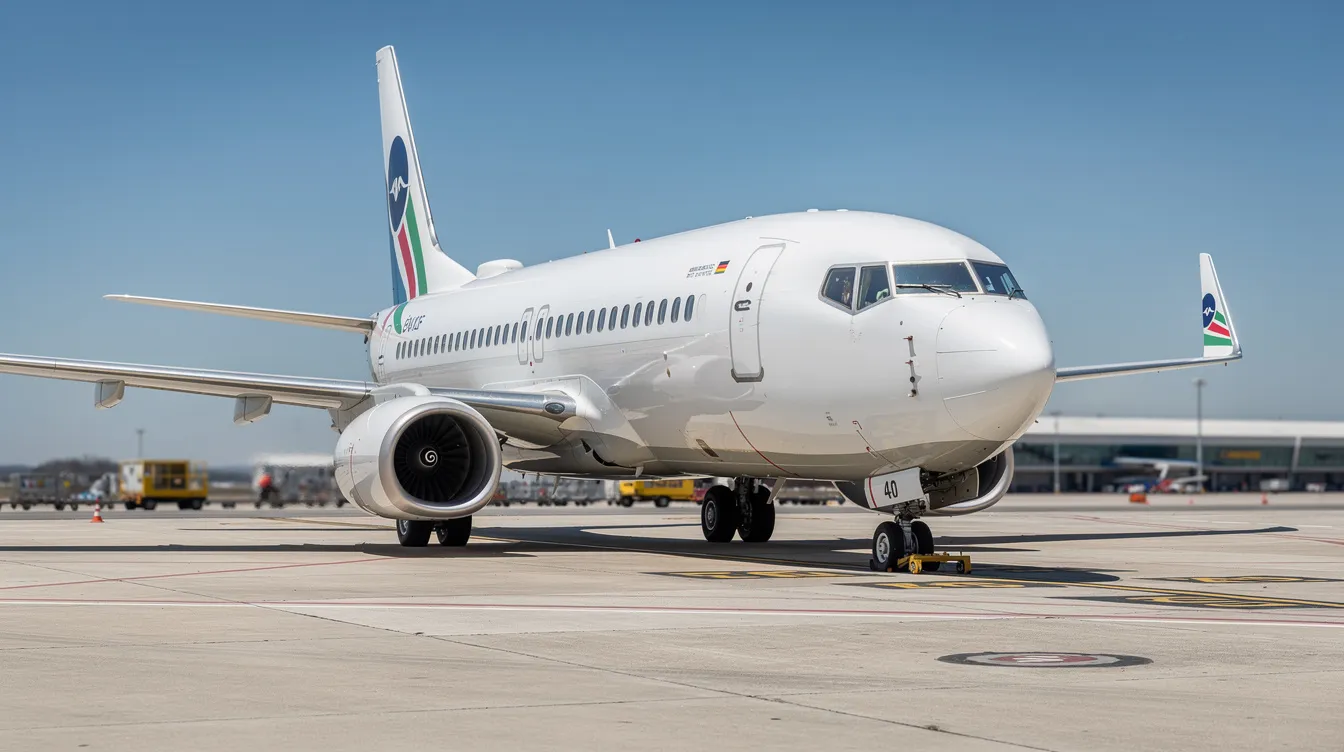
The Boeing 737-700, part of the Next Generation (NG) family, has maintained a strong safety record since entering service in 1998. It is distinct from the later Boeing 737 MAX and should not be confused with the 737 MAX 8 or 737 MAX 9.
The 737-700 does not use the MCAS anti-stall system that contributed to two fatal accidents involving 737 MAX aircraft. Its flight control logic has decades of proven operational history.
Boeing 737- 700 safety is governed by the Federal Aviation Administration (FAA) and other regulators worldwide, with ongoing airworthiness directives, inspections, and mandatory maintenance keeping the fleet current.
Most incidents involving the 737-700 are attributed to weather, pilot decisions, or operational factors rather than design flaws in the airplane itself.
Jettly works exclusively with certified operators that comply with strict safety and maintenance standards for any Boeing 737 charter, giving passengers and group travelers confidence in the aircraft they board.
Headlines about Boeing aircraft have dominated aviation news since 2018. Most of that coverage focuses on the Boeing 737 MAX—its grounding, its crashes, and its slow return to the skies. For travelers who see "Boeing 737" on a boarding pass or charter quote, the natural question is straightforward: is this airplane safe to fly?
The Boeing 737-700 is a member of the 737 Next Generation series, introduced in the late 1990s. It is a different aircraft from the 737 MAX family in design, certification, and systems. Understanding that distinction matters for passengers on airlines like Southwest and Ryanair, as well as for private charter clients evaluating a Boeing Business Jet (BBJ1) for corporate or group travel.
Jettly connects travelers to operators that use aircraft like the 737-700 under strict regulatory oversight and offers access to a broad range of private charter aircraft suited to different mission profiles. This article breaks down what makes the 737-700's safety profile different from the MAX, how regulators and operators keep these planes safe, and what charter customers should ask before flying.
The Boeing 737-700 is a narrow-body, twin-engine jet that first entered service around 1998. It was designed as a generation leap over the older "Classic" 737 models (-300, -400, -500), offering improved fuel efficiency, updated avionics, and compliance with evolving FAA and EASA safety requirements.
Key specs and design highlights:
Seating: Approximately 126–149 passengers in a typical two-class or single-class airline configuration. Private and VIP layouts vary.
Range: Roughly 3,000–3,400 nautical miles, depending on variant and cabin weight.
Engines: Two CFM56-7B engines, each featuring full authority digital engine control (FADEC) for consistent reliability and performance monitoring.
Variants: 737-700 (standard), 737-700C (convertible freighter), 737-700ER (extended range), and BBJ1 (Boeing Business Jet built on the 737-700 airframe).
The aircraft includes safety layers that account for redundancy in flight controls and multiple hydraulic systems. Specifically, the 737-700 utilizes a triple-redundant hydraulic system for flight control, meaning that the loss of one or even two systems still allows pilots to maintain control of the aircraft. It also has advanced navigation systems that support complex and precise flight paths, and modern avionics that reduce pilot workload and enhance situational awareness. Wing anti-ice systems prevent ice accumulation that can disrupt airflow during flight in cold conditions.
Boeing 737 700 safety does not rest on the manufacturer alone. Multiple regulators around the world share responsibility for keeping these planes airworthy.
The Federal Aviation Administration serves as the primary certifying body for Boeing aircraft in the United States. Type certification for the 737 family falls under FAR Part 25 (transport category aircraft), which sets standards for structural integrity, engine performance, fire protection, evacuation capability, and flight control systems.
Regulatory oversight encompasses routine maintenance and airworthiness checks for the 737-700. When the FAA identifies a potential safety risk in any Boeing 737 variant, it issues an airworthiness directive (AD) with clear compliance timelines. For example, AD 2020-16-51 required 737NG operators—including those flying the 737-700—to inspect engine bleed air 5th-stage check valves after reports of failures that could lead to dual engine failure scenarios.
Agencies such as EASA in Europe, Transport Canada, and regulators in South Korea and other countries validate FAA approvals and may issue their own directives. Airlines and charter operators must hold operating certificates—FAA Part 121 or Part 135 in the U.S.—to demonstrate compliance with maintenance, crew training, and operational safety rules.
Evaluating the safety record of the 737-700 requires comparing it to other Boeing 737 models and to other aircraft types used by airlines worldwide.
Since entering service, the Boeing 737-700 has a strong overall safety record in terms of accident history, with few fatal accidents attributed to design flaws. The 737NG series as a whole has a hull-loss rate of approximately 0.27 per million departures, significantly lower than the Classic series (~0.54) and the Original series (~1.75). The broader Boeing 737 program has a good safety record over 53 years of continuous operation across all variants.
Many 737-700 accidents are attributed to weather or operational factors rather than design issues. Consider two examples:
Southwest Flight 1248 (December 2005): A 737-700 overran the runway at Chicago Midway during a snowstorm, striking cars on the ground and killing one person in a vehicle outside the aircraft. The investigation pointed to pilot decision-making, tailwind conditions, poor braking action, and runway design—not a fault in the airplane itself.
LaGuardia hard landing (July 2013): A 737-700 sustained substantial damage after an unstable approach. The crew's flap mis-selection (30° instead of 40°) was a contributing factor. Again, the root cause was operational, not structural.
Safety incidents involving the 737-700 have often led to changes in regulations or operational guidelines, improving procedures for future flights. The two major 737 MAX crashes—Lion Air Flight 610 (October 2018) and Ethiopian Airlines Flight 302 (March 2019) — did not involve the 737-700. Those fatal accidents involved the 737 MAX 8, an aircraft with fundamentally different systems, and airlines such as Ryanair have operated an all-Boeing 737 fleet without a fatal accident.
The 737-700 (NG) and Boeing 737 MAX (such as the 737 MAX 8 and MAX 9) share a family name, but they are significantly different aircraft from a systems and certification perspective. The 737-700 is distinct from the newer 737 MAX family, which has different systems and histories.
|
Feature |
Boeing 737-700 (NG) |
Boeing 737 MAX |
|---|---|---|
|
Engines |
CFM56-7B |
LEAP-1B (larger diameter) |
|
MCAS |
Not installed |
Installed (anti-stall system) |
|
Service entry |
~1998 |
2017 |
|
Winglets |
Blended winglets |
Split-tip winglets |
|
Display systems |
Traditional NG avionics |
Updated LCD large-format |
The MAX introduced the Maneuvering Characteristics Augmentation System (MCAS) to address pitch characteristics caused by the larger, repositioned LEAP-1B engines, with Boeing modifying the existing Speed Trim System so that, in this form, it adjusted control feel near a stall. Boeing's MCAS was criticized for relying on a single sensor—a design choice that allowed erroneous angle-of-attack data to force the nose down without adequate pilot warning. Former Boeing CEO Dennis Muilenburg faced intense scrutiny over the certification process that approved this configuration.
After the 2019 worldwide grounding, Boeing's updated MCAS introduces changes to sensor logic, now requiring input from both angle-of-attack sensors rather than just one. Much of the debate focused on the implementation rather than the underlying 737 design, unlike older McDonnell Douglas examples. The 737 MAX re-entered service in December 2020 after the FAA and other regulators mandated design fixes and new pilot training requirements.
The 737-700 has none of this history. Its flight control logic and handling characteristics were well-established long before the MAX program began. When media coverage blends "737" stories together, passengers and charter clients should pull apart the details and confirm whether a report involves a 737-700, 737-800, or 737 MAX. The difference is not cosmetic—it is structural and systemic.

Broader Boeing quality concerns have understandably raised questions about all Boeing aircraft, including the 737-700.
Boeing's production quality issues were revealed in early 2024 after a 737 MAX 9 door plug blew out mid-flight on an Alaska Airlines service in January of that year. Subsequent investigation found that Boeing allowed components with known flaws on the production line, and separate evidence showed excessive force was applied during the 787 assembly process at Boeing's facilities. Boeing's CEO admitted to a "quality escape" in manufacturing, a term that drew public and congressional scrutiny.
In response, the FAA proposed an airworthiness directive for 453 Boeing 737 MAX jets. FAA inspections are required for incorrectly installed passenger seats on certain MAX aircraft, and the FAA's directive aims to prevent injuries during emergency landings caused by seats that could detach under force. The FAA has also slowed Boeing 737 MAX production rates due to safety concerns, capping output until quality improvements are verified.
These actions are applicable primarily to the 737 MAX, not the 737-700. However, heightened scrutiny across Boeing programs means that Next Generation 737s also receive more attention from regulators. When the FAA or other authorities identify potential risks, they issue formal directives requiring inspections or modifications with fixed compliance timelines.
Passengers and charter customers can verify aircraft compliance through operator documentation, airline safety statements, or the FAA's airworthiness directive database, and many use industry resources on choosing the best private jet charter companies to evaluate provider safety culture.
Once Boeing delivers an aircraft, day-to-day safety depends on the operator. A well-maintained 737-700 in the hands of a disciplined operation is a safe airplane. A poorly maintained one is not—regardless of its original engineering.
Key operator responsibilities include:
Adhering to Boeing's maintenance programs and service bulletins
Complying with all FAA and EASA airworthiness directives
Conducting regular inspections (A checks, C checks, and heavier overhauls)
Keeping detailed, auditable maintenance records
Training flight crew and crew members to current standards
For crew training specifically:
Pilots must hold a Boeing 737 type rating with recurrent checks
Cabin crew members must complete evacuation drills and emergency procedure training
Airlines and charter companies must maintain a safety management system (SMS)
Reputable charter operators flying the 737-700 or BBJ1 for private groups typically meet or exceed commercial airline standards. Many also pursue independent safety audits through ARGUS, Wyvern, or IS-BAO certifications, providing an additional layer of accountability beyond mandatory regulatory compliance. Travelers who want to compare different operators and service models can review a broader guide to charter airlines and private aviation when planning trips.
Pilots cannot legally fly a Boeing 737-700 without completing a Boeing 737 type rating recognized by the Federal Aviation Administration and equivalent regulators. This is not optional—it is a legal requirement for every captain and first officer who operates the aircraft.
The training pipeline includes:
Ground school: Systems knowledge covering hydraulics, electrical, flight controls, engines, and avionics specific to the 737NG
Simulator sessions: Full-motion simulator training on normal and non-normal operations, including engine-out procedures, rejected take-off drills, and system failures
Emergency procedures: Dual engine failure scenarios, rapid decompression, fire response, and low-speed handling
Line training: Supervised flying on revenue or positioning flights before independent operation
Many airlines cross-qualify pilots across the 737NG family (737-600, -700, -800, -900), with specific training on each variant's performance differences. Recurrent training and proficiency checks—typically every 6 to 12 months—ensure that pilots stay current on safety-critical scenarios.
Effective pilot training is crucial for recognizing system alerts and responding to emergencies. For private charter and corporate BBJ missions, captains usually bring extensive 737 experience from both short-haul commercial flying and long-range VIP operations, which reinforces confidence for high-net-worth and corporate clients. Frequent flyers on these routes often benefit from structured private jet membership programs that streamline booking and aircraft access while maintaining consistent safety standards.

The 737-700 cabin uses a single-aisle configuration with multiple emergency exits, including over-wing exits, forward and aft doors, and floor-level emergency lighting to guide passengers during an evacuation.
Standard safety features include:
Emergency exits: Multiple exit pairs sized for rapid evacuation within 90 seconds
Oxygen systems: Automatically deploying oxygen masks in the event of cabin depressurization
Life vests and rafts: Required on applicable overwater route operations
Fire protection: Extinguishers, smoke detectors in lavatories, and fire-resistant cabin materials
Seats: Built to meet FAA dynamic crashworthiness standards
The 737-700 also includes systems to improve landing safety and reduce runway excursion risks, including autobrake settings and ground spoiler deployment. While some seat-installation issues have affected 737 MAX fleets, operators address such matters through inspections and directives rather than redesigning the entire aircraft type.
Cabin crew training on the 737-700 covers briefings, evacuation drills, fire-fighting procedures, and turbulence response. VIP and business jet configurations (BBJ1) based on the 737-700 retain all core safety equipment mandated by regulators, even when interiors are customized with meeting rooms, private suites, or lounges with fewer seats than a standard airline layout.
The structural design of the 737-700 accounts for fatigue life, pressurization cycles, and corrosion control across decades of use. But design is only half the equation—consistent maintenance keeps the aircraft safe as it ages.
Inspection intervals follow a tiered structure:
|
Check Type |
Frequency |
Scope |
|---|---|---|
|
Daily/Preflight |
Every flight day |
Walk-around, fluid levels, visible damage |
|
A Check |
Every few hundred flight hours |
Detailed systems review, filter changes |
|
C Check |
Every 18–24 months (approx.) |
Structural inspections, avionics testing, wire harness checks |
|
D Check |
Every 6–10 years |
Full airframe strip-down, corrosion treatment, assembly overhaul |
Common maintenance themes on 737-700s include fuselage skin inspections, landing gear overhauls, engine inspections, avionics updates, and cabin safety systems verification. As aircraft accumulate flight cycles—particularly those used heavily on short-haul routes—regulators may adjust requirements and mandate more frequent checks to maintain safety margins.
Charter customers using Jettly should work with operators that provide documentation of maintenance status, recent inspections, and compliance with all Boeing and FAA recommendations. An engineer reviewing maintenance records can confirm whether the aircraft is current on all applicable directives, while travelers can use a guide to private jet charter costs to understand how robust maintenance and safety practices influence pricing.
Larger narrow-body jets like the Boeing 737-700 and BBJ1 variants are sometimes chartered for corporate roadshows, sports teams, incentive travel, or high-capacity VIP movements. These are not small planes—they carry significant passenger loads and operate on routes that demand reliability, similar in many respects to widely used models such as the Boeing 737-800 for charter operations.
In a charter context, safety considerations are identical to or stricter than scheduled airline operations. The same airframe, the same or similar crews, and the same regulatory framework apply, with flight plans tailored to the client's schedule and route, whether you are flying a 737-700 or another narrow-body like a Boeing 737-800 configured for private charter.
Jettly's platform connects clients to operators offering Boeing 737-700 charters under full regulatory oversight. Examples include North American transcontinental flights for corporate groups or intra-European shuttle service for large events. Charter customers can and should ask specific safety-oriented questions:
Year of manufacture and total flight cycles
Date of last heavy check (C or D check)
Captain and first officer hours on the Boeing 737-700
Third-party safety ratings (ARGUS, Wyvern) for the operator
Current compliance status on all airworthiness directives
Some customers may choose smaller private jets—midsize or heavy jets—depending on group size. Others may focus on budget by using a private jet charter cost estimator to compare aircraft options. But the underlying safety evaluation remains the same: regulatory compliance, maintenance quality, and pilot experience.

Media coverage of Boeing aircraft incidents—especially those involving the 737 MAX—has shaped how the world perceives all Boeing 737 models. When a wire report mentions "Boeing 737," many readers assume the worst, regardless of whether the story involves a 737-700, 737-800, or MAX variant.
Aviation safety experts evaluate risk using metrics like accidents per million flights. By that analysis, commercial jet travel—including on Boeing 737-700 aircraft—remains one of the safest forms of transportation in the world. The risk is orders of magnitude lower than driving cars on a highway.
Hundreds of thousands of successful 737-700 flights occur each year globally. The incidents that reach news headlines are almost always anomalies tied to weather, human factors, or ground infrastructure—not structural design flaws. Airlines sometimes offer passengers options to switch off certain aircraft types during periods of heightened concern, as was done with 737 MAX flights. But actual switching rates tend to be low, indicating continued general confidence.
Rational safety assessment weighs long-term operational data and regulatory findings, not just recent news cycles. When reviewing a report about a Boeing incident, the depth of investigation matters far more than the headline, and frequent flyers often lean on structured private jet membership options to work consistently with operators whose safety practices they understand.
Making informed choices about aviation safety starts with knowing what you are flying on and who is operating it.
Steps passengers and charter clients can take:
Confirm the aircraft type. Check whether the flight uses a 737-700, 737-800, or 737 MAX. Airlines list this on booking pages; Jettly shows the aircraft type during the quoting process.
Review operator credentials. Look for FAA Part 121 or Part 135 certification, plus any third-party safety ratings.
Check regulatory compliance. The FAA's airworthiness directive database is publicly available. Operators should be able to confirm compliance on request.
Ask about maintenance. When was the last C check? Are all service bulletins current?
Evaluate crew experience. How many hours does the flight crew have on the 737-700 specifically?
For Jettly users, the platform provides access to aircraft details and operator certificates, and customers can speak with a representative about equipment options. Tools such as an airport locator for private charters also help match safe aircraft and operators to suitable airfields. Comparing safety should focus on operators and practices-not just whether the aircraft says Boeing or Airbus on the fuselage. Both manufacturers operate under the same global regulatory frameworks.
An efficiently operated Boeing 737-700, flown within weight, fuel, and operation limits, supports both safety margins and environmental responsibility. These two goals are not in conflict-they reinforce each other, and they extend to supporting services like in-flight catering for private jets, where careful planning minimizes waste and respects operating limits.
The 737-700's Next Generation design improved fuel burn versus earlier 737 generations, though it is generally less efficient than the latest MAX models or new-technology Airbus aircraft. Operational practices that enhance both safety and efficiency include optimized flight planning, continuous descent approaches, and proactive maintenance that reduces in-flight diversions, as well as creative solutions like crowdsourcing private jet flights and sharing empty seats to maximize aircraft utilization.
For private jet charter, clients can select routings and schedules that reduce unnecessary repositioning flights. Some operators offer carbon-offset or sustainable aviation fuel (SAF) options even for larger aircraft like the 737-700. Others package these benefits into structured jet card programs for frequent flyers. Operators with a strong focus on efficiency often maintain disciplined operational and maintenance cultures—the same cultures that support safe 737-700 operations day after day.
The Boeing 737-700, part of the 737 Next Generation family, has a solid long-term safety record under the oversight of the Federal Aviation Administration and regulators around the world. Its hull-loss rate is low, its design flaws are few, and its systems have been refined through decades of real-world flying.
The 737-700 should not be conflated with the Boeing 737 MAX. It lacks the MCAS system at the center of the MAX accidents and has accumulated a generation of operational evidence that speaks for itself. Real-world Boeing 737 700 safety depends on operator quality, maintenance discipline, pilot training, and compliance with airworthiness directives—whether the aircraft flies for a commercial airline or a private charter operation.
Jettly connects safety-conscious travelers with certified operators and offers transparency around aircraft type, regulatory compliance, and maintenance history. Whether the mission calls for a business jet, a light jet, or a full-size 737-700 for a large group, the platform helps clients accept nothing less than verified operator standards.
Ready to explore charter options, including Boeing 737-700 and other aircraft categories? You can browse private charter aircraft across multiple categories, review available flights, or request a quote at https://www.jettly.com.
No. The Boeing 737-700 is an earlier Next Generation model and does not use the MCAS flight control software associated with the 2018–2019 737 MAX 8 crashes. While broader quality-control reviews at Boeing have increased scrutiny across all programs, most airworthiness directives in recent years have focused specifically on 737 MAX aircraft. Any 737-700 safety issues identified by regulators are addressed through mandatory inspections and modifications that operators must complete to keep the aircraft in service.
Check the flight details page when booking commercial tickets—airlines typically list the aircraft type as "Boeing 737-700" or use the IATA code "73W." For Jettly users, the aircraft type is shown during the quoting and booking process, and customers can directly request a specific model. If you have a strong preference about which aircraft you board, confirm the exact model before finalizing your booking.
Age alone does not determine safety. What matters is ongoing maintenance, structural inspections, and adherence to Boeing and FAA requirements. Many 737-700s have undergone significant maintenance overhauls and avionics upgrades that extend their safe service life. Safety-conscious travelers can ask operators when the last major maintenance check—such as a C or D check—was completed, and whether the aircraft is current on all airworthiness directives.
Depending on region and operator availability, Jettly can provide access to Boeing 737-700 or BBJ1 aircraft for larger group charters such as corporate events, sports teams, or tour groups. These charters are operated by certified air carriers under the same safety regulations that apply to commercial airline flights, with tailored cabin layouts and service levels. Explore options or submit trip details at https://www.jettly.com to check availability.
Key questions include:
What is the operator's certificate type (FAA Part 135 or Part 121)?
How many hours does the captain and first officer have on the 737-700?
When was the last major maintenance check completed?
Is the aircraft current on all Boeing and FAA airworthiness directives?
Does the operator hold any third-party safety ratings (ARGUS, Wyvern, IS-BAO)?
Reputable operators are comfortable answering these questions and often provide documentation on request. Jettly users can use the platform's support channels to clarify any safety-related concerns before confirming a charter.
The Boeing 737-700 remains a reliable and safe aircraft choice for both commercial passengers and private charter clients. Its proven design, robust safety systems, and strong operational history set it apart from the newer 737 MAX family. While recent manufacturing quality concerns have heightened industry scrutiny, these primarily affect the 737 MAX and do not diminish the 737-700's safety record.
Ultimately, Boeing 737 700 safety depends on rigorous regulatory oversight, diligent operator maintenance, and trained flight crews. Jettly’s commitment to connecting travelers with certified operators ensures that passengers can book with confidence, whether flying for business, leisure, or group travel.
Ready to experience private travel on your terms? Explore flight options or request a quote at https://www.jettly.com.
Share this post:
Jay Franco Serevilla
Oct 17, 2026
|
5
min read
Discover tips and trends in the industry.

5
min read
Who Owns a Jet? A Guide to Private Jet Owners, Boeing BBJ Operators, and Smarter Ways to Fly
This guide explores the landscape of private jet ownership, highlighting famous owners like Oprah Winfrey and Prince Al Waleed bin Talal. It also discusses the advantages of private jet charter services, such as Jettly, which provide flexible access to a wide range of aircraft without the burdens of ownership. Understanding the different models of private jet access can help travelers make informed decisions about their flying needs.
Read More
5
min read
Airport Charter Service: How Jettly Makes Private Charter Flights Simple
Jettly simplifies private charter flights, offering travelers on-demand access to over 20,000 aircraft worldwide. With flexible scheduling and transparent pricing, it caters to business, family, and group travel needs, ensuring a seamless experience from booking to arrival.
Read MoreStay updated with our latest insights and tips to elevate your journey with us.
MEMBERSHIPS AND ASSOCIATIONS



Disclaimer: Jettly operates as a charter broker, offering access to a global digital jet charter marketplace. Jettly is not a direct air carrier and does not own or operate aircraft. All advertised flights are conducted by third-party air carriers that are fully licensed and hold the appropriate Part 135 or Part 121 certifications issued by the Federal Aviation Administration (FAA) or equivalent regulatory authorities under U.S. or foreign law. Jettly complies fully with the U.S. Department of Transportation's Part 295 and Part 298 Charter Broker regulations. Jettly does not carry additional liability insurance. Passengers are covered by aircraft operator insurance. TICO: 50023770


