


Login
Get Instant Pricing On 23,000+ Aircraft

>
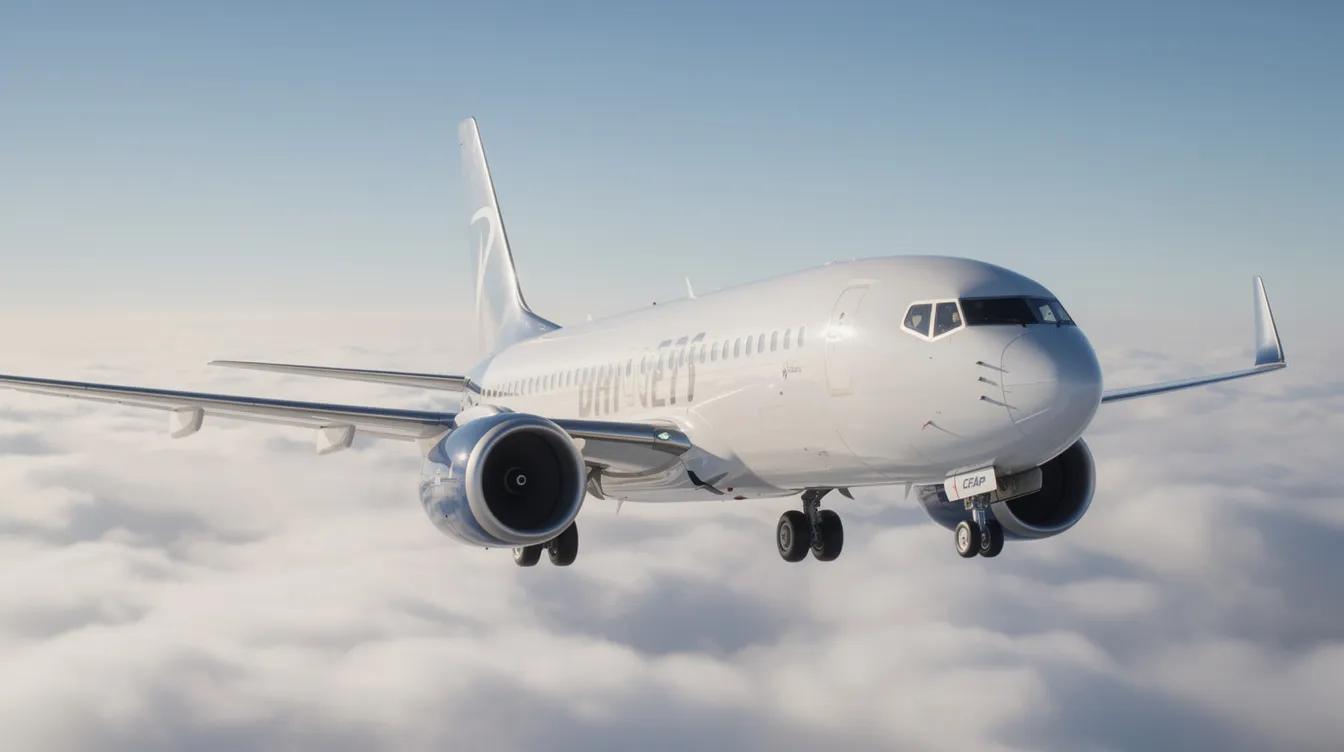
The Boeing 737 MAX 8 is the most ordered and most delivered variant in the 737 MAX family, a fourth-generation narrow-body airliner built for short- and medium-haul routes with better fuel efficiency and quieter engines than earlier 737s, but also the aircraft at the center of one of commercial aviation’s most consequential safety crises. For travelers, aviation enthusiasts, airline customers, and private charter users, that combination makes the MAX 8 worth understanding before booking or comparing flight options in 2026.
This article examines the Boeing 737 MAX 8’s development, design features, cabin experience, seating layouts, accident history, recertification and safety changes, operational use, and what the aircraft means for commercial travel and private aviation. Because the MAX 8’s two fatal crashes led to a 20-month global grounding, major software and regulatory redesign, and a lasting shift in passenger expectations, its story still shapes how millions of people judge aircraft safety across airlines and charter providers.
The Boeing 737 MAX 8 is the core variant of the 737 MAX family, equipped with CFM LEAP-1B engines, split-tip winglets, and the Boeing Sky Interior for a quieter, more efficient cabin on high-frequency routes.
Two fatal accidents, Lion Air Flight 610 (October 2018, Indonesia) and Ethiopian Airlines Flight 302 (March 2019), killed 346 people and led to a 20-month worldwide grounding while Boeing redesigned the MCAS flight control software.
After recertification by the FAA (November 2020), EASA, and Transport Canada, the MAX 8 returned to service with dual angle-of-attack sensor checks, revised pilot training requirements, and stricter manufacturing oversight.
Passenger capacity of the Boeing 737 MAX 8 ranges from 138 to 204 seats depending on airline configuration, and travelers can identify the aircraft type through booking confirmations or seat map tools.
The safety reforms prompted by the 737 MAX crisis reinforced the value of operator certification and transparency across commercial and private aviation, including platforms like Jettly that connect customers with vetted charter operators.
The Boeing 737 MAX 8 is a single-aisle, narrow-body jet and the most widely ordered member of the 737 MAX family. Boeing delivered its first 737 MAX 8 on May 16, 2017, to Malindo Air (branded as Batik Air Malaysia), and the first Boeing 737 MAX 8 entered service on May 22, 2017. Airlines such as Southwest, American, United, Ryanair, and WestJet now operate the type on domestic and international routes across countries on every continent.
The MAX 8 sits within a Boeing 737 lineage that dates back to the late 1960s, making it a generation of aircraft built on decades of operational data and infrastructure. Its design priorities center on fuel efficiency, longer range, and lower operating costs while retaining enough commonality with earlier 737 models to simplify fleet transitions for airlines and pilots.
Naming can be confusing: "737-8," "737 MAX 8," and "Boeing 737-8 MAX" all refer to the same aircraft. The broader family includes the MAX 7, MAX 9, MAX 10, and the high-density MAX 8-200 variant. By mid-2026, Boeing had delivered more than 2,300 737 MAX aircraft, with the MAX 8 accounting for the largest share and serving short- and medium-haul flights worldwide.
The central tension around the MAX 8 is straightforward: it combines modern technology and efficiency with a troubled safety history that triggered global regulatory reform. Both sides of that story matter for anyone who boards this plane.

Boeing began developing the 737 MAX program around 2011 to meet airline demand for lower fuel burn and to compete with the Airbus A320neo family, which had already attracted early orders. The company chose to update the existing 737 platform rather than design an entirely new aircraft, a decision that preserved commonality with the 737NG line and kept training requirements and maintenance costs low for operators.
The design objectives for the MAX 8 were specific: a maximum range of 3,550 nautical miles (Boeing later quoted 3,610 nautical miles depending on configuration), fuel efficiency improvements of roughly 14-20% over 737NG models, and compatibility with existing airport gates and ground equipment.
Key program milestones followed a compressed timeline:
January 29, 2016: The MAX's first flight took place at Renton, Washington.
March 8, 2017: The 737 MAX 8 gained FAA certification under an amended type certificate tied to the legacy 737 design.
May 2017: Boeing's first MAX 8 delivery occurred on May 16, 2017, to Malindo Air.
Commonality was a central design choice. Boeing aimed to make the MAX feel similar to earlier 737s for pilots and maintenance crews, which influenced decisions about cockpit layout, systems architecture, and, critically, the introduction of the MCAS system to preserve familiar handling characteristics. The MAX 8 became the baseline model for the family, around which the stretched MAX 9 and MAX 10, and the shorter MAX 7, were configured.
The 737 MAX 8 combines aerodynamic refinements, structural changes, and updated avionics while retaining the core 737 fuselage cross-section. The Boeing 737 MAX 8 has a wingspan of 35.9 meters, wider than the 737NG, partly due to the split-tip winglet design that visually differentiates the MAX from its predecessors.
The Boeing 737 MAX 8 features Advanced Technology winglets (the split-tip design) that reduce vortex drag and improve lift. This contributes directly to lower fuel burn and extended range. The 737 MAX 8 includes a split-tip winglet design for fuel efficiency, cutting induced drag on the wings during cruise.
Structural changes were necessary to accommodate the larger, heavier CFM LEAP-1B engines. Boeing raised the nose landing gear, reinforced the main gear and fuselage, and repositioned the engines higher and further forward on the wings. The 737 MAX 8 has a maximum takeoff weight of 194,700 pounds.
In the cockpit, the aircraft utilizes modern avionics with large LCD displays; specifically, four 15.1-inch screens that replaced older electromechanical instruments. Updated flight management systems and head-up display options maintain procedural continuity with the 737NG, reducing transition time for pilots moving between types.
The Maneuvering Characteristics Augmentation System (MCAS) was added as software intended to maintain handling characteristics similar to earlier 737 models at high angles of attack, compensating for the aerodynamic effects of the relocated engines. Its role in the MAX 8's safety history is covered in detail below.
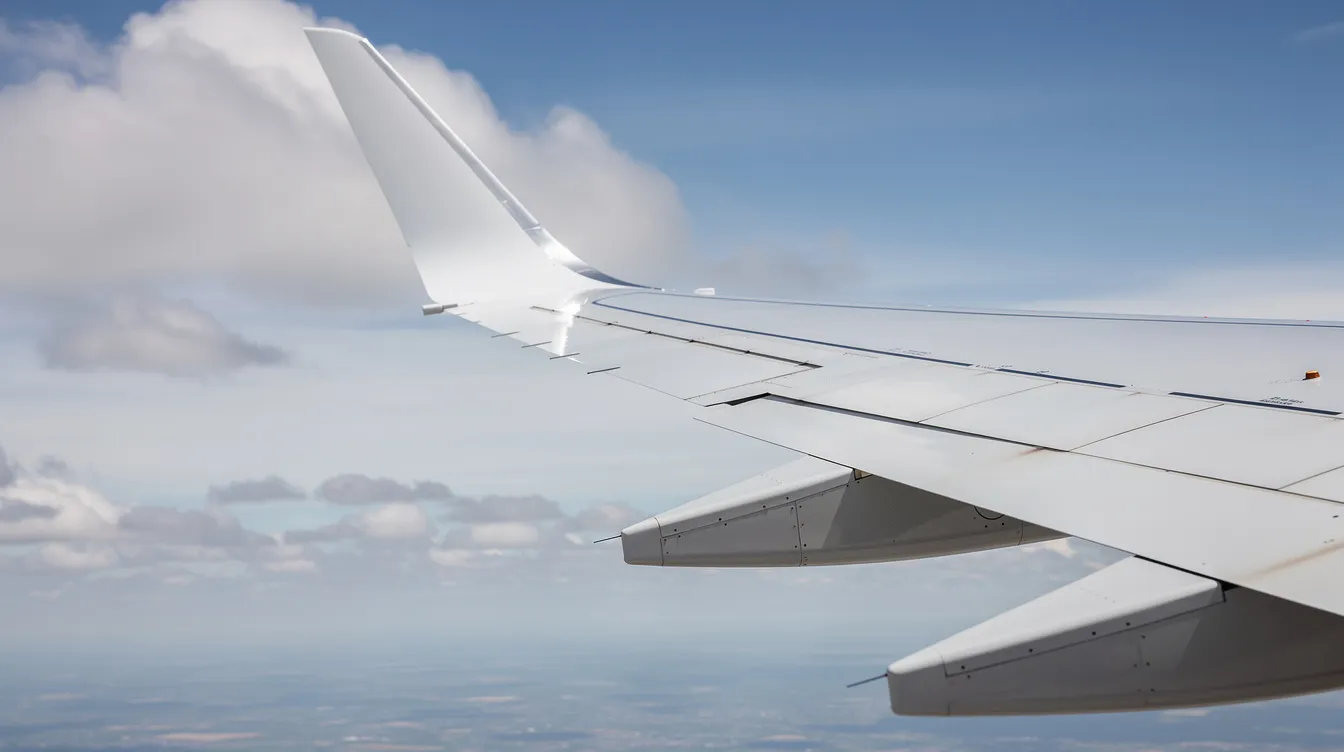
It features CFM LEAP-1B engines for improved fuel efficiency, developed by CFM International (a joint venture between GE and Safran). These new engines are the single largest contributor to the MAX 8's operating cost advantage over earlier 737 models.
The Boeing 737 MAX 8 offers improved fuel efficiency and reduced noise. Industry figures place fuel savings at roughly 14-20% per seat compared with the 737-800, depending on airline configuration and route length. When SpiceJet received its first MAX 8 in October 2018, the carrier estimated savings of approximately $1.5 million per aircraft per year in fuel costs.
The combination of new engines, winglets, and aerodynamic refinements also helps reduce engine noise, with Boeing claiming the noise footprint shrinks by roughly 50% compared with earlier 737 variants. Chevron-shaped nozzles on the LEAP-1B nacelles and quieter fan designs contribute to this reduction, benefiting communities near airports and giving airlines more flexibility under noise regulations.
These efficiency gains align with airline sustainability targets. The MAX 8 still burns conventional Jet-A fuel, but its lower consumption per seat reduces CO2 output per passenger. Airlines can also blend sustainable aviation fuel where available. The Boeing 737 MAX 8 competes with the Airbus A320neo family in the same single-aisle market segment, and both types target similar fuel efficiency benchmarks, which shapes fleet planning for carriers across Europe, Asia, and North America.
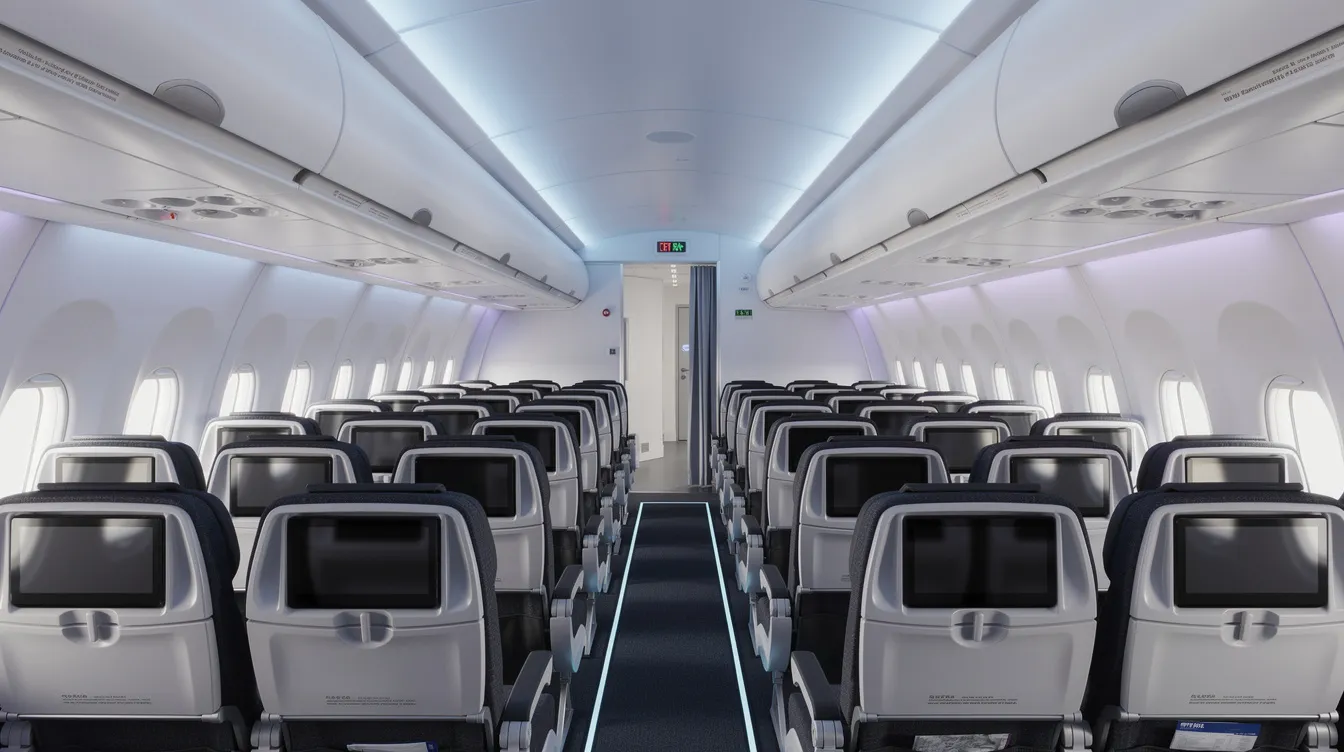
While the 737 MAX 8 is primarily an airline workhorse, it introduced cabin improvements through the Boeing Sky Interior that affect daily travel on busy short- and medium-haul routes.
Core elements of the Boeing Sky Interior include:
Sculpted sidewalls that create a slightly more open feel in a narrow-body cabin
Larger pivoting overhead bins that hold 50% more bags than earlier designs
Customizable LED mood lighting adjustable by crew for boarding, cruise, and landing
Redesigned window reveals that let in more natural light
The Boeing Sky Interior includes large overhead luggage bins and LED lighting as standard across MAX 8 deliveries. These features do not change the fuselage width, but they alter the perception of space for guests seated in standard economy rows.
Typical two-class configurations seat around 160-178 passengers, with 2-3 rows of domestic first class at the front (2-2 arrangement) and 3-3 economy seating in the main cabin. Many airlines use slimline seats from manufacturers like Recaro, which include USB and AC power outlets, tablet holders, and cup holders. Some carriers rely on personal device streaming rather than embedded seatback screens, keeping seat weight down.
The Boeing 737 MAX 8 features quieter cabins compared to its predecessors. Travelers boarding a MAX 8 after flying older 737NG aircraft often notice the difference in engine noise during takeoff and cruise, which can influence seat choice on routes where this type operates.
A Boeing 737 MAX 8 seat map shows the location of every seat, emergency exit, galley, and lavatory. Travelers often consult these maps when selecting seats for legroom, proximity to exits, or distance from high-traffic areas like galleys.
A common two-class layout places approximately 16 domestic first-class seats in a 2-2 arrangement at the front, followed by 150-160 economy seats in 3-3. Legroom varies from around 30 inches in standard economy to 34-36 inches in preferred or extra-legroom rows. For example, American Airlines' MAX 8 offers three zones: First (16 seats), Premium Economy (30 seats), and Economy (about 156 seats). Seat width in economy typically runs around 17 inches.
High-density layouts push capacity further. The MAX 8-200 variant used by Ryanair and similar low-cost carriers can board up to around 197-210 passengers in a single-class arrangement with tighter pitch and minimal galley space. A maximum seating capacity of 210 passengers in high-density configuration represents the upper end of what this airframe can hold.
When reading a seat map, look for:
Emergency exit rows: Extra legroom but seats may not recline
Overwing exits: Often have window obstructions
Bulkhead rows: More legroom but no under-seat storage
Seats near lavatories/galleys: Higher foot traffic and noise
Some airlines provide interactive seat maps showing real-time availability, icons for power outlets, and limited-recline warnings. Tools like SeatMap.app publish configurations for dozens of operators, helping travelers compare layouts before booking.
The 737 MAX 8 underwent a multi-aircraft flight test program before entering commercial service. The MAX completed 2,000 test flight hours before certification, covering aerodynamic performance, engine behavior, systems reliability, and extended operations validation.
The 737 MAX 8 gained FAA certification on March 8, 2017, under a Supplemental Type Certificate anchored to the legacy 737 design. This approach allowed Boeing to classify the MAX as a derivative rather than an entirely new aircraft type, which reduced additional requirements for pilot retraining. Boeing faced challenges during certification due to manufacturing quality issues that caused a temporary pause in certification flights during 2017.
Early commercial deployment moved quickly. Boeing's first MAX 8 delivery occurred on May 16, 2017, to Malindo Air, which began launch operations in Southeast Asia. Major carriers followed: Southwest Airlines (the launch customer in the U.S.), Norwegian, and WestJet in Canada all added the type to their fleet during 2017-2018.
Within the first year of service, over 130 MAX aircraft (primarily MAX 8) were delivered to dozens of customers. The planes logged tens of thousands of flights and carried millions of passengers. Production was underway at a pace that reflected Boeing's confidence in the program, with firm orders climbing past several thousand. That early momentum made the events of late 2018 all the more disruptive.
Two fatal accidents involving the Boeing 737 MAX 8 changed the trajectory of the program. Lion Air Flight 610 crashed on October 29, 2018, shortly after takeoff from Jakarta, Indonesia, killing all 189 people on board. Ethiopian Airlines Flight 302 crashed on March 10, 2019, six minutes after departure from Addis Ababa, killing all 157 passengers and crew. Combined, 346 people died in the two crashes involving the 737 MAX.
Both accidents were linked to erroneous angle-of-attack sensor data that repeatedly triggered MCAS, forcing the nose down despite pilot efforts to counteract it. The similarities between the Indonesian and Ethiopian crashes, both occurring shortly after takeoff on nearly new aircraft, led investigators to suspect a systemic design problem rather than isolated crew error.
The grounding sequence moved rapidly. Authorities in China, Europe, and other countries grounded the type beginning March 11, 2019. The FAA grounded the 737 MAX on March 13, 2019, effectively suspending global MAX operations. The 737 MAX family was grounded in 2019 due to fatal accidents involving MAX 8 aircraft, and the fleet remained parked for approximately 20 months.
Financial consequences were severe. Boeing estimated $6.3 billion in additional costs for the 737 MAX program. Airlines with idle MAX fleets continued paying lease and financing costs on planes that could not fly. The legal process included multi-billion-dollar penalties and settlements with victims' families.
The grounding reshaped regulatory scrutiny worldwide, prompting reviews of how the FAA certification process had allowed MCAS design flaws to reach passengers, and making "Boeing 737 MAX 8" one of the most recognized aircraft designations among the general public.
The Maneuvering Characteristics Augmentation System (MCAS) was added to the 737 MAX to address pitch-up tendencies caused by the forward and upward relocation of the LEAP-1B engines. At high angles of attack, the larger engine nacelles generated additional lift ahead of the center of gravity, changing the plane's handling. MCAS was designed to push the nose down automatically under those conditions so that pilots would experience handling similar to earlier 737 models.
The primary design flaws identified by investigators included:
MCAS relied on a single angle-of-attack sensor, with no cross-check
The system could command repeated nose-down trim adjustments
Pilots received limited awareness and training on MCAS behavior
Trim authority could overpower pilot manual input
Boeing redesigned the MCAS during the 20-month grounding. The flight control software of the Boeing 737 MAX 8 was enhanced to check data against both sensors. If the two AoA sensors disagree by more than 5.5 degrees, MCAS does not activate. The system now limits nose-down authority, activates only once per triggering event, and recognizes pilot manual trim inputs to prevent runaway scenarios.
The recertification process spanned 2019 to late 2020, with the FAA, EASA, and Transport Canada continuing independent simulator and flight-test work into September before final approvals later in 2020 and early 2021. Updated pilot training, including mandatory simulator scenarios, became part of the training requirements before any airline could resume service.
The FAA cleared the 737 MAX to return to service on November 18, 2020. American Airlines resumed 737 MAX service on December 29, 2020. Other regulators followed in early 2021. The Boeing 737 MAX 8 returned to commercial service after extensive review by aviation regulators, and some booking systems temporarily flagged the aircraft type for passengers who wished to be aware of what they were flying.
The 737 MAX crisis disrupted Boeing's production lines, supplier networks, and internal safety culture. Boeing reduced 737 production from 52 to 42 aircraft per month in April 2019 as the grounding dragged on. Boeing suspended 737 MAX production from January 2020, halting the assembly line entirely for the first time in over two decades.
By that point, Boeing had produced over 450 MAX aircraft awaiting delivery by 2020, stored at facilities across the Pacific Northwest. Boeing expected to deliver about half of the 450 stockpiled aircraft in 2021 as airlines prepared to reintegrate the type. Boeing's 737 MAX program was its largest source of profit, and the production halt rippled through the supply chain: CFM reduced LEAP-1B engine output, and subcontractors cut workforce to maintain financial stability.
Later quality concerns extended beyond MCAS. In January 2024, Alaska Airlines Flight 1282, a MAX 9, experienced a mid-cabin door-plug failure and rapid decompression at altitude. While that incident involved a different MAX variant, it underscored ongoing questions about manufacturing inspection standards across the entire MAX line and prompted the FAA to limit Boeing's production rate while conducting safety reviews.
Boeing's Safety & Quality Plan, announced in May 2024, aimed to improve factory documentation, inspection processes, and regulatory partnership. As of July 2026, the FAA restored Boeing's ability to issue airworthiness certificates for new MAX aircraft at the end of the production line, a milestone that followed months of oversight validating consistent build quality.
The 737 MAX program's commercial scale is large. Total orders for the MAX family have exceeded 7,200 aircraft from over 100 customers, surpassing the total orders ever placed for the 737 Next Generation series. The MAX 8 accounts for the largest share of those deliveries.
The family structure gives airlines capacity options while preserving commonality in training, spare parts, and maintenance:
|
Variant |
Typical Seats |
Role |
|---|---|---|
|
MAX 7 |
~138-153 |
Shorter routes, smaller markets |
|
MAX 8 |
~162-204 |
Core medium-haul workhorse |
|
MAX 9 |
~178-220 |
Stretched for higher-demand routes |
|
MAX 10 |
~188-230 |
Largest capacity, certification pending |
By November 2021, Boeing had delivered 1,000 737 MAX aircraft. By mid-2026, total deliveries exceeded 2,300, with an order backlog of roughly 4,800 unfilled aircraft. Major operators include Southwest, United, Ryanair, Alaska, American, and several large low-cost carriers across Europe and Asia.
Certification delays for the MAX 7 and MAX 10 due to evolving safety standards have forced some airlines to adjust route planning and fleet strategies, occasionally extending the service life of older 737NG or Airbus narrow-body jets. Despite these setbacks, the MAX 8 remains central to many airlines' future plans, with carriers projecting long-term demand for efficient single-aisle aircraft on high-frequency domestic and regional routes.
Safety is the defining concern for many travelers when they hear "Boeing 737 MAX 8." Understanding the accident record helps put risk into context.
The two fatal crashes:
Lion Air Flight 610: Jakarta to Pangkal Pinang, October 29, 2018. The aircraft was two months old. Erroneous AoA sensor data triggered repeated MCAS activation. The plane crashed into the Java Sea, killing all 189 on board.
Ethiopian Airlines Flight 302: Addis Ababa to Nairobi, March 10, 2019. The aircraft was four months old. A similar MCAS failure sequence occurred. All 157 people on board died.
The 737 MAX series experienced 1.48 fatal accidents per million takeoffs as of approximately 2023. That figure is heavily shaped by the two early accidents occurring over a relatively small number of total departures. As the fleet accumulates more flight hours without further hull losses, the rate will change.
The January 2024 Alaska Airlines Flight 1282 incident (MAX 9 door plug failure) was not a fatal event, but it triggered renewed inspections and quality controls affecting all MAX variants, including the MAX 8.
Statistics require careful interpretation. Regulation, pilot training, maintenance practices, and operational oversight all shape real-world safety for any aircraft type. The MAX 8 now operates under closer scrutiny than it did before the grounding, which is a direct result of the accidents that exposed its original design flaws.
For most passengers booking a ticket in 2026, a Boeing 737 MAX 8 flight is a routine experience. Airlines worldwide have reintegrated the type into their schedules, and millions of flights have been completed since the grounding ended.
Travelers can identify aircraft type during booking: most airline confirmation emails and booking sites list the equipment as "737 MAX 8," "737-8," or a similar code near the flight number. Expanding flight details or clicking "flight info" typically reveals the model. Aircraft assignments can change close to departure, so checking a day or two before the flight is useful if the model matters.
Key safety improvements for the Boeing 737 MAX 8 include pilot training changes, mandatory MCAS simulator scenarios, more stringent maintenance checks, and continuous operational monitoring by authorities such as the FAA and EASA. These were all in place before any airline could resume service.
Regulators grounded the aircraft for nearly two years and required substantial design and process changes before clearing it to fly again. That history itself is a form of assurance: few aircraft types have undergone such thorough re-examination before returning to the skies.
For passengers who remain uneasy, practical options exist: contacting the airline for clarification on aircraft type, reviewing safety resources from civil aviation authorities, or selecting alternative flights on routes where multiple aircraft types operate.
The Boeing 737 MAX 8 typically carries 160-190 guests on scheduled routes between major airports. Private and charter aviation operates in a different segment. Most private flights use light jets, midsize jets, heavy business jets, or turboprops rather than high-capacity airliners, because charter customers prioritize schedule flexibility, smaller group sizes, and access to secondary airports with shorter runways. Choosing among these aircraft types often starts with understanding the best private plane manufacturers and how different models fit specific mission profiles.
Platforms like Jettly operate a digital private charter aircraft marketplace, offering instant access to a global fleet of more than 20,000 aircraft types. Options range from light jets for short regional hops to long-range business jets for intercontinental missions. A broad list of charter airlines and private operators shows how these services span everything from on-demand charters to memberships and fractional ownership, all of which differ from commercial 737 MAX operations in purpose, scale, and passenger experience.
Key differences:
|
Factor |
Boeing 737 MAX 8 |
Private Charter (via Jettly) |
|---|---|---|
|
Capacity |
138-210 passengers |
4-16 passengers (typical) |
|
Airports |
Major hubs |
5,000+ airports including regional |
|
Scheduling |
Fixed timetable |
On-demand, flexible |
|
Terminal experience |
Commercial security/gates |
Private FBO terminals |
|
Customization |
Airline-standard cabin |
Tailored catering, seating |
Private charters can avoid crowded terminals, reduce total travel time by using closer airports, and customize in-flight services. Travelers considering these options often start by reviewing a guide to private jet charter costs to understand how aircraft type, route length, and trip timing affect pricing. The Boeing 737 MAX 8 is optimized for scheduled airline efficiency and cost per seat on popular routes.
Both commercial and private operations must comply with strict safety regulations. Resources outlining the best private jet charter companies and selection factors emphasize safety records, fleet quality, and operational transparency as key decision points. Private charter platforms like Jettly work with certified operators, and the safety scrutiny triggered by the 737 MAX crisis has reinforced industry-wide focus on operator oversight and transparency.
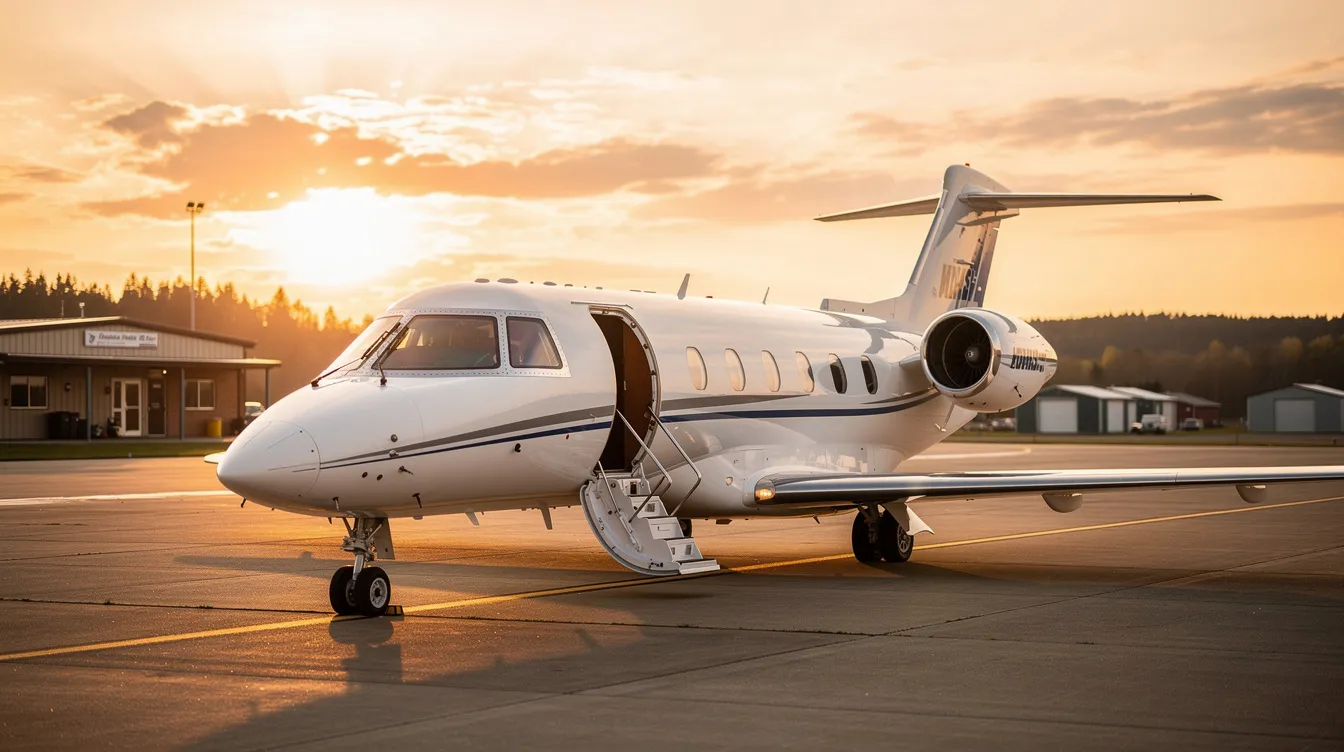
The scrutiny around aircraft such as the Boeing 737 MAX 8 has made travelers more aware of aircraft type, operator standards, and the value of transparent safety and pricing information. That awareness extends beyond commercial flying into private aviation, where customers increasingly ask about operator certifications, maintenance records, and safety ratings.
Jettly's on-demand private jet charter platform offers an alternative travel model. Customers search flights digitally, see instant pricing across thousands of aircraft, and select options that match their schedule, route, and comfort preferences without committing to jet cards or fractional ownership, or they can opt for structured private jet membership programs that provide wholesale rates and added benefits for frequent flyers. For many travelers, this makes Jettly a compelling alternative to traditional providers like NetJets, combining on-demand access with membership and jet card options.
Jettly works with regulated air carriers that must meet strict safety and maintenance standards. Customers can review aircraft categories (light jets, midsize, heavy, turboprops, helicopters) rather than focusing on high-capacity airliners like the 737 MAX, and those simply looking for convenient access to private flights can follow step‑by‑step advice on how to get a seat on a private jet easily.
Common private charter missions where a large commercial aircraft would be impractical include regional trips such as private jet charter flights in markets like Kolkata, West Bengal, where access to multiple airports and flexible timing can dramatically cut door‑to‑door travel time:
Last-minute executive trips between business hubs, often arranged through brokers that connect clients with operators such as Dexter Air Taxi and similar private jet providers
Family holidays to remote islands or resort destinations accessible only via smaller airfields, often identified using an airport locator tool for private aviation.
Time-critical medical or legal travel requiring flexible departure times, where a quick estimate from a private jet charter cost estimator helps determine whether chartering makes sense
Group flights for corporate retreats or sporting events where commercial schedules do not align, sometimes budgeted in advance using a jet card flight cost estimator, where travelers may weigh shared charter flights versus full charters to balance privacy and cost
For travelers who want greater control over their itinerary, choice of aircraft, and level of privacy, Jettly's platform provides a starting point. Those exploring more flexible arrangements can review a detailed guide on how to buy a seat on a private jet, including shared and empty‑leg options. Learn more about charter options and request a quote at jettly.com.
This section addresses common traveler questions about the 737 MAX 8 that are not fully covered in the main body of this article.
Major regulators, including the FAA, EASA, and Transport Canada, cleared the 737 MAX 8 to return to service after requiring MCAS redesigns, updated pilot training (including mandatory simulator scenarios), and additional inspections of each aircraft before it could carry passengers. Airlines must comply with all of these rules before operating the type.
No aircraft can be described as risk-free. The MAX 8 now operates under closer oversight than before the grounding, with continuous monitoring of operational data and stricter manufacturing quality controls. Safety data has been accumulating as the global fleet logs millions of additional flights since recertification.
Most booking sites and airline confirmation emails list the aircraft type near the flight number. Look for labels like "Boeing 737 MAX 8," "737-8," or "738MAX." If the aircraft code is not immediately visible, expand the flight details or click "flight info" in your booking confirmation.
Some airlines allow aircraft type filtering or display a small aircraft icon. Keep in mind that equipment assignments can change shortly before departure, so checking a day or two again before your flight is advisable if the specific model matters to you.
Passengers on the MAX 8 typically notice a quieter cabin due to the LEAP-1B engines, updated Boeing Sky Interior with LED lighting and redesigned overhead bins, and in some cases newer slimline seats with USB and AC power outlets. Older 737NG aircraft may have legacy interiors with smaller bins and louder engine noise during cruise.
Legroom and seat width depend more on each airline's chosen layout than on the aircraft type itself. A Southwest MAX 8 and an American Airlines MAX 8 can have different pitch, seat counts, and amenity levels. Always consult the specific airline's seat map and reviews rather than assuming all MAX 8 cabins are identical.
Specialized charter operators occasionally configure large airliners, including Boeing 737s, as VIP or corporate aircraft with luxury interiors and reduced seating. MAX-based VIP conversions are rare as of mid-2026.
Platforms such as Jettly mainly connect clients with business jets across light, midsize, and heavy categories, plus turboprops and helicopters. These aircraft are better suited to the flexibility, smaller group sizes, and access to secondary airports that define private charter travel. For more on how much it costs to charter a 737, Jettly's resource library covers the details.
Travelers concerned about the 737 MAX 8 can review aircraft assignments when booking commercial flights and choose routes operated by different models. Most airline websites display equipment type in the flight search results, and third-party tools like SeatGuru or the SeatMap app list aircraft configurations by carrier.
For those interested in on-demand private aviation using other aircraft types, Jettly's digital charter marketplace at jettly.com lets travelers compare private jet options, see instant estimates, and select aircraft categories that match their comfort and safety preferences outside the commercial 737 MAX environment.
The Boeing 737 MAX 8 is a technologically advanced, fuel-efficient successor in the long-running Boeing 737 family. Its two tragic accidents and lengthy grounding forced comprehensive software, training, and regulatory changes that reshaped how the aviation industry approaches certification and oversight.
The MAX 8's efficiency and range make it central to airline strategies for high-frequency regional and medium-haul routes. Airlines and regulators continue to monitor safety and manufacturing quality, and the production ramp toward 47 units per month in 2026 reflects renewed confidence in the line.
For travelers, the key takeaways are practical: understanding what a 737 MAX 8 is, how to read a seat map, and what post-grounding safeguards exist. Some passengers still evaluate aircraft choice as part of their booking decisions, and that awareness is a healthy outcome of the MAX saga.
While most readers will encounter the Boeing 737 MAX 8 in commercial service, those looking for more tailored travel can explore private charter solutions using platforms like Jettly that focus on smaller business jets, turboprops, and helicopters with on-demand flexibility.
Ready to explore private travel on your terms? Request a quote or browse flight options at jettly.com.
Share this post:
Jay Franco Serevilla
Aug 2, 2026
|
5
min read
Discover tips and trends in the industry.
5
min read
Top 10 Cheapest Private Jets in 2026: Ownership, Operating Costs, and Smarter Alternatives
Discover the top 10 cheapest private jets of 2026, focusing on ownership costs, operating expenses, and smarter charter alternatives. This guide highlights very light jets and turboprops that offer budget-friendly options for travelers, emphasizing the financial benefits of chartering through platforms like Jettly for those flying under 200 hours annually.
Read More
5
min read
Best Time to Book a Flight to Las Vegas (and When to Charter Private)
Discover the best times to book flights to Las Vegas, whether commercial or private. Booking 14 to 21 days in advance typically yields the best prices, while midweek flights can save you even more. This guide also highlights the advantages of private jet charters through Jettly for flexible travel options.
Read MoreStay updated with our latest insights and tips to elevate your journey with us.
MEMBERSHIPS AND ASSOCIATIONS



Disclaimer: Jettly operates as a charter broker, offering access to a global digital jet charter marketplace. Jettly is not a direct air carrier and does not own or operate aircraft. All advertised flights are conducted by third-party air carriers that are fully licensed and hold the appropriate Part 135 or Part 121 certifications issued by the Federal Aviation Administration (FAA) or equivalent regulatory authorities under U.S. or foreign law. Jettly complies fully with the U.S. Department of Transportation's Part 295 and Part 298 Charter Broker regulations. Jettly does not carry additional liability insurance. Passengers are covered by aircraft operator insurance. TICO: 50023770


