



Login
Get Instant Pricing On 23,000+ Aircraft

>
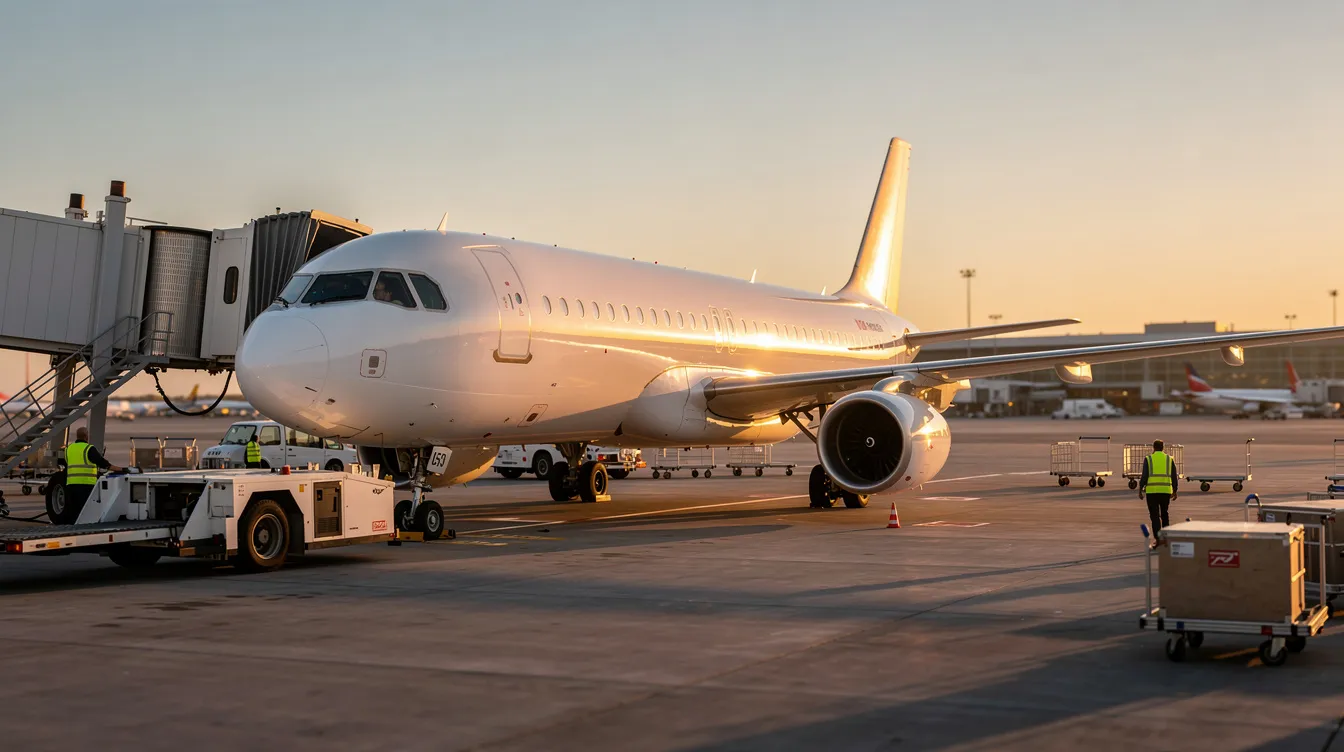
The Boeing 737 is the highest-selling commercial narrow-body aircraft series in aviation history. Since its maiden flight in 1967, Boeing 737 models have evolved through four distinct generations, each improving on the last in range, fuel efficiency, and passenger comfort. This guide breaks down every generation, variant, and use case—from the original short-haul workhorse to the latest 737 MAX and Boeing Business Jet configurations—so you can understand what these aircraft mean for commercial aviation and private travel alike.
The Boeing 737 family includes four generations—Original, Classic, Next Generation (NG), and MAX—with seating capacity ranging from about 85 to 230 passengers depending on model and layout.
Boeing 737 models span from early 1960s designs to the fourth-generation 737 MAX, covering passenger, cargo, military aircraft, and Boeing Business Jet variants, making it the most-produced commercial twinjet narrow-body airliner in history.
The 737 MAX series offers a 20% reduction in CO2 emissions compared to earlier models, using LEAP-1B fuel-efficient engines and advanced winglets, though it went through a global grounding in 2019 before returning safely to service.
Major US airlines like Southwest Airlines, American Airlines, Alaska Airlines, and United Airlines rely heavily on 737 fleets for domestic and medium-haul routes.
Business travelers and high-net-worth individuals often experience 737s on premium airline cabins or as Boeing Business Jet charters. Those looking for more flexible, point-to-point private travel can compare options through platforms like Jettly.
The Boeing 737 is a twin-engine, single-aisle jet that has been in continuous production since the late 1960s. With over 12,486 aircraft delivered and roughly 17,336 ordered across all variants, it is a cornerstone of airline fleets worldwide. The Boeing 737 typically seats 85 to 230 passengers, depending on model and cabin configuration.
The "Boeing 737 family" refers to four main generations: Original, Classic, Next Generation, and MAX. The Boeing 737 has evolved through four major generations since its first flight in 1967, and each generation introduced new engines, avionics, and structural improvements while keeping the same basic fuselage cross-section and six-abreast seating layout.
The 737 serves short- to medium-haul routes worldwide, including dense shuttle routes like New York–Chicago or London–Madrid. Airlines such as American Airlines, Alaska Airlines, Southwest Airlines, Ryanair, and United Airlines rely heavily on it. The aircraft type dominates the single-aisle market, competing directly with the Airbus A320 family and, more recently, the COMAC C919.
The 737's ubiquity in commercial flight also shapes private aviation demand. Many travelers use 737-operated airline routes to connect with private jet flights booked through Jettly, combining scheduled service with charter flexibility for the final leg of a trip.
In the early 1960s, Boeing identified a gap in its product lineup. The 707 and 727 were too large or inefficient for short-haul routes of roughly 50 to 1,000 miles. The company needed a smaller, simpler twin-engine aircraft to serve growing demand on regional city pairs.
Initial design concepts explored aft-mounted engines with a T-tail configuration and five-abreast seating. Boeing ultimately discarded these ideas in favor of under-wing engines and six-abreast seating to increase capacity and simplify the structure. This decision shaped every Boeing 737 variant that followed.
Key dates define the program's early trajectory. Internal feasibility studies began around 1964, with formal program approval on February 1, 1965. The development budget was roughly $150 million. Boeing's goal was to target about 80 to 100 seats for the initial model.
To reduce development time and cost, Boeing reused about 60% of the 727's structure, including the 148-inch fuselage cross section. This approach maintained crew commonality and parts commonality across Boeing's product line, a benefit that still matters to airline customers today.
Lufthansa became the launch customer in February 1965, ordering 21 aircraft and prompting Boeing to finalize the 737-100 design with approximately 85 to 100 seats. This made Lufthansa the first aircraft buyer for what would become aviation history's best-selling narrow-body jet.
United Airlines followed in April 1965 with an order that drove the stretched 737-200 variant, offering different passenger capacity options to suit higher-traffic domestic routes. United's involvement pushed Boeing to develop the stretched variant in parallel with the original.
The rollout and inaugural flight milestones came quickly:
737-100 rollout: January 17, 1967
First flight: April 9, 1967
FAA certification: December 15, 1967
First delivery to Lufthansa: Late December 1967
The 737-100 entered service in 1968, and the 737-200's rollout followed on June 29, 1967, with its first flight on August 8, 1967. United Airlines began operating the 737-200 in April 1968, quickly making it the dominant early model of the family.
The "Original" generation covers the first aircraft in the 737 lineage—sometimes called the "Jurassic" 737 by enthusiasts. These were the earliest models to carry the 737 designation and established the basic design DNA that persists today.
Technical basics of the Originals include:
Engines: Pratt & Whitney JT8D low-bypass turbofan engines, producing roughly 14,000 to 17,400 lbs of thrust
Landing gear: Relatively short, giving the aircraft a low fuselage profile
Seating: The 737-100 held roughly 85 to 100 passengers; the 737-200 can accommodate up to 130 passengers in high-density layouts
The 737-200 Advanced variant deserves special attention. It introduced upgraded engines and aerodynamic improvements that improved payload and range by 15%, making it a genuine workhorse on short-haul routes through the 1970s and 1980s. The 737-200 is also notable for its ability to operate on unpaved runways with optional gravel kits, which made it popular with airlines serving remote destinations in Alaska, northern Canada, and developing regions.
Only about 30 of the 737-100 were built, while nearly 1,000 737-200s entered service. Many 737-200s were later converted into dedicated freighters, government transports, or special-mission aircraft, extending their productive lives well beyond initial expectations.
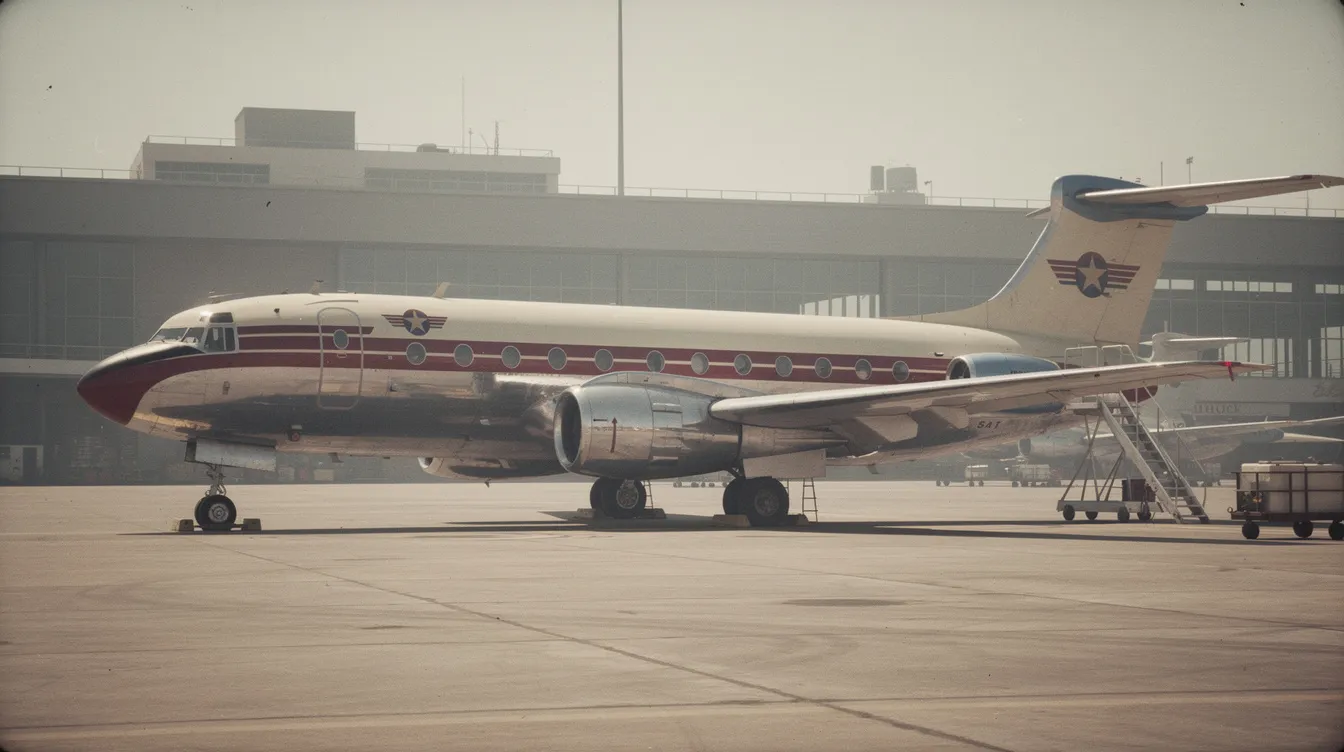
The 737 Classic generation series introduced in the 1980s was Boeing's answer to rising fuel costs and tightening noise regulations. The goal was to improve fuel efficiency and reduce fuel consumption while delivering improved performance across existing short- and medium-haul routes.
The CFM56-3 high-bypass turbofan engines were the centerpiece of the Classic upgrade. Because the 737's low fuselage and short landing gear left limited ground clearance, Boeing and CFM International designed a distinctive flattened lower nacelle—the recognizable "hamster pouch" engine look. This higher bypass ratio powerplant dramatically cut noise and improved economics compared to the JT8D.
Typical seating capacity and roles by variant:
|
Model |
Seats (typical) |
Role |
|---|---|---|
|
737-300 |
110–149 (two class) |
Direct replacement for -200 |
|
737-400 |
Up to 168 |
Stretched variant for higher-demand routes |
|
737-500 |
100–132 |
Short-body option for thinner routes |
The 737 Classic series was produced from 1984 to 2000, with nearly 2,000 units built (1,113 of the -300, 486 of the -400, and 389 of the -500). Airlines like United Airlines began retiring Classics heavily around 2008, replacing them with more efficient next-generation models or Airbus A320 family aircraft.
Many Classic models later received winglet retrofits and freighter conversions, extending their operational life in cargo and regional markets well into the 2010s.
The 737NG family was launched in the 1990s, with first delivery around 1997, to counter the Airbus A320 family and give airline customers higher efficiency, range, and passenger capacity. The 737 Next Generation series includes the -600, -700, -800, and -900 variants, each targeting a different market segment.
Structural changes on the NG were substantial. Boeing introduced a redesigned wing with increased span and greater fuel capacity, strengthened landing gear for higher maximum takeoff weight, and CFM56-7B engines offering roughly 7% better fuel burn than the Classics. These next-generation models represented the most comprehensive update to the 737 platform since its debut.
Seating capacity ranges by NG variant:
|
Model |
Seats (typical two-class) |
Range |
|---|---|---|
|
737-600 |
~108 |
~3,200 nmi |
|
737-700 |
126–149 |
~3,400 nmi |
|
737-800 |
162–189 |
2,900–3,600 nmi |
|
737-900ER |
200+ (high density) |
~3,200 nmi |
The 737-800 can fly approximately 2,900 to 3,600 nautical miles, making it the primary workhorse for domestic and medium-range international routes. The 737 Next Generation introduced a glass cockpit with six LCD screens and modern avionics, a major leap from the analog instruments of the Classic era. Boeing also debuted the Boeing Sky Interior on later NG aircraft, featuring sculpted sidewalls, LED lighting, larger overhead bins, and reduced cabin noise to improve passenger comfort.
Key operators of NG fleets include Southwest Airlines, Alaska Airlines, Ryanair, and American Airlines, all of which built large NG fleets for domestic and medium-haul routes. About 7,121 NG airliners were delivered before commercial production ended in 2020.
The 737 MAX is the fourth generation of the Boeing 737, launched in 2011 with first flight on January 29, 2016. The aircraft received FAA certification in March 2017, and Malindo Air took the first delivery in May 2017. The 737 MAX series was launched in 2011 and includes four main variants.
Core models and their roles:
|
Model |
Seats (two-class) |
Max Range |
|---|---|---|
|
MAX 7 |
~138–160 |
~3,825 nmi |
|
MAX 8 |
~162–178 |
~3,515 nmi |
|
MAX 8-200 |
Up to ~200 (high density) |
~3,515 nmi |
|
MAX 9 |
~178–193 |
~3,300 nmi |
|
MAX 10 |
~188–204 |
~3,100 nmi |
The 737 MAX has a range of 3,215 to 3,825 nautical miles, enabling many transcontinental routes and select transatlantic services. Key technologies include the CFM LEAP-1B engines with a higher bypass ratio, Advanced Technology winglets, and refined aerodynamic improvements. Together, these improve fuel efficiency by about 10 to 14% versus the 737NG.
The safety crisis that followed two fatal crashes cannot be overlooked. Lion Air Flight 610 (October 29, 2018) and Ethiopian Airlines Flight 302 (March 10, 2019) resulted in 346 fatalities. Both accidents were linked to the MCAS (Maneuvering Characteristics Augmentation System) and its reliance on single angle-of-attack sensors. A global grounding began in March 2019, followed by extensive software and training changes. The 737 MAX returned to service in phases from late 2020 onward.
By the mid-2020s, hundreds of 737 MAX aircraft serve in active airline fleets worldwide, with ongoing regulatory oversight and incremental safety enhancements continuing to strengthen confidence in the aircraft type.
Cabin interiors across Boeing 737 models have evolved dramatically, driven by changing passenger expectations and airline business models. What started as a basic short-haul cabin in the 1960s has become a sophisticated environment on today's 737 MAX aircraft.
Seating capacity by generation:
|
Generation |
Range of Seats |
|---|---|
|
Original (-100/-200) |
85–130 |
|
Classic (-300/-400/-500) |
100–168 |
|
NG (-600/-700/-800/-900ER) |
108–215 |
|
MAX (7/8/9/10) |
138–230 |
The 737 MAX has a range of 3,215 to 3,825 nautical miles, enabling many transcontinental routes and select transatlantic services. Key technologies include the CFM LEAP-1B engines with a higher bypass ratio, Advanced Technology winglets, and refined aerodynamic improvements. Together, these improve fuel efficiency by about 10 to 14% versus the 737NG.
Key interior milestones include older 1960s cabins with minimal overhead storage, Classic series cabins adopting design cues from the 757/767, and the modern Boeing Sky Interior on NG and MAX aircraft. The Sky Interior brought LED mood lighting, sculpted sidewalls, and larger pivot bins that hold more carry-on luggage while creating a more open feel.
Boeing Business Jet versions transform the same airframe into ultra-spacious VIP cabins with bedrooms, showers, and conference areas. Private jet charters arranged via Jettly typically use smaller business jets for point-to-point flexibility, though BBJ charters serve large groups and heads of state.
The core 737 design features a narrow-body fuselage derived from the 707/727 family, low-mounted wings, and under-wing engines. This basic architecture has remained consistent across all four generations, which is a key reason many pilots can transition between 737 variants with minimal retraining.
Wing evolution has been one of the most impactful changes across generations:
Original and Classic: Relatively compact wings with limited fuel volume
Next Generation: A significantly larger, more efficient redesigned wing with greater fuel capacity and increased span
737 MAX: Retained the NG wing structure with added Advanced Technology winglets to reduce drag further
The low-slung fuselage and short landing gear have both benefits and constraints. On the positive side, the low fuselage allows easier ground access at airports without jet bridges, supporting faster turnaround. This feature has been particularly valued by low-cost carriers operating from smaller airports. On the other hand, the limited ground clearance has forced creative engine nacelle designs throughout the aircraft's history.
Landing gear upgrades over time included stronger assemblies for higher weights and the introduction of carbon brakes in the late 2000s, which reduced weight and improved fuel efficiency marginally while lowering maintenance costs.
These design choices contrast with the runway flexibility of typical private jets. Light and midsize business jets can access thousands of smaller airfields that a 737 cannot, which is one reason travelers turn to charter platforms and use an airport locator tool for remote or regional destinations.
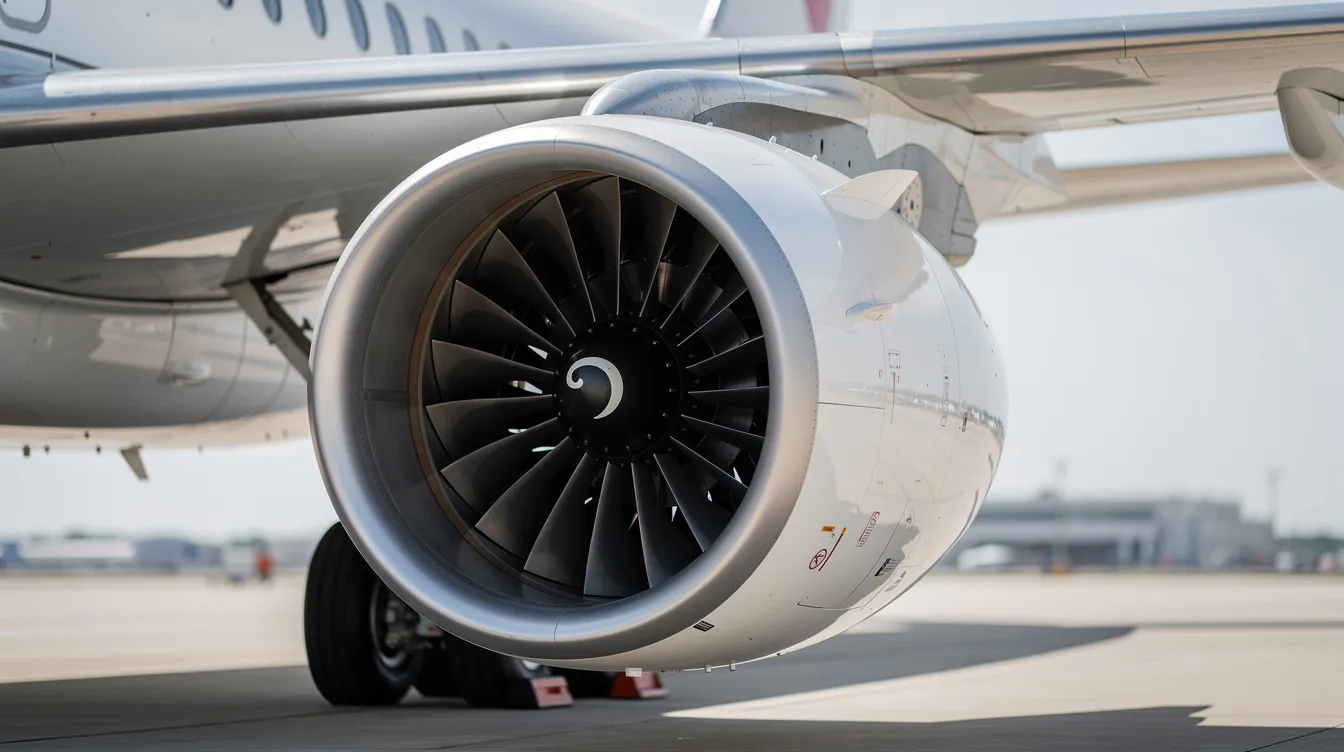
Engine technology is the single biggest driver of efficiency gains across Boeing 737 generations. The progression tells a clear story of improving fuel consumption and reducing environmental impact at each step.
Engine evolution:
|
Generation |
Engine |
Type |
Thrust (approx.) |
|---|---|---|---|
|
Original |
Pratt & Whitney JT8D |
Low bypass turbofan |
14,000–17,400 lbs |
|
Classic |
CFM56-3 |
High-bypass turbofan |
20,000–23,500 lbs |
|
NG |
CFM56-7B |
High-bypass turbofan |
19,500–27,300 lbs |
|
MAX |
CFM LEAP-1B |
Higher bypass ratio |
23,000–28,000 lbs |
Engine nacelle shapes changed at each step due to the 737's low ground clearance. The Classic's CFM56-3 required flattened inlets. The NG's CFM56-7B kept a similar approach. The MAX repositioned the larger LEAP-1B engines slightly higher and forward on the wing, which in turn necessitated the MCAS software system.
Winglet evolution added further drag reduction:
Early models: No winglets
Classics and NG (from ~2000): Optional blended winglets saving up to about 5% fuel
NG (from 2014): Split scimitar winglets offering slightly more savings
MAX: Standard Advanced Technology winglets integrated from the factory
The cumulative impact is significant. The 737 MAX reduces CO2 emissions by 20% compared to earlier models and has a 50% smaller noise footprint than the 737-800. For airlines operating large 737 fleets, even single-digit percentage improvements in fuel burn translate to millions of dollars in annual savings and meaningfully lower emissions.
Both airlines and private charter users increasingly look at CO2 emissions and sustainable aviation fuel options. Platforms like Jettly provide travelers with access to a range of aircraft types, allowing them to weigh efficiency alongside flexibility and estimate budgets with a dedicated private jet charter cost estimator.
All 737 generations retain predominantly hydro-mechanical flight controls with manual reversion capability—a design philosophy that sets the 737 apart from fully fly-by-wire competitors. However, cockpit layouts evolved dramatically from analog gauges to fully integrated glass cockpits.
The Original and Classic cockpits used analog instruments, with the Classic era introducing early electronic flight instrument systems and basic flight management systems. Many pilots who trained on these earlier models found the transition manageable due to consistent control logic.
The 737NG introduced modern avionics with a six-screen LCD glass cockpit, optional dual Head-Up Displays, and enhanced flight management capabilities. This upgrade preserved enough commonality with earlier 737s to simplify pilot cross-training—a major benefit for airlines managing mixed fleets.
The 737 MAX further upgraded to four 15.1-inch screens, added partial fly-by-wire spoilers, and enhanced flight control computers. Post-grounding safety updates included revised MCAS software that now requires input from two angle-of-attack sensors rather than one. The certification process for these changes was among the most scrutinized in aviation history.
Modern business jets used in private charters feature equally advanced or newer cockpit technology. Aircraft from Gulfstream, Bombardier, and Dassault often incorporate full fly-by-wire systems and synthetic vision, aimed at maximizing safety and dispatch reliability.
The Boeing Business Jet is a corporate and VIP adaptation of the Boeing 737 airframe, combining the proven reliability of a commercial airliner with long-range capability and fully customizable luxury interiors. It bridges the gap between airline travel and dedicated private jets.
Main BBJ variants from the 737NG family:
|
Variant |
Base Airframe |
Typical Range |
Key Feature |
|---|---|---|---|
|
BBJ1 |
737-700 (with -800 wing and gear) |
~6,000+ nmi |
Most popular BBJ |
|
BBJ2 |
737-800 |
~5,500 nmi |
Larger cabin volume |
|
BBJ3 |
737-900ER |
~5,000 nmi |
Longest cabin of NG-based BBJs |
BBJ MAX variants (BBJ MAX 7, MAX 8, and MAX 9) use LEAP-1B engines and 737 MAX aerodynamics to add range and improve fuel efficiency for corporate operators and governments. These new aircraft push range beyond 6,100 nautical miles in some configurations.
Typical BBJ interior layouts include low-density seating, master bedrooms, shower-equipped bathrooms, conference and dining areas, and high-bandwidth connectivity. Operating costs run approximately $5,170 to $5,630 per flight hour. These aircraft appeal to heads of state and ultra-high-net-worth individuals who need to move large delegations or carry cargo across continents.
For most private travelers, a super-midsize or heavy business jet makes more practical sense than a BBJ. Jettly's platform helps clients compare options based on group size, trip length, and budget—whether that means a Challenger 350 for six passengers or a BBJ for thirty.
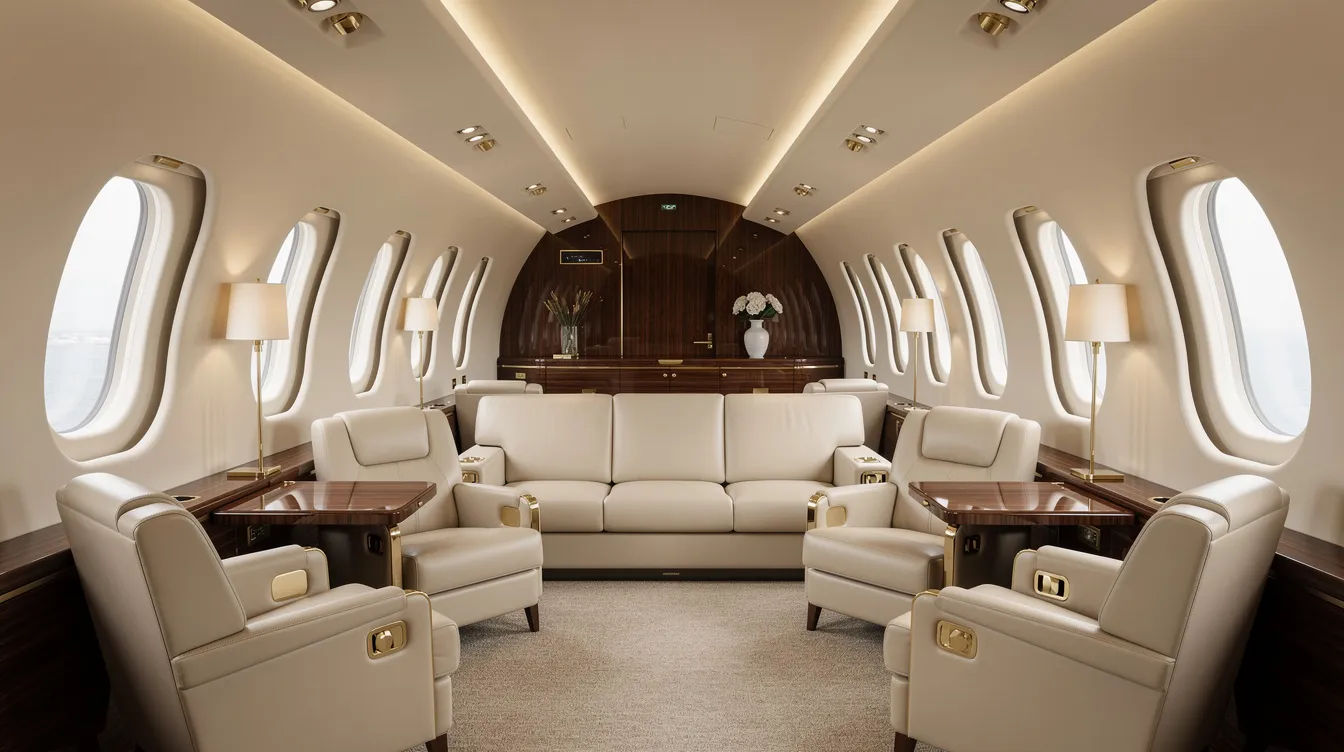
The robust 737 platform underpins several specialized military aircraft and government aircraft around the world. Its commercial reliability, widespread parts availability, and training commonality make it attractive—whether for applications that demand long service lives and global support.
Notable variants include:
T-43 "Flying Classroom" (based on 737-200): Used by the US Air Force for training navigators, this variant served for several decades before retirement. It demonstrated the 737's adaptability beyond commercial aviation.
E-7 AEW&C Wedgetail (based on 737-700IGW): An airborne early warning and control platform with a dorsal radar array, operated by Australia, Turkey, and South Korea.
P-8 Poseidon (derived from 737-800ERX): A long-range maritime patrol and anti-submarine warfare aircraft used by the US Navy and allied forces, equipped with weapons, sensors, and extended-range capability.
C-40 Clipper (737-700C): A military transport operated by several US military branches for VIP transport and logistics.
The core 737 design benefits—dispatch reliability, parts availability, and crew commonality—make the airframe attractive across these non-commercial missions. Several other air force organizations worldwide operate 737-based VIP transports for government leaders.
Aging passenger 737s frequently transition into cargo duty; benefits—dispatching parcel services, e-commerce logistics, and commonality—make them attractive. This second career extends the economic life of airframes that airlines no longer want for passenger service.
Early cargo solutions included the 737-200QC (Quick Change), which could switch between passenger and cargo configurations in under an hour using palletized seating. Several operators used this capability to carry cargo overnight and passengers during the day.
Modern programs like the Boeing Converted Freighter (BCF) for the 737-800 launched in the mid-2010s and have seen growing demand from logistics operators worldwide. These conversions involve installing a main deck cargo door, reinforced flooring, and cargo handling systems. A typical 737-800BCF carries about 23.9 metric tons of payload over distances suited to regional and domestic networks.
Freighter versions often operate from secondary airports and at off-peak hours, complementing major passenger hubs. Their economics are attractive for overnight shipping and regional logistics carriers who need dedicated freighters rather than belly cargo space on passenger flights.
Some charter clients use cargo aircraft for time-critical freight. Platforms like Jettly can support bespoke cargo charter solutions alongside passenger services when the situation demands it.
The Boeing 737 became the backbone of short-haul and medium-haul airline fleets globally. No other aircraft type comes close to the 737's installed base among the world's largest operators of scheduled service.
Among the largest operators as of the mid-2020s:
|
Airline |
Primary 737 Models |
Approximate Fleet Size |
|---|---|---|
|
Southwest Airlines |
737-700, 737-800, MAX 8 |
700+ |
|
Ryanair |
737-800, MAX 8-200 |
500+ |
|
United Airlines |
737-700 through MAX 10 |
400+ |
|
American Airlines |
737-800, MAX 8 |
350+ |
|
Delta Air Lines |
737-800, 737-900ER |
200+ |
Airlines often standardize around a single aircraft type like the Boeing 737 to simplify training for many pilots, reduce maintenance complexity, and optimize scheduling. Southwest Airlines pioneered this approach in the 1970s and still operates an all-737 fleet.
Boeing delivered 8,918 737s between 1988 and 2018, compared with Airbus delivering 8,605 A320 family aircraft by 2018. This intense competition across US airlines and international carriers has driven continuous improvements in both product lines.
Business travelers frequently fly commercial 737s into major hubs, then transfer to private jet charters booked on Jettly for remote or time-sensitive legs where scheduled service is unavailable.
The Boeing 737 family has amassed billions of flight hours across its four generations. Like any widely used aircraft, it has experienced accidents and incidents over its long history, but the overall trend shows significant safety improvement with each successive generation.
Hull loss rates by generation tell the story clearly:
|
Generation |
Hull Loss Rate (per million departures) |
|---|---|
|
Original |
1.78 |
|
Classic |
0.81 |
|
Next Generation |
0.18 |
|
MAX |
1.48 |
The 737 MAX's two fatal crashes in 2018 and 2019 focused global attention on the MCAS system and its reliance on single angle-of-attack sensors. The worldwide grounding beginning in March 2019 prompted the most thorough recertification effort in modern aviation history. Software changes, enhanced pilot training, and sensor redundancy were implemented before regulators like the FAA and EASA allowed phased return to service from late 2020 onward.
In January 2024, a non-fatal door plug incident on an Alaska Airlines MAX 9 led to temporary groundings and inspections of exit-door plug hardware, demonstrating that ongoing vigilance remains central to commercial aviation safety.
These facts are presented neutrally. Safety reforms benefit both commercial and private aviation by raising standards industry-wide.
The Boeing 737 exists within a broader travel ecosystem where commercial airlines, cargo operators, governments, and private aviation platforms coexist and often interconnect. Understanding this ecosystem helps travelers make better decisions about their options.
Large corporate groups, sports teams, and government delegations sometimes charter entire Boeing 737 aircraft or Boeing Business Jet variants for bespoke missions. These group charters often rely on high-capacity airliners like the Boeing 737-800 for private charter and other Boeing 737-800 specs, range, and charter options, offering the capacity of a commercial flight with the flexibility and privacy of a charter, often arranged through specialist brokers.
Jettly primarily focuses on dedicated private jets—light, midsize, heavy jets, turboprops, and helicopters—but can help customers compare options when a large-group charter on an airliner-class aircraft like a 737 or BBJ is appropriate. The platform's digital booking system provides instant pricing and access to a global private charter aircraft inventory.
A common travel pattern involves combining airline 737 flights with private charters. A business traveler might fly commercially on a 737 MAX from New York to Dallas, then take a private jet via Jettly to a smaller regional airport without scheduled service—or connect onward to hubs that support private jet charter in Kolkata, West Bengal, or private jet charter in New Delhi for trips across India. Empty leg flights and crowdsourced private jet seat-sharing can make this combination even more cost-effective.
Digital charter platforms give frequent travelers flexibility beyond fixed airline schedules, while still letting them leverage commercial networks dominated by aircraft types like the Boeing 737; travelers can compare providers using guides to the best private jet charter companies and services.
Understanding Boeing 737 models helps travelers assess when scheduled airline flights are the right call and when a private charter better serves time-sensitive or complex itineraries. The choice depends on route, group size, timeline, and budget.
When a 737 on a major carrier makes sense:
High-frequency city pairs (e.g., New York–Chicago, Dallas–Houston)
Lower per-seat cost for solo travelers or small groups
Routes heavily served by 737NG or 737 MAX aircraft with multiple daily departures
When private jet charter is the better fit:
Direct access to smaller airports without scheduled 737 service
Tailored departure times and routes
Privacy, productivity, and the ability to bypass crowded hubs and connections
Multi-city business trips in a single day
Consider a corporate team weighing multiple 737 MAX flights with layovers versus a nonstop super-midsize jet charter. Or a family connecting from an Alaska Airlines 737 in Seattle to a private turboprop flight to a remote fishing lodge. In both cases, the math depends on time value and logistics, as well as tools like a private jet charter cost estimator and broader guidance on how much a private jet really costs.
Learn more about charter options and compare aircraft at Jettly's private jet charter page, or lock in predictable hourly rates through jet card programs for frequent private flyers.
Despite its 1960s origins, the Boeing 737 remains central to Boeing's single-aisle strategy. The aircraft is expected to stay in production and service for decades through ongoing upgrades, new orders, and freighter conversions of aging airframes.
Industry forecasts anticipate continued growth in short- and medium-haul air travel globally, particularly in Asia, Africa, and Latin America. The 737 MAX is Boeing's primary answer to this growing demand, though competition is intensifying. The Boeing 737 was surpassed by the Airbus A320 family in orders in 2019, and Airbus held a 59.4% market share in the single-aisle market in 2017. The Comac C919 is a competitor to the Boeing 737 that adds further pressure from China's domestic market.
Areas of future development include incremental aerodynamic improvements, cabin updates, increased use of sustainable aviation fuel (SAF), and digital optimization tools for maintenance and operational efficiency. Boeing's ecoDemonstrator program has tested technologies like advanced winglets and SAF blends on 737 platforms, signaling the aircraft's role in industry decarbonization efforts.
The 737's flexibility—from high-density low-cost carrier operations to Boeing Business Jet configurations—aligns with changing travel habits, including greater use of private charters through platforms like Jettly for travelers who need options beyond scheduled service.
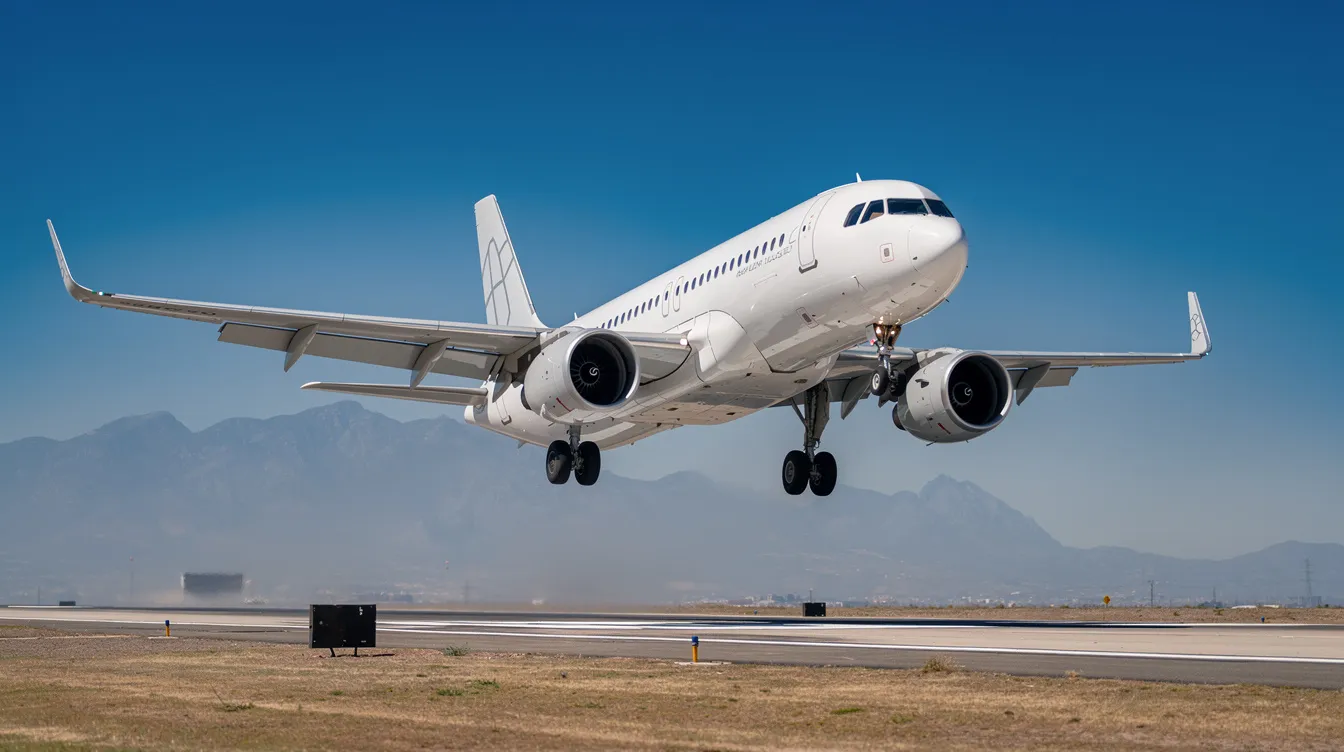
This FAQ addresses practical, traveler-focused questions about Boeing 737 models that go beyond what the main article covers.
The 737 Next Generation (especially the 737-700 and 737-800) and 737 MAX (particularly the MAX 8) are the most frequently seen models in current airline fleets. Southwest Airlines operates the largest all-737 fleet in the world, while Ryanair relies on 737-800 and MAX 8-200 aircraft for its European network. American Airlines, Alaska Airlines, United Airlines, and Delta Air Lines all operate significant numbers of NG and MAX variants on domestic and short-haul international routes.
Passenger comfort on a 737 depends heavily on the airline's cabin layout and seat pitch. Low-cost carriers may offer 28 to 30 inches of pitch, while full-service airlines provide 31 to 34 inches in economy and significantly more in premium cabins. Private jets generally offer more personal space, quieter cabins, and tailored service regardless of the operator, often enhanced by dedicated in-flight catering for private jets. BBJ versions of the 737 deliver a VIP experience with bedrooms and lounges, but these are typically chartered for large groups or heads of state rather than everyday travelers.
The 737's design supports operation from many medium-sized airports with moderately short runways, and the 737-200 was even capable of operating from unpaved strips. However, a 737 still requires more runway length, ramp space, and ground infrastructure than light or midsize business jets. Private jets can access a much larger network of smaller airfields—one key reason travelers turn to platforms like Jettly for remote or regional destinations that 737 service does not reach, especially on international private jet flights.
Ranges vary significantly by generation. Early Originals offered roughly 1,500 to 2,000 nautical miles. Classics and NG models reach approximately 2,900 to 3,600 nautical miles depending on variant. The 737 MAX offers a range of 3,215 to 3,825 nautical miles, enabling transcontinental routes and select transatlantic services but not true long-haul operations. BBJ and BBJ MAX versions can add auxiliary fuel tanks for intercontinental missions exceeding 6,000 nautical miles.
Private jets make the most sense for multi-city business trips in a single day, flights to airports without scheduled 737 service, or travel with urgent timing or privacy requirements. They also excel for groups traveling together who value avoiding commercial terminals and connections. Jettly's platform lets users compare private charter options and pricing instantly when airline schedules on 737s or other commercial aircraft do not fit their plans, including options to buy a single seat on a private jet instead of chartering the whole aircraft. Visit https://www.jettly.com to explore options.
The Boeing 737 family remains a cornerstone of commercial aviation, demonstrating remarkable longevity and adaptability across four generations. From the original 737-100 designed for short-haul routes to the latest 737 MAX models with advanced fuel-efficient engines and aerodynamic improvements, the 737 has continually evolved to meet changing market demands. Its widespread use by major airlines globally underscores its reliability, efficiency, and versatility.
For modern travelers, understanding the differences among Boeing 737 models helps inform choices between scheduled airline service and private jet charters, depending on factors like route, group size, and travel flexibility. Platforms like Jettly provide seamless access to private jet options, complementing the extensive commercial network served by 737 aircraft.
Looking ahead, the Boeing 737 is expected to remain in active service and production for decades, supported by ongoing upgrades, freighter conversions, and special-mission variants. Its role in reducing emissions through newer engine technology and sustainable aviation fuels aligns with industry goals for greener air travel.
Ready to experience private travel on your terms? Explore flight options or request a quote at https://www.jettly.com.
Share this post:
Jay Franco Serevilla
Oct 17, 2026
|
5
min read
Discover tips and trends in the industry.

5
min read
Contact Jet: How to Reach JetBlue Airways Customer Service Fast (and When to Consider Private Charter Instead)
This guide provides essential information on how to quickly contact JetBlue Airways customer service, including phone numbers and digital channels. It also explores the benefits of choosing private jet charter through Jettly for urgent travel needs, offering a faster alternative to waiting on hold.
Read More
5
min read
Private Plane Maintenance: A Practical Guide for Owners and Charter Flyers
Private plane maintenance is essential for ensuring safety, reliability, and the long-term value of aircraft. Owners and charter clients must understand maintenance costs and processes to make informed decisions. Platforms like Jettly provide access to well-maintained jets without the burdens of ownership.
Read MoreStay updated with our latest insights and tips to elevate your journey with us.
MEMBERSHIPS AND ASSOCIATIONS



Disclaimer: Jettly operates as a charter broker, offering access to a global digital jet charter marketplace. Jettly is not a direct air carrier and does not own or operate aircraft. All advertised flights are conducted by third-party air carriers that are fully licensed and hold the appropriate Part 135 or Part 121 certifications issued by the Federal Aviation Administration (FAA) or equivalent regulatory authorities under U.S. or foreign law. Jettly complies fully with the U.S. Department of Transportation's Part 295 and Part 298 Charter Broker regulations. Jettly does not carry additional liability insurance. Passengers are covered by aircraft operator insurance. TICO: 50023770


