


Login
Get Instant Pricing On 23,000+ Aircraft

>
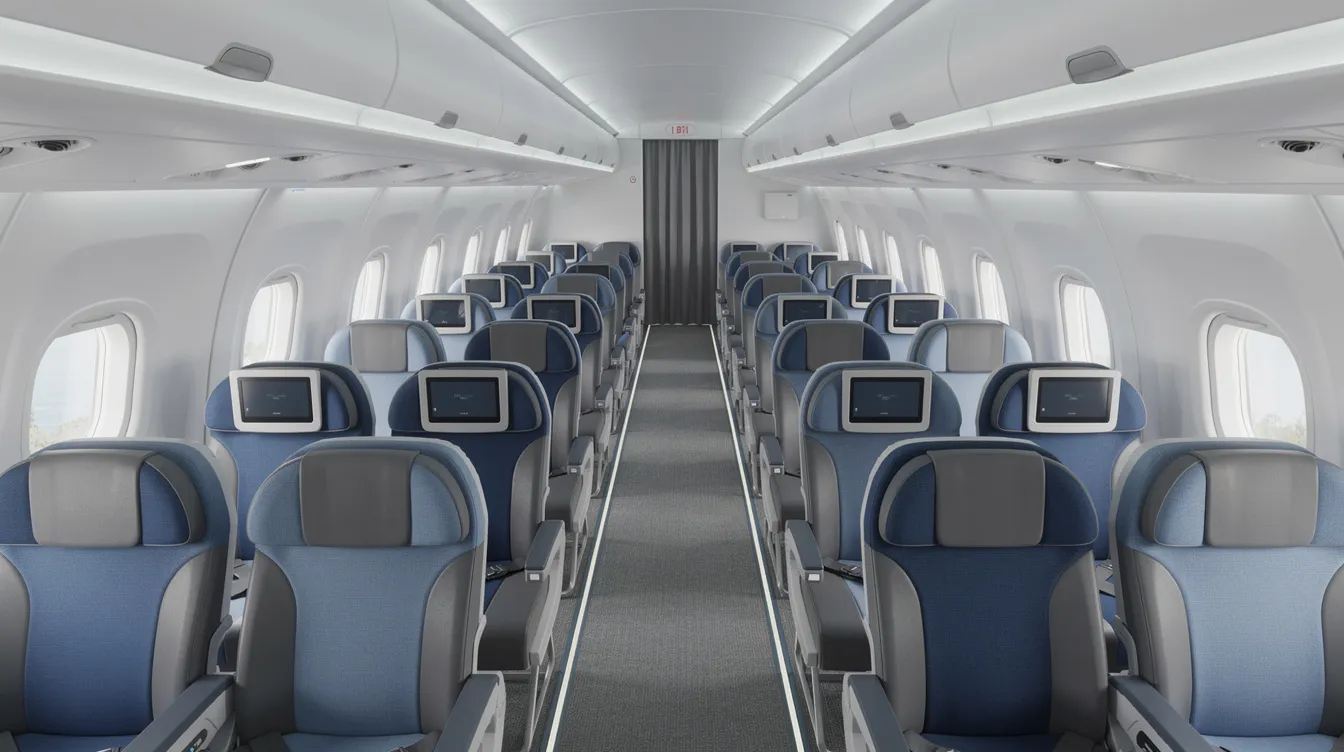
The Boeing 767 is a wide-body aircraft known for its 2-3-2 economy layout (meaning two seats by the window, three in the center, and two on the other side of the aisle) and twin-aisle passenger cabin. First introduced in the early 1980s as the first twinjet wide-body to earn approval for extended overwater operations, the 767 has served airlines on intercontinental routes, domestic routes, and everything in between. Understanding Boeing 767 seating capacity matters whether you're booking a transatlantic flight or planning group travel and weighing commercial options against private charter.
This guide is for travelers, aviation enthusiasts, and anyone comparing commercial airline seating to private jet options.
The 767 family includes several passenger variants - the 767-200, 767-300, Boeing 767 300er, and 767-400ER - each with different fuselage lengths and seat counts. This article focuses primarily on the popular 767 300ER and its seating layouts, while also covering the broader family. Capacity depends on airline requirements, cabin classes, and mission profile - whether a carrier is optimizing for high-density leisure traffic or premium long-haul routes.
While Jettly works mainly with private charter aircraft, understanding how a commercial 767 is configured helps travelers compare the fixed-capacity widebody experience to the flexible, on-demand nature of private aviation.
Boeing 767 seating capacity generally ranges from 181 to 375 passengers, depending on the variant and airline configuration, though most carriers fly layouts seating between 200 and 270.
The Boeing 767-300ER is the most common passenger variant, with a typical seating capacity of 226 passengers in two- or three-class configurations.
United Airlines operates one of the lowest-capacity widebody layouts on the 767-300ER - just 167 seats - thanks to a heavily premium-focused cabin design.
Seat maps, cabin classes, and features like movable armrests, flat beds, and in-flight entertainment vary widely by carrier and configuration.
For travelers who want maximum flexibility and personal space, Jettly offers private jet charter as an alternative to fixed-capacity commercial Boeing 767 service.
For quick reference, here are the typical seating capacity ranges for each major Boeing 767 variant:
|
Variant |
Typical Seating Capacity |
Notes |
|---|---|---|
|
Boeing 767-200/200ER |
181 to 224 passengers |
Original model: 200ER extends range without length change |
|
Boeing 767-300/300ER |
200 to 270 passengers |
Stretched fuselage; 300ER most widely used |
|
Boeing 767-400ER |
245 to 300 passengers |
Longest variant; max certified exit limit 375 |
|
Overall 767 Family |
181 to 375 passengers |
Maximum certified exit limit |
|
Actual Operating Capacity |
167 to 270 passengers |
Depends on the airline configuration |
Each Boeing 767 variant has a different overall length and a corresponding range of typical seat counts. Capacity limits are customizable based on the operational needs of airlines, so two carriers flying the same aircraft type may offer very different passenger experiences.
Here's how the variants break down:
767-200 and 767-200ER: The original model typically seats 181 to 216 passengers in two- or three-class layouts. The 767-200ER extends the range without changing the fuselage length, so its typical layout holds 181 to 224 passengers. Boeing produced the 767-200 until 1987, then switched production to the 767-200ER.
767-300: Approximately 21 feet longer than the 767-200, the 767-300 typically seats 218 to 269 passengers depending on density. This stretched fuselage opened up space for more rows and larger galleys.
767-300ER: The most widely used passenger model, with a typical layout of 200 to 270 passengers. It is the subject of most of this article.
767-400ER: The longest variant. The 767-400ER typically seats 245 passengers in a standard layout, with configurations ranging from 245 to 300 or more. The maximum certified exit limit for the 767-400ER is 375 passengers, though no airline flies a layout that dense.
It's worth noting that many 767s have been converted to cargo freighters - the 767-300F entered service with UPS Airlines on October 16, 1995, and remains a workhorse for freight carriers today. Boeing delivered the 1,000th 767 on February 2, 2011, a milestone reflecting the aircraft's enduring market appeal, including with airlines in the UK market after meeting local regulatory requirements. This article, however, focuses on passenger configurations and seat maps.
The 767-300ER is the most successful 767 version and is deployed by airlines worldwide for transatlantic, transpacific, and other long-haul routes. The Boeing 767-300ER typically seats 226 passengers in a standard three-class configuration, though the actual operating capacity ranges from 167 to 270 passengers depending on the carrier's priorities. At the extreme end, the 767-300ER can be configured with up to 351 seats under certain exit configurations - but that kind of density is essentially never seen in practice.
The aircraft features a length of 180.25 ft (54.9 m), a wingspan of 156.1 ft (47.6 m), and a maximum takeoff weight of 412,000 lb. These specifications make it capable of operating flights up to 5,990 nautical miles, putting major cities across the Atlantic and Pacific well within range.
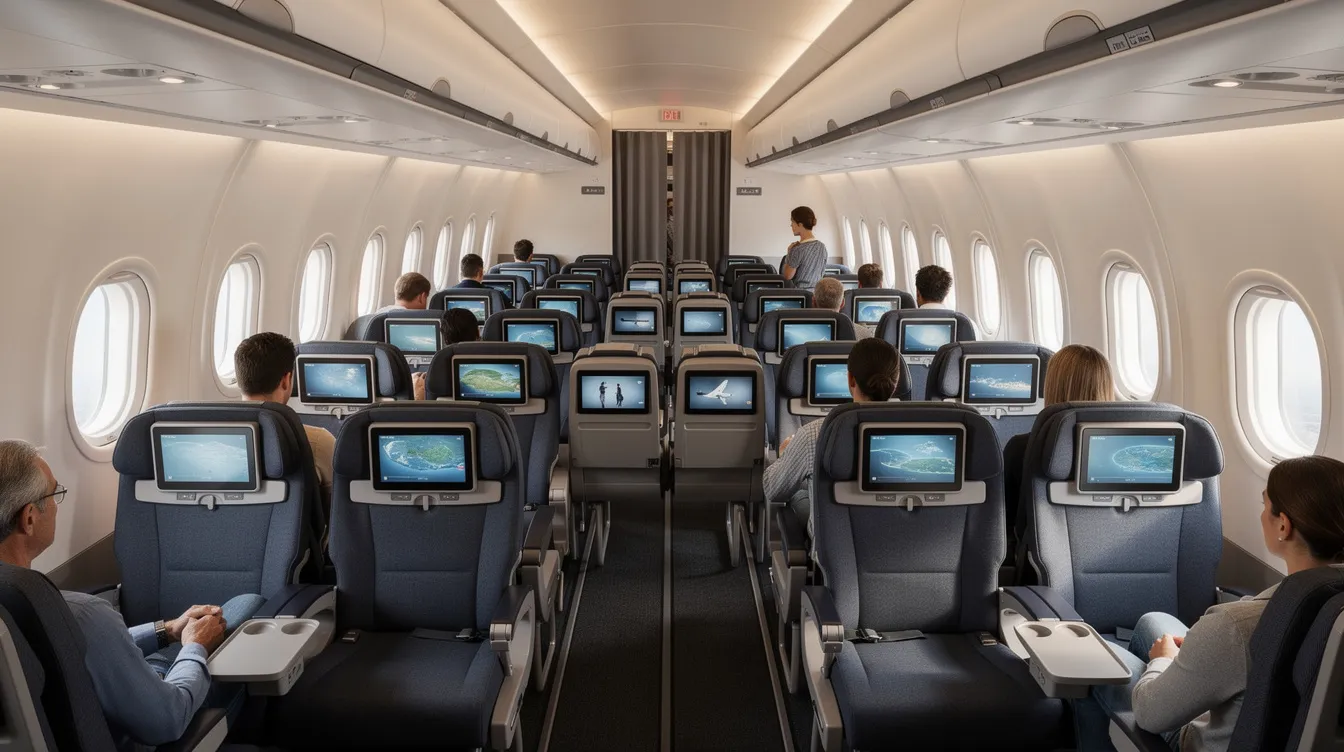
In economy class, the Boeing 767-300ER features a 2-3-2 seating layout (meaning two seats by the window, three in the center, and two on the other side of the aisle) - seven seats across with only one middle seat per row in the center section. Many travelers find this arrangement more attractive than the 3-3-3 or 3-4-3 configurations found on larger Airbus widebodies.
Three-class (business, premium economy, economy class): Typically 200–240 seats. Airlines deploy this on high-yield intercontinental routes.
Two-class (business and economy): Often 240–260 seats. Common for mid-distance international service.
High-density leisure: Mostly economy class, pushing seat counts toward 260–270+. Carriers use this for seasonal or vacation routes.
Seat pitch in economy generally runs about 31–32 inches, with seat width close to 18 inches.
Premium economy sections offer 35–38 inches of pitch.
Lie-flat business cabins on long-haul 767-300ERs provide significantly more space.
Features like movable armrests, in-seat power, and in-flight entertainment vary by airline even on the same airframe.
The 767-300ER entered service with American Airlines on March 3, 1988, and has been the backbone of transatlantic flying for decades, alongside narrowbody workhorses like the Boeing 737-800 on shorter routes.
United Airlines is one of the largest operators of the 767-300ER, flying 37 of the type in its fleet. What makes United Airlines particularly interesting is its split approach: some 767-300ERs are configured in a standard layout with roughly 214 seats, while others feature a premium-heavy "High-J" configuration with just 167 seats.
The 167-seat layout breaks down as follows:
46 Polaris business class seats - lie-flat suites in a staggered 1-1-1 arrangement with approximately 77 inches of pitch and about 20.6 inches of seat width. United's Polaris business class provides enhanced comfort and amenities, including direct aisle access from every seat.
22 Premium Plus seats - premium economy in a 2-2-2 layout (two seats by each window and two in the center) with around 38 inches of pitch, 13.3-inch entertainment screens, footrests, and headrests. United Premium Plus offers additional comfort for 18 passengers per row section, with no middle seats in the cabin.
43 Economy Plus seats - extra-legroom economy in the familiar 2-3-2 configuration (meaning two seats by the window, three in the center, and two on the other side of the aisle), with about 34–35 inches of pitch. United Economy Plus provides extra legroom compared to standard economy.
56 standard economy seats - again 2-3-2, with approximately 31–32 inches of pitch.
This 167-seat configuration is considered very low capacity for a widebody plane. United made this choice to prioritize premium cabins on key transatlantic routes like Newark–London and Chicago–Zurich, where demand for business and premium economy service is strongest.
United also operates higher-capacity 767-300ER configurations - around 214 seats - with approximately 30 Polaris seats and a heavier emphasis on economy. These versions serve markets where volume matters more than premium yield.
Travelers should always confirm the specific version operating their route by checking the seat map on United's website, as the cabin mix and total seat count can differ significantly between aircraft.
A Boeing 767 seat map is a diagram showing exits, galleys, lavatories, and every row for each cabin class. It's one of the most practical tools a passenger can use before boarding.
Typical cabin classes found on 767-300ER aircraft include:
Business class - often featuring flat beds on long-haul flights, with direct aisle access in staggered or herringbone layouts (such as a 1-2-1 layout: one seat by each window and two in the center, giving every passenger direct aisle access)
Premium economy - wider seats and more legroom than standard economy, usually without a diaper changing table nearby but with enhanced meal service (often arranged in a 2-2-2 layout: two seats by each window and two in the center)
Standard economy class - the largest section, with the familiar 2-3-2 cross-section (meaning two seats by the window, three in the center, and two on the other side of the aisle)
Seat maps help passengers pick between window, aisle, bulkhead, and exit-row seats. They also reveal details like restricted-recline rows near lavatories and galley-adjacent positions that may be noisier. Some airlines highlight features like movable armrests, bassinets, or wi fi availability directly on their digital seat map tools. Checking a seat map with prior notice before your flight date helps avoid unpleasant surprises on board.
On platforms like Jettly, travelers booking private aircraft can review interior layouts and seating for specific jets, but with far fewer seats and dramatically more personal space per passenger.
The standard Boeing 767 economy class experience centers on the 2-3-2 layout (meaning two seats by the window, three in the center, and two on the other side of the aisle). This arrangement means fewer middle seats than on wider aircraft - only one per row in the center section - which makes the 767 a surprisingly comfortable economy choice for long-distance flights.
Seat pitch: Generally around 31–32 inches on most carriers. Delta's economy class features 165 seats with 31–32 inches of pitch on the 767-300ER.
Seat width: Often close to 17.5–18.1 inches, depending on armrest design and airline specifications.
Recline: About 3–5 inches, which can vary by airline and row position.
Movable armrests on aisle or window seats
Personal seatback screens versus overhead monitors
USB or AC power on upgraded interiors
Note: Older 767 interiors sometimes lack individual entertainment screens and power outlets entirely
High-density configurations can increase total Boeing 767 seating capacity but reduce personal space per passenger. Airlines often deploy these optimized layouts on leisure-heavy or domestic routes where passengers spend less time on board.
For groups that want to avoid the 200+ seat economy cabin experience entirely, Jettly offers the option to charter a mid-size or super-midsize jet seating 8–14 passengers or explore a wider range of private charter aircraft. That's a fundamentally different way to travel - check out light jets and midsize jet options for a closer look.
Many 767-300ERs are equipped for transatlantic and other long-haul routes, so airlines invest in upgraded cabins to attract business travelers willing to pay for comfort.
Business class is commonly found in a 1-2-1 layout (one seat by each window and two in the center, giving every passenger direct aisle access) on the 767-300ER, giving every passenger direct aisle access. Key details:
Fully flat or nearly flat seats with a pitch ranging from 70 to 80 inches
Seat width of roughly 20–21 inches
Delta's business class has 26 seats with 77 inches of pitch on its 767-300ER fleet
Amenities typically include noise-canceling headphones, premium bedding, and large in-flight entertainment screens, with some private operators adding bespoke in-flight catering for private jets
The cabin width of the 767 does impose some constraints - business seats can be slightly narrower than those found on newer Airbus A350 or Boeing 787 widebodies. But the trade-off of a lie-flat bed with direct aisle access remains attractive for overnight flights.
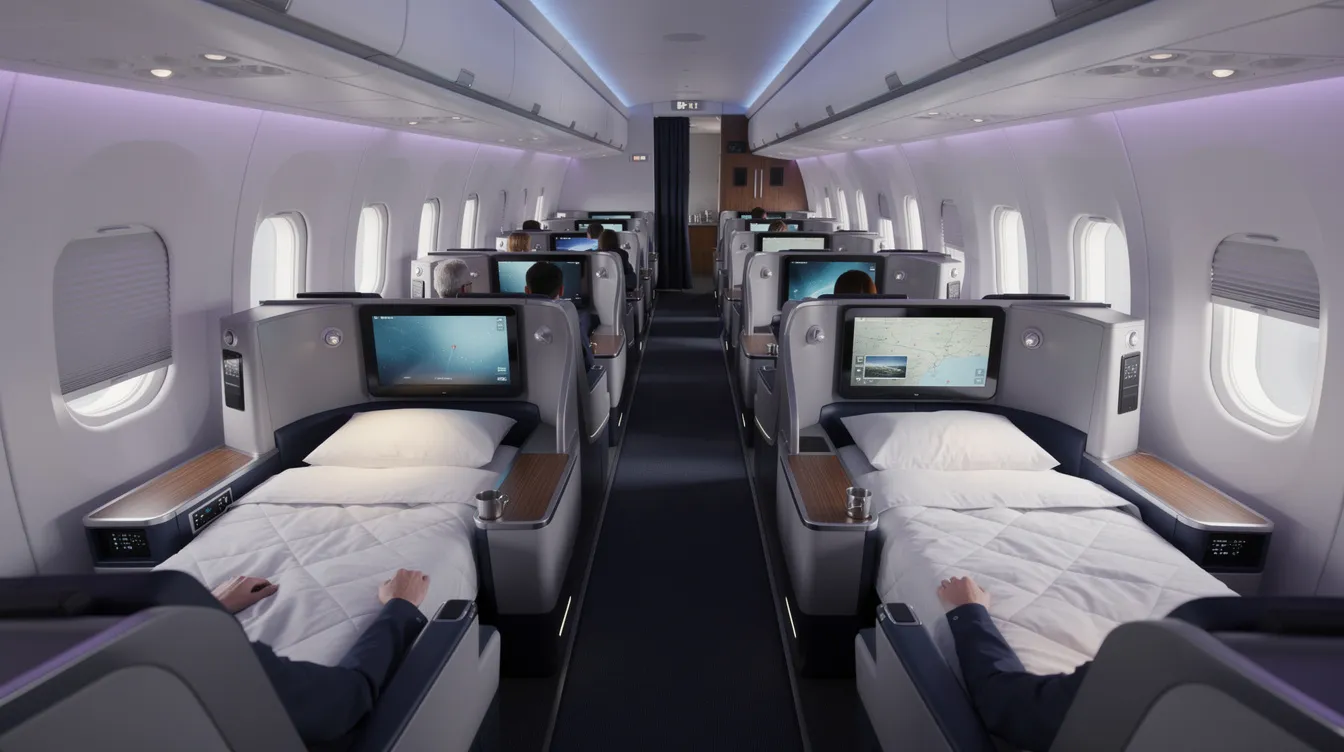
Premium economy is often arranged in a 2-2-2 or 2-3-2 layout (two seats by each window and two in the center, or two by the window, three in the center, and two on the other side of the aisle), eliminating or reducing middle seats. On the 767-300ER:
Seat pitch runs approximately 35–38 inches
Greater recline than standard economy, often with a leg rest or footrest
Enhanced dining, amenity kits, and larger entertainment screens compared to the main cabin
Delta's premium economy offers 35 seats with 35 inches of pitch
Adding or expanding premium cabins reduces overall Boeing 767 seating capacity but increases average revenue per seat on high-yield routes. It's a deliberate trade-off that airlines like Delta and United make on their most profitable flights.
For travelers who want every seat to feel premium without the constraints of fixed cabin classes, private jet charter through Jettly allows full cabin flexibility - configure the space for work, rest, or family seating as needed.
The Boeing 767 has a typical cruising speed of around Mach 0.80–0.82, which translates to approximately 530–540 mph (850–870 km/h). The 767-300ER's range of up to 5,990 nautical miles makes it capable of connecting major cities across the Atlantic and reaching many transpacific destinations with the right routing.
Airlines operating long-haul routes at these speeds often prioritize comfort over maximum capacity. The logic is straightforward: passengers spending 7–10 hours on board are more likely to pay for a lie-flat business seat or premium economy, so carriers allocate more cabin space to those products. This directly reduces total seating but increases per-seat revenue.
On shorter regional or domestic routes, the same aircraft may carry a higher-density configuration. Passengers on a 3-hour flight are generally more tolerant of a tighter pitch, so airlines can justify fitting more rows into the same fuselage. During the same period that United was rolling out its 167-seat premium-heavy layout for transatlantic service, other carriers were running denser 767 configurations on high-demand domestic segments.
Route planning drives layout decisions. A 767-300ER deployed between New York and London will look very different from one flying seasonal leisure routes to vacation destinations - even though the engine, thrust, wingspan, and performance specifications are identical.
With Jettly, flight time at similar speeds can sometimes be reduced further by using smaller private jets that access closer airports and bypass hub congestion. The onboard seating may be far fewer than a commercial 767, but the time savings can be significant, especially for members using Jettly's private jet memberships.
Many travelers who research Boeing 767 seating capacity are also weighing alternatives for business trips, family travel, or multi-city itineraries and may compare offerings from top private jet charter companies. Here's how the two experiences compare.
The typical Boeing 767 experience:
Fixed schedule and fixed seat maps - you choose from what's available
180–300+ passengers in multiple cabin classes
Limited ability to customize the onboard experience beyond seat selection and meal pre-orders
Standard crew ratios and service timelines
Private jet charter through Jettly:
Aircraft ranging from light jets (4–8 seats) to heavy jets and VIP airliners, all of which can be accessed through structured jet card membership programs
On-demand departure times and flexible airport choices
The entire cabin is yours - no economy, business, or premium divisions
Costs scale differently; use Jettly's charter cost estimator for transparent pricing
A Boeing 767's seating capacity is designed around airline economics - maximizing passengers per flight while balancing cabin class revenue. Jettly focuses on time savings, privacy, and tailored service for small groups. For a deeper comparison, check out the benefits of private jet travel.
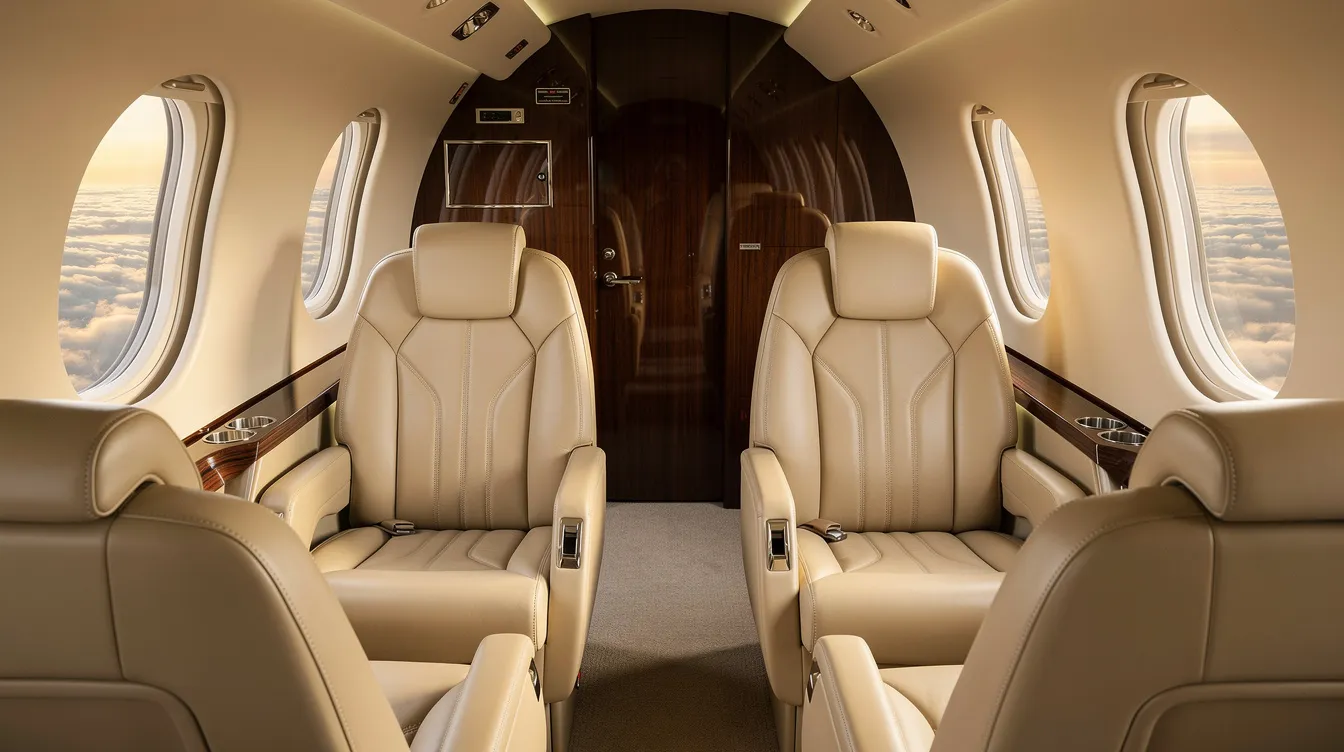
The development of private aviation platforms has made charter more accessible than ever. Options like crowdsourcing private jet flights and sharing empty seats, along with risk-sharing agreements and transparent pricing, mean that chartering doesn't require ownership or long-term commitment - just a plan and a destination.
Learn more about Jettly's charter options at https://www.jettly.com or explore the wider world of charter airlines and private flight options.
Most commercial 767-300ER aircraft seat roughly 218 to 269 passengers, with 226 being a common three-class figure. However, premium-heavy layouts like United Airlines' 167-seat 767-300ER significantly reduce capacity in favor of more business and premium economy seats. The 767 has an actual operating capacity ranging from 167 to 270 passengers in typical configurations, depending on how the airline balances premium and economy sections. The first Boeing 767 prototype rolled out on August 4, 1981, and the aircraft has been flown by carriers worldwide since its maiden flight shortly after.
The most common economy class layout on a Boeing 767-300ER is 2-3-2 across (meaning two seats by the window, three in the center, and two on the other side of the aisle), giving only one middle seat per row. Seat pitch is usually about 31–32 inches, and width is close to 18 inches. This layout is one of the 767's most appreciated features and the point many frequent flyers make when comparing it to denser configurations on other widebodies. Always check the specific airline's seat map for exact figures, as details vary by carrier and whether the aircraft has been recently refurbished.
Movable armrests are common on aisles and some window seats, but the specifics vary by airline and cabin retrofit program. Power outlets and USB ports are increasingly available, especially in business and premium economy cabins equipped with newer components. Older 767 interiors - particularly those that haven't been through a recent cabin refresh - may lack them entirely in standard economy class. If power access matters for your flight, confirm the details with the airline before you board.
Review the specific airline's Boeing 767 seat map for your flight, looking for extra-legroom seats, exit rows, bulkheads, and seats with limited recline. Pay attention to seats near galleys or lavatories if noise is a concern. Some seat map tools also note window misalignments - for instance, on certain United 767-300ER layouts, specific window-labeled seats actually have no view due to fuselage ducts. Checking recent traveler reviews and seat map annotations can save you from an unpleasant surprise on a long-haul flight.
Private charter through a platform like Jettly is often preferred for tight schedules, multi-city trips, high-value business meetings, or family groups wanting privacy and direct routing. It's also a strong option when commercial schedules don't align with your plan - say you need to connect two mid-size cities without a convenient hub. The large, fixed-capacity Boeing 767 serves the airline market well, but smaller, flexible private jets let travelers depart on their own timetable and bypass crowded terminals entirely with the support of vetted Part 135 charter companies. For a detailed comparison of costs, see Jettly's private jet charter costs page.
Boeing 767 seating capacity varies widely by variant and airline, but the 767-300ER - the most popular passenger version - typically carries around 226 passengers in a standard configuration. Layouts range from dense all-economy setups pushing past 260 seats to United Airlines' 167-seat premium-heavy design built for high-yield transatlantic markets. The distance between those numbers illustrates just how much airline strategy shapes the experience inside the same fuselage.
Understanding seat maps, cabin classes, and features like movable armrests, flat beds, and in-flight entertainment helps travelers choose the right experience for long-haul flights. Whether you're comparing a window seat in row 30 or weighing the entire commercial experience against something more flexible, the details matter.
Experience private travel tailored to your needs. Discover available flights or get a personalized quote at https://www.jettly.com.
Share this post:
Jay Franco Serevilla
Jun 24, 2026
|
5
min read
Discover tips and trends in the industry.
5
min read
Budget Airlines: How Low Cost Flights Really Work (and When Private Charter Makes More Sense)
Budget airlines have transformed air travel by offering low base fares, but hidden fees can quickly inflate the final cost. This guide explores how these airlines operate, the best options for travelers, and when private charters may provide better value. Understanding the true costs associated with budget airlines is crucial for making informed travel decisions.
Read More
5
min read
FedEx Cessna Caravan: How the Cessna 208B Powers Express Cargo and Charter Logistics
The FedEx Cessna Caravan, particularly the Cessna 208B, is essential for regional logistics, enabling efficient delivery to smaller communities. Its reliability and short runway capabilities make it ideal for both cargo and passenger charters, connecting underserved markets with major hubs. Platforms like Jettly facilitate access to similar aircraft for time-sensitive missions.
Read MoreStay updated with our latest insights and tips to elevate your journey with us.
MEMBERSHIPS AND ASSOCIATIONS



Disclaimer: Jettly operates as a charter broker, offering access to a global digital jet charter marketplace. Jettly is not a direct air carrier and does not own or operate aircraft. All advertised flights are conducted by third-party air carriers that are fully licensed and hold the appropriate Part 135 or Part 121 certifications issued by the Federal Aviation Administration (FAA) or equivalent regulatory authorities under U.S. or foreign law. Jettly complies fully with the U.S. Department of Transportation's Part 295 and Part 298 Charter Broker regulations. Jettly does not carry additional liability insurance. Passengers are covered by aircraft operator insurance. TICO: 50023770


