



Login
Get Instant Pricing On 23,000+ Aircraft

>
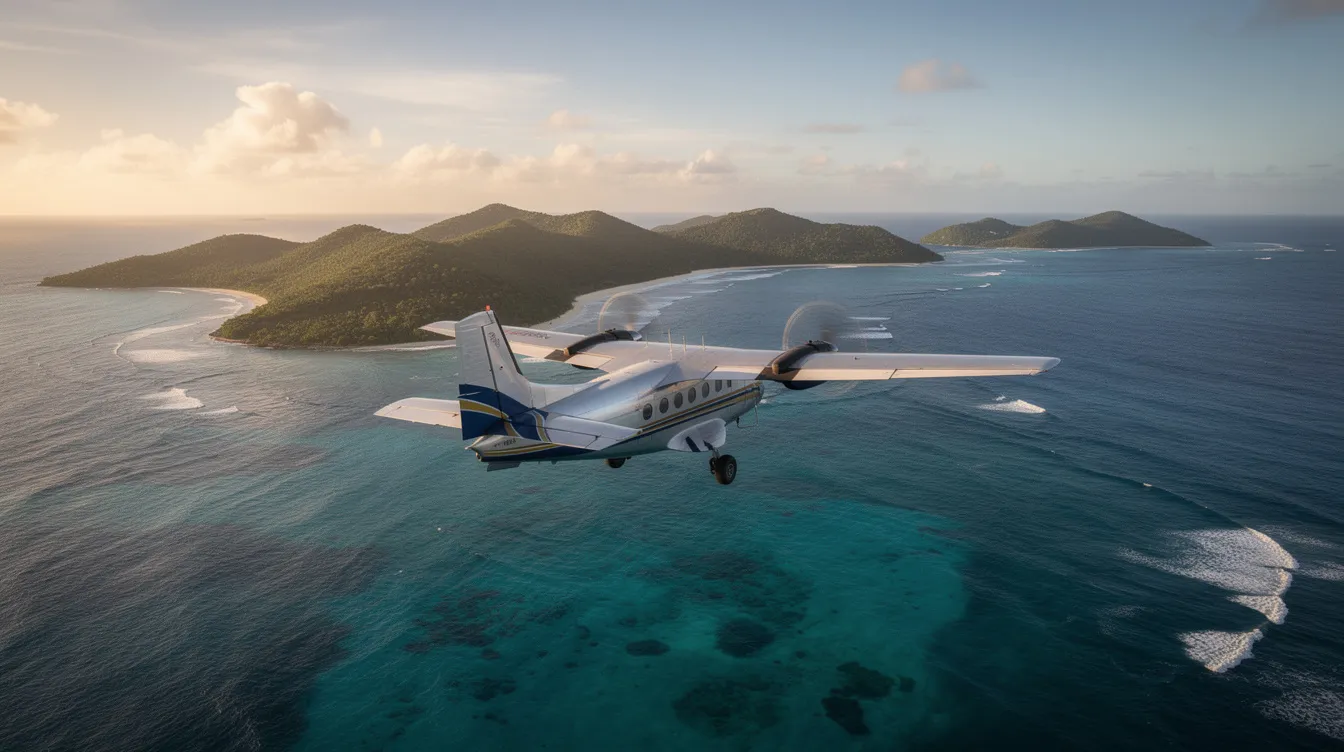
The British Islander - formerly the Britten-Norman Islander - is one of the most successful aircraft ever built for short-haul regional flying. Note: In this guide, "British Islander" refers to the Britten-Norman Islander aircraft, a British-designed utility airplane, not to a resident of the British Isles. Designated the Britten-Norman BN-2, this Islander aircraft has been connecting remote communities, island chains, and coastal settlements since the late 1960s. It remains in production today, a rare achievement in British aviation history. For charter travelers looking to reach places that larger aircraft simply cannot, the Islander offers a reliable and effective solution worth understanding. This guide is intended for charter travelers, aviation enthusiasts, and anyone interested in understanding the unique capabilities and advantages of the Britten-Norman Islander for regional and remote air travel.
The Islander is a British-designed, twin-engine light utility aircraft originally developed in the 1960s by Britten-Norman, the manufacturer, and still produced in the UK. It seats up to nine passengers in a standard commuter configuration, features a high-wing design for visibility, and can operate from short and unprepared airstrips - grass, gravel, or wet tarmac.
Its popularity in remote and coastal regions comes down to three things: short field performance that lets it land where most aircraft cannot, a rugged airframe built for many years of hard use, and simple systems that keep maintenance straightforward for operators far from major service centres.
The British Isles consist of two large islands and thousands of smaller islands - many of which depend on aircraft exactly like the Islander for essential transport links. Jettly includes the Islander among thousands of private charter aircraft options on its platform, making it a practical choice for cost-conscious, short-haul charter customers who need to fly into places off the beaten path.
The company behind the Islander was founded in 1954 by John Britten and Desmond Norman on the Isle of Wight in the UK. Their early work focused on agricultural aviation and experimental aircraft before they turned their attention to utility transport in the 1960s.
The design goals were deliberately modest: build a simple, rugged, high-wing aircraft that could operate from grass and gravel strips in places like the Scottish islands and the Channel Islands. Speed and range were secondary to payload, reliability, and the ability to land on short runways.
Key milestones in the Islander's development:
The BN-2 prototype made its first flight on 13 June 1965 at Bembridge on the Isle of Wight, appearing at the Paris Air Show just four days later.
The first production Islander flew in April 1967, with UK certification following in August and FAA certification in December of that year.
The BN-2A variant arrived around 1969 with aerodynamic refinements, improved engine cowlings, and enlarged baggage areas.
The BN-2B Islander II was introduced in 1978 with a redesigned cockpit, quieter cabin, and refined interior.
The BN-2T Turbine Islander followed in the 1980s, replacing piston Lycoming engines with Rolls-Royce/Allison 250 turboprops for improved climb and hot and high performance.
Britten-Norman faced rising costs and financial difficulties in the late 1960s and early 1970s. The company was acquired by Fairey Aviation in 1972, and some manufacturing shifted to Romania and Belgium for decades. In September 2023, Britten-Norman announced that production of new aircraft had returned to the UK. Approximately 1,280 Islanders have been produced since manufacturing began, and over 750 in-service Islanders remain flying with operators worldwide.
The company also developed the three-engined Trislander - a stretched, three-engine derivative - though the standard twin-engine Islander remains the most successful aircraft in the Britten-Norman lineup by far.
The Islander's configuration is straightforward: high-wing monoplane, twin engines mounted further outboard on the wings than many comparable types, fixed landing gear, and a boxy rectangular fuselage designed to maximise payload rather than minimise drag.
It is capable of short takeoff and landing operations, with piston models achieving ground rolls of around 189–215 metres and clearing a 50-foot obstacle in approximately 355–371 metres. The turbine BN-2T requires slightly more - about 255 metres for ground roll.
Standard piston variants carry up to nine passengers with a range of roughly 500–650 nautical miles at cruise speeds around 130–143 knots. The BN-2T Turbine Islander pushes speed to about 170 knots and extends range to 590–728 nautical miles depending on load.
Operating environments include unpaved strips, short island runways, mountain valleys, and hot-and-high scenarios where many aircraft struggle. The Islander's fixed gear and simple systems mean less to go wrong in harsh conditions.
Comparing piston to turbine: the BN-2T offers better climb rate, improved power at altitude, and greater payload flexibility in warm climates, at the cost of higher fuel burn and maintenance complexity.
Safety features include twin-engine redundancy, good low-speed handling, and a design philosophy that minimises mechanical complexity. That said, safety always depends on operator standards, crew training, and regulatory compliance.
The airframe was designed with an emphasis on durability - identical wing ribs, constant chord wings, and light alloy monocoque construction that supports a long service life even in demanding environments.
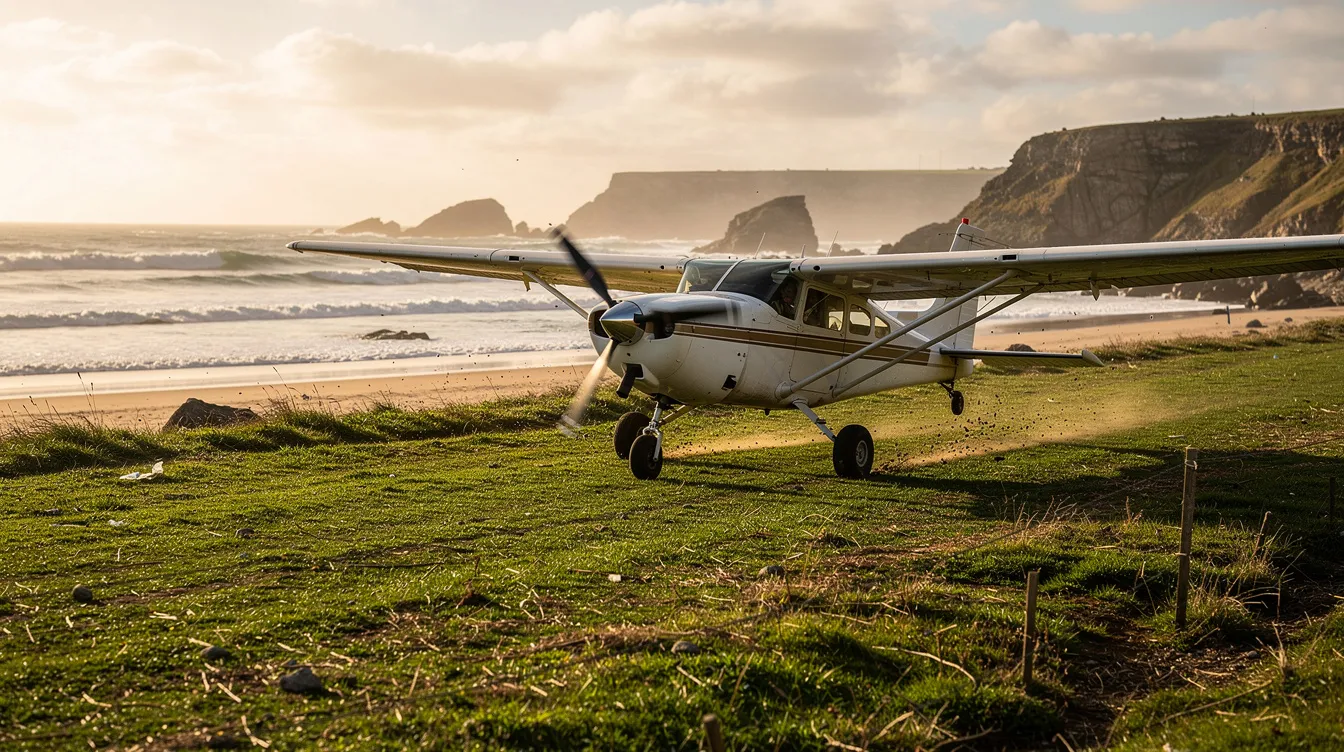
The Islander is primarily a utility and commuter transport aircraft. Its cabin is functional rather than luxurious - but for certain missions and destinations, that practicality is exactly the point.
The standard commuter configuration seats eight to nine passengers across single rows with a forward cockpit, central aisle, and rear baggage area. The cabin length is approximately 4.6 metres, width about 1.1 metres, and height around 1.3 metres.
Executive configurations are available through some operators, reducing seating to six in a club layout with leather upholstery, fold-out tables, and improved soundproofing. These are typically aftermarket retrofits.
The aircraft offers external access through wide side and rear doors with a low loading height, making boarding easy even at remote strips without ground equipment. Large windows provide excellent outside visibility.
Noise levels and vibration are higher than in pressurised turboprops or jets. This is a bush-plane experience - the Islander is about access and efficiency, not ultra-luxury. Travelers should expect a direct, functional flight rather than a quiet cabin with in-flight entertainment.
For passengers who value reaching their destination over cabin comfort, the Islander delivers. It can carry up to nine passengers into airstrips that would be impossible for most other charter aircraft.
The BN-2 Islander is a multi-role platform serving civil, government, and military markets across every continent.
Passenger transport and commuter roles: The Islander handles inter-island services in the Scottish Hebrides (where Scottish Gaelic remains an important language on some islands in the Outer Hebrides), the Channel Islands, Caribbean island chains, and Pacific archipelagos. These are communities where island life tends to follow natural rhythms rather than urban schedules, and where isolation fosters strong social bonds and community interdependence. Community hubs such as pubs and village halls serve vital social functions on islands, and small islands often host local events that bolster community ties and traditions. The Islander connects these places to the wider world.
Cargo and combi roles: Operators use the Islander to carry supplies, medical equipment, mail, and light freight into small airstrips where larger aircraft cannot operate. Island communities often adapt resourcefully to weather and supply chain challenges, and remote living on islands requires careful planning for shopping and medical appointments - making reliable air links essential.
Special missions: The aircraft is used for aerial surveillance and search-and-rescue operations. Islanders have been used for air ambulance services since 1976. The aircraft supports various missions including cargo hauling and law enforcement. The Defender military variant adds observation windows, underwing hardpoints, and sensor packages for surveillance work.
Island and cultural context: Each British island has unique characteristics influenced by its geography and history. Cultural identity on islands can vary greatly from that of mainland populations - Norse and Celtic cultural roots deeply influence the Northern Isles, while maritime heritage is a fundamental aspect of island identity across the region. Food culture on islands is typically based on locally caught and produced ingredients, with cuisine often featuring seafood and locally produced meats. Island cuisine may also include traditionally preserved foods due to historical isolation. Festivals in island communities often reflect local history and traditions. Tourism, renewable energy, and digital remote work increasingly shape island economies, and islander identities are often strongly tied to their specific island or archipelago. Islanders often exhibit a practical independence and support for one another - the aircraft that shares their name does much the same.
Crown Dependencies: The Isle of Man is a self-governing Crown Dependency with a distinct identity. Crown Dependencies like the Isle of Man have their own legal systems and parliaments, and the Islander has historically served these unique jurisdictions.
Real-world examples: Torres Strait island communities in Australia, the Falkland Islands, and Caribbean operators like Mustique Airways all rely on Islanders for lifeline and charter service.
Despite being over sixty years since the first aircraft of its type took flight, the Britten-Norman Islander remains in frontline service thanks to continuous upgrades and modernisation.
Operators have been retrofitting modern avionics, including Garmin glass cockpit displays, GPS navigation, and ADS-B systems,s to older airframes to meet current regulatory requirements in Europe and North America.
Engine and propeller upgrade paths include conversion to turbine power, noise reduction propellers, and fuel efficiency kits. The elongated nose of some refitted turbine variants reflects the different engine mounting requirements.
In September 2023, Britten-Norman returned manufacturing to the UK after decades of some production abroad, strengthening parts supply and shortening lead times for new aircraft and spares.
Fleet operators in regions like the Caribbean and Pacific have invested in multi-aircraft upgrade programs, re-engining and modernising cockpit systems to extend the useful life of their models well into the 2030s.
Regulatory compliance - meeting FAA Part 135 and EASA Air Operations requirements for modern avionics mandates, noise standards, and emissions - drives much of this upgrade activity. A single pilot can operate the Islander, which simplifies crew requirements for operators running frequent short sectors.
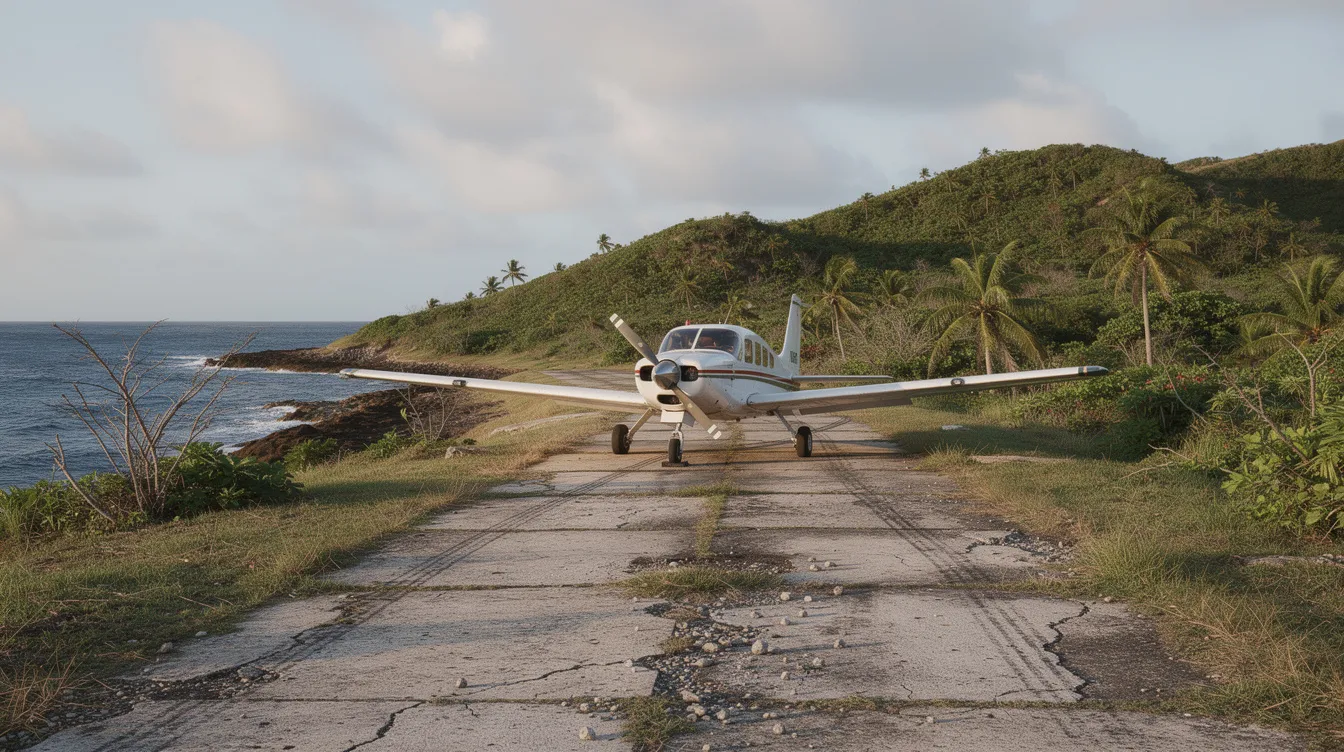
The Islander is attractive for charter because it is a cost-effective, versatile aircraft ideal for short regional trips and remote airfields. Private aviation offers greater flexibility and convenience than traditional travel options, and the Islander unlocks destinations that jets and larger turboprops cannot reach.
Typical charter missions include island-hopping vacations, quick point-to-point hops between small towns, and last-mile connections from major hubs to remote lodges or private islands, similar to the scenarios covered in Jettly’s essential guide to renting a plane.
Jettly's digital platform lets users search for Islander and similar aircraft, compare operators, use tools like an airport locator for private flights, and receive instant pricing estimates with a private jet charter cost estimator for selected routes. For a broader understanding of how chartering works, see the Aircraft Charter Guide.
Jettly operates as a charter marketplace and broker, connecting clients with regulated operators that fly aircraft like the Islander, including partners such as Dexter Air Taxi and Zenflight private jet operator. Jettly does not own or operate aircraft directly.
Operational advantages for charter clients include closer access to small airfields, flexible departure times, and the ability to tailor the cabin layout - passengers versus cargo - on some missions.
The Islander typically sits at the affordable end of the private charter spectrum, especially compared to light jets and larger turboprops.
Charter rates vary by journey length and airports. Industry data suggests Islander charter rates of approximately $2,900–$5,000 per flight hour, depending on route, demand, and lead time. For broader context on jet pricing, Jettly also details affordable private jet charter costs and savings strategies in addition to How Much Does Private Flight Cost.
The average price of a used BN-2 Islander is around $650,000. Wet lease rates depend on aircraft age and lease terms, making ownership a significant commitment compared to on-demand charter.
Jettly's transparent pricing model - no long-term jet card commitment, instant quotes - suits travelers who only occasionally need a short-haul utility aircraft, while its private jet membership plans and Jet Card program cater to customers who fly more frequently.
For those seeking lower-cost alternatives when an Islander is not available, empty leg flights on comparable turboprops or piston twins can reduce costs by 30–75%. Travelers focused on budget can also explore ways to get a seat on a private jet easily and guides to buying individual seats on private jets for maximum flexibility. Jettly also shares tips for booking the cheapest private jet flights to help travelers manage overall charter spend.
The Islander is one of several versatile aircraft options available through Jettly for short-haul and remote-field flying, fitting into the broader landscape of private charter airlines and services.
Compared to the Cessna Caravan, the Islander offers shorter takeoff distances and can handle rougher strips. The Caravan cruises faster (~180 knots) and carries more payload, but needs longer runways.
The Pilatus PC-12 offers a pressurised cabin, higher speed, and greater range - but at a significantly higher charter cost. It suits longer sectors and passengers who prioritise comfort.
Light jets offer faster cruise and pressurised cabins but generally require paved runways of 1,000 metres or more and carry higher operating budgets. For more on turboprop alternatives, Jettly covers the category in detail.
Choose an Islander when your runway is under 500 metres, your passenger count is nine or fewer, your sector distance is under 600 nautical miles, and access matters more than speed.
All Islander charter flights arranged through Jettly are operated by licensed air carriers subject to national and international aviation regulations, whether booked as traditional private charters or via crowdsourced flight and seat-sharing options.
In the US, charter operators fall under FAA Part 135. In Europe, EASA Air Operations regulations apply. These frameworks govern maintenance, pilot training, and operational standards for aircraft like the Islander.
For small utility aircraft, rigorous maintenance programs, pilot training for short-field and remote-area operations, and strict adherence to weight and balance limits are essential. Island communities often depend on mutual aid and trust due to small populations - and the same principle applies to the close working relationship between operators, maintenance teams, and regulators.
Environmental considerations: older piston Islanders burn more fuel per seat-mile than modern turboprops on longer sectors. However, on short hops with frequent descent and climb cycles, the simplicity and efficiency of the Islander can compare favourably to larger aircraft repositioning empty.
Some operators offer carbon offset programs or use sustainable aviation fuel when available. Jettly can help travelers explore lower-impact options across its fleet network and coordinate in-flight catering for private jets that aligns with specific dietary or sustainability preferences.
A: The Islander typically seats up to nine passengers in a standard commuter configuration.
A: Its short takeoff and landing capabilities, rugged airframe, and ability to operate from unprepared airstrips make it ideal for remote and island environments.
A: Yes, the Islander is available for charter through platforms like Jettly, offering flexibility and access to destinations with short or rough runways.
A: Charter rates vary by route and operator but generally range from $2,900 to $5,000 per flight hour. Ownership costs are higher, with used aircraft averaging around $650,000.
A: Yes, Britten-Norman resumed production in the UK in 2023, continuing to build new Islanders with modern upgrades.
A: The Islander is used for passenger transport, cargo, air ambulance, surveillance, search-and-rescue, and law enforcement.
A: The Islander offers shorter takeoff distances and better rough-strip performance, while the Caravan cruises faster and carries more payload but requires longer runways.
A: Yes, many operators retrofit older Islanders with Garmin glass cockpits, GPS navigation, and ADS-B to meet current regulations.
A: Older piston models burn more fuel per seat mile, but on short hops, their simplicity and efficiency can be favorable. Some operators also offer carbon offsetting and sustainable fuel options.
A: Booking is simple via Jettly’s online platform—create an account, enter your route and dates, select the Islander, review quotes, and confirm your booking online.
Booking an Islander via Jettly is handled entirely online or through a support team. Here is how the process works:
Create an account on the Jettly platform - it takes minutes.
Enter your route and dates - for example, London to the Isle of Wight, Glasgow to a Hebridean island, or a Caribbean inter-island hop from Barbados to Mustique.
Select your aircraft category, filtering for Islander or similar utility twins.
Review instant quotes, compare operators, and confirm your booking. For a detailed walkthrough, see How to Book a Private Jet.
Customise your trip: choose departure times, specify passenger count versus cargo split, and add ground transportation if needed.
Whether you need to reach a remote test site, connect with a community that depends on small aircraft for its lifeline service, or simply fly to an island where the runway is too short for anything else - the Islander is built for exactly that mission.
Ready to experience private travel on your terms? Whether you’re interested in regional routes like private jet charter in Kolkata, West Bengal, or private flights serving New Delhi, Jettly’s platform can help you find the right aircraft. Content creators and travel professionals can also benefit from Jettly’s high-ticket affiliate program, earning commissions by referring new charter clients. Explore flight options or request a quote at https://www.jettly.com.
Share this post:
Jeff Ryan Serevilla
Oct 22, 2026
|
5
min read
Discover tips and trends in the industry.

5
min read
How Many Planes Crashed This Year? (2026 Update)
In 2026, aviation safety continues to improve, with over 600 aviation accidents reported in the U.S. by September, primarily involving small general aviation aircraft. Fatal accidents remain rare in commercial aviation, with only a handful of incidents globally. Understanding the context of these numbers is crucial for travelers concerned about flying safety.
Read More
5
min read
Passenger Airline Crashes: History, Safety, and What Modern Travelers Should Know
Passenger airline crashes are rare, with commercial aviation being the safest mode of mass transportation today. In 2023, there were zero fatal accidents involving passenger jets, highlighting the effectiveness of safety regulations and advancements in technology. This article explores the history of airline crashes, safety measures, and what travelers should know about aviation safety.
Read MoreStay updated with our latest insights and tips to elevate your journey with us.
MEMBERSHIPS AND ASSOCIATIONS



Disclaimer: Jettly operates as a charter broker, offering access to a global digital jet charter marketplace. Jettly is not a direct air carrier and does not own or operate aircraft. All advertised flights are conducted by third-party air carriers that are fully licensed and hold the appropriate Part 135 or Part 121 certifications issued by the Federal Aviation Administration (FAA) or equivalent regulatory authorities under U.S. or foreign law. Jettly complies fully with the U.S. Department of Transportation's Part 295 and Part 298 Charter Broker regulations. Jettly does not carry additional liability insurance. Passengers are covered by aircraft operator insurance. TICO: 50023770


