


Login
Get Instant Pricing On 23,000+ Aircraft

>
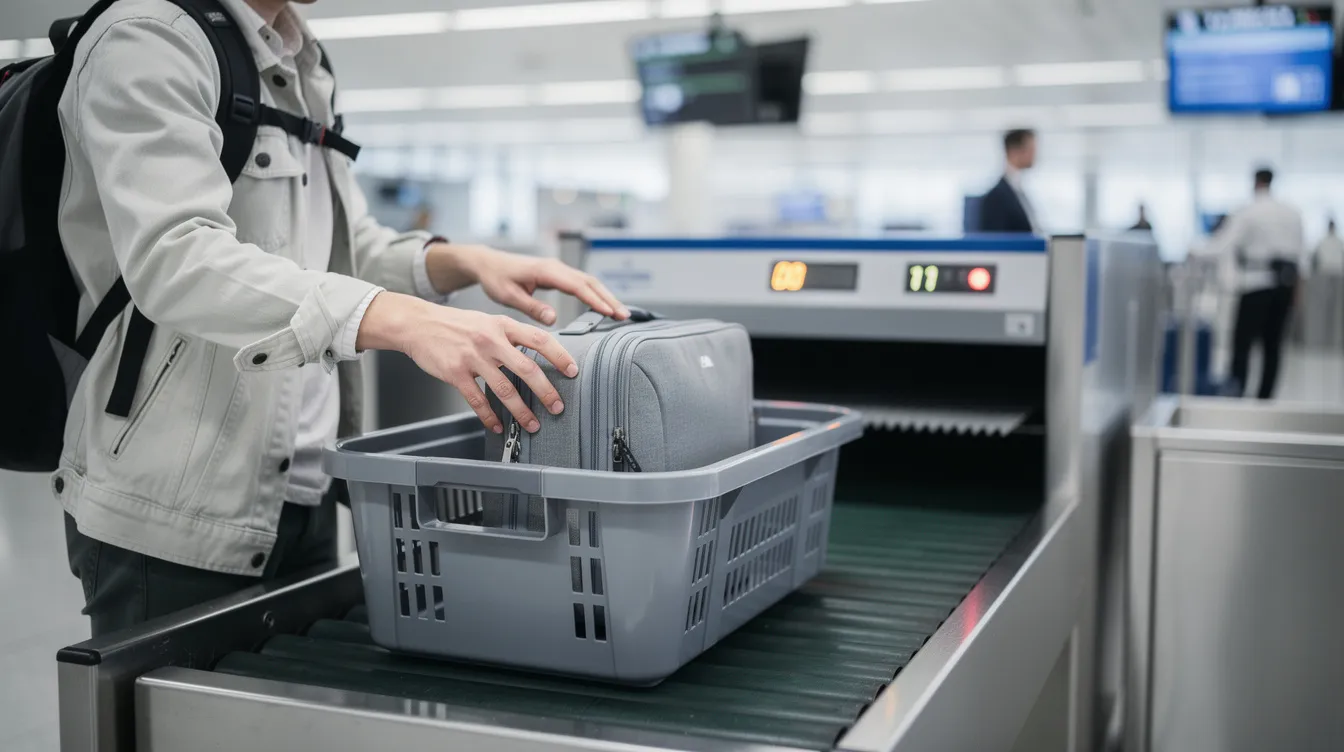
Taking cigarettes on a plane is one of those travel questions that seems simple but gets complicated fast - especially when international customs, vapes, and lighters enter the picture. This guide breaks down exactly what you need to know about carrying cigarettes on commercial flights and private jet charters, including the rules that trip most travelers up.
Cigarettes are allowed in both carry-on and checked luggage on most airlines, with cigarettes allowed subject to airline and security rules, but smoking on commercial flights is strictly prohibited and can result in fines up to $4,000.
On domestic flights, there is no limit on the number of cigarettes you can travel with. International trips are controlled by each destination country's customs regulations and duty-free limits, and rules can differ in other countries.
Lighters, safety matches, vapes, and loose tobacco face stricter safety rules - especially regarding checked baggage and lithium batteries.
Private jets, including charters booked through Jettly, may permit smoking if the aircraft owner and operator approve and fire safety standards are met.
Always confirm airline, airport, and destination country rules before you bring cigarettes or other tobacco products on any flight.
Yes, you can bring cigarettes on a plane in both carry-on bags and checked bags for personal use. The Transportation Security Administration has no restrictions on carrying cigarettes through airport security, and there is no federal quantity limit as long as the tobacco items are clearly for personal consumption, not resale.
However, smoking on airplanes is strictly prohibited on every scheduled commercial flight - domestic and international. This ban covers traditional cigarettes, e-cigarettes, and any device that produces smoke, vapor, or aerosol. Violating smoking rules can result in fines up to $4,000 under federal law.
When you travel internationally, customs regulations determine how many cigarettes you can bring into a country. Most countries allow about 200 cigarettes duty-free per adult traveler, but some destinations are far stricter. Rules also differ between commercial airlines and private jet charters - travelers using platforms like Jettly can manage cigarettes and smoking policies more flexibly, which later sections explain in detail.
Cigarettes can be packed in both carry-on luggage and checked luggage on commercial and private flights. Most security agencies treat factory-sealed cigarette packs and cartons as standard personal items, requiring no special paperwork on domestic routes.
Why carry-on is usually better:
Easier access during layovers or after landing
Lower risk of loss if checked baggage is delayed
Simpler declaration at customs when landing internationally
Carry-on luggage is recommended for cigarettes over checked luggage by most travel advisors
When checked luggage makes sense:
Carrying multiple packs or cartons within legal customs limits
Keeping your carry-on bag lighter for overhead bin space
Separating cigarettes from lighters and vapes that must stay in the cabin
Keep cigarettes in original packaging and grouped together so they are easy to present during security checks or customs inspection. While cigarettes themselves are not flammable like lighter fuel, airlines can still restrict how you pack tobacco if they suspect a smuggling or safety issue.
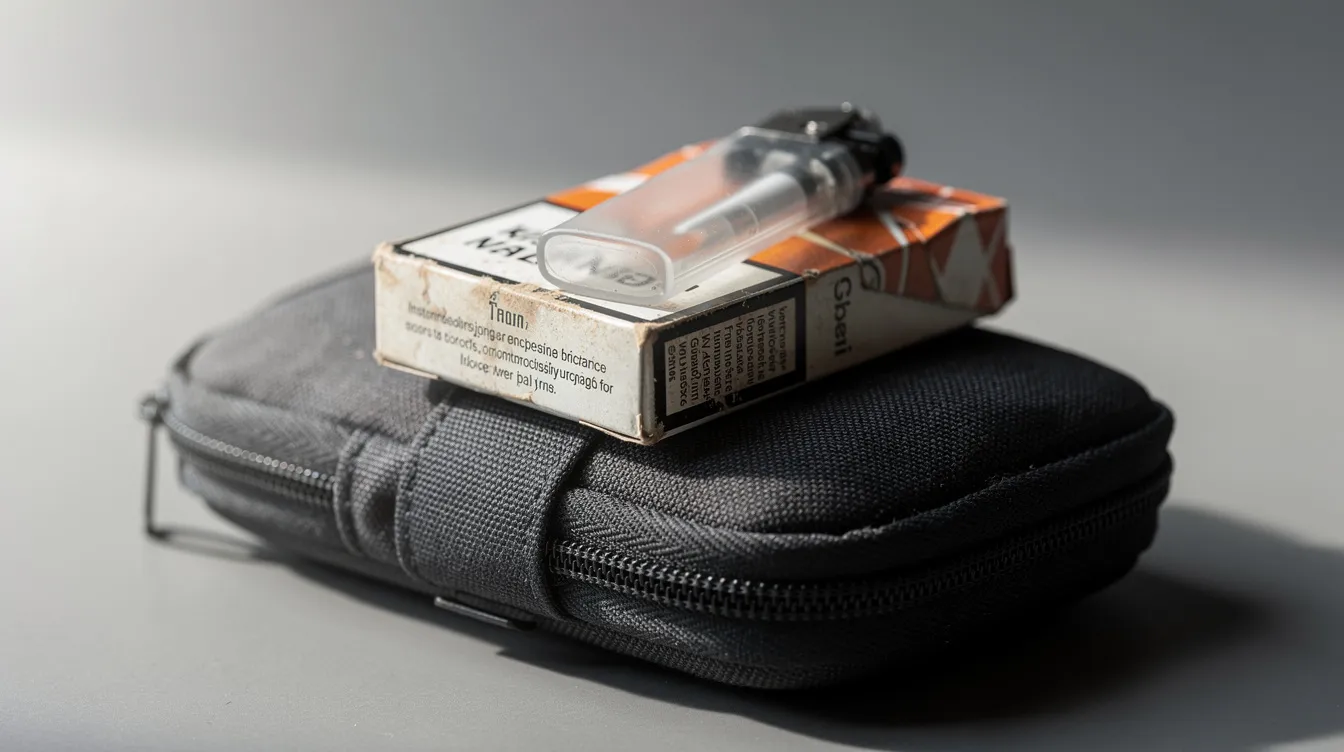
Carrying cigarettes through security is straightforward. Carrying lighters, matches, and electronic smoking devices is where most travelers run into trouble.
|
Item |
Carry On |
Checked Baggage |
|---|---|---|
|
Disposable lighters |
Generally allowed (one on person) |
Not allowed |
|
Torch lighters/gas torches |
Prohibited |
Prohibited |
|
Electronic lighters/arc lighters |
Allowed with restrictions |
Not allowed |
|
Safety matches (book matches) |
Generally allowed |
Not allowed |
|
Strike anywhere matches |
Prohibited |
Prohibited |
|
E-cigarettes/vapes |
Required (carry on only) |
Prohibited |
|
Cigar cutters |
Generally allowed |
Allowed |
|
Lighter fluid/butane refills |
Prohibited |
Prohibited |
Electronic cigarettes and vaping devices with lithium ion batteries must travel in carry on only. Spare lithium batteries must also stay in the cabin, protected from accidental activation or short circuit. The Federal Aviation Administration's PackSafe guidance classifies these as flammable items that pose a fire risk in the cargo hold.
Keep all related accessories together in an easily accessible pouch in your carry-on, ready to remove if security agents request a closer look. TSA rules and airline-specific policies can change, so check ahead with your local aviation authority before you fly.
Airport security screening decides what you can bring on the aircraft. Customs regulations decide what you can legally bring into a country. These are two separate processes, and both matter.
Domestic flights (for example, New York to Los Angeles or Toronto to Vancouver) carry no federal customs limits on how many cigarettes you can transport. There is no limit on the number of cigarettes you can travel with domestically, though local age laws still apply.
International flights are where customs limits kick in:
United States: Adults over 21 can bring in up to 200 cigarettes duty-free when returning from abroad (one standard carton).
United Kingdom: Allows up to 200 cigarettes for personal use.
Canada and most EU countries: Similar limits of roughly 200 cigarettes per adult.
Australia: A strict limit of 25 cigarettes duty-free for arriving passengers as of mid-2026.
Singapore: Allows zero cigarettes duty-free - all tobacco must be declared and taxed.
Most countries restrict the number of cigarettes you can bring into the country tax-free. If you exceed the duty-free allowance, you must declare cigarettes at customs when traveling internationally. Failure to declare can lead to confiscation, fines, or both. You can face confiscation for exceeding cigarette limits at customs in most countries.
Passengers who regularly fly internationally for business should check both departure and destination country customs websites before every trip, especially when bringing tobacco for colleagues or as gifts, and may find it useful to understand the broader landscape of private and charter airlines for business travel.
Most travel problems arise not from having cigarettes, but from how and where they are packed or declared. Here are the common mistakes to avoid:
Assuming domestic rules apply internationally. There is no domestic quantity cap, but crossing a border means customs rules and customs limits apply immediately.
Overpacking beyond duty-free limits. Carrying multiple packs beyond the allowed quantity and trying to hide extra cartons in checked baggage to avoid customs duties is risky - modern X-ray scanners detect tobacco easily.
Putting e-cigarettes or vapes in checked bags. Electronic smoking devices must be in carry-on luggage only because lithium batteries can ignite in the cargo hold. This is one of the most common prohibited items violations.
Mixing cigarettes with restricted items. Packing cigarettes alongside butane canisters, loose lighter fuel, or strike-anywhere matches in the same bag can cause the entire set of items to be removed or delayed at security.
Traveling without valid ID in high age-limit regions. The U.S. Tobacco 21 rule means authorities can question travelers who appear underage. Failing to carry valid ID can lead to complications.
Ignoring the human element. The ultimate decision on whether an item is permitted through security lies with the TSA officer, regardless of the established TSA regulations. Pack smart and cooperate.
Always read your airline or charter operator's dangerous goods page before flying and, if you use on‑demand private aviation, make sure any provider is a compliant Part 135 charter company.
Private jet charters, like those booked through Jettly's digital platform, operate under the same national safety regulations as commercial airlines but offer more flexibility in cabin rules, especially for members enrolled in Jettly’s private jet membership programs.
Carrying cigarettes on a private jet - whether in hand luggage or cargo - is generally allowed, subject to customs regulations when crossing borders. The same duty-free limits and declaration requirements apply whether you arrive by commercial or private aircraft, but many travelers also weigh which private jet charter companies offer the right mix of safety, cost, and flexibility.
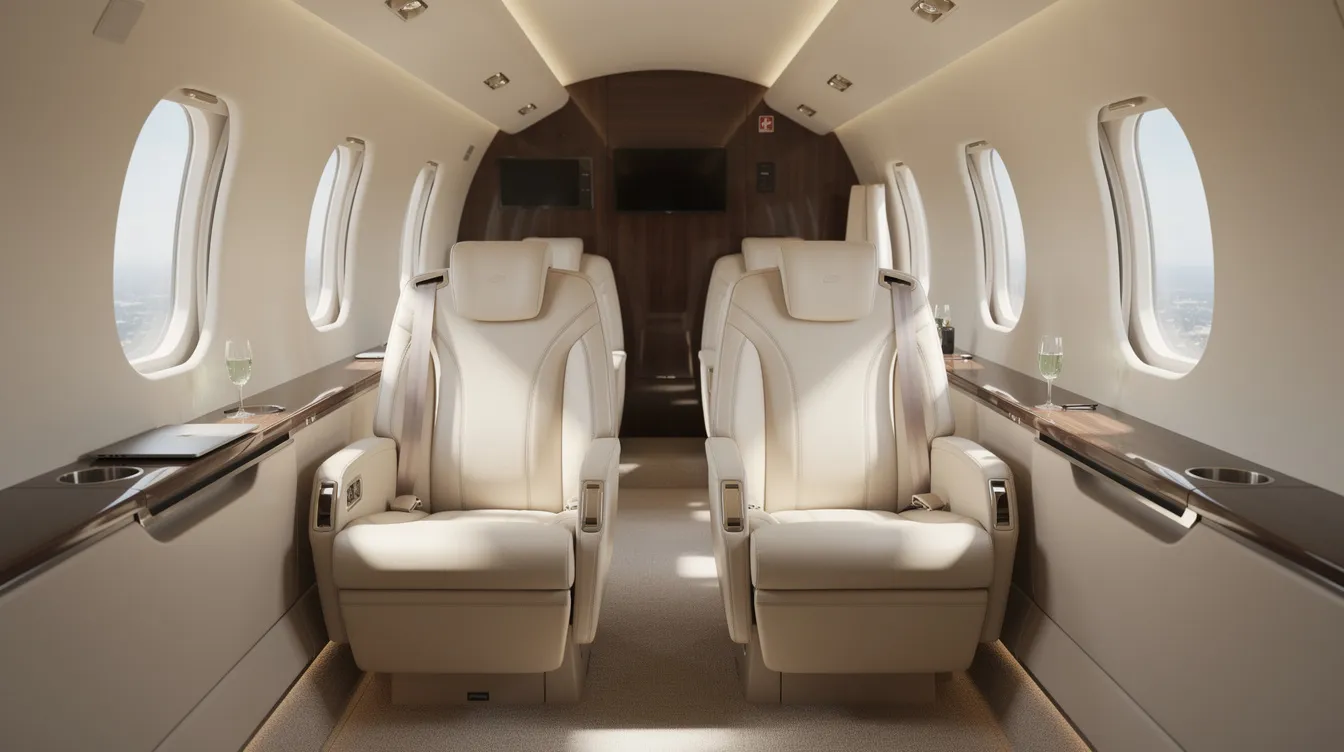
The key difference is smoking in flight. On a private jet operating under Part 91 regulations, smoking may be permitted if the aircraft owner, operator, and pilot agree, the cabin is configured for it, and fire safety requirements are met. Many modern jets are designated non-smoking to protect interiors, but some owners maintain smoking-friendly cabins. For a deeper dive, see Jettly's guide on whether you can smoke on private planes.
Jettly users can request a smoking-permitted aircraft during the booking process. The platform matches travelers with suitable operators where local regulations and owner policies allow smoking, drawing from its extensive private charter aircraft network. Frequent smokers also benefit from direct access to smaller airports with designated smoking areas, shorter terminal time, and coordinated ground transportation - all managed through Jettly's transparent pricing and instant digital booking tools, which can also support crowdsourced and shared private jet flights when cost‑sharing makes sense.
Aviation rules focus on safety and customs, while tobacco laws focus on age and public health. Travelers must respect both.
Smoking restrictions are also enforced in enclosed spaces such as aircraft cabins. The legal age to buy cigarettes varies: 21 in the United States under federal law, 18 in much of Europe, and 18 or 19 depending on the province in Canada. Aviation security officers typically do not check age specifically for carrying cigarettes, but customs agents and local police at the destination can enforce age restrictions and seize tobacco carried by minors.
Parents and guardians should note that minors traveling alone should avoid transporting cigarettes, even for an adult relative, to prevent complications at customs or immigration. Smoking carries significant health risks, and travelers interested in quitting should consult medical resources such as the CDC or WHO, especially given how prevalent tobacco use remains even among those flying on luxury celebrity private jets.
Use this as a quick checklist before your next flight:
Keep cigarettes in original packaging where possible - this simplifies customs inspection and demonstrates personal use rather than resale.
Use a rigid case or separate cartons within clothing in checked baggage to prevent crushing, particularly on long-haul flights with multiple baggage transfers.
Place a reasonable amount of cigarettes in carry-on for the journey and keep the bulk in checked luggage if local rules allow.
For connecting flights - especially when changing airlines or operators - confirm that all segments accept the same cigarette quantities and smoking accessory rules, and factor in any differences in fares if you’re comparing affordable private jet charter options against commercial business class.
When flying internationally, pack cigarettes where customs officers can easily access them, not buried at the bottom of a bag.
Travelers heading to India’s capital may find it convenient to arrive via private jet charter in New Delhi, where smaller terminals can speed up customs and baggage checks.
You cannot smoke electronic vaping devices on any airplane, commercial or private, unless the private operator specifically permits it.
Travelers using private jet charters via Jettly can coordinate directly with the flight support team to confirm how to pack cigarettes, cigars, and accessories on a specific aircraft type and arrange bespoke amenities like in‑flight catering for private jets through Jettly Eats. Learn more about what happens in flight on a private jet.
These questions cover practical scenarios not fully addressed in the sections above. Answers reflect rules as of 2026 - always verify details with airlines, operators, or customs offices before you travel.
Yes. Open packs of cigarettes are generally allowed in both carry-on and checked luggage. Security agencies focus on safety threats, not whether a pack is sealed. Keep open packs in a pouch or case to avoid loose tobacco scattering in your bag and to make inspection easier at security or customs checkpoints.
You usually only need to declare cigarettes if you exceed the duty-free allowance for your destination country - often 200 cigarettes per adult, but limits vary widely. If you are unsure whether you exceed the limit, declare what you are carrying. Customs officers can then apply the correct duty or confirm that no tax is due.
Yes. Modern X-ray scanners can easily detect cartons and multiple packs of cigarettes in both carry-on and checked luggage, even when screening focuses on other prohibited items. Attempting to hide excess cigarettes to avoid customs duty is risky and can lead to confiscation, fines, or secondary inspection.
Cigars and loose tobacco, including pipe tobacco and rolling tobacco, are usually allowed in both carry-on and checked bags. However, they may be subject to different duty-free gram or unit limits compared to standard cigarettes. Check the specific tobacco categories and weight limits on your destination country's customs website before bringing cigars or loose tobacco on a plane internationally.
Some private jets do allow smoking, but it depends on the aircraft owner's policy, operator rules, and local safety regulations. Many modern jets are designated non-smoking to protect interiors and air quality. Travelers interested in smoking on board should request a smoking-permitted aircraft when searching and booking through Jettly, so the platform can match them with an appropriate operator on their route.
Cigarettes are generally allowed in both carry-on and checked baggage, but passengers must follow safety rules for lighters and vapes and respect customs limits when crossing borders. Most countries allow one to two cartons of cigarettes for personal use, and there is no domestic limit in the U.S., but international travel requires careful attention to each destination country's rules.
Understanding the difference between domestic and international rules, packing cigarettes correctly in original packaging, and avoiding common mistakes will prevent delays, confiscation, or fines. Whether you want to bring tobacco, cigars, or other tobacco items, the process is manageable with a little preparation.
For travelers who value control over their onboard environment, private aviation through Jettly offers added flexibility: tailored aircraft selection, clarity on smoking policies, and streamlined routing through smaller airports, while tools like Jettly’s private jet charter cost estimator help you budget each trip. So the next time you ask, "Can you take cigarettes on an airplane?" the answer is yes - just know the rules before you go.
Ready to experience private travel on your terms? Explore flight options or request a quote at https://www.jettly.com.
Share this post:
Jay Franco Serevilla
Jun 29, 2026
|
5
min read
Discover tips and trends in the industry.

5
min read
Renta de Jet Privado: Guía Completa para Vuelos Privados con Jettly
Renta de jet privado has transformed into a seamless digital experience, allowing travelers to book flights without ownership or long-term commitments. This comprehensive guide details how private jet rentals work, the types of aircraft available, and how Jettly simplifies the booking process for business and leisure travelers alike.
Read More
5
min read
Cessna 402: History, Performance, and Charter Use
The Cessna 402 is a versatile light twin-engine aircraft known for its reliability and efficiency in regional travel. With a spacious cabin accommodating up to 10 passengers, it serves various roles including commuter service and cargo transport. Its long history and proven performance make it a popular choice among charter operators and aviation enthusiasts alike.
Read MoreStay updated with our latest insights and tips to elevate your journey with us.
MEMBERSHIPS AND ASSOCIATIONS



Disclaimer: Jettly operates as a charter broker, offering access to a global digital jet charter marketplace. Jettly is not a direct air carrier and does not own or operate aircraft. All advertised flights are conducted by third-party air carriers that are fully licensed and hold the appropriate Part 135 or Part 121 certifications issued by the Federal Aviation Administration (FAA) or equivalent regulatory authorities under U.S. or foreign law. Jettly complies fully with the U.S. Department of Transportation's Part 295 and Part 298 Charter Broker regulations. Jettly does not carry additional liability insurance. Passengers are covered by aircraft operator insurance. TICO: 50023770


