



Login
Get Instant Pricing On 23,000+ Aircraft

>
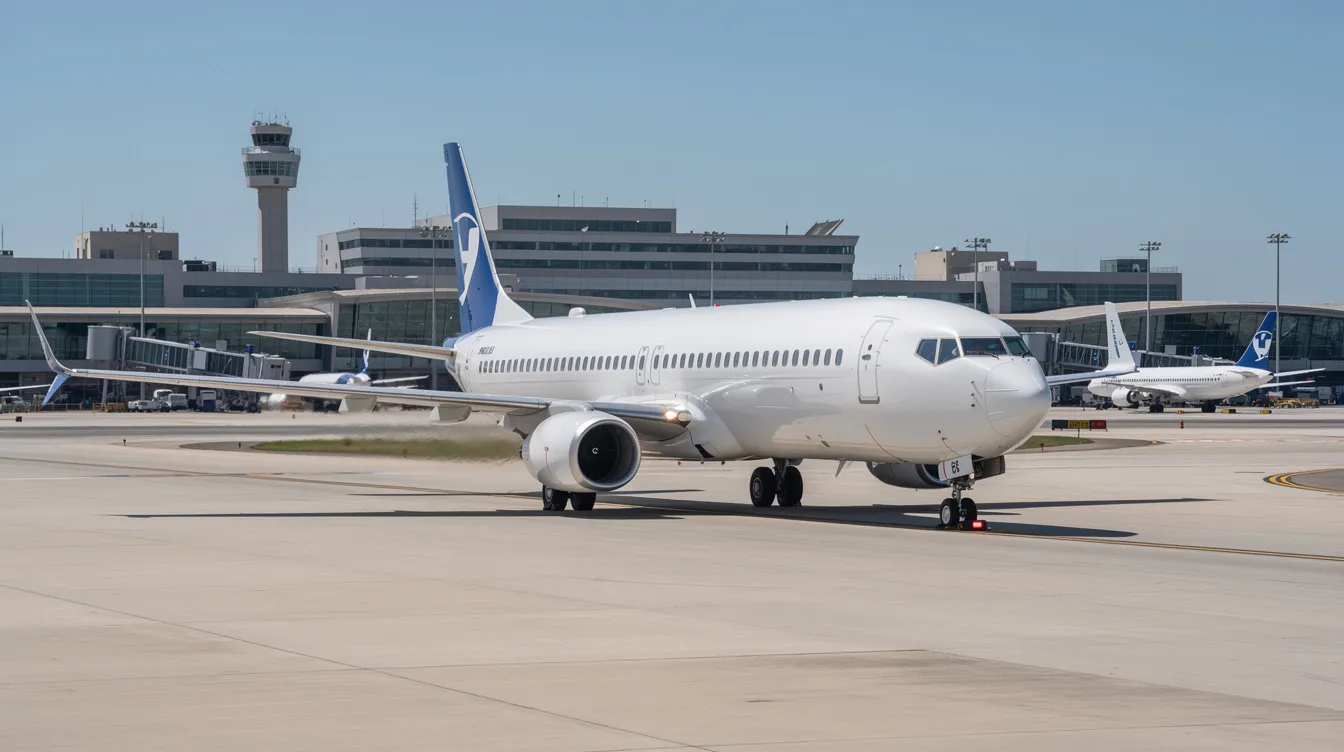
The Boeing 737-800 seats 162 to 189 passengers depending on airline configuration. Most carriers fly a two-class layout with 160–175 seats, while low-cost carriers like Ryanair push to the maximum 189 seats in all-economy high-density layouts.
Cabin layout, seat pitch, and airline strategy are the biggest variables. A Ryanair 737- 800 at 189 seats feels very different from an American Airlines version at 172 seats with a first-class cabin.
The aircraft's fuel efficiency, extended range of approximately 3,115 nautical miles, and proven reliability (99% dispatch rates) make it a staple for short- to medium-haul routes across North America, Europe, and Asia.
Seat width on the 737-800 typically ranges from 17 to 18 inches due to its narrow-body fuselage, while economy seat pitch varies from as tight as 28 inches to 34 or more in premium rows.
Jetly customers often encounter the 737-800 on commercial trunk routes between major airports, then use private charter for first- and last-mile segments to smaller destinations not served by commercial airlines, often starting their planning with an airport locator tool to see which smaller fields are available.
The Boeing 737-800 is one of the world's most widely used single-aisle jets, and its seating capacity depends almost entirely on how an airline chooses to configure the cabin. When people search for the capacity of a 737- 800, the answer ranges from 162 to 189 passengers, with the certified maximum at 189 seats in an all-economy setup.
This guide is for travelers, aviation enthusiasts, and charter clients seeking to understand the seating and cargo capacity of the Boeing 737-800. Understanding the 737-800's capacity helps travelers set expectations for comfort and helps charter clients plan group travel efficiently.
Most full-service airlines opt for fewer seats—typically 160–175—to accommodate a premium cabin and more generous legroom. Later sections break down exact seat maps, cabin layout options, cargo capability, and how this airplane compares to alternatives like the Airbus A320 and the newer 737 MAX 8.
The Boeing 737-800 is a stretched version of the 737 Next Generation family, derived from the shorter 737-700 and designed to replace the older 737-400. It entered commercial service in 1998, and its first flight took place in 1997, marking a significant step forward for the generation family of single-aisle Boeing aircraft.
Key physical dimensions that shape its seating capacity include:
Overall length of approximately 39.5 meters (129 ft 6 in)
Wingspan with blended winglets of about 35.8 m (117 ft 5 in), providing improved wing area efficiency
Maximum takeoff weight of up to 79,016 kg (174,200 lb)
A narrow-body fuselage with standard 3-3 abreast seating across a single aisle
The cabin cross-section is slightly narrower than the Airbus A320, which influences both aisle width and perceived spaciousness. However, the 737-800 maintains a comparable overall passenger count for short- to medium-haul routes, making it a direct competitor in commercial aviation. The aircraft's weight and empty weight also play roles in how many passengers airlines can carry while maintaining acceptable takeoff performance across various airports.
The capacity of a 737- 800 aircraft refers to the total installed seats, which vary by airline and regulatory approval. Seating configurations vary by airline on the 737-800, but they generally fall into three broad categories:
All-economy, high-density layouts: about 186–189 seats, used by carriers like Ryanair across Europe
Two-class layouts (business class plus economy): typically 160–175 seats, the standard for legacy airlines like American Airlines (172 seats) and United Airlines
VIP or corporate 737-800/BBJ2: as low as 20–60 passengers with luxurious spacing, suites, and private bedrooms
Regulatory emergency-exit spacing and door configuration limit the absolute maximum seat count, even when airlines push for maximum density. The four main cabin doors plus overwing emergency exits on the 737-800 cap its certified all-economy capacity at 189 passengers.
For a deeper look at how seating scales across the entire 737 family, see this overview of Boeing 737 seat capacity.
The difference between a two-class and a single-class cabin layout on a 737 800 aircraft directly changes both capacity and the passenger experience. Here's how each approach works.
Typical 2-class layout:
Small forward business or first cabin with 2–2 or 3–3 seats and increased pitch (often 36–38 inches)
Main economy cabin in 3–3 with standard seat pitch
Resulting total capacity often between 160 and 175 passengers
American Airlines, for example, runs a 172-seat layout: 16 first-class seats, 24 Main Cabin Extra seats with around 34 inches of pitch, and 132 standard economy seats.
Single-class high-density layout:
All economy in a 3–3 configuration
Tighter pitch (28–30 inches), commonly used by ultra-low-cost carriers
Seat counts pushed up to 186–189 seats
Cabin layout decisions balance ticket yields, route length, and customer expectations. Airlines operating a Europe business class product on shorter routes may sacrifice 15–20 seats to offer a premium experience, while carriers focused on volume across short to medium routes maximize every row.
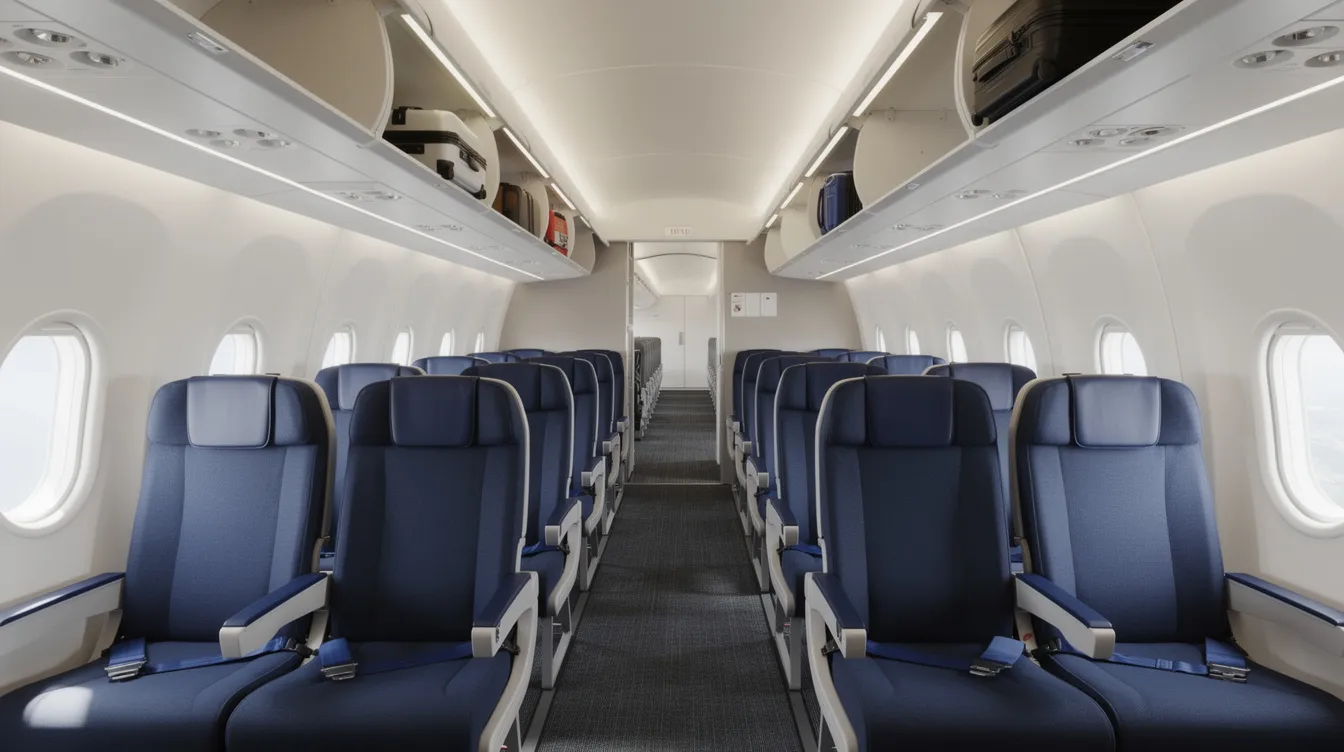
While official capacity numbers look similar across airlines, actual passenger comfort varies significantly depending on seat pitch and width choices.
Typical seat pitch ranges on the 737-800:
28–29 inches on low-cost, high-density layouts
30–32 inches on standard legacy carriers (economy seat pitch usually falls between 30 and 32 inches)
34+ inches in extra-legroom or premium economy rows, often marketed as economy comfort or a standard seat extra-legroom product
Some airlines configure the 737-800 for tighter seating at 28 inches, squeezing additional rows into the same fuselage length.
Seat width typically ranges from 17 to 18 inches on most 737-800 configurations, constrained by the narrow-body fuselage design. Adding wider seats or extra legroom always means fewer total seats and lower capacity.
The trade-off is straightforward: comfort-focused layouts (fewer seats, more space, a more spacious cabin feel) compete with revenue-maximizing layouts (maximum capacity, tighter spacing). The capacity of a 737- 800 is not just a hard number—it's a comfort decision that each airline makes differently.
A seat map visually shows how an airline arranges capacity on its Boeing 737-800, including the placement of galleys, lavatories, and emergency exits. Checking an interactive seat map before booking helps travelers find their ideal seat.
Ryanair: All-economy 3–3 seat layout with 189 seats and a minimal galley and lavatory footprint. Rows are tightly packed, with slimline seats (Zodiac Z110) reducing weight per passenger. Ryanair's fleet of 737-800s is the world's largest, with over 400 in commercial service.
American Airlines or United Airlines: Two-class seat maps with 16–20 domestic first-class seats and approximately 144–156 economy seats. On these airlines, you'll find a blocked middle seat in first class, offering a more comfortable arrangement.
Alaska Airlines: Around 159–161 seats with some extra-legroom options in premium rows. Alaska Airlines balances capacity with service quality on West Coast routes.
When reviewing a seat map, look for exit-row seats (extra legroom), rows near galleys or lavatories (potentially noisy), and restricted-recline seats (often the last row or rows directly ahead of exits). Many airline websites let you pull up a seat map for your specific flight—simply press enter on the search to see available options. A bird's-eye view of the cabin from the seat map reveals zone divisions, exit locations on both the left side and right side, and which rows might lack windows.
Capacity is not just an airline business decision. It is tightly regulated by aviation authorities who require that every commercial aircraft can be fully evacuated within 90 seconds, even under adverse conditions.
The exits on a typical 737-800 include:
Forward and aft main cabin doors (used for regular boarding and emergency egress)
Four Type-III overwing emergency exits (two per side), which dictate exit-row spacing
Flight deck windows that provide limited pilot egress in emergencies
The certified maximum passenger capacity for the Boeing 737-800 is strictly governed by regulations from the FAA and EASA. These rules cap the all-economy configuration at around 189 seats. Exit-row seats must have sufficient unobstructed space, aisle widths must meet minimum standards, and the pressure difference between the cabin and external environment means exit mechanisms must function reliably at altitude. Any relevant airworthiness directive issued by regulators can also affect how airlines configure their cabins.
The 737-800 has a hull loss rate of 0.17 per million departures—lower than earlier 737 models—underscoring the aircraft's safety record across decades of operation.
Capacity also includes what travels beneath the cabin floor. The 737-800's lower-deck cargo holds are split into two compartments:
|
Compartment |
Volume |
|---|---|
|
Forward cargo |
Approximately 672 cubic feet (~19.0 m³) |
|
Aft cargo |
Approximately 869 cubic feet (~24.6 m³) |
|
Total |
Approximately 1,541 to 1,555 cubic feet (~43.6 m³) |
Higher passenger loads mean more checked baggage per flight, which can limit remaining cargo capacity for freight. This is especially relevant on longer sectors where higher fuel loads already consume available weight margin. Load planners must balance the aircraft's weight across passengers, baggage, cargo, and fuel to stay within maximum takeoff weight limits.
For airlines that convert the 737-800 into a freighter (the 737-800BCF or 737-800SF), passenger seats are removed entirely, and the main deck is reconfigured for cargo pallets and containers. These converted freighters maximize payload and illustrate the fundamental trade-off between people and freight.
The more seats an airline fills at a given fuel burn, the lower the cost per seat-mile. This economic principle drives many airlines to maximize capacity on their 737- 800 fleet.
Key performance numbers for the Boeing 737-800:
Maximum cruise speed of Mach 0.79 (approximately 460 knots)
Typical range of approximately 3,115 nautical miles, covering most short- to medium-haul routes
The 737-800 burns approximately 4.88 US gallons per seat per hour in a typical configuration
Service ceiling reaches 41,000 feet (highest altitude for the type)
CFM56-7B engines paired with blended winglets deliver competitive fuel efficiency per seat
The generation series of NG aircraft, including the 737-800, was designed for fuel efficiency on routes up to about 3,100 nautical miles. Airlines using high-density layouts on shorter routes lower their unit costs further, spreading fixed operating expenses over 186–189 passengers rather than 160.
On a high-density 737-800 burning roughly 845 US gallons per hour, the per-seat fuel cost drops noticeably compared to a two-class layout carrying 30 fewer passengers over the same route. This speed and efficiency combination explains why the 737-800 dominates short- to medium-haul flying worldwide.
The Boeing 737-800 competes directly with the Airbus A320 family and faces newer challengers within Boeing's own lineup. Here's how capacity stacks up:
|
Aircraft |
Typical 2-Class Seats |
Max All-Economy |
Cabin Width |
|---|---|---|---|
|
Boeing 737-800 |
160–175 |
189 |
~3.54 m |
|
Airbus A320ceo |
150–170 |
~180 |
~3.70 m |
|
162–178 |
200+ (certified) |
~3.54 m |
|
|
Airbus A320neo |
150–180 |
~194 |
~3.70 m |
The Airbus A320 offers a slightly wider cabin, allowing marginally wider seats, but both aircraft serve similar route networks and airline types. Newer 737 MAX 8 and A320neo variants deliver 7–20% better fuel efficiency thanks to improved engines and aerodynamics, though the 737-800 remains common due to massive existing fleet infrastructure.
Larger narrow-body options like the 737-900ER or A321 can exceed 200 seats but bring increased weight and runway requirements. For more on how different Boeing aircraft compare, see this private jets comparison.
The Boeing 737-800 airframe is also used for Boeing Business Jets (BBJ2), where capacity is transformed from 160–189 airline seats down to 20–60 VIP passengers.
Typical BBJ2 cabin layouts include:
Private bedrooms and en-suite facilities
Executive offices with conference tables
Lounges with full-size sofas and entertainment systems
Dedicated galleys for gourmet catering
While the certified maximum capacity remains similar to the airline version, VIP and corporate operators intentionally keep the seat count low to enhance comfort, privacy, and the aircraft's extended range suitability. Some BBJ2 configurations even include a partial power supply setup for office equipment, ensuring executives can work throughout the flight.
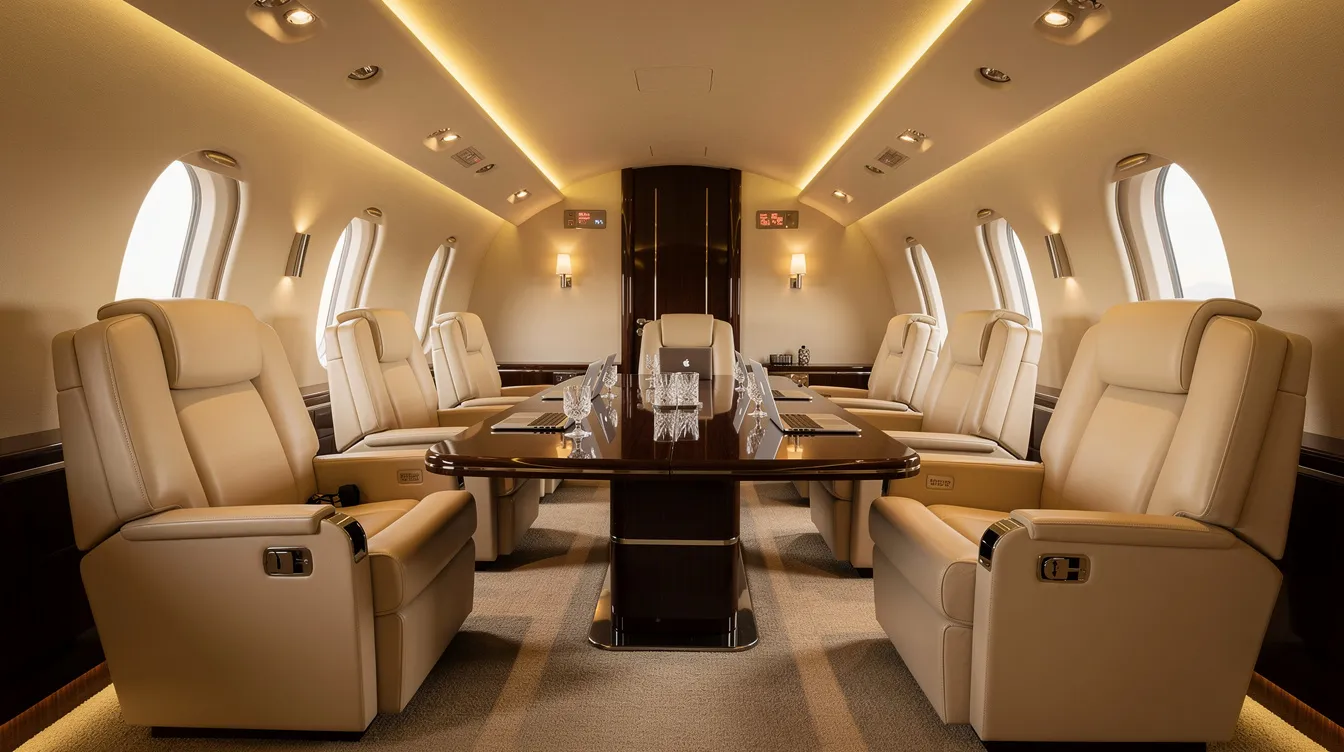
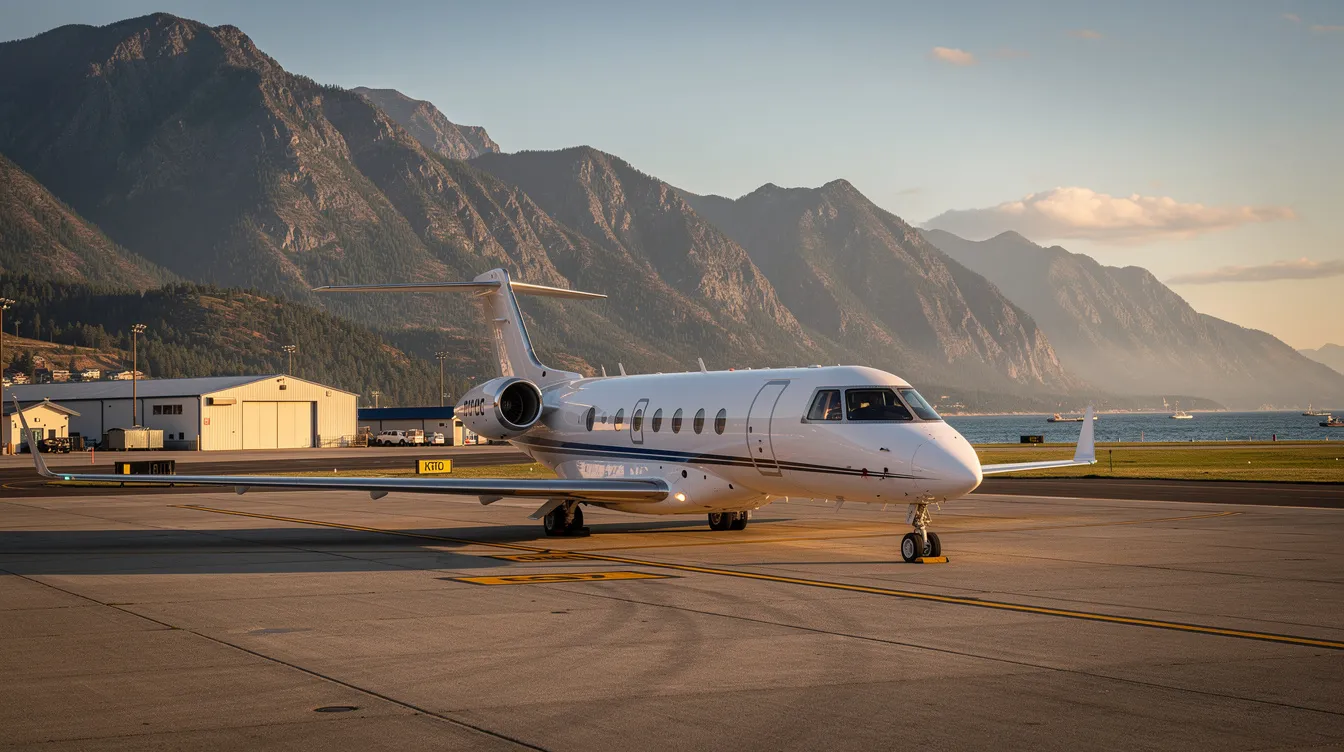
Though most Jettly charters involve smaller private jets carrying 4–16 passengers, large groups can charter a Boeing 737-800 privately or a VIP-configured 737- 800 aircraft for events, roadshows, and team travel. Explore Boeing 737-800 specs, range, and charter rates for more details.
Many travelers fly long trunk routes on a commercial Boeing737- 8000, then connect to smaller airports via private charter. This hybrid approach blends the cost efficiency of commercial aviation with the flexibility and time savings of private flight, especially when you can choose from a global fleet of private charter aircraft tailored to each trip.
Consider this example: a business executive flies commercially on a 180-seat 737-800 from London to Rome, then uses a Jettly-arranged 6–8 seat light jet to reach a smaller regional airport in Sardinia or the Amalfi Coast. The commercial leg handles the heavy lifting at a reasonable fare; the private segment eliminates a connecting flight or long drive.
Understanding the 737-800's capacity and typical loading helps travelers choose less-crowded departure times. If you know a flight operates in a high-density 189-seat layout, booking early for a preferred row matters more than on a 160-seat configuration with extra space, just as knowing your route and aircraft type helps when using a private jet charter cost estimator to plan a trip.
Jettly's platform lets customers browse over 20,000 aircraft, compare options instantly, and integrate private segments with their commercial airline charter flights for seamless door-to-door travel. Whether you need a turboprop to a mountain airstrip or a midsize jet to fly across Europe, the combination works.
While total capacity is fixed once the cabin is configured, your individual experience on a 737-800 can be improved through strategic seat selection based on the seat map.
Practical tips for picking your seat:
Choose exit-row or bulkhead seats for extra legroom, especially on flights over two hours
Avoid last rows, which often have limited recline and sit close to lavatories—noise and foot traffic increase substantially
Sit forward of the wing for reduced noise from the engines and faster deplaning upon arrival
Check whether your airline's seat map marks missing-window seats, galley proximity, or restricted-recline rows
On airlines offering economy comfort or extra-legroom sections, paying a small premium can meaningfully improve the experience on a plane configured with tight pitch
Airlines with interactive seat map tools let you preview each row's pros and cons. On some carrier websites, the view shows the left side and right side of the cabin independently, making it easier to spot which seats have full window views and which sit between overwing exits with obstructed views, similar to how guides on getting a seat on a private jet easily emphasize using available tools and information to secure the best spot on board.
A neutral approach works best here: no single airline gets seat selection perfectly right, and the right choice depends on your priorities—quiet, legroom, quick exit, or proximity to lavatories.
Despite newer designs entering the market, airlines continue operating large 737-800 fleets in 2025–2026. Here's why.
Proven reliability: dispatch reliability is 99% for NG variants, meaning the airplane almost always departs on schedule
Flexible seating capacity from approximately 160 to 189 seats, adaptable to any market
Deep existing pilot training, maintenance, and spare-part ecosystems that lower operating costs
Compatibility with thousands of airports worldwide, including shorter runways that limit larger aircraft
For routes across North America, Europe, and Asia, the 737-800 hits a sweet spot between capacity, fuel efficiency, and airport flexibility. Its wing design and wingspan allow operations from runways that newer, heavier aircraft sometimes cannot use.
Many 737-800s are being retrofitted with updated cabins to remain competitive. The Boeing 737-800 features Boeing's Sky Interior design, which includes larger pivoting overhead bins with 50% more volume, and on private flights, services like Jettly Eats in-flight catering further elevate the onboard experience. LED mood lighting enhances the passenger experience in the cabin, and reduced noise levels from improved insulation make the aircraft feel more modern despite its original generation roots.
Some European carriers assign bird-themed aircraft names to individual planes in their fleet—you might fly on a herring gull, a sparrow hawk, a green woodpecker, or even a great shearwater, each identified by a blue tail livery or fuselage decal. These naming conventions, common in the next-generation era, add personality to the fleet.
As of January 2020, the 737 series had 22 hull-loss accidents across all variants. In 2019, the FAA grounded 100 aircraft for structural inspections following an airworthiness directive, but no accidents resulted from the 2019 structural inspection issue, reinforcing the type's overall safety record.
Jettly operates as a digital private aviation platform that complements, rather than competes with, high-capacity aircraft like the Boeing 737-800. While the 737- 800 efficiently moves 160–189 passengers between major hubs as a workhorse of commercial service, Jettly focuses on different strengths, including flexible private jet memberships:
On-demand private jet charter for 4–16 passengers, or larger groups when needed
Access to 5,000+ airports versus the limited set served by commercial 737- 800 routes, similar to the broad operator coverage highlighted in a guide to charter airlines and private flights
Instant pricing and transparent booking without long-term ownership commitments, positioning Jettly as a flexible alternative to NetJets-style programs
The most common use case is hybrid travel: customers rely on commercial 737-800 flights for cost-effective trunk legs, then tap Jettly for last-mile flights to smaller cities, resort islands, or business hubs that commercial service doesn't reach.
If you're planning a trip and want to complement your next 737-800 flight with a private segment, browse available aircraft on Jettly's platform to compare options and get instant pricing, or use the jet card flight cost estimator to understand predictable hourly rates on frequent routes. Understanding the global fleet of private jets and market trends can also help you choose the right aircraft category for your needs.
The certified maximum typical passenger capacity is 189 seats in an all-economy 3–3 layout. This configuration is used by many low-cost European and Asian carriers, including Ryanair. However, most full-service airlines configure their 737-800 with fewer seats—around 160–175—to include a premium cabin and more legroom. The difference between theoretical maximum and real-world practice comes down to airline strategy and route demand.
Domestic business or first-class cabins on a 737-800 usually range from 8 to about 24 seats, arranged in 2–2 or 3–3 with a blocked middle seat, depending on the airline's product. Adding more premium seats reduces total capacity, so airlines pick a mix that fits their route demand and pricing strategy. Some carriers in Europe offer a business class section by simply blocking middle seats rather than installing different hardware.
There is no single standard seat map. Boeing 737-800 seat maps vary significantly between airlines, even when total capacity is similar. Travelers should always check the specific carrier's interactive seat map for their flight to see exact row numbers, exit rows, lavatory placement, and any missing-window or restricted-recline seats. For comparison, the Boeing 737-700 seat map offers a useful reference point for how a shorter fuselage changes the arrangement.
Higher-capacity layouts (186–189 seats) let airlines spread operating costs over more passengers, often leading to lower base fares at the expense of comfort. Airlines with fewer seats and more generous space typically charge higher fares but deliver a more comfortable onboard experience, much like how private operators balance price and comfort when offering affordable private jet charter options. On longer routes where passengers spend three or more hours in their seat, this comfort premium tends to be more justified and more willingly paid, just as frequent private fliers often gravitate toward structured jet card programs that trade upfront commitment for predictable comfort and pricing.
While most Jettly clients charter smaller private jets, the platform can arrange access to larger aircraft—including airliners like the 737-800 or VIP-configured derivatives like the BBJ2—for groups, events, or sports teams, whether as shared charter flights or full charters depending on budget and privacy needs. The Boeing 737-800 has been involved in 767 fatalities since its service began, a figure that reflects both the massive scale of its global operations and the type's overall low hull loss rate relative to departures. For any high-capacity private travel requirement, contact Jettly for a bespoke quote where capacity, range, and cabin layout can all be tailored to your group's needs, or explore crowdsourced and shared private jet flights to reduce per-seat costs on popular routes.
The capacity of the 737-800, ranging from 162 to 189 passengers depending on configuration, reflects its versatility as a workhorse in short- to medium-haul commercial aviation. Its balance of efficient seating layouts, fuel economy, and operational reliability has made it a staple for airlines worldwide. While the aircraft’s narrow-body design limits seat width and aisle space compared to competitors like the Airbus A320, the 737-800 remains competitive through its proven performance and adaptability.
For travelers, understanding the capacity and layout options of the 737-800 helps set realistic expectations for comfort and service levels on commercial flights. Meanwhile, platforms like Jettly complement the 737-800’s commercial strengths by offering private jet charter options that provide flexibility, privacy, and access to more airports.
Whether flying on a high-density Ryanair 737-800 or a more spacious two-class layout with a legacy carrier, the aircraft’s capacity plays a crucial role in shaping the travel experience and airline economics. To optimize your travel, consider combining commercial 737-800 routes with private charter segments through Jettly for seamless, time-efficient journeys.
Ready to experience private travel on your terms? Explore flight options or request a quote at https://jettly.com. Travelers comparing providers can review an overview of top private jet charter companies or a deep dive into industry leader NetJets and then see how Jettly stacks up. Those interested in earning from referrals can join Jettly's ULTRA high-ticket affiliate program, while operator-focused pages like Dexter Air Taxi and Zenflight illustrate how partners plug into the platform.
Share this post:
Jay Franco Serevilla
Oct 17, 2026
|
5
min read
Discover tips and trends in the industry.
5
min read
Delta Airline Planes: Fleet History, Current Aircraft, And How They Compare To Private Jets
Delta Air Lines boasts one of the largest fleets in the world, featuring over 1,000 aircraft from Airbus and Boeing. This article explores Delta's fleet history, current aircraft, and the advantages of private jet charters for travelers seeking flexibility and privacy. Discover how Delta's evolution from historic jets to modern fuel-efficient models shapes the aviation landscape today.
Read More
5
min read
Aircraft Charter Guide: How to Choose, Book, and Fly with Confidence
This comprehensive aircraft charter guide provides essential insights on how to choose, book, and fly with confidence using Jettly's digital platform. It covers various jet categories, the charter process, and highlights the benefits of private aviation for both personal and business travel. With access to over 20,000 aircraft and transparent pricing, Jettly simplifies the charter experience for travelers.
Read MoreStay updated with our latest insights and tips to elevate your journey with us.
MEMBERSHIPS AND ASSOCIATIONS



Disclaimer: Jettly operates as a charter broker, offering access to a global digital jet charter marketplace. Jettly is not a direct air carrier and does not own or operate aircraft. All advertised flights are conducted by third-party air carriers that are fully licensed and hold the appropriate Part 135 or Part 121 certifications issued by the Federal Aviation Administration (FAA) or equivalent regulatory authorities under U.S. or foreign law. Jettly complies fully with the U.S. Department of Transportation's Part 295 and Part 298 Charter Broker regulations. Jettly does not carry additional liability insurance. Passengers are covered by aircraft operator insurance. TICO: 50023770


