


Login
Get Instant Pricing On 23,000+ Aircraft

>
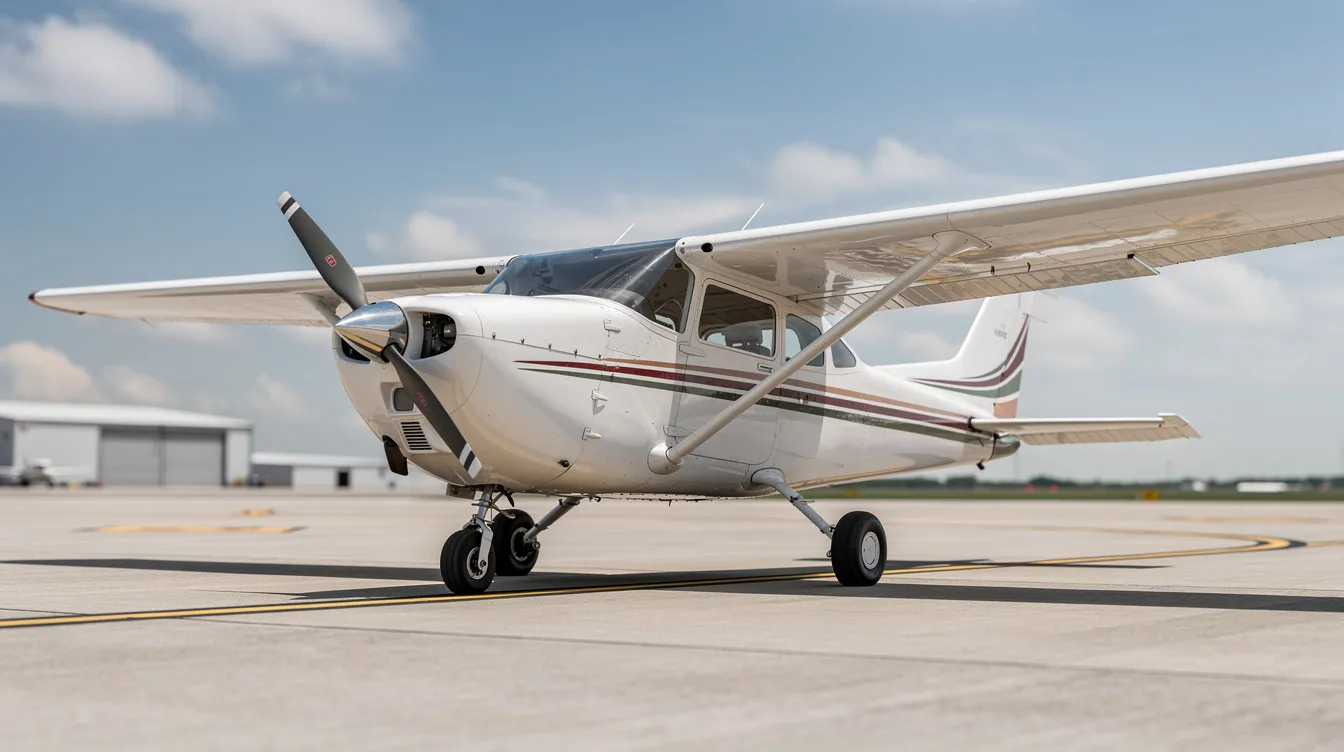
The Cessna 172 Skyhawk has been in production since 1955, and its wings are high-wing aluminum structures with a roughly 36-foot 1-inch span, a rectangular planform, a modified NACA 2412 airfoil, trailing-edge flaps, and external V-struts—features that helped make the airplane stable, predictable, and forgiving at low speeds. Over that span of production, those wings also went through quiet but consequential changes.
For owners, restorers, maintenance technicians, buyers, and even private aviation travelers evaluating aircraft condition, those changes raise real questions about structural fit, systems compatibility, inspection points, documentation, resale impact, and FAA approval—especially when a wing swap involves a related model like the 170B. What follows looks at how Cessna 172 wing design evolved, where interchangeability with the 170B and other variants begins and ends, what the FAA requires for legal airworthiness, and which maintenance and charter-relevant details matter before you buy, restore, modify, or fly one.
Cessna 172 wings evolved across dozens of model variants. Changes in flap systems, fuel capacity, and structural reinforcement for higher gross weight limits mean that not every wing from one 172 variant bolts onto another model without engineering review and FAA paperwork.
Many 100-series Cessna wings (150, 170, 172) share a common design philosophy, and mechanics have successfully installed 172 wings on 170B airframes. But "physically fits" and "FAA-approved" are two different things. Any replacement requires logbook entries, FAA Form 337, and approved data from an STC, DER, or factory engineering letter.
Owners weighing a wing swap face a choice between rebuilding original wings, sourcing similar items from donor aircraft, or pursuing upgrades. Each path involves trade-offs in cost, downtime, and originality.
Jettly operates as a charter marketplace, not a maintenance shop. But understanding how Cessna 172 wings work helps buyers and renters assess aircraft condition, configuration, and flight performance before booking.
The Cessna 172 Skyhawk features a high-wing configuration, mounted above the cabin and braced by external V-struts on each side. The wings are built from lightweight aluminum, with a rectangular planform that runs nearly the full span of 36 feet 1 inch and a total wing area of 174 square feet.
The airplane uses a modified NACA 2412 airfoil, a profile optimized for efficiency at low speeds. This airfoil design contributes to predictable stall behavior, which is one reason the 172 remains the world's most common training aircraft. The high aspect ratio of the wing allows efficient lift production at lower speeds, and the rectangular planform aids in maintaining aileron effectiveness during stalls by ensuring the wing root stalls before the tip.
The high-wing position enhances stability during flight and provides excellent downward visibility for the pilot and passengers seated below. Trailing-edge flaps increase lift while also increasing drag, giving pilots control over descent rates and approach speeds. The 172's wing structure is optimized for stable, predictable low-speed flight; the high-wing design also contributes to a low stall speed, which aids training. One trade-off: the Cessna 172 experiences reduced ground effect during landings due to its high-wing configuration, compared to low-wing designs where the wing sits closer to the runway surface.
These characteristics make the 172 a staple for flight training, sightseeing, and short-range travel. For both owners and renters comparing wet rates, insurance, and dispatch availability, understanding affordable aircraft rental options and cost drivers helps frame the value of a well‑maintained Skyhawk. Wing condition and configuration directly affect climb performance, stall margins, range, and useful load for any Skyhawk variant.
The first Cessna 172 rolled out in 1955 as a tricycle-gear derivative of the tailwheel 170. Through the 1960s, models like the 172F and 172H retained the basic strut-braced aluminum wing but introduced electric flaps around 1964 (the 172E), replacing the earlier Johnson-bar manual system.
In the early 1970s, the 172M introduced a "Camber-Lift" leading edge, a subtle droop added to the wing's forward profile to improve low-speed handling and reduce stall speeds. Gross weight crept upward: early 172 A-through-H models were certified at roughly 2,200 lb, while the 172P (1981-1986) moved to 2,400 lb. Flap travel also changed. Earlier models allowed up to 40 degrees of deflection; the 172P and later variants limited travel to about 30 degrees, which simplified short-field technique but altered approach profiles.
By 1979, the 172N adjusted flap speed limits: the first 10 degrees of deflection could be deployed at up to 110 KIAS, a jump from earlier restrictions that gave pilots more flexibility during descent planning. Fuel capacity shifted too, from roughly 40 usable gallons in P-series tanks to 56 usable gallons in the 172S, which also raised gross weight to 2,550 lb.
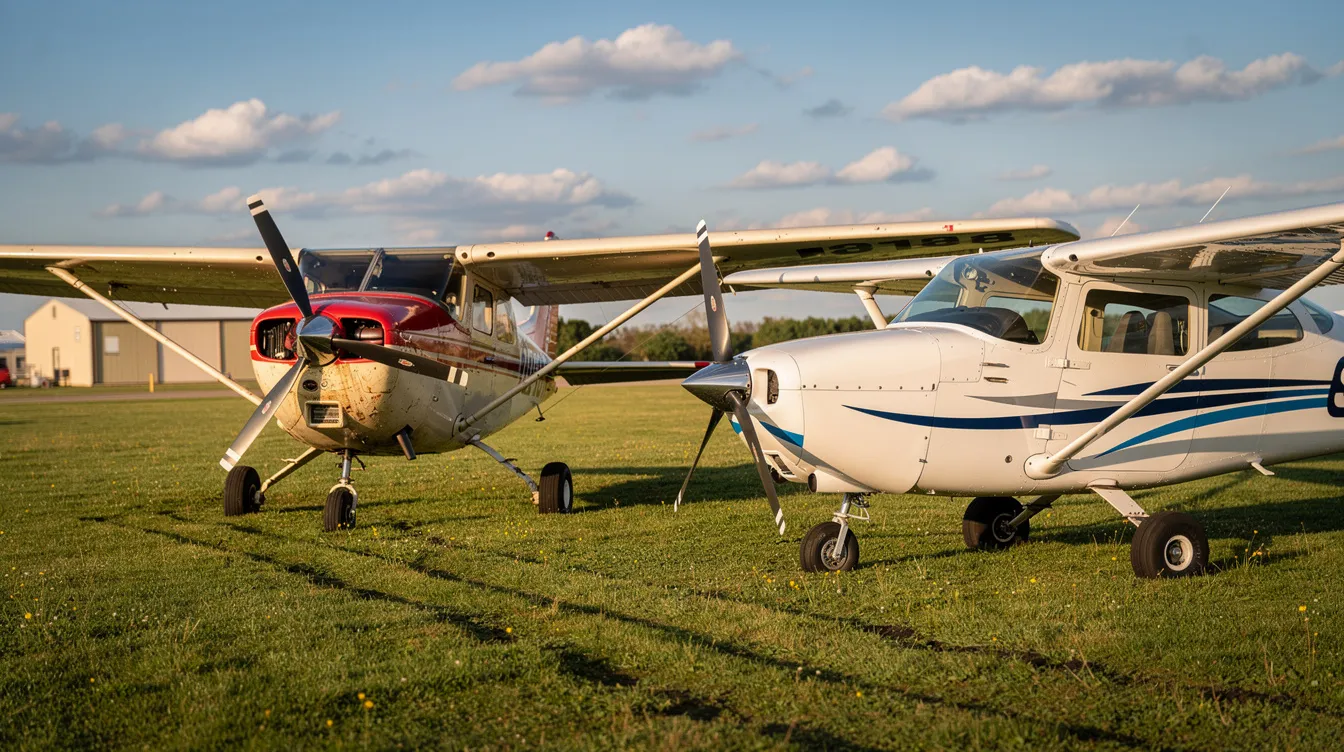
While early Cessna 100-series wings (covering the 150, 170, and 172 families) shared a common design philosophy, differences in spars, skin thickness, attachment fittings, and leading-edge profiles accumulated over time. Each variant's wing was certified to its own set of structural and performance standards under TCDS 3A12.
Cessna 172 wings can fit on Cessna 170B airframes. Owners in the International Cessna 170 Association community have documented cases of installing 1965 172F or 1967 172H wings on 1952-1953 170Bs. The spar attach points align on the Left Wing and right side, and the overall geometry is close enough for a physical fit.
But physical fit and legal approval are separate matters. Documentation is required for wing compatibility changes. Each case depends on part numbers, the condition of the donor wing, and whether owners can find complete donor documentation before assuming the swap can be approved. A 170B owner in 2000, working through the Harrisburg FSDO, received approval to install B-model wings on an A-model airframe using a Cessna informational letter as supporting data.
Wings must be from aircraft of equal or higher gross weight. This is a core principle in FAA logic: a wing rated for a heavier airplane carries structural margin when installed on a lighter one. The reverse raises questions about spar and skin loads that the wing may not have been designed to handle.
Key point: "fitting" is not "approved." Field approvals, engineering data, and precise logbook entries are all required to keep the aircraft legal and insurable.
Gross weight is the maximum certified takeoff weight for the complete airplane. Wings from a model with a higher gross weight rating carry more structural margin, which is why the FAA and most inspectors prefer donor wings rated at or above the receiving airframe's limit.
Representative figures show how capacity evolved:
|
Model |
Approximate Max Gross Weight |
|---|---|
|
172 A-H (1955-1968) |
~2,200 lb |
|
172P (1981-1986) |
~2,400 lb |
|
172R (1996+) |
~2,450 lb |
|
172S (1998+) |
~2,550 lb |
Installing wings from a 172S onto an earlier 172 does not automatically raise the receiving airplane's certified gross weight. The gross weight limit applies to the entire airframe: fuselage, landing gear, tail structure, and engine mount must all be rated for the higher load. A wing swap alone does not satisfy that requirement.
Any intent to change the certified weight demands engineering justification (factory data, STC, or DER analysis) and explicit FAA approval. This is a certification project, not a weekend repair.
Differences in electric flaps and fuel systems may exist between donor and receiving wings. Manual flaps used a Johnson-bar handle in the cockpit with mechanical detents; electric flaps (standard from the 172E onward) use motors, cables, and limit switches controlled by a panel-mounted switch.
Flap travel ranges vary. A wing with 40-degree flap capability bolted onto an airframe certified for 30-degree flaps requires limit switch adjustment, placard changes, and documentation. Fuel system changes are equally important: earlier models carried roughly 40 usable gallons; later variants like the 172S hold 56 usable gallons. Tank construction, venting, and fuel quantity sending units differ between generations.
Retrofitting 172 wings onto a 170B that originally used a different flap system means adding wiring for the flap motor, installing cockpit switches, and matching fuel gauge senders to the instrument panel. The 170B's original fuel indication may have been a simple sight gauge; a 172F wing uses electrical float senders. An IA or avionics technician must reconcile these interfaces to satisfy airworthiness standards.
Electrical system voltage also changed: many 172N and later models shifted from 14-volt to 28-volt systems, which affects flap motor compatibility and wiring gauge requirements.
Under 14 CFR Part 43, Appendix A, swapping wings between dissimilar models qualifies as a major alteration because it can affect structural strength, aerodynamics, fuel systems, and flight characteristics. The installer must file FAA Form 337 and prove the new wings are equal or better in strength, flutter margin, and systems safety.
The regulatory categories break down as follows:
Standard repair: using OEM parts with matching part number from the same model. Straightforward logbook entry.
Major repair/alteration: cross-model wing swap. Requires Form 337, approved data (STC, DER report, or AC 23-27 guidance package), and sometimes a field approval from the local FSDO.
STC-based modification: a pre-approved design change that the owner purchases and the installer follows per instructions.
The typical field approval process involves gathering data (including any Cessna letters), preparing drawings, submitting to the FSDO, and waiting for review. Owners report the process as slow but achievable with patience and a cooperative inspector.
Without proper FAA sign-off, the aircraft risks being grounded, unsellable, or what mechanics sometimes call a "paperweight" in regulatory terms. Insurance companies will deny claims on an airplane flying with undocumented major alterations.
Cessna provides guidance letters for wing replacements across the 100-series family. These informational letters suggest that wings from 170, 172, and 175 models may substitute for one another if five conditions are met: matching airfoil, donor gross weight equal to or higher than the receiving aircraft, compatible fuel systems, compatible flap systems, and proper documentation.
These letters are not engineering approvals. They are opinion or informational documents that an IA or FAA inspector may use as part of a data package to support a field approval. Some FSDOs accept them readily; others require formal DER analysis on top of the letter.
The concept of similar items in maintenance practice holds that parts demonstrably equivalent in form, fit, and function may serve as acceptable substitutes. But "demonstrably equivalent" requires approved data, not assumption. In the Harrisburg FSDO case from 2000, the inspector accepted a Cessna letter plus donor aircraft records as sufficient to approve the swap. Results vary by office and inspector, so owners should engage their local FSDO early in the planning process.
Picture this: a buyer finds a Cessna 170B at a reasonable price, only to discover during pre-purchase inspection that 172 wings were installed decades ago with no Form 337, no logbook references to part number or serial number, and no weight-and-balance update. That airplane is, for practical purposes, grounded until an inspector reconstructs the approval basis.
Minimum documentation for any wing work includes:
Logbook entries citing the wing's part number (pn), serial number, and donor aircraft model
FAA Form 337 for any major alteration
Updated weight-and-balance calculations reflecting new empty weight and CG
References to STCs, DER reports, or factory letters used as approved data
Photographs of installation and any modifications to flap or fuel systems
Undocumented modifications trigger insurance denial, pre-purchase red flags, and possible grounding. Some aircraft with missing paperwork have been removed from service until inspectors re-derive the configuration; that process can take months and cost thousands.
Before buying replacement wings, confirm the paperwork history of both the donor aircraft and the receiving airframe. A clean paper trail is worth as much as the hardware itself.
Rebuilding original Cessna 172 wings preserves the airplane's original configuration and simplifies FAA interactions. No cross-model compatibility questions arise. But rebuilding corroded spars, replacing skins with hail damage, and overhauling fuel tanks takes specialized shop time. Labor costs can exceed the price of a replacement wing assembly from salvage.
Replacement wings can be attractive when they come from a low-time airframe or a variant with a higher gross weight rating. Cessna 172 wings are available on eBay and through salvage operations. Texas Air Salvage stocks thousands of used aircraft parts, including wing assemblies, and some owners struggle to find hard-to-find replacements or related propellers from the same inventory. Cessna 172 wings can be purchased as complete assemblies, though Cessna wings are sold as structures only, excluding components like flap actuators, fuel senders, and navigation lights, which must be sourced or transferred separately. Prices for Cessna 172 wings range from $19.49 for minor items like tips or fairings to $5,500.95 for a complete wing structure.
Some owners work with salvage companies that clearly describe damage, removed parts, condition of sale, and seller or manufacturer details in the listing. Checking the display of stock listings carefully and reading every comment or note about the wing's history prevents surprises at installation time. Because of shipping risk, some sellers require payment by cash or bank wire transfer for local pickup or high-value parts.
Whether wings are original, rebuilt, or purchased from salvage, a thorough inspection covers these items:
Spars and ribs: corrosion at attach points (front and rear spars), spar cap cracks, carry-through fitting condition
Skins: dents, hail damage, wrinkling at rivet lines, leading-edge erosion
Strut attach fittings: wear, elongation, corrosion in bolt holes
Flap tracks and rollers: binding, misalignment, worn guide rails; check electric flap motor alignment
Aileron hinges and bell cranks: play, corrosion, control cable tension
Fuel tanks: leaks, staining on lower skins, condition of bladders (in long-range configurations), float senders, fuel cap sealing, vent lines
Wing attach bolts: condition, torque, corrosion; aft spar bolts used to adjust dihedral
Previous repairs: patches, doubler sheets, fiberglass repairs to wingtips or fairings, mixing of leading-edge profiles (Camber-Lift vs. straight)
Windows and inspection panels: security, crazing, missing fasteners

For pilots chartering or renting, knowing that the operator follows strict inspection schedules provides confidence. Operators regulated under FAR Part 135 maintain detailed inspection records that cover wing structure, control surfaces, and fuel systems, and understanding how Part 135 charter companies are regulated and audited helps travelers verify that oversight in practice.
Wing configuration in the Cessna 172 interacts directly with landing gear design. The fixed tricycle gear is designed to absorb loads calculated for the airplane's certified gross weight and wing lift characteristics. Changes to flap type, wing span, or dihedral alter approach speeds and touchdown loads, which in turn affect gear fatigue.
Modifications such as larger tires, STOL kits, or vortex generators are sometimes certified together with wing changes. A STOL kit that adds leading-edge cuffs and modified flap gap seals can reduce stall speeds by 5-8 knots, shortening takeoff rolls on grass or gravel strips. But these kits are certified as packages; installing one component without the others can void the approval.
Heavier or higher gross weight variants of the 172 often carry reinforcing changes in the main landing gear legs, nose gear, and aft tailcone to balance loads across the airframe. Pilots moving from an early 2,200 lb model to a 2,550 lb 172S report noticeably different ground handling and climb gradients, differences driven partly by wing loading changes (the 172S has a wing loading of about 14.7 lb per square foot).
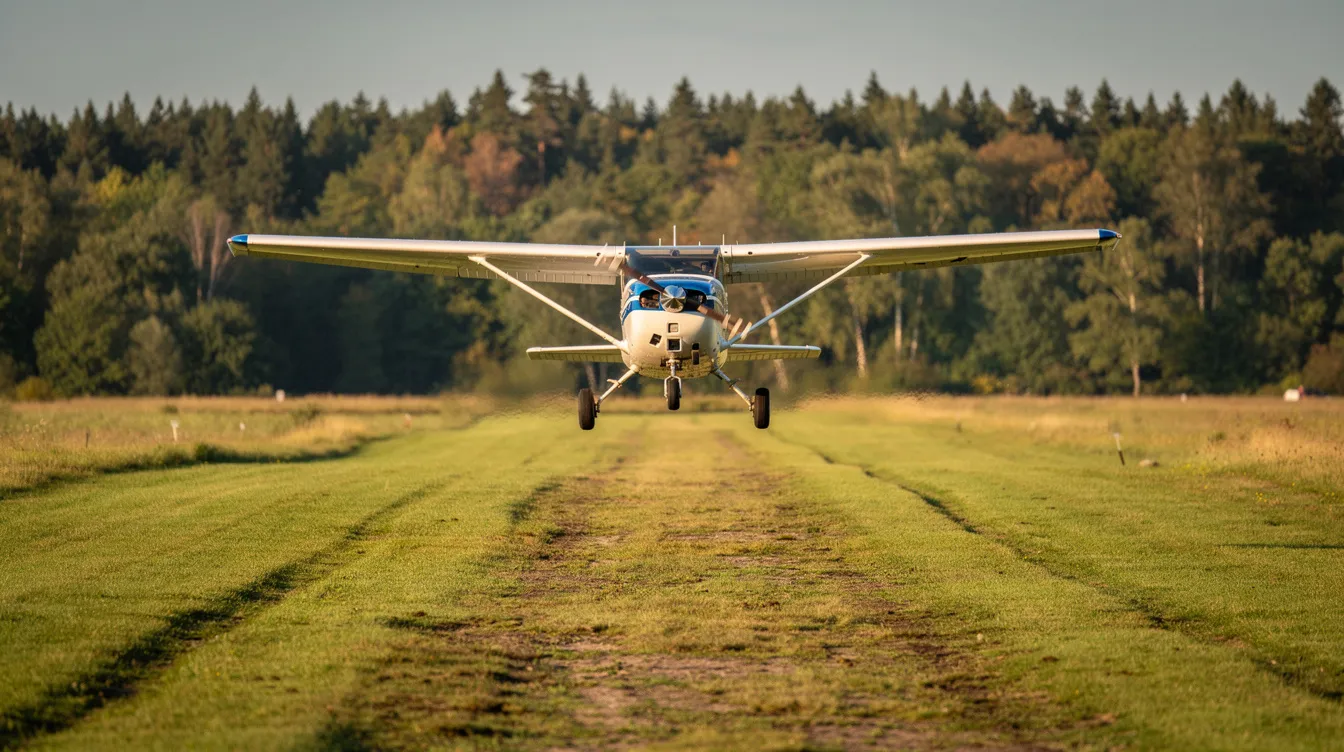
The Cessna 172's forgiving handling and low stall speeds make it the default choice for primary flight training, time-building, and sightseeing. For short-range business hops where a pilot needs seats for two or three passengers plus light baggage, the 172 delivers predictable performance at a modest operating cost, and a basic grasp of how renting a plane works from booking to billing helps set expectations before you show up at the hangar.
While Jettly's core inventory focuses on jets and turboprops, piston aircraft like the Cessna 172 appear across the general aviation ecosystem. Jettly’s broader private charter aircraft network spans everything from light pistons to ultra-long-range jets, giving travelers flexibility to match mission profile to aircraft type. Operators who also provide charter services fly these airplanes on training contracts and scenic routes. Buyers, renters, and charter clients can ask operators about maintenance history, including wing inspections and any major structural work, as part of due diligence.
Reliable wing condition connects directly to schedule reliability and safety. Whether an owner is evaluating a Cessna Skyhawk for sale or a traveler is booking a short regional flight, using a private jet charter cost estimator to understand pricing inputs alongside the airplane's maintenance record tells the story.
Ready to explore private travel on your terms? Request a quote or browse aircraft options at https://www.jettly.com.
No. Installing wings from a higher gross weight variant does not automatically raise the receiving aircraft's certified gross weight. The certified limit applies to the entire airframe, including the fuselage, landing gear, engine mount, and tail. Any gross weight increase requires a formal engineering justification (STC, factory data, or DER report) and explicit FAA approval, which is a certification project involving stress analysis and flight testing, not a simple parts swap.
Flying with undocumented major alterations is non-compliant with 14 CFR Part 43 and puts the pilot at legal and insurance risk. An IA or designated inspector will typically require reconstruction of the approval basis, which may involve engineering review, a new Form 337, and possibly a conformity inspection. Prospective buyers should treat missing paperwork as a red flag and budget both time and money, often several thousand dollars and months of calendar time, to bring the aircraft back into clear regulatory status.
Check the wing's data plate for part number and serial number, then cross-reference against the Cessna illustrated parts catalog and TCDS 3A12. The part number identifies the model variant and its certified gross weight. Reputable salvage yards like Texas Air Salvage normally provide model, serial, and condition information with each listing. An experienced IA can verify compatibility against the receiving airframe's type certificate before you buy.
Dedicated STCs for this specific conversion are uncommon. Most successful installations have relied on case-by-case field approvals backed by engineering data and Cessna informational letters. Owners should search the FAA STC database and consult type-club communities (the International Cessna 170 Association posts discussions on this topic regularly) for current information. STC availability can change, so checking with the local FSDO before starting work saves time.
Jettly is a charter marketplace and broker, not a maintenance organization. It does not perform wing replacements, structural work, or any hands-on aircraft modifications. Jettly partners only with licensed operators who hold the certifications required to keep aircraft airworthy, including maintaining Cessna 172 wings and other critical structures in accordance with FAA or applicable national regulations. Travelers can learn more about available aircraft and operators at https://www.jettly.com.
Cessna 172 wings are durable, well-understood structures backed by decades of service data. But any change from the original configuration, especially a swap onto a 170B or between dissimilar 172 variants, must address gross weight compatibility, systems differences (flaps, fuel, wiring), and FAA approval through Form 337 or STC.
Thorough documentation, use of approved data, and careful inspection protect both safety and resale value. Whether an owner chooses to rebuild original wings or install comparable parts from a donor airframe, the paperwork trail matters as much as the hardware.
Travelers who book aircraft through modern charter platforms benefit when operators maintain clear maintenance records and configuration histories. For anyone interested in exploring private flight options, from single-engine piston aircraft to long-range jets, Jettly connects passengers with licensed operators across a global network, and structured private jet membership programs with wholesale-style pricing can make frequent use more predictable from a budgeting standpoint.
Share this post:
Jay Franco Serevilla
Aug 13, 2026
|
5
min read
Discover tips and trends in the industry.

5
min read
Phoenix to Las Vegas Flight Time: How Long Is the Trip and What Are Your Options?
The flight time from Phoenix to Las Vegas averages about 1 hour and 12 minutes for nonstop commercial flights. With three airlines offering direct service, travelers can choose between convenience and speed, or opt for private jet charters for a quicker door-to-door experience. Factors like airport logistics and flight schedules can influence total travel time, making it essential to consider all options before booking.
Read More
5
min read
How Far in Advance to Book Flight for Best Price (and When Private Jets Make Sense)
Booking flights at the right time can save you money, with domestic flights best booked 1 to 3 months in advance and international flights 2 to 8 months ahead. Understanding pricing dynamics and using tools like fare alerts can help you find the best deals. For those needing flexibility or last-minute travel, private jets may offer better value despite higher upfront costs.
Read MoreStay updated with our latest insights and tips to elevate your journey with us.
MEMBERSHIPS AND ASSOCIATIONS



Disclaimer: Jettly operates as a charter broker, offering access to a global digital jet charter marketplace. Jettly is not a direct air carrier and does not own or operate aircraft. All advertised flights are conducted by third-party air carriers that are fully licensed and hold the appropriate Part 135 or Part 121 certifications issued by the Federal Aviation Administration (FAA) or equivalent regulatory authorities under U.S. or foreign law. Jettly complies fully with the U.S. Department of Transportation's Part 295 and Part 298 Charter Broker regulations. Jettly does not carry additional liability insurance. Passengers are covered by aircraft operator insurance. TICO: 50023770


