


Login
Get Instant Pricing On 23,000+ Aircraft

>
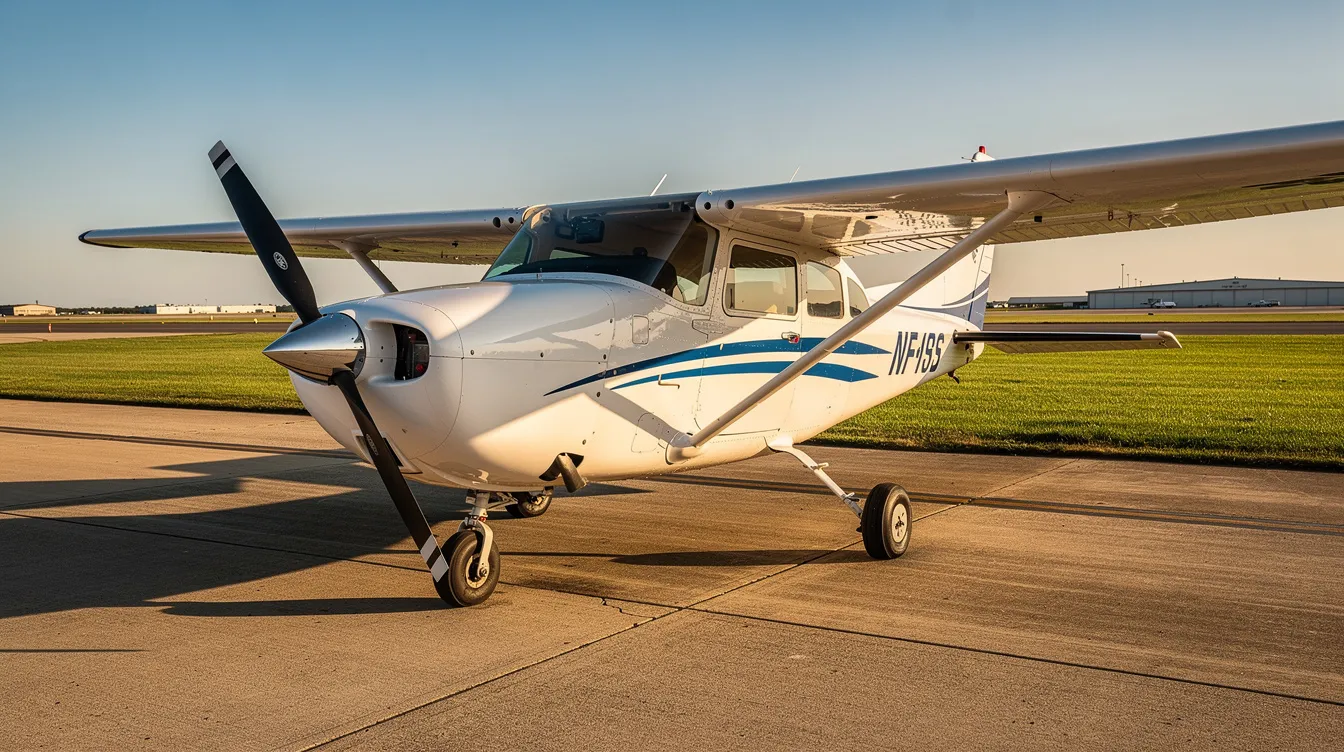
This guide is designed specifically for student pilots and Cessna 172S owners who want to master the essential skills of aircraft documentation and safe operation. Whether you are just beginning your flight training or are an owner seeking to deepen your understanding of your aircraft, this resource will help you navigate the Cessna 172S Pilot Operating Handbook (POH) and the Information Manual. The guide covers the structure and content of the POH, explains how to use its data for real-world flight planning, highlights the key differences between the official POH and the generic Information Manual, and demonstrates practical applications for both training and everyday flying.
Understanding the POH is critical for safety, legal compliance, and pilot proficiency. The POH is not just a reference—it is a regulatory document that defines how to operate the aircraft within its certified limits, ensuring every flight is conducted safely and in accordance with FAA requirements. By mastering the POH, pilots build a foundation for sound decision-making, effective preflight planning, and confident handling of both normal and emergency situations. In summary, this guide will help you become a safer, more knowledgeable, and legally compliant pilot or owner by unlocking the full value of the Cessna 172S POH.
The Cessna 172S Pilot Operating Handbook is an FAA-approved, serial number specific document required on board for every flight. The Cessna 172S Information Manual is a study reference, not a legal replacement.
Every student pilot should learn the POH layout early, focusing on limitations, normal and emergency procedures, and performance sections.
Understanding the POH improves safety, preflight planning, and dispatch decisions for cross-country or IFR operations in a 172S.
The POH is crucial for student pilots and professionals transitioning between aircraft types.
The same emphasis on documentation, safety, and aircraft-specific data found in the 172S POH applies to turbine aircraft in Jettly's global charter network.
A pilot operating handbook is the official reference manual for a specific aircraft. For the Cessna 172S, it covers everything from engine specs to emergency checklists and performance charts. The Pilot's Operating Handbook is FAA-approved and required on all flights under 14 CFR 91.9.
The Cessna 172S POH is specific to the aircraft model and tied to a single airplane by serial number. It includes the installed equipment list, avionics configuration, and any supplements for modifications or STCs on that plane. Pilots should carry the POH during flights; without it, the aircraft is not properly documented.
The Cessna 172S Airplane Information Manual, often sold online as a separate product, contains the same operating data, limitations, and procedures. The difference: it is not serial number specific and carries no FAA approval. That makes it ideal for home study, ground school, and cockpit familiarization, but it cannot replace the original POH on board.
Typical retail details keep this concrete. The Cessna 172S manual costs $149.95 and includes checklists and performance charts. 86% of reviewers rated the manual 5 stars, highlighting its value for students and professionals alike. However, the manual is currently backordered until August 17, 2026, so early ordering is recommended.
Finding the correct manual has been difficult for years. Just as the 172S POH is the definitive reference for that model, private jets in Jettly's network rely on type-specific flight manuals and operating limitations for each aircraft.
The 172S POH follows the standard GAMA 9-section format. Learning this structure helps pilots transition between aircraft later in their careers, since most modern GA manuals use the same layout.
Here is what each section covers:
|
Section |
Title |
What It Includes |
|---|---|---|
|
1 |
General |
Aircraft dimensions (36 ft 1 in wingspan, 27 ft 2 in length), engine description, definitions |
|
2 |
Limitations |
Maximum takeoff weight (2,558 lbs), approved fuel grades, flap limits, maneuvering speed |
|
3 |
Emergency Procedures |
Immediate-action items and checklists for engine failure, fire, and other emergencies |
|
4 |
Normal Procedures |
Standardized flows and checklists for startup, taxi, takeoff, cruise, landing, shutdown |
|
5 |
Performance |
Takeoff/landing distance charts, climb rates, cruise speeds, fuel consumption tables |
|
6 |
Weight & Balance |
Empty weight, moment/arm tables, loading graphs, sample problems |
|
7 |
Systems Description |
Fuel, electrical, pitot-static, avionics (often Garmin G1000 or G1000 NXi in newer 172S aircraft) |
|
8 |
Handling & Maintenance |
Servicing, lubrication, daily inspection guidelines |
|
9 |
Supplements |
Autopilot, GPS, ADS-B equipment procedures and limitations for installed options |
The POH covers aircraft systems in detail to aid pilots in operating the aircraft. The POH's emergency procedures contain checklists that may require immediate action. The POH specifies normal and emergency operating procedures for the aircraft, and the Cessna 172S POH includes checklists and performance charts tailored to the 180-hp Lycoming IO-360-L2A engine.
Pilots flying a single-engine plane with non-standard avionics must review Section 9 supplements to confirm that procedures and limitations match the installed equipment.
Early familiarity with the 172S operating handbook helps student pilots progress faster through pre-solo, cross-country, and checkride phases. The manual is essential for students and professionals at every stage.
Three chapters deserve priority:
Emergency Procedures: Memory items for engine failure on takeoff, in-flight fire, and electrical malfunctions. Emergency procedures in the POH provide immediate actions for in-flight emergencies.
Normal Procedures: Standardized flows and checklists that build consistency and safety.
Limitations: Speeds, weights, and fuel requirements that define the operating envelope.
The handbook outlines specific V-speeds critical for safe operation, including operational airspeeds such as Vx (approximately 62 KIAS) and Vy (approximately 74 KIAS) for performance. Students should memorize these and understand how weight or configuration changes affect them in their specific aircraft.
Flight instructors often assign POH-based homework: calculating takeoff distance for a summer afternoon at a 3,000-ft elevation airport, or computing expected fuel burn for a 250 nm dual cross-country. Working through these exercises also gives students answers to common performance-planning questions. The instrument panel diagram in Section 7 helps students learn switch locations, though some information manuals have low-contrast black-and-white page images that are harder to read than the originals.
This learning mindset prepares pilots to interpret more complex aircraft flight manuals later, including the multi-engine and jet types commonly available through Jettly's charter platform or when choosing the best cross-country aircraft for longer missions.
Pilots utilize the POH for performance calculations during preflight planning. Every preflight session uses the book's tables and charts to determine takeoff and landing distances, rate of climb, cruise true airspeed, and fuel burn for a specific trip.
Performance information in the POH includes takeoff distances and climb rates. At gross weight, sea level, on a standard day: takeoff ground roll is approximately 960 ft, with 1,630 ft needed to clear a 50 ft obstacle. Rate of climb reaches about 730 fpm at sea level. The service ceiling for the Cessna 172S is 14,000 feet. Cruise speed at 75% power runs approximately 124 knots.
The POH provides takeoff and landing distances based on aircraft weight and conditions. Using the POH correctly can help to achieve optimal fuel efficiency during flights by selecting the right cruise power setting for a given altitude and temperature.
Weight and balance computations rely on moment/arm tables, loading graphs, and sample problems in Section 6. FAA checkrides often require applicants to demonstrate proficiency using these exact formats. Real-world pilots add 10-20% safety margins on top of published data for short, soft, or high-density-altitude runways.

IFR planning in a 172S; predicting climb to MEA, fuel to alternate, and reserves; relies on the same cruise and climb tables. Operators in Jettly's network use aircraft-specific manuals and performance software for similar calculations, just at higher altitudes and faster speeds, often supported by airport locator and charter planning tools.
The POH is not a guidebook. It is a regulatory document that defines the operating envelope of the 172S under its type certificate. The POH includes operational limitations for the aircraft.
Key limitation categories pilots must reference directly from their own POH:
Airspeed limitations (color arcs and redline, including VNE of approximately 163 KIAS)
Limitations in the POH indicate the maximum weight and operational constraints (maximum takeoff weight of 2,558 lbs)
Center-of-gravity envelope
Fuel grade and usable fuel capacity (56 gal total, 53 gal usable)
Environmental restrictions (the 172S is typically not certified for known icing)
Many flight schools standardize on the Cessna 172S because of its forgiving handling and clear documentation. Each aircraft can still differ in equipment lists or supplemental type certificates that alter certain limits.
Emergency procedures are tailored to the 172S systems layout. Practicing both checklist use and memory items drawn from the POH improves reaction time. FAA inspectors and designated pilot examiners frequently ask applicants to locate specific limitations and procedures in the POH during practical tests.
Charter operators accessed through Jettly follow strict regulatory guidance, and their crews rely on aircraft flight manuals the same way a 172S pilot relies on a POH, operating under documented Part 135 charter company regulations and standards. The POH helps pilots understand the mechanics of the aircraft systems, whether those systems power a piston trainer or a business jet.
If you are considering purchasing a Cessna 172S Information Manual for training or self-study, it can be a great study resource before you get into the details checklist and order.
Confirm the exact model and year. A manual written for a 2004 172S with analog gauges will not match a 2018 172S equipped with a Garmin G1000 NXi glass cockpit. Systems descriptions, procedures, and even some limitations differ between variants.
The Cessna 172S manual costs $149.95 from most retailers. The manual includes checklists and performance charts. 86% of customer reviews rated the manual 5 stars. However, stock can be limited; the manual is backordered until August 17, 2026, at some sellers. Many buyers say it was exactly what they wanted. Student pilots should order early to avoid delays.
Treat the information manual as a study copy to highlight, tab, and annotate. Keep the serial number specific POH in the aircraft clean, current, and intact for legal and operational use. A Cessna 172S Information Manual is not a legal replacement for a missing or damaged POH. An FAA-approved replacement must come through Cessna (Textron Aviation) or an authorized channel tied to the aircraft's serial number.
The disciplined planning and POH literacy learned in a Cessna 172S transfers directly to private aviation, including when exploring crowdsourced private jet flights and empty-seat sharing. Lots of pilots and owners who train in 172S aircraft outgrow the speed and range of a four-seat piston for certain missions. Multi-city business trips or international family vacations often call for something faster, including options to book individual seats on shared private jet flights. The POH is essential for transitioning to new airplanes, since the same habits of checking performance data and limitations apply to every aircraft type—whether you're comparing potential cross-country platforms or evaluating a Jettly-powered alternative to traditional fractional programs like NetJets.
Jettly functions as a digital private jet charter marketplace, giving customers access to a global inventory of aircraft; turboprops, light jets, and long-range business jets; without long-term contracts or fractional ownership commitments, and tools like a jet card flight cost estimator for common routes. Just as the 172S POH provides transparent performance and limitation data, Jettly emphasizes transparent, up-front charter pricing and instant quotes.
Safety and regulatory compliance remain central. Charter operators in Jettly's network maintain and dispatch a broad range of private charter aircraft according to manufacturer manuals and staff flights with professionally trained crews familiar with their aircraft flight manuals. For pilots, owners, and aviation-savvy travelers who respect the structure and safety culture represented by the Cessna 172S POH, Jettly is a natural next step when a trip needs the cabin space and scheduling flexibility of a private jet, especially through structured options like Jet Card corporate and personal programs.

Ready to explore flight options beyond the 172S—or even share those bookings through Jettly's high-ticket affiliate referral program?' Consider Jettly's range of private jet membership options, then request a quote at https://www.jettly.com.
These questions address practical concerns not fully covered above. For regulatory interpretations, confirm with your flight school or local aviation authority.
Under FAA rules, the aircraft must carry the specific, FAA-approved Pilot Operating Handbook or Airplane Flight Manual for that serial number. A generic Cessna 172S Information Manual does not satisfy this requirement. While the information manual is excellent for study and reference, verify with your flight school or aircraft owner that the correct original POH or legally approved replacement remains in the airplane.
The true POH lists the aircraft's model, serial number, and registration on its title or revision pages. A generic information manual typically shows only the model and publication date. Compare the equipment list, avionics description (Garmin G1000 vs. analog gauges), and supplements section to the actual aircraft panel to confirm that checklists, limitations, and procedures align with what is installed.
Many pilots and flight instructors use scanned or pdf copies on tablets for convenience during ground study or in the cockpit. Regulatory acceptance of electronic manuals varies by authority and operator. Private owners and student pilots should treat the physical, FAA-approved POH as primary and keep it on board, using digital versions as backups unless formally approved for paperless operations.
Genuine, serial number specific POHs are obtained through Cessna (Textron Aviation) or an authorized service center. They cost more than generic information manuals because they are tied to the aircraft's certification. Have your aircraft registration, serial number, and current configuration details ready when you place the order so the correct supplements and equipment list are included.
Familiarity with performance charts, limitations, and checklists in the 172S makes travelers more informed when evaluating charter trip details like runway length, weather considerations, and aircraft selection. Charter platforms like Jettly rely on similar aircraft-specific documentation for jets and turboprops, so pilots and frequent flyers who understand POHs can better appreciate safety margins, routing choices, and the time-saving advantages of private aviation.
The Cessna 172S POH is an indispensable resource for student pilots and aircraft owners, providing detailed, FAA-approved information essential for safe and efficient operation. While the generic Information Manual serves as a valuable study tool, only the serial number-specific POH is legally required on board. Understanding the POH's sections—from limitations and emergency procedures to performance charts—enhances flight planning, safety, and pilot proficiency.
For those progressing beyond training in a Cessna 172S, the skills gained in interpreting aircraft manuals translate directly to private aviation. Platforms like Jettly offer access to a wide range of aircraft with their own detailed manuals, ensuring transparent and informed charter experiences. Whether planning a local flight or a multi-city business trip, mastering the POH is a foundational step toward confident, flexible private air travel.
Ready to experience private travel on your terms? Explore flight options or request a quote at https://www.jettly.com.
Share this post:
Jay Franco Serevilla
Aug 13, 2026
|
5
min read
Discover tips and trends in the industry.

5
min read
Burbank to Las Vegas Private Jet Charter Guide
This guide provides essential information for travelers considering a private jet charter from Burbank to Las Vegas. Covering flight options, pricing, and airport choices, it highlights the benefits of bypassing LAX congestion and maximizing convenience. Jettly's on-demand marketplace offers flexible booking and transparent pricing for a seamless travel experience.
Read More
5
min read
Delta Flash Sale: How to Maximize SkyMiles Deals (And When a Private Jet Makes More Sense)
Delta flash sales offer significant discounts on SkyMiles award flights, making travel more accessible. This guide details how to maximize these deals, stack credit card perks, and when private jet charters may be a better option for travelers seeking flexibility and privacy.
Read MoreStay updated with our latest insights and tips to elevate your journey with us.
MEMBERSHIPS AND ASSOCIATIONS



Disclaimer: Jettly operates as a charter broker, offering access to a global digital jet charter marketplace. Jettly is not a direct air carrier and does not own or operate aircraft. All advertised flights are conducted by third-party air carriers that are fully licensed and hold the appropriate Part 135 or Part 121 certifications issued by the Federal Aviation Administration (FAA) or equivalent regulatory authorities under U.S. or foreign law. Jettly complies fully with the U.S. Department of Transportation's Part 295 and Part 298 Charter Broker regulations. Jettly does not carry additional liability insurance. Passengers are covered by aircraft operator insurance. TICO: 50023770


