


Login
Get Instant Pricing On 23,000+ Aircraft

>
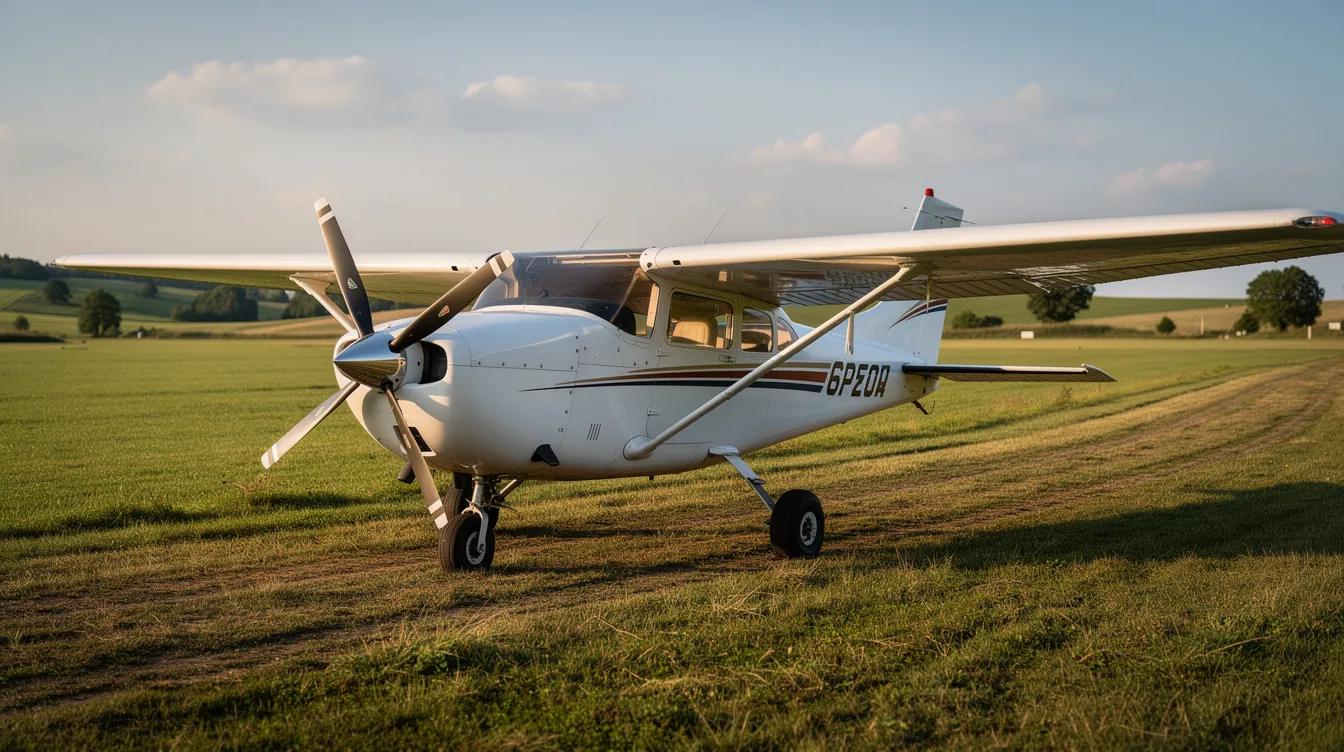
The Cessna 182 useful load is one of the first numbers pilots check when deciding whether this airplane fits their mission. Get it wrong, and you're either leaving passengers behind or cutting fuel short. This guide breaks down the real numbers across every major Cessna 182 generation, walks through practical loading scenarios, and explains what those numbers mean for flight planning and private travel.
Useful load is simple math: take the max takeoff weight of an airplane and subtract its empty weight. What remains is everything you can carry - fuel, passengers, and baggage. For an American four-seat, single-engine high-wing design like the Cessna 182 Skylane, originally introduced in 1956, useful load determines whether you can realistically carry four adults with bags and enough fuel for your route.
The useful load of a Cessna 182 typically ranges from 1,100 to 1,250 pounds across classic models. A 1970s 182P, for example, has a standard empty weight around 1,707 lb and a gross weight of 2,950 lb, leaving roughly 1,243 lb of useful load, while newer models like the 182T tend to land between 1,000 and 1,200 lb depending on installed equipment and trade some payload margin for updated engine power and equipment.
The Turbo Skylane (T182T) tells a different story. With a max takeoff weight of 3,100 lb and a basic empty weight around 2,114 lb, the Cessna 182 has a useful load of 998 pounds in its turbocharged configuration. Add air conditioning, de-ice systems, or advanced avionics, and heavily optioned Cessna 182s have reduced useful loads that can dip below 950 lb.
What does this mean for real missions?
Full fuel + two adults + baggage: Usually works within limits on most models.
Four adults + bags + partial fuel: Often possible on classic Skylanes but tight on turbo variants.
Useful load affects flight planning, balancing fuel and passenger capacity on every flight. The Cessna 182 carries four adults comfortably in its cabin, but weight limits may force tradeoffs between people and fuel. For travelers booking through Jettly, the solution is straightforward - when a mission exceeds what a 182 can handle, the platform makes it easy to select a larger aircraft from its extensive private charter aircraft network.
Every load calculation starts with a handful of key terms, including how installed equipment and system components affect empty weight. Empty weight includes the airframe, engine, permanently installed equipment, unusable fuel, and full oil. Useful load is everything above that. Maximum ramp weight covers the aircraft before taxi, while max takeoff weight is the limit at the start of the takeoff roll. The Cessna 182's maximum landing weight is 2,950 pounds on most modern variants.
Here are representative numbers by model:
|
Model |
MTOW (lb) |
Typical Empty Wt (lb) |
Useful Load (lb) |
MLW (lb) |
|---|---|---|---|---|
|
182Q |
2,950 |
1,700–1,800 |
1,150–1,260 |
2,950 |
|
182T |
3,100 |
1,900–2,032 |
1,070–1,200 |
2,950 |
|
3,100 |
2,114–2,190 |
908–998 |
2,950 |
A real-world POH example: 3,100 lb MTOW minus 2,191.5 lb actual empty weight equals just 908.5 lb of useful load - well below the brochure claim. The gap comes from operator-installed options that inflate empty weight beyond the factory standard figure.
The location of weight in the aircraft affects the center of gravity and flight stability. Even when total weight is legal, loading bags too far aft or piling passengers forward can push the CG outside limits and make the airplane unsafe. Charter operators working under Part 135 - including those on Jettly's platform - must comply strictly with these weight and balance regulations, and understanding how Part 135 charter companies are regulated helps explain why weight and balance paperwork is so rigorous.
The Cessna 182 family spans seven decades, from mid-1950s straight-tail production models to modern glass-cockpit Skylanes. Each generation brought more features, more comfort, and more empty weight.
Early 182/182A–C (1950s–60s): MTOW around 2,650 lb, empty weight roughly 1,621 lb, and length was about 25 ft 10 in. Useful load often exceeded 1,000 lb but fuel capacity and range were modest. The Omni Vision rear window, introduced in 1962, became a signature Cessna feature with the wider fuselage.
182P/182Q (1970s–80s): MTOW standardized at 2,950 lb. Empty weights around 1,700–1,800 lb delivered useful loads of 1,150–1,260 lb. These remain popular with flight schools and private pilots for their load-carrying capability.
182S (1990s): MTOW climbed toward 3,100 lb, but added avionics and interior weight kept useful loads around 1,050–1,150 lb.
182T / T182T (2000s onward): MTOW 3,100 lb. Empty weights above 2,000 lb - especially on turbocharged models - compress useful loads into the 920–1,050 lb range.
Comparing fixed-landing-gear Skylanes with the older 182RG variant with retractable landing gear, the RG's gear mechanisms and extra systems add weight and maintenance complexity. A 1978 R182 carried roughly 1,292 lb of useful load before fuel but required more expensive upkeep. Any numbers quoted should be verified against real POH data or AOPA type certificate references, not marketing claims alone.
Aviation gasoline weighs approximately 6 lb per US gallon. Every gallon you pump reduces what's left for people and bags. A Cessna 182 holds about 87 gallons of usable fuel, weighing approximately 522 pounds. The T182T's tanks hold around 92 gallons total (87 usable), and older models typically carry 80–88 gallons depending on tank options.
Here's how fuel capacity shapes real missions:
Full fuel in a T182T (522 lb) against a useful load of 998 lb: with full fuel, the cabin can carry 398.5 pounds for occupants plus baggage. That covers two average adults and modest bags - not four.
Partial fuel (60 gal ≈ 360 lb) in a 182Q with 1,150 lb useful load leaves 790 lb for passengers and gear - enough for four adults on a shorter leg.
The aircraft burns approximately 14 gallons of fuel per hour during cruise, which translates to hourly fuel costs ranging from $77 to $105 based on current avgas prices. Fuel consumption averages 14 gallons per hour during cruise, and many pilots treat fuel as the flexible variable: fly 60–70 gallons instead of full tanks for regional trips, and use fuel totalizers to track burn precisely for fuel economy.
The Cessna 182 has a maximum range of 971 nautical miles under optimal conditions, but achieving that range means carrying more fuel - and fewer passengers. For Jettly clients planning true cross-country travel missions on longer legs, a step up to a turboprop or light jet may be more practical than aggressively limiting passengers or fuel in a 182.
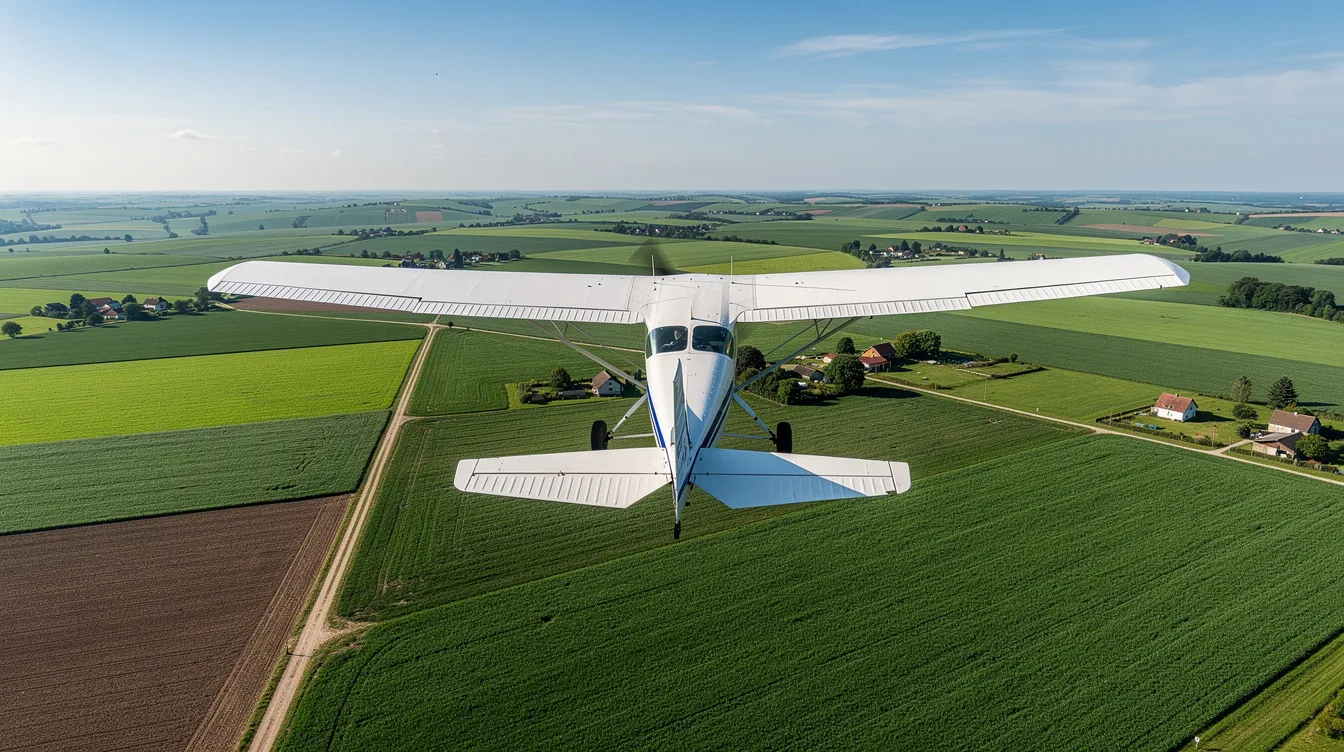
Numbers on paper are one thing. Loading an actual airplane is where tradeoffs get real. The baggage compartment of a Cessna 182 has weight limits between 120 to 200 pounds depending on the model, with maximum baggage capacity for the Cessna 182 at 200 pounds on later variants.
Four 180-lb adults = 720 lb
Baggage: 50 lb
Fuel: 60 gal (360 lb)
Total payload: 1,130 lb
Useful load available: ~1,150 lb
Result: Fits with a slim 20-lb margin. Full fuel (480 lb) would push this over by 200 lb.
Two 170-lb adults = 340 lb
Camping gear + bags: 100 lb
Full fuel: 522 lb
Total payload: 962 lb
Useful load available: ~998 lb
Result: Works with 36 lb to spare. Adding a third person breaks the limit.
Two adults (170 lb each) + two kids (90 lb each) = 520 lb
Luggage: 120 lb
Fuel: 65 gal (390 lb)
Total payload: 1,030 lb
Useful load available: ~1,100 lb
Result: Comfortable margin, though heavy sports equipment like skis or bikes could push things tight.
Each scenario must also pass a CG check. Loading heavy bags in the aft compartment while keeping the front seats light can shift balance outside limits. For bigger groups or heavy luggage, Jettly's platform can match travelers to aircraft that accommodate all weight requirements without complex compromises, much like the family-focused options discussed in our guide to choosing the best plane for a family of four.
The Turbo Skylane (T182T) is built for altitude, not maximum payload. Its Lycoming engine with turbocharger uses that boost to preserve engine power as altitude increases, but the added hardware, plumbing, and often-bundled de-ice and oxygen systems push empty weight higher - typically reducing useful load to the 900–1,000 lb range compared with non-turbo Skylanes exceeding 1,150 lb.
The Cessna 182 has a maximum cruise speed of 165 knots, and the turbo variant maintains that performance at higher altitudes where manifold pressure stays consistent even as density drops. The T182T excels over high terrain and in weather that benefits from cruising in the mid-teens up to around 20,000 ft service ceiling.
The tradeoff is straightforward:
Turbo Skylane: Better speed at altitude, weather flexibility, cruise above turbulence. Lower payload.
Non-turbo 182: More useful load for the same takeoff weight, lower engine overhaul costs, simpler operation. Better when pure load carrying capability matters more than altitude.
In the charter context, Jettly can pair travelers with a Turbo Skylane for mountainous routes, arrange a Cessna 340 for higher-speed piston travel, or source a King Air-class turboprop when both altitude and higher payload are required.
Supplemental Type Certificates (STCs) allow legal modifications to certified aircraft, often pursued for mission-specific or industry use. For the Cessna 182, some STCs directly increase useful load by raising the max takeoff weight. Others affect it indirectly - for better or worse.
Weight-increase STCs: The Trolltune STC (SA03608AT) raises maximum gross takeoff weight on eligible 182P and 182Q models from 2,950 lb to 3,100 lb - an increase of roughly 150–160 lb. Some require only paperwork and a flight manual supplement with no parts installation, making them accessible for many older Skylane owners evaluating the best personal plane for their needs.
Mods that add weight: Long-range tanks increase fuel capacity but eat into payload. Floats, larger tires for rough-field operation, and interior upgrades all raise empty weight.
Documentation requirement: Any weight limit change must appear in official weight and balance records, POH supplements, and FAA-recognized paperwork. Marketing claims alone are insufficient.
Professional charter operators accessed through Jettly must operate with updated, STC-compliant documentation and performance numbers filed with regulators.
Staying under max takeoff weight is only part of the equation. The Cessna 182's maximum landing weight of 2,950 lb sits 150 lb below the 3,100 lb MTOW on the T182T. If you depart at full gross weight, you need to burn at least 25 minutes of fuel before landing legally.
Performance degrades predictably as weight increases:
Operating near maximum gross weight requires a longer ground roll for takeoff. Takeoff distance over a 50-foot obstacle is 1,385 feet at standard temperature and sea level - and climbs sharply at higher elevation.
The maximum rate of climb is 1,040 feet per minute, but the initial rate of climb drops noticeably at maximum gross weight.
Heavier aircraft require higher rotation speeds during takeoff, and they also make the controls feel heavier in slow flight and maneuvering.
Increasing weight raises the stall speed because more lift is required to maintain flight.
At high density altitude - hot days, elevated airfields - these penalties compound. A runway that works at sea level may demand reduced payload at a 6,000-ft mountain strip, cutting effective useful load by several hundred pounds even when the numbers look fine on paper.
Jettly emphasizes working with operators who run conservative performance calculations and account for nosewheel steering limitations on short fields rather than pushing aircraft to their published limits.
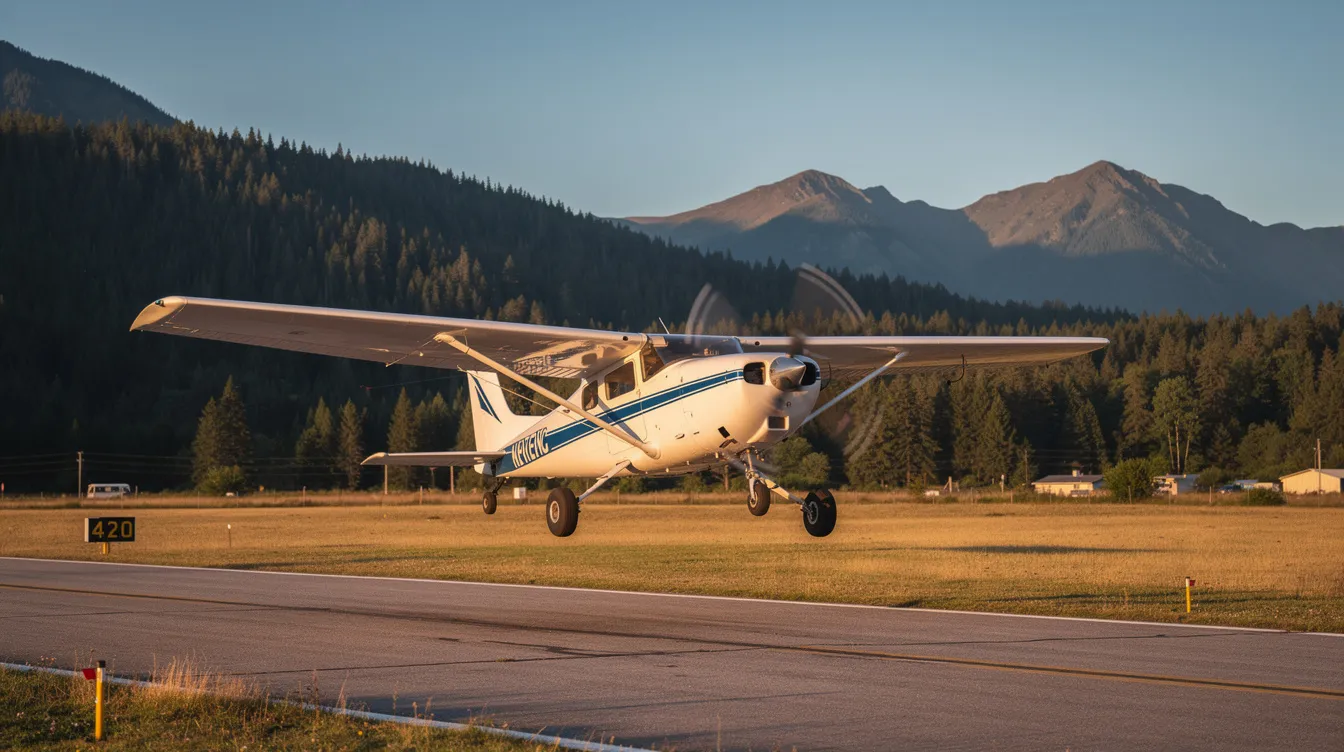
Owning a Cessna 182 offers the freedom to fly on your own schedule. The airplane has low operating costs and impressive fuel efficiency for a four-seat piston single. But the numbers still add up to what owners should expect to pay:
Annual inspections cost between $1,500 and $3,000, similar to what many pilots encounter when exploring affordable aeroplane rental options
Insurance for a Cessna 182 typically costs $530 to $1,200 per year
Routine maintenance costs average $15 to $30 per hour
Estimated hourly operating costs are $130 to $170 for private use
The 182 delivers strong utility and reliability for a general aviation single, but families and business travelers often find they "grow out" of its payload on longer trips. Four passengers plus ski gear plus full fuel for a four-hour leg? That math rarely works in a Skylane.
Chartering lets travelers right-size the aircraft for each mission - sometimes a 182, sometimes a turboprop, sometimes a light jet, all sourced from a broad charter airline and operator ecosystem. There's no financing, no hangar fees, and no paying for an airplane that sits idle between trips. For occasional heavy-payload missions, charter through Jettly is often more efficient than owning a plane that can't quite handle every trip you want to take.
The Cessna 182 is often called the "SUV of general aviation." It offers access to thousands of small airports, handles well in diverse conditions, and provides stability and shoulder harnesses for all seats. Pilots at flight schools and the broader aviation consumer market hold it in high demand for good reason.
But charter users have a broader fleet to choose from. Here's a quick comparison:
|
Aircraft |
Seats |
Useful Load (lb) |
Typical Range (nm) |
|---|---|---|---|
|
4 |
900–1,250 |
~970 |
|
|
6 |
1,300–1,500 |
~800 |
|
|
6–9 |
2,800+ |
~1,500 |
|
|
Light Jet |
4–7 |
2,000+ |
1,500–2,000 |
For short regional hops into smaller airstrips, the 182 remains hard to beat. For multi-person groups or heavy gear, stepping up through Jettly's platform - with instant pricing, aircraft filtering by seats and payload, and departure from small airports using its integrated airport locator tool - saves time and removes the guesswork. Understanding useful load on a 182 helps travelers ask better questions about capabilities when booking any private aircraft.
The useful load typically ranges from about 900 to 1,250 pounds depending on the model, equipment, and modifications.
Useful load determines how much weight you can carry in fuel, passengers, and baggage. Balancing these factors is crucial for safety and performance.
On classic non-turbo models, it is often possible with partial fuel. Turbocharged variants usually require fuel or passenger trade-offs due to lower useful load.
The maximum baggage capacity ranges from 120 to 200 pounds depending on the variant and configuration.
Certain Supplemental Type Certificates (STCs) can increase max takeoff weight, thereby increasing useful load. However, added equipment like air conditioning or de-ice systems often reduce it.
Control forces affect how the airplane handles, especially at higher weights. Heavier control forces require more pilot input but contribute to stable flight characteristics.
Exceeding the maximum landing weight of 2,950 pounds can compromise safety and aircraft structural integrity. Pilots must burn off fuel or reduce payload to comply.
It offers excellent access to small airports and good payload for its class but may require stepping up to turboprops or light jets for longer ranges or heavier loads.
Learn more about Jettly’s charter options at https://www.jettly.com.
Cessna 182 useful load typically ranges from about 900 to 1,250 lb depending on model, equipment, and modifications. That spread matters because it dictates whether you can carry four people with bags and full fuel - or whether you need to make trade-offs. Maximum landing weight, fuel choices, throttle settings, and environmental conditions all shape what the airplane can actually do versus what the brochure says.
Owner-pilots must balance performance and safety on every flight. Travelers using Jettly can skip the spreadsheet and simply choose an aircraft with the useful load, cabin space, range, and seats their trip requires.
Ready to experience private travel on your terms? You can compare private jet memberships, use the private jet charter cost estimator, review our guide on how Jettly offers affordable private jet charter, or explore options like the jet card flight cost estimator and our Jet Card programs. Travelers can also lower per-seat costs through crowdsourced and shared charter flights, weigh shared charters versus full charters, learn how to get a seat on a private jet, or dive deeper into how renting a plane works, all while enhancing trips with Jettly Eats in-flight catering. Explore flight options or request a quote at https://www.jettly.com.
Share this post:
Jeff Ryan Serevilla
Oct 6, 2026
|
5
min read
Discover tips and trends in the industry.
5
min read
Saudi Jet: Military Tensions, Regional Security, and What It Means for Modern Air Travel
The term 'Saudi jet' often refers to military aircraft incidents involving the Royal Saudi Air Force, particularly in the context of regional tensions with Iran and Yemen. These incidents impact not only military operations but also civilian aviation, as airspace management is crucial for ensuring safety. Despite the risks, private and commercial flights operate under strict regulations to navigate around conflict zones effectively.
Read More
5
min read
McClellan Jet Services: FBO Facilities, Jet Services, and Charter Alternatives
McClellan Jet Services is a premier fixed-base operator (FBO) at McClellan Airport, offering comprehensive ground support and amenities for private jet travelers. With 24/7 operations, it provides fueling, ground handling, and passenger services, while Jettly's digital platform facilitates seamless private jet charter bookings. Together, they enhance the private aviation experience for business and leisure travelers in Northern California.
Read MoreStay updated with our latest insights and tips to elevate your journey with us.
MEMBERSHIPS AND ASSOCIATIONS



Disclaimer: Jettly operates as a charter broker, offering access to a global digital jet charter marketplace. Jettly is not a direct air carrier and does not own or operate aircraft. All advertised flights are conducted by third-party air carriers that are fully licensed and hold the appropriate Part 135 or Part 121 certifications issued by the Federal Aviation Administration (FAA) or equivalent regulatory authorities under U.S. or foreign law. Jettly complies fully with the U.S. Department of Transportation's Part 295 and Part 298 Charter Broker regulations. Jettly does not carry additional liability insurance. Passengers are covered by aircraft operator insurance. TICO: 50023770


