


Login
Get Instant Pricing On 23,000+ Aircraft

>
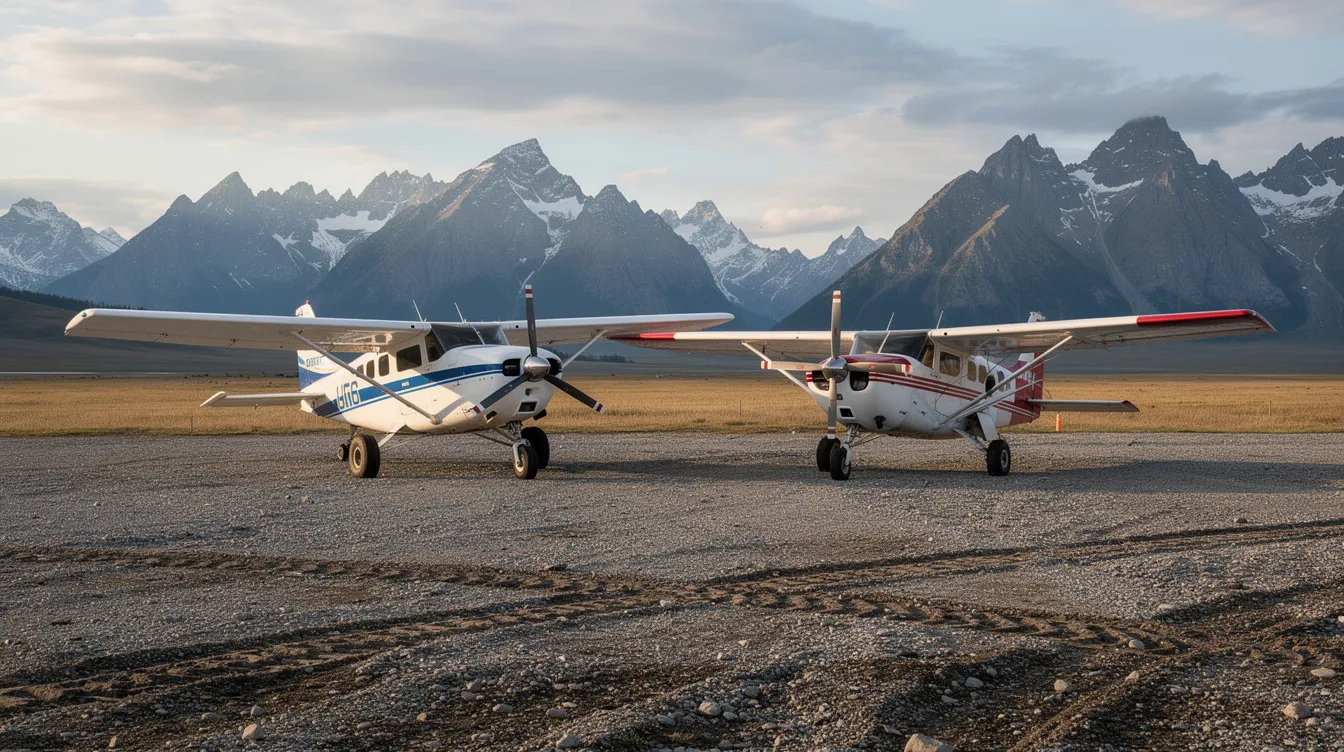
When you start talking about rugged single-engine utility aircraft, the Cessna 207 vs 206 debate comes up fast. Both are high-wing, fixed-gear workhorses built for hauling people and cargo into places where comfort takes a back seat to capability. But they are not the same airplane, and choosing the wrong one for your mission can cost you performance, money, or both.
This article breaks down exactly where these two models diverge: airframe, capacity, engines, handling, costs, and the missions each one does best.
The Cessna 206 is generally the better fit for shorter strips, lighter loads, and mixed personal use or family missions, while the Cessna 207 is optimized as a heavier hauler and workhorse for operators moving larger groups.
Both aircraft share similar powerful Continental six-cylinder engines in many variants, but the 207's higher gross weight of 3,800 lbs and stretched fuselage change takeoff, landing, and handling characteristics compared to the 206's maximum gross weight of 3,600 lbs.
Turbo vs. non-turbo choices significantly affect high-altitude and hot-and-high performance, especially for operators in the Rockies, Alaska, or mountainous regions where climb rates matter most.
The Cessna 206 performs better in short field operations than the 207, making it the go-to for backcountry strips and tight approaches.
The Cessna 207 is considered a better load hauler than the 206 and is known for its stability in rough fields, but it is not a short field airplane and requires 10–15 knots more airspeed at gross weight.
Travelers who want the benefits of these utility aircraft without owning them can often access them through charter platforms like Jettly's global private charter aircraft network, depending on route and mission type.
The Cessna 200-series lineage—Stationair, Skywagon, and related variants—represents some of the most trusted utility planes ever built. The Cessna 206 and Cessna 207 are high-wing fixed-gear single-engine utility aircraft that have earned their reputation hauling everything from river rafts to medical supplies across remote terrain.
The Cessna 206, marketed variously as the Super Skywagon, Super Skylane, and Stationair, first appeared in 1964 as a six-seat utility aircraft popular for bush flying, skydiving, air taxi, and personal use. It evolved through multiple variants including the U206, P206, and later 206H. The 206 has a lower empty weight than the 207, making it lighter and more agile, which helps in short field and backcountry utility missions.
When Cessna decided the market needed more seats and cargo volume, they created the Cessna 207, often called the "Sled" because of its hauling role. Introduced in model year 1969 and produced until 1984, the 207 is a stretched version of the 206 designed for passenger and cargo utility work. It seats seven to eight passengers depending on configuration. Production of the Cessna 207 ended in 1984, with roughly 626 units built—far fewer than the thousands of 206s in service.
Both aircraft share similar wing designs and serve heavy-hauling utility and air-taxi roles as rugged load carriers. Both feature similar high-wing configurations and robust fixed landing gear, emphasizing durability and versatility.
Although the Cessna 207 grew out of the 206 platform, the fuselage and structural details make them feel like different airplanes in practice.
Cessna 206 airframe highlights:
High wing, strut-braced, with fixed landing gear in a tricycle configuration
Large cargo door on the left side for easy loading
Typical 2+4 seating (pilot plus five passengers for six seats total)
Overall length around 28–29 ft depending on model year
Lower empty weight than the 207, contributing to better agility
Cessna 207 airframe highlights:
About 32 ft 2 in long compared to the 206's 28–29 ft, with roughly 45 inches added to the fuselage—18 inches forward and 27 inches aft
Redesigned rear cabin section with 2+3+2 or similar seating layout
Higher maximum takeoff weight at 3,800 lbs vs the 206's 3,600 lbs
Nose baggage compartment to help balance when loaded, compensating for the longer tail moment arm
Adds cabin length and seating capacity at the expense of agility
The 207's longer tailcone and aft seating mean that passengers sitting in the back rows have a larger moment arm. Load that rear cabin carelessly, and the center of gravity slides aft fast, which can degrade climb performance and maneuverability.
Cabin space and seating are often the decisive factor when operators compare these two.
The Cessna 206 seats up to six people with a shorter body. That typically means two up front and four in the rear cabin, arranged in two rows of two. The rear seats can be removed for cargo, dogs, a stretcher, or other hauling needs. This flexibility makes the 206 a great plane for mixed-use missions.
The Cessna 207 provides greater useful load and passenger capacity, seating seven or eight depending on certification, arranged in three rows plus a baggage area. The 207 adds cabin length and seating capacity at the expense of agility—a fair trade if your mission is shuttling groups of rafters, lodge guests, or remote community members.
Comfort-wise, the aft-most seats in the 207 are tight. Anyone sitting back there on a long flight might find legroom limited. The 206, by contrast, can feel surprisingly spacious when carrying just three or four people. Entry and exit logistics also matter: loading seven passengers through a single door on the right side takes patience and choreography.
Both models utilize powerful Continental six-cylinder engines, often from the IO-520 or IO-550 series, producing 285–300 hp. The Cessna 206 features a 300 hp engine option in most production variants, and the 207 runs the same or very similar powerplant.
Turbocharged variants offer better high-altitude and hot-and-high performance by retaining more power as density altitude increases. Non-turbo engines lose power at altitude, affecting climb rates and takeoff distances.
The 207 typically carries more weight, so the same engine that feels strong in a 206 can feel more "worked" in a 207. It is not underpowered but has less performance margin.
Pilots often choose between the Cessna 207 vs 206 based on airfield length and density altitude constraints, not just cruise speed.
|
Specification |
Cessna 206 (Non-Turbo) |
Cessna 207 (Non-Turbo) |
|---|---|---|
|
Maximum Gross Weight |
3,600 lbs |
3,800 lbs |
|
Empty Weight |
Lower than 207 |
Higher than 206 (approx. 2,400 lbs) |
|
Length |
28–29 ft |
32 ft 2 in |
|
Seating Capacity |
Up to 6 |
7 to 8 |
|
Takeoff Ground Roll |
1,060 ft |
1,100 ft |
|
Distance Over 50 ft Obstacle |
1,970 ft |
Longer than 206 |
|
Rate of Climb |
960–1,050 fpm |
950 fpm |
|
Cruise Speed (75% Power) |
145–155 knots |
149 knots |
|
Service Ceiling |
17,000–18,000 ft |
13,300 ft |
|
Full Fuel Payload |
900 lbs |
550–600 lbs |
The Cessna 207 requires 10–15 knots more airspeed at gross weight compared to the 206, meaning higher approach and landing speeds and more runway consumed. The 207's higher gross weight and longer fuselage translate into longer takeoff and landing distances and slightly lower climb performance at the same density altitude.
Turbocharged versions of both aircraft close this gap at higher altitudes. The turbo 207 has a service ceiling around 26,000 ft and can maintain stronger climb rates above 10,000 ft.
The 206 is generally favored for short fields and precision landings; the 207 excels where runway length is generous, and payload volume matters more.
Both types are known as strong load haulers, but their useful load, volume, and load distribution differ in ways that matter.
The Cessna 207 is considered a better load hauler than the 206. With a useful load of approximately 1,628 lbs and higher gross weight, it can carry more total stuff. However, filling standard tanks (~61 gallons) limits full-fuel payload to around 550–600 lbs, which restricts passenger count.
The 206's useful load runs roughly 1,300–1,450 lbs, with full-fuel payload around 900 lbs thanks to larger standard fuel capacity (~87 gallons usable). For mixed passenger-and-cargo missions, the 206 often carries more payload with fuel for the distance needed.
Operators use the 207 for multiple river rafts, lodge supplies, and groups of six to seven passengers on longer strips. The cargo door on the 206 simplifies loading, making it ideal for mixing three to four passengers with substantial gear.
CG management remains critical. The 207's aft seats and baggage area require careful loading—every operator needs to check weight and balance carefully.
Despite similar wings and engines, many pilots report that the Cessna 207 "feels like" a heavier, more demanding airplane compared to the 206, especially when fully loaded.
The Cessna 206 is lighter and more agile than the 207. Pilots describe solid, predictable handling with good short-field performance when properly configured. Strong flaps and manageable approach speeds make it suitable for backcountry strips when flown within limits. The 206 can handle tight spots better than the 207.
The Cessna 207 is not a short-field airplane. It requires 10–15 knots more airspeed at gross weight and higher approach speeds, which means more runway is needed. That said, the 207 is known for its stability in rough fields—once you have the distance, it tracks well. Pilots describe it as a capable but less forgiving hauler.
The 206 is the clear choice for tight, one-way backcountry strips and short soft-field work. The 207 belongs on established gravel or paved strips with more margin, while broader decisions about the best cross-country plane for your travel journey will also weigh range, speed, comfort, and ownership costs beyond this specific Cessna matchup.
Modifications like Sportsman STOL kits, Wing-X extensions, and upgraded props can improve low-speed handling for both, but no mod fully erases the inherent difference between a 28-ft airplane and a 32-ft airplane carrying about 200 more pounds of empty weight.
For private owners and families choosing between these two, the decision often comes down to how many seats you actually fill.
The Cessna 206 is the preferred choice for most owner-pilots. Simpler loading for smaller groups, more manageable size for standard hangars, and better fit for two to four people plus baggage. If your typical flight is you, a friend, and some camping gear, the 206 is your plane.
The Cessna 207 makes sense for personal use if you regularly fly six to seven people—large families, clubs, or groups. Otherwise, it is "too much airplane" for typical personal missions. You pay more fuel per hour, carry higher insurance, and fly with empty seats most of the time.
Many individuals and families now choose charter via platforms like Jettly instead of owning either aircraft, using services that offer affordable private jet charter. Charter lets you scale cabin size to each trip rather than committing to one airframe that is either too small on some days or too large on most, fitting neatly into the ultimate list of charter airlines and private flight options that modern travelers now consider.
Both aircraft have long histories in commercial service: air taxi in Alaska and Canada, Caribbean island hops, parachute operations, and lodge transfers. Both serve heavy-hauling utility and air-taxi roles in some of the world's most demanding environments.
The Cessna 207 is popular with operators running shuttle-style services. The ability to move six to seven paying passengers at once, combined with a robust structure and proven reliability, makes it a revenue-generating workhorse.
The Cessna 206 shines in commercial roles where flexibility matters: skydiving platforms, medevac and cargo missions where rear seats are removed, and shorter or marginal strips where the 207 would need too much runway. Pilots also use them on floats for lake access—something the 207's weight makes less practical.
Digital charter platforms like Jettly can offer both types in their inventory, matching aircraft to mission. Need a Cessna 207 with its specific specs and charter rates for lodge guest transfers from a regional hub? Done. Need a 206 for a smaller party heading to a constrained airstrip? Also covered.
Exact operating costs vary by year, engine, and region, but general patterns distinguish the Cessna 207 vs 206 from an owner-operator perspective.
Common cost drivers for both:
Fuel burn: non-turbo models average ~13.9–15 GPH; turbo variants slightly higher
Insurance: varies by pilot experience, use type, and hull value
Engine/prop overhauls: Continental 520-series overhauls run ~$16,000–$24,000
Hangar or tie-down fees: depend on location
Published hourly cost estimates put the 206 around $110–$155/hr and the 207 closer to $222/hr when factoring in all variable and fixed costs. For charter customers, a private jet charter cost estimator can provide similar insight into hourly pricing across different aircraft categories. The 207 typically burns more fuel and requires more maintenance attention due to higher average loads and more intensive commercial use.
Resale markets for both types are strong in regions with heavy bush and utility flying. But 206s appeal to a broader pool of private buyers, influencing long-term ownership planning.
For travelers who only need a few flights per year, on-demand charter via Jettly avoids the capital outlay, maintenance risk, and utilization pressures of owning either type, while private jet memberships and structured jet card programs give frequent flyers predictable access and wholesale-style rates without long-term fractional ownership commitments—and those with an audience can even monetize referrals through Jettly's high ticket affiliate program.
Beyond choosing between the 207 and 206, buyers and operators must decide whether a turbocharged or non-turbo engine best fits their typical routes.
Non-turbo makes sense when:
Operations are mainly at or near sea level with moderate temperatures
Runways have comfortable length margins
Lower complexity and maintenance costs are priorities
You are talking about flatland or coastal flying
Turbo makes sense when:
Regular flying from high-elevation airports (Colorado, Idaho, Andean or Himalayan regions)
Operations on hot summer days when density altitude climbs fast
Missions where climb rate and obstacle clearance on departure are critical
You cannot afford to lose power when the air gets thin
Turbo systems add mechanical complexity, higher maintenance costs, and the need for disciplined engine management, but significantly expand the safe performance envelope.
Charter customers using Jettly can specify operational constraints like high-altitude strips, short runways, or heavy loads, using tools such as its airport locator tool to verify field suitability. The platform and operators then select the appropriate turbo or non-turbo aircraft without the client needing to know the technical details, and tools like a private jet charter cost estimator help ensure the chosen solution fits the budget as well as the mission.
Case studies show how the 206 and 207 are used differently in real-world flying.
Cessna 207 scenario: An operator transporting six whitewater rafters plus gear from a regional airport to a mid-length backcountry strip in Idaho. The pilot loads carefully, checking weight and balance against the 3,800-lb limit. The strip is 3,000 ft of packed gravel—plenty of distance for a 207 but not the kind of tight backcountry strip a 206 would handle. Wind is light, density altitude is moderate. The flight runs smoothly, and the operator fills every seat for revenue.
Cessna 206 scenario: A family of four plus camping equipment flying from a low-elevation city airport to a shorter grass strip near a lake. The pilot pulls the rear seats to make room for coolers and a sled full of fishing gear. Total load is well under the 3,600-lb limit. The ground roll takes about 900 ft, and the airplane climbs away with authority. This is the kind of mixed personal and cargo mission the 206 was born for, though many travelers opt for on-demand private charter aircraft instead of owning the plane.
A digital charter platform like Jettly might present these options to a traveler: 206 offered for a small group heading to a lodge with limited runway, 207 or a larger turboprop like a Caravan for bigger groups going to a longer strip. The decision should hinge on payload, runway length, weather, and total trip cost—not brand loyalty to a specific model, and guides on affordable aeroplane rent costs and options can help frame those trade-offs.
While many Jettly customers think first of jets, utility aircraft like the Cessna 206 and 207 often provide the crucial last leg into remote or smaller airfields that jets simply cannot reach.
Jettly's global network includes thousands of turboprops and piston aircraft, including Cessna 206 and 207 models used for regional hops, lodge transfers, fishing and hunting trips, and access to backcountry strips, all cataloged within its private charter aircraft selection. Users can enter their route and passenger count on the platform, use tools like its airport locator tool, and receive instant pricing options that may include these types when they are the most efficient—or only—aircraft able to access a specific airstrip.
Jettly emphasizes transparent pricing, digital booking, and vetted operators, and it appears among the best private jet charter companies for premium travelers as a compelling NetJets alternative. Customers benefit from the rugged capability of 206/207 aircraft without needing to understand every performance nuance or own the airplane themselves.
Understanding the strengths of each aircraft helps travelers and operators choose the right tool for the job. Platforms like Jettly make access to that tool straightforward—whether you need a six-seat 206 for a tight strip or a seven-seat 207 for a full group transfer—and fit neatly into the broader guide to charter airlines and private flights.
When comparing Cessna 207 vs 206 for personal use or charter, the 206 is the more versatile personal and mixed-use airplane with better short-field manners. The 207 is the stretched hauler best for operators moving larger groups and loads.
Turbo vs non-turbo choices shape how either model performs at altitude. A non turbo 206 is a pretty good all-rounder for low-elevation flying. A turbo 207 is a commercial workhorse that earns its keep in demanding environments.
Key decision points:
Typical passenger count: 2–4 favors the 206; 5–7 favors the 207
Runway lengths: Short fields favor the 206; 2,500+ ft strips accommodate the 207
Operating elevations: High altitude demands turbo variants of either model
Budget: The 207 costs more to own and operate per hour
Revenue vs personal: The 207 earns back its costs in commercial service; the 206 fits personal budgets better
Ready to fly without the commitment of ownership? You can even offset costs by joining trips that crowdsource private jet flights and share empty seats. Explore flight options or request a quote at https://www.jettly.com.
These questions cover practical details not fully addressed in the main comparison, focused on ownership, safety, charter access, and how these Cessna workhorses fit into the broader charter airlines and private flights ecosystem.
Both require proper training and type-specific experience. Many pilots report the 207 feels heavier, needs higher approach speeds (10–15 knots more at gross weight), and is more sensitive to aft-CG loading than the 206. It can be more demanding when fully loaded or in hot-and-high conditions. For those not ready for ownership, exploring affordable aeroplane rent options and costs can be a smarter way to gain experience in similar aircraft. A pilot stepping into a 207 after flying only 206s should expect a transition period, not just a checkout ride.
The Cessna 206 is generally preferred for shorter, rougher strips because of its lower landing speeds and better short-field performance. The 207 excels on longer gravel or paved strips where payload volume—not minimum distance—is the priority. If a strip is under 2,000 ft with obstacles, most experienced bush pilots would pick the 206 every time.
Insurers may require more total time, high-performance endorsements, and sometimes specific make-and-model time for either aircraft. Commercial use brings stricter requirements. The 207's typical role as a higher-capacity hauler can lead to higher premiums and more stringent recurrent training expectations, which is why some frequent flyers opt for structured jet card programs instead of direct ownership. Talk to your broker early in the buying process.
Many air taxi and charter operators worldwide use these types. Platforms like Jettly aggregate such operators, allowing customers to book flights on 206/207 aircraft—or suitable alternatives—on-demand with instant pricing rather than committing to ownership, whether they prefer shared charter flights vs. full charters or want to crowdsource private jet flights and share empty seats, and while ensuring operators meet relevant Part 135 charter company standards.
Turboprops like the Cessna Caravan or Pilatus PC-12 offer higher speeds, more payload, and often better hot-and-high performance at a higher hourly cost, while larger aircraft such as the Boeing 737-800 with its charter-focused specs and range step in when group sizes outgrow piston and small turboprop categories. The 206 and 207 provide cost-effective access to smaller strips and shorter routes. Jettly's platform can display both piston and turboprop options so customers can weigh time savings against budget on the same page, whether they are comparing rugged singles like the 206/207 or the best cheapest single-pilot jets for budget-conscious buyers, and it is often positioned as a flexible NetJets alternative for flying private.
Selecting the right aircraft between the Cessna 207 and 206 depends largely on your mission needs, passenger count, and operating environment. The Cessna 206 offers superior short-field performance, agility, and versatility, making it ideal for personal use, smaller groups, and backcountry flying. In contrast, the Cessna 207’s stretched fuselage and higher gross weight make it a better choice for operators needing to haul larger loads or more passengers on longer or more established runways.
Turbocharged variants of both models extend capability into high-altitude and hot conditions, but come with added complexity and cost. For travelers and operators who want flexibility without ownership burdens, platforms like Jettly provide easy access to both aircraft types through on-demand charter. Learn more about Jettly’s charter options at https://www.jettly.com.
Ultimately, understanding the practical differences in performance, handling, and costs helps you match the right Cessna to your flying goals and, more broadly, to choose the best cross-country plane for your travel journey. Whether you prioritize short-field agility or passenger capacity, these rugged utility aircraft remain dependable tools for a wide range of missions.
Ready to experience private travel on your terms? Use Jettly's tools that offer affordable private jet charter, then explore flight options or request a quote at https://www.jettly.com.
Share this post:
Jay Franco Serevilla
Aug 13, 2026
|
5
min read
Discover tips and trends in the industry.
5
min read
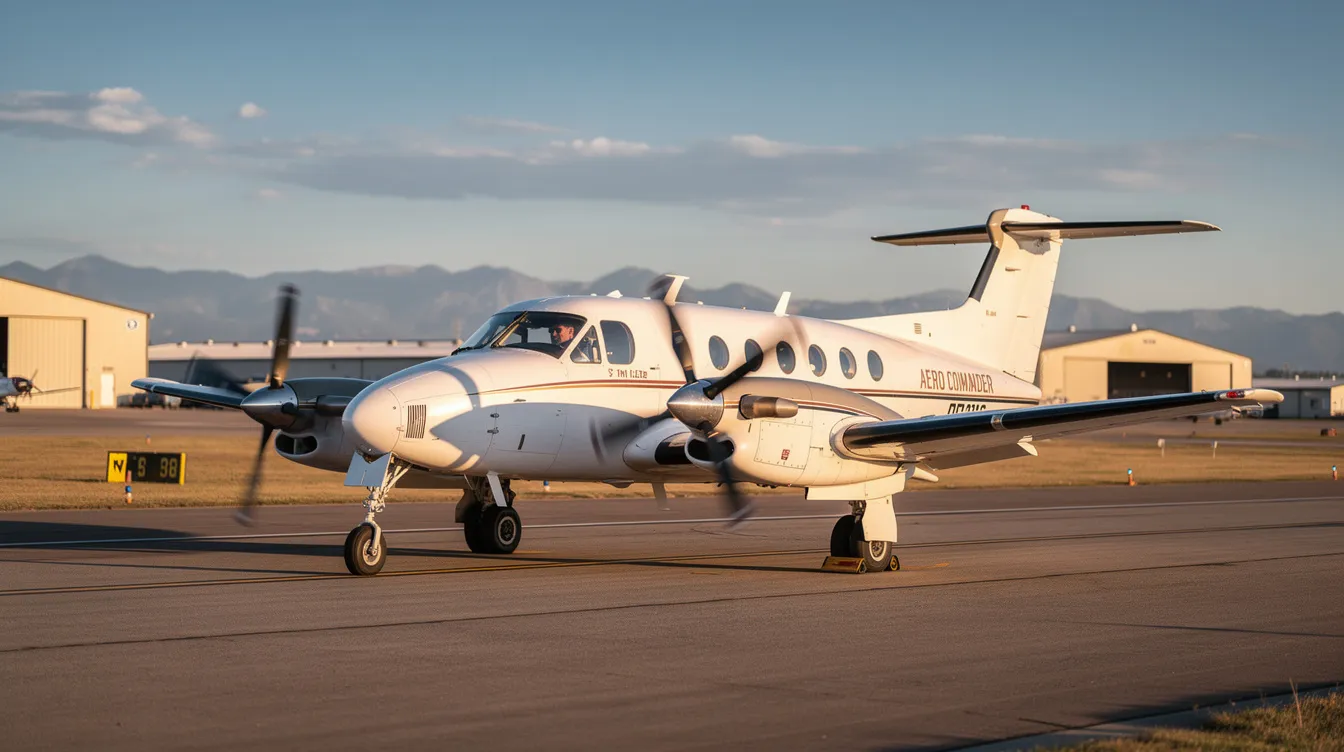
Aero Commander 690: Turboprop Charter Guide
The Aero Commander 690 is a versatile twin-turboprop aircraft ideal for regional charter flights, accommodating 5 to 9 passengers. Known for its short-field capabilities and cost-effectiveness, it offers a practical solution for business and leisure travel. With a range of approximately 1,790 miles and powered by reliable Honeywell engines, it's a popular choice for those seeking efficient air travel.
Read More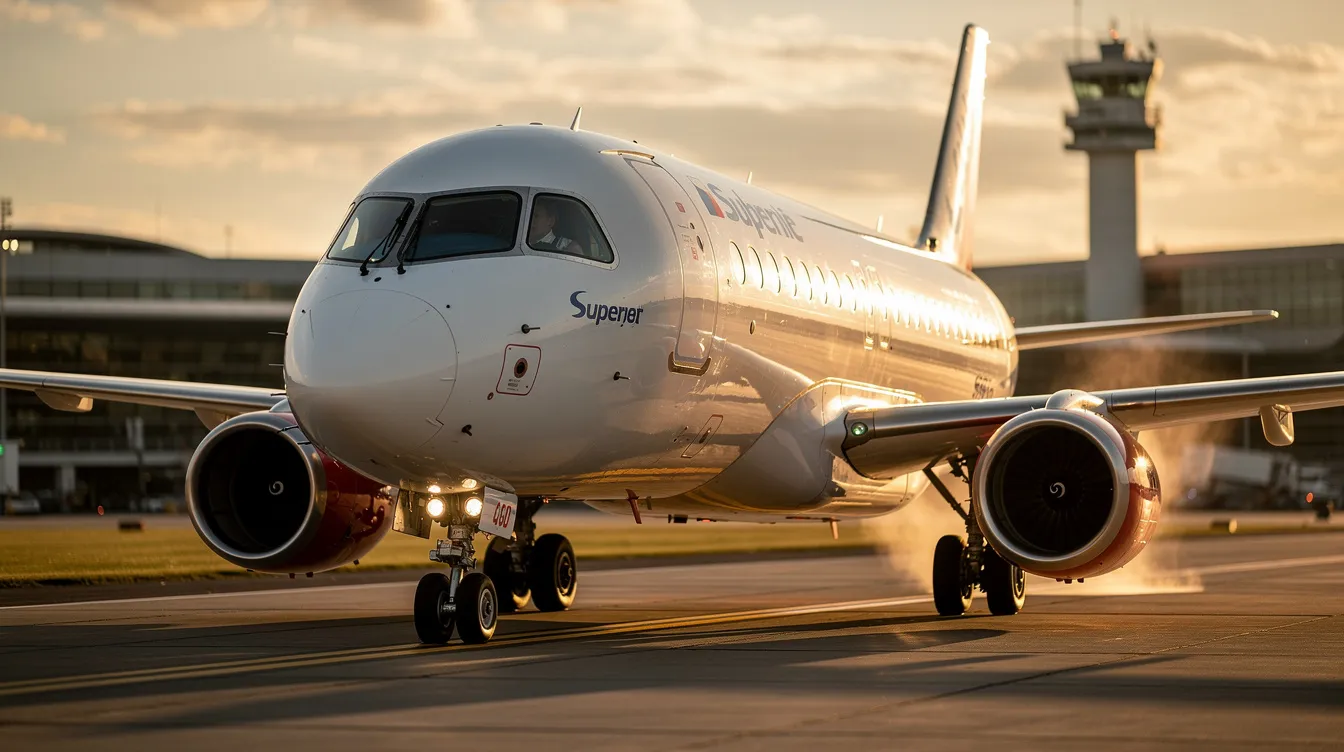
5
min read
Sukhoi Superjet SSJ100: Regional Jet Overview, Variants, and Charter Use
The Sukhoi Superjet SSJ100 is Russia's premier regional jet, designed for short to medium-haul routes with a capacity of 68-103 passengers. Despite its modern design and capabilities, the aircraft faces challenges due to sanctions and limited global support, impacting its international operations. This guide provides insights into its variants, charter use, and operational considerations for aviation enthusiasts and travel planners.
Read MoreStay updated with our latest insights and tips to elevate your journey with us.
MEMBERSHIPS AND ASSOCIATIONS



Disclaimer: Jettly operates as a charter broker, offering access to a global digital jet charter marketplace. Jettly is not a direct air carrier and does not own or operate aircraft. All advertised flights are conducted by third-party air carriers that are fully licensed and hold the appropriate Part 135 or Part 121 certifications issued by the Federal Aviation Administration (FAA) or equivalent regulatory authorities under U.S. or foreign law. Jettly complies fully with the U.S. Department of Transportation's Part 295 and Part 298 Charter Broker regulations. Jettly does not carry additional liability insurance. Passengers are covered by aircraft operator insurance. TICO: 50023770


