


Login
Get Instant Pricing On 23,000+ Aircraft

>
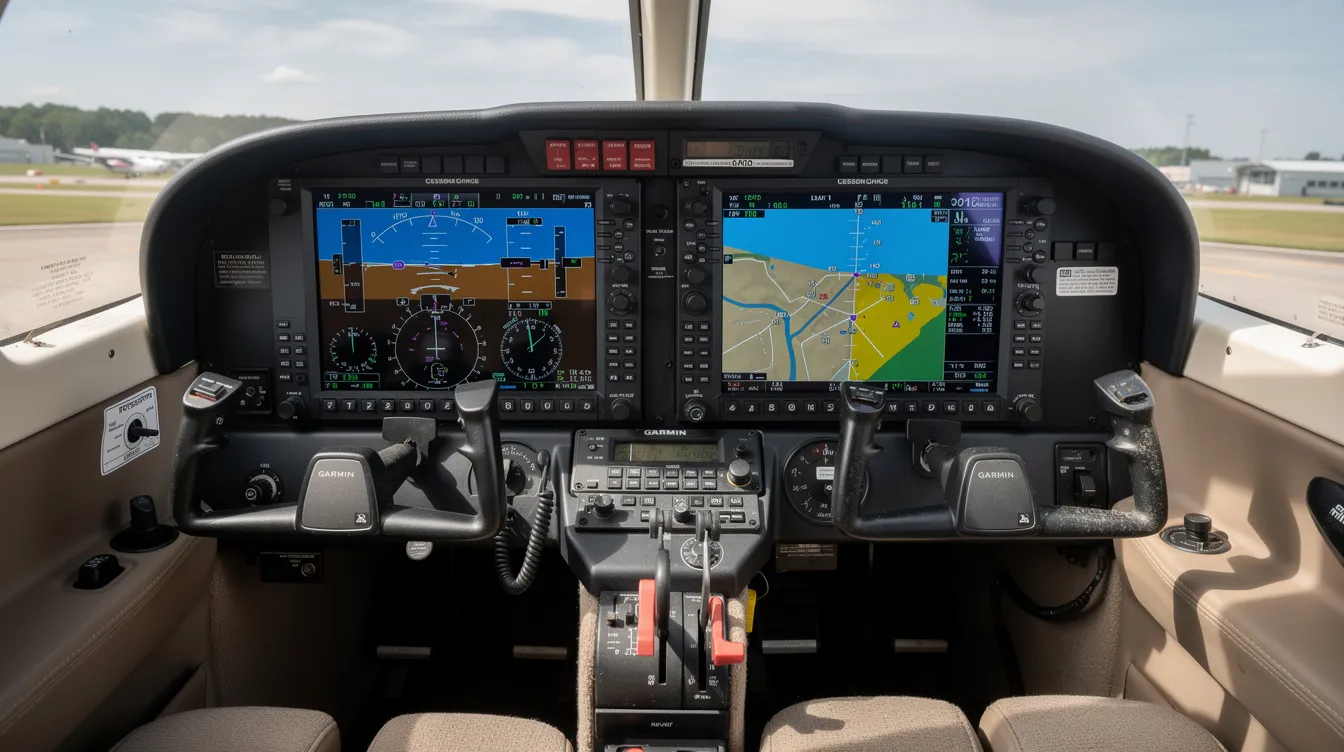
Buyers searching "cessna g1000 for sale" are typically looking for one specific airplane: the Cessna 172S Skyhawk SP with a factory-installed Garmin G1000 glass cockpit. These aircraft sit at the intersection of modern avionics, proven airframe reliability, and strong resale demand. This guide covers what to look for in a listing, how pricing works across different model years, and when chartering through a platform like Jettly may serve the same mission at lower cost.
Pilots and buyers searching for a Cessna G1000 for sale are almost always targeting the Cessna 172S Skyhawk SP, powered by the Lycoming IO 360 L2A engine at 180 hp. Garmin began factory-installing the G1000 suite in this model around 2005, and production continues today. G1000-equipped Cessna aircraft are often preferred for training and personal travel because of the integrated avionics, IFR capability, and cockpit standardization across fleets.
In the current market, 2010 to 2016 Cessna 172S models with full G1000 panels, low-time airframes, and clean logbooks carry asking prices in the mid- to high-USD $300,000s. Broader Cessna 172 prices range from $99,580 to $244,499 for older or higher-time examples, while a 2019 Cessna 172S is listed for $569,500 and a 2020 Cessna 172S is priced at $599,000. The spread reflects age, total hours, equipment, and condition.
Before committing to any purchase, buyers should confirm the aircraft has a fresh annual inspection, continuous logbooks with no gaps, and up-to-date G1000 software databases. Jettly, a digital private aviation platform, offers private jet memberships and helps pilots, owners, and investors compare the cost of ownership against simply chartering similar capability on-demand for training, business aviation, or family missions.
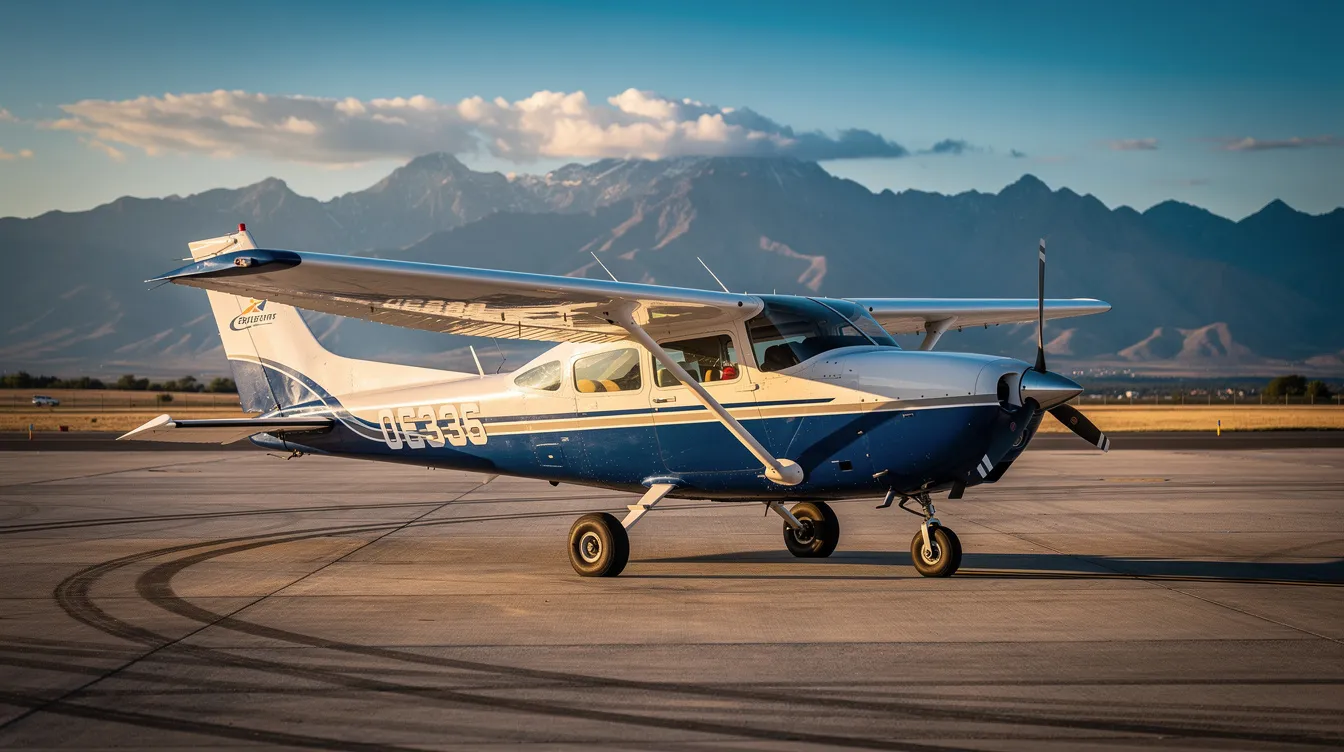
The phrase usually refers to a Cessna 172S Skyhawk SP with the factory-integrated Garmin G1000 or G1000 NXi suite, built from 2005 onward. Some Cessna 182T Skylane and Cessna 206 Stationair aircraft also carry the G1000, but the 172S dominates search results. Cessna 172 listings include models from 1963 to 2020, so filtering for the right variant matters.
There is a meaningful difference between:
Older Cessna 172 and 172S models retrofitted with partial glass (e.g., dual Garmin G5s, a Garmin GTN 650 navigator, and a standalone audio panel) that approximate a glass cockpit but lack full integration.
Fully integrated G1000 panels with a Primary Flight Display, Multifunction Display, integrated engine monitoring, autopilot, and built-in WAAS and ADS-B solutions that operate as a single system.
A 2015 Skyhawk SP with full G1000, roughly 2,000 TTAF, GFC 700 autopilot, WAAS, and ADS-B Out compliance at an asking price of USD $364,000 represents a benchmark for late-model, low-time G1000 172 pricing as of 2025.
Flight schools, time-building pilots, and small business owners gravitate to these aircraft for standardized training, modern avionics, situational awareness, and strong resale value. The same mission profile (short-range trips of 300 to 500 NM, two to three seats filled) can also be served without ownership by chartering on a marketplace like Jettly when utilization is low.
Most buyers search specifically for the Cessna 172S Skyhawk SP, but the G1000 also appears in other Cessna singles. Here is what each model offers:
Cessna 172S Skyhawk SP: G1000 introduced around 2005. Popular 2010 to 2016 models appear frequently for sale. Powered by the 180 hp Lycoming IO-360-L2A engine, the 172S has a cruise speed of 124 knots at 75% power, a stall speed of 47 knots, an empty weight of 1,650 lb, a gross weight of 2,550 lb, a useful load around 870 lb, and a range of 730 nautical miles. Four seats, fixed gear, and a fuel burn of roughly 8 to 10 gallons per hour.
Cessna 182T Skylane: Often G1000-equipped from the mid-2000s. Higher cruise speed, better climb performance, and greater payload than the 172S, at higher acquisition and operating cost.
Cessna T206H Stationair: G1000 as standard on many 2007 and later examples. Utility-class, float-capable, higher useful load.
Sample listing descriptions illustrate what buyers encounter:
"2015 Cessna 172S Skyhawk SP, roughly 2,000 TTAF, Garmin G1000, GFC 700 autopilot, WAAS, ADS-B Out, fresh annual 06/2026, asking USD $364,000."
"2008 Cessna 182T G1000, 1,600 TTAF, de-ice boots, 3-blade prop, IFR-ready, business aviation shuttle configuration."
The letter code matters. The "S" in 172S identifies the Skyhawk SP variant with the IO-360-L2A engine and higher gross weight. Earlier designations (172N, 172P, 172R) use different engines or equipment levels. Many buyers target "S" models specifically because the factory G1000 integration, engine output, and gross weight align with both training fleet requirements and advanced IFR trainer missions. Analog-panel 172M or 172N examples cost far less but lack modern avionics and IFR precision, which limits both capability and resale appeal.
As of mid-2026 in the USA, asking prices for Cessna 172S G1000 aircraft fall roughly into these bands:
Legacy G1000 (2005 to 2015), decent condition: USD $180,000 to $280,000.
G1000 NXi (2016 to 2024), low time, ADS-B, current databases: USD $250,000 to $380,000.
Factory new or near-new (2023 to 2025): USD $400,000 to $675,000 for fully optioned examples with features like Rosen visors, fresh paint, new prop, and air conditioning.
The main factors that drive value:
Airframe total time and engine time since major overhaul. An aircraft with 10 hours SMOH commands a premium over one at 1,500 SMOH approaching TBO.
Whether the aircraft has a fresh annual or one coming due soon. A due annual means the buyer absorbs that cost and risk.
G1000 configuration: WAAS vs non-WAAS, NXi upgrade or original, ADS-B In and Out capability, and whether the GPS position source supports LPV approaches.
Autopilot type (GFC 700 vs older KAP 140) and add-ons like Flight Stream 510 wireless connectivity, Synthetic Vision Technology, and traffic or weather subscriptions.
Consider two real examples: a 2007 172S G1000 with roughly 7,000 TTAF and a mid-time engine at around USD $260,000, versus a 2015 low-time example with 1,500 TTAF at USD $360,000 or more. The gap reflects not just hours but perceived remaining airframe life, avionics currency, and maintenance trajectory.
Geographic factors also apply. Aircraft hangared in dry climates like Texas or California, with corrosion-free records and continuous maintenance in one location, fetch higher prices than those stored outdoors in humid coastal areas. Listings from Houston, Fort Lauderdale, Las Vegas, or even international locations like Poland or Buenos Aires appear in global search results but carry different regulatory and import considerations, and buyers based near Texas may even pair ownership with on-demand private jet charter in Houston for longer missions.
Some buyers, after tallying real ownership cost, choose on-demand charter via Jettly instead. A private jet charter cost estimator can help compare acquisition expenses against per-trip charter pricing for similar missions.
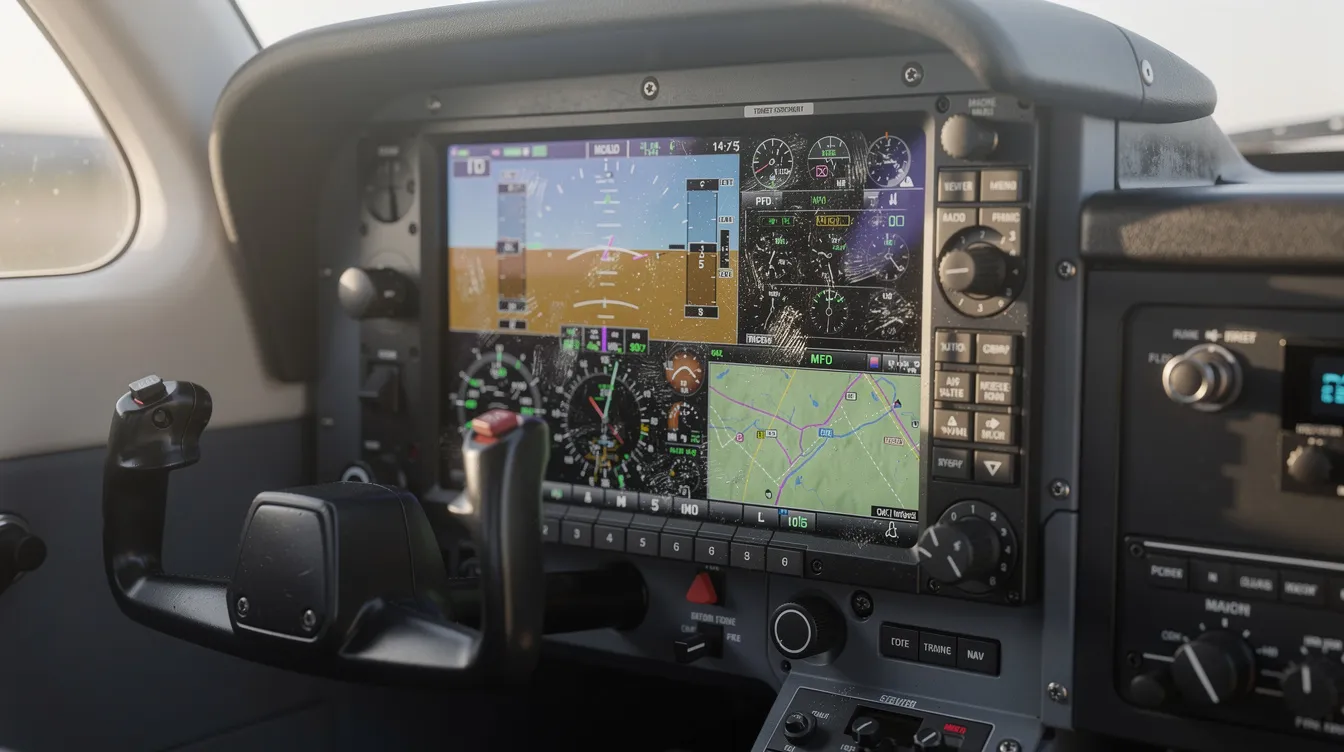
The Garmin G1000 is an integrated avionics system for aircraft that replaces traditional round gauges with two large screens and digital processing. It comprises:
A Primary Flight Display showing attitude, airspeed, altitude, and navigation on a single screen.
A Multifunction Display with moving map, engine and fuel monitoring, and optional overlays.
Integrated Garmin GPS and communication radios, a transponder, and an air data computer with attitude heading reference system.
Optional traffic, terrain, and weather overlays depending on sensors installed.
WAAS capability is essential for modern IFR operations because it enables LPV approaches to near-ILS minimums at airports lacking traditional ground-based equipment. Synthetic Vision Technology enhances situational awareness in instrument conditions by rendering terrain, obstacles, and runways on the PFD. ADS-B compliance is mandatory for most controlled airspace operations in the United States under 14 CFR §§ 91.225 and 91.227.
The GFC 700 is the preferred autopilot for the G1000 system in the Skyhawk SP, offering coupled LPV approaches and altitude preselect. Earlier aircraft may have a KAP 140 or no autopilot at all. The G1000 NXi offers faster performance and improved display resolution, along with LED backlighting, wireless database transfer, and SurfaceWatch runway safety alerts. These differences affect both the pilot experience and the sale price.
Students who train on G1000 or NXi-equipped 172S aircraft gain familiarity with cockpit layouts used in modern turbine and jet aircraft, aligning with business aviation standards. Flight instructors are necessary for safe operation of glass cockpit systems, particularly during the transition from analog instruments.
Not all "cessna g1000 for sale" listings are equal. A plane that looks identical in photos can vary by tens of thousands of dollars in hidden maintenance needs. Cessna 172 aircraft have a typical total time of about 6,223 hours across the fleet, but training birds often log 8,000 to 12,000 hours or more. A G1000 pre-buy inspection requires specialized knowledge of Garmin systems, so budget for a qualified avionics shop evaluation.
Confirm total time on airframe (TTAF) and engine (TSO or SMOH).
High-time ex-trainers carry lower value even if the avionics are current.
Check for a fresh annual inspection.
Look for upcoming major maintenance such as a prop overhaul, magneto replacement, or G1000 software updates.
Review complete and continuous logbooks.
Ensure Airworthiness Directive compliance and Service Bulletin status.
Inspect logbooks for aviation records, which is critical when purchasing any aircraft.
Look for corrosion, hail damage history, or previous repairs.
Corrosion inspections should include areas like wing spars and landing gear attach points, especially on older 2005 to 2008 airframes.
Verify the listing details on paint, interior, and recent upgrades.
Do not rely solely on cosmetic phrases like new paint, fresh paint, or excellent condition interior with features like Rosen visors.
Is the system WAAS-enabled and LPV-capable?
Are there display failures, intermittent issues, or outdated databases? (Subscription fees for G1000 database updates can exceed $1,000 per year, so lapsed subscriptions hint at deferred maintenance.)
Has the system been upgraded to G1000 NXi, or is it still the original version?
Serious buyers should commission an independent pre-purchase inspection and request all documents, including engine logs, prop logs, and invoices for overhauls. Some prospective owners choose to fly similar G1000 aircraft on charter via platforms like Jettly or follow strategies for getting a seat on a private jet easily first, confirming the cockpit and mission suit their needs before signing a purchase contract.
A G1000-equipped cessna 172S is attractive, but not always the most economical path. Readers comparing ownership against other aircraft types may also look at the cheapest private aircraft options. For owners flying fewer than 150 to 200 hours per year, the effective hourly cost of ownership often exceeds what charter would cost for similar missions.
USD $250,000 to $380,000 or more depending on year and time.
Cessna 172 financing options are available through specialized lenders, and financing can cover both new and pre-owned Cessna 172 aircraft, helping manage the purchase within a buyer's budget.
Hangar or tie-down (roughly USD $4,000 to $15,000 per year by region)
Insurance
Annual inspection
Avionics subscriptions
Aircraft with glass cockpits may have higher hull values for insurance, which increases premiums.
Cessna 172 insurance includes liability and hull coverage, and insurance brokers can tailor coverage for Cessna 172 owners.
Personal accident insurance is an additional coverage option worth considering.
Fuel burn of 8 to 10 GPH
Oil
Routine maintenance
Engine and prop reserves toward the next major overhaul
Charter offers a different equation. For occasional business aviation trips or family weekends, travelers can use Jettly to charter turboprops or light jets that cover 500 to 1,000 NM legs faster than a 172S. Understanding how much it costs to rent a private jet helps put those speed and comfort gains in financial context. At low utilization (under 100 hours per year), per-hour ownership cost including fixed expenses, depreciation, and lease or opportunity cost of capital often exceeds per-hour rental rates for comparable capability.
Jettly's marketplace allows users to access a global inventory of 20,000 or more aircraft, use an airport locator tool to identify suitable departure and arrival fields, get instant pricing, and book point-to-point flights without owning equipment. A business trip from New York to Chicago, for example, fits a light jet or turboprop charter far better than a four-seat piston airplane with 124-knot cruise speed.
Before committing capital, estimate annual flight hours and compare with on-demand charter pricing, keeping in mind the key elements that drive one private jet flight cost.
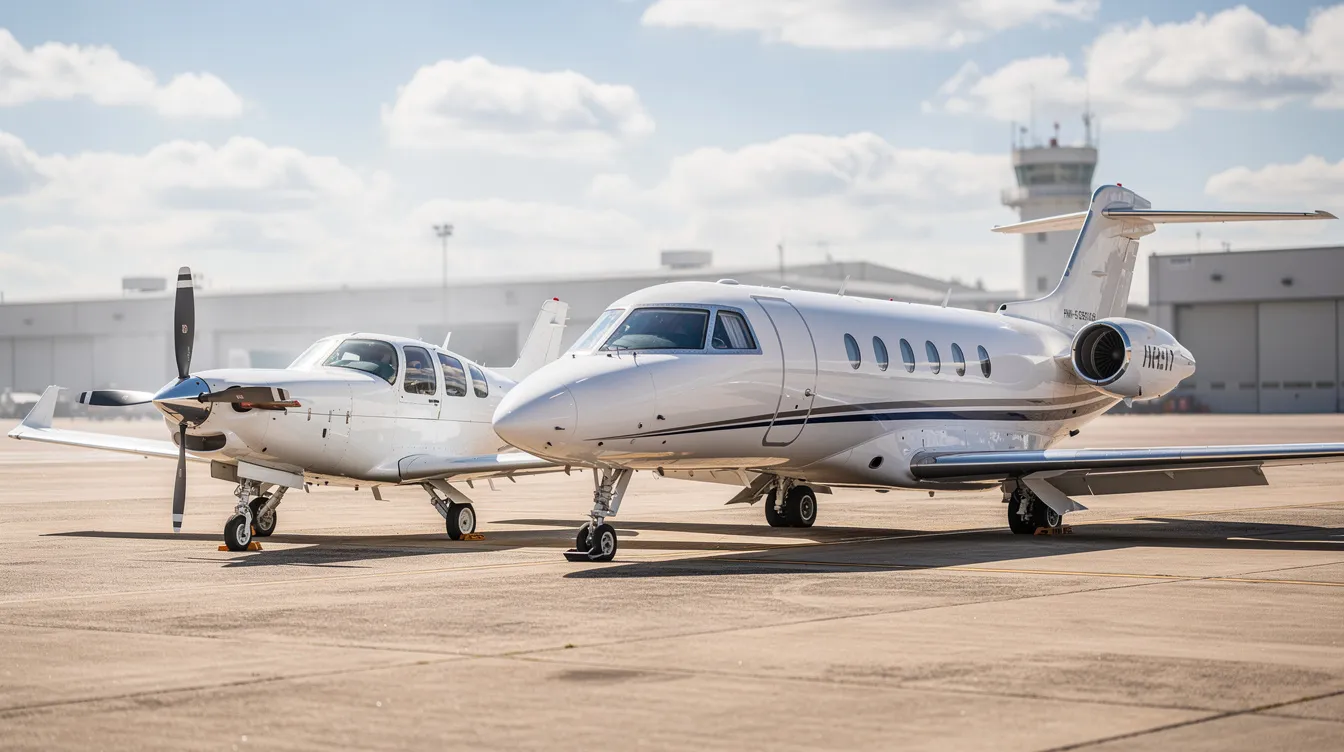
G1000-equipped Cessna 172S aircraft serve multiple roles, each with different economic logic.
Training: Flight schools operate fleets of 2007 to 2016 172S G1000 models for instrument and commercial training. Students building 200 to 300 hours of time in glass-cockpit aircraft face fewer transition issues when moving to multi-engine or turbine equipment. A 172S G1000 is preferred over an analog Cessna 172 for IFR training because the avionics match what airline and corporate pilot programs expect. Recent sales show strong interest in Cessna 172 aircraft from training operators, sustaining demand.
Time building and private ownership: Private buyers acquire a 172S G1000 to combine recreation with career building or side-business travel. Shared ownership or equity partnerships (quarter shares, for example) make glass-cockpit ownership accessible at a lower individual budget. An owner who plans to fly regularly from a home base can protect their investment by maintaining logs, keeping avionics current, and hangaring the airplane.
Business aviation missions: Short-range internal routes of 200 to 300 NM between regional offices work in a 172S when speed is less critical than point-to-point flexibility. Some companies use 172S G1000 aircraft as feeders to larger charter flights booked through Jettly, connecting remote airfields to major hubs for onward travel. But where time and security matter, or when the mission calls for more seats, payload, or air speed, chartering from Jettly’s extensive selection of private charter aircraft is the better fit.
Buyers can browse listings across marketplaces for G1000-equipped Cessna aircraft, including Controller and Trade-A-Plane. As of mid-2026, 21 Cessna 172 listings are currently available on Trade-A-Plane, and Cessna 172 listings typically stay active for about 107 days. Recent activity shows 17 Cessna 172 sales in the past year, confirming a liquid market.
Filter specifically for "172S" and "G1000" or "G1000 NXi" to avoid non-glass variants.
Shortlist aircraft with fresh annual inspections, low or mid-time engines, and no damage history.
Pay attention to photography quality, panel close-ups, logbook scans, and maintenance summaries.
Good listings include key details such as configuration, maintenance status, equipment specifics, the serial number, registration, total time, SMOH, prop time, exact G1000 options, and paint or interior age.
Look for evidence of hangaring, corrosion prevention, and recent avionics or interior upgrades.
Ensure a transparent asking price and seller contact method on the website.
Compare three to five candidates side by side, noting trade-offs in pricing, avionics mode and configuration, and total time before commissioning a pre-buy inspection on the best candidate.
This research habit mirrors how business aviation customers compare options across charter airlines and private operators on Jettly; filtering by aircraft type, range, and cost to find the best fit for each trip.
|
Specification |
Detail |
|---|---|
|
Engine |
Lycoming IO-360-L2A, 180 hp |
|
Cruise Speed |
124 knots (75% power) |
|
Stall Speed |
47 knots |
|
Empty Weight |
1,650 lb |
|
Gross Weight |
2,550 lb |
|
Useful Load |
Approx. 870 lb |
|
Fuel Capacity |
56 US gallons |
|
Range |
730 nautical miles |
|
Seating Capacity |
4 seats |
|
Avionics |
Garmin G1000 or G1000 NXi |
|
Autopilot |
GFC 700 preferred |
|
Fuel Burn |
8 to 10 gallons per hour |
Buyers often debate three paths:
Purchasing an older analog-panel Cessna 172 or 172N.
An older 172 with traditional instruments costs roughly USD $90,000 to $150,000.
Cessna 172 financing can help manage aircraft purchase costs effectively at this price point.
These aircraft suit VFR training or low-budget flying clubs but lack modern avionics situational awareness tools.
Some carry higher maintenance risk from aging airframes and limited parts availability.
Stretching into a more expensive G1000 172S.
The G1000 172S sits in the middle ground. Higher purchase price, but closer to modern airline and business aviation avionics standards.
Better for IFR training and resale value; newer airframes with clearer maintenance records.
A late-model example in good condition with factory equipment, complete documents, and continuous logs holds value well.
Forgoing ownership and using private charter for business travel.
For travelers whose priority is time savings and comfort on regional or cross-country trips, stepping into a turboprop or light jet via Jettly saves hours per mission compared with a 172 at 124 knots.
Guides to the best private jet charter companies can help these buyers understand how on-demand charter compares with ownership.
This path works for executives and families who need only 20 to 40 flight hours per year and prefer not to manage an aircraft, handle a lease, sell when circumstances change, or coordinate a security service for travel logistics, making programs like corporate jet cards and on-demand charter attractive alternatives.
The realistic decision path: define mission profile first, then compare costs and flexibility of owning a G1000 172S versus using on-demand charter for the same routes, drawing on broader context about how much a private jet costs to operate and own.
These questions address common concerns for first-time buyers and pilots transitioning from analog cockpits.
A 172S G1000 works well for owners who plan to pursue instrument ratings or fly regularly in controlled airspace. The avionics match what modern training and airline programs use, reducing transition time later. Insurance options are available for new and used Cessna 172s, and brokers can structure hull and liability coverage for first-time owners.
The downsides:
Higher acquisition cost than older analog models
Database subscription expenses exceeding $1,000 per year
The need for proper glass-cockpit training
Very low-time pilots may benefit from flying G1000 aircraft on charter or in a club arrangement before committing capital, or exploring affordable aeroplane rental options through clubs, schools, and charter providers. Some owners also lease back to flight schools to offset fixed expenses.
Compared to similar-age analog-panel 172s, G1000-equipped 172S models command a premium of tens of thousands of dollars. The exact amount depends on configuration (WAAS vs non-WAAS, NXi upgrade, ADS-B compliance), software currency, and general airframe and engine condition. Evaluate the total package rather than assuming G1000 automatically guarantees value.
A full G1000 retrofit into an older 172 is technically possible but often cost-prohibitive, sometimes approaching six figures for parts and labor. Many owners choose partial glass upgrades instead:
Dual Garmin G5 flight instruments
A GTN 650 or 750 navigator
A modern ADS-B transponder
These combinations provide many benefits of glass at lower cost. For some missions, chartering a modern glass-cockpit aircraft through Jettly may be more economical than a deep panel upgrade.
Late-model Cessna 172S G1000 aircraft have shown strong resale demand because they align with current training standards and remain in limited supply. Cessna 172 aircraft typically stay active for about 107 days on the market before sale, reflecting steady buyer interest.
Value retention still depends on:
Total time
Maintenance quality
Accident history
Owners who keep maintenance records clean, update databases, and comply with service bulletins protect their resale position.
Charter usually makes more sense when:
Annual flying hours are under 100 to 150
Most trips serve time-sensitive business aviation needs
Passengers and baggage regularly exceed what a 172S can carry
Jettly lets travelers choose the right aircraft category for each mission rather than compromising around one owned aircraft, while tools that explain affordable private jet charter pricing make it easier to benchmark against ownership. Run sample cost scenarios for a year's worth of typical trips and compare total ownership cost with charter quotes before deciding.
Searching "cessna g1000 for sale" leads to late-model Cessna 172S Skyhawk SP aircraft with the Garmin G1000 suite, well suited for modern training, private ownership, and short-haul business aviation missions. A low-time, well-maintained example in excellent condition represents an extremely rare opportunity in the current market where demand from flight schools and private buyers continues to push prices higher.
Focus on airframe and engine time, fresh annual status, clean logs, and G1000 configuration including WAAS, NXi, and ADS-B compliance. Compare several listings and invest in professional pre-purchase inspections, particularly for high-time ex-training aircraft.
For readers who mainly care about efficient travel rather than flying for its own sake, compare ownership costs with on-demand private charter through Jettly, which offers instant pricing and access to aircraft worldwide. Whether the destination is York, Pennsylvania, or across the continent, matching the right aircraft to each mission matters more than owning a single plane.
Ready to explore aircraft options without committing to ownership? Learn more about Jettly's private charter aircraft and turboprop charter solutions or request a quote at https://www.jettly.com.
Share this post:
Jay Franco Serevilla
Aug 2, 2026
|
5
min read
Discover tips and trends in the industry.

5
min read
Flights to Zapopan: How to Get There, Save Time, and Upgrade with Private Charter
Traveling to Zapopan requires flying into Guadalajara Miguel Hidalgo y Costilla International Airport (GDL), located about 25-30 km away. This guide outlines both commercial and private flight options, helping travelers save time and choose the best fit for their needs. With competitive pricing and flexible scheduling, private jet charters through Jettly offer a convenient alternative for those seeking comfort and efficiency.
Read More
5
min read
Fractional Ownership Cirrus: How Shared Cirrus Aircraft Ownership Really Works
Fractional ownership of Cirrus aircraft offers a cost-effective way to access high-performance aviation without the full financial burden of sole ownership. This model allows multiple owners to share the costs and benefits of owning a Cirrus SR22 or Vision Jet, with management companies handling maintenance and scheduling. Ideal for those flying 50-200 hours annually, fractional ownership provides flexibility and access to premium aircraft.
Read MoreStay updated with our latest insights and tips to elevate your journey with us.
MEMBERSHIPS AND ASSOCIATIONS



Disclaimer: Jettly operates as a charter broker, offering access to a global digital jet charter marketplace. Jettly is not a direct air carrier and does not own or operate aircraft. All advertised flights are conducted by third-party air carriers that are fully licensed and hold the appropriate Part 135 or Part 121 certifications issued by the Federal Aviation Administration (FAA) or equivalent regulatory authorities under U.S. or foreign law. Jettly complies fully with the U.S. Department of Transportation's Part 295 and Part 298 Charter Broker regulations. Jettly does not carry additional liability insurance. Passengers are covered by aircraft operator insurance. TICO: 50023770


