


Login
Get Instant Pricing On 23,000+ Aircraft

>
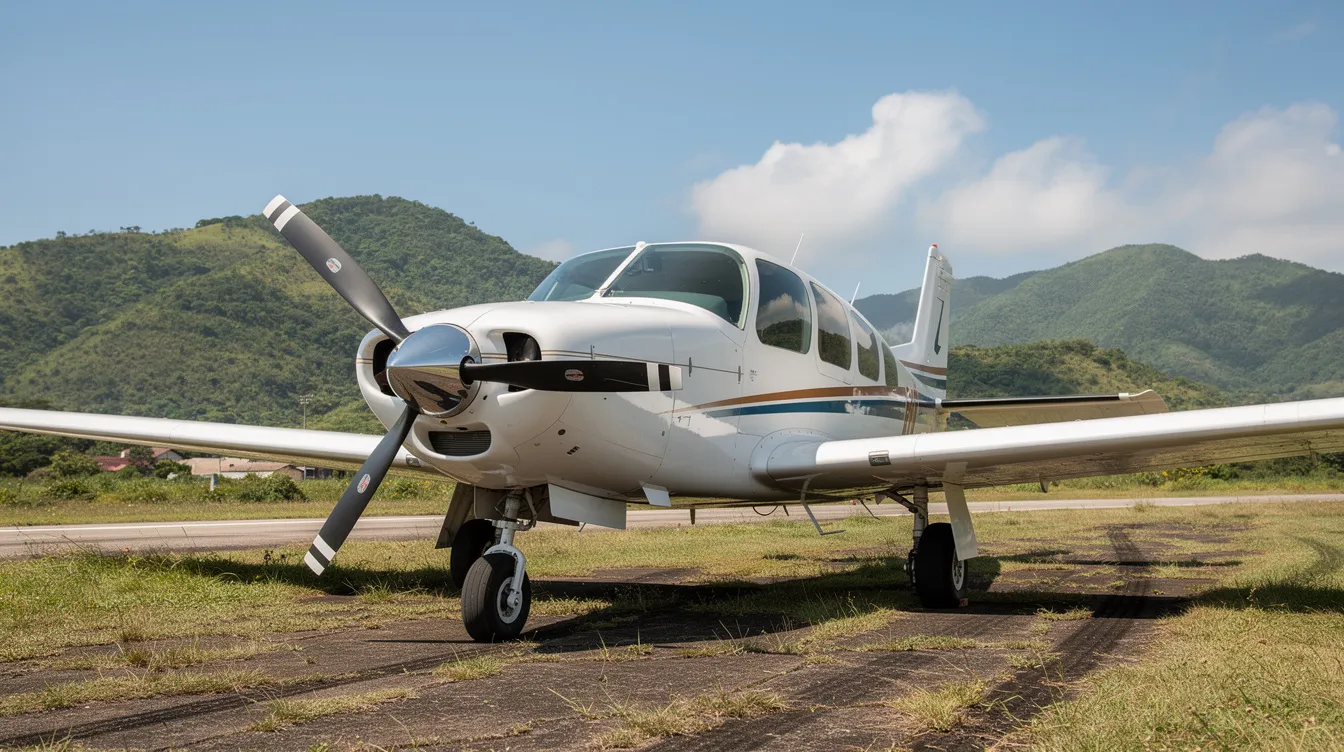
Cessna turboprops remain some of the most versatile and cost-effective aircraft in private aviation. Whether a traveler needs to reach a remote lodge, shuttle a corporate team between secondary cities, or move cargo to an airstrip with no jet service, aircraft models like the Cessna Grand Caravan EX and Cessna SkyCourier deliver where other planes simply cannot. This guide is intended for private travelers, charter brokers, and aviation enthusiasts considering Cessna turboprop aircraft for regional or remote missions. Understanding the unique capabilities of Cessna turboprops helps travelers and operators choose the most efficient and versatile aircraft for their needs. Cessna turboprop aircraft are renowned for rugged utility, with the Caravan family emphasizing versatility over speed. Their short takeoff and landing capability allows access to remote locations, and they are designed for unpaved runway operations, excelling in short-field capability. This guide covers the specs, interiors, operating economics, and real-world charter use cases for these turboprop aircraft—and how to book them through Jettly.
The Cessna Grand Caravan EX is a single-engine, high wing utility turboprop powered by a Pratt Whitney PT6A-140 engine, seating up to 14 passengers with a takeoff ground roll of only 1,399 feet—ideal for short or rough runways.
The Cessna SkyCourier is a newer twin engine turboprop whose first flight was in May 2020. It seats up to 19 passengers or carries three LD3 cargo containers, and it was designed for high frequency operations and maximum efficiency.
Cessna turboprops have lower operating costs than comparable jets, burn less fuel per hour, and can access runways under 3,000 feet long, including unpaved strips and even water (amphibious Grand Caravan EX).
Cessna's turboprop lineup includes the Caravan and SkyCourier models, both frequently available through Jettly for regional charter, cargo, and remote missions worldwide.
Travelers can compare Cessna turboprops against light jets and other turboprop aircraft and get instant charter pricing at Jettly.
Turboprop aircraft use turbine engines to drive propellers, offering better fuel efficiency than jets on short to medium routes. A turboprop is an aircraft powered by a gas turbine engine that drives a propeller, combining the reliability and power of a turbine with the efficiency of a propeller-driven aircraft. Turboprops generally provide a larger useful load capacity relative to their gross weight, are often more suited for short routes than small jets, and provide excellent fuel efficiency for regional flights. Under the Textron Aviation umbrella, the legendary Cessna brand has built one of aviation's most recognized turboprop families.
The Cessna 208 Caravan was introduced in the mid-1980s, with first deliveries in 1985. The original Caravan is powered by a Pratt & Whitney PT6A-114A engine and has a maximum range of 1,000 nautical miles. Over 2,500 Cessna Caravans have been manufactured, making the Cessna Caravan family the most delivered utility turboprop in the world. Early models established the platform's reputation; later models like the Cessna Grand Caravan and Grand Caravan EX brought more power and broader range.
Textron Aviation expanded the lineup further. The Cessna SkyCourier offers twin engine capability for higher-capacity missions. The in-development Cessna Denali has a range of 1,600 nautical miles, features GE's Catalyst advanced turboprop engine, can carry 8 to 11 passengers, and includes a Garmin G3000 touchscreen avionics suite. The Cessna 441 Conquest II is a twin-engine pressurized turboprop that also fits within the broader Cessna aircraft family. For a full breakdown of available Cessna models, Jettly's guide covers training, travel, and charter options.
Jettly frequently sources Caravan-family turboprops and SkyCouriers from vetted operators for passenger, cargo, and combi missions on regional and remote routes, alongside a broader fleet of private charter aircraft suitable for different mission profiles.
The Cessna Grand Caravan 208B and its upgraded successor, the Grand Caravan EX, are rugged single-engine turboprops built for commercial and charter fleets. Cessna turboprop aircraft are renowned for rugged utility, and the Grand Caravan EX exemplifies this.
Key specs for the Grand Caravan EX:
|
Specification |
Grand Caravan EX (Land) |
|---|---|
|
Engine |
PT6A-140 (867 shp) |
|
Maximum speed (cruise) |
~185 KTAS |
|
Maximum range |
Just over 900 nautical miles |
|
Passengers |
Up to 14 (commuter) / 8–10 (executive) |
|
Takeoff ground roll |
1,399 ft |
|
Avionics |
Garmin G1000 NXi |
|
Useful load |
~3,100–3,500 lb |
Many Cessna turboprop models can operate from runways under 3,000 feet long, giving pilots more flexibility on short or unpaved fields. The Grand Caravan EX excels in short-field capability and is designed for unpaved runway operations-grass, gravel, or compact dirt. Turboprops generally provide a larger useful load capacity relative to their gross weight, making them efficient haulers of passengers and cargo alike.
Typical missions include regional commuter service, humanitarian flights, medical transport, skydiving operations, and private charter for larger groups. The Grand Caravan EX is popular across Southern Africa, South America, Alaska, the Canadian North, and Pacific islands. All of these markets are represented in Jettly's global inventory of more than 20,000 aircraft. For deeper Cessna Caravan specs, Jettly maintains a dedicated reference page.

While the Grand Caravan EX is known for utility, Cessna's Caravan family emphasizes versatility over speed—and recent interior options push that versatility into executive territory. The aircraft cabin has seen meaningful upgrades that appeal to charter customers who expect more than bare metal.
Textron Aviation's named executive interior schemes include Lunar, Obsidian, and Saddle Sport, which join existing Canyon and Savanna schemes. Each theme offers distinct design palettes, from neutral leather tones to darker sport-oriented styling with quilted stitching and coordinated carpeting.
Common layouts include:
Executive club seating for eight to ten passengers
High-density commuter for 12–14 passengers
Mixed cargo-passenger with a belly cargo pod
Large windows let in natural light, and the spacious interior includes air conditioning, USB-C charging ports, a view toward the modern cockpit, and a low step height for easy boarding. Cabin noise is present—it is a turboprop—but manageable on typical 1–3 hour legs. Cessna turboprop cabins can be rapidly converted for different missions, whether carrying four passengers or five passengers with extra cargo. Jettly users can filter for specific interior options or layouts and arrange extras like catering and ground transport.
Operating economics are a major reason charter customers choose the Grand Caravan EX over light jets for short to mid-range flights. Turboprops are often more suited for short routes than small jets, and the numbers back that up.
Single-engine Grand Caravan EX aircraft burn significantly less fuel per hour than comparable light jets. Turboprops provide excellent fuel efficiency for regional flights, translating into lower hourly charter rates and strong payload-to-cost ratios. The PT6A engine's reputation for reliability contributes to longer maintenance intervals and better dispatch rates. Cessna models have a strong reputation for reliability and dispatch rate across commercial and charter fleets. One pilot can operate the Grand Caravan EX, further reducing crew costs.
Turboprops cruise at lower speeds and altitudes than jets, but their ability to use shorter airfields closer to a passenger's final destination—often via the most direct route—results in real door-to-door time savings, especially when paired with tools like Jettly's airport locator to identify convenient regional strips. On a 500-nautical-mile regional leg, the time saved avoiding a distant jet-capable airport and long ground transfer can offset the slower cruise entirely. Jettly's platform displays instant pricing that reflects these cost advantages, letting travelers compare Cessna turboprops with light jets for each specific route using the charter cost estimator.
The Cessna SkyCourier is a clean-sheet, high-wing twin-engine turboprop developed by Textron Aviation for high-frequency cargo and passenger operations, complementing the single-engine Caravan family.
Timeline highlights:
The program launched in 2017
Its successful first flight took place on 17 May 2020 (marking a major program milestone)
Entry into service began in 2022
By 2025, the aircraft reached its five-year anniversary since that flight
Cessna's broader utility lineup also includes models like the Cessna 207 with short-field capability for smaller group missions. The SkyCourier first flight Textron Aviation achieved represented a new era for utility turboprops.
|
Specification |
SkyCourier (Passenger) |
SkyCourier (Freighter) |
|---|---|---|
|
Engines |
Twin PT6A-65SC |
Twin PT6A-65SC |
|
Passengers |
Up to 19 |
2 crew + freight |
|
Cargo capacity |
- |
3 LD3 containers / ~6,000 lb |
|
Range |
Up to 900 nautical miles |
~940 nm |
|
Cruise speed |
~210 KTAS |
~210 KTAS |
The SkyCourier features a straightforward flight deck, single-point pressure refueling, and design emphasis on quick turns. It features a cargo variant for three LD3 shipping containers, and the aircraft is powered by Pratt & Whitney PT6A-65SC engines. SkyCourier charters via Jettly suit larger corporate groups, sports teams, tour operators, or cargo clients needing point-to-point freight. For more on Cessna twin-engine aircraft, Jettly covers additional models and charter applications.
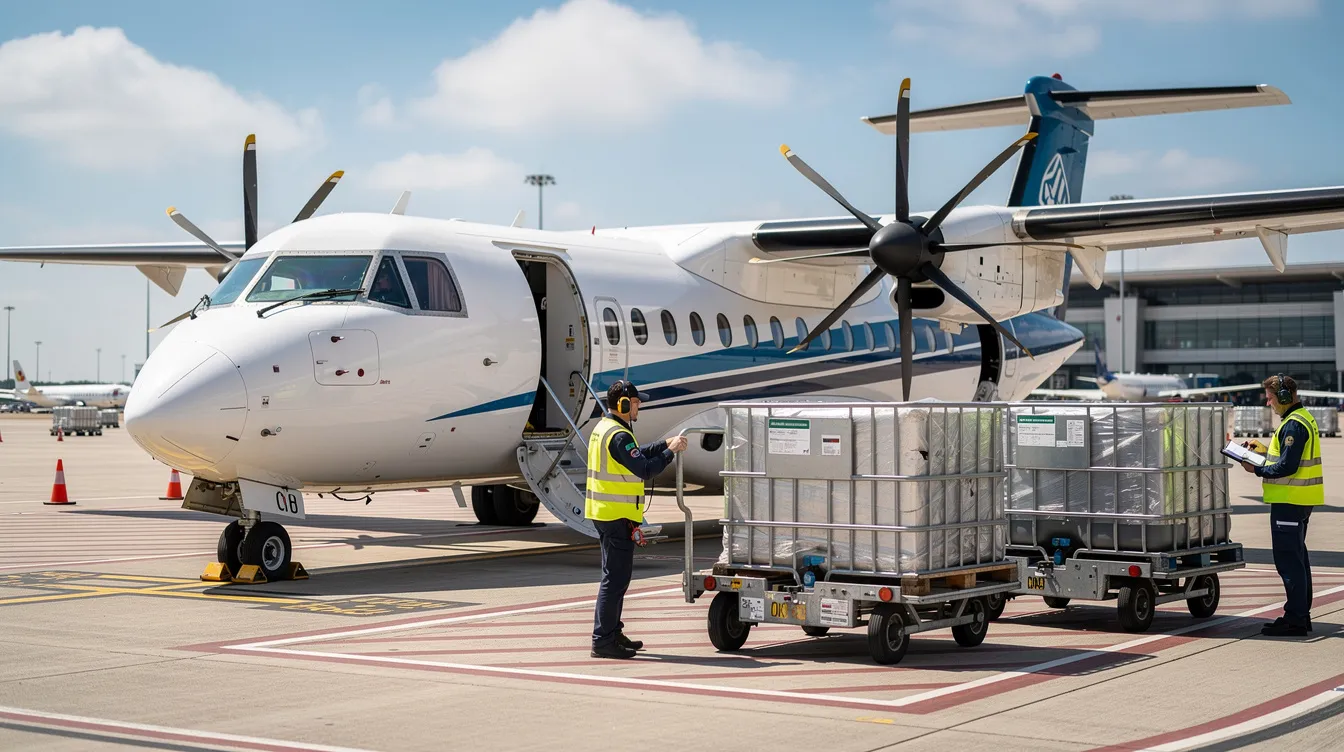
Textron Aviation continues to evolve Cessna turboprops under broader innovation themes. The "Fly a Different Sky" concept—sometimes written as sky discover—is about modernizing legacy aircraft with updated flight decks, new paint, interiors, and efficiency upgrades that benefit operators and charter customers, whether they operate pressurized twins like the Cessna 340 for business travel or workhorse turboprops.
The Cessna brand also invests in structured test programs. The second test article flight for the Cessna Citation CJ4 Gen3 demonstrated how rigorous development pipelines support every new model—turboprop or jet. Similar processes supported the SkyCourier and the upcoming Denali.
Cessna's community programs also strengthen the brand. The Top Hawk program annually congratulates recipients at flight schools such as Bismarck Flight Academy, Brazos Valley Flight Services, Sterling Flight Training, Fairmont State University, and Victors Aviation. This recognition honors schools that operate the first aircraft in their training fleets from Cessna. The Hawk Program congratulatory recognition recognizes schools operating the first aircraft in their training fleets from Cessna. These programs—along with buying pre-owned Cessna turboprops for fleet expansion—keep the ecosystem strong, much like Jettly's high-ticket affiliate program expands access to private aviation through partner networks.
On sustainability, efficient turboprop private jet alternatives on short routes reduce fuel burn compared with operating larger jets, and understanding private jet charter costs and savings strategies helps travelers choose the most efficient option overall. Jettly customers can often choose newer, more efficient Cessna turboprops or opt into carbon-offset options where available.
Cessna turboprops are heavily represented in Jettly's global inventory and are often the right aircraft for specific missions versus light jets or helicopters. Short takeoff and landing capability allows Cessna turboprops to access remote locations that jets never could.
Concrete use cases include shared flying arrangements that resemble Jettly's crowdsourced private jet flights and empty-seat sharing, as well as:
Regional corporate shuttles between secondary cities with no commercial service, a segment highlighted across many operators in our guide to charter airlines and private flights
Family trips to island or safari lodges reachable only by short or unpaved strips
Adventure tourism and skydiving flights with high payloads, often paired with tailored in-flight catering services via Jettly Eats for longer journeys
Cargo and medical supply runs using the direct route between remote points
Route examples where a Cessna Caravan rental makes sense: Nairobi–Maasai Mara, Johannesburg–lodge airstrips, Vancouver–Tofino, or Caribbean island-to-island sectors with limited infrastructure. These are missions where turboprops fly the most direct route and save hours of ground travel.
Jettly's platform lets users filter for "turboprop," refine to Cessna Grand Caravan EX or similar types, view estimated flight time, and compare side-by-side with jets, while frequent flyers can optimize costs through flexible private jet membership plans. The platform also coordinates in-flight catering, ground transfers at remote airstrips, and helps passengers understand baggage capacity and weight limits on utility turboprops.
For travelers who already know they want a Cessna turboprop for their next trip, here is the process:
Visit jettly.com
Enter departure and arrival airports (including small regional fields), dates, and passenger count
Select "turboprop" as your preferred aircraft category
Refine results to specific aircraft types (e.g., Cessna Grand Caravan EX) where available
Review instant pricing, estimated flight duration, and cabin photos
Travelers can choose between on-demand bookings, jet card programs with fixed hourly rates, and membership options for frequent flyers. Membership offers potential cost savings, dedicated support, and faster repeat booking. Safety-vetted operators, transparent pricing, and optional add-ons—catering, ground transport, special baggage or sports equipment handling—are all coordinated through the Jettly platform, which also includes tools like a jet card flight cost estimator for budgeting one-way trips.
The Grand Caravan EX seats up to 14 passengers in high-density commuter configuration, but many charter operators configure cabins for eight passengers to twelve to balance comfort and baggage capacity. Jettly listings specify exact seating and baggage allowances for each aircraft, helping travelers compare full-aircraft charters with options to buy a single seat on a private jet through shared and semi-private services.
Yes. One of the Grand Caravan EX's core strengths is its short-takeoff-and-landing capability and rugged landing gear, allowing operations from rough runways and short regional strips. Jettly users should share intended airports and runway details so operators can verify performance and weather constraints.
Cessna turboprops fly lower and slower than jets, with more propeller-driven cabin noise. Flights are still comfortable for typical 1–3 hour regional legs. Travelers sensitive to noise can request aircraft with upgraded interiors or consider light jets via Jettly for longer routes.
Cessna's turboprop lineup includes the versatile Caravan family and the modern SkyCourier model. The Caravan family, introduced in the mid-1980s with over 2,500 units manufactured, emphasizes rugged utility and versatility over speed. Models like the Grand Caravan EX seat up to 14 passengers and feature powerful Pratt & Whitney PT6A-140 engines with Garmin G1000 NXi avionics. The SkyCourier, which made its first flight in May 2020, is a twin-engine turboprop designed for high-frequency operations and maximum efficiency, carrying up to 19 passengers or three LD3 cargo containers.
Many Cessna turboprop models excel in short-field capability and are designed for unpaved runway operations, including grass, gravel, and compact dirt strips. Their short takeoff and landing capabilities allow access to remote locations with runways under 3,000 feet long, making them ideal for regional and utility missions.
Yes. Cessna turboprops have lower operating costs than comparable jets due to their excellent fuel efficiency and larger useful load capacity relative to their gross weight. They provide strong reliability and dispatch rates, contributing to reduced maintenance and operational expenses.
Turboprops are often more suited for short routes than small jets. Cessna turboprops offer excellent fuel efficiency for regional flights and can rapidly convert their cabins for different missions, whether passenger transport or cargo. The single-engine Grand Caravan family and twin-engine models like the 441 Conquest II pressurized turboprop provide rugged utility and versatility across a range of applications.
Cessna 208 Caravan: Powered by a Pratt & Whitney PT6A-114A engine, with a maximum range of 1,000 nautical miles, seating up to nine passengers.
Cessna Grand Caravan EX: Seats up to 14 passengers, powered by a Pratt & Whitney PT6A-140 engine, with a range just over 900 nautical miles and a takeoff ground roll of only 1,399 feet.
Cessna SkyCourier: Twin Pratt & Whitney PT6A-65SC engines, range up to 900 nautical miles, seats up to 19 passengers or carries three LD3 shipping containers.
Cessna Denali (in development): Features GE's Catalyst advanced turboprop engine, Garmin G3000 touchscreen avionics suite, range of 1,600 nautical miles, and can carry 8 to 11 passengers.
Grand Caravan and Grand Caravan EX aircraft often feature belly cargo pods and wide doors, making them strong choices for bulky items like camping equipment, skis, surfboards, or dive gear within weight limits. The SkyCourier's cargo variant handles palletized and containerized freight. Jettly can match customers with cargo-configured aircraft for logistics missions.
On many sub-1,000-nautical-mile routes with six to fourteen passengers, Cessna turboprops often provide lower hourly costs and better per-seat pricing than comparable jets. Jettly's instant pricing tools make it easy to compare turboprops and jets for any route, balancing speed, cost, and airport access.
Cessna turboprops—especially the Cessna Grand Caravan EX, Cessna Grand Caravan, and Cessna SkyCourier—offer a blend of payload, rugged performance, and operating economics built for regional, remote, and utility-focused private travel. Their short-field capability, flexible interior options, and proven PT6A engine turboprop reliability make them strong choices for both passenger groups and cargo missions compared with light jets on many routes.
Through Jettly, travelers can access a wide selection of Cessna turboprops worldwide, view instant pricing, and tailor each charter with catering, transfers, and other services.
Ready to explore turboprop charter options? Request a personalized quote at jettly.com or begin planning routes such as a private jet charter to Chennai, Tamil Nadu using similar tools and workflows.
Share this post:
Jay Franco Serevilla
Aug 24, 2026
|
5
min read
Discover tips and trends in the industry.

5
min read
Best Time To Buy Hawaii Tickets: How To Lock In The Best Deal On Your Hawaii Trip
Discover the best strategies for booking flights to Hawaii and save money on your trip. This guide outlines optimal booking windows, travel periods, and tips for finding the best deals. Whether you're traveling for leisure or business, understanding these factors can help you secure the best airfare.
Read More
5
min read
When Are Flight Tickets Cheapest? Timing, Trends, and Smart Alternatives
Knowing when flight tickets are cheapest can lead to significant savings. This guide explores optimal booking windows, travel days, and strategies for both commercial and private flights, emphasizing the importance of tracking prices and flexibility in travel plans.
Read MoreStay updated with our latest insights and tips to elevate your journey with us.
MEMBERSHIPS AND ASSOCIATIONS



Disclaimer: Jettly operates as a charter broker, offering access to a global digital jet charter marketplace. Jettly is not a direct air carrier and does not own or operate aircraft. All advertised flights are conducted by third-party air carriers that are fully licensed and hold the appropriate Part 135 or Part 121 certifications issued by the Federal Aviation Administration (FAA) or equivalent regulatory authorities under U.S. or foreign law. Jettly complies fully with the U.S. Department of Transportation's Part 295 and Part 298 Charter Broker regulations. Jettly does not carry additional liability insurance. Passengers are covered by aircraft operator insurance. TICO: 50023770


