


Login
Get Instant Pricing On 23,000+ Aircraft

>

A charter airline company operates flights on-demand rather than on a fixed, public schedule-giving travelers complete control over routes, timing, and aircraft. As the private aviation industry evolves, digital platforms are reshaping how people access charter flight services. This guide breaks down how charter airlines work, what they cost, and how Jettly fits into the broader private aviation market as a technology-first booking platform.
A charter airline company flies aircraft on demand under regulations like FAA Part 135, offering flexibility that scheduled commercial aviation cannot match. Charter flights are leased entirely by a client for specific trips.
Private aviation saves 2–4 hours per trip compared to commercial flights, with access to over 5,000 airports in the U.S. alone versus roughly 500 served by commercial airlines.
Industry leaders include NetJets, Vista Global, Flexjet, Jet Linx Aviation, and Air Hamburg, alongside digital brokers like Jettly.
Jettly is a tech-driven air charter platform-not a traditional operator-providing access to 20,000+ aircraft globally without requiring jet cards or long-term contracts.
Key charter concepts to understand: on-demand charter flights, empty legs (discounted repositioning flights), aircraft size categories from light jets to heavy jets, and global network coverage across 150+ countries.
Ready to explore flight options or get a quote? Visit https://www.jettly.com for fast pricing and booking.
Charter airline companies operate flights on-demand rather than on a fixed, public schedule. In the U.S., these operators hold FAA Part 135 certificates for on-demand and charter operations, meeting specific pilot, maintenance, and safety standards. Unlike commercial airlines that operate on pre-published timetables with predetermined routes, air charter gives clients the ability to choose departure times, airports, and destinations freely.
Charter services span several formats: private jet charter for executives and families, group charter for sports teams or corporate events, cargo charter, and special-event flights like music tours. Charter flights can fly to destinations not served by major carriers, and they can often utilize over 7,000 airports globally-including smaller regional airports not accessible by commercial airlines.
Well-known charter-related brands include NetJets, Vista Global (which encompasses VistaJet and XO), Jet Edge, Wheels Up, Air Hamburg, Jet Linx Aviation, and Flexjet. Many of these own or manage fleets directly. Jettly takes a different approach: it connects travelers digitally to multiple certified operators through a single marketplace, offering jet charter access without fleet ownership.
Charter airlines obtain operating certificates from aviation authorities, maintain diverse fleet rosters, and employ trained crews to deliver private flights. In the U.S., charter operators must meet FAA operational and certification requirements. Part 135 operators face stricter regulatory oversight than Part 91 operators, with mandated crew rest rules, maintenance schedules, and safety audits.
The typical workflow looks like this:
Inquiry - The customer specifies route, date, passenger count, and any special needs.
Aircraft sourcing - The operator or marketplace identifies a specific aircraft matching the mission.
Pricing - Base hourly rates plus extras like positioning fees, landing charges, and fuel surcharges are calculated.
Contract - The operator issues a charter agreement; safety and insurance compliance is confirmed.
Flight execution - Crew scheduling, ground handling, and operations proceed.
Jettly operates as a digital private jet charter platform that aggregates aircraft from many operators. This broker/marketplace layer expands customer choice, drives transparent pricing, and covers a global network spanning 150+ countries. Charter airlines can operate turboprops, light jets, midsize jets, heavy jets, and helicopters, often specializing by category or region.
Legitimate charter airlines are subject to aviation safety regulations and certification requirements. Third-party safety audits from organizations like ARGUS and Wyvern provide objective quality measurements for operators.
Choosing the right flight type and aircraft is central to both the charter experience and cost. Here are the main models:
On-demand private charter - Book the entire aircraft for a single trip.
Semi-private or shared flights - Split costs with other passengers on set routes.
Corporate shuttle programs - Recurring flights between company locations.
Ad-hoc group charter - One-off flights for teams, bands, or delegations.
Main aircraft categories include turboprops (ideal for short regional travel with lower costs), light jets (seating 4–6 passengers for short-haul flights), midsize jets (accommodating 6–9 passengers with more cabin space), super midsize jets, heavy jets (seating 10–16+ passengers for international flights), and ultra-long-range jets. Very light jets are suitable for quick business trips under 3 hours.
Empty legs are discounted one-way charter segments created when aircraft reposition without paying passengers. Savings typically range from 30% to 75% for flexible travelers willing to adapt to set times and routes. Jettly's platform surfaces both standard charter quotes and available empty leg flights, letting customers filter by aircraft size, range, and features like wi fi, enclosed lavatories, and beds.
|
Category |
Passengers |
Typical Range |
Hourly Rate (2025) |
Best For |
|---|---|---|---|---|
|
Turboprop |
4–8 |
Up to 1,000 NM |
$2,000–$3,500 |
Short hops, regional |
|
Light Jet (e.g., Phenom 300, Citation XLS) |
4–6 |
1,000–1,800 NM |
$2,500–$5,500 |
LA–Las Vegas, short business trips |
|
Midsize (e.g., Citation Latitude) |
6–9 |
1,800–2,800 NM |
$4,000–$7,000 |
Toronto–Vancouver, cross-country |
|
Super Midsize (e.g., Challenger 350) |
8–10 |
2,800–3,500 NM |
$6,500–$9,500 |
Transcontinental, coast-to-coast |
|
Heavy (e.g., Gulfstream G550) |
10–16+ |
4,000–6,000 NM |
$8,500–$15,000 |
NY–London, international |
|
Ultra-Long-Range (e.g., Global 7500) |
10–16+ |
6,000+ NM |
$11,000–$20,000+ |
Intercontinental nonstop |
A Los Angeles–Las Vegas hop works well on a light jet or turboprop. Toronto–Vancouver fits a midsize or super midsize jet. New York–London demands a heavy jet or ultra-long-range aircraft. The trade-offs come down to cost, speed, and onboard comfort- long-range jets command higher rates but offer beds, full galleys, and room for productive work.
Traditional charter airlines own or manage fleets and hold operating certificates. Digital platforms like Jettly act as tech-enabled charter brokers, connecting travelers to a global network of 20,000+ vetted aircraft from certified operators across 170+ countries-without operating a single aircraft directly.
The marketplace model delivers several strategic advantage points: more aircraft choice, competitive pricing from multiple operators, fast quotes, and global reach through one interface. Travelers can avoid long-term commitments like fractional ownership (which allows shared access to an aircraft fleet) or traditional jet card programs by using on-demand charters through Jettly.
Competitors like Vista Global (including Air Hamburg and Jet Edge), NetJets, Flexjet, and Jet Linx Aviation operate strong fleets. Jettly positions itself as a flexible, technology-first alternative that sources the best option across all of them.
Jet card programs require prepaid flight hours from 25 to 200+ hours, typically ranging from $100,000 to $500,000. They appeal to frequent flyers who want fixed pricing and guaranteed aircraft availability during peak periods. Membership programs from companies like NetJets, Nicholas Air, and Solairus Aviation often include 24-hour concierge services.
Jettly takes a different approach. Its membership options and jet card program emphasize transparent, trip-by-trip pricing without locking clients into large prepaid deposits. If you fly 50+ hours annually on consistent routes, a jet card may save money. For occasional or unpredictable travel needs, Jettly's on-demand booking and empty leg opportunities often make more sense.
The private aviation market recorded 1.8 million global departures in H1 2025, with North America holding roughly 76% of business jet activity. Here are some industry leaders:
NetJets operates approximately 780 aircraft across five jet classes.
Flexjet recorded 78,322 North American departures in H1 2025 from a fleet of ~314 aircraft.
Vista Global operates over 70 business jets globally and has grown membership 12% year-over-year.
Wheels Up serves over 5,000 airports across North America and Europe.
Talon Air, Red Wing Aviation, and Clay Lacy Aviation serve as strong regional operators.
Jettly plugs into this ecosystem as an independent marketplace, sourcing flights from multiple certified operators. This multi-operator approach helps travelers compare options-from light jets to heavy jets-across regions without contacting each company separately. For a deeper look at corporate aircraft options, Jettly's platform lets clients browse by mission type.
Some charter airlines focus on specific regions or niches. Air Hamburg covers European business centers. JSX offers semi-private U.S. shuttles. Boutique operators provide helicopter transfers to major events. Jettly's global network includes these niche operators alongside major fleets, giving customers broader choice for both routine business trips and special events. Aviation experts on Jettly's team can match travelers with the right local expertise for any region.
While every charter airline has its own workflow, Jettly standardizes the experience through its digital platform:
Enter route, dates, and passenger count.
Receive instant pricing across multiple operators.
Compare aircraft by size, amenities, and cost.
Confirm and pay securely.
Receive a detailed itinerary with all logistics handled.
Jettly coordinates with the underlying charter operator for flight operations, safety compliance, crew scheduling, and ground arrangements. Many itineraries can be quoted and confirmed within hours-especially for common routes like New York–Miami or popular destinations like Las Vegas.
Use case: A corporate team needs a same-day jet charter for an urgent board meeting in Chicago. They enter details into Jettly at 8 AM, receive three aircraft options by 9 AM, and depart by noon from a private terminal.
Charter operators can customize in-flight meals and cabin setups-from gourmet catering to working configurations with conference seating. Private aviation provides luxury amenities like gourmet catering and spacious interiors, but the real value is practical: wi fi for productivity, lie-flat seats for rest, even chilled champagne for celebrations.
Jettly's concierge team arranges chauffeured transfers, helicopter connections, and hotel arrivals through vetted partners. This door-to-door integration saves several hours per trip compared with coordinating each element separately. Private aviation offers personalized service with dedicated account managers available 24/7.
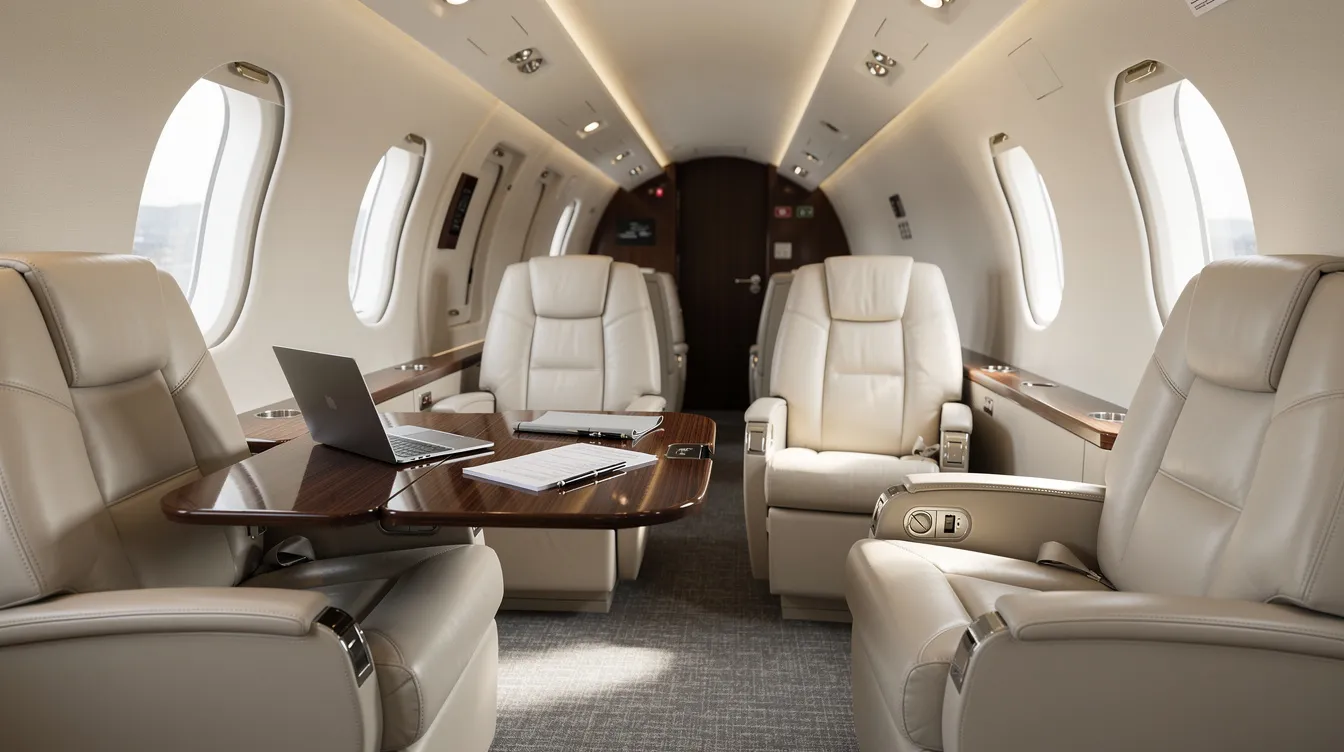
Charter costs range from $2,000 to $25,000+ per hour depending on aircraft type, distance, and market conditions. Light jets start at around $2,500 per hour. Midsize jets typically cost between $4,000 and $7,000 per hour. Long-range jets can command rates from $10,000 to $15,000 per hour.
Key cost drivers beyond hourly rates include:
Positioning legs (ferrying aircraft to your departure point)
Landing and handling fees (vary by airport)
Crew costs (overnight stays, duty limits)
Fuel surcharges (sensitive to market volatility)
Extras - catering, ground transport, de-icing in winter
Hidden costs may add 20–50% to base hourly rates. Understanding the full trip cost matters more than comparing headline numbers.
Empty legs offer 30–75% discounts for flexible travelers. These occur when an aircraft must reposition without passengers. Jettly's platform surfaces available empty legs alongside standard quotes so price-sensitive clients can optimize costs without sacrificing safety.
When comparing quotes from different charter airlines and brokers, look beyond hourly rates to total trip cost. Check safety ratings, aircraft age, cabin layout, and cancellation terms alongside price. Jettly's transparent, itemized pricing helps avoid hidden fees common in some traditional charter agreements.
Example: A 3-hour New York–Miami round trip on a light jet might quote at $3,500/hour ($10,500 base) plus ~$2,000 in positioning, landing fees, and taxes-bringing the total closer to $12,500–$13,000. Knowing this upfront is the best choice for smart budgeting.
Safety and compliance are non-negotiable in private aviation. In the U.S., charter operators must meet FAA operational and certification requirements under Part 135. Argus Platinum and Gold ratings validate operational safety standards. Wyvern Wingman certification ensures high safety compliance for operators. IS-BAO certification establishes international safety management protocols.
Reputable charter airlines use two-pilot crews on jets, structured training programs, and regular maintenance by certified facilities. Jettly only works with licensed operators that meet strict regulatory standards and encourages clients to review safety ratings during the selection process.
On the environmental front, the industry is investing in fuel-efficient aircraft, sustainable aviation fuel, and carbon offset programs. These innovative services are gradually becoming standard among forward-thinking operators across Europe and North America.
Charter flights frequently operate out of private terminals (FBOs) rather than crowded public passenger terminals. Passengers on charter flights avoid lengthy check-in and boarding processes. Direct routing eliminates connections and layovers, cutting risks tied to missed flights or congested hubs.
For time-critical or sensitive trips-medical transport, crisis response, high-profile executives-charter airlines can tailor procedures and schedules that would be impossible on commercial flights. Charter flights provide a confidential environment for sensitive meetings and complete scheduling control with direct access to secondary airports.
The main reasons clients turn to charter airlines: time savings, flexibility, privacy, and access to smaller airports. Charter flights can use smaller regional airports often not accessible by commercial airlines. Private jets access over 5,000 airports; commercial airlines serve roughly 500. Charter flights allow direct routing, eliminating connections and layovers. Charter flights offer unmatched flexibility in scheduling, and private aviation allows for flexible scheduling tailored to individual air travel needs.
Charter flights permit greater privacy and comfort during travel, with typically less strict luggage policies than commercial airlines. Passengers arrive just 15–20 minutes before departure versus 90+ minutes for commercial flights.
Use cases include:
Executive roadshows across multiple cities in one day
Family vacations to remote destinations with limited local service
Urgent last-minute trips
Event travel for conferences, film festivals, and sports
Jettly enhances these benefits with instant pricing, a diverse fleet inventory, and digital trip management. It offers membership options for frequent flyers and pay-as-you-go charter for occasional travelers-helping each segment avoid overcommitting to jet cards or fractional ownership.
Commonly booked routes through charter airlines include New York–Miami, Los Angeles–Las Vegas, London–Nice, Toronto–New York, and intra-Europe routes like Zurich–Hamburg.
CEO visiting three cities in one day - Chicago, Houston, Miami on a super midsize jet. Total flight hours: ~5.5 hours. Impossible on commercial schedules.
Family flying to a Caribbean island - Limited scheduled service; a light jet from Miami gets them there in 90 minutes with luggage flexibility.
Sports team touring multiple venues - Group charter on a heavy jet, ground transport coordinated at each stop.
Jettly coordinates each scenario-choosing suitable aircraft, optimizing schedules, and integrating ground transportation for a seamless trip.
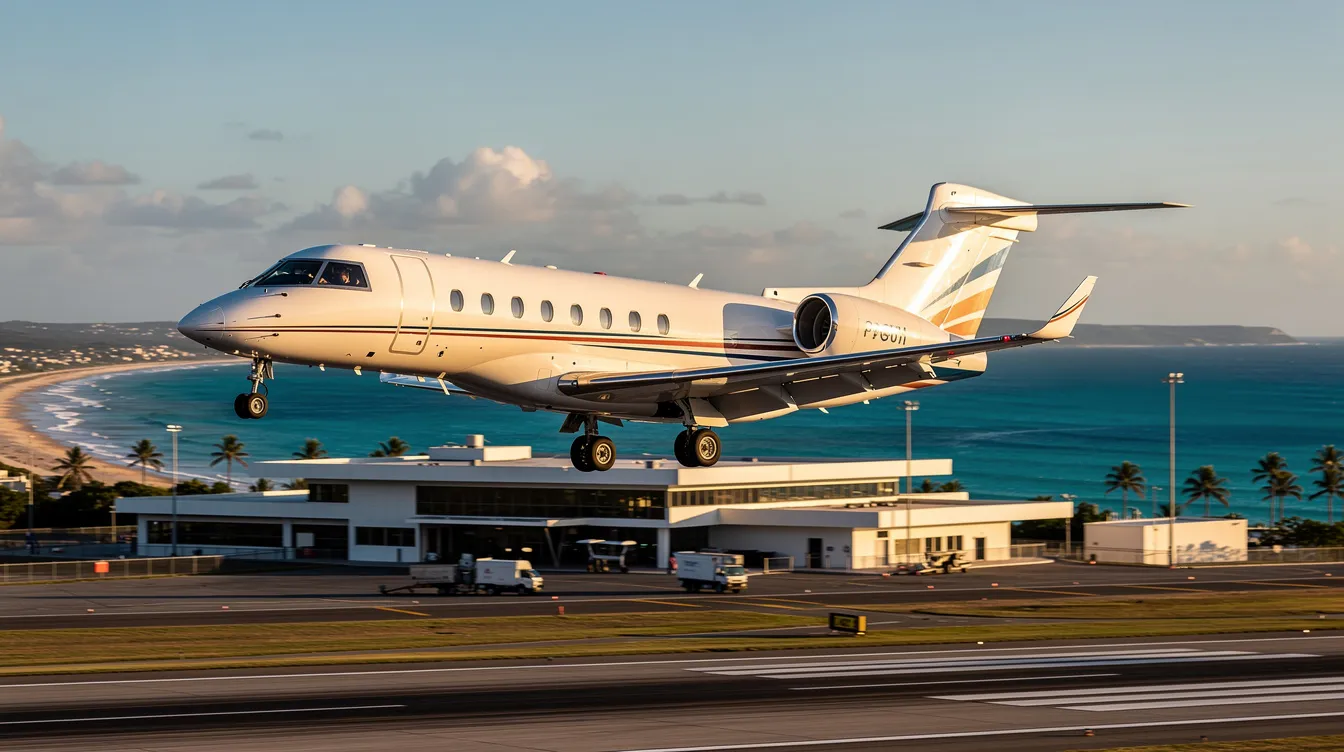
Travelers can book directly with a single charter airline if they prefer a specific operator. Jettly offers a marketplace view across many operators with instant pricing, saving time on quote collection and comparison. When booking through Jettly, the underlying flight is still operated by a licensed charter company meeting all regulatory requirements. This preserves direct operational safety oversight by the carrier while giving clients broader access.
Same-day and next-day charters are often possible, especially on popular business routes. However, 2–7 days' notice usually provides more aircraft choice and better pricing. Peak periods-major holidays, events like the Super Bowl or Monaco Grand Prix-benefit from booking several weeks ahead. Jettly's platform shows real-time availability, helping travelers understand options even on short notice. Rule of thumb: the more flexible your dates, the better your price.
No jet card is required. Travelers can simply request a quote and pay per flight. Jettly also offers optional membership tiers with benefits like reduced booking fees, added support, or access to special pricing for frequent flyers. This contrasts with traditional jet card programs requiring $100,000+ in prepaid hours. First-time private flyers can start with a single trip-no commitment needed. For more details, see Jettly's first-time flying guide.
Most midsize, super midsize, and heavy jets used by charter airlines handle international flights comfortably, subject to range and airport capabilities. Jettly and its partner operators routinely manage customs, landing permits, and multi-leg itineraries across North America, Europe, the Caribbean, and the world beyond. Example: a three-city European business itinerary-London to Zurich to Milan-on a super midsize jet, with ground transport at each stop and customs handled behind the scenes.
Luggage limits depend on aircraft size and weight balance, but private jets typically allow more flexible baggage arrangements than commercial flights. Many charter airlines are pet-friendly, allowing pets to travel in the cabin with prior notification and documentation. Jettly's booking process collects luggage and pet details so the selected operator can confirm what works for the chosen aircraft. Discuss any specific needs with Jettly's team before finalizing your booking.
A charter airline company gives travelers what scheduled airlines cannot: complete control over timing, routing, and the in-flight experience. As the private aviation industry matures-with the global market projected to reach $50.6 billion by 2026-digital platforms are making these services more accessible than ever.
Jettly offers a smarter way to fly private: on-demand jet charter, transparent pricing, global network coverage, and optional memberships-without mandatory jet cards or ownership. Whether comparing aircraft types, hunting for empty legs, or checking safety credentials, the information in this guide puts you in a stronger position to make informed charter decisions.
Ready to experience private travel on your terms? Explore flight options or request a quote at https://www.jettly.com.
Share this post:
Jay Franco Serevilla
Jul 4, 2026
|
5
min read
Discover tips and trends in the industry.
5
min read
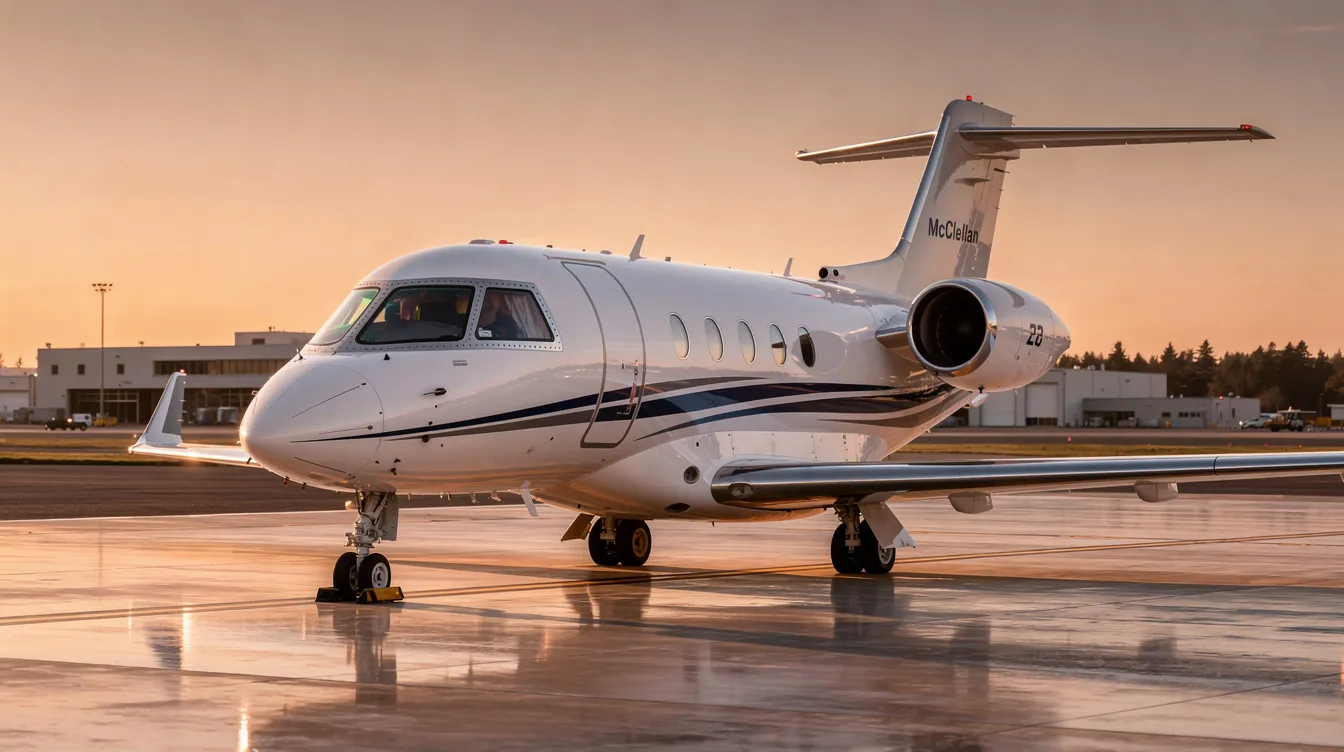
McClellan Jet Services: FBO Facilities, Jet Services, and Charter Alternatives
McClellan Jet Services is a premier fixed-base operator (FBO) at McClellan Airport, offering comprehensive ground support and amenities for private jet travelers. With 24/7 operations, it provides fueling, ground handling, and passenger services, while Jettly's digital platform facilitates seamless private jet charter bookings. Together, they enhance the private aviation experience for business and leisure travelers in Northern California.
Read More
5
min read
Arrow Jets: How Jettly Makes Private Jet Travel Simple, Fast, and Transparent
Jettly revolutionizes private jet travel by offering a digital platform that simplifies the booking process for over 20,000 aircraft worldwide. With instant pricing and transparent cost breakdowns, travelers can easily access fast, direct flights tailored to their needs. This on-demand model eliminates the complexities of traditional jet ownership, making private aviation more accessible and efficient.
Read MoreStay updated with our latest insights and tips to elevate your journey with us.
MEMBERSHIPS AND ASSOCIATIONS



Disclaimer: Jettly operates as a charter broker, offering access to a global digital jet charter marketplace. Jettly is not a direct air carrier and does not own or operate aircraft. All advertised flights are conducted by third-party air carriers that are fully licensed and hold the appropriate Part 135 or Part 121 certifications issued by the Federal Aviation Administration (FAA) or equivalent regulatory authorities under U.S. or foreign law. Jettly complies fully with the U.S. Department of Transportation's Part 295 and Part 298 Charter Broker regulations. Jettly does not carry additional liability insurance. Passengers are covered by aircraft operator insurance. TICO: 50023770


