


Login
Get Instant Pricing On 23,000+ Aircraft

>
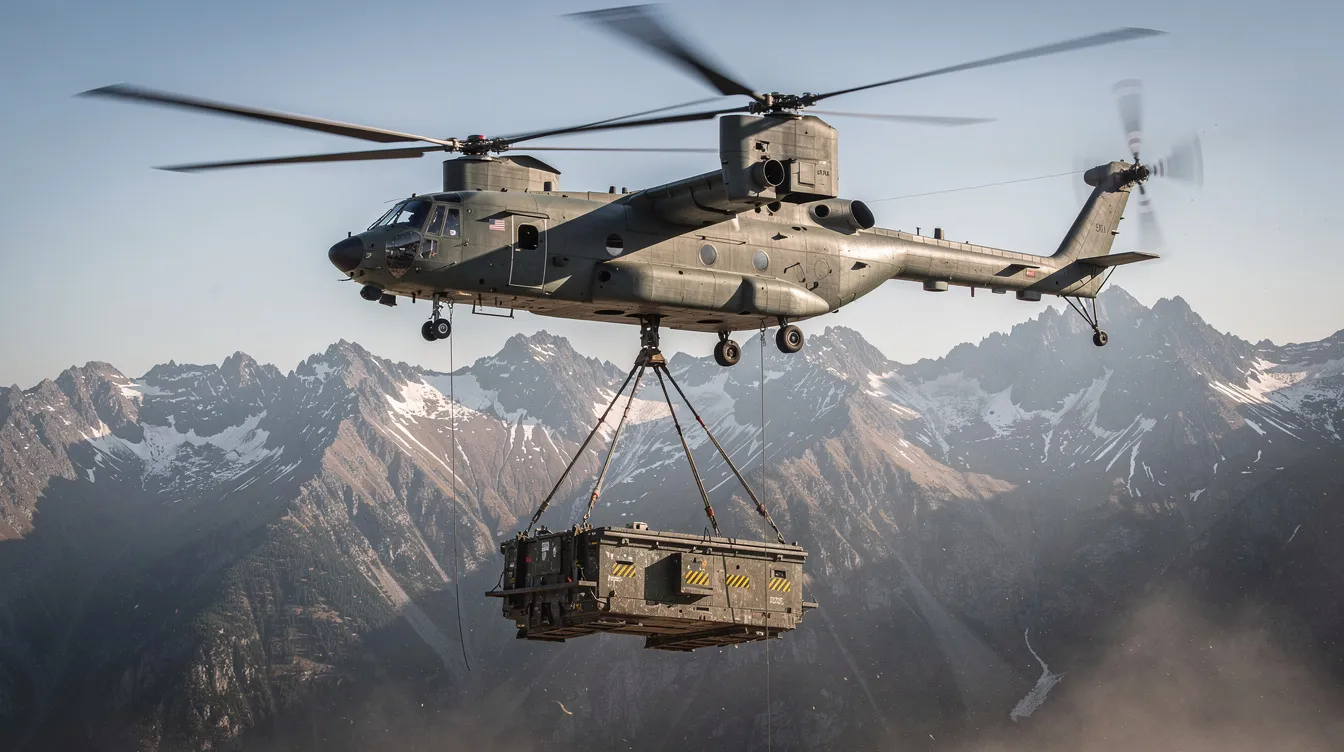
The CH-47 Chinook helicopter is a twin-engine, tandem rotor heavy-lift aircraft designed and developed by Boeing Vertol
. It entered service with the US Army in 1962 and remains one of the most capable vertical-lift platforms in the world, with the CH-47D and CH-47F as its most prominent variants.
Surplus CH-47D airframes are the primary option for civil and commercial heavy-lift operations, while the CH-47F remains a frontline military asset that is not normally sold to civilians due to export controls, cost, and strategic sensitivity.
The CH-47F can reach a maximum speed of around 170 knots (over 175 mph), carry more than 26,000 pounds on its center hook, and operate at altitudes up to 20,000 feet. Extended range fuel tanks allow longer missions in remote areas.
Most private organizations access Chinook capability via charter platforms like Jettly rather than ownership, because civilian ownership of Chinook helicopters is uncommon and regulated, with significant crew, maintenance, and certification requirements.
Chinook helicopters play a critical role in aerial firefighting, heavy construction, infrastructure projects, and rapid-response disaster relief, often operating alongside fixed-wing cargo aircraft to establish logistics chains.
The CH-47 Chinook is a heavy-lift helicopter with twin engines and tandem rotors, developed by Boeing Vertol. Since the first CH-47A was delivered in 1962, the Chinook helicopter has become the backbone of military and commercial heavy-lift operations worldwide. Its distinctive silhouette—two large rotors spinning atop a long fuselage—makes it instantly recognizable on battlefields, construction sites, and disaster zones alike.
Unlike single-rotor helicopters that require a tail rotor to counteract torque, the Chinook's tandem rotor layout uses counter-rotating rotors to balance forces. This design gives the aircraft greater stability, a wide center-of-gravity tolerance, and the ability to carry heavy loads both inside its spacious cabin and on external hooks beneath the fuselage.
The Chinook family spans several military variants—from the early CH-47A/B/C series through the rebuilt CH-47D and modern CH-47F, plus the MH-47 special operations models—and one key civil derivative, the Boeing Vertol Model 234. This guide covers performance, models, operational history, market availability, and how charter access through Jettly works for organizations that need heavy-lift capability without the burden of ownership.
The Chinook was born from a late-1950s requirement: the Army sought a gas-turbine-powered medium-to-heavy-lift helicopter to replace the piston-engine Sikorsky CH-37 Mojave. The result was a design built from the ground up for moving heavy loads in challenging environments.
The tandem rotor configuration works as follows:
Two main rotors, one forward and one aft, spin in opposite directions. These counter-rotating rotors eliminate the torque that would otherwise spin the fuselage, removing the need for an antitorque tail rotor entirely.
Both rotors are mechanically linked through a combining gearbox, so power transfers between them seamlessly. If one engine fails, the remaining engine can drive both rotors under specified load and altitude conditions, giving the aircraft critical redundancy.
The design provides improved hover efficiency under heavy loads, a large center-of-gravity envelope that allows flexible cargo placement, and the ability to carry bulky items both internally and on three external hooks.
Two turboshaft engines from the Honeywell T55 series provide propulsion. Later variants introduced upgraded engines, composite rotor blades, and stronger drivetrains to support higher maximum takeoff weight and extended range missions. Improved avionics, digitized flight controls, and vibration-dampening airframe components further refined the platform across its six-decade service life.
In 1956, the United States military issued a requirement for a turbine-powered transport helicopter capable of all-weather operations and heavy cargo hauling. Vertol Aircraft Corporation responded with two designs: the smaller Model 107 and the larger Model 114, which would evolve into the Chinook.
Key milestones in the Chinook's development:
The HC-1B prototype (Vertol Model 114) completed its first flight and hover tests in 1961.
The aircraft was redesignated YCH-47A in 1962 under the new tri-service designation system.
The CH-47A Chinook entered service on August 16, 1962, with the US Army, marking the beginning of continuous production and deployment that continues today.
The Army ordered the Chinook specifically to fill the gap between the small UH-1 Huey—used for assault, medevac, and light utility—and the need for a dedicated troop transport and cargo aircraft. Where the Huey moved squads and light equipment, the Chinook could carry entire artillery batteries, vehicles, and large supply loads.
Early CH-47A/B/C variants saw rapid deployment to the Vietnam War, where over 750 Chinooks were used for troop insertion, supply runs, casualty evacuation, and downed aircraft recovery. Performance in the hot, humid, mountainous terrain of South Vietnam revealed limitations that drove the development of more powerful engines and stronger airframes in subsequent models.
Most Chinook airframes have been successively rebuilt or upgraded rather than entirely replaced, making variant history essential for understanding today's Chinook fleet. The transport helicopter role has remained constant, but the capabilities have expanded dramatically.
CH-47A/B/C Series (1962–1980s)
These early models saw incremental increases in power and payload. The CH-47C, introduced in 1967, could carry roughly 15,000 lb of payload under specific conditions. However, hot-and-high environments exposed limitations in engine power and structural strength, particularly in Vietnam War operations.
CH-47D (Introduced 1982)
The CH-47D entered service in 1982 with upgraded engines—the T55-L-712 and later -714 variants—along with composite rotor blades, a stronger transmission, and improved avionics. This major upgrades program rebuilt earlier airframes to a common standard, creating the D models that would serve as the US Army's primary heavy-lift fleet for over two decades.
CH-47F (Fielded from 2009)
The CH-47F was introduced in 2009 with advanced avionics, including the Common Avionics Architecture System (CAAS) and Digital Advanced Flight Control System (DAFCS). These digitized flight controls significantly reduce pilot workload. The airframe features monolithic machined components that lower vibration, cut maintenance costs, and improve crew comfort. Block II upgrades push maximum gross weight toward 54,000 lb and add extended range fuel tanks for longer missions.
Specialist and International Variants
The MH-47G, operated by the Army Special Operations Command, adds aerial refueling probes, enhanced sensors, and mission equipment for special operations insertions. International versions include India's CH-47F(I) tailored for Himalayan operations, the UK's HC series, Canada's CH-147F, and variants for Australia, Germany, and other allied nations. Some carry nose art and mission-specific markings reflecting their operational history.
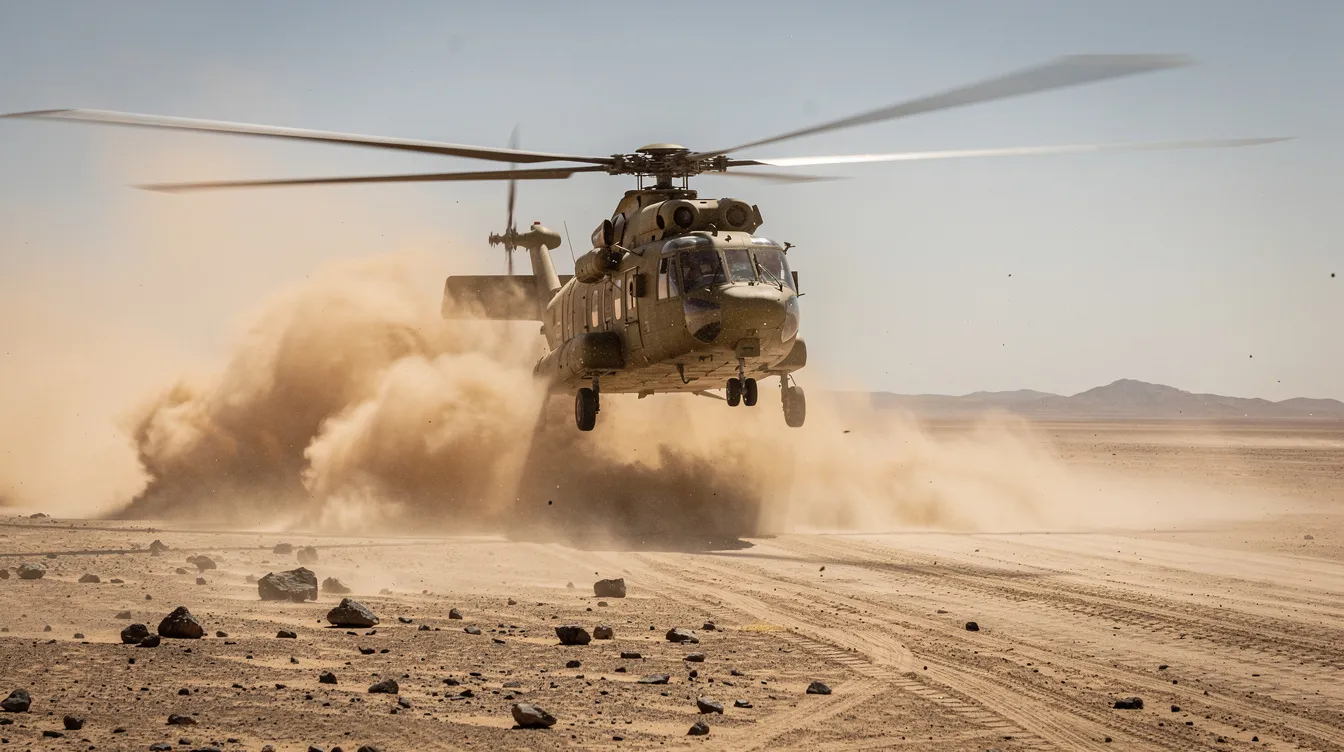
Exact figures vary by configuration, operator, and environmental conditions, but the following representative CH-47F numbers give a concrete picture of this aircraft's heavy lift capability. For a deeper dive into payload specifics, see Jettly's guide on the lift capacity of a Chinook helicopter.
Dimensions: Each rotor spans approximately 60 ft in diameter. With rotors operating, the overall length reaches about 98 ft 10.7 in. The fuselage stands roughly 18 ft 7.8 in tall. Inside, the cabin offers approximately 30 ft 6 in of floor length by 7 ft 6 in of width, with about 6 ft 6 in of headroom.
Powerplant: The CH-47F is powered by two Honeywell T55-GA-714A turboshaft engines. Each engine produces approximately 4,733 horsepower (3,529 kW), driving the tandem rotors through the main combining gearbox. These powerful engines provide redundancy—the Chinook can maintain controlled flight on one engine under specified conditions.
Performance metrics:
Maximum speed: approximately 170 knots (~175 mph / 282 km/h)
Cruise speed: around 157 knots in clean configuration
Service ceiling: approximately 20,000 feet, depending on weight and environmental conditions
Fuel capacity: roughly 1,080 gallons; fuel burn rate approximately 330 gallons per hour
Typical endurance: 2.5 to 3 hours in standard configuration
Payload: The CH-47F has a maximum payload capacity exceeding 21,000 pounds internally. Its maximum takeoff weight is 54,000 pounds in Block II configurations. Chinooks can carry up to 26,000 pounds externally on the center hook, with forward and aft hooks rated for approximately 17,000 lb each. These figures make the Chinook one of the most capable vertical-lift cargo platforms available.
Understanding the Chinook ecosystem requires familiarity with several terms that come up in procurement, operations, and charter discussions.
CH-47: The baseline US Army designation for the Chinook helicopter family. Letters A through F and G denote major versions or rebuild standards, with "MH" indicating special operations modifications.
CH-47D: The widely produced upgrade standard from the 1980s. Because hundreds of D models were rebuilt from earlier airframes, the CH-47D became the primary surplus model available for civil heavy-lift operations after newer F-model conversions began.
CH-47F: The modern digital-cockpit successor offering higher reliability, improved situational awareness through improved avionics, and better payload handling. It features improved engines and is designed for long-term service with the US Army and allied air forces.
Boeing Vertol Model 234 (Boeing Model 234): The main civilian version of the Chinook, holding a civil type certificate. These aircraft operate in logging, offshore support, heavy construction, and large-scale aerial firefighting. Columbia Helicopters holds the type certificate for the FAA-certified Chinook 234.
Restricted category certification: Under FAA regulations (14 CFR § 21.25), surplus military helicopters can receive restricted category certification for special-purpose operations like external sling load work, firefighting, and forest conservation. These certificates generally prohibit regular passenger transport for hire.
External sling load: Cargo carried below the aircraft on a hook or sling system. Sling loads increase aerodynamic drag, reduce cruise speed, and demand specialized rigging and ground-crew coordination.
Extended range fuel tanks: Additional or enlarged fuel cells (sometimes called ERFS) that increase ferry range or mission radius, particularly important for Block II CH-47F deployments to remote or austere locations.
The Name "Chinook" Beyond the Helicopter
The name "Chinook" carries deep cultural and ecological significance beyond aviation. The Chinook people are indigenous people from the Pacific Northwest, with the Chinook Nation actively involved in cultural preservation and language revitalization. The traditional Chinookan languages, which are polysynthetic and morphologically complex, faced severe decline due to colonization, and fluent speakers of traditional Chinook languages are nearly extinct today.
Chinook Jargon, a pidgin trade language, originated from trade among indigenous peoples and settlers and was widely used by approximately 100,000 speakers in the 19th century. Chinook Jargon facilitated commerce across the region, and its vocabulary is present in regional English language and culture to this day. Chinuk Wawa, a related lingua franca, developed as a communication bridge across diverse linguistic groups and incorporates elements from indigenous languages, English, and French. Revitalization efforts for Chinuk Wawa include educational programs aimed at preserving this linguistic heritage.
Chinook salmon are the largest species of Pacific salmon and are classified as a keystone species. These fish can weigh over 100 pounds and have high commercial and recreational value. Chinook salmon are ecologically important in transporting marine nutrients to inland ecosystems. They return to freshwater to reproduce after migrating through the ocean, but many wild Chinook populations are threatened or endangered today.
Chinook winds are warm, dry, gusty winds that blow down the Rocky Mountains. Known locally as "snow eaters," Chinook winds can cause temperature increases of 20°C or more in hours and can rapidly melt heavy snowpacks. These winds have significant effects on agriculture and ecosystems across western North America.
Chinook helicopters have seen continuous combat and support service since the 1960s, building an operational history that spans multiple conflicts and humanitarian operations across every continent.
Vietnam War (1962–1975)
The Chinook's baptism by fire came in Vietnam, where the aircraft performed troop transport, artillery emplacement for artillery batteries, casualty evacuation, downed aircraft recovery, and supply missions in some of the most challenging terrain on Earth. Over 750 Chinooks served in Vietnam, and the aircraft's ability to recover damaged helicopters and fixed-wing aircraft earned it a reputation for rugged aircraft recovery capability. Secondary missions included moving refugees and supporting medical evacuation operations.
Gulf War (1990–1991)
During Operations Desert Shield and Desert Storm, more than 160 CH-47D airframes were deployed for battlefield resupply, movement of heavy equipment, and long-distance logistics. The Chinook's heavy lift capability proved essential for moving artillery, fuel, and ammunition across vast desert distances.
Afghanistan and Iraq (2001–2021)
The CH-47F and remaining D models performed air assault, resupply, medical evacuation, and special operations support under Part 135-style charter regulatory frameworks in conditions that pushed the aircraft to its limits. High altitude performance in Afghan mountain passes and extreme heat in Iraqi summers tested every aspect of the design. These deployments directly informed the Block II improvements aimed at increasing lift in hot-and-high conditions.
Global Fleet
Numerous air forces worldwide operate Chinook fleets tailored to national requirements. The Royal Air Force, Royal Canadian Air Force, Indian Air Force, Australian Army Aviation, and forces from Germany, the Netherlands, Turkey, and other nations all field Chinook variants. Operations have included peacekeeping in Northern Ireland, support missions in Africa, and humanitarian efforts across Asia.
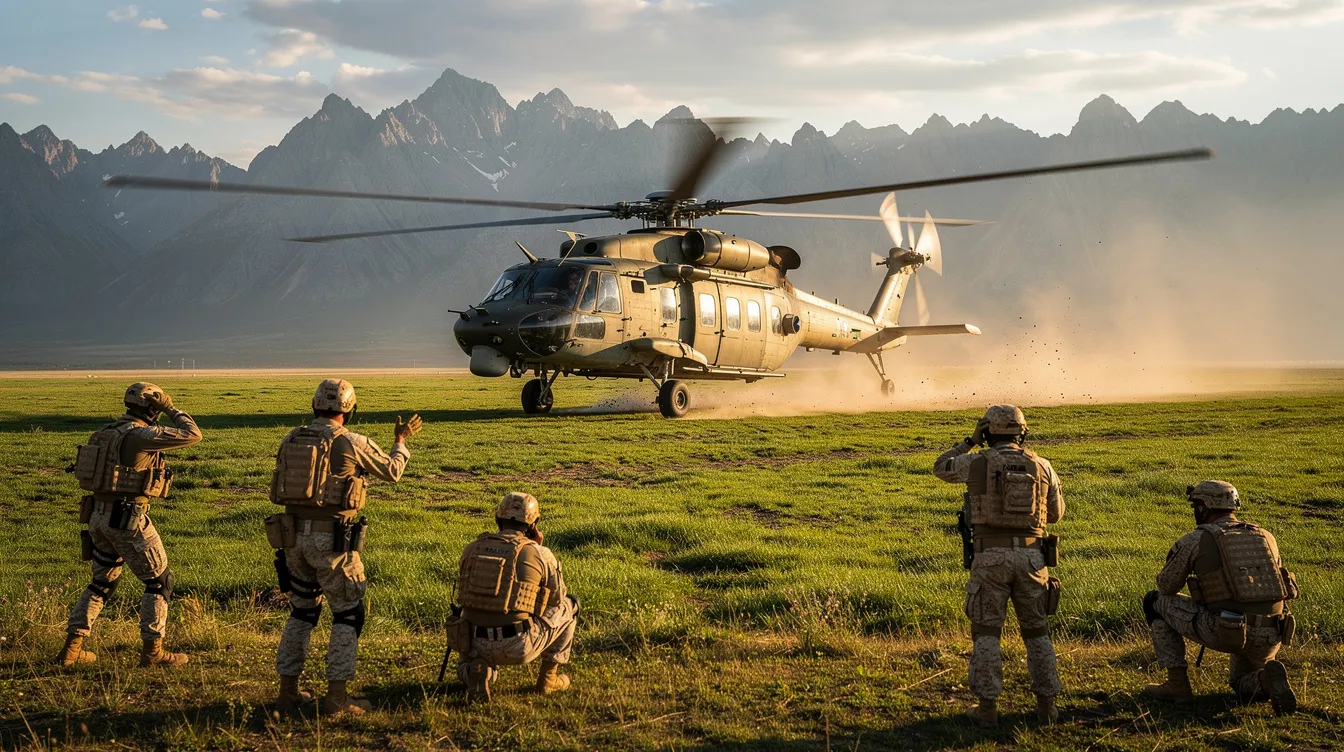
The Chinook gained particular fame during the 1982 Falklands War, where the Royal Air Force Chinook known as "Bravo November" became one of the most celebrated individual aircraft in British military history.
When the transport ship Atlantic Conveyor was struck by Argentine Exocet missiles, all but one RAF Chinook was lost. Bravo November, already airborne at the time, became the sole surviving Chinook in the theater. Over the following weeks, it flew intensive troop and cargo missions in extreme South Atlantic weather—high winds, freezing rain, and near-zero visibility—carrying far more than its normal rated loads to compensate for the lost aircraft. The Falklands War demonstrated the Chinook's resilience and versatility under combat conditions, cementing its reputation with the British armed forces.
Beyond the Falklands, Chinooks have supported embassy evacuations, special operations insertions by units under the Army Special Operations Command, and high-altitude missions in places like Afghanistan's Hindu Kush and the Himalayas. The air force and army have used machine guns mounted on Chinooks for self-defense during combat operations, while the aircraft's rear ramp allows rapid loading and unloading even under fire.
Non-combat operations have included UN and coalition support missions across Africa, Southeast Asia, and Latin America, where the Chinook's extended range and vertical-lift capability fill gaps that ground transport cannot.
Chinook helicopters are among the first assets deployed for large-scale disaster relief because their payload, range, and rear-ramp loading capability allow them to move supplies and equipment that smaller helicopters simply cannot handle.
Notable deployments include:
Hurricane Andrew (1992): Chinooks supported disaster relief after Hurricane Andrew in 1992, moving generators, construction materials, and medical supplies into devastated areas of southern Florida.
Indian Ocean Tsunami (2004): US Army and allied Chinooks ferried emergency shelter modules, water purification equipment, and food to coastal communities cut off by the tsunami.
Kashmir Earthquake (2005): Indian Air Force Chinooks operated in mountainous terrain to deliver supplies and evacuate casualties from remote villages.
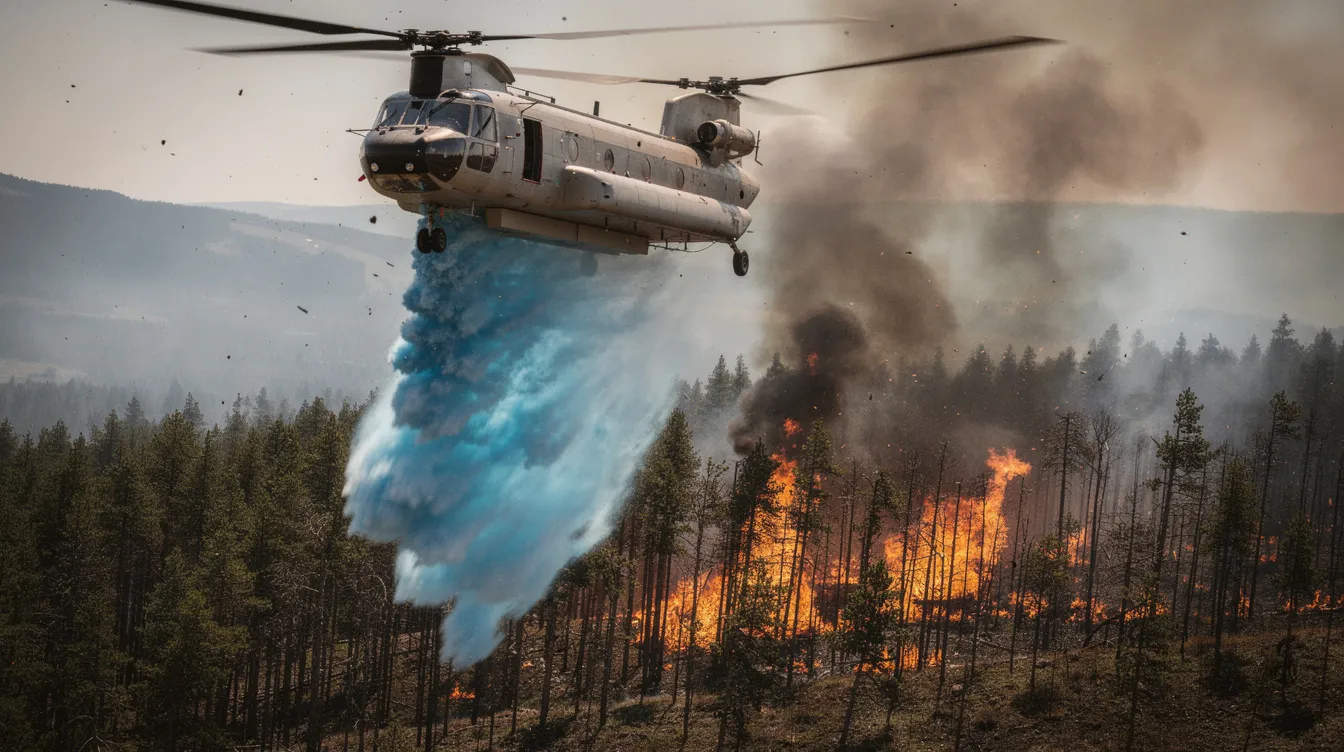
North American Wildfire Seasons: Chinooks are regularly tasked with aerial firefighting, using large water and retardant buckets to shuttle between water sources and fire lines.
Chinooks move emergency shelters, generators, medical supplies, and heavy engineering equipment into areas inaccessible by road or fixed-wing aircraft. They also perform mass evacuation and medical evacuation roles, moving civilians from flood zones or conflict areas into a disaster zone staging area. Chinooks are utilized for search and rescue missions worldwide, leveraging their endurance and payload to cover large areas.
Governments and NGOs often combine CH-47D or Vertol 234 helicopters with cargo jets chartered through platforms like Jettly to create an integrated disaster relief air bridge.
Mission profiles for Chinook helicopters cluster into several categories: military operations, civil protection and disaster relief, commercial heavy lift, and specialized research. Each demands different configurations, crew compositions, and planning.
Heavy Construction and Infrastructure
Chinooks lift HVAC units, bridge sections, transmission towers, and prefabricated buildings into dense urban environments or remote valleys without road access. They regularly place power line towers and heavy construction modules for mining, energy, and telecommunications projects.
Wildfire Suppression
During wildfire seasons, Chinooks deploy 2,000-gallon (or larger) water or retardant buckets, shuttling between water sources and fire lines in coordination with ground firefighting teams. A flight engineer manages the external load while two pilots handle flight operations.
Industrial and Energy Support
Oil, gas, and mining operations rely on Chinooks to transport drilling rigs, pipeline sections, and heavy equipment to locations without road access, including Arctic sites and high-mountain installations. The aircraft's three-hook system allows precise placement of oversized cargo.
Specialized Research and Aerospace
Niche applications include lifting rocket stages for aerospace testing, high-altitude research support, and assisting national space programs. Indian Air Force Chinooks, for example, have supported ISRO experimental vehicle operations.
The retirement of CH-47D airframes in favor of CH-47F upgrades created a limited surplus market starting in the late 2000s. For those exploring purchase options, Jettly maintains a resource on Chinook helicopters for sale.
U.S. government auctions for CH-47D helicopters began in 2013 via the General Services Administration (GSA) after demilitarization and export-control review. Surplus CH-47D helicopters sold at auction for $2 to $3.5 million in "as-is" condition, with later refurbished airframes commanding higher prices depending on hours, component life, and avionics upgrades.
Most available CH-47D airframes date from roughly 1979–2002 production runs. Surplus CH-47D helicopters require substantial refurbishment for commercial use, including engine overhauls, component replacement, new avionics, and restricted category certification work. A refurbished CH-47D under a restricted type certificate can handle about 28,000 lb of external load at approximately 54,000 lb gross weight.
The civilian buyer pool consists almost entirely of specialized heavy-lift operators rather than private individuals. Certification hurdles, training requirements, and operating costs in the tens of thousands of dollars per flight hour make individual ownership impractical for most organizations. Fort Rucker (now Fort Novosel) served as the primary US Army training center where many Chinook crews earned their type ratings before entering service.
CH-47F and MH-47G helicopters are frontline assets managed through Foreign Military Sales (FMS) programs administered by the Defense Security Cooperation Agency, not typical open-market aircraft.
The CH-47F's enhanced features—digital avionics, improved engines, Block II upgrades for increased payload and extended range, and increased stability systems—represent strategically sensitive technology. Export controls and ITAR regulations apply to Chinook purchases of these variants, effectively preventing civilian acquisition.
Real-world acquisition costs illustrate why these remain government-to-government transactions. The United Arab Emirates received approval for six CH-47F Block II Chinooks with support packages totaling approximately $1.32 billion. A 2026 US Army contract awarded Boeing $326 million for six remanufactured CH-47F Block II aircraft—roughly $54.3 million per helicopter. CH-47F helicopters cost between $50 and $90 million each when full support packages are included.
For civil heavy-lift missions, demilitarized CH-47D or Vertol 234 aircraft remain the realistic Chinook-family options. The CH-47F's cost-effective military profile does not translate to the commercial market.
A small number of commercial operators run Chinook fleets focused on heavy-lift and aerial firefighting rather than passenger transport. Four commercial operators sell CH-47D helicopters for heavy-lift services in the current market.
Columbia Helicopters, based near the Columbia River in Oregon, is the best-known commercial operator. The company holds the FAA type certificate for the Boeing Vertol Model 234 and operates both the 234 and CH-47D airframes under restricted or transport category approvals. Billings Flying Service also holds restricted type certificates for CH-47D operations.
Core commercial missions include:
Logging and forestry operations
Infrastructure construction (towers, pipelines, bridges)
Oil and gas support in remote or offshore locations
Aerial firefighting for state and federal agencies
Disaster relief logistics under government contract
These operators maintain fleets that include several Chinooks plus dedicated maintenance bases, extensive spare-parts inventories, and crews trained specifically in tandem rotor operations. Managing these resources requires deep expertise in the CH-47 ecosystem.
Platforms like Jettly connect customers to such operators, enabling on-demand access to the broader Chinook fleet and other private charter aircraft without needing to own or manage aircraft directly. This model is particularly valuable for organizations with intermittent heavy-lift needs.
Most civil CH-47D and Vertol 234 aircraft operate under "restricted category" or "special purpose" certifications rather than standard passenger transport approvals. FAA restricted-category certification limits Chinook operations to specific missions such as external loads, firefighting, agricultural applications, and other special-purpose work.
Key regulatory factors include:
Restricted category rules generally prohibit carrying paying passengers. Commercial CH-47D helicopters cannot carry passengers due to FAA regulations governing restricted category operations.
Export controls and ITAR compliance apply to any transfer of Chinook technology or airframes, particularly for modern variants.
Noise and environmental regulations may limit operations near populated areas.
National aviation authority approvals are required for modifications, maintenance, and operational changes.
Safety requirements are stringent. Two qualified pilots are required to operate a Chinook helicopter, and type-specific training in tandem rotor handling is mandatory. Additional crew—typically a flight engineer and loadmasters—manage external loads, communications with ground teams, and emergency procedures. Maintenance must be performed at certified facilities with expertise in the CH-47's drivetrain, rotor hubs, gearbox, and engine systems.
Prospective buyers or chartering organizations should engage aviation legal counsel and safety specialists to navigate these regulations effectively, and tools such as Jettly's airport locator platform can assist with planning compliant routings and operational bases.
Full ownership of a CH-47D or Vertol 234 is a fundamentally different proposition from on-demand charter through digital platforms such as Jettly or committing to fixed-hour jet card programs for regular private jet use.
Ownership makes sense mainly for governments, large industrial companies, or specialized operators with continuous heavy-lift contracts and in-house maintenance capacity. Owning a Chinook requires significant operational and regulatory compliance, including multi-million-dollar overhauls, fuel for large twin turboshaft engines (approximately 330 gallons per hour), hangar space, insurance, pilot and engineer salaries, training programs, and parts inventories. Civilian ownership of Chinook helicopters is uncommon and regulated for good reason.
Charter benefits include Jettly's flexible private jet membership programs, which extend similar on-demand access principles to fixed-wing aircraft:
No capital tie-up: Chartering Chinooks avoids long-term capital commitments and maintenance burdens that come with ownership.
Scalable capacity: Organizations can scale up or down based on project needs, accessing different aircraft types matched to each mission.
Charter access provides flexibility for intermittent heavy-lift needs, from a single construction lift to a multi-week disaster relief deployment.
Operator vetting: Platforms handle certification verification, insurance review, and safety management system checks.
For most organizations, charter is the cost-effective path to Chinook capability without the overhead of fleet management, just as using a jet card flight cost estimator helps evaluate fixed-wing options without committing to full ownership.
Successful Chinook missions depend on carefully balancing payload, range, altitude, temperature, and safety margins. No two missions are identical, and detailed planning is essential.
External sling loads—such as 20,000+ lb construction modules—reduce effective range and maximum speed significantly. A clean CH-47F can achieve a maximum speed of around 170 knots, but operational speeds during external-load or firefighting work typically drop to 100–120 knots for safety and structural reasons. Fuel capacity must account for increased burn rates under load.
The Chinook operates effectively at altitudes up to 20,000 feet, but high altitude performance degrades as density altitude increases. Hot-and-high conditions—common in places like Afghanistan or mountain construction sites—can reduce payload capacity by thousands of pounds.
Extended range fuel tanks and auxiliary fuel systems allow Chinooks to support long-distance ferry flights or remote deployments without frequent refueling. Block II CH-47F upgrades include enlarged fuel cells specifically designed for these extended-range operations.
Charter clients should provide precise data—weights, dimensions, pickup and set-down coordinates, altitude, and expected temperatures—so planners at operators and platforms like Jettly can select the right configuration and aircraft type, much like using a private jet charter cost estimator to model fixed-wing missions.
Jettly is a digital private aviation and charter marketplace with access to a global inventory of over 20,000 private charter aircraft, including heavy-lift helicopters and cargo aircraft, and is profiled among leading platforms in its guide to charter airlines and private aviation. While the platform focuses largely on private jets and turboprops for passenger travel, it also works with vetted operators that field CH-47D, Vertol 234, and similar heavy-lift helicopters for industrial and disaster relief missions.
The booking flow works in straightforward steps: clients outline mission objectives, payloads, and dates, while Jettly confirms that partner operators meet Part 135 charter company safety and compliance standards. Jettly sources options from partner operators and presents transparent pricing and aircraft details. For complex logistics—such as rebuilding power infrastructure after a storm—Jettly can coordinate mixed fleets combining Chinook helicopters with fixed-wing freighters to create an integrated supply chain. This approach is particularly valuable for government and official travel or emergency response scenarios.
The serial number, configuration, and certification status of each aircraft are verified through Jettly's operator vetting process, giving clients confidence that the aircraft and crew meet regulatory standards, while value-added services such as Jettly Eats in-flight catering can support VIP or governmental missions tied to heavy-lift operations.
Learn more about Jettly's charter options and instant pricing tools—including its overview of affordable private jet charter costs—at jettly.com.
The following questions address common practical concerns not fully covered elsewhere in this article, focusing on operations, costs, and charter access.
Most CH-47D and military-derived Chinooks in civilian hands operate in restricted category roles that generally prohibit carrying paying passengers, especially for sightseeing or executive travel. Commercial CH-47D helicopters cannot carry passengers due to FAA regulations governing their restricted category certification.
A small number of Boeing Vertol 234 aircraft have held approvals for limited passenger or offshore transport, but these are exceptions, heavily regulated, and rare in the charter market compared with lighter utility helicopters such as the Eurocopter EC30. Clients seeking group or VIP transport typically charter large cabin private jets or standard transport-category helicopters rather than Chinook helicopters, often leveraging Jettly's private jet memberships to simplify repeat travel.
Hourly charter rates vary widely by region, fuel prices, mission complexity, and operator. For CH-47D-class aircraft, rates typically run into the tens of thousands of dollars per flight hour. Project quotes also factor in ferry time to and from the work site, standby time, rigging, engineering surveys, and mission-planning support—not just airborne hours.
Clients should provide detailed project information to platforms like Jettly to receive accurate, obligation-free pricing. For additional context on helicopter rental costs and pricing factors, Jettly maintains updated pricing guides, including this overview of general helicopter flight costs.
Civil Chinook operations typically require at least two pilots holding rotorcraft-helicopter licenses plus type-specific CH-47 training and significant experience in external-load work. Additional crew members—such as a flight engineer, loadmasters, or helicopter managers—manage sling loads, communications with ground teams, and safety procedures during operations.
Reputable operators adhere to national aviation authority standards and maintain internal safety management systems, whether they are independent helicopter companies or branded private jet operators like DEXTER AIR TAXI. Jettly considers these factors when selecting and vetting partner operators for heavy-lift missions.
For domestic assets already certified and stationed in the operational area, mobilization can often happen within 24–48 hours once contracts, clearances, and crew availability are confirmed. International deployments typically require overflight and landing permits, customs handling, and staging logistics, which extends lead time but still offers far faster response than ground transport into damaged areas.
Pre-planning agreements with charter platforms and operators can significantly shorten activation times during wildfire seasons or known high-risk periods, especially when working with global private jet networks such as ZENFLIGHT for fixed-wing support alongside helicopters. Jettly's emergency charter services, along with its platform for crowdsourcing private charter flights and sharing empty seats, are designed to support exactly this kind of rapid coordination.
For very large or concentrated loads—such as placing heavy infrastructure modules or moving large volumes of water for firefighting—a single CH-47 can outperform several lighter helicopters in both time and total cost. The Chinook's ability to carry over 20,000 lb in a single lift eliminates the need for multiple smaller sorties.
However, for smaller or dispersed tasks, medium or light helicopters may be more economical on an hourly basis. Platforms like Jettly compare multiple aircraft options before recommending a solution. Clients should discuss both weight requirements and mission timelines with charter specialists to identify when a Chinook's high capacity justifies its higher hourly rate, similar to weighing shared charter flights versus full private charters in fixed-wing operations.
The CH-47 Chinook has served as a proven heavy-lift platform for over six decades, from its first flight with the US Army in 1962 through today's Block II CH-47F deployments. The distinction between surplus CH-47D airframes available for civil use, the rare civil Vertol 234, and frontline CH-47F/MH-47G models retained by militaries shapes every procurement and charter decision.
While direct ownership remains practical only for governments and specialized operators, businesses, agencies, and NGOs can still access Chinook helicopters via on-demand charter. Matching aircraft capabilities—payload, maximum speed, extended range options—to mission needs such as heavy construction, wildfire suppression, or disaster relief logistics is what turns a capable aircraft into an effective solution.
Ready to plan a heavy-lift mission or coordinate air support for your next project? Explore charter options, consider Jettly's ULTRA high-ticket affiliate program if you regularly refer aviation clients, or request a tailored quote at https://www.jettly.com.
Share this post:
Jay Franco Serevilla
Oct 11, 2026
|
5
min read
Discover tips and trends in the industry.
5
min read
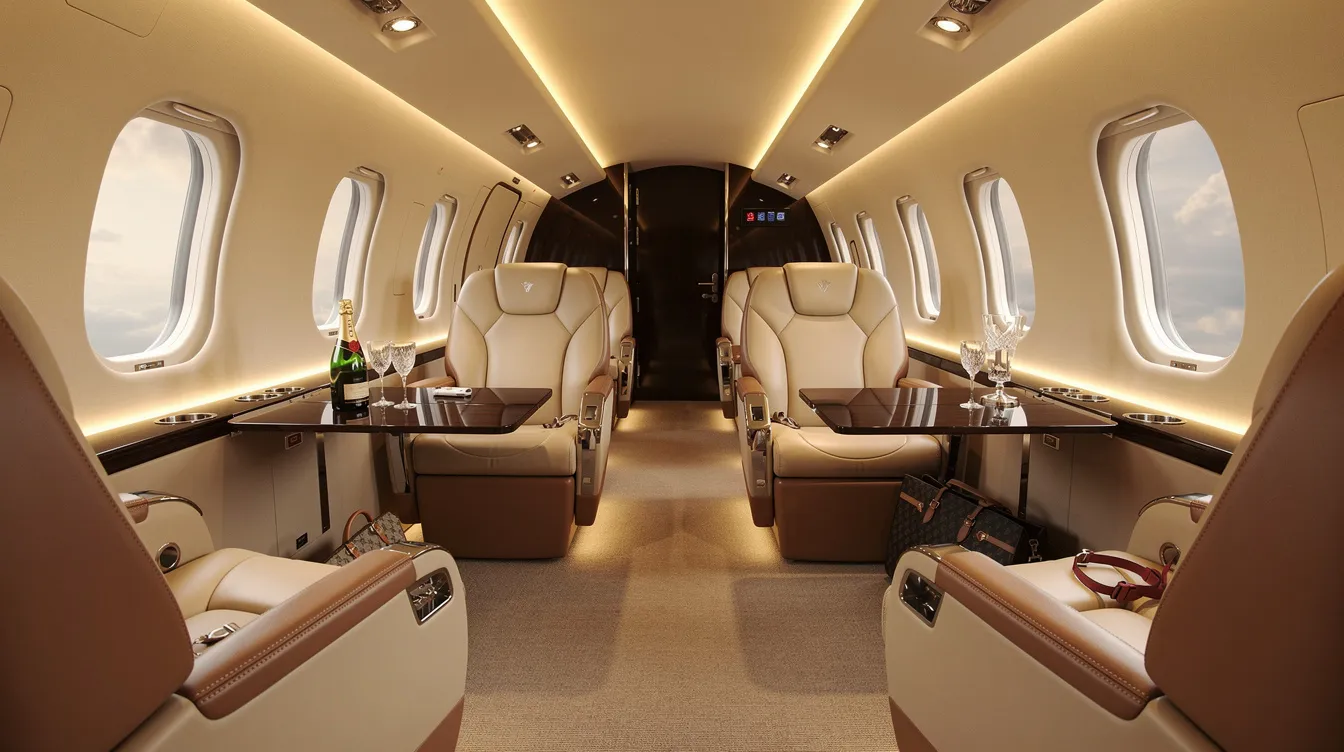
Private Plane Stewardess Jobs: How to Start and Grow a Career in Private Aviation
Private plane stewardess jobs combine aviation safety with luxury service, offering professionals opportunities for global travel and high earnings. With a focus on personalized care for high-net-worth clients, these roles require specialized training and experience in premium hospitality. Candidates can find positions through networking and platforms like Jettly, which connect them with private aviation operators.
Read More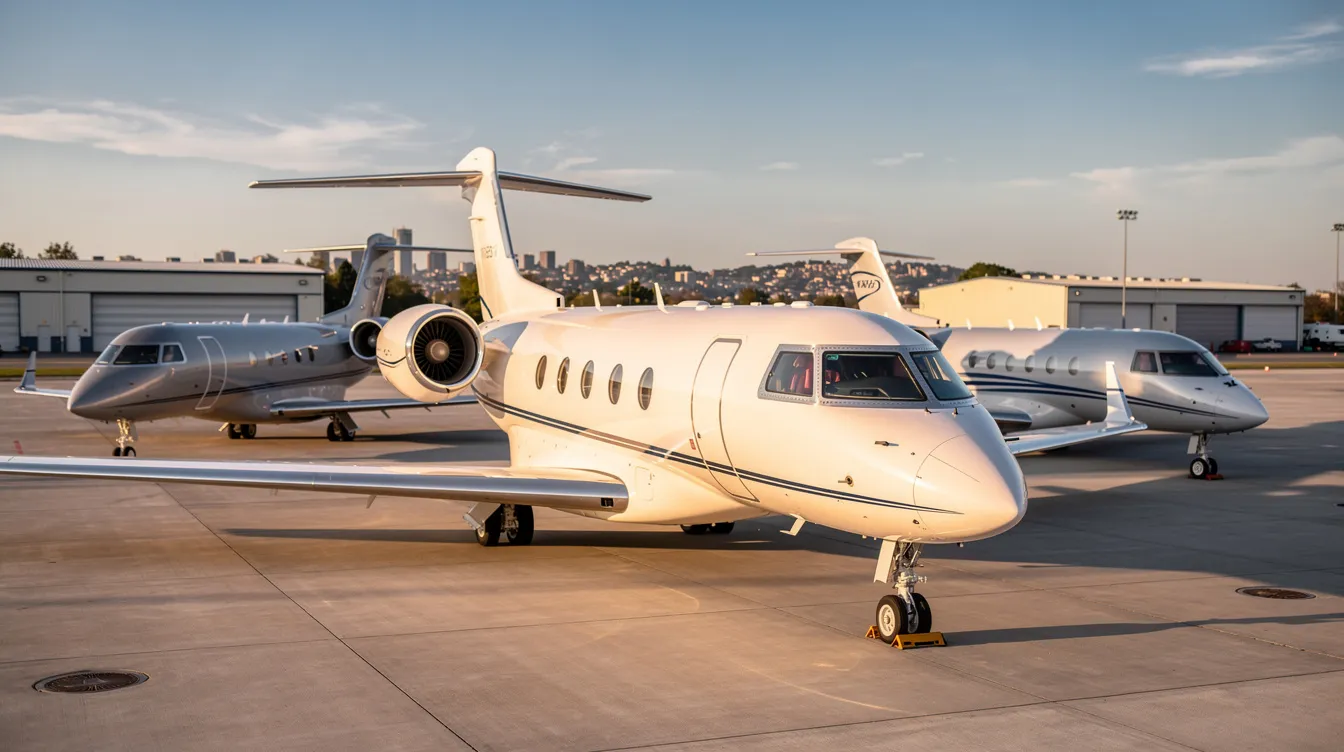
5
min read
Private Jets Manufacturers: A Practical Guide for Charter Travelers
Private jet travel offers unparalleled convenience and comfort, with various manufacturers providing tailored options for charter travellers. This guide explores leading private jet manufacturers, their key models, and how their designs influence the charter experience. Understanding these manufacturers helps clients make informed choices for their travel needs, whether for short hops or long-haul flights.
Read MoreStay updated with our latest insights and tips to elevate your journey with us.
MEMBERSHIPS AND ASSOCIATIONS



Disclaimer: Jettly operates as a charter broker, offering access to a global digital jet charter marketplace. Jettly is not a direct air carrier and does not own or operate aircraft. All advertised flights are conducted by third-party air carriers that are fully licensed and hold the appropriate Part 135 or Part 121 certifications issued by the Federal Aviation Administration (FAA) or equivalent regulatory authorities under U.S. or foreign law. Jettly complies fully with the U.S. Department of Transportation's Part 295 and Part 298 Charter Broker regulations. Jettly does not carry additional liability insurance. Passengers are covered by aircraft operator insurance. TICO: 50023770


