


Login
Get Instant Pricing On 23,000+ Aircraft

>
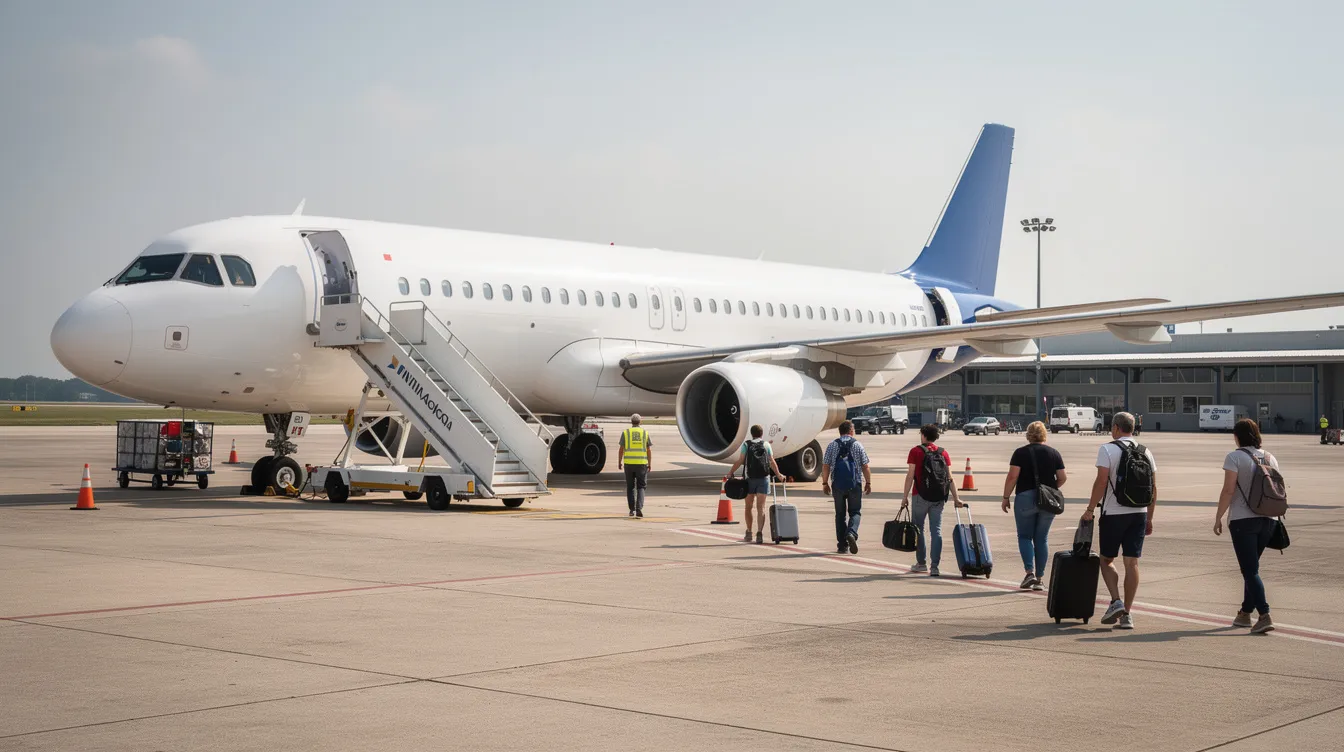
A commercial charter flight gives organizations the ability to hire an entire aircraft on their own schedule, bypassing the constraints of regular airline service. For groups ranging from 40 to 400+ passengers, it can be the most practical way to fly.
This guide is tailored for corporate travel planners, sports teams, event organizers, tour operators, and anyone responsible for coordinating group travel. Understanding how commercial charter flights work is crucial for these audiences because it empowers them to optimize travel logistics, control costs, ensure privacy, and provide a seamless experience for large groups. Whether you’re arranging transportation for a major conference, moving a sports team to an away game, or organizing a special event, knowing the ins and outs of commercial charter flights helps you make informed decisions, avoid common pitfalls, and deliver a superior travel experience.
For corporate travel planners, mastering commercial charter flights means gaining control over schedules, ensuring privacy for executives, and streamlining group movements for meetings or incentive trips. Sports teams benefit from tailored itineraries, direct routes to away games, and the ability to travel together with equipment and support staff. Event organizers and tour operators can offer unique travel experiences, coordinate large groups efficiently, and access airports not served by regular airlines. By understanding the process, advantages, and logistics of commercial charter flights, these professionals can deliver cost-effective, reliable, and memorable travel solutions for their organizations or clients.
Here's how the process works and where Jettly fits in.
A commercial charter flight is the on-demand rental of an entire aircraft from a direct air carrier, operating outside any airline's published schedule. It's designed for groups of 20–400+ passengers who need schedule control, custom routing, or privacy.
Charter flights can access over 7,000 airports worldwide-including regional airfields-compared to the roughly 500 major airports served by scheduled commercial flights, and tools like Jettly’s airport locator make it easy to identify viable departure and arrival options.
Key advantages over scheduled flights include flexible departure times, private boarding, tailored catering, and the ability to fly direct without layovers.
Jettly acts as a digital air charter broker, comparing private jet, commercial jet charter, and scheduled alternatives side by side with instant pricing and global aircraft availability.
Commercial jet charter is most cost-effective for groups above 40–60 passengers, on routes with limited scheduled service, or when missed connections would disrupt an event or business operation.
A commercial charter flight is a non-scheduled flight where an organization charters the entire aircraft from a licensed air carrier for a specific mission. Think of a Boeing 737 or Airbus A320 reserved exclusively for one group-sports teams heading to an away match, a corporation moving employees to a conference, or a tour operator running a seasonal holiday program.
The key differences between a commercial charter flight and a private jet are mainly scale. A commercial airline charter typically carries 20–400+ passengers on narrow-body or wide-body aircraft, while private jet charters usually seat 4–18 passengers on light jets or midsize cabin aircraft. Commercial charters combine the benefits of scheduled airline service and fully owned aircraft: professional crews, full-size cabins, and airline-grade maintenance, but with the flexibility of a private charter.
Three parties are typically involved: the charterer (the company, team, or organizer), an air charter broker like Jettly, and the direct air carrier-an FAA Part 121/135 or EASA-certified operator actually flying the plane. For example, a European football club during the 2025–2026 season might charter an A321 for away matches, with Jettly sourcing the aircraft and a certified charter operator providing the crew and airplane.
Both are technically commercial flights, but they differ in how they're sold, scheduled, and experienced. Here are the key differences between chartered and scheduled flights:
Selling model: Scheduled flights sell individual seats on fixed routes. Charter flights sell the entire aircraft to a single entity or organized group.
Departure time: Scheduled airlines follow published timetables. Charter flights allow schedule customization-departure is based on the passenger's readiness, including early morning or late-night windows that don't exist on public timetables.
Routing: Scheduled carriers operate through major hubs like Atlanta, Chicago, or London Heathrow. Air charter opens access to secondary and regional airports closer to the final destination, which means fewer transfers and shorter ground transportation legs.
Cabin environment: On a commercial airline, travelers share the cabin with strangers. On a charter, one group has exclusive use-with the option to reserve seating blocks for VIPs, staff, or guests.
Time savings: Charter flights eliminate long lines at major airports. Passengers skip long TSA security queues and enjoy personalized check-in through FBOs or dedicated gates, gaining more legroom and space onboard.
Commercial flights typically offer lower ticket prices per seat. But when a large group needs to travel together, the total cost of a charter can compete with-or beat-buying dozens of business-class tickets on scheduled flights. Jettly's platform displays both options side by side so clients can compare total travel time and cost before deciding.
Not all charter flights follow the same commercial model. Regulations and pricing structures vary depending on whether the flight is a public charter, affinity charter, or single entity charter.
Public charter flights involve an organizer contracting an air carrier and selling individual seats to the general public. These are often bundled with hotel or event packages-think summer holiday programs to Mediterranean resorts. Public charters sell seats to the general public and can operate seasonally or infrequently, with DOT-required prospectuses and escrow protections for consumers.
Affinity charters are restricted to members of a defined group-alumni associations, fan clubs, or corporate organizations. Each passenger pays individually, but affinity charter prices must be the same for all adult members of the group. Consumer protections are lighter than public charters.
Single entity charters are the most straightforward: one company, team, or government agency pays for the entire aircraft and does not resell seats. For example, a mining company might fly crews to remote bases in Northern Canada on a single entity charter, maintaining full control over the passenger list.
Special event and tour charters are common variations, combining airfare with ground services and event tickets for occasions like the FIFA World Cup or major concerts. Jettly helps organizers choose the correct charter type and ensures contracts align with DOT and aviation authority rules.

Commercial jet charter is most efficient for mid to large groups needing schedule control, privacy, or complex routing. A charter is beneficial when group travel is needed or when time is more valuable than airfare.
Common users include:
Professional and collegiate sports teams and their support staff
Touring musicians and film production crews
Government delegations and military support operations
Tour operators running seasonal programs
Large corporations organizing incentive trips, AGMs, or shuttle operations between hubs
Group charter services lease a larger commercial airliner to transport many employees or clients together. Event-driven charters-fans traveling to championship games, supporters' groups for international tournaments, corporate hospitality programs-are a fast-growing segment where customers may also compare shared charter flights vs. full charters to balance cost and privacy.
The economics shift in charter's favor for groups above roughly 40–60 passengers, on routes with poor scheduled service, or where missed connections would be highly disruptive. Based on 2026 European market data, a 150-passenger A320 on a short-haul European flight can bring per-seat costs to around €200–€400-competitive with business-class fares on the same route.
Booking a commercial charter involves defining trip requirements and choosing an operator. Jettly manages this process end-to-end:
Requirement gathering: Dates, routes, passenger count, baggage needs, branding, and catering preferences are collected.
Aircraft sourcing: Jettly queries multiple charter operators to compare aircraft availability and pricing across its global fleet.
Contract and compliance: A charter agreement is signed between charterer, broker, and direct air carrier. It covers the latest safety standards, insurance, cancellation terms, and any regulatory filings.
Manifest and logistics: Passenger data, seating layouts, catering selections, special assistance needs, and security clearances are finalized.
Day-of operations: Passengers enjoy personalized check-in at dedicated counters or FBOs, private boarding, and real-time flight monitoring.
Charter quotes detail hourly rates, fuel, crew, landing fees, and extra positioning costs. For private jet travelers, a dedicated jet card flight cost estimator can help model these variables in advance. Charter flights allow last-minute changes to flight schedules, and dynamic routing allows mid-trip itinerary changes to accommodate business needs.
Typical lead times: 3–6 months for major public charters and peak-season tour programs, 4–8 weeks for standard single-entity charters, and as little as a few days for urgent charter flights where Jettly can secure aircraft quickly.
Commercial charter flights use a wide range of aircraft. Here's a quick breakdown:
|
Aircraft Category |
Seats |
Typical Range |
Example Routes |
Best For |
|---|---|---|---|---|
|
Turboprops / Regional Jets |
30–90 |
500–1,500 mi |
Regional hops, island transfers |
Small groups, short distances |
|
Narrow-Body (B737, A320) |
100–220 |
1,500–3,500 mi |
New York–Miami, London–Barcelona |
Mid-size groups, domestic/continental |
|
Wide Body Aircraft (A330, B787) |
250–350+ |
5,000–9,000 mi |
Dubai–London, LA–Tokyo |
Large groups, long-haul, Middle East routes |
|
Private Jets (Light jets to Heavy) |
4–18 |
Varies |
Executive shuttles, VIP transfers |
Leadership teams, small groups |
Aircraft type varies from turboprops for short hops to heavy jets for international travel. Global access opens thousands of regional airports not serviced by major airlines.
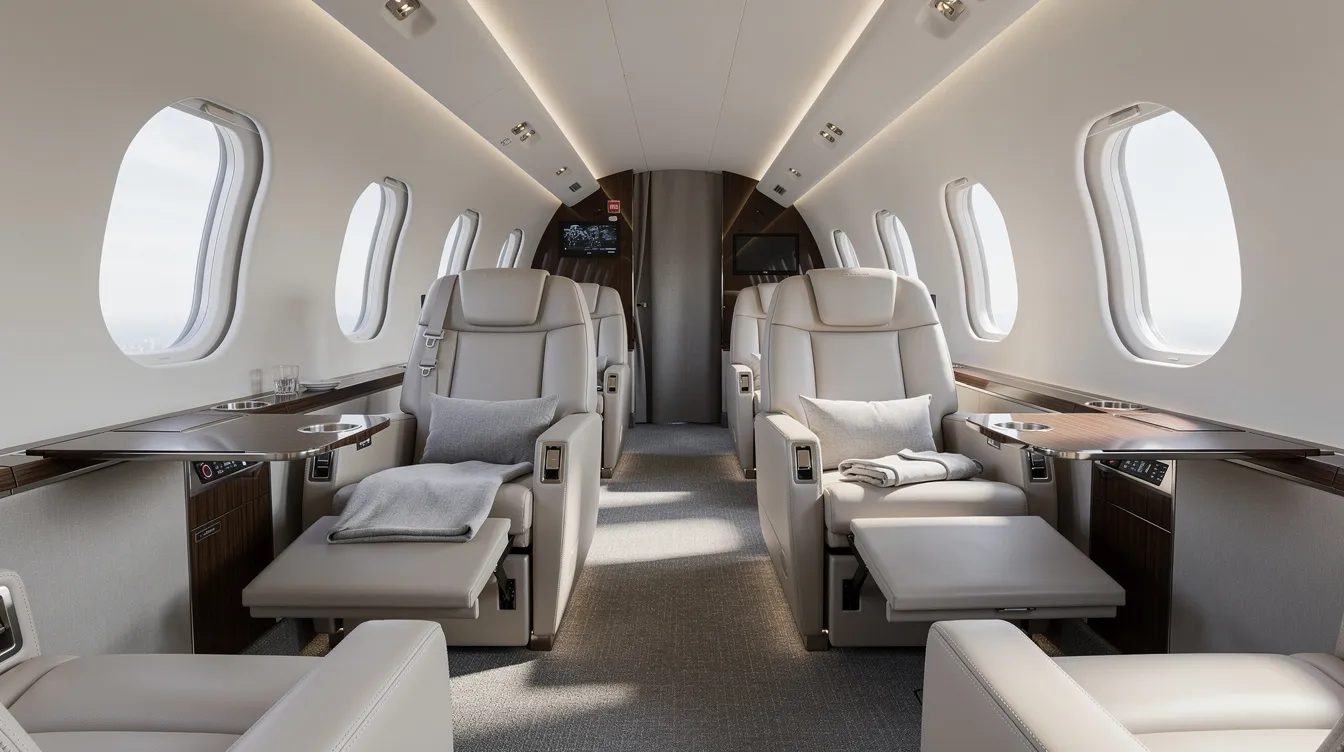
Charter flights offer more spacious cabins and legroom than commercial flights. Options include standard seating, reduced-seat VIP layouts, or mixed-class cabins for players, staff, and media. Charter flights provide a quiet environment with reliable wi fi for teams to collaborate, and mobile boardrooms in charter aircraft enable confidential meetings and strategic discussions.
Customization of charter services extends to branded headrest covers, custom safety cards, onboard announcements, and in-flight catering services aligned with dietary or performance needs. Jettly aggregates over 20,000 unique aircraft, letting clients compare commercial jet charter and private jet charter for each mission.
Charter pricing is based on the entire aircraft, not per seat. Total cost depends on several variables:
Flight time and positioning legs (empty-leg repositioning adds cost)
Fuel prices (volatile, especially in peak seasons)
Airport and handling fees
Crew costs, including overnight stays for multiple flights
Catering, branding, and additional security or special services
A 180-seat A320 charter costs about €50,000 for a two-hour flight within Europe. A five-hour North American 737 charter runs approximately US$80,000–US$130,000 depending on the season. For detailed estimates, Jettly offers a charter cost estimator that factors in these variables, alongside guidance on affordable private jet charter pricing for smaller groups or executive travel.
Charter flights typically cost more than commercial flights on a per-seat basis for small groups. But charter flight costs can be comparable to business-class fares for large groups when the aircraft is well filled. Empty-leg flights offer significant discounts for charter travelers willing to fly on repositioning routes.
Beyond the ticket price, charter delivers operational value: reduced risk of missed events, consolidated arrivals, fewer hotel overnights, and productivity gains from controlled schedules. Jettly's platform provides transparent charter pricing and instant quotes, plus membership options for frequent flyers seeking stable cost structures.
Commercial charter flights must meet the same or higher safety and maintenance standards as scheduled airlines. Safety compliance requires operators to hold relevant aviation certifications from national aviation authorities.
In the United States, the direct air carrier holds an FAA Part 121 or Part 135 certificate; there are currently 1,837 Part 135 certificate holders operating 11,582 authorized aircraft, and understanding how Part 135 charter companies operate helps charterers vet operators properly. In Europe, EASA-approved air carriers must hold AOC and TCO authorisation for non-EU operators. Key safety factors Jettly evaluates when selecting a charter operator include:
Audit status (ARGUS, Wyvern)
Safety records and incident history
Average fleet age and maintenance programs
Insurance coverage
Crew experience on the specific aircraft type
For public charters and affinity charters, U.S. regulations require DOT-filed prospectuses, escrow for customer funds, and clear refund policies. Privacy and security keep executives and corporate data confidential during travel-a benefit that extends to both commercial charter and private jet options, especially when working with top private jet charter companies that emphasize rigorous safety and discretion.
Environmental considerations matter too: newer, fuel-efficient aircraft reduce emissions, and voluntary carbon offsetting programs are increasingly requested by corporate clients. Fractional ownership allows purchasing a share of flight hours for flexibility, and businesses evaluating fractional jet ownership companies can compare those programs against on-demand charter. Jettly presents only vetted operators and clearly labels whether a flight is operated by a private jet operator or a commercial airline charter.
Jettly operates as a digital private aviation marketplace and air charter broker, connecting clients to a global network of direct air carriers and private operators. The platform handles everything from a group private jet charter to a full-size commercial jet charter using its extensive private charter aircraft network.
Key platform capabilities include:
Instant pricing on many city pairs
Real-time aircraft availability checks
Side-by-side comparison of charter, private jet, and scheduled alternatives
Geographic coverage spans North America (New York–Miami, Toronto–Vancouver), Europe (London–Barcelona, Paris–Rome), the Middle East, Asia-Pacific, and Latin America. For those comparing Jettly with fractional ownership providers, it can also serve as a flexible NetJets alternative that avoids long-term commitments. Integration of ground transportation, catering, and custom branding into a single itinerary means corporate travel teams, sports managers, and tour organizers can manage the entire journey in one place. Charter flights offer flexibility in departure times and schedule modifications, giving organizers wiggle room even after the booking process begins. Privacy during travel allows for confidential discussions without public exposure.
Ready to plan your next commercial charter flight? Explore flight options or request a quote at https://www.jettly.com, or even crowdsource and share empty seats on private flights to optimize costs. Travel advisors, influencers, and agencies can also earn referral income by joining Jettly’s high-ticket affiliate program.
Below are common questions from first-time charter organizers that weren't fully covered above.
There's no strict regulatory minimum. However, commercial jet charter tends to be a cost-effective way to fly starting around 40–60 passengers, depending on route and aircraft. For smaller groups, a 30-passenger plane or regional jet may fit better. Smaller leadership teams often combine a commercial charter for the main group with a separate private jet for executives, coordinated through Jettly.
Yes. Hybrid itineraries are common. The main group flight goes on a commercial charter, VIPs board a private jet charter, and overflow travelers take regular scheduled flights. Jettly can align arrival times, baggage handling, and ground transfers so all parties reach the destination seamlessly. This approach works well for corporate events, special event travel, and large conferences where travelers have different travel needs and budgets.
Charter contracts typically require a signed agreement with a deposit at confirmation-usually 30–50% of the total cost-with full payment due before departure. Jettly manages secure payments to the direct air carrier and any ancillary service providers. Accepted methods usually include bank transfer and major corporate cards. The contract covers trip details, cancellation terms, and insurance requirements, and frequent flyers may streamline this process further through private jet membership plans.
Baggage limits depend on aircraft size, route, and safety constraints. Charters generally offer more flexibility than standard commercial flights-critical for equipment-heavy groups like sports teams or film crews that need to board oversized gear. Organizers should share detailed baggage and equipment lists with Jettly early in the booking process so the platform can match a suitable aircraft and avoid weight or volume issues on the day of the group flight.
Large public or event-related charters are best booked 3–6 months ahead to secure airport slots and aircraft. Single entity charters for corporate or team travel commonly finalize 4–8 weeks before departure. Jettly can often arrange last-minute charter flights within days, subject to aircraft availability, crew duty limits, and required permits, giving organizers room to adjust their travel plans even on short notice.
Commercial charter flights provide a flexible, efficient, and private solution for moving large groups on custom schedules and routes. By hiring an entire aircraft, organizers gain control over departure times, airport access, cabin environment, and onboard services—benefits that scheduled commercial flights cannot match. Jettly’s digital platform simplifies the booking process by offering instant pricing, global aircraft availability, and side-by-side comparisons with private jet charter and scheduled commercial flight options. Whether for corporate travel, sports teams, special events, or tour groups, commercial charter flights deliver time savings, privacy, and tailored experiences that enhance group travel logistics and comfort. Ready to experience the convenience and flexibility of commercial charter flights? Explore flight options or request a quote today at https://www.jettly.com.
Share this post:
Jay Franco Serevilla
Aug 4, 2026
|
5
min read
Discover tips and trends in the industry.

5
min read
Corporate Flight Attendant Jobs: Career Guide for Private and Corporate Aviation
Corporate flight attendant jobs offer a unique blend of safety and luxury service aboard private jets. This career path is ideal for those with hospitality backgrounds seeking flexible schedules and high-end travel experiences. With growing demand in private aviation, aspiring attendants can find rewarding opportunities in this expanding field.
Read More
5
min read
Honda Jet Charter Price: Costs, Specs, and When a HondaJet Charter Makes Sense
The HondaJet offers a flexible and cost-effective solution for private air travel, with charter prices typically ranging from $2,000 to $5,000 per flight hour. This guide provides insights into the costs, specifications, and scenarios where chartering a HondaJet makes financial sense compared to ownership. Understanding these factors can help travelers make informed decisions about their private aviation needs.
Read MoreStay updated with our latest insights and tips to elevate your journey with us.
MEMBERSHIPS AND ASSOCIATIONS



Disclaimer: Jettly operates as a charter broker, offering access to a global digital jet charter marketplace. Jettly is not a direct air carrier and does not own or operate aircraft. All advertised flights are conducted by third-party air carriers that are fully licensed and hold the appropriate Part 135 or Part 121 certifications issued by the Federal Aviation Administration (FAA) or equivalent regulatory authorities under U.S. or foreign law. Jettly complies fully with the U.S. Department of Transportation's Part 295 and Part 298 Charter Broker regulations. Jettly does not carry additional liability insurance. Passengers are covered by aircraft operator insurance. TICO: 50023770


