



Login
Get Instant Pricing On 23,000+ Aircraft

>
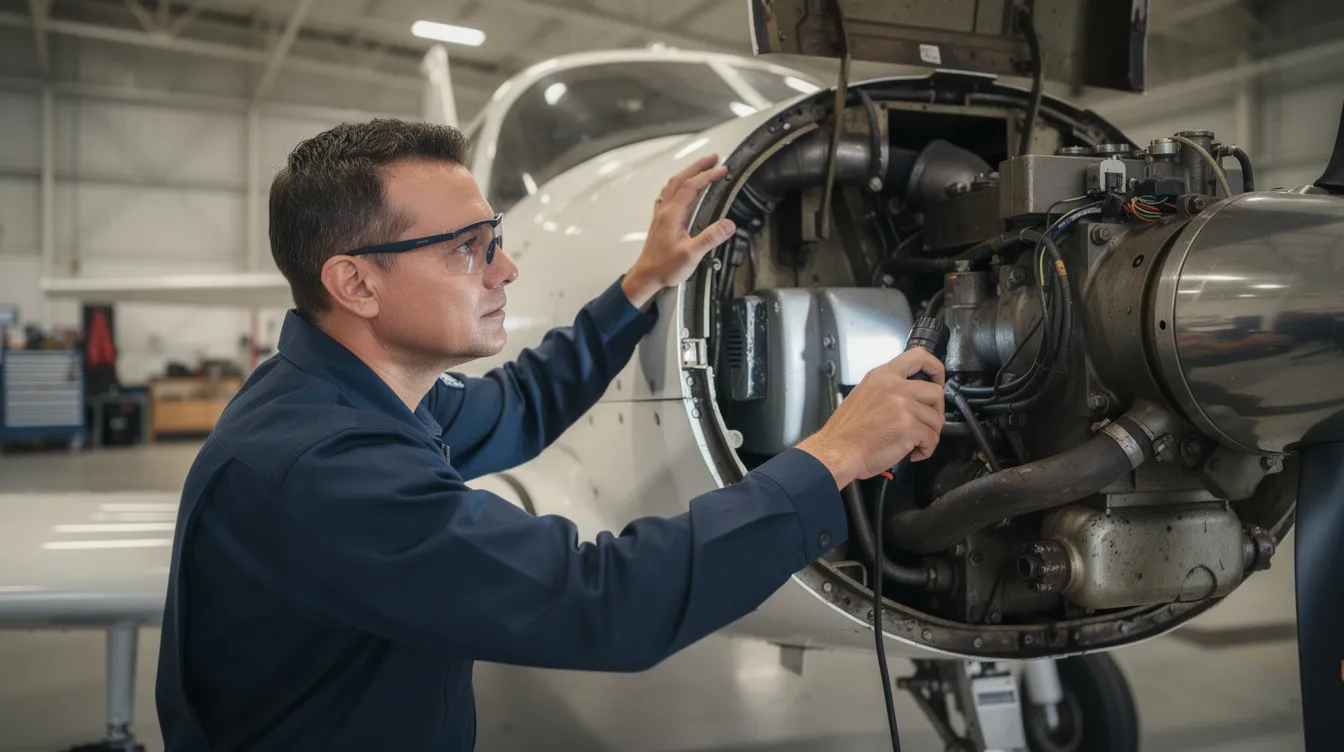
The cost of aircraft maintenance is one of the least visible but most significant expenses in aviation. Whether someone owns a four-seat piston plane, operates a fleet of business jets, or simply charters flights for occasional trips, maintenance drives a large share of every dollar spent in the air. This guide breaks down what goes into those costs, how they differ across aircraft types, and why understanding them helps travelers decide between ownership and on-demand charter through platforms like Jettly.
Aircraft maintenance costs are a primary driver of the true cost of ownership and strongly influence private jet charter pricing on platforms like Jettly. Before diving into the details, here are the essentials.
Annual inspection fees for light aircraft range from $1,500 to $3,000 in labor alone. Larger jets can require tens of thousands per year once engine programs, airframe checks, and unscheduled repairs are included.
Total maintenance costs go well beyond the annual inspection. They include scheduled component overhauls, unscheduled repairs, reserve contributions for future engine work, and aging avionics replacements.
Aircraft maintenance typically accounts for 15% to 20% of total operating costs, making it one of the largest line items after fuel and crew.
Ownership demands steady cash reserves for surprise repairs and major overhaul events. On-demand charter through Jettly lets travelers access well-maintained aircraft without directly carrying these financial obligations, and shared flight options that crowdsource private jet flights and empty seats can further reduce per-passenger costs.
Understanding these costs helps readers judge whether to own, join a membership program through options like fractional ownership or jet cards or Jettly's own jet card programs with fixed hourly rates, or charter on demand.
Aircraft maintenance costs cover both predictable and unpredictable expenses required to keep an aircraft airworthy and compliant with government regulations. The major categories include:
Routine inspections - annual inspection, 100-hour inspection, and progressive inspection programs as an ongoing maintenance process
Scheduled component overhauls - engine, propeller, landing gear, and other life-limited parts reaching their Time Between Overhaul (TBO) limits
Unscheduled repairs - brake failures, avionics malfunctions, corrosion, wiring issues
Parts and labor - certified mechanics, OEM versus independent shop pricing, and supply-chain costs. Replacement parts are expensive due to FAA and EASA certification and traceability requirements.
Avionics upgrades - moving from analog to glass cockpits, navigation database subscriptions, ADS-B compliance
For general aviation and business aircraft, maintenance costs are often expressed as a cost per flight hour plus fixed annual costs, similar to how renters evaluate affordable airplane rental costs and options. Direct operating costs include fuel, oil, and landing fees, while scheduled maintenance includes routine inspections and major maintenance reserves. Commercial air carriers report direct maintenance costs by aircraft type to the Bureau of Transportation Statistics, and private operators track similar data internally.
Jettly works only with operators that meet strict maintenance and safety standards, so these costs are built into charter rates rather than billed separately to travelers.
Fixed costs must be paid whether the aircraft flies or not. Variable costs rise with each hour flown.
Fixed costs typically include:
Hangar or tie-down fees
Insurance premiums (hull and liability)
Mandatory annual inspection
Navigation database and maintenance-tracking subscriptions
Calendar-based checks on rotable components
Monthly fixed costs average around $1,000 for a typical single-engine aircraft ownership scenario, even before a single flight. An unused aircraft still incurs costs from handling and maintenance downtime.
Variable costs include:
Fuel (aircraft fuel consumption averages 8 to 10 gallons per hour for piston singles)
Oil changes and consumables
Tire and brake wear
100-hour inspections on aircraft used for hire
Per-hour reserves for engine and propeller overhauls
Routine maintenance costs can be roughly half the hourly cost of fuel, meaning they accumulate quickly with regular flying. A Cessna 172 owner may see around $1,000 per month in average expenses, while a light jet like a Citation CJ3+ might require several thousand per month in maintenance-related outlay even at modest utilization.
When travelers charter via Jettly, these fixed and variable costs are already embedded in the hourly charter rate, which is why larger and more complex aircraft command higher prices, a dynamic explored in Jettly's guide to affordable private jet charter pricing.
Most general aviation aircraft must undergo at least an annual inspection by a certificated aircraft mechanic holding Inspection Authorization. This is a regulatory requirement under FAA Part 91, and no aircraft can legally fly without a current inspection sign-off.
The typical cost range for an annual inspection on a piston single varies widely but generally falls between $1,500 and $3,000 for labor only. When squawks (discrepancies found during inspection) require corrective work and parts, the total cost can double or more, sometimes adding $1,000 to $4,000 on top of the base fee.
A 100-hour inspection is required for aircraft used for hire, such as those in flight training or Part 135 charter operations, and the inspection process helps catch issues early. It mirrors the annual inspection in scope but is triggered by flight hours rather than the calendar. Catching discrepancies early can save owners more money over time.
High-utilization aircraft, including many used in private jet charter, may run on progressive inspection programs. These split the annual inspection into smaller, more frequent blocks, increasing planning flexibility but sometimes raising overall labor costs. Operators in Jettly's network schedule these checks to maintain aircraft without disrupting charter availability.
Many of the most expensive maintenance events are tied to TBO limits and aging avionics, not just annual inspections. Specialized components often require higher expenditures for maintenance due to engineering complexity, certification standards, and major repair decisions that affect continued airworthiness.
A Lycoming engine on a Cessna 172 typically has a TBO of around 2,000 hours. Engine overhauls can cost between $30,000 and $40,000 at a quality shop in the mid-2020s. Factory remanufactured or new replacements, can push past $50,000 installed.
Turbine engines on business jets carry even steeper price tags. A major overhaul or hot-section inspection on a Pratt & Whitney engine for a midsize Citation can run well into six figures, which is why most jet operators enroll in hourly engine maintenance programs to spread these costs over time.
Propeller overhauls, landing gear servicing, and avionics upgrades - such as replacing a failed Garmin G1000 display at $3,000 to $8,000 per unit - add tens of thousands over an ownership cycle. Responsible owners set aside per-hour maintenance reserves to cover these known future costs, while charter clients using Jettly simply see those reserves reflected in quoted hourly charter rates.
Airworthiness Directives (ADs) are mandatory safety-related fixes issued by the FAA or other authorities. An aircraft cannot legally fly if relevant ADs are not complied with. Compliance with Airworthiness Directives and Service Bulletins incurs capital-heavy outlays that owners cannot defer.
ADs can impose sudden costs. One recent FAA directive required bolt replacements, sealant application, and corrosion inspections across affected airframes, with estimated compliance costs exceeding $38,000 per aircraft. Regulatory compliance introduces both planned and unplanned maintenance expenses that must be budgeted for.
Older airframes require more frequent inspections and heavy overhauls due to age and complexity, which is why many travelers prefer vetted fleets highlighted in guides to charter airlines and private flight options. Aging aircraft face rising costs from corrosion, outdated wiring, structural fatigue, and parts scarcity for discontinued models. Harsh operating environments - coastal humidity, extreme heat, dust - accelerate component wear and tear further.
Unscheduled repairs such as brake failures, fuel leaks, or pressurization issues can ground a plane unexpectedly. Aircraft on Ground (AOG) situations create financial premiums due to urgent repairs and expedited parts shipping.
Prospective buyers should commission a pre-purchase inspection by an independent aircraft mechanic to uncover hidden maintenance liabilities. Chartering via a vetted platform like Jettly avoids owning those risks altogether.
Charter operators calculate an hourly rate that covers fuel, crew, insurance, maintenance costs, and profit margin, all within the regulatory and safety framework that governs Part 135 charter companies. That rate is then surfaced transparently through digital platforms like Jettly.
Maintenance influences hourly pricing through several channels:
|
Cost Driver |
Light Jet |
Heavy/Long-Range Jet |
|---|---|---|
|
Engine program (per hour) |
$120–$300 |
$500–$800+ |
|
Airframe reserves (per hour) |
$150–$300 |
$400–$700+ |
|
Total maintenance per hour |
$300–$600 |
$1,200–$1,500+ |
Aircraft maintenance costs scale with complexity, size, and the number of engines. A turboprop like a King Air 350 may carry hundreds of dollars per hour in maintenance reserves, while a long-range jet like a Gulfstream G550 builds in thousands per flight hour.
]Aircraft downtime incurs costs beyond maintenance invoices, impacting revenue, which is why operators managing large fleets of private charter aircraft focus on efficient maintenance planning. An aircraft sitting in a hangar for a heavy check cannot generate charter income, so efficient maintenance planning and schedule management are critical for operators.
Travelers can use Jettly's instant pricing tool and airport locator tool to compare aircraft categories on a route like New York to Miami and see how different maintenance cost profiles show up in per-trip pricing.
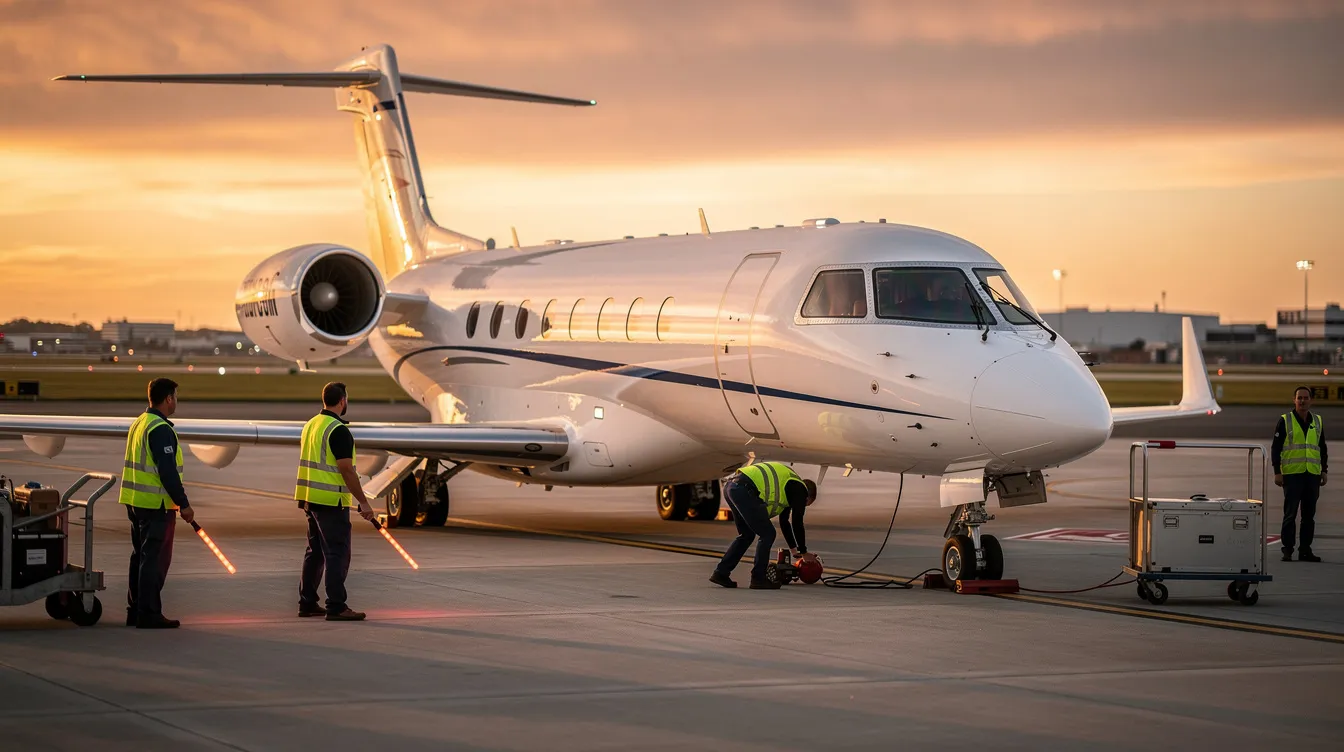
Operators listed on Jettly, including branded partners like Dexter Air Taxi, factor rigorous maintenance and inspection schedules into their pricing models to keep aircraft available and compliant.
The cost of aircraft maintenance is partly driven by the supply and training costs of aircraft mechanics, especially those holding FAA Airframe and Powerplant (A&P) certificates.
Training paths include attending a dedicated aircraft mechanic school, enrolling in a community college A&P program, or gaining structured hands-on training and testing through the FAA without formal school enrollment; some programs focus on career-specific FAA preparation rather than broad general education requirements, especially for those interested in private jet maintenance costs from the operator side. Each path carries different time and money commitments.
Typical aircraft mechanic school cost ranges in the mid-2020s:
In-state students at a community college aviation maintenance program often pay under $25,000 in tuition
Private schools and specialized aircraft mechanic training academies may run $30,000 to $50,000+ including tools and exam fees
Labor costs for aviation maintenance include wages, training, and overtime. The median annual wage for aircraft mechanics and service technicians exceeded $75,000 in the U.S. by 2024–2025. Labor rates for aviation mechanics vary significantly by region and facility type, with metro-area MRO shops and OEM-certified facilities commanding the highest rates. Mechanic shortages and the investment required to train skilled technicians push labor rates higher, so owners pay more money for maintenance over time.
Full aircraft ownership and on-demand private jet charter serve different profiles. Here is how the numbers compare.
General aviation ownership: An owner of a four-seat piston aircraft who flies 150 to 200 hours per year may see annual maintenance costs in the $7,000 to $15,000 range for inspections, reserves, and unscheduled work - excluding hangar, insurance, and fuel.
Business jet ownership: A midsize jet owner flying 300 to 400 hours per year may need to budget six-figure annual maintenance costs once hourly engine and airframe programs, heavy checks, and unscheduled work are included; owners of larger aircraft should also understand the scale of private jet maintenance costs before buying. For a deeper look, see this breakdown of the real cost of aircraft ownership.
For travelers who only need occasional business or family flights - say 25 to 75 hours per year - chartering often makes financial sense, and comparing shared charter flights versus full charters can help align costs with actual usage. They effectively rent aircraft that qualified professionals maintain and manage, paying only when they fly, or they can opt for private jet memberships that bundle access and pricing into predictable monthly and hourly fees.
Readers unsure about ownership should compare their expected annual flight hours with transparent on-demand pricing from Jettly or explore NetJets alternatives like Jettly before committing capital to an aircraft plus its long-term maintenance obligations. The full cost of ownership over four years frequently surprises first-time buyers.
Maintenance costs cannot be avoided, but they can be planned for and optimized.
Engine and parts programs. Enrolling in hourly maintenance programs converts disruptive six-figure overhaul bills into predictable per-hour fees. This is standard practice for most jet operators and is commonly paired with structures like fractional private jet ownership to smooth cash flow.
Dedicated maintenance reserve accounts. Budgeting $20 per flight hour can fund engine overhauls on piston singles over time. For light jets, reserves run into several hundred dollars per hour, which is a key consideration when evaluating fractional jet ownership costs and commitments.
Preventive practices. Regular oil analysis, borescope inspections, and prompt attention to small squawks prevent minor issues from escalating. Implementing condition monitoring can prevent unexpected failures in aircraft maintenance. Predictive maintenance can help identify minor mechanical faults before they escalate into expensive repairs, and top private jet charter companies use these practices to keep fleets reliable and safe.
Fly newer aircraft when possible. Newer planes generally require fewer immediate repairs, fewer AD retrofits, and have better parts availability.
Optimize utilization. Higher utilization spreads fixed costs over more flight hours, reducing cost per hour - though it increases variable expenses on a parallel course; some operators address this by sharing empty seats on private jet flights to boost load factor.
For travelers not wishing to manage these details, using an on-demand charter platform such as Jettly lets operators handle all maintenance planning while customers simply pay an all-in charter rate.
Some readers may be interested in aircraft maintenance from the career side, not just as owners or charter customers, or even in promoting aviation services through opportunities like Jettly's high-ticket affiliate program. The aviation workforce needs qualified mechanics, and the investment to pursue this career path is worth understanding.
A typical FAA-approved aircraft mechanic school runs 18 to 24 months of focused training in airframe, powerplant, and general aviation systems, with coursework built around A&P preparation rather than four years of general education requirements. Programs are offered by community colleges, private schools, and specialized aviation maintenance institutions that qualify students for the A&P certificate upon graduation.
Major cost components include:
Tuition (varies widely by school type and location)
Tools and required equipment
Books and study materials
FAA written test fees, which may be separate from tuition costs
Oral and practical exam fees
Total aircraft mechanic school cost can range from $8,000 to $58,000 or more depending on path and location. Tuition often excludes tools, books, and exam fees, so students should budget for the full cost beyond the published tuition figure. Financial aid, scholarships, and financing options can help in-state students, and others qualify for support.
Graduates often enter roles with airlines, MROs, business aviation, and general aviation - supporting the same aircraft categories that Jettly customers charter. Rising demand for mechanics is a key factor keeping maintenance standards and safety high across the industry.
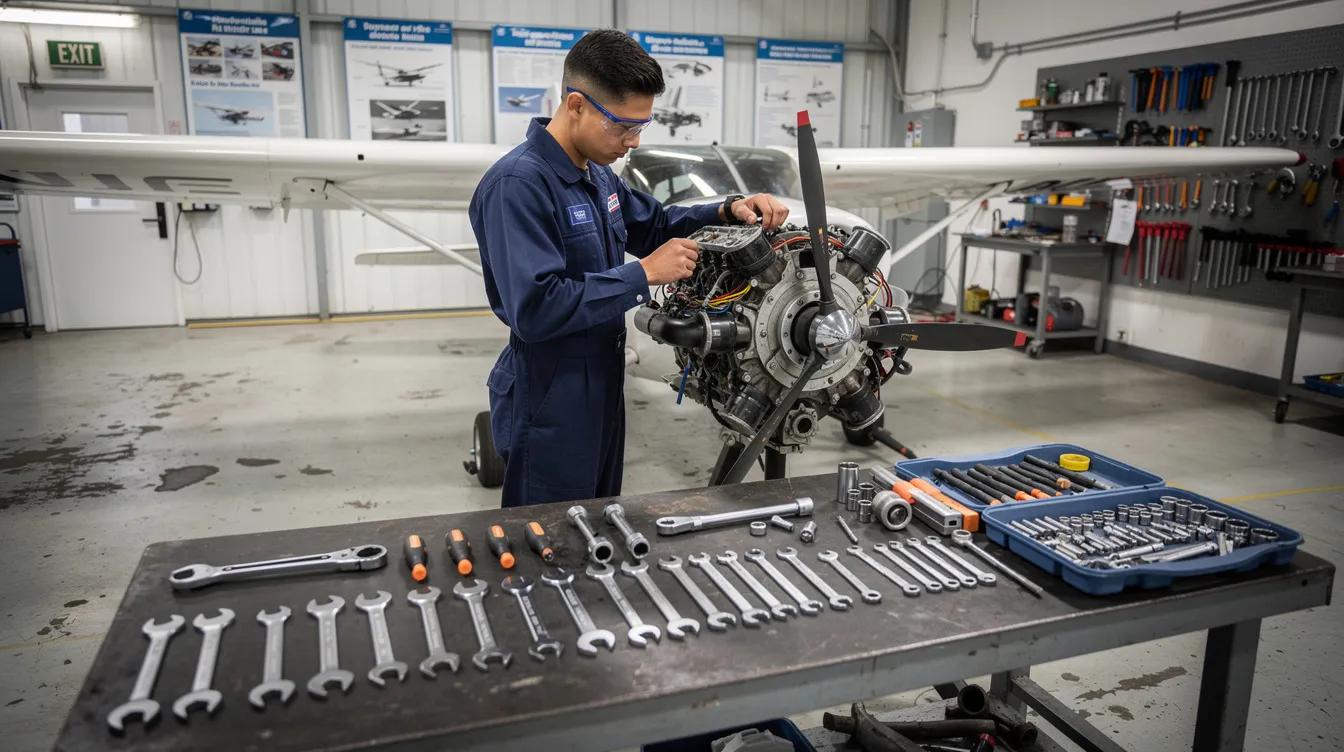
For a common four-seat piston aircraft like a Cessna 172 flown around 100 to 150 hours per year, typical annual maintenance costs - including the annual inspection, minor repairs, and engine reserves - often fall between $3,000 and $8,000. This excludes hangar fees, insurance, registration fees, and fuel. Older aircraft or those with deferred maintenance can push costs considerably higher.
It varies by category. Light jets such as the Citation CJ series may see maintenance-related reserves in the $500 to $900 per flight hour range. Midsize jets run somewhat higher. Large-cabin or long-range jets like the Global 6000 or Gulfstream G650 can exceed $1,500 to $2,500 per flight hour when accounting for all reserves and heavy checks.
No. Private jet charter customers using Jettly pay an all-in hourly or trip-based price quoted up front. This includes the operator's built-in maintenance costs and reserves, so there are no separate maintenance invoices for the traveler.
In most jurisdictions, only certificated aircraft mechanics can perform and sign off maintenance on certified aircraft. Private pilots may handle limited preventive tasks like oil changes or simple part replacements as allowed by regulation. Experimental and homebuilt aircraft often allow more owner maintenance, but commercial charter aircraft must follow stricter rules to protect safety and passengers. For the most part, professional mechanics handle everything that matters.
Readers can compare aircraft categories, view instant pricing, and request quotes directly at https://www.jettly.com. Chartering through Jettly offers access to well-maintained aircraft without the financial and operational burden of owning and maintaining a plane - making it a practical plan for travelers who value flexibility over long-term capital investment.
Understanding the cost of aircraft maintenance is essential for owners, operators, and charter clients alike. Maintenance expenses significantly impact the total cost of ownership and the pricing of private jet charters on platforms like Jettly. With a clear grasp of fixed and variable costs, routine inspections, major overhauls, and regulatory compliance, travelers can make informed decisions about whether to own an aircraft or choose on-demand charter services.
Jettly offers a convenient alternative to ownership by providing access to a wide range of well-maintained aircraft with transparent pricing that includes maintenance costs. This approach lets travelers enjoy the benefits of private aviation flexibility, convenience, and safety without the financial and operational burdens of managing maintenance. Learn more about Jettly’s charter options and how private jet maintenance costs influence pricing.
Ready to experience private travel on your terms? Explore flight options or request a quote at https://www.jettly.com
Share this post:
Jay Franco Serevilla
Aug 27, 2026
|
5
min read
Discover tips and trends in the industry.
5
min read
Medevac Flight Cost: What a Medical Evacuation Really Costs in 2026
In 2026, medevac flight costs range from $25,000 for short domestic transfers to over $200,000 for complex international missions. Factors influencing pricing include distance, aircraft type, and patient medical needs. Understanding these costs is crucial for families facing urgent transport decisions, especially when insurance coverage varies significantly.
Read More
5
min read
Havasu Falls Helicopter Price: Costs, Schedule, and How to Book in 2026
Planning a trip to Havasu Falls in 2026? The helicopter service offers a quick alternative to the challenging hike, costing approximately $300 one-way. Flights operate on select days and are first-come, first-served, so early arrival is essential. Remember, a valid permit is required for all visitors to access the falls.
Read MoreStay updated with our latest insights and tips to elevate your journey with us.
MEMBERSHIPS AND ASSOCIATIONS



Disclaimer: Jettly operates as a charter broker, offering access to a global digital jet charter marketplace. Jettly is not a direct air carrier and does not own or operate aircraft. All advertised flights are conducted by third-party air carriers that are fully licensed and hold the appropriate Part 135 or Part 121 certifications issued by the Federal Aviation Administration (FAA) or equivalent regulatory authorities under U.S. or foreign law. Jettly complies fully with the U.S. Department of Transportation's Part 295 and Part 298 Charter Broker regulations. Jettly does not carry additional liability insurance. Passengers are covered by aircraft operator insurance. TICO: 50023770


