


Login
Get Instant Pricing On 23,000+ Aircraft

>
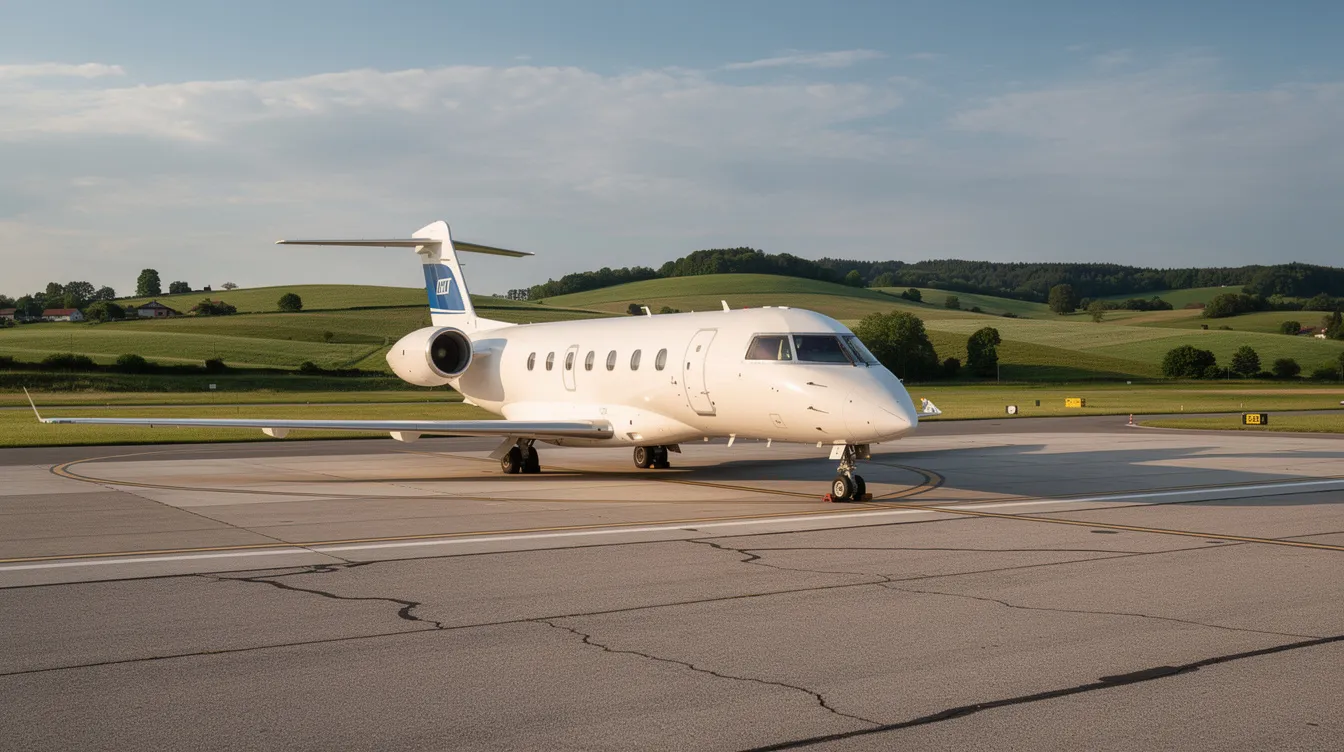
The Bombardier CRJ 200 is a 50-seat regional jet originally developed by Bombardier Aerospace that now serves a growing role in private charter, with layouts ranging from 14 to 50 seats for corporate shuttles, VIP group travel, and event transport. Originally built to move passengers between regional airports for major airlines, it offers airline-grade reliability and a range of about 1,956 statute miles (roughly 1,700 nautical miles), which makes it a practical option for short- to medium-haul group flights.
For business and leisure charter customers—from corporate executives and event organizers to sports teams and private groups—understanding the CRJ 200’s cabin options, performance, pricing, and airport flexibility can make a major difference in cost, comfort, and trip planning. This guide covers the aircraft’s history, design, specs, charter costs, typical use cases, safety considerations, comparisons with other aircraft, and how to book a CRJ 200 through Jettly.
The Bombardier CRJ 200 is a 50-seat regional jet originally developed by Bombardier Aerospace as an evolution of the Canadair Challenger business jet. It was introduced into service in 1996 and became a fixture on short to medium-haul routes across North America and Europe. This article focuses on its charter and private use - not scheduled airline operations.
The CRJ 200 typically seats 50 passengers in standard airline layout, but VIP conversions reduce that to 14–30 seats with upgraded interiors, tables, and enhanced amenities.
Many retired airline CRJ 200s are now converted for private charters, corporate shuttles, and group travel, often available through platforms like Jettly.
The maximum range of the CRJ 200 is 1,956 statute miles (roughly 1,700 nautical miles), making routes like New York–Chicago or Toronto–Calgary comfortable non-stop sectors.
The average hourly rental rate is $18,600, placing it in the mid-five-figure range per flight hour depending on configuration and region.
This article compares airline vs. private layouts, explains costs, covers typical use cases, and walks through how to book a CRJ 200 or similar aircraft through Jettly's digital marketplace.
The Canadair CRJ-200 is part of the broader Bombardier CRJ family, tracing its lineage directly to the Canadair Challenger business jet. Bombardier stretched the Challenger fuselage by nearly six meters, reinforced the wing and landing gear, and increased fuel capacity to create a purpose-built regional jet. The CRJ 100 prototype first flew in May 1991, and the model entered service in 1992 with Lufthansa CityLine. The CRJ 200 followed with upgraded General Electric CF34-3A1 engines for lower fuel consumption and increased cruise altitude, and was first introduced into service in 1996.
The Bombardier CRJ 200 is primarily designed for short-to-medium-haul flights. In its standard configuration, it accommodates up to 50 passengers in a 2-2 abreast layout, optimized for high-frequency short flights on routes typically lasting one to three hours. The aircraft supports high-frequency short flights due to its efficiency, and regional airlines often use the CRJ 200 to connect smaller communities to major hubs. It serves as a feeder jet in the hub-and-spoke model of airline operations, and the CRJ 200 is frequently utilized for Essential Air Service routes in the U.S.
By the late 2010s, carriers began phasing the CRJ 200 out of mainline service as fuel prices rose and passenger expectations shifted toward wider cabins and more efficient engines. Delta Airlines phased out the CRJ 200 in November 2023, marking the end of an era for one of the most reliable regional jets in North America. In 2020, Bombardier sold the CRJ program to Mitsubishi Heavy Industries. Production ended, but parts and engineering support continue—a critical point for ongoing charter operations.
The CRJ 200 is an efficient, proven plane with airline-grade systems and a design heritage rooted in the Challenger business jet platform. Here are the key performance and cabin characteristics any aviation enthusiast or charter customer should know:
Engines: The CRJ 200 is powered by two General Electric CF34-3A1 engines mounted at the aft of the fuselage. Each engine generates up to 41 kN of thrust. The rear-mounted configuration contributes to improved noise management inside the cabin, especially for passengers seated fore of the wing.
Speed: The aircraft can cruise at speeds up to Mach 0.78, outperforming turboprops and making it capable of covering mid-range distances quickly. Normal cruise is around Mach 0.74 (roughly 430–450 knots).
Altitude: The CRJ 200 can reach altitudes of up to 41,000 feet, placing it above most weather and turbulence—a smoother ride than many turboprops flying at lower levels.
Range: The maximum range of the CRJ 200 is 1,956 statute miles with reserves, depending on payload and variant (ER vs. LR).
Cabin: The cabin of the CRJ 200 has a standing height of 6 ft 1 in and a width of about 8 ft 3 in. In standard airline layout, overhead bins are compact and legroom is modest (around 30–32 inches of pitch). Comfort is adequate for short hops but not designed for long-haul flying.
The aircraft can operate effectively from shorter runways, with takeoff distance requirements around 5,800–6,290 feet at sea level depending on variant. That said, hot or high-altitude airports reduce performance margins.
Modern cabin refurbishments—LED lighting, refreshed seats, Wi-Fi, and mood lighting—can significantly upgrade the passenger experience in charter configurations, making a 20-year-old airframe feel remarkably current.
The 2010s and 2020s saw a wave of CRJ 200 retirements from scheduled service. Delta Airlines phased out the CRJ 200 in November 2023, and other carriers followed similar timelines as they shifted to larger regional jets like the CRJ700 and Embraer E-Jets with more efficient engines. The aircraft still remains relevant in Canada through regional operations.
This created a surplus of airframes—and an opportunity. Companies like Slate Aviation began converting 35 CRJ 200 family aircraft for VIP charter and shuttle service, while conversion specialists like Elisen & Associés developed 15-seat executive layouts with club seating, divans, and full entertainment systems. Retired airline airframes also came from fleets that had long served regional markets, which supports conversion demand, and the aircraft's performance capabilities make it ideal for corporate and charter flights. These CRJ private jet conversions turn a 50-seat airline cabin into a spacious business jet experience.
Typical conversion options include:
Shuttle layout (18–30 seats): All-business-class seating for corporate or team transport.
VIP layout (10–19 seats): Executive chairs, meeting tables, divans, upgraded galley, satellite Wi-Fi, and custom veneers.
Standard charter (30–50 seats): Original or lightly modified airline interior for budget-conscious group travel.
Platforms like Jettly can provide access to both unconverted 50-seat layouts and fully converted VIP configurations, as part of a wider portfolio of private charter aircraft, depending on the customer's route, budget, and group size.
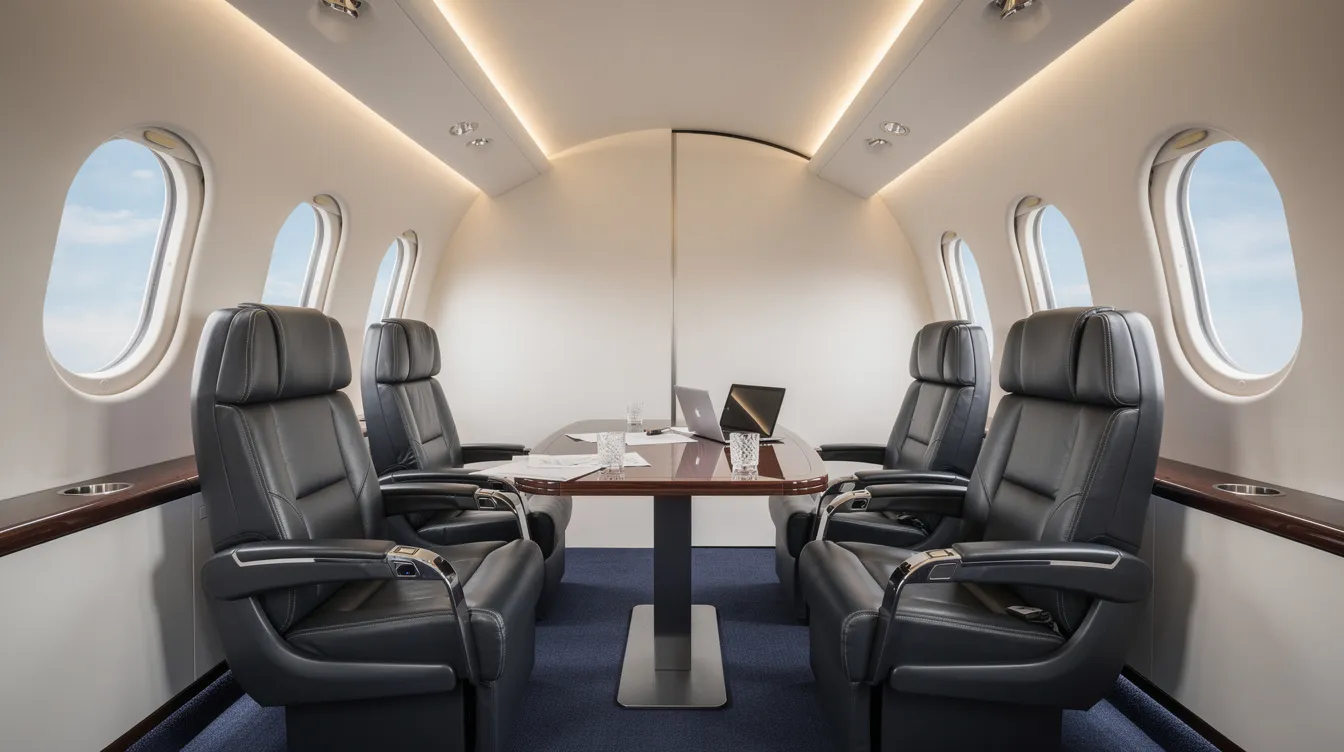
These figures are approximate and vary by operator, interior layout, and weight, but they provide a practical planning baseline for travelers considering a Bombardier CRJ 200 charter.
|
Specification |
Standard Layout |
VIP / Shuttle Layout |
|---|---|---|
|
Passenger capacity |
~50 |
14–30 |
|
Maximum range |
~1,956 statute miles |
Slightly reduced due to interior weight |
|
Cruise speed |
Mach 0.74–0.78 (~430–460 kn) |
Similar |
|
Service ceiling |
41,000 ft |
Same |
|
Takeoff distance (SL, ISA) |
~5,800–6,290 ft |
Similar or slightly longer |
|
Landing distance |
~4,850 ft |
~4,850 ft |
|
Baggage capacity |
Full airline-size hold |
~308 cu ft (VIP conversions) |
Baggage capacity in standard layouts accommodates each passenger with bags and a personal item. VIP conversions may trade some baggage space for cabin volume—divans, cabinets, and enhanced galleys take up room.
These numbers translate into real routes. A CRJ 200 regional jet can handle sectors like New York–Chicago, Toronto–Calgary, or Paris–Athens comfortably under charter conditions with reserves, and understanding one-flight private jet costs on these sectors helps set realistic budgets. For a deeper look at group charter aircraft in this class, Jettly's platform lets you compare options side by side.
Travelers using Jettly often compare the Bombardier CRJ 200 to smaller business jets, turboprops, and other aircraft in the CRJ family like the CRJ 700 or Embraer ERJ-145.
vs. Light and Midsize Business Jets: A midsize jet seats 6–12 passengers with more privacy and luxury per seat. But when moving 20–50 people, the CRJ 200 is far more cost-effective on a per-seat basis. The trade-off is a narrower cabin and less personalized service.
vs. Turboprops (Dash 8, ATR): Turboprops often win on short-field performance and fuel burn for very short sectors. But the CRJ 200 cruises at Mach 0.78 versus a turboprop's typical Mach 0.45–0.50, cutting flight time significantly on routes over 400 nm. The jet-level ride at altitude is also noticeably smoother.
vs. CRJ700 and CRJ900: The CRJ700 entered production in 1999 and can seat up to 70 passengers. It offers more legroom than the CRJ 200 and features an updated wing and newer avionics. However, CRJ 200 conversions can be more cost-effective for groups under 30 or for specialized VIP layouts where the smaller size works in the customer's favor.
The CRJ 200 regional jet is ideal for corporate roadshows, sports team transport, incentive travel, and music tours, sitting within a broader universe of private charter aircraft options that can be tailored to different group sizes and route profiles. For smaller executive groups or longer non-stop missions, a super midsize or large-cabin business jet is typically the better fit.
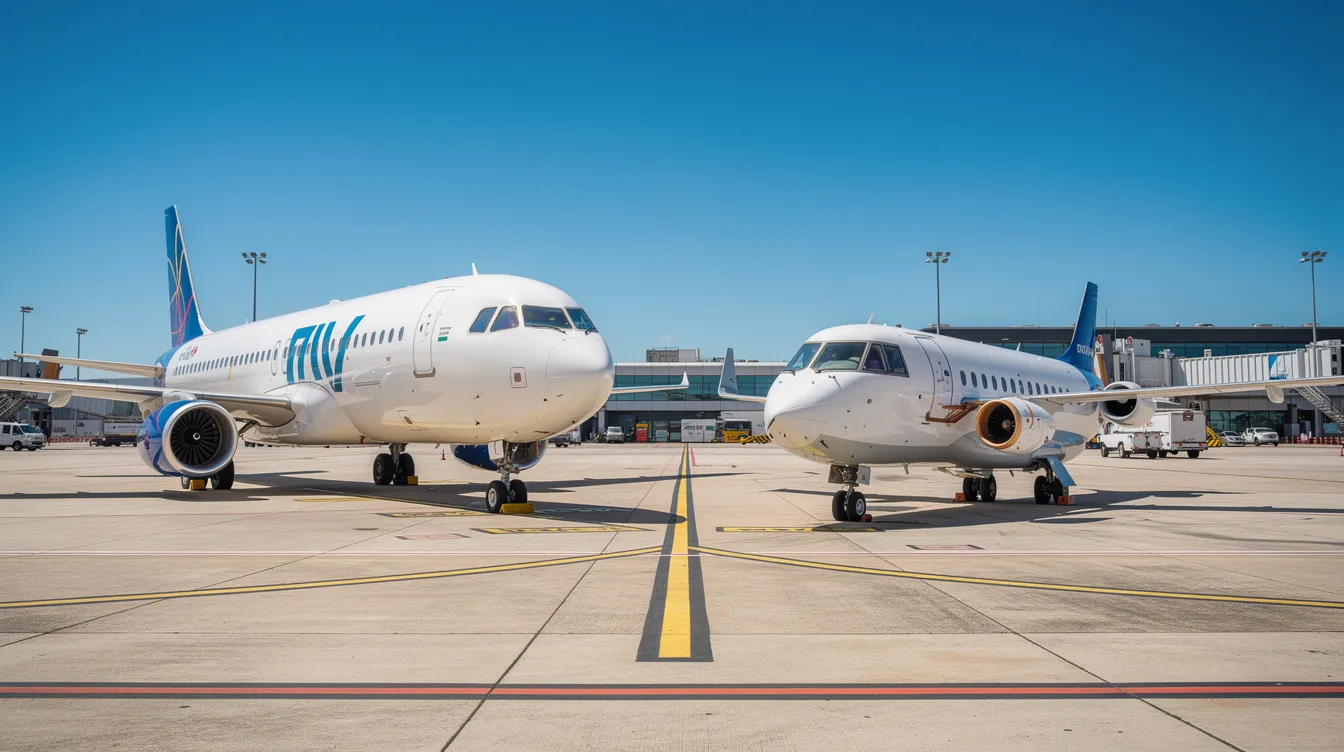
Jettly is a digital private aviation platform that aggregates aircraft from operators around the world, including regional jets like the Bombardier CRJ 200 and its VIP conversions. Here's how the booking flow works:
Enter your route, dates, and group size.
The platform surfaces suitable aircraft—CRJ 200 options where available—alongside alternatives in other categories.
Instant or near-instant pricing appears, allowing side-by-side comparison.
Key cost drivers for CRJ 200 charters include hourly rate (averaging $18,600 per flight hour for VIP configurations), repositioning legs, airport fees, crew expenses, and onboard services like catering and Wi-Fi, all of which you can explore in more detail with Jettly's private jet charter cost estimator. A new Bombardier CRJ-200 costs around $21 million, while a pre-owned Bombardier CRJ-200 averages $19.5 million—context that explains why charter rates reflect significant capital costs and why understanding affordable airplane rental options across different aircraft types is valuable for many travelers. For a broader look at charter pricing and the economics of private aviation, including ownership versus charter, Jettly's resources on how much a private jet costs break down each line item.
Jettly also coordinates ground transportation at both ends, tailored in-flight catering for large groups, and scheduling that leverages the CRJ 200's ability to use secondary and regional airports closer to your actual destination, supported by its integrated airport locator tool for planning access to suitable fields.
The CRJ 200 is particularly efficient when the objective is moving a larger group on a short to mid-range route in a single aircraft. The aircraft's performance capabilities make it ideal for corporate and charter flights across several scenarios:
Corporate shuttles and roadshows: Moving 20–40 executives between multiple cities in a day, using regional airports to cut ground time. Reconfigured cabins allow on-board meetings and focused work during the flight.
Sports teams: Professional or collegiate teams transporting players, coaches, and support staff with enough cabin and baggage capacity for equipment. Direct routing to cities not well served by commercial schedules is a major advantage.
Events and incentive travel: Company incentive trips, product launches, or entertainment tours where timing control, branding, and group cohesion on one plane matter. It's more fun and practical than splitting a group across multiple flights.
Ad-hoc group travel: Large family trips, wedding parties, or humanitarian missions. A group private jet charter with a CRJ 200 offers flexible routing through Jettly's global network of operators, while travelers focused on individual seats can explore buying a seat on a private jet as an alternative way to access similar routes.
The CRJ 200 has an impressive safety record, achieving 99% dispatch reliability in its first 100 days of service—a remarkable achievement for any new aircraft type. It holds a type certificate under FAR Part 25 (transport category), meaning it meets the same structural and systems standards as full-size airliners.
Chartered Bombardier CRJ 200 flights arranged through Jettly are typically operated by licensed carriers holding FAA Part 135 certification or international equivalents. The type’s overall safety history remains strong despite the usual industry review of operational incidents. Jettly acts as the marketplace, not the operator, so customers should expect fully compliant operations from vetted operators, similar in rigor to established providers profiled in overviews of industry leaders like NetJets.
Key safety elements include a two-pilot crew, advanced avionics, well-documented maintenance procedures, and continued parts and engineering support from Mitsubishi's CRJ program. Runway and altitude considerations are important: the CRJ 200 needs more runway than a light jet, and performance degrades at high-elevation or hot-weather airports. Route planning through Jettly's operators accounts for these variables.
On the environmental side, the CRJ 200 burns more fuel in absolute terms than a small jet, but per-seat efficiency improves significantly when fully loaded. Some operators offer carbon offsetting programs and prioritize efficient routing to minimize the environmental footprint.
The Bombardier CRJ 200 is one of several regional jet options in Jettly's inventory, which spans turboprops, light jets, midsize jets, heavy jets, and helicopters from many of the best private plane manufacturers. It developed a strong niche as a group-travel workhorse and is frequently mentioned alongside the best private jet charter companies that specialize in tailoring aircraft choices to specific missions.
Customers use Jettly to compare categories—selecting between a CRJ 200 for 30 passengers, a super midsize jet for a smaller executive group, or multiple light jets based on cost and privacy needs. The platform's private jet cost calculator makes these comparisons straightforward and complements Jettly's broader guidance on affordable private jet charter for different budget levels.
Frequent flyers may benefit from private jet membership programs generating reduced commissions or fixed-rate structures, while occasional users can book CRJ 200 charters on-demand. Jettly's platform also highlights empty leg or repositioning opportunities, where a regional jet might be available at a discount on certain routes and dates.
The CRJ 200 is most compelling within Jettly's ecosystem when a traveler needs to move a larger group efficiently over short to medium distances with airline-grade reliability and the flexibility to use secondary airports closer to the final destination.
The original airline configuration seats about 50 passengers in a 2-2 layout, which some charter operators still use for group charters and corporate shuttles. VIP or corporate shuttle conversions typically reduce capacity to around 14–30 seats, accommodating fewer passengers but providing significantly more space per person—larger seats, meeting tables, and upgraded amenities. Jettly's search tools display the exact seating configuration for each available CRJ 200 so customers can match aircraft to their group size.
While the maximum range of the CRJ 200 is 1,956 statute miles, a realistic charter planning range with full reserves is usually around 1,500–1,700 nautical miles. Routes such as Los Angeles–Denver, Toronto–Winnipeg, or London–Rome are generally within comfortable non-stop distance. Customers should confirm exact range and routing with their Jettly flight advisor, especially when planning flights from shorter runways or with full passenger and baggage loads.
Comfort depends heavily on configuration. A standard 50-seat layout is functional for short flights but narrower and less luxurious than a purpose-built business jet—every row feels closer to economy class. VIP conversions, however, offer larger seats, more legroom, and tailored interiors that can rival many midsize business jets in perceived space for groups. Reviewing cabin photos and seat maps within Jettly's aircraft details helps customers choose based on personal comfort priorities.
The CRJ 200 is designed for regional airports with paved runways, typically requiring around 5,800–6,300 feet of runway at sea level—more than many light jets or turboprops but still allowing access to hundreds of secondary and non-hub airports that commercial airlines don't serve. Extremely short, high-altitude, or unimproved strips may not be suitable. Travelers can input departure and arrival airports into Jettly's platform to confirm whether a CRJ 200 or another aircraft category is the best fit for their gate-to-gate needs, whether they're planning a regional hop or a private jet charter in Kolkata, West Bengal and surrounding areas.
The hourly rate for a Bombardier CRJ 200 is higher than that of a single light or midsize jet, but the cost per seat can be substantially lower when you pay for one aircraft carrying 20–50 passengers instead of splitting across three or four smaller planes. That math can be especially compelling for domestic group movements in Canada, where one aircraft may replace several smaller jets on the same itinerary. One regional jet is also simpler logistically, better for group cohesion, and eliminates the coordination headaches of syncing multiple departures. Jettly's instant pricing and quote tools let customers compare a CRJ 200 charter against multiple smaller jets on the same route, factoring in total trip cost and passenger count. For travelers recently exploring life in the Canadair regional jet class of charter, this side-by-side comparison is the fastest way to find the right fit from the ground up, especially when weighed against the cheapest private aircraft options for smaller groups or different mission profiles.
The Bombardier CRJ 200 is a proven aircraft that has transitioned from airline service in the skies of North America and Europe into a capable charter platform—particularly effective for group travel, corporate shuttles, and event transport. Its airline heritage and safety credentials are well established by every manufacturer and operator standard.
For travelers looking to move 20–50 passengers on sectors up to roughly 1,700 nautical miles, the CRJ 200 delivers capacity and per-seat economics that smaller business jets cannot match. Schedule control, regional airport access, and flexible cabin layouts (from standard 50-seat to VIP) make it a versatile choice in the world of group charter.
The best way to determine if it fits your trip is to compare it against other options. Use Jettly's digital platform to see Bombardier CRJ 200 availability alongside other aircraft types, with instant pricing and transparent cost breakdowns.
Ready to explore regional jet charter options, including the Bombardier CRJ 200? Compare aircraft and request a quote at https://www.jettly.com.
Share this post:
Jay Franco Serevilla
Jun 30, 2026
|
5
min read
Discover tips and trends in the industry.

5
min read
Jet Stream Turbulence: What Private Fliers Need to Know
Jet stream turbulence is a common challenge for private fliers, occurring unexpectedly in clear skies and often causing discomfort. Understanding its causes and effects can help travelers manage their flights more effectively, especially as climate change is projected to increase turbulence severity. This article outlines practical strategies for navigating jet stream turbulence, including flexible routing and aircraft selection.
Read More
5
min read
Turbulence in Planes: What It Is, How Pilots Handle It, and Why Private Jets Feel Different
Turbulence is a common concern for air travelers, often misunderstood but generally not dangerous. This guide explains the science behind turbulence, how pilots manage it, and why private jets can offer a smoother experience. Understanding turbulence can help alleviate anxiety and enhance confidence during flights.
Read MoreStay updated with our latest insights and tips to elevate your journey with us.
MEMBERSHIPS AND ASSOCIATIONS



Disclaimer: Jettly operates as a charter broker, offering access to a global digital jet charter marketplace. Jettly is not a direct air carrier and does not own or operate aircraft. All advertised flights are conducted by third-party air carriers that are fully licensed and hold the appropriate Part 135 or Part 121 certifications issued by the Federal Aviation Administration (FAA) or equivalent regulatory authorities under U.S. or foreign law. Jettly complies fully with the U.S. Department of Transportation's Part 295 and Part 298 Charter Broker regulations. Jettly does not carry additional liability insurance. Passengers are covered by aircraft operator insurance. TICO: 50023770


