



Login
Get Instant Pricing On 23,000+ Aircraft

>
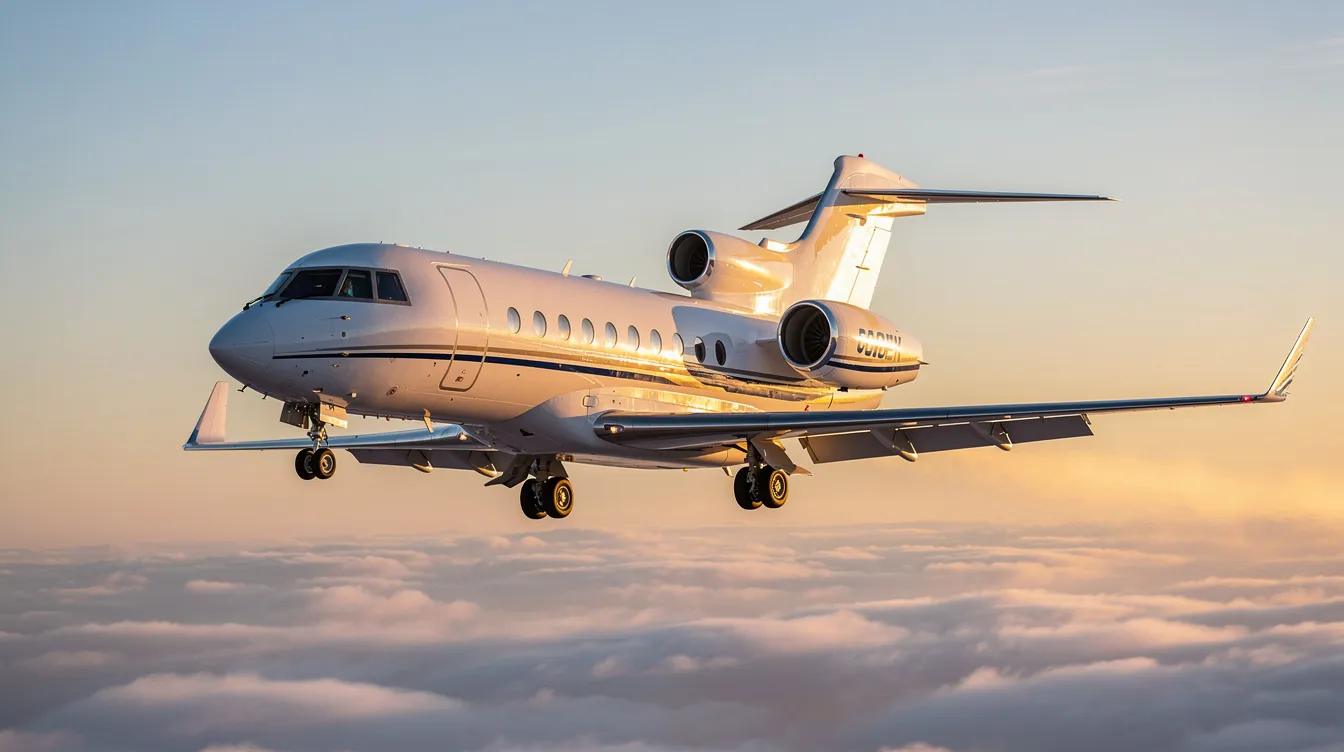
This comprehensive guide explores the Dassault Falcon 900EX, a long-range large-cabin trijet aircraft, and its relevance for private jet charter customers, aviation enthusiasts, and corporate travellers seeking efficient, comfortable, and flexible long-range travel. Whether you are evaluating aircraft for transatlantic business trips, family vacations, or group charters, this guide covers the Falcon 900EX’s key features, performance, cabin experience, and booking process—helping you make informed decisions for your next journey.
The Dassault Falcon 900EX is a long-range, large‑cabin trijet aircraft introduced in 1996 by Dassault Aviation as an upgraded variant of the Falcon 900B. It remains a popular choice on Jettly's platform for transatlantic and cross‑continent charters.
The Falcon 900EX has a range of 4,500 nautical miles, making nonstop sectors like New York–London or Los Angeles–Honolulu practical for groups of 8–12 passengers.
Its short‑field performance and maximum takeoff weight of 48,300 lbs allow access to smaller and regional airports that many competing heavy jets cannot reach, including those with challenging runway lengths.
The trijet design, powered by three Honeywell TFE731-60 engines, enhances safety and reliability compared to twin-engine jets, providing overwater routing capability without requiring ultra-large aircraft.
The Falcon 900EX features a spacious cabin volume of approximately 1,264 to 1,270 cubic feet with typical seating for 12 passengers and a maximum capacity of up to 16.
Charter rates depend on journey length and airports, with pre-owned Falcon 900EX jets typically costing around $9 million, while the upgraded 900EX EASy models range between $13.5 million and $17 million.
Annual fixed costs for the Falcon 900EX total approximately $802,795, with total operating costs reaching about $3.1 million. Maintenance includes standard six-year C checks costing $300,000 to $700,000, and major modifications adding $500,000 to $2 million, potentially increasing downtime to 12–16 weeks.
About 30% of customers opt to add noise-reduction systems during maintenance, complementing the aircraft's aerodynamic design that reduces vibration and noise for a whisper-quiet cabin conducive to productive work and rest.
Advanced avionics systems enhance safety and reduce pilot workload, while 96.7% of Falcon 900EX EASy jets are pre-owned, reflecting a mature market with strong availability.
The Dassault Falcon 900EX is a long-range large-cabin trijet aircraft introduced in 1996, best known for combining roughly 4,500 nautical miles of range with strong short-field performance for transatlantic and cross-continent private charter missions. Produced until 2003, it remains a practical option on Jettly’s charter platform for corporate executives, high-net-worth travellers, families, and groups seeking flexible private jet travel without ownership obligations.
A trijet is an aircraft powered by three jet engines, which enhances safety and reliability compared to twin-engine jets. This design provides additional redundancy, especially valuable for overwater and remote-region flights.
This guide breaks down what matters when evaluating a Falcon 900EX for charter: core specifications, performance, passenger capacity, cabin layout, onboard experience, avionics and safety features, typical routes, and how booking works through Jettly's comprehensive private aviation platform. Knowing where the 900EX fits helps travellers compare comfort, airport access, and mission capability more confidently before choosing an aircraft for long-range private travel.
The Falcon 900EX is designed as a true long-range jet, balancing speed, runway performance, and efficiency for both business and leisure missions, while helicopters such as the Eurocopter EC30 address shorter, point‑to‑point hops. Its specifications position it well against many twin-engine competitors, with added safety from the trijet configuration.
Key performance data at a glance:
Long range capability of about 4,500 nm (around 8,300 km) with NBAA IFR reserves factored in.
Maximum cruising speed of 482 knots (roughly Mach 0.87), with long-range cruise typically in the 460–480 ktas band.
Service ceiling of 51,000 feet—higher altitudes generally mean smoother air, less traffic, and better fuel economy on long sectors.
Max takeoff weight of 48,300 lbs, with a wingspan of about 70.2 ft.
Takeoff distance in the region of 5,200–5,300 ft at sea level under standard conditions.
Landing distance of approximately 2,300–2,500 ft, enabling the Falcon 900EX to operate from airports with challenging runway lengths that would exclude many other heavy jets.
The three Honeywell TFE731-60 engines each deliver roughly 5,000 pounds of thrust. They are known for reliability and relatively modest fuel burn for a large tri‑jet, contributing to strong climb performance and comfortable margins over water and remote regions. The trijet design enhances safety and reliability compared to twin-engine jets, particularly on overwater routing where having a third engine provides meaningful redundancy without requiring ultra-large aircraft.
Compared to the earlier Falcon 900B long‑range business jet, the 900EX offers noticeably better range and engine performance. Against twin-engine long-range competitors, the 900EX holds competitive range while often delivering superior short-field capability—a practical advantage for reaching secondary airports closer to a final destination.
For charter passengers on Jettly, or those browsing its broader private charter aircraft inventory, these numbers translate into common nonstop pairings such as:
New York – London
Los Angeles – Honolulu
Toronto – Bogotá
Paris – Dubai under favourable conditions
The Falcon 900EX's aerodynamic design and engine choice make it relatively efficient for a heavy jet. For clients concerned about environmental impact, Jettly can connect them with operators that offer carbon offsetting on request.
Step on board a charter-configured Falcon 900EX and the first thing you notice is the space. With a cabin height of approximately 6 ft 2 in (1.88 m), most adults can walk the full length of the cabin comfortably. The cabin width sits at roughly 7 ft 8 in (around 2.3 m), and the cabin length stretches about 33 ft 2 in (10.1 m). The cabin volume of 1,264 to 1,270 cubic feet puts the 900EX firmly in the spacious large-cabin class, with room that feels open rather than cramped even on long flights.
The aerodynamic design of the aircraft reduces vibration and noise for a quieter ride. The aircraft features a whisper-quiet cabin, allowing for productive work and rest during flight. Around 30% of customers add noise-reduction systems to their aircraft during refurbishments, further improving the experience, similar to what you’d find on other Dassault long‑range jets such as the Falcon 7X.
Typical charter layouts divide the stylish cabin into three distinct zones:
Forward double club configuration seating—four seats facing each other across a shared table—ideal for meetings, laptop work, or casual dining. Standard seating in this area often includes two seats on each side.
Mid-cabin conference group with a larger table suited for dining or team collaboration.
A rear section featuring a three-person divan and additional club seats. On overnight flights, these convert to lie-flat sleeping arrangements, effectively creating a full-length bed for rest during transatlantic or transcontinental trips.
Amenities commonly found on board:
Fully enclosed aft lavatory with wardrobe or storage space.
Forward galley equipped with oven, microwave or both, coffee and espresso options, and chilled storage for catering.
Inflight connectivity options including Wi‑Fi or satellite communications, though equipment levels vary by individual aircraft and operator.
Many Falcon 900EX airframes have undergone major refurbishments over the years, just as sister models like the Falcon 900B available for charter often do. Upgrade scope typically includes new leather seats, refreshed veneers, upgraded LED lighting, improved soundproofing, and modern cabin management systems. Major modifications can add $500,000 to $2 million in costs, with combined C check and modification work extending downtime to 12–16 weeks—context that matters for owners but not for charter passengers who simply benefit from the finished result.
How Jettly clients use these zones in practice:
Business travellers separate executives and support staff across the three cabin areas for privacy and productivity.
Families use the rear zone and divan as a quiet area for children on overnight or holiday flights.
Sports or entertainment groups take advantage of the baggage capacity (approximately 127 cubic feet internal plus external compartments) for equipment, wardrobe, or instruments.
Specific seating plans, Wi‑Fi availability, and catering options for any Falcon 900EX charter can be reviewed in advance on Jettly. Bespoke in‑flight menus coordinated via Jettly Eats in‑flight catering and ground transportation can also be arranged through the platform as part of the booking process.
Early Falcon 900EX models came equipped with a Honeywell Primus 2000 or similar integrated flight deck—already a capable cockpit for the era. The flight crew benefited from dual flight management systems, inertial reference units, and standard safety suites including weather radar and terrain awareness.
The development of the Falcon 900EX EASy, from a long-established Dassault brand in business aviation, brought a significant leap forward. EASy stands for Enhanced Avionics System, Dassault's easy digital cockpit concept built on the Honeywell Primus Epic platform. It introduced large‑format multi-function displays, cursor‑control devices, and a streamlined interface designed to reduce pilot workload and improve situational awareness. The aircraft utilises advanced avionics systems enhancing safety and reducing pilot workload, which benefits passengers even if they never see the cockpit.
Safety technologies commonly found on 900EX and 900EX EASy charter aircraft include:
Advanced autopilot and flight‑management systems.
Modern GPS and performance‑based navigation capabilities (RNAV, RNP where upgraded).
Traffic Collision Avoidance System (TCAS), Enhanced Ground Proximity Warning System (EGPWS), and weather radar.
For charter passengers, these systems translate into real benefits, and tools like Jettly’s private jet charter cost estimator help quantify the value for specific routes:
More precise routing and approaches into busy or weather‑affected airports.
Better decision‑support tools for pilots on long oceanic or polar routes, which provide overwater routing capability the flight crew can manage with confidence.
Reduced delays and diversions, enhancing reliability for time‑critical business trips.
Falcon 900EX aircraft on Jettly's network are operated under stringent regulatory standards such as FAA Part 135, EASA Air Ops, or equivalent frameworks. Only vetted operators and crews handle charters arranged through the platform.
Some older 900EX fleets have been retrofitted with partial EASy‑style or next‑generation avionics packages. Jettly can identify specific aircraft equipped with the latest cockpit technology for clients who prioritise this—just flag it when requesting a quote.
The Falcon 900EX is a practical choice for groups of 8–12 passengers requiring nonstop long-range sectors. It is well suited to transcontinental and transatlantic routes where its range, cabin space, and airport flexibility matter most, while midsize options like the Hawker 800A can be ideal for shorter regional missions.
How Jettly's digital marketplace works for this aircraft:
Customers enter their route, dates, and passenger count.
The platform searches its global inventory, returning instant pricing for suitable aircraft types including the Falcon 900EX, 900EX EASy, and comparable large‑cabin jets, as well as options to share empty seats on crowdsourced flights when available.
Users compare options by cabin photos, year of production (typically between 1996 and 2003 for the 900EX), operator rating, and estimated flight time, much like they would across other brokers such as Dexter Air Taxi private jet services featured on the platform.
Charter rates for the Falcon 900EX vary by journey length, airport choices, aircraft year, and regional availability. Rates typically fall within the heavy jet band—several thousand USD per flight hour. Some aircraft also appear on the pre-owned market for sale, but charter avoids acquisition and ongoing operating-cost exposure, while separate resources on affordable aircraft ownership options speak to buyers exploring purchase instead. Jettly shows transparent prices with no hidden repositioning fees or membership‑only restrictions, while optional private jet membership plans cater to frequent flyers seeking additional benefits. For a detailed estimate on a specific trip, the charter cost estimator provides a starting point.
Common use cases on the platform:
Corporate roadshows visiting multiple European capitals in a single trip, where schedule control and cabin space for the company team are critical, often pair well with fixed‑rate Jet Card corporate programs.
A family or group flying from New York to the Caribbean with ample luggage, sports gear, and pets on board, similar in priorities to those evaluating the best planes for a family of four.
Time‑sensitive missions such as medical team deployment or film production travel, where the operation depends on precise timing the flight crew can deliver, may also be served efficiently by midsize jets like the Hawker 800XP available for charter.
Service elements Jettly can coordinate around a Falcon 900EX charter:
Door‑to‑door itineraries including ground transfers.
Custom catering matched to dietary requirements, prepared and loaded at the galley before departure.
Preferred FBO selection for privacy and quick turnarounds.
Ready to fly on your terms? Explore real‑time Falcon 900EX availability and request a quote at jettly.com. Membership is optional—on‑demand access is available for every trip.
The following FAQs cover practical details for travellers considering a Falcon 900EX charter that are not fully addressed in the sections above. If your question isn't listed here, Jettly's team can help with specifics when you request a quote.
The Falcon 900EX typically seats 12 passengers in a standard charter configuration, with a mix of club seats and divans. Some configurations stretch to 14 seats, while maximum certified seating can reach 16 in high‑density layouts rarely used for charter. Jettly's aircraft details page shows the exact seating layout and recommended passenger count for each individual jet, so there are no surprises on boarding day.
The aircraft excels on sectors between roughly 3,000 and 4,500 nm—think North America to Europe, cross‑U.S. transcontinental flights, or deep South America and Middle East missions from European hubs. The Falcon 900EX is renowned for its access to smaller and remote airports, making it ideal when your destination is away from major international hubs. For very short hops, a smaller jet may be more cost‑effective, and guides to choosing the best cross‑country aircraft can help frame those alternatives. For missions beyond 4,800 nm, other long-range aircraft featured on Jettly may be a better fit.
Many Falcon 900EX and 900EX EASy aircraft are equipped with inflight Wi‑Fi, but availability is not universal. It depends on the specific tail number, operator, and the avionics upgrade history of the aircraft. Jettly can filter or confirm Wi‑Fi availability and estimated data costs before the booking is finalised, so it's worth mentioning connectivity as a priority when you submit your request.
Baggage capacity is generous for the class—approximately 127 cubic feet of internal baggage space, plus additional external compartments. That's enough for large checked bags, garment bags, and equipment for 8–12 travellers. If you're bringing oversized or unusually heavy items such as film gear, surfboards, or ski equipment, confirm dimensions and weights with Jettly so the appropriate loading plan and aircraft selection can be arranged, especially if you’re comparing capacity with larger group aircraft like the Boeing 737‑800.
Several days to a couple of weeks' notice usually provides the best selection and pricing, especially during peak seasons or around major events. That said, Jettly can often arrange last‑minute Falcon 900EX flights when aircraft and crew are available—flexibility on departure time and airport choice helps in those situations, particularly if you’re weighing alternatives such as a widebody like the Boeing 767‑300ER for charter. For the most options, booking earlier is always the intended approach.
The Dassault Falcon 900EX remains a compelling choice for private jet charter travellers seeking a blend of long-range capability, spacious comfort, and operational flexibility. Introduced in 1996 as an improved version of the Falcon 900B, it offers an increased range of approximately 4,500 nautical miles, a generous cabin volume of about 1,264 cubic feet, and the safety benefits of a trijet design. Its ability to access smaller airports with shorter runways further enhances its appeal for business and leisure travellers alike. With transparent pricing, advanced avionics, and a quiet, well-appointed cabin, the Falcon 900EX delivers value and convenience for a variety of missions. Whether flying transatlantic routes, cross-continent trips, or to remote destinations, Jettly’s platform makes booking this versatile aircraft straightforward and efficient. Ready to experience private travel on your terms? Explore flight options or request a quote at https://www.jettly.com.
Share this post:
Jay Franco Serevilla
Jul 20, 2026
|
5
min read
Discover tips and trends in the industry.

5
min read
Helidosa Aviation Group: Private Jet Charter, Safety Insights, and Alternatives
Helidosa Aviation Group is a leading private aviation operator in the Dominican Republic, offering a range of services including private jet charters and helicopter tours. Established in 1992, the company has expanded its fleet and services to cater to leisure and business travelers across the Caribbean and Americas. While Helidosa boasts a strong safety record, it has faced incidents that travelers should consider when booking.
Read More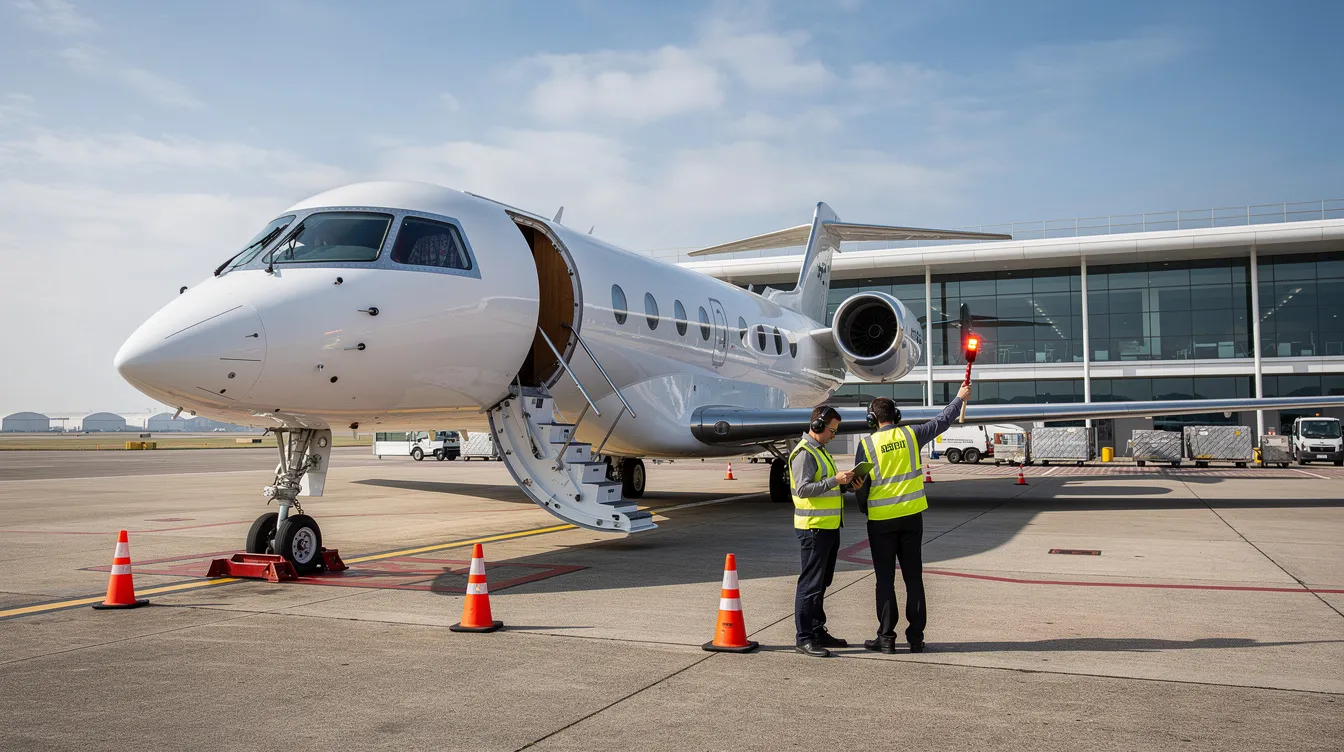
5
min read
Jet Number: How Private Jet Tail Numbers, Registration, and Tracking Really Work
Every private jet has a unique jet number, also known as a tail number, which serves as its identification in the aviation world. This alphanumeric code is crucial for air traffic control, legal records, and flight tracking, ensuring safety and compliance. Understanding jet numbers can enhance the private jet booking experience, providing travelers with essential information about the aircraft.
Read MoreStay updated with our latest insights and tips to elevate your journey with us.
MEMBERSHIPS AND ASSOCIATIONS



Disclaimer: Jettly operates as a charter broker, offering access to a global digital jet charter marketplace. Jettly is not a direct air carrier and does not own or operate aircraft. All advertised flights are conducted by third-party air carriers that are fully licensed and hold the appropriate Part 135 or Part 121 certifications issued by the Federal Aviation Administration (FAA) or equivalent regulatory authorities under U.S. or foreign law. Jettly complies fully with the U.S. Department of Transportation's Part 295 and Part 298 Charter Broker regulations. Jettly does not carry additional liability insurance. Passengers are covered by aircraft operator insurance. TICO: 50023770


