


Login
Get Instant Pricing On 23,000+ Aircraft

>
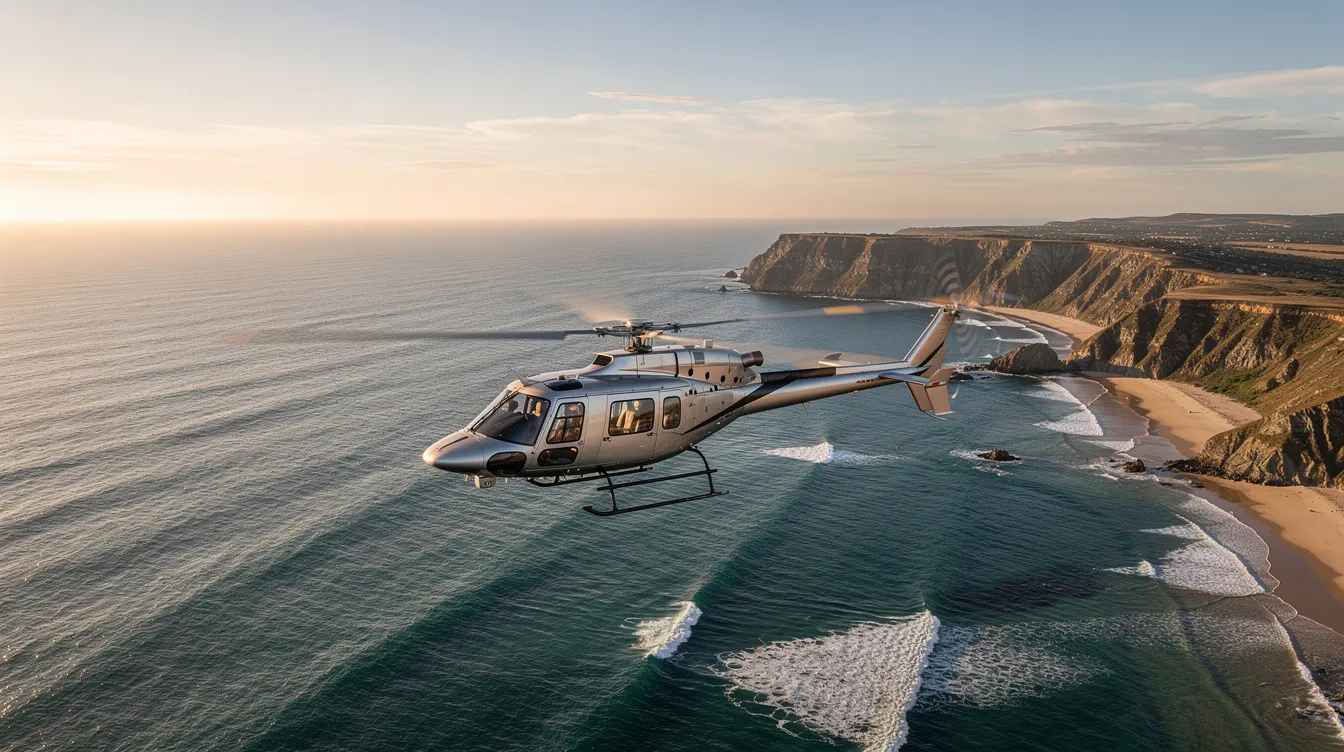
The Dauphin helicopter is one of the most recognized medium twin-engine platforms in rotary aviation. This guide is intended for private charter clients and aviation enthusiasts seeking to understand the capabilities, advantages, and booking process for the AS365 N3 Dauphin. Designed for speed, range, and versatility, the Eurocopter AS365 Dauphin family has served corporate shuttles, offshore rigs, coast guards, and air ambulance fleets for nearly five decades. This guide breaks down what charter clients need to know about the AS365 N3 and how to book one.
The Eurocopter AS365 Dauphin family traces its roots to Aérospatiale in the early 1970s, evolved under Eurocopter, and is now supported by Airbus Helicopters. It is a medium twin-engine helicopter widely used for corporate transport, search and rescue, and offshore missions, with over 1,000 units produced since its introduction and operated by more than 300 operators worldwide.
Speed and range matter. The AS365 N3 cruises at 145–160 knots with a ferry range of up to 426 nautical miles, making it practical for city-pair shuttles and coastal transfers alike.
Hot-and-high capability. The N3 variant was purpose-built for hot and high climates, giving charter operators stronger safety margins at altitude and in warm regions.
Right-sized for charter groups. VIP configurations seat 6–8 passengers comfortably, hitting a sweet spot between lighter twins and costlier heavy platforms.
Competitive pricing. Typical hourly charter pricing for an AS365 N3 sits around $3,000–$3,500 per flight hour, with the average hourly rental rate at roughly $3,100 depending on region and operator. New AS365-N3 helicopters average $8.6 million, while pre-owned models can cost over $12 million.
The AS365N3 Dauphin is available through Jettly's global aircraft marketplace. Explore charter options and instant pricing at https://www.jettly.com.
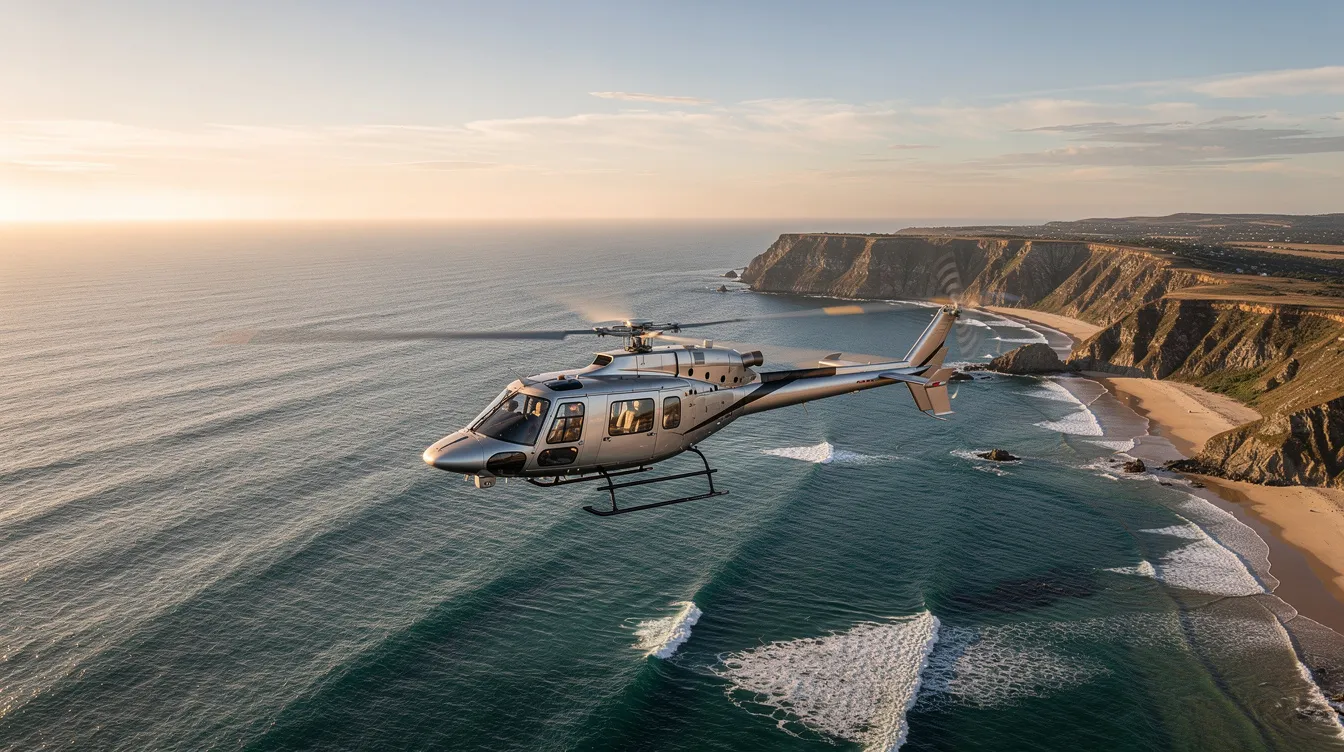
The "dauphin helicopter" refers to a family of medium-weight, twin-engine rotorcraft that started life as the Aérospatiale SA 360 in the early 1970s and matured into the twin-engined version known as the SA/AS 365 Dauphin 2. The first prototype flew on 2 June 1972, with production deliveries beginning later that decade. By 1980, 265 Dauphins had been delivered to 23 nations. The company subsequently developed multiple upgrades, integrated into Eurocopter in 1992, and rebranded as Airbus Helicopters in 2014.
The Dauphin quickly became popular for emergency medical services and search and rescue operations worldwide, including use by the Irish Air Corps. The 500th Dauphin was delivered in February 1991, and the AS365 N variant set a speed record of 372 km/h that same year, underscoring its reputation for speed and performance.
The family spans both civil and military operators worldwide. Civil variants center on the AS365 Dauphin, while military operators fly the Panther (AS565) and the USCG's short-range recovery platform, the HH/MH-65 Dolphin. The Dauphin is utilized by law enforcement and various governmental agencies, including the French Navy for maritime monitoring. Over 1,000 Dauphin-family helicopters have been produced and are operated by more than 300 operators globally.
The most recognizable branches include the SA/AS365 "Dauphin 2," the AS365 N2 and AS365 N3 upgrades, and the stretched EC155 (now H155). The Eurocopter AS365 Dauphin remains one of the most proven twin-engine platforms in the medium helicopter category.
Several design choices set the AS365 Dauphin apart from other medium twins. The aircraft is known for its Fenestron enclosed tail rotor—a shrouded design with asymmetric blade distribution that cuts noise signature, protects ground personnel, and improves handling in crosswinds and confined landing zones. This feature, combined with an aerodynamic fuselage and a twin-engine configuration, became a hallmark across many Airbus helicopter models.
Key design elements include:
Main rotor system. The Starflex main rotor hub uses composite rotor hub technology with five high-inertia blades (blade spheriflex main rotor on later variants), delivering smooth handling and a main rotor diameter of approximately 11.94 meters. The composite blades and streamlined nose work with a retractable tricycle undercarriage to push cruise speeds above 140–150 knots with efficient fuel burn.
Avionics evolution. The AS365 F was the first rotorcraft with electronic flight instruments in 1985. Later AS365 N2 and AS365 N3 versions adopted glass cockpit layouts with digital flight displays, four-axis autopilot, and flight management systems suitable for IFR flight operations, with manual reversion for backup purposes aboard.
Redundancy and safety. Modern Dauphins feature dual independent hydraulic and electrical systems, an uprated main transmission with revised transmission architecture, and advanced avionics and a sophisticated electrical system. The AS365 N3 incorporates a modular design for mechanical assemblies, simplifying maintenance. Optional health and usage monitoring systems (HUMS) add another layer valued by charter operators.
Engines and performance. The AS365-N3 Dauphin has two Turbomeca Arriel 2C engines paired with a Full Authority Digital Engine Control (FADEC) system, offering improved single-engine performance and reduced pilot workload. The helicopter is designed for hot weather and high altitude operations, making it effective in complex environments and harsh conditions.
The AS365 trades a slightly smaller cabin than larger helicopters like the Leonardo AW139 for better agility, lower operating weight, and strong proven reliability.
The AS365 N3, often written as 365n3 Dauphin, is a much improved version of the Dauphin line. This version, introduced around 1998, was originally developed to address hot-and-high performance gaps in earlier models. The production model began deliveries in the early 2000s, with improvements developed specifically for demanding mission profiles. Production model deliveries continued through 2022, when the last AS365 N3 reached the Spanish Customs Service.
Performance figures for the AS365 N3:
Maximum speed: 165 knots (approximately 306 km/h)
Typical cruise: 145–160 knots (270–295 km/h)
Range: up to 426 nautical miles with standard fuel
Service ceiling: exceeding 20,000 feet
Max takeoff weight: 4,300 kg
The helicopter's cabin can be configured for various roles including VIP transport, EMS, or offshore shuttle. Typical VIP layouts seat 6–8 passengers plus 1–2 pilots. In charter markets, the AS365 N3 fills the gap between lighter twins like the EC135/H135 and larger types like the AW139, balancing speed, comfort, and helicopter rental cost for flights of 100–250 nautical miles, a point explored in more depth in our guide to helicopter rental costs and pricing.
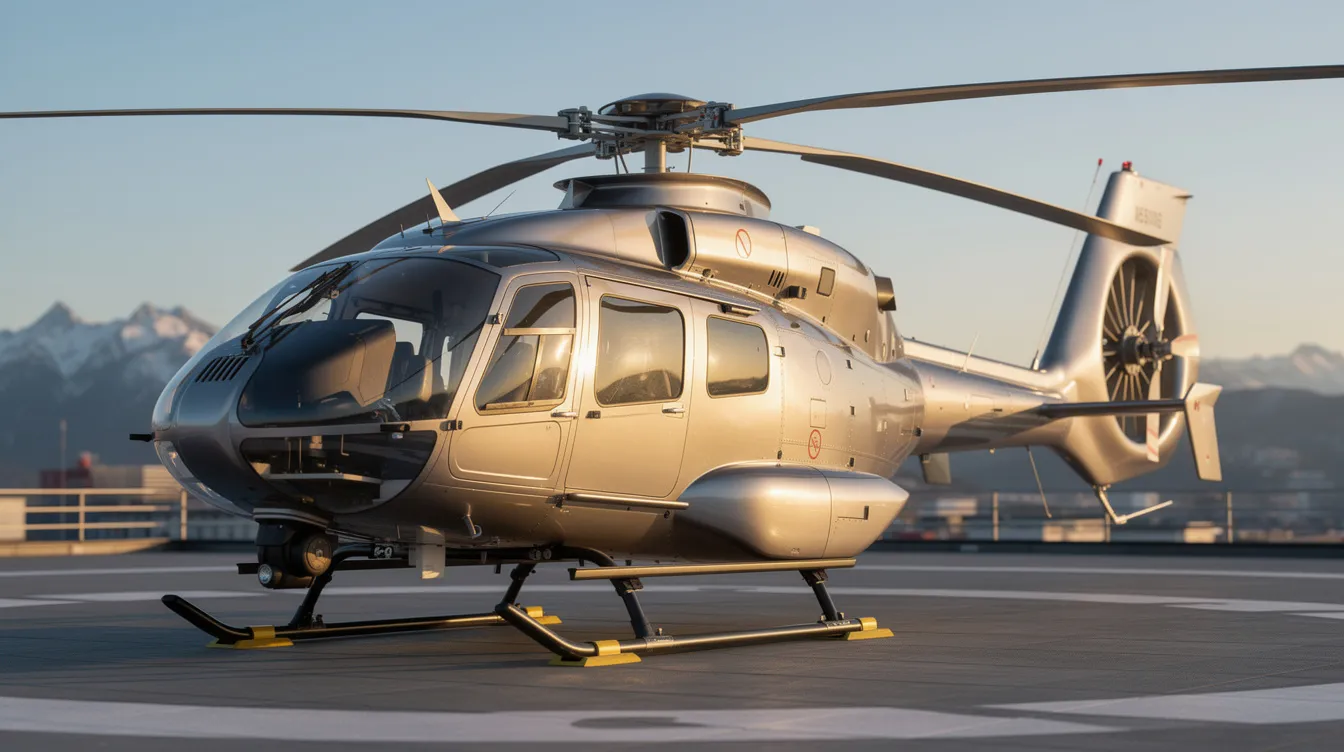
The Dauphin entered production and operational service in the late 1970s, quickly proving itself across corporate, emergency, and maritime missions. The first Dauphin broke speed records in February 1980, achieving a high speed on the Paris–London route. The AS365 N variant holds a speed record of 372 km/h since 1991, reinforcing its reputation for fast cruise among medium twins.
Civil roles have spanned several major variations of mission type:
Offshore transport. Operators like India's Pawan Hans operated a fleet of 19 Dauphins by 2003 for offshore oil support, shuttling crew to rigs across demanding environments. Pawan Hans continues to operate these helicopters for offshore missions.
EMS and SAR. The Dauphin has become popular for emergency medical services and search and rescue operations, functioning as an air-sea rescue helicopter for coast guards and hospitals alike. The Irish Air Corps uses the AS365 for search and rescue, and the French Navy employs the type for maritime monitoring.
Law enforcement. The Dauphin is utilized by law enforcement and various government agencies as an airborne law enforcement platform across Europe, Asia, and the Americas.
Naval and military. The French Navy operates the Dauphin for various missions from frigates and the aircraft carrier Charles de Gaulle. The United States Coast Guard uses the Dauphin as HH/MH-65 Dolphin for maritime SAR. Other military operators include Brazil, China (Harbin Z-9 derivative), and several Gulf and Asian nations. The aircraft is capable of multitasking, serving civilian and military missions with specialized versions for each role.
The Dauphin family has experienced accidents over decades of continuous production and service—including a 1999 Irish Air Corps incident and a 2008 Maryland State Police crash. Modern training, upgraded avionics, and tighter regulation have driven further reduction in incident rates.
Here are the practical specifications of the AS365 N3 most relevant to charter customers, drawn from the wider AS365 Dauphin and Eurocopter AS365 Dauphin family data:
General characteristics crew and capacity:
Crew: 1–2 pilots
Passengers (VIP): 6–8
Overall length: approximately 13.7 m (fuselage)
Main rotor diameter: ~11.94 m
Height: ~4.0 m
Max takeoff weight: 4,300 kg (9,480 lb)
Performance:
Maximum speed: 165 knots (~306 km/h)
Cruise speed: 145–155 knots (~270–287 km/h)
Ferry range: up to 426 nautical miles (standard fuel, no reserves)
Service ceiling: ~19,000–20,000 ft
Takeoff power: two Turbomeca Arriel 2C engines with FADEC
The aircraft features redesigned cabin doors on VIP variants, enlarged tail surfaces and an enlarged tail fin for stability, a rotor mast fairing and new engine fairing with engine cowlings optimized for cooling, and a probatory technical development path that led to the final N3+ sub-variant.
Compared to the AW139, which carries 10–12 passengers at a higher cost, the AS365 N3 is often more cost-effective for 6–8 passenger missions. The aircraft's initial design priority—speed and agility—remains its competitive edge, but overall trip economics still follow the same fundamentals outlined in our guide to understanding private flight costs.
The Dauphin helicopter fits missions where a medium twin-engine helicopter offers better value, speed, or access than a light jet or turboprop. The aircraft can operate effectively in complex environments and harsh conditions, making it a practical choice across Jettly's broader private charter aircraft marketplace.
City-pair shuttles. New York to the Hamptons, Los Angeles to Palm Springs, or Nice to Monaco—point-to-point helicopter taxi flights that bypass congested roads and airports.
Offshore and resort transfers. Moving guests to island resorts, yachts, or platforms where the AS365 N3's twin-engine design and overwater capability matter most, sometimes pairing helicopter sectors with discounted empty leg flights on private jets for longer positioning legs.
Executive regional travel. Teams hopping between offices or client sites, making multiple meetings per day with cabin space suitable for work on the go, especially when paired with crowdsourced and shared private flights on connecting jet sectors.
Time-sensitive missions. Urgent medical transport, evacuation from remote locations, or organ transfer support—subject to local regulations and certified operators. For longer-range segments, Jettly can also source affordable private jet charter options that complement helicopter legs.
Jettly can surface availability from air charter companies for AS365 Dauphin, EC155, and comparable helicopters side by side for transparent comparison. Visit https://www.jettly.com to explore options.

Helicopter charter pricing is typically quoted per flight hour and varies by region, operator, positioning time, and demand, much like the broader aircraft rental dynamics outlined in our guide to affordable aeroplane rental costs and options.
The Eurocopter AS365 N3 Dauphin often charters around $3,000–$3,500 per flight hour. The average hourly rental rate is $3,100 based on publicly available benchmarks. A new Eurocopter AS-365-N3 Dauphin costs $8,600,000, while a pre-owned Eurocopter AS-365-N3 Dauphin averages $12,272,500 on the resale market (reflecting high-time, well-maintained airframes with VIP interiors).
Smaller twin-engine helicopters may run $2,000–$2,800 per hour. Larger types like the AW139 often exceed $4,000 per hour, placing the Dauphin squarely in the mid-range twin category, similar to how fixed-wing buyers compare affordable planes and budget-friendly aircraft choices when evaluating ownership.
Cost drivers: landing fees at city heliports, minimum daily flight hours, overnight and standby charges, and seasonal demand spikes (Mediterranean summer, US Northeast summer). These same variables show up in broader analyses of jet card pricing and cost factors.
Jettly's approach: The platform provides instant or near-instant pricing estimates based on route and aircraft type via its private jet charter cost estimator, with transparent display of all known fees before booking. Clients can compare Dauphin options against light jets or turboprops in one view.
Frequent flyers may benefit from Jettly private jet memberships to reduce per-flight costs, while occasional users book on a purely on-demand basis without long-term commitments.
For charter clients, safety and regulatory compliance are non-negotiable when selecting any helicopter, including the AS365 N3 and other Dauphin variants. The twin-engine Dauphin configuration provides redundancy that single-engine types cannot match.
Charter flights on Dauphin helicopters should be operated by carriers holding appropriate air operator certificates (AOCs) under FAA, Transport Canada, EASA, or relevant national authorities, covering maintenance, crew training, and operational oversight.
Crews typically include 1–2 pilots with several thousand flight hours and specific type ratings on the AS365 series. Complex IFR missions or demanding terrain usually call for two-pilot crews.
Passenger experience: VIP configurations feature club seating, relatively low noise levels (thanks to the Fenestron), storage for small luggage, and options for light catering where available, including bespoke menus coordinated through Jettly Eats in-flight catering.
Environmental note: Fuel burn for a medium twin like the Dauphin is lower than a comparable short-haul jet. Some operators partner with carbon offset programs that Jettly can help passengers access.
Jettly vets operators on safety and reliability criteria. Clients can request specific information on operator certifications, insurance, and safety history before confirming a Dauphin charter.
The right aircraft depends on distance, passenger count, terrain, helipad access, and budget. Jettly's platform simplifies this decision.
Choose the Dauphin when:
4–8 passengers traveling under 250 nautical miles
Direct heliport, rooftop, or remote-site access is needed
Overwater or hot-and-high conditions require twin-engine safety
Consider a light jet when:
Trips exceed 300 nautical miles between airports
Speed above 300 knots is a priority
Runway access is available at both ends
Consider a larger twin (AW139, H175) when:
Groups exceed 8 passengers
More baggage capacity or longer offshore legs are required
Use Jettly's airport locator tool and search features or support team to compare AS365 Dauphin, EC155, light jets, and turboprops side by side on price, flight time, and heliport flexibility for your preferred route. Learn more about how to book a private jet or helicopter through the platform.
Below are answers to common practical questions about Dauphin helicopter charter not fully covered above.
Yes. Although production of some AS365 variants has ended and the prototype flying phase is long past, Airbus Helicopters continues to support in-service AS365 Dauphin aircraft through parts supply, maintenance documentation, and avionics upgrades via its global network. Production deliveries of the final N3 units wrapped up in early 2022. This ongoing support is why charter operators still actively use AS365 N2 and AS365 N3 helicopters. For Jettly clients, the Dauphin remains a viable, well-supported choice—not an obsolete legacy type.
Most VIP-configured AS365 N3 Dauphins seat between 6 and 8 passengers, in addition to 1–2 pilots, depending on interior layout and weight-and-balance considerations. High-density offshore configurations can seat more, but charter customers seeking comfort usually opt for spacious club seating rather than maximum capacity. Jettly listings show the specific seat count and layout available for each Dauphin on a given route, so clients can match the aircraft to their group size.
The AS365 N3 has an approximate maximum range of around 426 nautical miles under ideal conditions with standard reserves. Practical charter legs are often kept shorter—150–250 nautical miles—to allow comfortable fuel margins and account for weather or routing. Passenger count, baggage, and temperature all affect usable range. Clients planning longer helicopter journeys should consider refueling stops or combining helicopter and jet sectors for efficiency.
Many AS365 N2 and AS365 N3 Dauphins are equipped for IFR and night operations, with advanced avionics, weather radar, and autopilot. However, whether a specific charter can operate at night or in low visibility depends on regulatory approvals, pilot qualifications, and operator SOPs—not just the helicopter type. Jettly can help find properly equipped and certified Dauphin operators for routes where night or all-weather capability is important.
Enter your route and dates on Jettly's platform, filter results to include helicopters, and look for AS365 Dauphin or similar Airbus helicopter options. Compare listings from air charter companies by price, schedule, and aircraft details. If instant pricing is not available, request a quote, review operator and safety information, then confirm and pay directly through the platform. Visit https://www.jettly.com to explore current Dauphin availability, compare it with jets and turboprops, and contact support for tailored recommendations.
The Dauphin helicopter, particularly the AS365 N3 variant, offers a compelling blend of speed, versatility, and operational reliability for private charter clients. Its advanced design features like the digital engine control unit and better single-engine performance make it well-suited for challenging environments, including hot-and-high conditions and overwater flights. With a proven track record among world air forces directory listings and civilian operators alike, the Dauphin rescue helicopter role highlights its adaptability and mission readiness.
For travelers seeking efficient regional transport with flexible seating and competitive pricing, the high-speed Dauphin remains a top choice. Jettly’s platform simplifies access to this iconic helicopter, providing transparent pricing, instant booking, and a wide network of vetted operators. Whether for business, leisure, or emergency missions, the Dauphin helicopter delivers dependable performance and convenience.
Ready to experience private travel on your terms? Explore flight options or request a quote at https://www.jettly.com.
Share this post:
Jay Franco Serevilla
Jul 25, 2026
|
5
min read
Discover tips and trends in the industry.

5
min read
Lunken Airport Private Charter: Jet Charters at Cincinnati Municipal Lunken Airport (LUK)
Cincinnati Municipal Lunken Airport (LUK) offers a convenient private charter service for travelers seeking quick access to downtown Cincinnati. Jettly connects clients to a wide range of aircraft options, ensuring a seamless booking experience with transparent pricing. With amenities designed for comfort and efficiency, Lunken Airport is the ideal choice for both business and leisure flights.
Read More
5
min read
Flight Charter: How Jettly Makes Private Charter Flights Simple, Flexible, and Transparent
Jettly revolutionizes private charter flights by offering travelers the flexibility to choose their schedule, aircraft, and route. With access to over 20,000 certified aircraft worldwide, Jettly ensures transparent pricing and no long-term commitments. This guide explores the benefits of charter flights, including cost-saving options like empty leg flights and the convenience of booking through a digital platform.
Read MoreStay updated with our latest insights and tips to elevate your journey with us.
MEMBERSHIPS AND ASSOCIATIONS



Disclaimer: Jettly operates as a charter broker, offering access to a global digital jet charter marketplace. Jettly is not a direct air carrier and does not own or operate aircraft. All advertised flights are conducted by third-party air carriers that are fully licensed and hold the appropriate Part 135 or Part 121 certifications issued by the Federal Aviation Administration (FAA) or equivalent regulatory authorities under U.S. or foreign law. Jettly complies fully with the U.S. Department of Transportation's Part 295 and Part 298 Charter Broker regulations. Jettly does not carry additional liability insurance. Passengers are covered by aircraft operator insurance. TICO: 50023770


