


Login
Get Instant Pricing On 23,000+ Aircraft

>

Finding the cheapest days to fly can shave hundreds off your next trip—whether you're booking domestic flights across the U.S. or planning long-haul flights overseas. Flight prices shift constantly, but the day of the week you depart still plays a measurable role in what you pay. This guide breaks down the latest 2026 data, compares domestic and international patterns, and covers how private jet travelers can apply similar timing strategies through platforms like Jettly while also considering broader options for affordable aircraft rental and charter choices.
Flight prices are dynamic, but the day of the week you fly has a clear effect on costs for both domestic and international routes. Midweek departures—especially Tuesday and Wednesday—generally offer the cheapest flights, while Fridays and Sundays tend to carry the highest fares.
For domestic travel in 2026, flying Tuesday through Thursday can save 10–20% compared with peak weekend days. Flying on Saturdays often yields the best prices for domestic flights as well. Shoulder seasons and flexible travel dates amplify these savings further.
The day you fly matters much more than the day you book. Booking windows of 1–3 months for domestic and 2–8 months for international routes still drive the biggest savings.
Private jet pricing on Jettly works differently from airline ticket prices, but off-peak days, empty leg flights, and flexible timings can still secure better-value private charters, especially once you understand how much a private jet really costs to own or charter.
Shifting a trip by just one or two days can significantly reduce ticket prices on both commercial and private flights.
Airlines use automated algorithms to adjust seat prices in real time based on live demand. These systems factor in remaining seat inventory, seasonal trends, route competition, and upcoming events. As seats fill, fares climb. As demand softens—typically midweek—prices drop.
Dynamic pricing means deals can appear any day of the week, but patterns still emerge. Wednesdays are 7% cheaper for flights on average, and midweek flights are generally cheaper than weekend flights. Recent 2024–2026 studies from Expedia and Skyscanner confirm that midweek departures run 10–20% below weekend fares on many routes.
There is no hard and fast rule that guarantees one day is always cheapest. Travelers should use day-of-week trends as a guide combined with flight comparison tools and flexible dates rather than treating any single weekday as a guaranteed discount.
Domestic flights and international routes follow slightly different patterns, but both reward off-peak travel days.
|
Day of the Week |
Domestic Flights (U.S. & Canada) |
International Flights |
|---|---|---|
|
Monday |
Moderate pricing, near weekend levels on busy commuter routes |
Less consistent, often moderate pricing |
|
Tuesday |
Typically 14% cheaper than Sunday |
Strong option, often cheaper midweek |
|
Wednesday |
Around 7% cheaper than average, often the cheapest day |
Strong option, often cheapest midweek |
|
Thursday |
Moderate pricing |
Emerging as competitive, especially Fridays and Thursdays |
|
Friday |
Higher prices due to business travel |
About 8% cheaper than Sunday, competitive |
|
Saturday |
Often the cheapest day for domestic flights |
Variable, sometimes less expensive |
|
Sunday |
Consistently most expensive due to weekend returns |
Typically the most expensive day |
Example: A Wednesday night New York–London flight in October can cost significantly less than a Friday evening departure in December on the same route—combining a cheaper day of the week with a more affordable month.
"What day of the week is cheapest to fly?" is one of the most common travel questions. The honest answer: there is no universal cheapest day valid for every route, season, and airline.
Several 2025–2026 analyses identify Tuesday, Wednesday, or Thursday as the cheapest days, but rankings shift year to year and by market. Many travelers guess Tuesday, yet on some routes Wednesday averages slightly lower. The differences between midweek days are usually small—a few percentage points at most.
Travelers should treat cheapest days as a probability boost, not a guarantee. Price swings from seasonality and events are often larger than from day-of-week alone. It's also worth noting that U.S., European, and Asia-Pacific markets may show different patterns, so checking your specific route matters more than following a blanket rule.
There's an important distinction between the cheapest day to buy flights and the cheapest day to fly. The flying day usually matters more for total savings. The booking day of the week does not guarantee savings—what matters is buying within the right window.
Domestic routes:
Book domestic flights 1 to 3 months in advance. Lowest domestic flight prices appear around 39 days before departure.
Booking 28 days in advance can save up to 24% on domestic flights, while buying too far out (6+ months) or too close in often costs more.
International routes:
The best time to book international flights is 2 to 8 months ahead. Many long-haul flights on popular routes like U.S.–Europe are priced best 50–100 days before departure.
Booking on a Sunday can save up to 17% on international flights, though this finding is less consistent than the flying-day patterns.
The key comparison: Buying on a Wednesday for a Sunday flight still costs more than buying on a Friday for a Tuesday flight. The departure date drives the savings, not the purchase date. Price tracking tools and fare alerts are more reliable than betting on a specific booking day.
For private jet charter prices on Jettly, costs depend on aircraft availability, routing, and operating expenses rather than the weekday of purchase. Travelers comparing trip budgets over a year can also use a jet card flight cost estimator alongside the Private Jet Cost Calculator for route-specific estimates.
Even the cheapest day of the week can become expensive during peak seasons and around major holidays. Summer breaks, spring break, Thanksgiving, Christmas, and New Year's drive up fares regardless of whether you're flying midweek.
Shoulder seasons offer some of the best deals, and flexible-date travelers considering private options can often pair those dates with affordable private jet charter offers to keep overall trip costs in check:
January–February and September–October see lower demand on many Northern Hemisphere routes.
August is typically the cheapest month to travel for international routes—often 20–30% below December fares.
December is among the most expensive for leisure trips.
Example: Flying New York–Miami on a Wednesday in mid-September typically costs far less than a Friday before Christmas, even on the same airline and cabin class.
For travelers planning their next trip during major holidays: book flights several months in advance and, where possible, shift travel dates to less popular days. Flying on the actual holiday can result in lower fares since many airlines price those seats below the surrounding peak days.
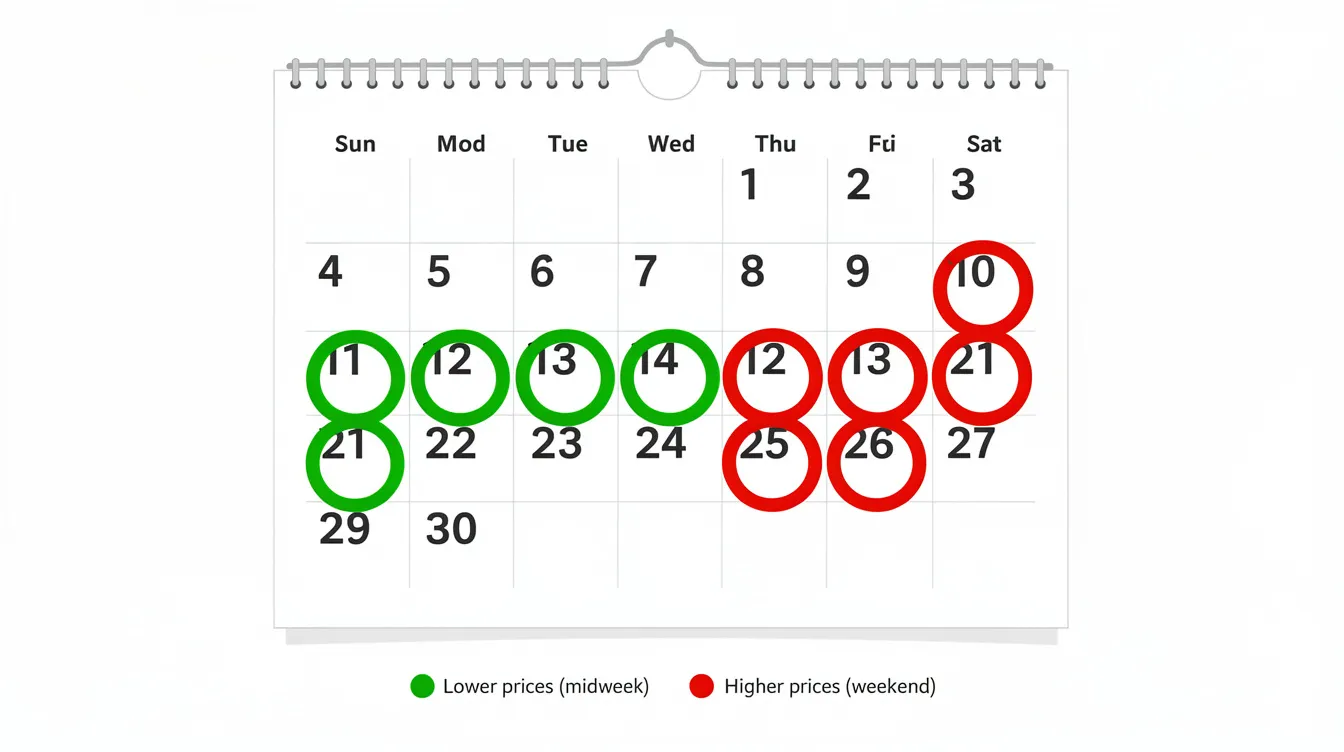
Tools and flexibility help convert cheapest-days theory into real cheap flight deals. Many of the same ideas also apply to booking the cheapest private jet flights. Here's how to find cheap flights consistently:
Use flexible date search tools. Google Flights calendar view and whole-month search options show day-by-day price differences. Using flexible date grids can help spot price drops you'd otherwise miss. Flight comparison apps and online travel agencies can also help compare fares across multiple sources.
Shift dates by 1–3 days. Moving a Saturday departure to Wednesday can trim a meaningful percentage off airfare. Many travelers can save money simply by adjusting travel plans slightly.
Consider alternative airports. Comparing nearby airports can lead to cheaper tickets due to lower landing fees. Try Fort Lauderdale instead of Miami, or a nearby airport like Oakland instead of San Francisco. Low-cost carriers can also offer lower base fares on some routes, but compare the total trip cost after fees.
Set price alerts. Fare alerts that track specific popular routes—like Los Angeles to Las Vegas or Toronto to Vancouver—let travelers buy flights when prices drop. Travelers should check email trackers to monitor price dips for their preferred routes.
Fly at unpopular times. Red-eye flights, early-morning departures, and one-stop itineraries with a short layover often unlock the lowest prices on midweek days. For private aviation, flight-sharing platforms that crowdsource charter flights and sell empty seats can similarly bring down per-seat costs. Using award miles can reduce costs for same-day flights as well.
Last-minute bookings, big events, and irregular demand can override typical cheapest-days patterns.
Flight prices typically spike 2–3 weeks before departure, especially on popular Friday and Sunday departures. Last-minute flights are usually more expensive. True last-minute deals are rare on popular routes and usually depend on occasional fare sales or special promotions. However, some airlines offer last-minute promotions for same-day flights, and booking same-day flights online is possible 2–3 hours before departure on most airlines. Flexibility with travel plans can lead to cheaper same-day flights in these rare cases.
Major sports events, conferences, and festivals—like CES in Las Vegas, Formula 1 weekends, or the Mexico City Grand Prix—can make even a Tuesday or Wednesday pricey on affected routes. During peak travel times around these events, many airlines raise fares across the entire month, prompting some travelers to look at the most affordable private aircraft categories as an alternative way to manage both schedule and cost.
If a traveler must fly last minute for business or personal reasons, checking multiple days around the target departure time can still uncover a relatively better option. For same-day private jet charter travelers, Jettly may surface attractive last-minute options through empty leg flights that don't follow commercial patterns but can carry significant savings, and understanding how much it costs to rent a private jet helps set realistic expectations for those fares.

Commercial airline seat pricing works on a per-seat, fare-bucket model. Private jet charters are priced per mission, covering the entire aircraft, crew, fuel, and airport fees. This means many airlines' day-of-week pricing dynamics don't apply the same way to private aviation.
For private jets on Jettly, the cheapest days to fly are usually those with lower aircraft demand and less repositioning—often off-peak weekdays or shoulder season travel dates. Empty legs are repositioning flights that would otherwise fly empty. Empty leg flights can save 30–75% on charter prices, and they're often the best deals in private aviation. Travelers can even book single seats on private jets through empty-leg and shared options with select providers.
Platforms like Jettly aggregate empty-leg flights across thousands of aircraft. Example routes where attractive empty legs appear include Los Angeles–Las Vegas midweek or Toronto–New York on a Tuesday. Travelers who want occasional access without full ownership can use these tools alongside broader strategies for getting a seat on a private jet easily. Check the Empty Leg Index for current availability, or explore empty leg flights in Las Vegas for popular leisure routes.
Unlike commercial flights, there is no predictable "Tuesday is always cheapest" rule for private charters. Clients use Jettly's instant pricing tools to compare days and times and find when repositioning or off-peak slots reduce the total cost. Understanding how one private jet flight is priced makes it easier to see how shifting to quieter weekdays can lower that total. While private jets cost more than economy plane tickets, they can be cheaper in time and convenience—particularly for same-day round-trip business travel or multi-city itineraries where commercial affordable flights would require multiple connections, especially when you can choose from a wide range of private charter aircraft types and sizes.
These questions address specific scenarios focused on how the day of the week interacts with real-world booking decisions.
Mondays often price between true off-peak days (Tuesday–Wednesday) and peak leisure days (Friday–Sunday). On heavy commuter routes, Monday can be nearly as expensive as Friday. Compare Monday vs. Tuesday and Wednesday on your exact route using flexible date tools, since some domestic markets treat Monday almost like a weekend in terms of demand.
Compare total trip cost—airfare plus lodging and any lost work time—for a Wednesday–Wednesday trip vs. a Friday–Sunday trip. On many routes, the significant savings from midweek fares outweigh one extra hotel night. If the lowest fares on your route show 14% or more difference between midweek and weekend, the math usually favors the schedule change.
Day-of-week patterns still exist for business and first class, but corporate travel contracts and seat inventory make premium cabin pricing less predictable. Travelers seeking best fares in premium cabins should still check midweek departures first and use fare alerts, but percentage savings may differ from economy.
Connecting flights are often cheaper than nonstops, and this gap can widen on peak travel days like Fridays and Sundays when nonstop demand is highest. Tuesday–Thursday connections on long-haul flights can reduce total flight prices further. Use flexible date tools to compare nonstop vs. one-stop fares across the weeks leading up to your trip.
Jettly's platform offers transparent, instant pricing across 20,000+ aircraft with both membership and on-demand options, including structured jet card programs with fixed hourly rates. Travelers can compare costs across dates without hidden surcharges tied to specific weekdays. Frequent private flyers can identify when shifting a business trip from a peak Thursday afternoon slot to a Wednesday evening slot lowers charter cost through better aircraft availability or empty leg matches.
Tuesday, Wednesday, and some Saturdays are often the days cheapest to fly, but savvy travelers combine this knowledge with seasonal awareness, proper booking windows, and flexible date searches. There is no single universal best day to buy flights—but booking domestic trips 1–3 months ahead and international journeys 2–8 months ahead usually secures the best prices, especially when aligned with off-peak days.
For private jet travel, cheapest days depend on aircraft demand and routing rather than airline-style fare buckets. Tools like Jettly's instant pricing, empty leg listings, and clear breakdowns of jet card costs and pricing structures help travelers find great deals on less busy days.
Ready to explore private travel on your terms? Whether you're comparing NetJets alternatives like Jettly for flexible private flying, arranging in-flight catering for your private jet, or planning a regional trip such as a private jet charter in Kolkata, West Bengal, you can also participate in Jettly's high-ticket affiliate program while you book.
Compare charter options, check empty leg availability, or request a quote for your next trip at https://www.jettly.com.
Share this post:
Jay Franco Serevilla
Oct 7, 2026
|
5
min read
Discover tips and trends in the industry.

5
min read
Priceline Plane Ticket: How It Works, What It Costs, and When Private Charter Makes More Sense
Priceline plane tickets offer affordable commercial flight options through an online travel agency, making them popular among budget-conscious travelers. However, they come with trade-offs such as rigid change policies and nonrefundable fares. For those prioritizing time and flexibility, private jet charters via Jettly present a compelling alternative, providing tailored travel experiences.
Read More
5
min read
Cheap Time to Fly to Europe: How to Find Cheap Flights, Routes, and Travel Windows
Finding the cheapest time to fly to Europe involves understanding seasonal patterns and booking strategies. January through early March offers the best deals, with midweek flights being more affordable. Utilizing flexible dates and comparing commercial flights with private jet options can significantly reduce travel costs.
Read MoreStay updated with our latest insights and tips to elevate your journey with us.
MEMBERSHIPS AND ASSOCIATIONS



Disclaimer: Jettly operates as a charter broker, offering access to a global digital jet charter marketplace. Jettly is not a direct air carrier and does not own or operate aircraft. All advertised flights are conducted by third-party air carriers that are fully licensed and hold the appropriate Part 135 or Part 121 certifications issued by the Federal Aviation Administration (FAA) or equivalent regulatory authorities under U.S. or foreign law. Jettly complies fully with the U.S. Department of Transportation's Part 295 and Part 298 Charter Broker regulations. Jettly does not carry additional liability insurance. Passengers are covered by aircraft operator insurance. TICO: 50023770


