


Login
Get Instant Pricing On 23,000+ Aircraft

>

The Douglas DC-9 is a rear-engined commercial jet that Douglas developed in the 1960s for short-haul routes, and it became a benchmark for fast turnarounds, operational flexibility, and point-to-point regional flying. From its first flight in 1965 to its role moving rock bands between sold-out shows, this workhorse shaped how the world thinks about regional air travel.
For frequent flyers who now want that same mission profile in a private setting—corporate executives, high-net-worth travelers, tour managers, and production crews—this guide explains what made the DC-9 effective, how its cabin and operating model influenced modern aviation, and where its legacy shows up in today’s charter market. You’ll see the aircraft’s history, design, onboard experience, and cultural footprint, then compare them with modern charter jets, digital booking tools, safety standards, and environmental considerations.
Today, the DC-9’s legacy lives on not in airline terminals, but in the charter aircraft and digital booking platforms that carry its mission forward. Jettly connects travelers with modern aircraft that deliver what the DC-9 once promised: fast, flexible, point-to-point flying without the hassle, plus instant access to a large aircraft network that makes booking private travel quicker and more practical.
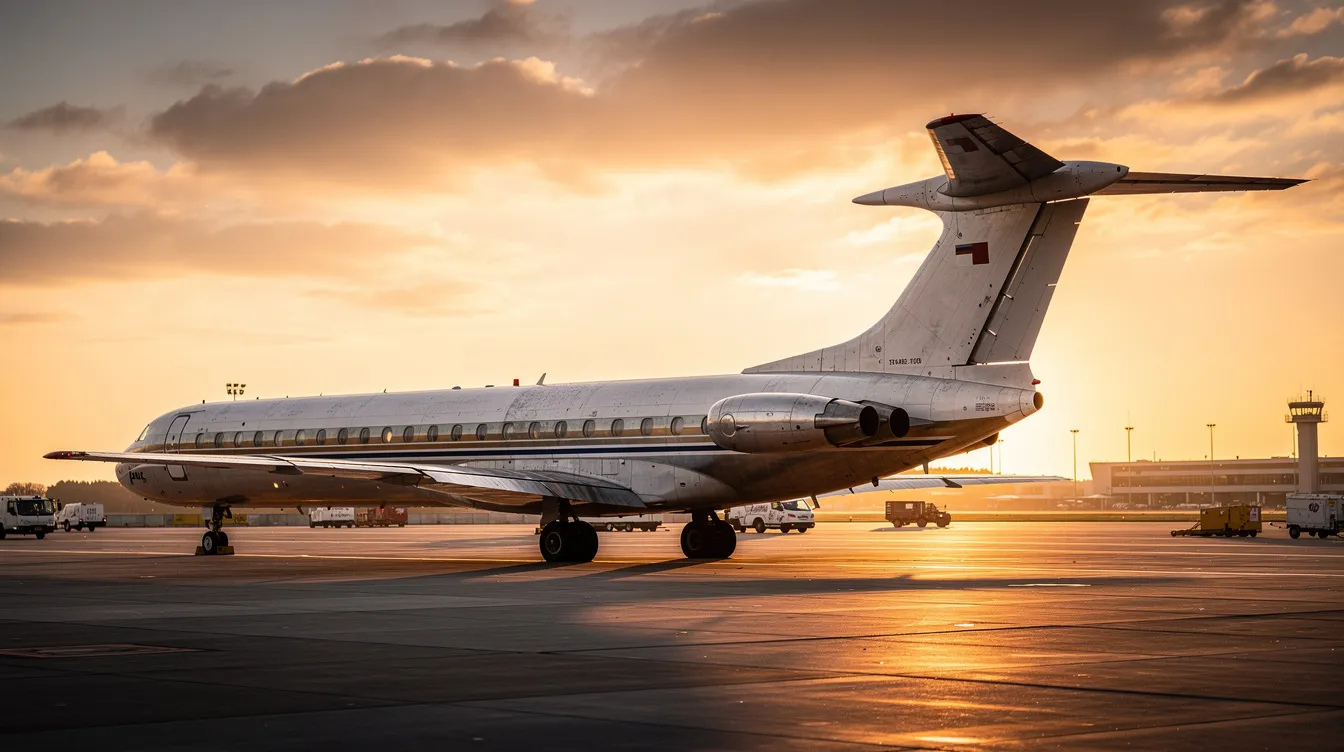
The DC-9 was developed by the Douglas Aircraft Company in the early 1960s to fill a gap that larger jets like the DC-8 couldn't reach. Airlines needed a smaller, efficient aircraft purpose-built for high-frequency, short-distance routes under 500 miles — connecting mid-sized cities that didn't generate enough traffic for widebody service. Douglas answered with an aircraft that would reshape regional aviation from the beginning of its program approval on April 8, 1963, through decades of continuous service.
The DC-9 made its first flight on February 25, 1965, and the DC-9 entered commercial service in December 1965 with Delta Air Lines. Production of the DC-9 ran from 1965 to 1982 with nearly 1,000 units built - 976 airframes in total — spanning five major variants from the compact Series 10 to the stretched Series 50.
The power of the DC-9's design lay in a few deliberate engineering choices. The DC-9 had two rear-mounted Pratt & Whitney JT8D turbofan engines, which kept the wing clean for better low-speed lift and reduced the risk of debris ingestion on rougher regional runways. The aircraft featured a T-tail configuration optimized for pitch control, working in concert with those rear engines to deliver strong takeoff and landing performance.
The aircraft's design included the capability to operate from short runways - some Series 10 variants could work from strips as short as 5,000 feet. This meant the aircraft facilitated jet service to smaller and intermediate-sized cities that previously relied on propeller-driven aircraft or had no scheduled jet service at all.
The DC-9 was a significant competitor to Boeing's 737 in the short-haul market. While Boeing focused on underwing engine configurations, Douglas bet on the rear-engine layout and won a loyal customer base among airlines that valued operational flexibility. The DC-9 contributed to the foundation of the modern hub-and-spoke model in aviation, enabling carriers to feed passengers from smaller spoke cities into larger hub airports efficiently.
The DC-9 was also one of the earliest commercial jets to feature a two-person cockpit, eliminating the need for a flight engineer and reducing crew costs - a detail that mattered enormously for airlines running dozens of daily short-haul rotations. DC-9 variants included modifications for military and cargo purposes, extending the airframe's usefulness well beyond scheduled passenger service.
The DC-9 didn't just move business travelers. Throughout the 1970s and 1980s, charter operators frequently deployed DC-9 family aircraft for music tour logistics, helping bands and their crews cover multi-city itineraries across North America and Europe. The aircraft's ability to access regional airports closer to concert venues—combined with the energy of quick turnarounds — made it a practical choice for promoters juggling tight schedules and heavy gear loads.
Jettly does not typically charter legacy DC-9s today. Most are retired from commercial service, with roughly 30 airframes still active worldwide — almost exclusively in cargo roles. However, Jettly offers charter access to aircraft descended from the DC-9 family, including MD-80 series jets and the Boeing 717, as well as smaller business jets inspired by similar mission profiles. The DC-9's design lineage continued with the MD-80, MD-90, and Boeing 717, carrying its operational DNA into the modern era.
First flight: February 25, 1965
Service entry: December 8, 1965 (Delta Air Lines)
Units built: 976 (1965–1982)
Passenger capacity: 80–139 seats depending on variant and configuration
Typical range: 1,100–1,700 miles
Cruise speed: Mach 0.80–0.84 (approximately 560–645 mph)
Engines: Two Pratt & Whitney JT8D turbofans (rear-mounted)
Flying on a DC-9 during its peak years was a distinct experience. Passengers at many airports boarded through built-in airstairs — sometimes at the rear of the fuselage — stepping directly from the tarmac into the cabin without a jetbridge. Built-in airstairs allowed the DC-9 to operate independently at smaller airports, which meant less ground infrastructure and faster gate turns. The sound of those rear-mounted JT8Ds spooling up behind the cabin was unmistakable: a low rumble that grew into a roar on takeoff, louder in the back rows and quieter toward the front.
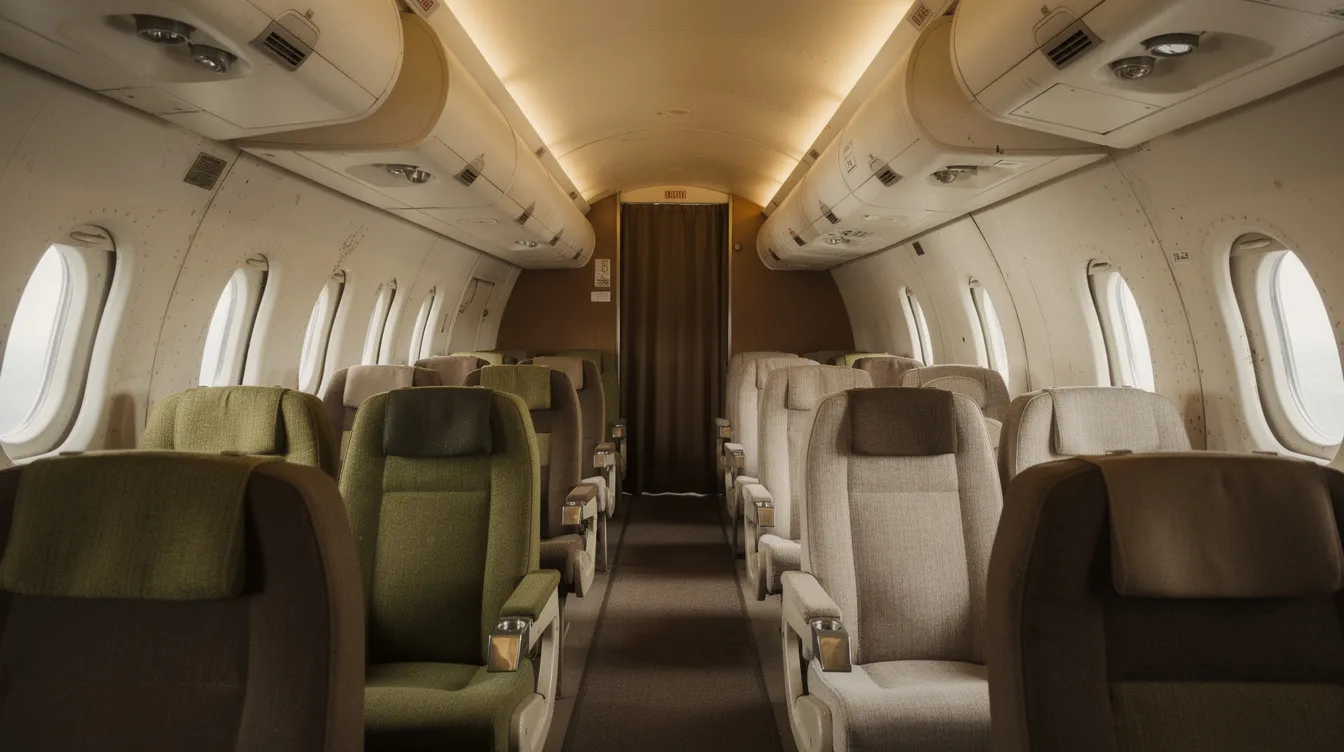
The rear fuselage-mounted engines and low-set swept wings gave the DC-9 its signature profile. The clean wing — free of underwing engine pods — allowed Douglas engineers to optimize high-lift devices like leading-edge slats (on later variants) for better low-speed performance. Small vortilons mounted under the wings helped prevent flow separation, a critical safeguard given the deep-stall risks associated with T-tail, rear-engine configurations.
For passengers, these choices translated into practical benefits. The aircraft became known for its operational efficiency and quick turnaround times. Flights could depart and arrive at regional strips that larger jets couldn't reach, cutting overland travel time for passengers whose final destinations were smaller cities or suburban venues.
Scheduled airlines typically configured DC-9 cabins in a 2-3 economy layout — five seats across a narrow fuselage. Depending on the variant:
DC-9-10: Around 80–90 seats in standard economy
DC-9-30: Approximately 105–115 seats, the most popular variant
DC-9-40/50: Up to 125–139 seats in high-density layouts
In charter, VIP, and tour configurations, operators would strip out rows to create more legroom, expand galley space, or add storage for equipment. Sports teams and production crews often flew in modified cabins with 50–70 seats and dedicated cargo zones for gear.
The DC-9 family became a workhorse for tour logistics during the height of arena rock and stadium pop. Here's how artists and their teams put it to work:
Multi-city tours: Charter operators would set up DC-9 rotations covering cities like Detroit, Cleveland, Pittsburgh, and Washington in rapid succession — sometimes two shows in two cities in a single day.
Band and crew transport: A single DC-9-30 charter could carry 60–80 people in a modified layout: the band, vocals and instrument techs, stage crew, tour management, and support staff, all on one aircraft.
Instrument safety: Controlled cabin environments meant delicate gear — from vintage guitars to keyboards — traveled in known temperature and humidity conditions rather than in unmonitored commercial cargo holds.
Tight schedules: Quick turnarounds were essential. A band finishing a set at 11 PM needed to be wheels-up by midnight and sound-checking at the next venue by noon. The DC-9's ability to use smaller, less congested airports made these timelines work.
The love for this kind of flexibility among touring artists helped breathe life into the charter market that exists today.
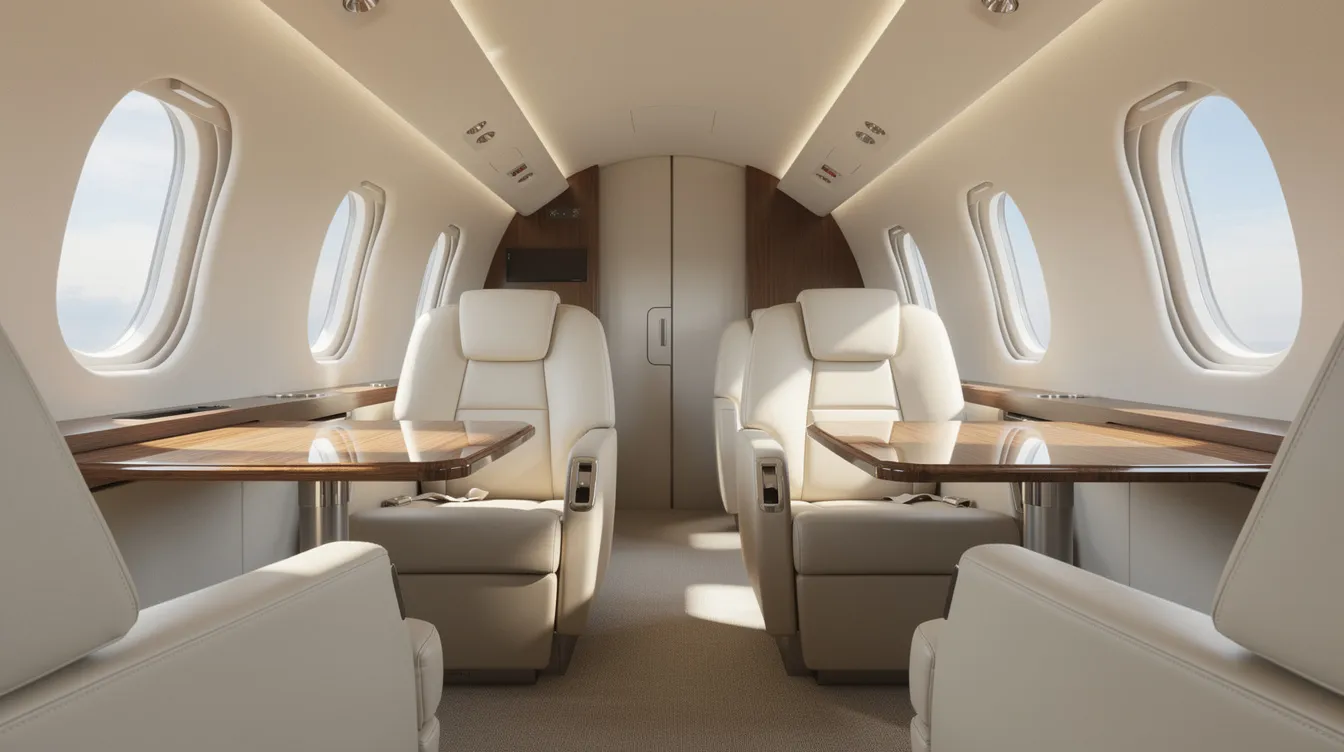
Today's private jet standards — accessible through platforms like Jettly — represent a generational leap from what the DC-9 offered. Modern business jets feature bespoke seating layouts with club seats, divans, and conference tables. Cabins are quieter, thanks to advanced sound insulation and newer engine technology. In-flight catering can be customized for artist riders, corporate teams, or families, with Jettly coordinating directly with operators.
Seating: DC-9 offered fixed 5-abreast economy; modern jets provide configurable layouts for 6–19+ passengers
Noise: DC-9 cabins were loud near the rear engines; modern jets are significantly quieter throughout
Amenities: DC-9 had a basic galley and lavatory; modern jets offer flat-beds, Wi-Fi, full galleys, and entertainment systems
Baggage: DC-9 had large total cargo volume but less user-friendly access; modern jets are designed for accessible, bulky-gear storage
Airport access: Both DC-9 and modern charter jets can use regional airports and FBOs
Jettly integrates ground transportation, airport selection, and in-flight services to replicate the logistical advantages the DC-9 once provided for touring acts and corporate shuttles—but in a more comfortable and flexible package. For multi-city private jet charter itineraries, the platform handles routing, timing, and aircraft matching so clients can focus on their work rather than logistics.
The DC-9 didn't disappear — it evolved. Douglas stretched and refined the airframe into the MD-80 "Super 80" series in the early 1980s, then into the MD-90, and finally the MD-95, which Boeing rebranded as the 717 after acquiring McDonnell Douglas in 1997. Each generation carried forward the DC-9's core mission: efficient, reliable service on short- to medium-haul routes with strong runway performance.
Today, most DC-9s are no longer in regular passenger service. Approximately 30 remain active worldwide, almost all in cargo operations. Only one passenger DC-9 is still flying scheduled service — with African Express Airways in Kenya. But the mission profile the DC-9 pioneered hasn't gone away. Charter clients still need to move groups of 10, 30, or 50+ people between business hubs or tour stops on tight timelines. Modern aircraft — available through Jettly — now fill that role.
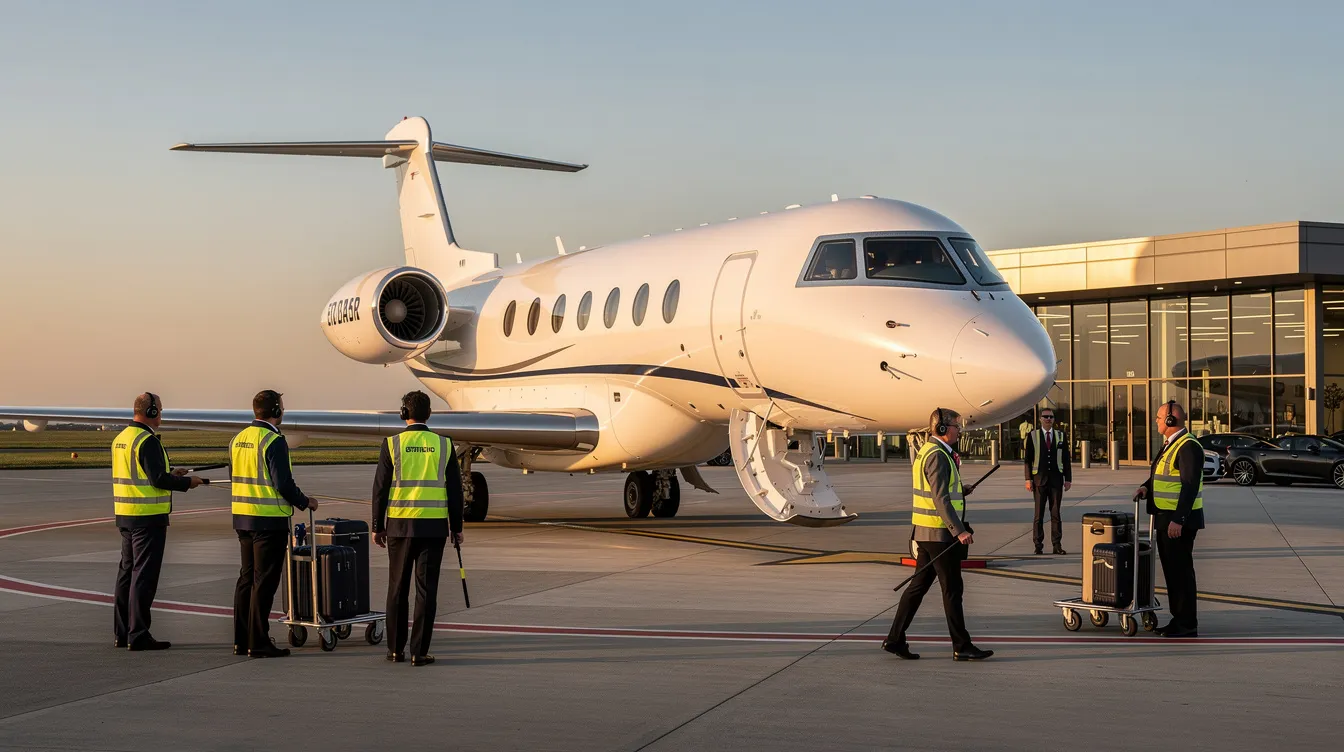
Jettly's platform provides access to over 20,000 unique aircraft globally, spanning every category a charter client might need. Here are the categories most relevant to missions the DC-9 once handled — along with use cases for each. For a deeper look at choosing the right private jet, Jettly's aircraft guides break down specs by category.
Light and midsize jets seat 6–10 passengers and cover ranges of roughly 1,500–2,500 nautical miles. Aircraft like the Citation XLS+ or Learjet 60 are ideal for executives or small bands traveling between cities like New York–Chicago or Los Angeles–Las Vegas. These jets are fast, efficient, and can operate from the same regional airports the DC-9 once served.
Super-midsize and large-cabin jets — think Challenger 604, Gulfstream G450 — carry 10–16 passengers with more room for baggage, flat-bed seating, and coast-to-coast range. They're a strong fit for regional tours, sports teams, or music groups channeling the DC-9 spirit on routes like London–Berlin or Toronto–Vancouver. High-net-worth individuals prefer private jets for luxury travel, and these cabins, especially when paired with dedicated in-flight catering for private jets, deliver that standard without compromise.
Regional airliner-style charters come closest to replicating the DC-9 experience at scale. Aircraft like the Embraer 135/145 or CRJ-200 in VIP or high-density layouts can carry 30–50+ passengers — enough for a full touring production, corporate roadshow, or event logistics team. These modern airframes offer better fuel efficiency, lower noise, and cleaner cabins than any legacy DC-9 could provide.
In the DC-9 era, booking a group charter meant phone calls, faxes, opaque pricing, and weeks of back-and-forth with brokers. Today, users can book private jets instantly through digital platforms like Jettly. The difference is substantial:
Instant pricing: Jettly provides transparent cost breakdowns for various aircraft sizes, so clients can compare options before committing. Check the private jet cost calculator to see estimates for specific routes.
Aircraft comparison: Clients can evaluate multiple aircraft for the same route, factoring in total passenger count, baggage requirements (including bulky stage equipment and instruments), and range — all in a single session.
No long-term commitments: On-demand access offers flexibility without long-term commitments. On-demand access eliminates the need for jet cards or ownership, making it practical for a single tour leg or a one-off corporate shuttle.
Instant digital booking enhances travel convenience for users who need answers in minutes, not days. Private charter aircraft access provides flexibility without ownership burdens — a point that matters for tour managers juggling budgets across dozens of cities and songs on a setlist.
The decision comes down to group size, mission complexity, and budget. Here are the scenarios where regional airliner-style charter makes more sense than a traditional business jet:
Large music tours or production crews moving together — 30+ people plus gear — where splitting across multiple smaller jets would be more expensive and harder to coordinate.
Corporate shuttles between company sites, such as a Washington headquarters and a manufacturing facility, where 40–50 employees need to travel on the same schedule.
High-profile events requiring group travel with controlled security, coordinated arrivals, and timing that can't miss a beat.
For smaller groups — an executive team of six, a band without full production — a midsize or super-midsize jet is the better fit on every measure: cost per hour, cabin comfort, and scheduling flexibility. Understanding this distinction is the whole point of working with a platform that matches aircraft to mission rather than forcing clients into a single option.
Private jet operators must comply with FAA regulations covering every aspect of flight operations. Aircraft must undergo regular maintenance checks as per regulations — including airframe inspections, engine overhauls, and avionics updates on strict schedules. Pilots must have specific certifications to operate private jets, with type ratings specific to each aircraft model they fly. These standards apply equally whether a client books a light jet for a day trip or a regional airliner for a multi-city business charter.
It's hard to miss how far aviation has come on fuel efficiency and noise. Modern jets burn significantly less fuel per seat-mile than the DC-9's older JT8D engines, and they produce far less noise — an increasingly important factor as airports tighten noise restrictions. Newer airframes like the Embraer E2 series and Airbus A220 are replacing older types across both scheduled and charter operations.
For environmentally conscious clients, Jettly and its partner operators can help arrange carbon offset options and efficient routing that minimizes fuel burn and repositioning flights.
Booking speed: Weeks of phone negotiations vs. instant digital quotes
Cabin comfort: Fixed economy seating vs. bespoke VIP configurations
Airport access: Both eras offer regional airport flexibility, but modern FBOs provide better ground services
Flexibility: Fixed charter contracts vs. on-demand access with no ownership burdens
Fleet access: One aircraft type vs. private jets offering access to over 20,000 unique aircraft across every category
The era of DC-9 service set a benchmark for reliable regional travel that still shapes how charter clients think about short-haul flying. What the DC-9 proved — that smaller jets could profitably and efficiently connect cities that mainline carriers overlooked — is exactly the principle that drives today's private charter market.
Jettly connects travelers to thousands of aircraft worldwide, making it simple to replicate and improve upon the convenience that DC-9 routes once offered. Whether the mission is a 12-city concert tour, a corporate shuttle between offices, or a family trip to a regional destination, the platform matches the right aircraft to the job — with transparent pricing, modern cabins, and the kind of flexibility that Douglas engineers could only have imagined.
Ready to experience private travel on your terms? Explore flight options, plan music tours or business shuttles, and request instant quotes through Jettly at https://www.jettly.com. Browse available aircraft anytime at Jettly's aircraft search.
Share this post:
Jeff Ryan Serevilla
Sep 25, 2026
|
5
min read
Discover tips and trends in the industry.
5
min read
Cirrus Vision Jet Cruise Speed Knots: Performance, Safety, and Charter Use
The Cirrus Vision Jet boasts a maximum cruise speed of 311 knots, making it a competitive choice for regional travel. This guide explores its performance, safety features, and how charter users can leverage its capabilities through platforms like Jettly. Understanding cruise speed is essential for effective trip planning and maximizing the jet experience.
Read More
5
min read
Pilot Training Price in 2026: What It Really Costs to Become a Pilot
In 2026, pilot training costs in the U.S. range from $4,500 for a basic sport pilot certificate to over $130,000 for comprehensive career-track programs. Understanding these costs is crucial for aspiring pilots and career changers to budget effectively and avoid unexpected expenses. This guide breaks down the various training milestones and associated costs, helping you plan your aviation journey with confidence.
Read MoreStay updated with our latest insights and tips to elevate your journey with us.
MEMBERSHIPS AND ASSOCIATIONS



Disclaimer: Jettly operates as a charter broker, offering access to a global digital jet charter marketplace. Jettly is not a direct air carrier and does not own or operate aircraft. All advertised flights are conducted by third-party air carriers that are fully licensed and hold the appropriate Part 135 or Part 121 certifications issued by the Federal Aviation Administration (FAA) or equivalent regulatory authorities under U.S. or foreign law. Jettly complies fully with the U.S. Department of Transportation's Part 295 and Part 298 Charter Broker regulations. Jettly does not carry additional liability insurance. Passengers are covered by aircraft operator insurance. TICO: 50023770


