


Login
Get Instant Pricing On 23,000+ Aircraft

>
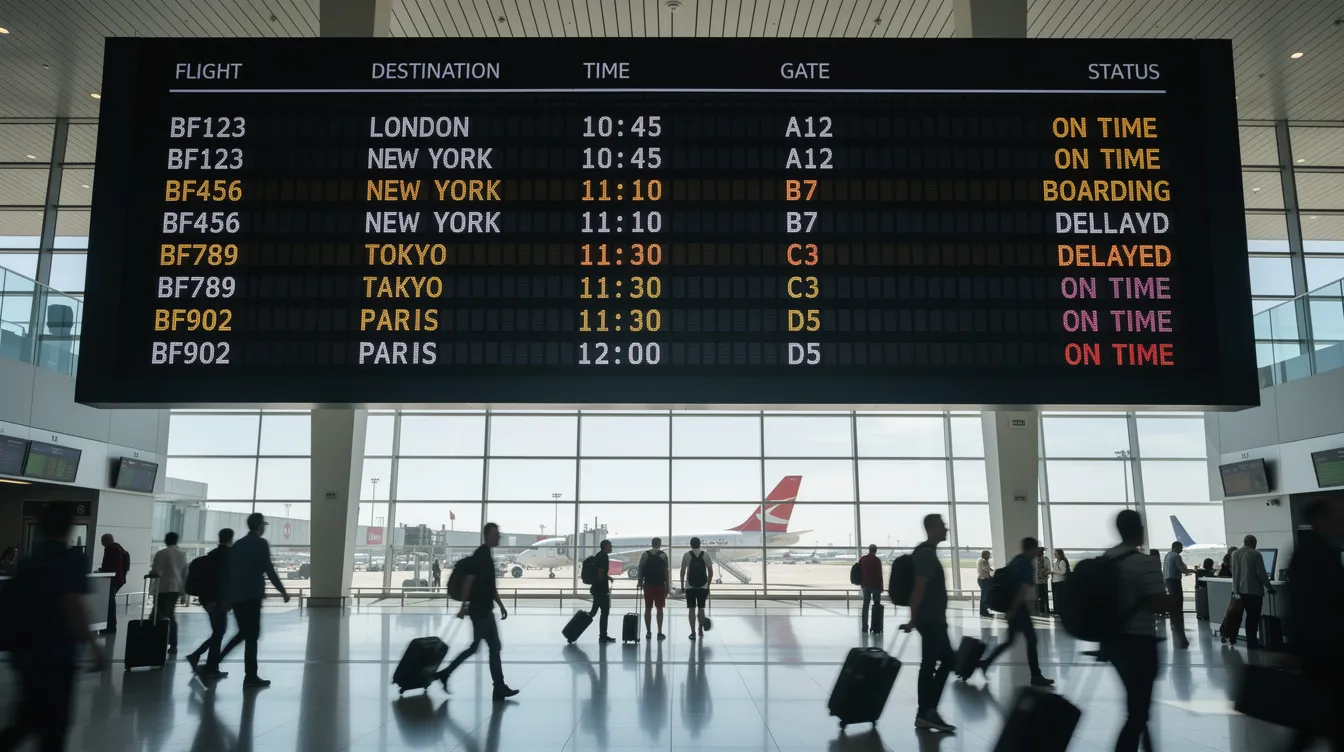
Every Delta flight number starts with two letters that drive everything from booking to boarding. Understanding the Delta carrier code and the broader system of airline codes helps travelers navigate schedules, tickets, and connections with confidence, whether flying commercial with Delta Air Lines or coordinating a private charter alongside a DL-coded segment.
Delta Air Lines has three primary codes used in aviation: its IATA airline code is DL, its ICAO code is DAL, and its callsign is "Delta." The DL prefix appears at the beginning of every Delta flight number, such as DL123 or DL267. It shows up on boarding passes, e-tickets, booking systems, and airport departure boards. The DL carrier code identifies Delta Air Lines across global booking systems, making it essential for both commercial tickets and private jet connections arranged through platforms like Jettly.
The following table summarizes Delta's core identifiers:
DL - IATA code, used for reservations, ticketing, and flight numbers visible to passengers.
DAL - ICAO code, used in flight plans, radar systems, and air traffic control.
"Delta" - callsign spoken in radio communications between pilots and controllers.
An airline code is a standardized aviation identifier assigned to carriers for use in schedules, ticketing, flight plans, and air traffic control. These codes ensure that diverse systems around the world can recognize airlines without ambiguity.
There are three main types:
IATA code - a two-character code assigned by the International Air Transport Association. IATA codes are used for booking and ticketing. Example: DL for Delta, AA for American Airlines, UA for United Airlines.
ICAO code - a three-letter code assigned by the International Civil Aviation Organization for operational purposes like flight planning and radar tracking. Example: DAL for Delta, AAL for American, UAL for United.
Callsign - the spoken name used in radio communications. Delta's callsign is "Delta." American Airlines uses "American," and United uses "United." For a look at how other carriers handle this, see how Southwest uses the WN code.
How airline codes and airport codes work together in reservation systems:
A flight number combines the airline code with a numeric identifier. DL85 from ATL to CDG means Delta flight 85 from Atlanta to Paris Charles de Gaulle.
Ticketing systems, global distribution systems, and online travel agencies all pair the carrier code with origin and destination airport codes to define routes and fares.
These standards have been maintained by IATA and ICAO since the mid-20th century and apply equally to commercial and private aviation coordination.
Delta Air Lines is one of the world's largest carriers, serving over 300 destinations worldwide across six continents. It relies on three main identifiers to operate across every system in global aviation.
DL (IATA code) - Delta's IATA code is DL. It appears on tickets, boarding passes, and electronic ticket records. The DL code is used in commercial transactions such as reservations and flight tickets. Delta's flight numbers start with the IATA code DL, for example DL149 or DL267.
DAL (ICAO code) - Delta's ICAO code is DAL. The DAL code is used for flight planning and air traffic control communications. Air traffic controllers use the DAL code paired with the flight number for communications, such as "DAL one-four-nine, descend and maintain flight level two-four-zero."
"Delta" (callsign) - Delta's callsign is "Delta." Pilots say it over the radio: "Delta one-four-nine, climb and maintain flight level three-five-zero."
These identifiers are distinct from airport codes like ATL, JFK, or CDG and from loyalty brands like Delta Sky Club or SkyMiles. They also remained consistent through major corporate milestones, including the Northwest Airlines merger completed in July 2010.
A "carrier code" is the IATA airline code shown at the start of a flight number. When you see DL212, DL is the carrier code identifying Delta. When you see AA100, AA identifies American Airlines.
How DL appears in practice:
On commercial booking sites like Delta.com, online travel agencies, and GDSs (Amadeus, Sabre), DL-prefixed flight numbers label Delta flights in search results.
The DL code is used on passenger boarding passes and electronic ticket records. It tells you which airline is marketing or operating the flight.
On flight tracking tools and airport FIDS screens, DL plus the flight number (e.g., DL89) identifies the service. The DL code helps identify which airline is operating a specific flight.
Delta codeshare flights may use the DL prefix while being operated by partner airlines. A flight marketed as DL4320 might actually be flown by SkyWest Airlines under the Delta Connection brand. The ticket still shows DL as the carrier code, which matters for mileage accrual and lounge eligibility.
When Jettly clients connect from a private jet to a Delta flight, they look for the DL-prefixed commercial segment in their combined travel plan to coordinate timing and ground logistics.
Delta serves more than 300 destinations on six continents with up to 5,500 daily flights, including mainline and Delta Connection services. Its strong hub-and-spoke model anchors the majority of its domestic and international routes across the United States, Europe, Latin America, South America, the Caribbean, Africa, and Asia-Pacific.
Delta operates 8 hub airports in the United States:
ATL (Atlanta Hartsfield–Jackson) - Delta's largest and primary hub, and the world's busiest airport by passenger traffic. For more on Delta's Atlanta operations, see Where Is Delta Based?
DTW (Detroit Metropolitan) - Delta's hubs include Detroit and Minneapolis–St. Paul (MSP), both serving as key connecting points for Midwest and Canada routes.
MSP (Minneapolis–St. Paul) - a major domestic and northern international gateway.
SLC (Salt Lake City) - Delta's hubs also include Salt Lake City, serving western states and connections to Alaska destinations.
SEA (Seattle–Tacoma) - a growing Pacific hub with strong reach to Tokyo, China, and other Asia-Pacific destinations.
BOS (Boston Logan) - focus on transatlantic flights to London, Germany, and broader Europe.
JFK (John F. Kennedy International Airport) - Delta's primary gateway for international routes to Europe, the Caribbean, Latin America, and Mexico.
LAX (Los Angeles International) - covers transpacific and Latin America services, and West Coast travelers frequently route through other large markets such as Houston via private jet charter services.
Delta's hub airports handle most of its connecting flights. The airline also maintains significant operations at LGA (LaGuardia) in New York for domestic routes.
Focus cities where Delta has expanded include AUS (Austin) and RDU (Raleigh–Durham), reflecting investment in fast-growing markets. For a deeper look at Delta's route network, see Delta Routes: How to Use Delta's Network Strategically.
Travelers often confuse airline codes with airport codes. Understanding the difference prevents booking mistakes and missed connections, especially when flying through multi-airport cities like New York or San Francisco.
Key distinctions:
DL identifies Delta Air Lines Inc. as a carrier. It never refers to a location.
ATL is the IATA airport code for Hartsfield–Jackson Atlanta International Airport; Delta primarily uses it as its main hub.
JFK (John F. Kennedy International Airport) and LGA (LaGuardia) are two separate airports in New York. JFK handles the majority of Delta's international flights, while LaGuardia covers many domestic Delta routes.
Real-world city-pair examples:
DL89 ATL–CDG - Atlanta to Paris Charles de Gaulle.
DL106 JFK–GRU - New York JFK to São Paulo Guarulhos in South America.
DL555 LAX–SEA - Los Angeles to Seattle, routes that can also be paired with nearby airports found using an airport locator tool for private jet charters.
Mixing up airport codes like EWR, JFK, and LGA in the same city can lead to missed flights. This risk increases when connecting from time-sensitive private jet arrivals, where even a wrong terminal or airport can end a carefully timed transfer.
Delta Air Lines uses a combined approach of mainline aircraft and regional partners under the Delta Connection brand, plus global codeshare agreements through the SkyTeam alliance. Understanding how the DL code appears on your ticket helps you know what to expect at the gate.
Delta Connection details:
Regional flights are operated by partners like Endeavor Air, Republic Airways, and SkyWest Airlines.
Tickets usually show the Delta carrier code DL followed by a four-digit flight number (e.g., DL4325) even when a regional partner operates the aircraft.
Codeshare examples:
A Paris–Rome flight marketed as DL8675 but operated by Air France (AF) under SkyTeam. Passengers may earn SkyMiles and access partner lounges depending on fare and route.
A flight to Lima marketed as DL6330 but operated by LATAM Airlines. The ticket shows DL, but cabin product and baggage rules follow the operating carrier, and some travelers may connect to or from a wide selection of private charter aircraft.
Why marketing vs. operating carrier codes matter:
Seat selection, baggage rules, and schedule changes are typically controlled by the operating carrier, not the marketing carrier. Check flight status carefully to understand who actually flies the plane.
When coordinating private jets with commercial legs through platforms like Jettly, misreading carrier or operating codes can affect timing, terminal selection, and ground arrangements. For more on how Delta Air Lines partnerships work, see Jettly's overview.
Here is practical guidance on how to use DL and related codes when searching, booking, or tracking Delta flights.
When searching on airline or OTA websites, enter airport IATA codes (ATL, JFK, LAX) and look for DL-prefixed flights to identify Delta-operated or Delta-marketed services.
On flight-tracking apps, consumer tools display DL plus the flight number (e.g., DL72). Professional aviation tools often show the ICAO code DAL plus the flight number. The DAL code supports air traffic control and operational communication in aviation, so it appears in more technical contexts.
Delta's mobile app and website let you search by three-letter IATA airport code, which is faster and more accurate than typing full city names, especially in areas served by multiple airports like New York, London, or Washington, mirroring how modern platforms catalog a comprehensive list of private and charter airlines.
For corporate or high-frequency travelers who fly private and commercial in the same week: when arranging a Jettly private jet to connect with a Delta flight, clients typically share the DL flight number and exact airport code (e.g., DL72, ATL) so ground handling and transfer timing can be aligned, often after comparing the best private jet charter companies and providers. Learn more about how to charter a private jet.
Delta's loyalty ecosystem, from SkyMiles to Delta Sky Club lounges, connects directly to the DL carrier code that appears on qualifying flights and boarding passes.
SkyMiles is Delta's frequent flyer program, and miles do not expire. Status qualification and mileage credit usually depend on traveling on DL-coded or partner-coded flights. Misreading codeshares can affect how many miles you earn and what upgrades become available.
Delta Sky Club access is tied to cabin class, membership level, and credit cards. Gate agents verify eligibility by checking the boarding pass, which typically shows a DL-coded flight for Delta mainline or Delta Connection services. Club locations at JFK, LAX, BOS, and other hubs have expanded in recent years, much like how private jet membership programs simplify frequent charter travel.
On routes where Delta One, Premium Select, or Delta Comfort+ are offered, tickets clearly display DL flight numbers. This helps travelers distinguish Delta's own cabin product from joint venture or codeshare partners operating the same city pair, and some private flyers even coordinate bespoke in-flight catering services for private jets when connecting to or from these cabins.
Travelers moving between private jets (booked through Jettly) and Delta-operated segments often save time by planning lounge access between flights. Confirming the DL flight code, departure terminal, and lounge eligibility in advance makes the transition smoother.
Many Jettly customers use private jets to connect into or out of major Delta hubs like ATL, JFK, LAX, SEA, and DTW. Understanding the DL carrier code helps coordinate those connections and avoid costly timing errors, especially for travelers using jet card programs for frequent private flights.
Typical use cases:
A corporate traveler flying by private jet into Atlanta on a Jettly-arranged charter, then connecting to a Delta long-haul DL flight to London or São Paulo in Latin America might choose an operator that serves as a flexible NetJets alternative for flying private. See how private jet business travel works.
A family using a Jettly turboprop to reach a smaller regional airport, then joining a DL-coded Delta Connection flight to a major hub like MSP or SLC.
Why correct codes matter operationally, particularly when using tools like a jet card flight cost estimator:
Ground transportation, FBO crews, and concierge services use the DL flight number and airport code (e.g., DL34, JFK) to time transfers and monitor delays. Knowing where private jets land is also critical for planning; see Where Do Private Jets Land?
Misidentifying the carrier or using the wrong city airport code (e.g., mixing JFK and LaGuardia) can cause missed connections, even in private aviation, so travelers looking to get a seat on a private jet should double-check codes when pairing private and commercial segments.
Jettly's digital platform enables travelers to search private charter options by airport IATA code, match departure times with specific DL-coded flights, and view instant pricing, making mixed private–commercial itineraries easier to plan, whether choosing between shared charter flights and full private charters.
This section answers common questions travelers ask about the Delta carrier code and related aviation identifiers.
What is Delta's carrier code? Delta's IATA code is DL. It identifies Delta Air Lines as a member of global booking and ticketing systems. It is distinct from airport codes and from the DAL ICAO code.
Is DL different from Delta's ICAO code? Yes. Delta's ICAO code is DAL. It is used in professional and regulatory contexts, including flight planning, radar tracking, and ATC communications.
How do DL and airport codes like ATL or JFK work together on a ticket? A ticket shows notation like DL47 ATL–LHR, combining the carrier code (DL), origin airport (ATL), and destination airport (LHR for London Heathrow).
Does the DL code change when I fly with Delta's partners in Latin America or Europe? No. On codeshare flights, the ticket may still show DL as the marketing carrier, but the flight is operated by a partner airline. Check your booking for "Operated by" details, especially if you are connecting to or from different types of private charter aircraft.
Can I see DL on flight tracking sites and apps? Consumer apps show DL plus the flight number. Professional aviation tools may display DAL (ICAO) instead.
If I'm chartering a private jet with Jettly to connect to a Delta flight, which codes do I need? You should know the DL flight number, the IATA airport code for your commercial departure location, and the scheduled departure and arrival times. This lets FBO staff and ground handlers coordinate your transfer, while tools that explain how Jettly offers affordable private jet charter pricing help you budget the trip. Ready to estimate costs? Try the Private Jet Cost Calculator.
Delta's carrier code DL, its DAL ICAO code, and its "Delta" callsign are core identifiers that help travelers interpret schedules, tickets, and connections at the end of every booking process. Whether you fly commercial every week or travel by private charter, these codes matter.
DL always refers to Delta Air Lines as a carrier, not an airport or a location.
Combining DL with correct airport IATA codes (ATL, JFK, LAX, CDG, GRU, and others) is essential for accurate bookings.
Understanding airline codes, including Delta's, reduces confusion when navigating hubs, codeshares, and regional partners.
For travelers blending private and commercial flights, aligning Jettly charters with specific DL-coded segments saves time and simplifies complex itineraries.
Ready to coordinate private charters with your next Delta flight? Explore flight options or request a quote at https://www.jettly.com.
Share this post:
Jeff Ryan Serevilla
Oct 5, 2026
|
5
min read
Discover tips and trends in the industry.
5
min read
Delta Flash Sale: How to Maximize SkyMiles Deals (And When a Private Jet Makes More Sense)
Delta flash sales offer significant discounts on SkyMiles award flights, making travel more accessible. This guide details how to maximize these deals, stack credit card perks, and when private jet charters may be a better option for travelers seeking flexibility and privacy.
Read More
5
min read
The Real Cost of Flying Private: Pricing, Options, and How to Save
Flying private offers a range of costs and options, making it more accessible than many think. With hourly rates varying by aircraft type and additional fees, understanding pricing can help travelers save. Jettly provides transparent pricing and flexible booking, making private aviation a viable choice for both business and leisure travel.
Read MoreStay updated with our latest insights and tips to elevate your journey with us.
MEMBERSHIPS AND ASSOCIATIONS



Disclaimer: Jettly operates as a charter broker, offering access to a global digital jet charter marketplace. Jettly is not a direct air carrier and does not own or operate aircraft. All advertised flights are conducted by third-party air carriers that are fully licensed and hold the appropriate Part 135 or Part 121 certifications issued by the Federal Aviation Administration (FAA) or equivalent regulatory authorities under U.S. or foreign law. Jettly complies fully with the U.S. Department of Transportation's Part 295 and Part 298 Charter Broker regulations. Jettly does not carry additional liability insurance. Passengers are covered by aircraft operator insurance. TICO: 50023770


