



Login
Get Instant Pricing On 23,000+ Aircraft

>
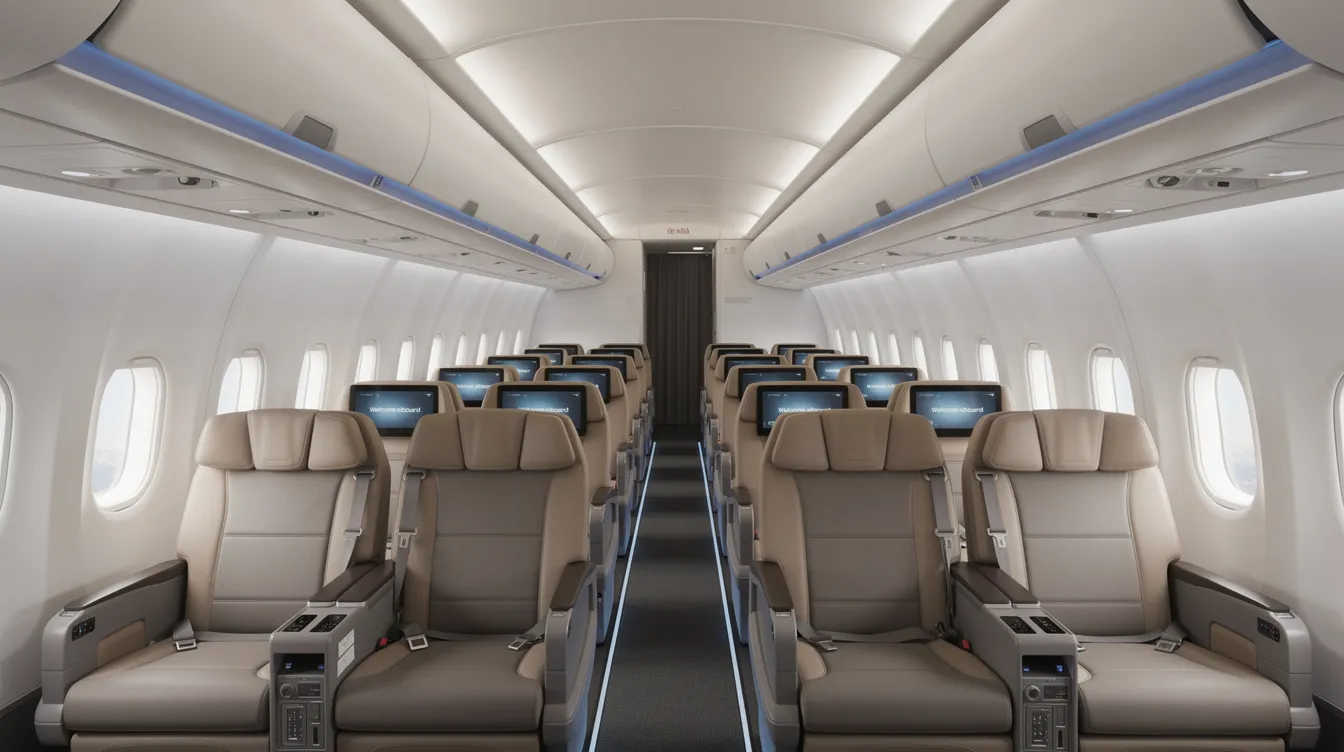
Delta ticket classes are Delta’s single-letter booking codes—such as J, Z, Y, and E—that sit beneath branded products like Delta One, Delta Premium Select, Delta Comfort+, Delta Main, and basic economy, and together determine your fare, perks, upgrade eligibility, and how many miles you earn. Delta Air Lines structures its ticket pricing across tiers within cabins, and the system is more layered than most travelers realize.
For frequent flyers, corporate travel planners, and travelers comparing commercial cabins with more flexible options, this guide explains how Delta’s fare classes, brand identifiers, and experience levels work in practice, including upgrades, Sky Club access, mileage earning, and pricing strategy. It also looks at when the tradeoffs of Delta’s fare structure make a private charter alternative like Jettly worth considering for travelers who want clearer pricing, more schedule control, and a simpler booking experience.
Delta fare classes are single-letter booking codes (J, Z, Y, E, etc.) that dictate ticket price, rules, and upgrade eligibility. The letter alone does not define the cabin; it works alongside the branded product and experience level.
Delta's "travel experiences" (Basic, Classic, Extra) now layer on top of fare letters and cabin products, controlling flexibility, mileage earning rates, and Delta Sky Club access for flights from October 1, 2025 onward.
Basic fares across all cabins (including Delta Main Basic and basic business) carry the most restrictions: no upgrades, limited seat selection, reduced or zero SkyMiles, and upcoming lounge access cuts for premium-cabin basic tickets after January 19, 2027.
Specific fare classes within the same cabin produce different prices, upgrade priority, and medallion qualification dollars. A Z-class Delta One ticket and a J-class Delta One ticket sit in the same seat but differ in flexibility and cost.
Travelers tired of navigating fare buckets, brand IDs, and changing lounge rules can compare Jettly's on-demand private charter as an alternative, where pricing is transparent, and schedules are fully customizable.
Delta Air Lines, as an airline, organizes its offerings into distinct product cabins and unbundled fare tiers. Every ticket combines three elements: a cabin product (Delta One, Delta Premium Select, Delta Comfort+, Delta Main, or basic economy), a fare booking class letter, and an experience level (Basic, Classic, or Extra). Fare booking classes dictate ticket rules and mileage earnings; two passengers in the same main cabin seat on the same flight can pay different prices and earn different miles if one holds a V-class ticket and the other holds a Y-class ticket.
Delta fare classes include Delta One, Main, and Basic Economy as broad categories, but within each, the booking letter and experience level create a matrix of price, flexibility, and perks. Delta rolled out the Basic/Classic/Extra experience labels for travel departing October 1, 2025, with updated brand IDs embedded in fare basis codes across most domestic and international markets.
Understanding this structure matters for frequent flyers, corporate travel planners, and travelers who mix commercial and charter. When Delta's rules grow too complex or too restrictive, a private jet through a platform like Jettly can sidestep fare-class mechanics entirely.
Every seat on a Delta flight sits in a fare bucket, represented by a single letter. Delta One fare classes range from J to Z (specifically J, C, D, I, Z). Premium Select uses P, A, G. Comfort+ uses W, S. Main cabin classes include Y, B, M, H, Q, K, L, U, T, X, and V.. Delta Main Basic is represented by E.
As demand rises, cheaper fare buckets close. If V, T, and L are sold out on an Atlanta-to-Los Angeles flight, the system moves availability to higher buckets like M, B, or Y. Late buyers in the same main cabin may pay hundreds more for identical seats simply because cheaper inventory is gone.
Delta's fare basis code is typically an 8-character alphanumeric string. For example, XAVNA0FE: the 7th position ("F") identifies the branded product (in this case, Delta First Class). A code like VEWIA0DQ uses "D" in position 7 for Delta One. Other positions flag routing, advance purchase requirements, seasonality, and whether the ticket is refundable. The fare basis code also encodes the experience level, so travel agents and booking systems can distinguish a Classic fare from an Extra or Basic fare within the same cabin and class letter.
Delta Air Lines offers a tiered structure of cabin classes and fare options. The five primary cabin products define the physical seat and onboard service:
Delta One is Delta's most premium travel experience with lie-flat beds and premium dining on long-haul routes like JFK-CDG and ATL-NRT. First Class on domestic routes features wider recliner seats with priority service and premium meal options. Delta Premium Select sits between economy and business on select international routes, offering a footrest, enhanced meals, and more recline. Delta Comfort+ provides extra legroom and dedicated overhead bin space, available on most domestic and medium-haul flights. Main cabin offers standard economy flexibility with advance seat selection and changes permitted (on Classic and Extra fares). Basic economy, or Delta Main Basic, is the lowest tier with the fewest perks.
The cabin defines the hard product. The fare class letter and experience level within that cabin define how restrictive or flexible the ticket is. A Delta One Classic ticket and a basic business ticket occupy the same lie-flat seat, but one grants lounge access and the other, after January 19, 2027, does not.
For travelers who consistently purchase Delta One or Delta Premium Select on transatlantic routes, on-demand private jet charter through Jettly can be competitive when three or four travelers share one aircraft and value direct routing to smaller airports.
Basic fares are now a branded experience applied across every cabin. This creates Delta Main Basic (E class), Delta Comfort Basic, Delta Premium Select Basic, and Basic Business. All are designed as bare-bones options with fewer perks.
Key restrictions shared by basic fares across cabins:
No complimentary or paid upgrades. Basic fares have no complimentary upgrades or seat selection at booking.
Seat assignment typically happens at check-in or 30 days out for a fee.
Change and cancellation penalties apply ($99 for domestic Delta Main Basic, $199 for international routes).
Reduced or zero checked baggage inclusion compared to Classic.
Basic economy tickets earn no SkyMiles and have no upgrades. Delta's basic economy fare earns no SkyMiles for general SkyMiles members, and medallion qualification dollars from the base fare component are minimal or nonexistent.
Boarding pass assignment places Basic Main in Zone 8 (last to board).
Delta Sky Club access is blocked for Delta Main Basic passengers regardless of medallion status or credit card credentials. Basic business tickets in premium cabins will lose Delta One Lounge access and premium check-in starting January 19, 2027, meaning "basic" branding now overrides traditional business class privileges.
Classic fares are Delta's standard non-refundable backbone. Delta Main Classic, Delta Comfort Classic, Delta Premium Select Classic, Delta First Classic, and Delta One Classic all allow advance seat selection, standard baggage, and cancellation for eCredit. These fare types let SkyMiles members earn miles at different rates, with Classic earning roughly 5 miles per dollar of base fare (excluding taxes and carrier-imposed surcharges) and Extra earning about 7 miles per dollar.
Extra fares sit above Classic and offer the highest flexibility in each cabin. Delta's travel experiences page shows Extra earning roughly 7 miles per dollar of base fare, plus medallion bonuses on top. Extra fares also unlock same-day confirmed changes in most U.S. and Canada markets, better boarding priority (Zone 5 for Main Extra vs. Zone 6 for Main Classic), and priority in the upgrade queue over Classic ticket holders at the same medallion status level.
A frequent New York-to-Atlanta traveler choosing Main Extra instead of Main Basic pays more upfront but earns extra miles per flight, retains upgrade eligibility, and avoids change fees if plans shift. A quarterly transatlantic flyer buying Premium Select Classic instead of Delta Premium Select Basic keeps lounge access and earns medallion qualification dollars from every dollar of the ticket price.
Experience level cannot be changed after purchase. Moving from Basic to Classic or Extra requires cancellation and rebooking, which often triggers fare differences and fees.

Delta uses a three-tier hierarchy for complimentary upgrades: medallion status first (Diamond, Platinum, Gold, Silver), then travel experience (Extra over Classic over Basic), then fare booking class letter within the product. A Gold medallion member on Main Extra with a Y-class ticket beats another Gold member on Main Classic with an H-class ticket on a popular route like ATL-LAX or MSP-JFK.
Delta's fare codes dictate upgrade eligibility and change fees. Basic fares are excluded from free and paid upgrades and from same-day confirmed changes or standby. Classic and Extra maintain access to these features when inventory allows. Delta One tickets offer maximum flexibility and upgrade priority within the premium cabin queue.
Delta Sky Club access follows the fare type closely. Credit cards, memberships, and partner status still unlock entry for Classic and Extra ticket holders. But basic economy and Delta Main Basic passengers remain barred from Delta Sky Clubs, even with medallion status. The announced tightening for basic business from January 19, 2027 extends this logic to premium cabins, separating seat comfort from ground perks.
Delta's revenue-based SkyMiles system ties miles and medallion qualification dollars to the ticket's base fare and experience level, not just distance flown. Lower-cost economy codes (V, X, T) and basic fares earn minimal or no MQDs and limited redeemable miles. Full-fare Y or premium J tickets earn more per dollar, making booking class a key lever for medallion members chasing status.
On SkyTeam partners like Air France, KLM, or Korean Air, earning rates shift to distance-and-fare-class math. Full-fare business fares (J or C) on partner metal can credit at up to double the flown distance. Deep-discount economy on a partner flight to Latin America or Asia sometimes earns as little as 10% of flown miles. How many miles you actually earn depends on both the fare codes on your ticket and the specific partner's earning chart.
Travelers should consult Delta's online partner earning charts before booking, especially for long-haul trips to Europe, Asia, and Latin America, to avoid being surprised by low earnings despite a high cash outlay on non-refundable tickets.
Close to departure on competitive routes like JFK-LHR or LAX-JFK, full-fare economy tickets (Y or B in Delta Main) can cost more than discounted business class fares in Delta One. Fare codes like Z and I indicate discounted premium seats; a J fare is a full-fare, flexible Delta One ticket, while Z is a confirmed business seat with stricter change rules and lower earning.
Discounted premium fares can be cheaper than full-fare economy tickets because airlines release discounted premium fares to fill empty seats that would otherwise fly vacant. Less than 15% of premium cabin seats sell at full price. The rest fill through corporate contracts, upgrades, and discounted fare buckets. Monitoring fare codes helps identify discounted premium fares, and travelers who set alerts or use fare comparison tools can occasionally fly Delta One for less than a fully flexible coach ticket.
Whenever a Y or B main cabin fare is priced high, check whether a Z- or I-class Delta One ticket is only slightly more. The seat comfort, meals, baggage inclusion, and lounge access can make the premium fare a better overall value.
Private jet travel provides flexibility and convenience without ownership burdens. Unlike Delta's layered fare structure, private charter pricing is transparent and not tied to fare buckets, brand IDs, or changing lounge rules.
For time-sensitive or multi-stop trips, such as visiting several client sites in one day, flying to secondary airports, or booking a last-minute flight when Delta's only remaining fares are expensive Y or J class, on-demand private jets can be cost-effective for groups sharing a cabin who take advantage of crowdsourced shared private flights and empty seats. Instant pricing and booking are key features of digital private jet charter services like Jettly, which offers access to over 20,000 aircraft, custom schedules, and integrated ground transport or catering, as well as dedicated in-flight catering for private jets through Jettly Eats.
On high-traffic commercial routes like New York-Miami, Los Angeles-Las Vegas, and Toronto-Vancouver, travelers frequently compare premium Delta tickets with light-jet or turboprop charters. For a detailed cost breakdown or to use a private jet charter cost estimator, Jettly's platform provides instant quotes without membership requirements.

Seven guidelines for picking the right Delta ticket:
Match experience to trip risk. If your itinerary might change, avoid basic fares. The inability to upgrade or modify without rebooking and paying fare differences makes Basic a poor fit for business travel.
Check upgrade eligibility before booking. If you hold medallion status and want a shot at Comfort+ or First, Classic or Extra in Main is the minimum. Basic blocks all upgrades.
Calculate the mileage math. At 5 miles per dollar (Classic) vs. 0 (Basic), a $400 domestic round trip earns 2,000 redeemable miles on Classic and nothing on Basic. For status seekers, the medallion qualification dollars from Classic and Extra add up.
Watch for discounted premium availability. Before buying a $900 Y-class Main ticket, check if Delta One Z or I is available at $1,100. The gap may be smaller than expected.
Protect lounge access. If Delta Sky Club access matters to you, avoid all Basic fares. Even paid Sky Club memberships cannot override the Basic fare restriction on Main Basic.
Track fare buckets on your frequent routes. Over time, you will learn typical pricing bands for domestic routes like ATL-JFK or cross-country flights, making it easier to spot when a Delta One or Premium Select deal is unusually cheap.
Consider private charter for the trips Delta does not serve well. For multi-city days, group travel, or routes to smaller airports, Jettly's private jet options can replace several commercial segments with a single direct flight.
|
Cabin/Product |
Fare Classes (Examples) |
Experience Levels |
Key Features & Restrictions |
Upgrade Eligibility |
SkyMiles Earning Rate |
Delta Sky Club Access |
|---|---|---|---|---|---|---|
|
Delta One |
J, C, D, I, Z |
Basic, Classic, Extra |
Lie-flat beds, premium dining, flexible change options (varies by experience), lounge access |
Basic: None; Classic & Extra: Yes |
Basic: 0; Classic: ~5; Extra: ~7 |
Basic: No; Classic & Extra: Yes |
|
Delta Premium Select |
P, A, G |
Basic, Classic, Extra |
Enhanced seats with footrest, better meals, more recline |
Basic: None; Classic & Extra: Yes |
Basic: 0; Classic: ~5; Extra: ~7 |
Basic: No; Classic & Extra: Yes |
|
Delta Comfort+ |
W, S |
Basic, Classic, Extra |
Extra legroom, dedicated overhead bin space |
Basic: None; Classic & Extra: Yes |
Basic: 0; Classic: ~5; Extra: ~7 |
Basic: No; Classic & Extra: Yes |
|
Delta Main |
Y, B, M, H, Q, K, L, U, T, X, V |
Basic, Classic, Extra |
Standard economy flexibility; seat selection varies; change fees vary |
Basic: None; Classic & Extra: Yes |
Basic: 0; Classic: ~5; Extra: ~7 |
Basic: No; Classic & Extra: Yes |
|
Delta Main Basic |
E |
Basic |
Most restrictive, no upgrades, no seat selection at booking, no miles earned |
None |
0 |
No |
These questions address practical points not fully covered above, focusing on finding fare classes before purchase, mixing cabins, and combining commercial tickets with private charter.
On Delta.com and the Delta app, expand "Details" or "Fare rules" on the itinerary page to view the booking class letter and whether the ticket is Basic, Classic, or Extra. Third-party tools like Google Flights often display at least the primary fare letter after selecting an option.
No. Identical fare letters can carry different prices because Delta layers advance-purchase rules, minimum-stay requirements, seasonality, and brand IDs into the full fare basis code. Y or Z signals the general fare bucket and its associated rules, not a fixed dollar amount. The same Y-class ticket between two country markets can produce very different prices.
Delta generally does not allow experience upgrades (Basic to Classic or Extra) without canceling and rebooking, which triggers fees and potential fare increases. Choosing the right experience at purchase is critical.
For simple point-to-point routes with plenty of daily frequencies, especially for solo travelers or pairs, a higher Delta fare class like Delta One Classic can be more economical. Small groups on time-critical or multi-city trips often find Jettly's private charters and broad private charter aircraft options more efficient despite a higher total cost per seat.
Jettly's on-demand charter platform provides instant pricing, aircraft comparisons, and example routes. Private charter removes concerns about fare buckets, change fees, availability restrictions, and lounge access. Ready to fly on your terms? Explore flight options or request a quote at https://www.jettly.com.
Understanding Delta ticket classes is key to navigating the airline's complex pricing, upgrade, and mileage system. The interplay of fare booking classes, branded cabin products, and experience levels shapes your travel flexibility, perks, and cost. Basic fares offer the lowest upfront price but come with significant restrictions, while Classic and Extra fares provide increasing benefits and upgrade priority. For travelers seeking greater control, transparency, and convenience beyond commercial airline fare structures, private jet charter platforms like Jettly offer a compelling alternative with instant pricing, diverse aircraft options, and fully customizable schedules.
By mastering Delta's fare classes and experiences, travelers can make informed choices that balance cost, comfort, and flexibility. When Delta's fare rules feel too restrictive or complex, exploring private charter options can unlock new possibilities for seamless, efficient travel tailored to individual needs.
Ready to experience private travel on your terms? Explore flight options or request a quote at https://www.jettly.com.
Share this post:
Jay Franco Serevilla
Nov 1, 2026
|
5
min read
Discover tips and trends in the industry.
5
min read
Delta Ticket Classes: How Delta Fare Classes, Brands, and Experiences Really Work
Delta ticket classes are defined by single-letter booking codes that determine fare, perks, and upgrade eligibility. Understanding these classes is crucial for frequent flyers and corporate travel planners, as they impact mileage earning and overall travel experience. For those seeking more flexibility and transparency, private jet charters like Jettly offer a compelling alternative to navigating Delta's complex fare structure.
Read More
5
min read
Delta Perks: How Delta Benefits Compare to Private Jet Convenience
Delta Perks encompass a range of benefits including employee discounts, the Total Rewards compensation package, and the SkyMiles loyalty program. While Delta offers significant advantages for frequent flyers, private jet charters through Jettly provide unmatched flexibility and privacy for time-sensitive travel. This guide compares the two options to help travelers choose the best fit for their needs.
Read MoreStay updated with our latest insights and tips to elevate your journey with us.
MEMBERSHIPS AND ASSOCIATIONS



Disclaimer: Jettly operates as a charter broker, offering access to a global digital jet charter marketplace. Jettly is not a direct air carrier and does not own or operate aircraft. All advertised flights are conducted by third-party air carriers that are fully licensed and hold the appropriate Part 135 or Part 121 certifications issued by the Federal Aviation Administration (FAA) or equivalent regulatory authorities under U.S. or foreign law. Jettly complies fully with the U.S. Department of Transportation's Part 295 and Part 298 Charter Broker regulations. Jettly does not carry additional liability insurance. Passengers are covered by aircraft operator insurance. TICO: 50023770


