


Login
Get Instant Pricing On 23,000+ Aircraft

>
If you've ever wondered whether the Transportation Security Administration runs a full background check every time you step into an airport, you're not alone. The short answer: TSA conducts identity verification and security screening on all passengers, but it does not pull your criminal history at the checkpoint. Full background checks are reserved for specific programs and roles, not for everyday travelers.
TSA does not do background checks on standard passengers during screening. Instead, it matches your name, date of birth, and gender against federal terrorism watchlists through the Secure Flight program. Physical screening at checkpoints does not check for outstanding warrants or past criminal records.
A formal security threat assessment—involving fingerprinting, criminal history review, and immigration status checks—is only required for trusted traveler programs like TSA PreCheck, aviation workers, and holders of transportation credentials such as TWIC.
Certain serious crimes are considered permanently disqualifying offenses for TSA programs and aviation jobs (espionage, terrorism, explosive-related crimes), but they do not automatically bar someone from flying as a commercial passenger.
Most travelers are not subjected to traditional background checks during air travel. Unless you're on the no fly list or a federal watchlist, your criminal history alone won't prevent you from boarding.
Private jet charter platforms such as Jettly operate differently: security vetting focuses on aircraft operators and crew, while passengers benefit from faster, more discreet processes at private terminals and FBOs.
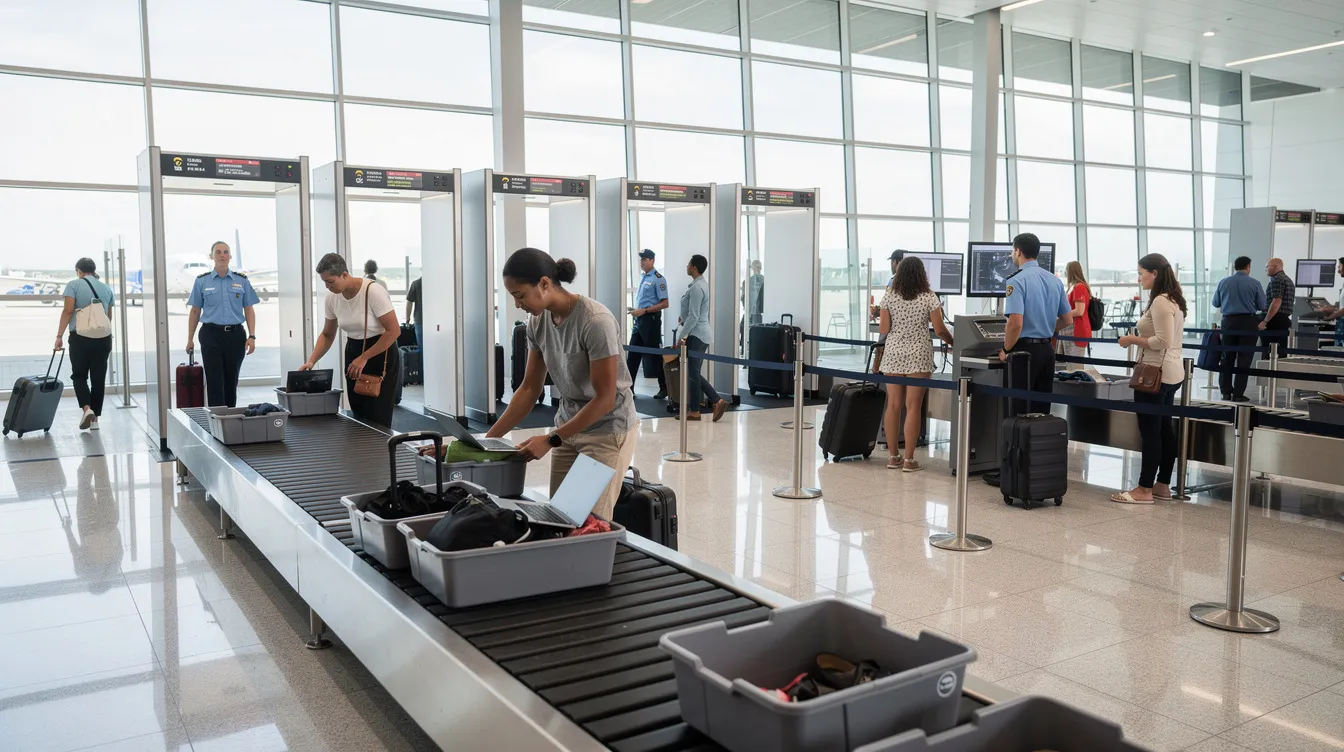
Every commercial air traveler in the United States goes through a standardized screening process at the airport security checkpoint. This process is designed to detect immediate threats to transportation security—not to investigate your personal history.
Here's what the typical checkpoint flow looks like:
ID check: Agents use Credential Authentication Technology to verify identities present at checkpoints. Your government-issued photo ID is scanned and compared to your boarding pass.
Boarding pass scan: The TSA uses identity verification for securing boarding processes, confirming you're authorized for the flight.
Baggage screening: Checked bags and carry-on items pass through X-ray screening and advanced imaging technology.
Body scanners: Passengers walk through millimeter-wave scanners or metal detectors.
Manual inspection: Flagged items trigger additional screening, pat-downs, or bag checks.
The TSA's Secure Flight program matches reservation data against government watchlists. It checks your name, date of birth, and gender—not your full criminal history. The TSA does not conduct criminal background checks on standard passengers during screening.
For travelers who use private aviation through platforms like Jettly, the experience at a fixed-base operator (FBO) is notably different: fewer crowds, no shared security lines, and controlled access—though overarching federal regulations still apply to crew and operators.
A TSA security threat assessment is a formal background check required for programs like TSA PreCheck, airline crew vetting, and the Transportation Worker Identification Credential. It goes well beyond the quick ID scan at the checkpoint.
Core components include:
Identity verification using government-issued documents and biographic data
Criminal history review through fingerprinting and criminal record checks matched against FBI databases
Immigration and citizenship status confirmation, including checks for immigration violations or unlawful presence
Terrorist watchlist screening through the Terrorist Screening Center and related databases
An STA is designed to identify red flags that indicate a potential risk to aviation security or national security. It does not flag unpaid parking tickets, minor civil infractions, or unrelated misdemeanors.
These assessments are periodically revalidated—often every five years—for anyone holding secure-area access or trusted traveler benefits. Some programs also use FBI "Rap Back" systems that provide ongoing notifications if a person's criminal history changes.
TSA maintains specific lists of permanently disqualifying offenses and interim disqualifying offenses when evaluating applicants for PreCheck, TWIC, and aviation employment. These standards are defined in regulations like 49 CFR Part 1572 and differ from what applies to regular ticketed passengers.
Permanently disqualifying offenses include:
Convictions for espionage lead to permanent disqualification
Terrorism convictions result in permanent disqualification
Transportation security incidents disqualify applicants permanently
Improper transport of hazardous materials disqualifies applicants
Convictions for explosive-related crimes lead to permanent disqualification
Crimes involving racketeer influenced and corrupt organizations act violations tied to the above
Sedition, treason, and security related offenses against the state
Interim disqualifying offenses follow a lookback window—conviction within the last seven years or release from incarceration within the last five years. These include criminal offenses such as assault, firearms violations, arson, robbery, fraud, money laundering, voluntary manslaughter, controlled substance distribution, and certain felonies. Jail time over 365 days disqualifies applicants from TSA positions during the lookback period.
These rules affect eligibility for trusted programs and transportation roles. They do not automatically prevent a convicted person from buying a commercial airline ticket—unless that person also appears on a terrorist or fly list.
Applicants unsure about their records should review TSA's current list of disqualifying offenses and consider consulting legal counsel before applying.
TSA PreCheck is an expedited airport security program that requires a background check before enrollment. The screening process includes fingerprinting, an in-person interview, and a full security threat assessment.
Application steps:
Submit an online application and pay the enrollment fee
Schedule and attend an appointment at an enrollment center
Present identity and immigration documents (lawful permanent residents must provide appropriate documentation)
Provide fingerprints for FBI database matching
TSA runs your information through criminal history databases and terrorist watchlists
TSA PreCheck background checks typically take 3 to 5 days. However, some TSA PreCheck background checks may take up to 60 days if additional review is needed. Delays in TSA background checks can occur due to documentation issues, ambiguous immigration status, or records requiring verification.
Once approved, PreCheck members use dedicated lanes where they keep shoes and belts on and leave laptops in bags—a faster experience at the security checkpoint. But private jet terminals used by platforms like Jettly already offer comparable or faster security without a separate membership. Learn more about how private jets handle TSA requirements.
If denied, applicants can appeal through TSA's formal process or file a DHS TRIP inquiry if they believe the denial resulted from false information or a data mismatch.
While passengers undergo security screening, those who work in or around secure areas face far deeper scrutiny. All TSA employees undergo rigorous background screening, as do airline pilots, flight attendants, baggage handlers, and catering staff with access to aircraft.
TSA employees: Full STA including fingerprinting, drug testing, criminal history checks, and medical certificates review
Airline crews and maintenance: Background checks examining criminal history, intent to commit security-related offenses, and terrorism ties
TWIC holders: Workers at seaports and intermodal facilities need credentials verified against the same process used for aviation roles
Airport vendors: Anyone with unescorted access to secure zones must pass an STA and hold a valid commercial driver's license or equivalent credential where applicable
TSA background checks generally take 30 to 45 days for these roles. Clearances must be renewed—typically every five years—and ongoing monitoring can lead to suspension if new offenses, indictment, or license suspensions appear.
Charter operators in Jettly's network must comply with FAA and TSA security requirements for crew and ground staff, giving travelers assurance of vetted personnel even at smaller private terminals.
The Transportation Security Administration uses federal watchlists—including the No-Fly List and Selectee List—to flag potential threats before they reach airport security. This is a targeted national security measure, not a broad TSA background check.
Watchlist match: If Secure Flight matches your data against the Terrorist Screening Database, you may see "SSSS" printed on your boarding pass, triggering enhanced screening. Travelers may require enhanced screening based on watchlist matching or random selection.
Denial of boarding: In most cases, only individuals on the no fly list face outright denial. TSA checks names against multiple terrorist watchlists for every flight.
Mistaken identity: Similar names or biographical data can cause false matches. The DHS Traveler Redress Inquiry Program (DHS TRIP) is the primary channel to correct these errors and obtain border protection redress numbers.
Other triggers: Booking anomalies, powder-like substances, unusual items in checked bags, or suspicious travel patterns can prompt additional screening—but this doesn't amount to a full criminal history investigation.
Even in private aviation, passengers on federal watchlists face restrictions. Operators may decline service based on regulatory or insurance concerns, and flights into U.S. airports still fall under federal oversight for potential threats including transportation system disruption, economic disruption, environmental damage, or significant loss of life.
Commercial airport security involves long lines, shared checkpoints, and a rigid same process for every traveler—whether you're a low risk passenger, frequent flyer, or a first-time traveler. The TSA controls central screening at commercial terminals, and every person goes through metal detectors, baggage X-ray screening, and identity checks.
Private aviation through Jettly works differently, with affordable private jet charter options tailored to different routes and cabin sizes:
Operator compliance: Aircraft operators are subject to FAA regulations and applicable TSA security programs, including vetting of pilots and crew, and many fly under certified Part 135 charter company standards
Controlled access: Secure FBOs manage who enters the facility, handles baggage, and accesses the aircraft—even items like breast milk or specialized cargo follow clear protocols, and they often leverage the wider range of airports where private jets can land
Faster departures: Passengers can arrive minutes before takeoff, skip crowded terminals, and maintain control over their carry-on items, whether they’ve chartered a whole aircraft or bought a single seat on a private jet
Behind-the-scenes safety: Robust transportation security measures—crew background checks, secure handling of baggage, aircraft maintenance standards, and the use of the safest private jet models available—operate without creating passenger-facing friction
For travelers who find commercial flight security stressful or time-consuming, private jet charter offers a way to maintain safety and compliance while bypassing the inconveniences of mass-market airport security, especially when you choose among the best private jet charter companies. It's not about avoiding rules—it’s about experiencing them differently, with privacy and security built into the process and even smoother rides thanks to how turbulence behaves on private jets.

These questions address common concerns that travelers have about TSA background checks, screening, how private aviation fits into the regulatory picture, and what to expect when private jets fly internationally.
No. Each time you fly, TSA's Secure Flight program checks your name, date of birth, and gender against federal security watchlists. This is not a full background check. A comprehensive TSA background check—with fingerprinting and criminal records review—is only performed once, during enrollment in programs like TSA PreCheck or when a person applies for transportation worker credentials. The process at the checkpoint is a security screening, not a criminal history investigation.
In most cases, a criminal record alone does not prevent someone from purchasing an airline ticket or boarding a commercial flight. Serious crimes tied to terrorism or aviation security can land a person on a watchlist, and active legal restrictions—such as probation conditions, a court order, or a requirement to stand trial—may affect the ability to travel. But a past felony conviction for possession or fraud, for example, does not trigger automatic denial at the gate.
Most TSA PreCheck applications are processed in about 3 to 5 days. However, complex cases involving older convictions, ambiguous immigration status, or missing documents may take up to 60 days. It's wise to apply several weeks before any trip where you want the benefit. For aviation workers and TSA employees in formal roles, background checks typically take 30 to 45 days to complete.
Unusual or prohibited items—like firearms, certain test-fail substances, or powder-like substances—can result in extra screening, questioning, or confiscation. However, this does not usually trigger a full background investigation. Unless the items raise direct national security concerns or suggest intent to commit a crime, the response stays within physical checkpoint screening. A suspicious item won't cause TSA to pull your criminal records on the spot.
Private jet travel still operates under U.S. transportation security and national security rules, whether you’re flying with NetJets, the industry leader in private aviation, a boutique operator, or a NetJets alternative like Jettly. Passengers aren't exempt from federal oversight, and operators must comply with applicable FAA and TSA regulations. However, passengers typically experience a faster, more personalized process at private terminals, and there are now many ways to get a seat on a private jet easily without full ownership, from shared charter flights to full private charters. Vetted operators, crews, and airport staff handle most formal compliance requirements in the background—so travelers get the benefit of robust safety standards without standing in long checkpoint lines, especially when booking through platforms that curate a comprehensive list of charter airlines.
Understanding how TSA uses background checks and security threat assessments can help travelers choose between commercial flights and private options with greater confidence, especially when comparing top private plane manufacturers and their jets. Whether you're navigating a busy terminal or stepping onto a charter flight, knowing what's actually being checked puts you in control and helps families choose the best private planes for family travel when they opt for charter.
Ready to experience private travel on your terms, understand how much a private jet really costs, and access to a global fleet of private charter aircraft? Explore flight options, compare private jet membership plans, review world-class corporate jet card programs, or learn what a jet card is and how it works before you request a quote at https://www.jettly.com.
While the TSA does not conduct full background checks on everyday airline passengers, it employs robust identity verification and watchlist screening to maintain aviation security. Comprehensive background checks with fingerprinting and criminal history reviews are reserved for trusted traveler programs, aviation workers, and transportation credential holders. Serious crimes classified as permanently disqualifying offenses affect eligibility for these roles but do not generally prevent commercial air travel. Private jet travel through platforms like Jettly offers a streamlined security experience with vetted operators and crews, balancing safety with convenience. Understanding how TSA background checks function helps travelers make informed choices about their air travel options, whether commercial or private.
Ready to travel privately on your own schedule? Discover flight options or get a quote at https://www.jettly.com.
Share this post:
Jay Franco Serevilla
Aug 9, 2026
|
5
min read
Discover tips and trends in the industry.

5
min read
Kitplanes: A 2026 Guide to Modern Homebuilt Aircraft, Costs, and Travel Alternatives
Kitplanes have become a popular and accessible option for aircraft ownership in 2026, with over 33,000 homebuilt experimental aircraft now licensed. This guide provides insights into the costs, building process, and travel alternatives, helping aviation enthusiasts make informed decisions about kitplane ownership and when to consider private jet charter services like Jettly.
Read More
5
min read
The Most Advanced Fighter Plane in 2026: F-35 Lightning II and the Future of Air Combat
The F-35 Lightning II is recognized as the most advanced fighter jet in 2026, combining cutting-edge stealth technology, sensor fusion, and network-centric warfare capabilities. Its operational maturity and global deployment make it central to modern air combat and international security strategies.
Read MoreStay updated with our latest insights and tips to elevate your journey with us.
MEMBERSHIPS AND ASSOCIATIONS



Disclaimer: Jettly operates as a charter broker, offering access to a global digital jet charter marketplace. Jettly is not a direct air carrier and does not own or operate aircraft. All advertised flights are conducted by third-party air carriers that are fully licensed and hold the appropriate Part 135 or Part 121 certifications issued by the Federal Aviation Administration (FAA) or equivalent regulatory authorities under U.S. or foreign law. Jettly complies fully with the U.S. Department of Transportation's Part 295 and Part 298 Charter Broker regulations. Jettly does not carry additional liability insurance. Passengers are covered by aircraft operator insurance. TICO: 50023770


