


Login
Get Instant Pricing On 23,000+ Aircraft

>
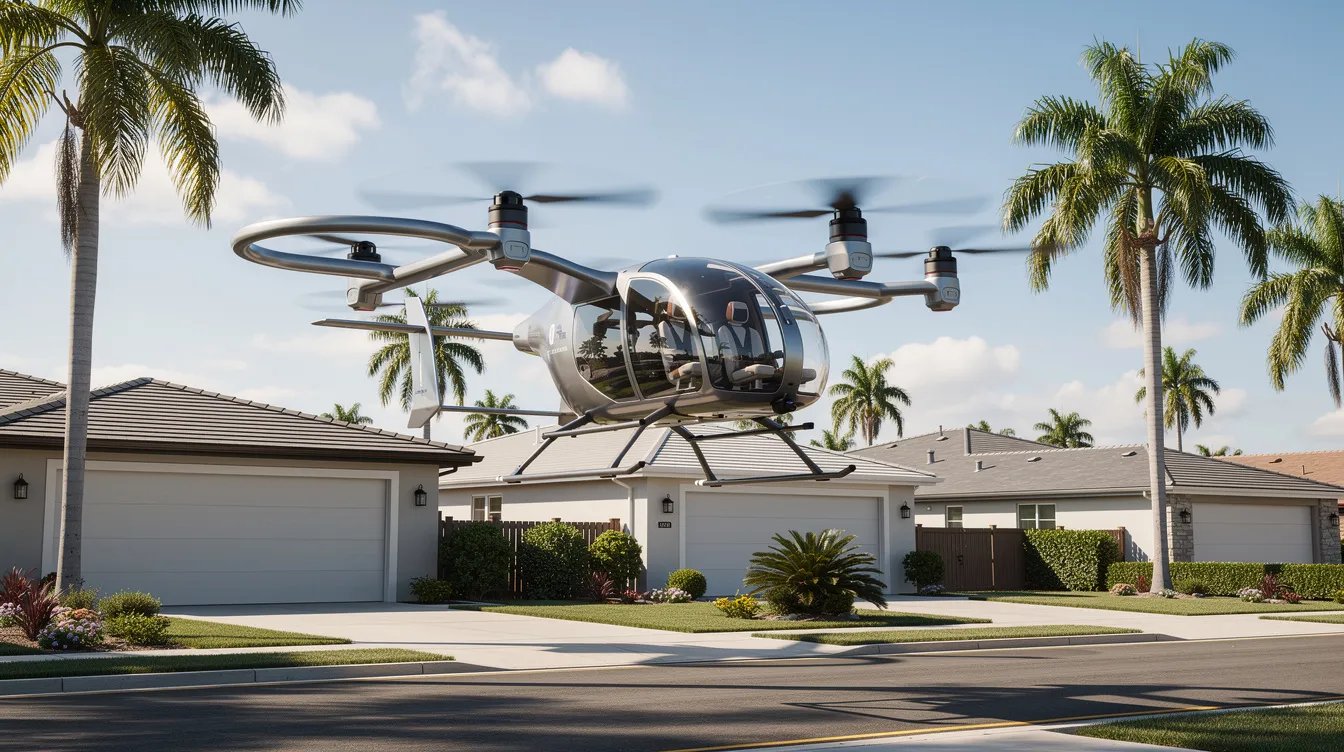
Doroni Aerospace is a Florida-based company specializing in electric vertical takeoff and landing (eVTOL) aircraft, which are designed for personal aerial mobility, with its two-seat H1-X designed as a practical flying car for urban air mobility. Headquartered in Pompano Beach, Florida, the company sits at the center of a growing push toward personal flying vehicles that ordinary people can operate from their own driveways.
For frequent flyers, urban commuters, real estate professionals, first responders, and anyone tracking new private aviation options, Doroni stands out because it aims to replace traffic-bound ground travel with fast, electric point-to-point flight. This article looks at Doroni Aerospace’s background, aircraft design and specifications, certification progress, likely use cases, manufacturing plans, and how personal eVTOL aircraft could work alongside services like Jettly for longer private trips.
Doroni Aerospace, founded in 2016 to innovate urban transportation, is developing the H1-X, a two-seat eVTOL designed for individual ownership and personal flight experiences, with a top speed of 120 mph and a range of roughly 100 miles.
The H1 "Hummingbird" received FAA type certification last year, and Doroni aims for FAA certification of the H1-X by the end of 2026, with commercial production targeted for 2028.
Doroni has secured 370 pre-order requests for its flying car, with total capital raised exceeding $30 million and plans to produce 2,500 eVTOLs annually in the future.
Operating the H1-X requires only a driver's license and 20 hours of training, making personal air mobility accessible to the average person.
The H1-X features a full-vehicle ballistic parachute, independent ducted fans for noise reduction and safety, and a digital co-pilot system to enhance user operation.
For longer routes, platforms like Jettly's private jet charter services fill the gap that short-range eVTOL flying cars cannot cover.
Doroni Aerospace is an aerospace startup founded in 2016 to transform urban transportation and develop aircraft that enable everyday users to travel quickly between cities and suburbs. The company focuses on personal air mobility, offering consumer flights with a vision to define the future of urban air mobility.
Unlike competitors targeting fleet-based air taxi services, Doroni focuses on personal ownership and operation. The company's vision is to put a flying car in the driveway of anyone willing to invest in one.
The H1 "Hummingbird" and the next-generation H1-X are Doroni's flagship personal flying cars. Both are electric, two-seat eVTOL aircraft designed for short-hop personal aerial mobility.
The H1-X is designed for two passengers and built for individual ownership and personal flight experiences. It has a top speed of 120 mph and can recharge from 20% to 80% in about 20 minutes, with a full recharge to approximately 80% in 25 minutes on a standard EV charger, positioning it as a complement to traditional options when choosing the best cross-country plane for longer journeys.
|
Specification |
H1-X |
|---|---|
|
Top speed |
120 mph |
|
Cruise speed |
~95 mph |
|
Range |
~100 miles |
|
Gross weight |
~1,850 lbs |
|
Recharge time (20% to 80%) |
20 minutes |
|
Full recharge (to ~80%) |
25 minutes on a standard EV charger |
|
Projected price range |
$300,000 to $400,000 |
Operating the H1-X requires only a driver's license and 20 hours of structured company training, making it accessible compared to traditional aircraft that demand extensive flight school hours.
Its ground footprint is comparable to a large SUV, designed to park in a standard driveway or on a small landing pad.
Doroni's aircraft use a tandem wing configuration with wing fences that manage airflow and improve stability. Propulsion comes from eight vertical ducted fans plus two horizontal ducted fans for forward thrust. The H1-X features independent ducted fans for noise reduction and safety; enclosed propellers protect bystanders while producing less sound than open-rotor competitors.
The cockpit integrates a digital co-pilot system called SOUL AI to enhance user operation. Core safety systems include:
|
Feature |
Description |
|---|---|
|
Multiple redundant motors |
Ten independent fan units provide redundancy for propulsion and safety. |
|
Anti-collision sensors |
360-degree obstacle detection to help avoid mid-air and ground collisions. |
|
Full-vehicle ballistic parachute |
A last-resort recovery system that deploys a parachute for the entire aircraft. |
|
Fly-by-wire controls with auto-stabilization |
Electronic flight controls that automatically stabilize the aircraft for intuitive operation. |
These features aim to make personal flight intuitive for non-professional pilots, with future upgrades expected through over-the-air software updates.
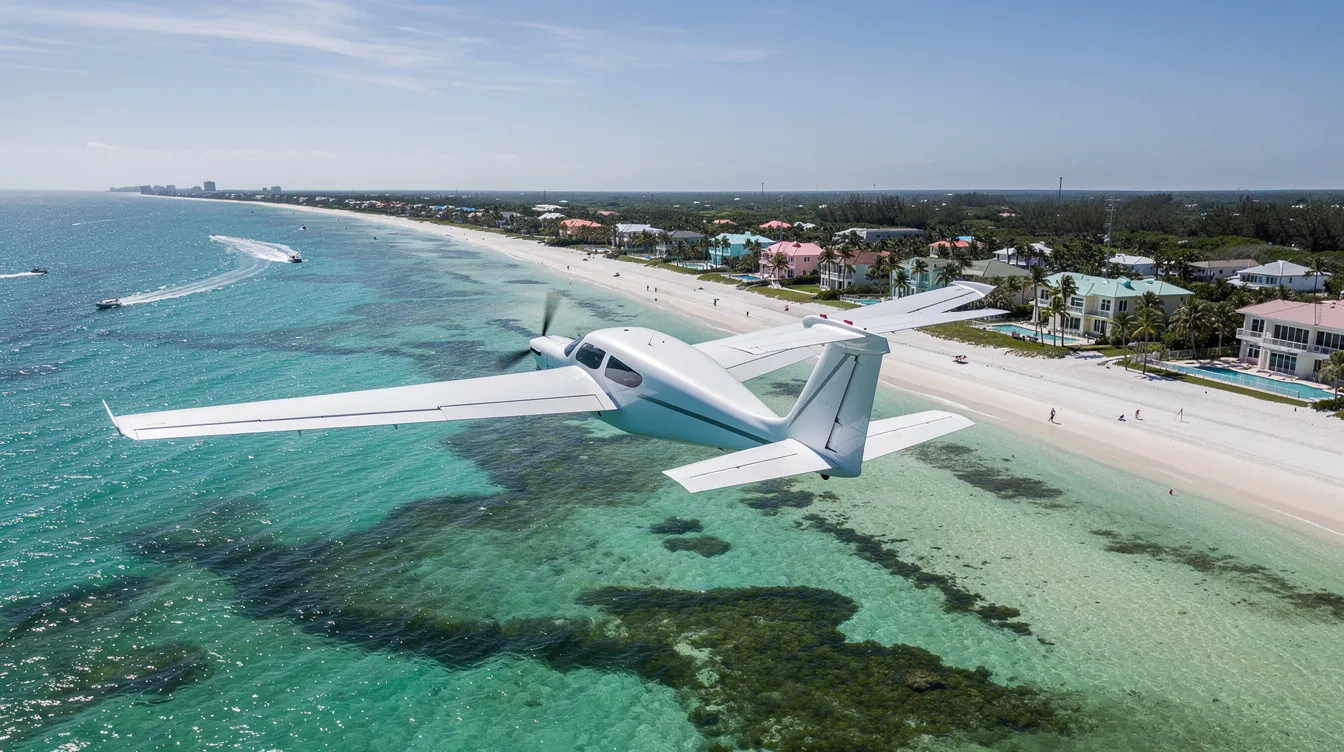
FAA certification is crucial for commercial availability. Doroni received an FAA Special Airworthiness Certificate for flight testing and is pursuing FAA Light Sport Aircraft certification under the FAA's MOSAIC regulations, aiming for full certification by the end of 2026.
Production and delivery of the H1-X target the end of 2026, with commercial production planned for 2028. Manufacturing will be expanded through a partnership with Innovation Wings Industries in Saudi Arabia, targeting production of 2,500 eVTOLs annually.
Doroni has secured 370 pre-order requests for the H1-X and plans to expand its offerings beyond this model as the market matures.
Doroni's aircraft complement cars, helicopters, and private jets on short urban and regional trips, fitting into the broader landscape described in comprehensive guides to charter airlines and private flights. Examples include:
A real estate executive commuting 30 miles from a suburban home to downtown Miami, cutting a 90-minute car trip to a 20-minute flight.
A family flying 60 miles from Pompano Beach to Key Biscayne without using roads or boats.
First responders are reaching accident sites 25 miles away in under 15 minutes, significantly faster than by road.
The H1-X is designed to reduce environmental strain by replacing short car trips with electric flights. Integration with vertiports, local airports, and community landing pads will shape early adoption, just as established players like NetJets and its industry-leading private aviation network rely on expansive airport access for their operations.
For trips beyond 100 miles, platforms like Jettly provide private jet charter services and an airport locator tool for accessing a wider range of airports for longer legs, enabling seamless multimodal travel.
Doroni fills a niche in short-range, owner-operated personal flight alongside fleet-based air taxi companies and traditional aircraft manufacturers, while platforms like Jettly position themselves as a flexible NetJets alternative for long-range private flying. A traveler might use an H1-X for first-mile transport to a regional airport, then board a private jet arranged through Jettly for longer distances, potentially leveraging crowdsourced private jet flights and shared empty seats to reduce costs.
All-electric eVTOLs produce zero direct emissions, and combined with carbon-offset options through private jet charters from top private jet charter companies, the overall environmental impact is reduced compared to traditional travel.
Doroni and Jettly represent the future of flexible, on-demand, digitally coordinated air travel, and Jettly’s broad catalog of private charter aircraft across multiple jet categories complements Doroni’s short-range eVTOLs, offering alternatives to traffic and commercial airport waits.

Doroni is actively testing prototypes with manned flights. Production and delivery of the H1-X target the end of 2026, with full commercial certification expected by 2028. Widespread personal use depends on FAA approval and manufacturing scale-up.
No. The H1-X requires only a driver's license and 20 hours of company training, not a traditional pilot's license.
The H1-X is projected to cost between $300,000 and $400,000, similar to a high-end car or small piston aircraft and many models from leading private plane manufacturers across budgets and mission profiles. Private jet charters through Jettly are priced per flight hour and involve no ownership costs, and you can use a private jet charter cost estimator to compare them, making them more economical for occasional long-distance trips.
Early adoption is expected in regions with supportive regulations and infrastructure, such as Florida, select U.S. states, and Saudi Arabia, where manufacturing is planned.
A traveler might fly a Doroni H1-X from home to a regional airport, then continue on a private jet booked through Jettly for longer distances, using Jettly’s resources on affordable private jet charter pricing and cost factors to plan the trip, saving time and avoiding traffic.
Doroni Aerospace is accelerating the future of personal air mobility with its practical and efficient H1-X eVTOL flying car. By combining innovative hardware, user-friendly design, and a clear mission to transform urban transportation, Doroni is challenging the status quo and making personal flight accessible to everyday users. With significant investment raised, ongoing FAA certification progress, and plans for large-scale production, Doroni is poised to achieve important milestones in the development of practical personal eVTOL aircraft.
As urban congestion and environmental concerns grow, Doroni’s vision for sustainable, convenient, and safe personal flight offers a promising alternative to traditional ground travel. When paired with platforms like Jettly for longer private jet travel, this new era of flexible, on-demand air mobility could redefine how people move within and between cities worldwide.
Explore more about innovative private flight options and request a quote at https://www.jettly.com to experience the future of travel today.
Share this post:
Jay Franco Serevilla
Aug 23, 2026
|
5
min read
Discover tips and trends in the industry.
5
min read
Taneja Aerospace Share Price: Live Updates, Fundamentals & Investor Guide
Taneja Aerospace & Aviation Ltd's current share price is ₹344.20, reflecting a 1.7% decrease. With a P/E ratio of approximately 47, the stock indicates strong growth expectations in the aerospace sector, making it an intriguing option for investors. This guide provides essential trading data, valuation metrics, and insights into the company's fundamentals and market trends.
Read More
5
min read
What Airline Has the Most Crashes 2026 (And What That Really Means for Air Travel Safety)
In 2026, no major airline has been identified as having the most crashes, with serious incidents primarily involving smaller operators. Despite 61 reported crashes resulting in 397 fatalities, commercial flying remains one of the safest modes of transportation due to stringent regulations and advanced safety technologies. Understanding aviation safety statistics is crucial for travelers to make informed decisions about their air travel options.
Read MoreStay updated with our latest insights and tips to elevate your journey with us.
MEMBERSHIPS AND ASSOCIATIONS



Disclaimer: Jettly operates as a charter broker, offering access to a global digital jet charter marketplace. Jettly is not a direct air carrier and does not own or operate aircraft. All advertised flights are conducted by third-party air carriers that are fully licensed and hold the appropriate Part 135 or Part 121 certifications issued by the Federal Aviation Administration (FAA) or equivalent regulatory authorities under U.S. or foreign law. Jettly complies fully with the U.S. Department of Transportation's Part 295 and Part 298 Charter Broker regulations. Jettly does not carry additional liability insurance. Passengers are covered by aircraft operator insurance. TICO: 50023770


