


Login
Get Instant Pricing On 23,000+ Aircraft

>
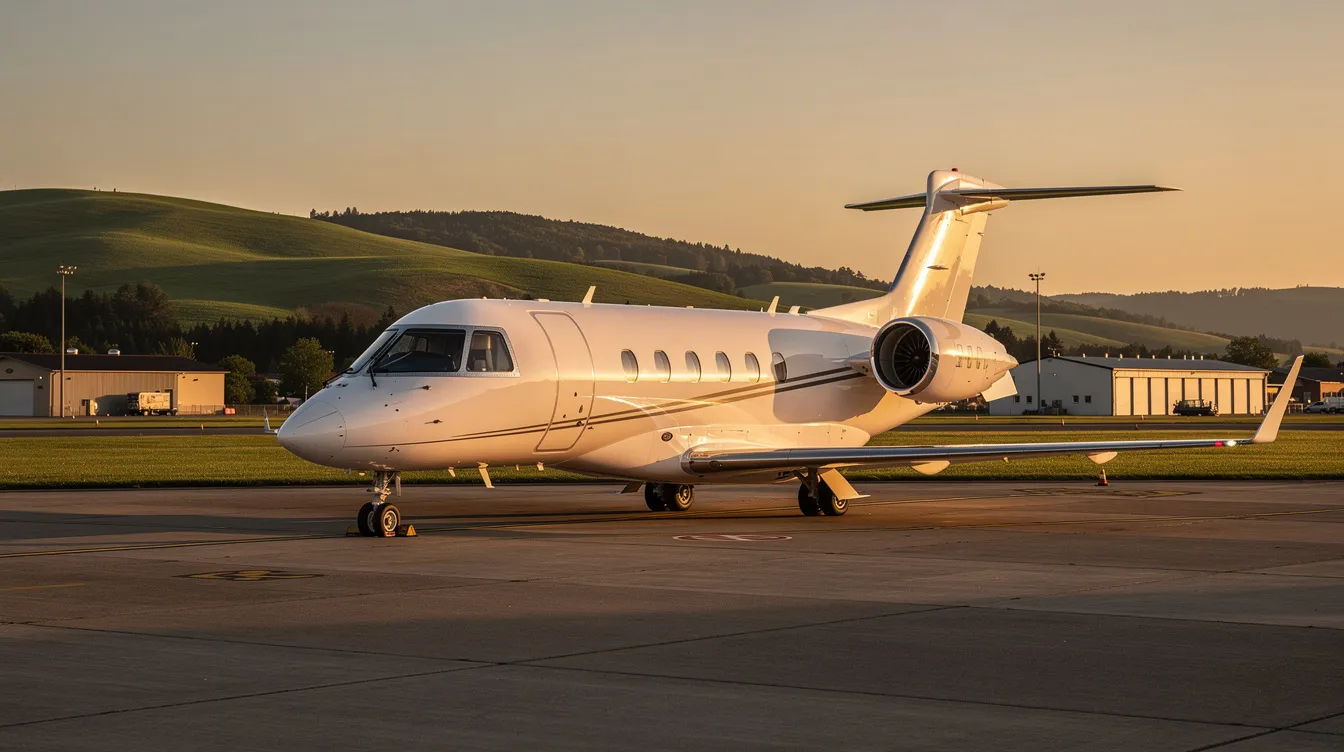
Executive aviation has moved well beyond the boardrooms of multinational corporations. Today, it describes any private flight — charter, fractional, or membership-based — that lets travelers set their own schedule, choose their own aircraft, and reach worldwide destinations without the constraints of commercial airline timetables. Whether the trip is a same-day investor tour or a family ski vacation, executive aviation puts time, comfort, and control back in the traveler's hands.
Executive aviation lets travelers fly private on custom schedules, with first-class accommodations and access to worldwide destinations through digital platforms like Jettly. It covers on-demand charter, memberships, jet cards, and fractional ownership — all designed around the traveler's itinerary, not the airline's.
Private flights save significant time compared to commercial aviation. Skipping security lines, using direct routing, and departing from closer airports typically cut 2–4 hours off door-to-door travel on routes like New York–Miami or Toronto–Vancouver. Passengers can arrive just 15 to 20 minutes before departure.
Executive aviation covers multiple aircraft types — turboprops, light jets, midsize jets, and heavy long-range jets — and serves business trips, family vacations, medical travel, and urgent same-day needs. Private jets can also reach higher speeds than commercial airplanes, reducing time in the air.
Jettly is a digital marketplace, not an executive aviation corporation that owns aircraft. It offers transparent pricing, membership and on-demand options, and access to over 20,000 aircraft globally. Digital booking enables 24/7 availability for charter services, and instant pricing is available through the platform.
Readers can compare options and request instant quotes online to fly private without buying a jet or signing long-term contracts. All flights are operated by licensed, insured charter operators.
Executive aviation is the segment of general aviation focused on business and high-end personal travel using private aircraft on custom routes and schedules. It includes on-demand charter flights, fractional ownership programs, jet cards, and dedicated corporate flight departments.
The distinction between executive and commercial aviation lies primarily in their operational models and purposes. Commercial airlines fly fixed routes on fixed timetables. Executive aviation allows changes in flight routes before takeoff, adapts departure times to the traveler, and reaches airports that commercial carriers don't serve.
There are no fixed timetables to work around. A client can fly direct between secondary cities — Dallas to Aspen, London to Nice, Raleigh to Napa — without layovers or connections. Executive aviation allows for direct routing to multiple destinations within a single day, something nearly impossible on airline schedules.
Digital charter platforms like Jettly have modernized this space. Instead of the traditional executive aviation corporation model — where one company owns a fixed fleet and sells access through long-term contracts — Jettly aggregates operator inventory across a global network. Travelers search, compare, and book through the web or app, with pricing shown upfront.
Private aviation is not limited to luxury travel but offers practical solutions for businesses. Typical users include corporate executives traveling to multiple meetings in one day, founders visiting investors in different cities, families flying to vacation homes, and medical or last-minute travelers who need reliable same-day options. The team behind a company's travel logistics can arrange flights for clients, board members, or employees with far less friction than commercial booking.
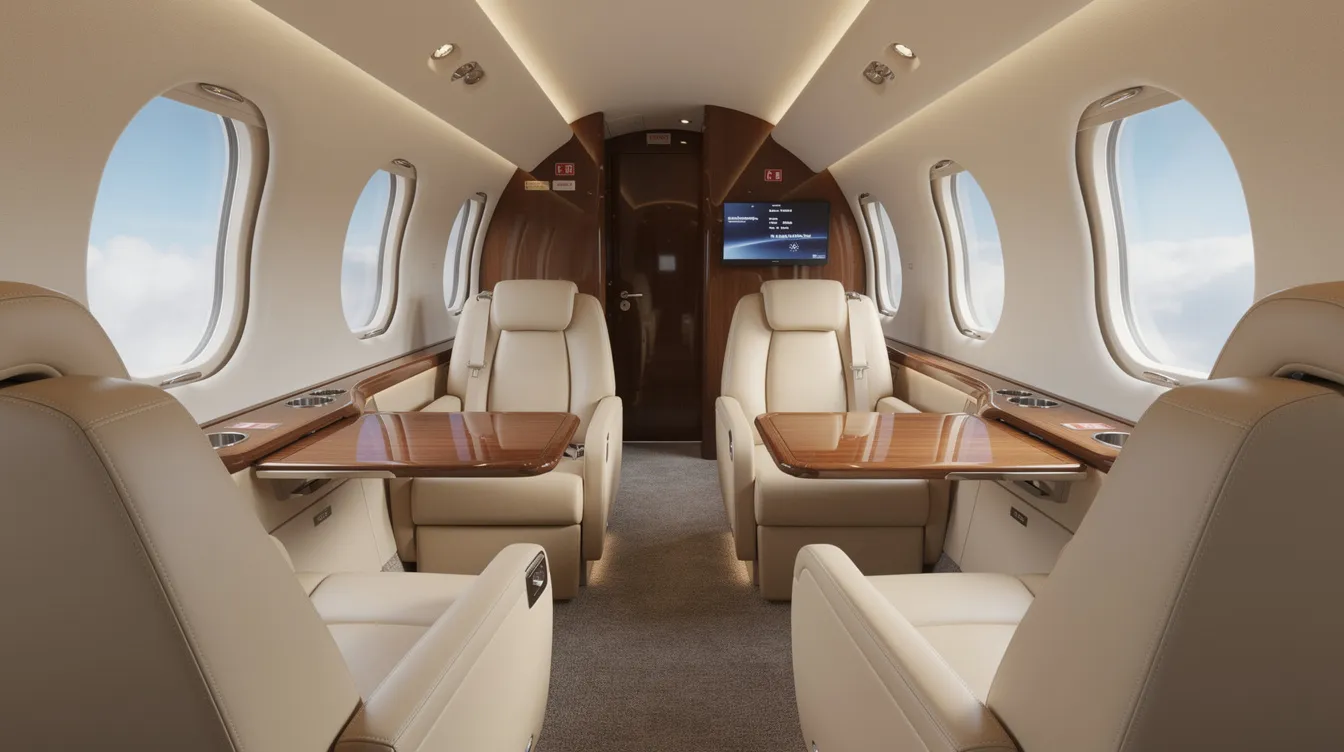
Cabin comfort goes beyond what even airline first class delivers. With fewer passengers on board, travelers get spacious seating, a quiet environment, tailored catering, and real privacy. These class accommodations are designed for productivity or rest, depending on the trip. Unlike commercial first-class accommodations — which still involve crowded terminals and shared cabins — private flights ensure complete privacy for passengers from curb to destination.
Example scenario: Consider a same-day New York–Chicago–Detroit–New York business itinerary. On commercial airlines, this trip would require at least two connections, roughly 10–12 hours of travel, and likely an overnight stay. On a midsize jet, a traveler departs Teterboro at 7:00 AM, lands at Chicago Midway by 9:00 AM local time, holds a 90-minute meeting, flies to Detroit for an afternoon session, and returns to the New York area by 7:00 PM. Three cities, one day, zero security lines.
Different aircraft classes serve different missions depending on distance, passenger count, and budget. Jettly's marketplace includes turboprops, light jets, midsize and super-midsize jets, heavy long-range jets, and helicopters in some regions.
Turboprops (e.g., King Air 250, Pilatus PC-12): Ideal for short hops under roughly 600 miles. They carry 4–8 passengers at a lower cost per hour, making them a smart pick for regional routes like Toronto–Ottawa or Milan–Nice.
Light jets (e.g., Citation CJ3, Phenom 300): Carry 4–7 passengers with a range of around 1,500–2,000 miles. Popular for routes such as New York–Miami or Los Angeles–Aspen, these aircraft focus on speed and efficiency for domestic travel.
Midsize and super-midsize jets (e.g., Citation XLS+, Challenger 350): Seat 6–10 passengers with more cabin space, stand-up height in many models, and coast-to-coast U.S. capability. They also handle Europe–Middle East connections well.
Heavy and long-range jets (e.g., Gulfstream G550, Global 6000): Carry 10–16 passengers with lie-flat seating or beds, full-service galleys, and first-class accommodations suited for non-stops like New York–London, Dubai–Paris, or Hong Kong–Sydney. Private jets in this class can reach higher speeds than commercial airplanes, cutting hours off intercontinental trips.
Helicopters: Handle short urban transfers — Manhattan to Teterboro, São Paulo city center to Campinas — avoiding ground traffic entirely. They need only helipads, making them useful where fixed-wing access is limited.
Executive aviation also has remarkable reach in regions with limited commercial service. For instance, private jets can access over 2,400 aerodromes in Brazil, and the full network allows landing at 2,499 aerodromes across the country — far more than the handful of airports served by major airlines.
|
Aircraft Type |
Typical Passengers |
Ideal Range |
Example Route |
Indicative Hourly Rate |
|---|---|---|---|---|
|
Turboprop |
4–8 |
Up to 600 mi |
Toronto–Ottawa |
$1,000–$3,000 |
|
Light Jet |
4–7 |
1,500–2,000 mi |
New York–Miami |
$2,500–$5,500 |
|
Midsize Jet |
7–9 |
2,000–3,500 mi |
LA–Chicago |
$5,500–$8,500 |
|
Super-Midsize |
8–10 |
3,000–4,000 mi |
Coast-to-coast U.S. |
$7,000–$10,500 |
|
Heavy / Long-Range |
10–16 |
4,000–7,500 mi |
New York–London |
$9,000–$16,000+ |
|
Helicopter |
4–6 |
Up to 150 mi |
Manhattan–Teterboro |
Varies |
For a deeper comparison, see Jettly's private jets comparison guide.
Pricing for executive aviation typically depends on aircraft category, flight time, repositioning needs, airport and handling fees, and optional services like catering or ground transfer. Jettly shows instant estimates for many routes through its charter cost estimator.
The hourly rates listed above cover aircraft, crew, and insurance in most cases. However, additional costs - positioning flights, landing fees, FBO charges, fuel surcharges, and taxes — can add 20–40% to the base quote. In the U.S., the Federal Excise Tax alone adds roughly 7.5% to charter flights (FAA charter guidance).
Here's a sample breakdown for a 2-hour one-way trip:
|
Aircraft Size |
Hourly Rate (Mid-Range) |
Estimated 2-Hour Trip Total* |
|---|---|---|
|
Light Jet |
~$4,000/hr |
~$8,000–$10,000 |
|
Midsize Jet |
~$7,000/hr |
~$14,000–$17,000 |
|
Heavy Jet |
~$12,000/hr |
~$24,000–$30,000 |
*Includes estimated fees and taxes. Actual quotes vary by route, date, and operator.
The key models for accessing executive aviation differ in commitment level:
On-demand charter: Pay per trip. No ownership, no long-term contract. Best for travelers flying under roughly 75 hours per year.
Memberships and jet cards: Prepaid hours or plans that may offer perks like capped hourly rates or priority access. Less capital than fractional ownership, more predictability than ad hoc charter.
Fractional ownership: Buying a share of an aircraft. Efficient for those flying 75–300 hours per year, but carries fixed costs even when unused.
Jettly allows travelers to fly private without buying into long-term commitments. For those looking for savings, empty leg flights — repositioning flights sold at discounts of 25–75% off standard rates — can significantly reduce the cost of a one-way trip. The platform can display or alert users to these opportunities when they match a traveler's schedule.
For more on finding lower pricing, see cheap private jet charter prices.
Executive aviation prioritizes flexibility, time savings, and privacy compared to commercial aviation. These are not abstract perks — they translate directly into fewer hours lost in transit, better control over itineraries, and a working environment that actually supports productivity.
Through platforms like Jettly, travelers can align departures with meeting schedules, reduce overnight stays, and often visit multiple cities in one day, improving the return on every travel hour. Private flights can be arranged on short notice, 24/7, giving the traveler demand-driven control that airlines simply can't match.
Executive aviation often uses private terminals — known as FBOs (Fixed Base Operators) — with amenities like quiet lounges, meeting rooms, and direct ramp access. There are no crowded gates, no overhead announcements, and no waiting at carousels.
Consider a business traveler flying from Boston to Toronto. On a commercial airline, the schedule might involve a 90-minute early arrival at Logan, a 30-minute boarding process, a 90-minute flight, customs and immigration at Pearson, and a 45-minute ground transfer — roughly 5.5 hours door-to-door. On a private jet departing from Hanscom Field, the same traveler arrives 15 minutes early, boards immediately, flies direct, clears customs at a private terminal, and reaches downtown Toronto in about 3 hours total.

Private aviation offers unmatched flexibility in scheduling flights. Skipping standard security lines, boarding queues, and baggage carousels can save 60–120 minutes per flight leg, especially at congested hubs like JFK, LAX, Heathrow, or Frankfurt. Executive aviation eliminates long waits at commercial airports entirely.
Executive aviation utilizes thousands of smaller airports for more convenient access to final destinations. Examples include Teterboro for New York, Van Nuys for Los Angeles, and Linate for central Milan. In the U.S. alone, private aircraft can access approximately 5,000 airports, compared to about 500 served by scheduled airlines.
Private aviation can optimize transportation time significantly. Departure times are customizable. Itineraries can be modified on short notice. And travelers can route directly between cities that lack non-stop commercial service — Raleigh to Napa, Lyon to Ibiza, or Calgary to Kelowna.
Executive aviation offers on-demand scheduling tailored to traveler needs. Private jet charters provide unmatched flexibility for scheduling, meaning a team can build an entire day around business objectives rather than airline timetables.
Sample multi-city day:
7:00 AM - Depart Chicago (Midway)
8:15 AM - Land in Des Moines, meeting until 10:30 AM
11:00 AM - Depart Des Moines
12:00 PM - Land in Omaha, meeting and lunch until 3:00 PM
3:30 PM - Depart Omaha
5:30 PM - Arrive back in Chicago
This itinerary would require at least two days using commercial airlines — if direct flights existed at all. With a light or midsize jet, it fits comfortably into a single day.
For urgent travel, private jets can be airborne within 2 hours of booking in many cases. Learn more about same-day private jet charter options.
Cabin comfort in executive aviation goes beyond airline first class. With as few as 2–6 passengers in the cabin, travelers can choose quiet working environments, meeting-style seating configurations, or lounge setups depending on the purpose of the trip. These class accommodations are tailored to the flight, not standardized across hundreds of seats.
Onboard features support real productivity. Wi-Fi is available on many jets. Power outlets and USB charging are standard. Low cabin noise — significantly quieter than commercial aircraft — supports presentations, phone calls, or confidential discussions. Executive aviation provides a secure environment for confidential discussions during flights, which matters for legal, financial, or M&A-related travel.
Passengers enjoy complete privacy during executive flights. There are no crowded gates, minimal contact with strangers, and full control over who is on board. Sensitive documents can be reviewed, and strategy meetings can happen without concern about neighboring passengers.
The benefits extend to leisure and family travel. Pets can ride in the cabin. Catering can be customized for children or dietary preferences. Flight times can align with school schedules, resort check-in windows, or event start times. Executive aviation can reduce travel stress by offering more control over itineraries, turning a potentially exhausting travel day into something closer to pleasure.
Many operators and platforms, including Jettly's network partners, support tailored in-flight catering and ground transportation coordination to create a door-to-door service experience. Whether the trip is for business meetings or weekend getaways, the caliber of service remains consistent.
Executive aviation companies must meet specific regulations and certifications to operate. In the United States, charter operators fly under FAA Part 135 rules, which impose strict standards for pilot training, aircraft maintenance, crew proficiency, and operational procedures. The FAA requires safety standards for all private aircraft, ensuring that even single-flight charters meet rigorous oversight requirements. In Europe, EASA provides comparable regulatory oversight. Regulatory oversight for executive aviation differs from commercial aviation regulations, but both aim to protect passengers.
Beyond government requirements, third-party safety audits add another layer of accountability. ARG/US Platinum Standards are stricter than FAA requirements and evaluate operators on pilot experience, maintenance history, insurance, and financial stability. Jettly only works with licensed, insured charter operators, and travelers can review operator certifications and safety records when choosing an aircraft through the platform. For more on how safety vetting works, see Jettly's safety and regulations FAQ.
Rigorous maintenance standards are essential for flight safety. Aircraft in the charter fleet undergo scheduled inspections, component overhauls, and airworthiness checks mandated by regulators. Highly experienced, certified flight crews ensure safety in aviation — most charter pilots hold thousands of hours of flight time and pass recurrent training and proficiency checks.
On the environmental front, private aviation does carry a higher per-passenger carbon footprint than commercial flights, particularly when flights are lightly loaded. The industry is responding with several measures: carbon offset programs, adoption of Sustainable Aviation Fuel (SAF) where available, more efficient routing, and ensuring aircraft are right-sized to passenger loads. Policymakers in some regions are considering emissions-based levies that could add 8–25% to charter costs depending on aircraft class and flight duration (ICCT working paper). Efficient routing, sharing flights when possible, and choosing the smallest suitable aircraft are practical steps travelers can take to reduce impact without sacrificing the core benefits of executive aviation.
Jettly operates as a digital private aviation platform that connects users to a global fleet of charter aircraft. Unlike a single executive aviation corporation with a fixed in-house fleet, Jettly aggregates inventory from operators worldwide, providing access to over 20,000 aircraft across worldwide destinations.
The booking process is straightforward:
Enter your route and travel dates on the platform.
Receive instant pricing across available aircraft types.
Compare aircraft profiles — cabin size, range, amenities, and safety information.
Select, confirm, and pay online.
Receive itinerary details and 24/7 support contacts.
For a step-by-step walkthrough, see how to charter a private jet.
Key differentiators include transparent pricing with no hidden fees, the ability to book on-demand or through membership plans, and support for trips to both major hubs and secondary airports. Digital booking allows access to over 20,000 aircraft, and instant pricing is available through the platform — meaning travelers can get a quote within minutes rather than waiting for callbacks.
Typical use cases include last-minute business trips, weekend getaways, ski vacations (Denver to Vail, London to Geneva), and international connections where commercial and private segments are linked. Whether clients fly from Canada to the Caribbean or across Europe for a single meeting, the platform handles the logistics.
For new users: Jettly offers 24/7 support, the ability to request custom quotes for complex itineraries, and filters for aircraft type, cabin size, and budget. No one needs to commit to a flight until they've seen exactly what they're paying for. Learn more about Jettly's charter options at https://www.jettly.com.

Jettly's on-demand model lets travelers pay per trip without buying fractional ownership or signing up for long-term jet cards. Digital platforms eliminate membership fees for private jet services when travelers prefer single bookings, making it accessible for occasional flyers who need flexibility without fixed commitments.
For frequent flyers, membership options can reduce per-flight costs and add perks such as priority support, capped hourly rates, and streamlined annual travel budgeting. These plans suit the clientele who fly private regularly but don't want the capital outlay of fractional programs. To learn more, visit private jet membership and jet card programs.
Empty leg flights appear on the platform when an aircraft needs to reposition — flying without passengers to reach its next pickup or return to base. These can be discounted 25–75% compared to standard charter rates. The trade-off: timing and routing are less flexible, since the schedule is set by the operator's existing commitment. Still, for travelers with flexible plans, they offer genuine value.
|
Option |
Ideal Traveler |
Flexibility |
Price Predictability |
Availability |
|---|---|---|---|---|
|
On-Demand |
Occasional flyers, varied routes |
High - any route, any time |
Per-trip pricing; varies |
Broad; depends on fleet |
|
Membership |
Frequent flyers (50+ hrs/yr) |
High, with added perks |
More predictable; capped rates |
Priority access |
|
Empty Leg |
Flexible schedule, budget-conscious |
Lower - fixed route & time |
Lowest cost; steep discounts |
Limited; route-dependent |
All three models use professionally operated, regulated aircraft and crew. The difference is in pricing and commitment level, not in safety or comfort. Every flight, whether booked on demand or through an empty leg deal, is committed to the same operational standards.
Here's how executive aviation plays out on common routes — and why travelers choose it over commercial options:
New York–Miami (Business): A finance executive books a light jet for a morning meeting in Miami, returning the same evening. Total travel time: about 6 hours including both flights. Commercial would require early check-in, connections or limited non-stops, and at least 10 hours door-to-door. A light jet fits the schedule and the team size.
Toronto–Vancouver (Corporate): A company sends its leadership team across Canada for quarterly planning. A midsize jet carries 7 people direct, with room for luggage and working space during the 5-hour flight. No connections in Calgary. No checked-bag delays.
Los Angeles–Las Vegas (Events): A group heading to a conference books a light jet from Van Nuys. Flight time: about 45 minutes. They skip LAX entirely and land at Henderson Executive Airport, minutes from the Strip. The pleasure of arriving relaxed — instead of frazzled by a 5-hour drive or crowded terminal — sets the tone for the trip.
London–Zurich (Finance): A wealth management team flies a super-midsize jet for a day of client meetings. The 90-minute flight departs from Farnborough, lands at Zurich Airport's private terminal. The crew and aircraft wait on the ramp for the return leg. No overnight stay needed.
Multi-leg tech roadshow - San Francisco, Seattle, Vancouver (2 days): Day one covers San Francisco to Seattle with morning meetings, then Seattle to Vancouver for an afternoon session. Day two wraps in Vancouver with a return to San Francisco. A midsize jet handles all legs without the team dealing with three separate airline bookings, border-crossing logistics, or overnight layovers. Executive aviation makes this a focused, efficient trip.
For longer routes like New York–London or Dubai–Geneva, heavy jets with first-class accommodations provide lie-flat beds and full-service galleys, ensuring passengers arrive rested after overnight flights — ready for the next day's agenda.
Explore more popular private jet charter routes on the Jettly platform.
The following questions address common concerns that first-time private flyers often have, covering practical details beyond what's discussed above.
Not at all. Executive aviation is used by a wide range of travelers: small and mid-sized business owners, families, medical travelers, high-net-worth individuals, and anyone who needs to understand and control their travel schedule. On-demand charter through Jettly lets occasional travelers book single trips without corporate contracts, ownership structures, or any legacy commitment. You don't need to be a Fortune 500 executive to fly private — you just need a reason to value your time.
Many trips are booked several days to a few weeks in advance. However, urgent flights can sometimes be arranged within hours, depending on aircraft and crew availability. Digital booking enables 24/7 availability for charter services, so requests can be submitted at any time of day. For peak periods — major holidays, large sporting events, or international conferences — submitting details early gives the best selection. Jettly's platform will show what's available in real time, ensuring transparency from the moment you start planning.
Most private aircraft can accommodate pets in the cabin. Items like golf clubs, skis, musical instruments, or specialized equipment are typically welcome, subject to size, weight, and operator policies. When requesting a quote through Jettly, it helps to share details on passengers, pets, and luggage so the platform can match you with a suitable aircraft and invite the right operator into the booking process.
Travelers still need valid passports, visas, and any required entry documents for international flights, just as on commercial airlines. The departure and arrival procedures are faster and more private — customs and immigration often happen at the FBO rather than a crowded terminal — but border and entry rules remain the same. Jettly or the operator will brief passengers on any specifics for their route, providing clarity before the day of travel. If you're a first-time private flyer, this is one of the most common questions — and the answer is simpler than most people expect.
Visit https://www.jettly.com, enter basic trip details - origin, destination, date, number of passengers — and the platform will display available aircraft with pricing. From there, compare options by cabin size, range, and cost. Confirm a booking directly, or request a tailored quote for complex itineraries. Those unsure of the right aircraft or schedule can contact Jettly's support team for guidance on matching their needs and budget to available executive aviation solutions.
Executive aviation offers a compelling alternative to commercial air travel, combining flexibility, time savings, privacy, and comfort tailored to the needs of modern business and leisure travelers. Platforms like Jettly simplify access to this world by providing instant pricing, extensive aircraft options, and seamless digital booking without long-term commitments. Whether flying for critical meetings, family vacations, or urgent travel, executive aviation delivers efficient, secure, and personalized experiences that help travelers make the most of their time.
Ready to experience private travel on your terms? Explore flight options or request a quote at https://www.jettly.com. Learn more about Jettly's charter options at https://www.jettly.com.
Share this post:
Jay Franco Serevilla
Sep 16, 2026
|
5
min read
Discover tips and trends in the industry.

5
min read
Green Private Jet: How Eco-Conscious Travelers Can Fly Private with a Smaller Footprint
Green private jets offer eco-conscious travelers a practical way to fly with a reduced environmental impact. By utilizing fuel-efficient aircraft, sustainable aviation fuels, and carbon offsets, travelers can significantly lower their carbon footprint while enjoying the convenience of private aviation. Platforms like Jettly make it easy to compare options and book flights quickly.
Read More
5
min read
Private Jet Vancouver: Charter Guide, Airports, Costs & Empty Leg Deals
Flying a private jet to Vancouver offers travelers quick access to stunning destinations like Stanley Park and Whistler. This comprehensive guide covers airport options, aircraft types, pricing, and the benefits of empty leg deals, making private travel more accessible and efficient.
Read MoreStay updated with our latest insights and tips to elevate your journey with us.
MEMBERSHIPS AND ASSOCIATIONS



Disclaimer: Jettly operates as a charter broker, offering access to a global digital jet charter marketplace. Jettly is not a direct air carrier and does not own or operate aircraft. All advertised flights are conducted by third-party air carriers that are fully licensed and hold the appropriate Part 135 or Part 121 certifications issued by the Federal Aviation Administration (FAA) or equivalent regulatory authorities under U.S. or foreign law. Jettly complies fully with the U.S. Department of Transportation's Part 295 and Part 298 Charter Broker regulations. Jettly does not carry additional liability insurance. Passengers are covered by aircraft operator insurance. TICO: 50023770


