


Login
Get Instant Pricing On 23,000+ Aircraft

>
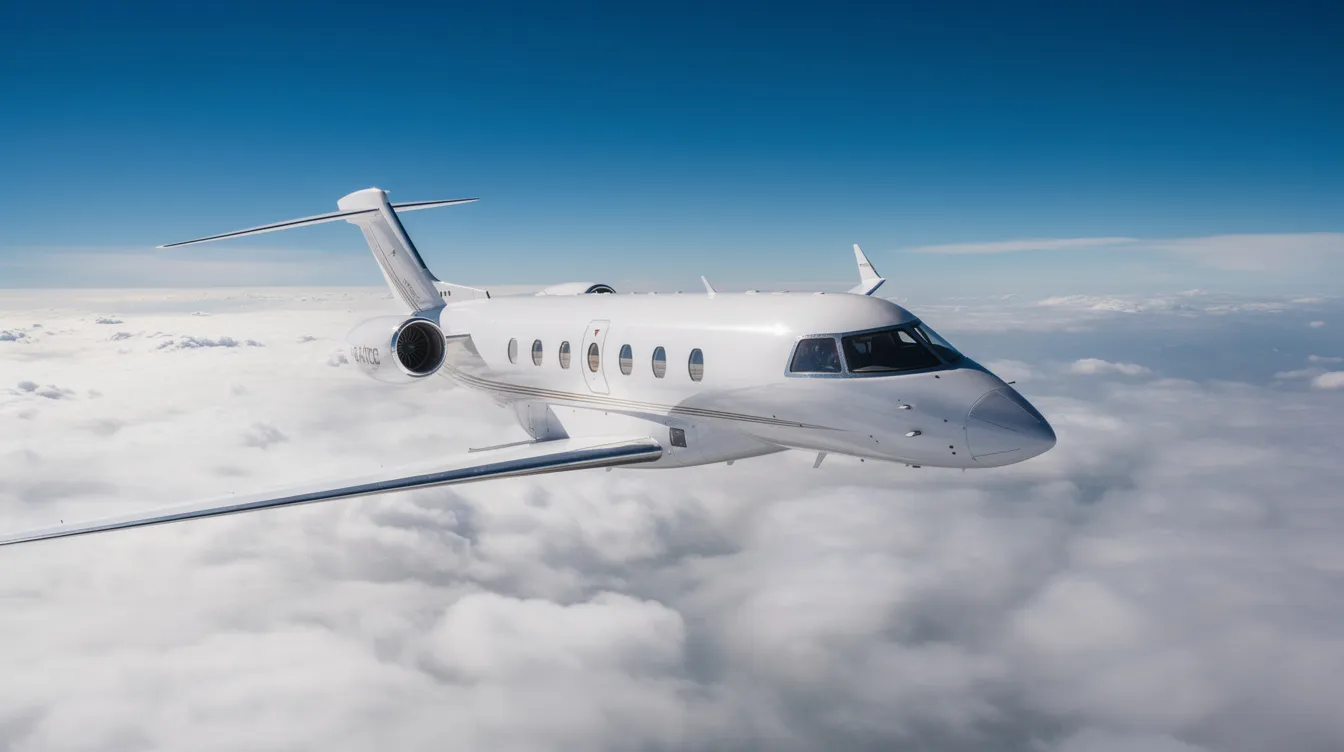
When it comes to covering ground in the sky, not all aircraft are created equal. This guide is for business travelers, charter customers, and aviation enthusiasts who want to understand which jets offer the fastest travel and why speed matters in private aviation. The fastest non-military jet today is a purpose-built machine designed for executives and travelers who treat time as their most valuable asset. Here is what defines the fastest private jets in service, how they compare, and what matters when booking a high-speed charter flight.
The Bombardier Global 8000 currently holds the title of the world's fastest business jet, with a top speed of Mach 0.94-roughly 721 mph or 1,160 km/h. It pairs that speed with an intercontinental range of 8,000 nautical miles and seats up to 19 passengers. Entry into service began in December 2025.
Close behind sit the Gulfstream G700 at Mach 0.935 and the Cessna Citation X+ at Mach 0.935 (though with a shorter range of about 3,460 nm). The fastest non-military civilian aircraft today are ultra-long-range business jets built for executive transport and global missions.
Why does this matter in practice? Faster jets save significant travel time, reduce or eliminate fuel stops, and create flexibility for travelers who need to reach destinations on tight schedules.
Jet speed is measured in Mach, the ratio of aircraft speed to the speed of sound. A business jet certified for civil operations, with that status dependent on regulatory certification, powered by jet engines, and flown with a crew qualifies as a non-military jet. The fastest non-military civilian aircraft are utilized for executive transport and business purposes. The fastest non-military civilian aircraft are utilized for executive transport and business purposes. The focus is on level-flight performance, not short test dives or experimental reconnaissance platforms.
Most private jets cruise a notch below their maximum operating speed (called MMO) to optimize fuel consumption and range. Modern aerospace engineering has pushed civilian aircraft near the edge of the sound barrier, but certified operations remain subsonic. Some aircraft have broken through Mach 1 in testing-the Global 8000 test vehicle reached approximately Mach 1.015-yet standard commercial service stays below that threshold. For charter customers, real-world cruise speed and dispatch reliability in the air matter more than a peak figure on paper.
The Bombardier Global 8000 is the fastest private jet in active service today. It can reach a top speed of Mach 0.94, with Mach 0.95 cited in some marketing materials. Typical cruise sits around Mach 0.90, while long-range cruise drops to Mach 0.85 to complete its full 8,000 nautical miles of range, with engine thrust playing a key role in sustaining that level of performance. Service ceiling is about 51,000 ft.
The large cabin features four living zones, an optional private stateroom, and a full galley. Cabin altitude at 41,000 ft is roughly 2,900 ft-low enough to reduce fatigue on long flights. Many business jets are designed with significant passenger capacity in mind, while still prioritizing speed, and the Global 8000 is the clearest example.
During testing, a Global 7500 flight test vehicle configured to Global 8000 standards broke the sound barrier using sustainable aviation fuel. That record matters for aviation history, but certified operation remains subsonic.
For Jettly users, the Global 8000 opens nonstop routes like New York to Hong Kong, LA to Tokyo, or London to Perth-missions that eliminate connections and cut total journey time by hours.
Several aircraft approach the Global 8000's performance. Here is how the fastest jets compare:
|
Aircraft |
Top Speed (MMO) |
Range |
Passengers |
First Delivery |
|---|---|---|---|---|
|
Bombardier Global 8000 |
Mach 0.94 |
~8,000 nm |
Up to 19 |
2025 |
|
Mach 0.935 |
~7,750 nm |
16–19 |
2024 |
|
|
Gulfstream G800 |
Mach 0.935 |
~8,200 nm |
16–19 |
2025 |
|
Gulfstream G650 / G650ER |
Mach 0.925 |
~7,000–7,500 nm |
14–19 |
2012 / 2014 |
|
Bombardier Global 7500 |
Mach 0.925 |
~7,700 nm |
Up to 19 |
2018 |
|
Mach 0.935 |
~3,460 nm |
8–12 |
2014 |
The Gulfstream G700 has a maximum speed of Mach 0.935 and connects London and Singapore nonstop, while the Gulfstream G650ER can cruise at Mach 0.90 with long-distance efficiency across roughly 7,500 nm. The Gulfstream G700 and G800 are engineered for high-speed performance with significant range.
The Cessna Citation X can fly from LA to New York in under 5 hours, making it a favorite for coast-to-coast missions despite its smaller cabin and shorter range. The Citation X+ can achieve speeds up to Mach 0.935, matching larger jets in airspeed if not in space or range. Production ended in 2018.
Each aircraft fills a niche: ultra-long-range jets handle intercontinental travel, while super-midsize jets like the Citation serve high-speed domestic routes.
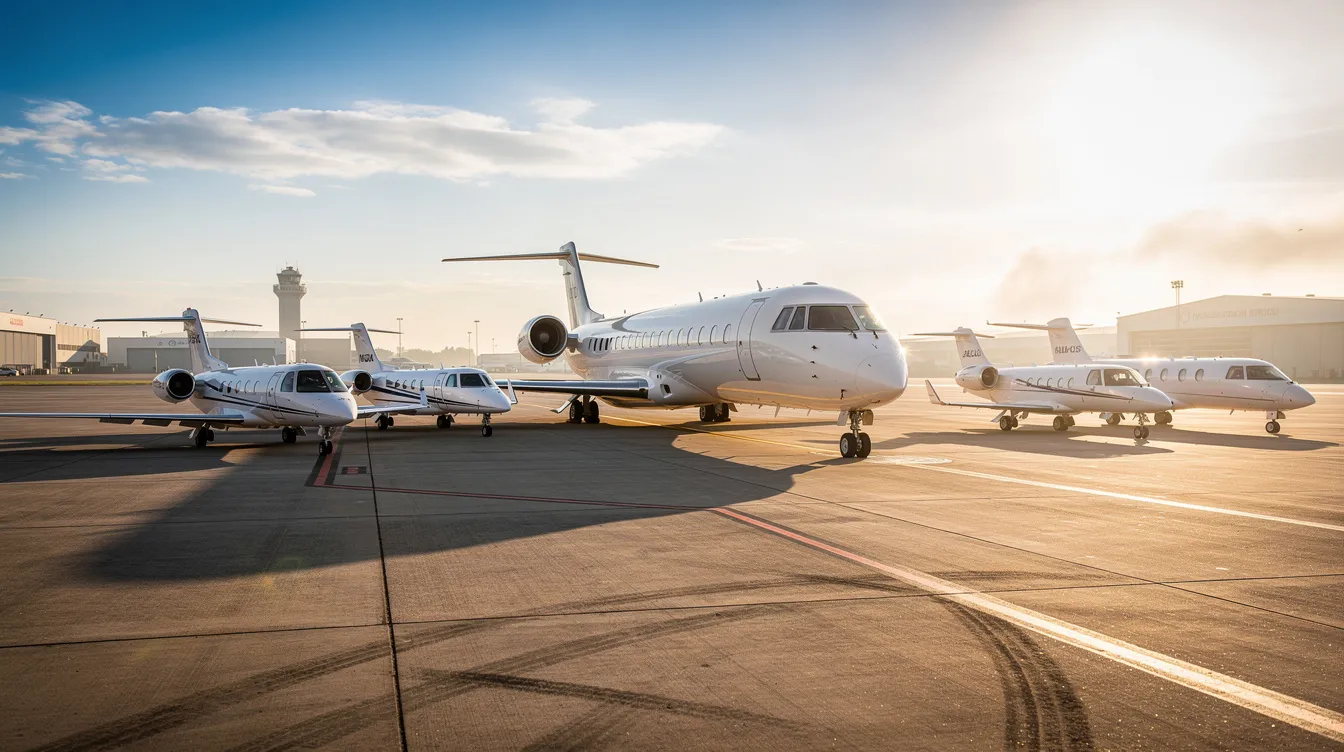
The conversation around speed extends beyond today's business aviation fleet. Two supersonic aircraft set records that still stand:
Tupolev Tu-144: Cruise around Mach 2.0, with test flights reaching Mach 2.35. Limited passenger service in the 1970s before being called off.
Aérospatiale-BAC Concorde: Mach 2.04 cruise, entered service in 1976, retired in October 2003. It remains the benchmark for civil supersonic travel.
Speed alone is not enough to earn lasting historical comment without practical engineering and viable service.
Civilian aviation has focused on efficiency and high-subsonic speeds since the Concorde's retirement. Supersonic fuel costs, noise regulations, and limited routes created barriers no operator could overcome. Current supersonic passenger aircraft are not active, but prototypes-including NASA's X-59 low-boom research plane-are in testing. No commercial supersonic private jet service is available today, so the fastest private jets in the world remain subsonic.
For charter customers, overall trip time and reliability beat raw top speed. Civilian jets operate significantly slower than maximum speed during typical flights due to economic considerations-flying at Mach 0.90 instead of Mach 0.94 burns less fuel and extends range, while costing only minutes on most routes.
Top speeds for civilian jets are optimized to balance speed, fuel consumption, and range. Factors that matter as much as a Mach number:
Range and fuel stops: A faster aircraft with shorter range may arrive later than a long-range aircraft flying nonstop.
Runway access: Landing closer to your destination saves more time than a few extra knots of cruise speed.
Cabin comfort: Layout, noise, and cabin altitude affect productivity and rest.
Door-to-door time: Private terminal access, no security lines, and flexible scheduling create true time savings over commercial alternatives.
Operating at speeds close to Mach 1 enhances time optimization for executive travel, but "faster is always better" is a myth. The right plane matches the mission.
Jettly is a digital private jet charter marketplace offering on-demand access to over 20,000 aircraft globally-including many of the fastest private jets on the market. The platform lets travelers search and compare options from light jets to ultra-long-range aircraft like heavy and large-cabin jets, starting the booking process there with instant pricing and transparent cost breakdowns. Travelers should also watch for hidden costs and extra fees, especially when comparing providers.
Concrete scenarios where speed and access matter:
An executive team flying New York to London overnight in a Global 7500 or 8000 to maximize time on the ground the next day.
A family flying LA to Hawaii on a fast midsize jet to skip connections and reduce travel to a few hours.
Urgent same-day coast-to-coast repositioning on a high-speed aircraft when schedules shift.
Jettly also offers empty leg flights for cost savings, works exclusively with safety-compliant operators, and supports sustainable aviation fuel options where available. Faster jets enhance flexibility and privacy for travelers, and Jettly's fleet includes Cessna Citation models, Gulfstreams, Globals, and more.
The best aircraft is not always the absolute fastest. It is the one that balances speed, range, cabin features, and cost for a specific flight. Keep these categories in mind:
Light jets: Ideal for short regional hops under 2–3 hours. Slightly slower but still faster than airlines door-to-door.
Midsize and super-midsize: Strong mix of speed, efficiency, and comfort for 3–5 hour sectors. The Cessna Citation family fits here.
Heavy and ultra-long-range: The fastest jets overall, with long-range capability and large cabins for 8–19 passengers. Global and Gulfstream flagships dominate this space.
Jettly's platform helps match aircraft to route length, passenger count, luggage, and budget-whether that means the absolute fastest jet or a slightly slower but more economical option. The goal is real-world time savings and comfort, not just headline performance.
Q: What is the fastest private jet currently in service?
A: The Bombardier Global 8000 is the fastest private jet in service today, reaching speeds up to Mach 0.94 with an intercontinental range of 8,000 nautical miles.
Q: How does speed impact private jet travel?
A: Higher speeds reduce total travel time, minimize or eliminate fuel stops, and increase flexibility for travelers with tight schedules, making private jet travel more efficient.
Q: Are the fastest private jets always the best choice?
A: Not necessarily. The best jet balances speed, range, cabin comfort, and cost based on the specific mission. Sometimes longer range or better airport access saves more time than raw speed.
Q: Can private jets exceed the speed of sound?
A: Some jets, like the Global 8000, have broken the sound barrier during testing, but certified commercial operations remain subsonic due to regulatory and economic factors.
Q: How does Jettly help travelers book the fastest jets?
A: Jettly offers a digital platform with instant pricing and access to over 20,000 aircraft worldwide, including the fastest private jets, allowing travelers to compare options and book transparently.
Q: What types of flights benefit most from the fastest jets?
A: Long intercontinental routes, urgent business trips, and missions requiring minimal ground time benefit most from high-speed private jets.
Q: Are faster jets less safe?
A: No. All private jets undergo rigorous FAA/EASA certification and pilot training. Safety is a top priority regardless of speed.
Q: What is the typical cruising speed compared to maximum speed?
A: Jets usually cruise below their maximum speed to optimize fuel efficiency and range, balancing speed with operational costs and comfort.
The Bombardier Global 8000 holds the record as the fastest non-military jet built, with unmatched speed at Mach 0.94. The Gulfstream G700, G650, and Cessna Citation X+ remain top choices depending on the mission. The fastest civilian jets available today set significant performance benchmarks across both speed and range, but the smartest choice balances these factors against cabin needs, route, and budget.
Jettly offers a transparent, tech-driven way to access the fastest private jets and a wide fleet of aircraft-no ownership or long-term contracts required.
Ready to experience private travel on your terms? Explore flight options or request a quote at https://www.jettly.com.
Share this post:
Jeff Ryan Serevilla
Oct 8, 2026
|
5
min read
Discover tips and trends in the industry.
5
min read
What Are Empty Leg Flights? A Practical Guide to Discounted Private Jet Travel
Empty leg flights are discounted private jet journeys that occur when a jet is repositioning without passengers. These flights offer travelers the luxury of private aviation at a fraction of the cost, typically 50% to 80% cheaper than standard charters. This guide explains how to find and book these flights, making private travel more accessible for those with flexible schedules.
Read More
5
min read
Cost of Flight for Life: What Air Ambulance Transport Really Costs
Air ambulance transport can be a lifesaver during medical emergencies, but the costs can be staggering, ranging from $12,000 to over $200,000. This guide explores the factors influencing these prices, including distance, aircraft type, and medical care level, while offering tips on managing and reducing costs effectively.
Read MoreStay updated with our latest insights and tips to elevate your journey with us.
MEMBERSHIPS AND ASSOCIATIONS



Disclaimer: Jettly operates as a charter broker, offering access to a global digital jet charter marketplace. Jettly is not a direct air carrier and does not own or operate aircraft. All advertised flights are conducted by third-party air carriers that are fully licensed and hold the appropriate Part 135 or Part 121 certifications issued by the Federal Aviation Administration (FAA) or equivalent regulatory authorities under U.S. or foreign law. Jettly complies fully with the U.S. Department of Transportation's Part 295 and Part 298 Charter Broker regulations. Jettly does not carry additional liability insurance. Passengers are covered by aircraft operator insurance. TICO: 50023770


