



Login
Get Instant Pricing On 23,000+ Aircraft

>
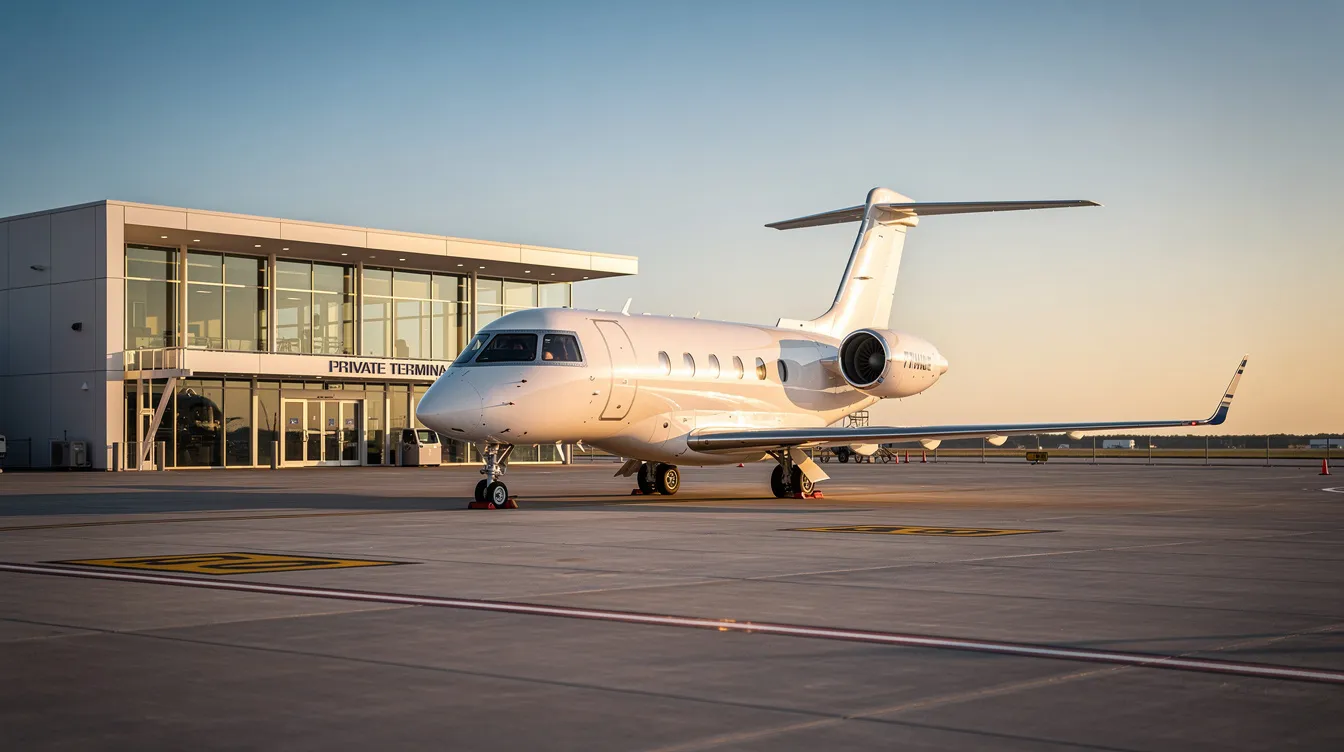
Every private jet flight starts and ends on the ground—and the facility that handles that ground experience is called a Fixed Base Operator, or FBO. Whether it’s a quick domestic hop or a transatlantic business trip, the FBO private jet terminal is where passengers check in, aircraft get fueled and serviced, and the time savings of private aviation begin. This guide explains what FBOs do, how they differ from commercial terminals, and what travelers should know before booking through Jettly, part of a broader private charter airlines and platforms ecosystem.
A Fixed Base Operator is a private aviation terminal and service hub. There are over 5,000 FBOs across the U.S., compared to roughly 500 commercial airports.
FBOs can reduce pre-departure ground time to 15–20 minutes, replacing long security lines and crowded gates with a streamlined curb-to-cabin process. This is one part of affordable private jet charter value.
Core FBO services include fueling, ground handling, crew support, passenger amenities, and catering, including Jettly Eats catering coordination.
FBO choice affects trip logistics, comfort, and cost. Jettly and partner operators select a facility based on aircraft needs and passenger preferences.
Travelers should confirm the FBO name, address, and arrival time before every flight. An airport locator search can help verify terminal details.
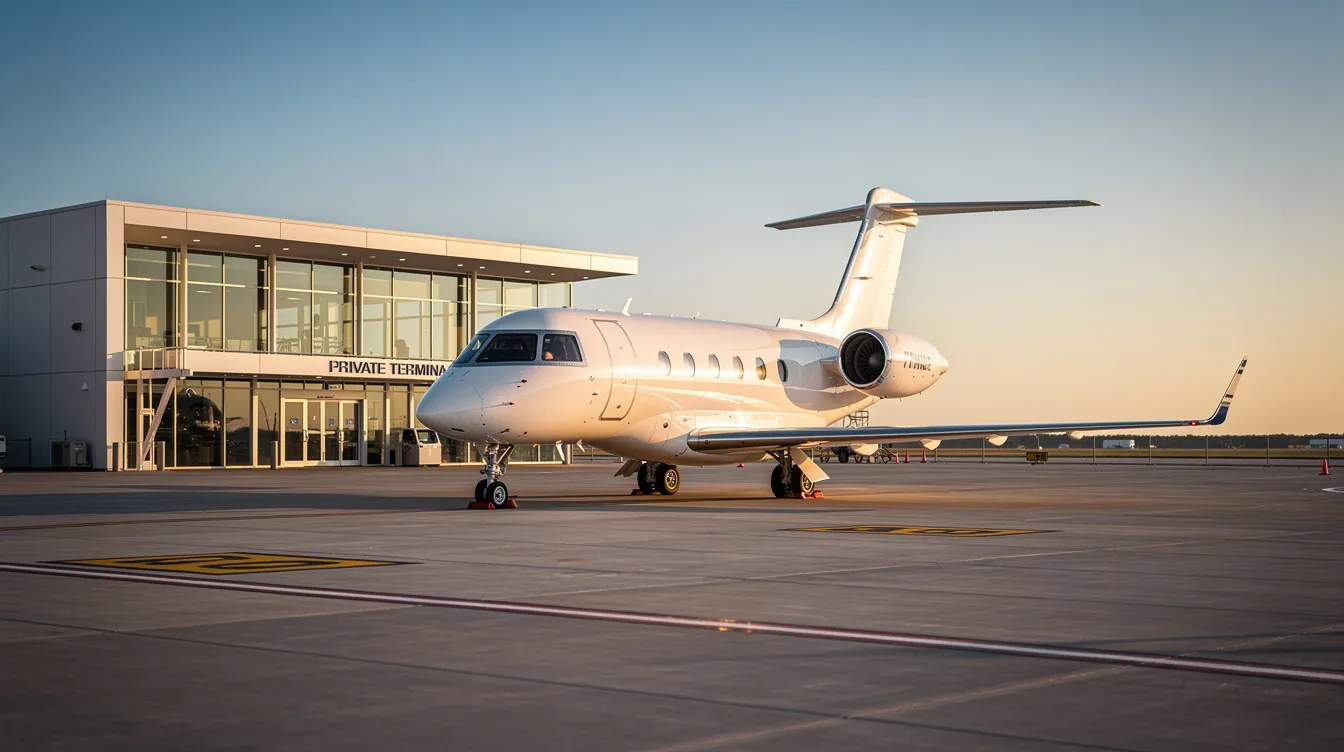
An FBO is a commercial business granted the right by an airport to operate on its property, providing ground services for private and business aviation. The term dates to the 1920s, when permanent airport-based companies were distinguished from transient operators. Today, an FBO combines a quiet passenger lounge with behind-the-scenes operations such as fueling, aircraft handling, crew coordination, and aircraft maintenance.
There are over 5,000 FBOs across the U.S., serving airports of every size. FBOs act as private terminals for private aviation clients at busy hubs like Teterboro Airport near New York and Van Nuys in Los Angeles.
|
FBO function |
What it means for travelers |
|---|---|
|
Passenger terminal |
A separate, quieter place to check in and wait |
|
Aircraft support |
Fueling, hangarage, cleaning, towing, and ramp coordination |
|
Crew services |
Rest areas, weather briefings, and flight-planning support |
|
Special handling |
Concierge assistance and customs coordination where available |
Jettly, a digital charter broker, books flights operated by certified carriers. Those carriers work with local fixed base operators at each airport to deliver the ground experience, using a global network of private charter aircraft.
The difference between an FBO and an airline terminal comes down to time, privacy, and personal attention.
|
Trip detail |
Private jet FBO |
Commercial terminal |
|---|---|---|
|
Arrival time |
Often 15–30 minutes before departure |
Commonly 60–180 minutes, depending on route and airport |
|
Check-in and boarding |
ID and manifest checks, followed by direct access to the aircraft |
Airline check-in, security queues, gates, and boarding groups |
|
Privacy |
Separate entrances and private waiting areas |
Shared public spaces and crowded gates |
|
Staff focus |
Personalized handling for each flight |
Service designed for large passenger volumes |
A European study of more than 800,000 business aviation flights found that private flights saved an average of 127 minutes per trip over commercial alternatives. Actual savings depend on the route, airport, and schedule.
FBOs allow passengers to bypass crowded commercial terminals. On routes like New York–Miami or LA–Las Vegas, this can cut total door-to-door travel time, especially when paired with Jettly’s airport locator platform to find convenient departure and arrival points.
Here’s what a typical travel day looks like for a Jettly customer flying domestically.
A car service pulls up at the private jet terminal. Staff greet passengers, and luggage is taken directly to the aircraft. Inside the FBO, check-in is brief: staff confirm ID against the manifest and complete any required paperwork.

Passengers can stop in the lounge for coffee or Wi-Fi, or head straight to the plane. When the crew signals readiness, FBO staff escort passengers across the ramp. On many domestic charter flights, pre-departure ground time can be as little as 15–20 minutes.
|
Flight type |
Typical arrival guidance |
Why extra time may help |
|---|---|---|
|
Domestic |
About 15–20 minutes before departure |
Allows for check-in and a direct boarding process |
|
International |
Often 30–45 minutes or more |
Passport, customs, and border procedures vary by location |
|
Large group or special assistance |
Confirm a tailored report time |
Luggage, mobility needs, or special handling may require coordination |
FBOs can provide customs and border facilities for international flights, but availability and procedures vary. Travelers with pets, reduced mobility, medical equipment, or unusual cargo should coordinate requirements with the operator in advance.
What passengers see inside an FBO varies by location, but the facilities are designed to support private travel.
Passenger lounges with comfortable seating and Wi-Fi
Shower facilities and private meeting rooms at some locations
Complimentary snacks and beverages at many FBOs
Duty-free shopping and car rental desks at some larger facilities
Concierge services and private lounges at high-traffic hubs
At Paris Le Bourget, which has eight FBOs, travelers can find dedicated suites, customs services, and concierge desks. Pre-ordered catering can be placed onboard, from simple meals to tailored menus, with services like Jettly Eats in-flight catering coordinating across many airports.
Amenities differ even between FBOs at the same airport. One may prioritize passenger comfort; another may excel at speed and operational reliability. When schedules are tight, a well-staffed ramp team can matter more than lounge features. Learn more about private jet amenities.

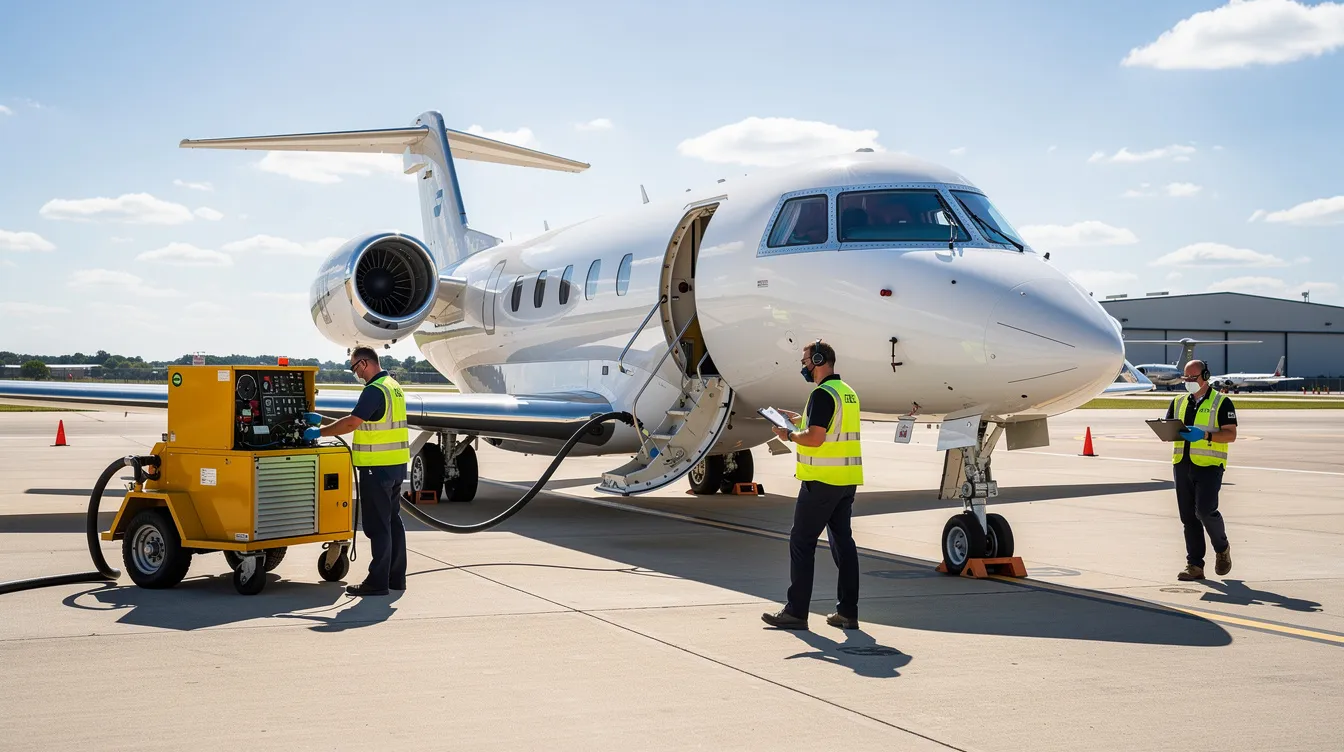
While passengers see the lounge, operators choose FBOs for safe, efficient aircraft and ground handling. FBOs provide fueling, aircraft handling, and crew support services that help flights stay on schedule.
|
Service area |
Common examples |
|---|---|
|
Aircraft services |
Jet A fueling, Avgas, parking, tie-downs, hangars, de-icing, cleaning, and towing |
|
Crew services |
Lounges, rest areas, weather briefings, and flight-planning support |
|
Ground support |
Baggage handling, ground transportation coordination, and after-hours access where available |
FBOs provide fueling, hangarage, and aircraft cleaning as standard services. They also offer personalized ground handling for each flight, adjusted to aircraft type and mission requirements. Brokers and operators, including Dexter Air Taxi on the Jettly platform, coordinate these services through certified carriers.
Turn times matter. A strong line team can turn a light or midsize jet in 15–30 minutes by fueling, cleaning, and provisioning it efficiently. This can help operators maintain schedules and manage costs, one of several factors that shape private jet charter pricing.
Many airports used in private aviation have multiple FBOs. The choice can change your curb location, ramp access, and taxi time to the runway.
Airfield location: An FBO closer to the active runway may reduce taxi time. Selection also affects ramp convenience and aircraft traffic flow.
Seasonal capability: De-icing matters for winter flights, but not every FBO at a northern airport offers it.
Ground access: Some FBOs allow planeside drop-off by car service; others require passengers to walk from the building. Confirm access needs in advance.
Parking and overnight storage: Hangar availability and overnight parking fees vary between facilities.
Cost impact: Handling, parking, and after-hours fees may be included in a quote through the operating carrier. Choosing a different FBO can sometimes increase cost, particularly where fuel agreements differ.
The FBO landscape includes large networks and independent operators. Signature Flight Support operates over 200 FBO locations worldwide. Atlantic Aviation, Jet Aviation, and regional operators such as Million Air are other names travelers may encounter. Local service, facilities, and operating hours vary by airport.
|
Airport |
FBO context |
|---|---|
|
Teterboro Airport (TEB) |
Five FBOs serve the New York metro area’s business aviation traffic |
|
Van Nuys (VNY) |
Multiple FBOs handle Los Angeles private flight demand |
|
Opa-Locka Executive (OPF) |
A common option for South Florida business aviation |
|
Paris Le Bourget (LFPB) |
Eight FBOs serve Europe’s busiest private aviation airfield |
At smaller airports, one or two fixed base operators may serve both private jets and general aviation. These facilities can have fewer amenities or shorter operating hours, while still providing essential fueling and handling services.
Jettly’s global marketplace schedules flights into thousands of airports worldwide and relies on each operating carrier’s local knowledge to match the FBO to the mission. The carrier’s familiarity with the airport and its home base can help inform practical choices. Partners such as Zenflight private jet charter also use brokered networks to match aircraft and airports.
Jettly is a technology-driven charter broker, not an FBO or aircraft operator. All flights are operated by properly certified third-party carriers. Once a booking is confirmed, the operating carrier reserves space with an appropriate FBO.
Factors in that choice include aircraft size, runway requirements, customs needs, passenger count, ground transportation, and crew services. Pilots and carrier staff coordinate operational details with the FBO before departure.
Customer preferences can also be accommodated. Travelers can request a specific FBO, discreet access, or a preferred car service provider. Requests may affect cost or availability, particularly for frequent flyers using private jet membership programs. Jettly support can confirm which FBO will be used and explain the selection. Frequent flyers can also review jet card program benefits.
Confirm arrival time: Plan for 15–30 minutes before a domestic departure. For international or complex trips, allow more time and follow the operator’s instructions. If booking a single seat on a private jet, confirm whether shared passengers affect the report time.
Get exact FBO details: Confirm the name, street address, and entrance. Share them with your chauffeur; the private terminal may be on the opposite side of the airfield from the commercial terminal. If using prepaid hours, check how jet card pricing handles itinerary changes.
Ask about access rules: Planeside pickup, pet procedures, and customs availability vary. If you are sharing private jet flights or empty seats, make sure every passenger understands the applicable rules.
Check IDs and the manifest: Keep government-issued ID or passports ready. Confirm all passengers appear on the manifest before departure.
Communicate changes: Tell Jettly or the operator promptly if the departure time, passenger count, or schedule changes. This helps the FBO adjust staffing and ramp coordination, including when arranging last-minute private jet seat options.
Plan for peak periods: Events, ski season, and holidays can create ramp congestion and limit ground transportation. Book early and confirm details with the charter airlines or operators.
FBO-related charges can appear as separate line items or be included in the charter price. Common charges include:
|
Fee type |
What it may cover |
|---|---|
|
Ramp or parking fees |
Use of ramp space or overnight parking; sometimes waived with a minimum fuel purchase |
|
Ground handling |
GPU, lavatory service, cleaning, or de-icing |
|
After-hours fees |
Staffing or call-outs outside normal operating hours |
|
Passenger facility fees |
Access to lounges, conference rooms, or other amenities |
For Jettly customers, these costs are generally reflected in the total charter quote provided by the operating carrier. Efficient turnaround and competitive fuel pricing can help control operating costs. Travelers comparing options can use Jettly’s jet card flight cost estimator to understand how aircraft and programs affect pricing.
Choosing a different FBO may increase the price. Before booking, ask whether unusual surcharges apply, especially during peak events. Jettly’s charter cost estimator and cost guide can help set expectations.
The process is straightforward:
Search routes and dates on Jettly’s platform.
Compare aircraft available for the route.
Review pricing and select an option that fits the trip.
Confirm the booking and review the itinerary details.
After confirmation, travelers receive the airport, FBO name, address, and arrival instructions from the operator. Jettly members can access additional support for complex trips, multi-leg itineraries, or short-notice changes. Frequent flyers may also consider jet card programs for structured pricing and service expectations.
Ready to fly private on your terms? Explore aircraft options and request an instant quote at Jettly.com. Travelers who fly often can consider private jet memberships, while those interested in referrals can learn about the affiliate program.
Most business aviation flights use a private jet FBO on the airfield rather than the commercial terminal. Some airports integrate FBO lounges into the main building, but passengers still use a separate private aviation process. Travelers considering a seat on a private jet should confirm the specific meeting location and check-in instructions.
The operating carrier typically selects the FBO based on contracts and operational needs. Jettly customers can request a specific facility, but a change may affect cost or availability, particularly at airports where fuel agreements differ. Shared-seat arrangements, such as ways to get a seat on a private jet, may also influence the schedule and terminal instructions.
Passengers need valid government-issued identification for domestic flights and a passport for international travel. All travelers must appear on the flight manifest. Some locations require additional screening, but the process is generally more direct than at a commercial terminal. Travelers can also explore options to share empty seats rather than chartering an entire aircraft.
Car service or rideshare drivers need the precise FBO address, not just the airport name. The private terminal may be on the opposite side of the airfield from the commercial terminal. Jettly’s airport locator tool can help travelers verify the location, and the operator can arrange transportation when requested.
If departure times shift, the operator can re-coordinate with the FBO for ramp space and staffing. Jettly can help communicate changes and provide updated check-in details. The platform’s same-day charter process helps match travelers with suitable private charter aircraft for revised travel windows.
An FBO is more than a private terminal. It coordinates passenger handling, aircraft services, and ground logistics that shape the trip. The right FBO can save time, support a smoother departure, and fit the aircraft and schedule. Its location, services, and fees can also affect the overall charter experience.
Before flying, confirm the FBO name, exact address, arrival time, and any special arrangements with the operating carrier. Jettly is a charter broker, and every flight is operated by a properly certified third-party carrier. Through Jettly’s marketplace, travelers can compare aircraft and request an instant quote, while the carrier coordinates a suitable FBO for the itinerary.
Ready to plan your next FBO private jet trip? Explore flight options or request a quote at https://www.jettly.com.
Share this post:
Jay Franco Serevilla
Nov 4, 2026
|
5
min read
Discover tips and trends in the industry.
5
min read
Seat Map Plane: How Aircraft Seat Maps Help You Choose the Best Private Jet Cabin
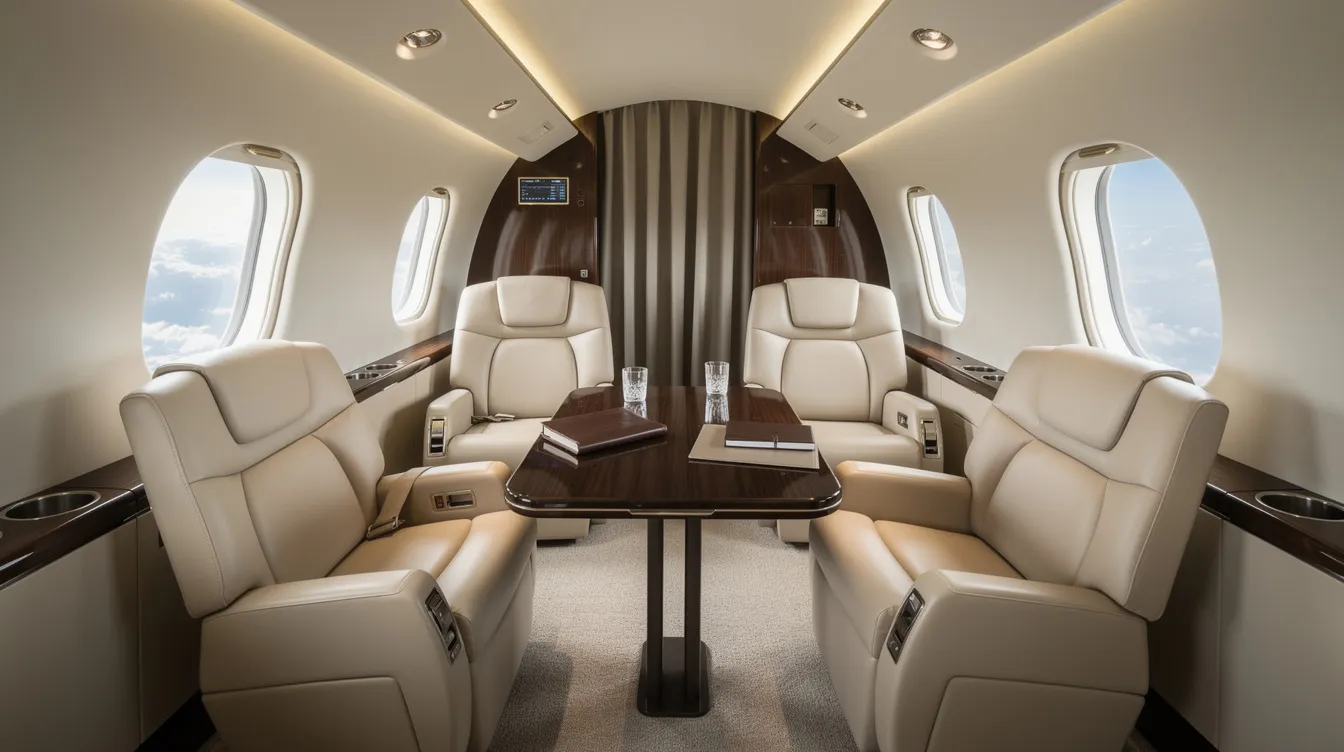
Understanding aircraft seat maps is essential for both commercial and private jet travelers. These maps provide a visual layout of seating arrangements, helping passengers choose the best options for comfort and convenience. Jettly offers access to over 20,000 unique aircraft, allowing travelers to compare cabin configurations and make informed decisions before booking.
Read More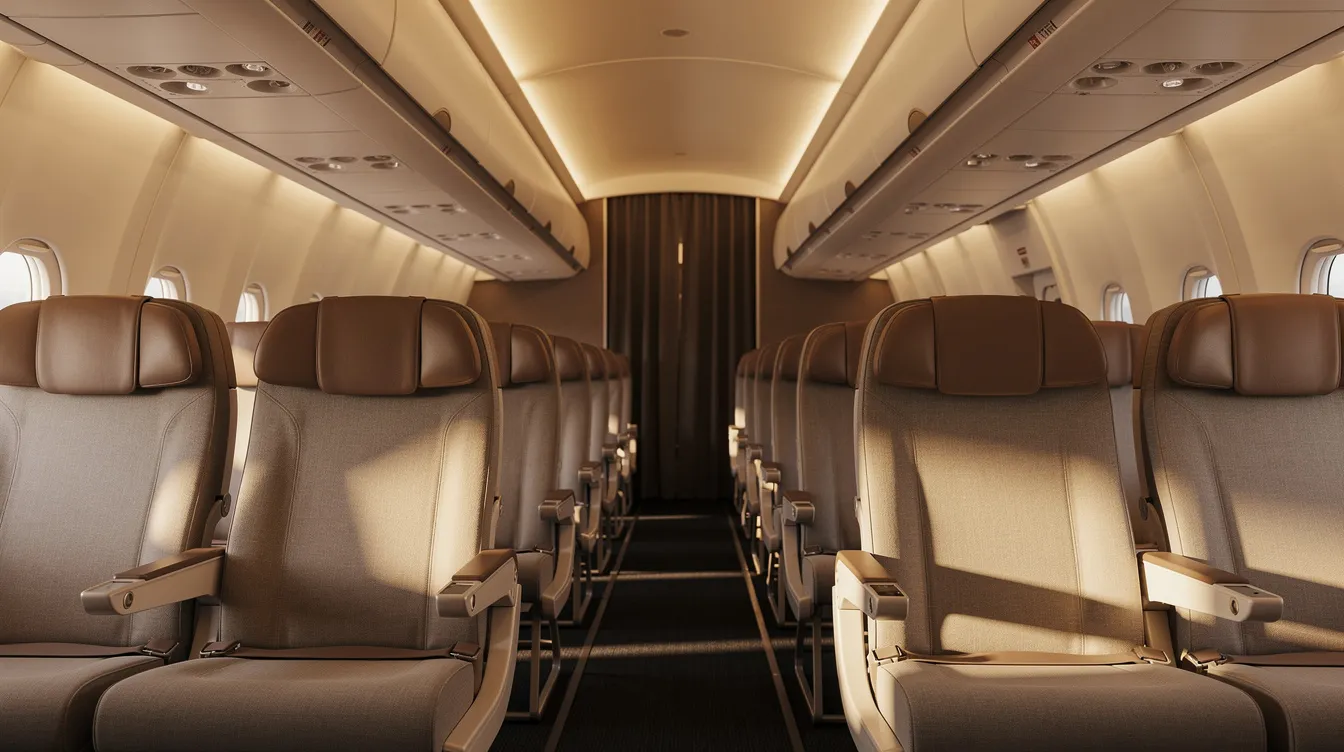
5
min read
Inside a Delta Plane: What the New Cabin Interior Really Feels Like
Delta Air Lines has introduced a new cabin interior across its fleet, featuring modern designs, memory-foam cushions, and enhanced lighting. The updated cabins aim to provide a more comfortable and inviting atmosphere for travelers, with distinct offerings in Delta One, Premium Select, Comfort+, and Main Cabin. This article explores the features and experiences of flying in the revamped Delta planes compared to private jet alternatives.
Read MoreStay updated with our latest insights and tips to elevate your journey with us.
MEMBERSHIPS AND ASSOCIATIONS



Disclaimer: Jettly operates as a charter broker, offering access to a global digital jet charter marketplace. Jettly is not a direct air carrier and does not own or operate aircraft. All advertised flights are conducted by third-party air carriers that are fully licensed and hold the appropriate Part 135 or Part 121 certifications issued by the Federal Aviation Administration (FAA) or equivalent regulatory authorities under U.S. or foreign law. Jettly complies fully with the U.S. Department of Transportation's Part 295 and Part 298 Charter Broker regulations. Jettly does not carry additional liability insurance. Passengers are covered by aircraft operator insurance. TICO: 50023770


