


Login
Get Instant Pricing On 23,000+ Aircraft

>

The FedEx Cessna Caravan, primarily the Cessna 208B and Grand Caravan variants, forms the backbone of FedEx Feeder operations on short regional routes, handling first-mile and last-mile package runs into communities that larger aircraft cannot reach.
The Caravan is a single-engine turboprop built by Textron Aviation, chosen for its reliability, short-runway performance, and operating costs well below those of light jets.
FedEx's Caravan missions mirror many private charter use cases: regional business trips, cargo shuttles, and access to small airfields with no commercial airline service.
A digital charter platform like Jettly can source similar aircraft types, including Grand Caravans and comparable turboprops, for time-critical regional passenger or cargo flights.
FedEx operates hundreds of Cessna 208 Caravans for cargo, making the FedEx Cessna Caravan one of the most recognizable workhorses in express logistics. Every night across North America, these reliable single-engine turboprops depart regional hubs loaded with packages, fly short legs into smaller cities, and land before sunrise to support next-day delivery commitments. The Cessna 208 Caravan serves as a crucial link for regional logistics, connecting communities that would otherwise wait days longer for their shipments.
The Cessna Caravan line, produced by Textron Aviation since the mid-1980s, has become one of the world's most widely used utility and cargo turboprops. FedEx first took delivery of Caravans in that era and has since built a feeder fleet of hundreds of aircraft through its FedEx Feeder network.
Similar Caravan aircraft also fly passenger shuttles, medical transport, and small-load cargo charters every day. Platforms like Jettly connect travelers and shippers to these aircraft when a turboprop fits the mission better than a jet, alongside a broader catalog of private charter aircraft for missions better suited to jets.
The Cessna 208 Caravan is a single-engine turboprop aircraft with a high-wing layout, first certified by the FAA in October 1984. The Caravan's design enables operation from short and rough runways, a trait that made it attractive to cargo operators and bush pilots from the start.
The main variants include:
Cessna 208 Caravan: the original short-body version, often assembled for passenger and mixed-use roles with a standard window configuration.
Cessna 208B Super Cargomaster: a stretched, windowless freighter developed at FedEx's request after the company identified volume, not weight, as the limiting factor on feeder routes.
Grand Caravan and Grand Caravan EX: stretched passenger variants with upgraded PT6A engines, Garmin G1000 NXi glass cockpits in newer models, and seating for 9 to 14 passengers in commuter layouts.
Typical cruise speed sits around 184 knots true airspeed at 10,000 feet. Range with full fuel and reserves runs roughly 900 to 1,100 nautical miles, depending on payload. Textron Aviation continues producing and upgrading the Caravan family today, with improvements in avionics, cabin options, and payload capability rolling out each model year.
Interior configurations vary: FedEx uses stripped-out cargo interiors with reinforced floors and tie-down points, while charter operators install commuter seats, combi layouts, or club-style cabins.
The FedEx Feeder system is the regional arm of FedEx Express. It uses smaller aircraft to connect outlying communities to major sorting hubs. The Cessna Caravan is integral to this feeder network connecting smaller communities, and as of recent fleet counts, roughly 238 of FedEx Feeder's 282 contracted aircraft are Cessna 208B Caravans.
A typical mission looks like this:
Late-night departure from a regional hub after packages are sorted.
Short-haul legs, often under 300 to 400 nautical miles.
Early-morning arrival into a smaller airport, enabling same-day or next-day delivery in remote markets.
The Caravan serves FedEx's Purple Promise service to customers through dedicated routes, and the Cessna Caravan supports FedEx's commitment to reliable morning deliveries. Smaller markets can rely on the Caravan for overnight priority shipping that would not justify dispatching larger aircraft. The Caravan is pivotal for connecting underserved markets to major regional hubs, and Cessna 208 Caravans serve smaller markets for FedEx across North America, Latin America, and parts of Europe.
Many FedEx Caravans are flown by contract carriers like Empire Airlines, Mountain Air Cargo, and Wiggins Airways. FedEx often uses single-engine turboprops for lower-cost regional deliveries, and the Caravan's operational flexibility allows adaptation to varied delivery routes, whether the destination is a paved regional airport or a short strip in a rural area—an efficiency-focused mindset that also informs affordable private jet charter pricing for smaller business or leisure missions.
The Cessna Caravan's cargo-focused design aligns with FedEx's package delivery needs. FedEx-configured Super Cargomasters feature a large cargo door at the rear, strengthened floors, and tie-down points for securing freight. The external belly cargo pod increases the Caravan's cargo capacity by roughly a third, adding both volume and weight allowance.
Key cargo and performance specs:
|
Specification |
FedEx Cessna 208B Caravan |
|---|---|
|
Maximum Useful Load |
Approximately 4,700 lb |
|
Payload with Full Fuel |
Around 2,000 to 3,000 lb |
|
Cargo Volume |
About 340 cubic feet + ventral cargo pod |
|
Cruise Speed |
Approximately 184 knots |
|
Range |
900 to 1,100 nautical miles |
|
Takeoff Distance (50 ft obstacle) |
Roughly 1,700 feet ground roll (light load) |
|
Service Ceiling |
Around 22,800 feet |
|
Fuel Burn |
About 65 US gallons per hour |
The simplicity of the Caravan's design contributes to lower operating costs for FedEx, burning around 65 US gallons of fuel per hour compared to far higher rates for twin turboprops or jets. FedEx's use of the Caravan allows for lower infrastructure requirements in logistics: no jetway, no long runway, no specialized ground equipment. The Caravan's rugged design enhances operational reliability in adverse conditions, from freezing Alaskan winters to humid Caribbean nights.For comparison, larger FedEx feeder types like the ATR-42 carry 15,000 to 20,000 lb of cargo. Caravans fill the low-density routes where that capacity is unnecessary.
While FedEx operates dedicated freighter Caravans, many Grand Caravan aircraft in global fleets carry passengers. The Cessna 208 Caravan serves smaller markets not accessible by larger jets, making it a natural fit for charter and regional airline service.
Common passenger roles include:
Short-haul commuter services between secondary cities.
Scenic flights and safari transfers in East Africa and Alaska.
Island-hopping routes in the Caribbean, Indonesia, and the South Pacific.
Corporate and family travel to airfields too small for jets.
Cabins typically seat 9 to 12 passengers in a single-aisle layout with high-wing windows providing good downward visibility. Some operators offer upgraded finishes and club-style seating for private charter trips, and travelers can match aircraft layouts to their group size using guides on how many passengers private jets can carry or explore easy ways to get a seat on a private jet through memberships, empty legs, and flight-sharing options. Reputable charter platforms partner only with certified, safety-vetted operators, and single-engine commercial passenger operations are subject to local regulations from authorities like the FAA or EASA, which is why many travelers compare top private jet charter companies on factors like safety standards, fleet diversity, and service quality.
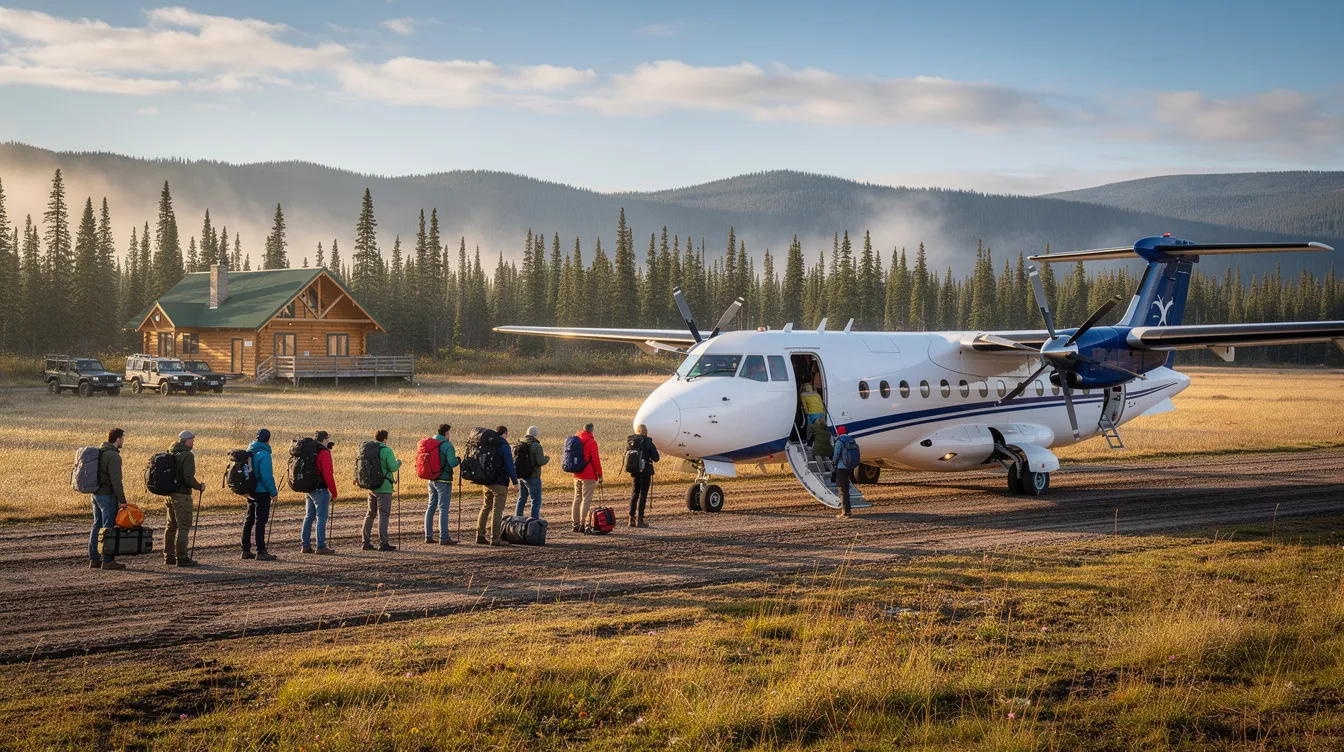
Textron Aviation oversees continuous improvements to the Cessna 208B and Grand Caravan product line. Key design features that built the Caravan's reputation include:
Fixed landing gear built for rough strips, eliminating retraction mechanisms that add complexity and maintenance.
High-wing layout improving ground clearance and cargo loading access.
Pratt & Whitney Canada PT6A engine series with engine overhaul intervals around 8,000 hours.
Garmin-equipped glass cockpits in newer Grand Caravan EX models.
FedEx Caravans are inspected every 100 to 200 flight hours under the FAA's Approved Aircraft Inspection Program. Pilot training and standard operating procedures for single-engine IFR cargo flights are critical, especially on overnight schedules. For travelers considering non-airline options, understanding how renting a plane works and affordable aeroplane rental costs and options helps clarify the process, requirements, and safety standards. Jettly's marketplace lists flights only from licensed operators meeting local safety and maintenance requirements, so customers can access Caravan-type aircraft under regulated conditions with accurate operator information available before booking.
FedEx's Cessna 208B Caravans are dedicated freighters and not available for private booking. But many similar Grand Caravan aircraft are accessible for on-demand charter through digital platforms like Jettly.
Typical charter missions where a Caravan-class turboprop makes sense:
Short-range business trips between secondary or remote airports.
Group leisure trips to ski resorts, fishing lodges, or safari camps where runway length is limited.
Time-critical cargo movements for high-value spare parts, medical supplies, or material shipments on routes too small for larger freighters.
On Jettly's platform, customers input route, date, and passenger or cargo details or use a private jet charter cost estimator or guides on what affects one private flight cost to understand ballpark pricing before booking. The system generates pricing based on available aircraft, including turboprops like the Grand Caravan. Users compare options by aircraft type, operator, flight time, and cost, and can review usage terms before they purchase a charter option or service. If a listing includes a cabin or aircraft photograph, users should rely on the operator's provided material rather than assume rights to reuse it. When special permissions or documentation are needed for cargo or operator-provided material, customers should request or leave a note through the platform during booking. The platform provides access to over 20,000 aircraft globally, with membership and on-demand choices for frequent or occasional flyers, and transparent pricing with clearly stated fees, positioning Jettly as a flexible NetJets alternative for private flying.
Jettly does not compete with FedEx parcel services. Instead, it enables bespoke passenger and ad-hoc cargo flights that resemble FedEx-style point-to-point operations for private clients, businesses, and logistics teams that need schedule control and small-airport access, similar to the operators highlighted in comprehensive charter airline guides.
Choosing between a Caravan-class turboprop and a light jet comes down to mission fit, not prestige. Here is how the decision factors break down:
|
Feature |
Cessna 208B Caravan |
Typical Light Jet |
|---|---|---|
|
Cruise Speed |
~180 knots |
400+ knots |
|
Runway Requirement |
Under 2,000 feet, rough strips |
Longer, paved, with infrastructure |
|
Operating Cost |
Lower fuel burn, simpler maintenance |
Higher fuel burn, complex maintenance |
|
Cabin Experience |
Functional, utility-oriented |
Executive, luxury-oriented |
|
Passenger Capacity |
9 to 14 (Grand Caravan) |
6 to 10 (varies by model) |
On sub-500 nm routes, the time difference shrinks once you factor in airport access, taxi, and ground handling at smaller fields. Other turboprops like the Pilatus PC-12, Cessna 207 utility aircraft, or Beechcraft King Air offer pressurized cabins or multi-engine redundancy, but at higher hourly rates, while light twins such as the Cessna 340 balance speed and comfort for small business groups. The Grand Caravan sits at the rugged utility end of the spectrum. Jettly can display multiple aircraft categories for a given route, letting users decide whether a Caravan-type turboprop, another turboprop, or a light jet best fits their schedule and budget.
Yes. FedEx's aircraft share the Cessna 208B airframe with passenger Grand Caravans. The difference is configuration: FedEx flies windowless Super Cargomasters with reinforced cargo floors and no passenger seats, while other operators use the same airframe with a new window layout, commuter seating, and standard passenger interiors.
With a useful cargo load in the 3,000 to 3,500 lb range on a typical feeder run, a Caravan can carry several hundred smaller parcels per flight. The exact count depends on package size, route length, and how much fuel the aircraft needs to carry for that leg.
FedEx's own Caravans are dedicated to its network and not bookable for private use. Similar Cessna 208B or Grand Caravan cargo aircraft can be chartered through Jettly via certified third-party operators for ad-hoc freight missions, medical logistics, or other time-sensitive shipments.
The Grand Caravan is not a luxury jet, but it handles short-range business trips well when schedule control and airport access matter more than cabin finishes. A team of six to nine people can fly direct to a remote site, congratulations event, or regional office without the constraints of commercial airline schedules, especially if they leverage private jet membership programs designed for frequent flyers.
Caravan-type turboprops generally have lower hourly rates due to reduced fuel burn and simpler maintenance. On a 200 nm leg, the cost difference can be considerable, especially when you compare these charter rates with the full private jet operating cost breakdown for owners. Jettly's platform shows side-by-side pricing for turboprops and jets on the same route, and dedicated tools like a jet card flight cost estimator help customers compare membership-based flying with on-demand options so they can share a preview of each choice with their team and pick what fits their budget and timing.
The FedEx Cessna Caravan, especially the Cessna 208B Super Cargomaster and Grand Caravan, underpins FedEx Feeder's ability to reach smaller markets quickly and at low cost. The same strengths that create value for FedEx (short-field performance, reliability, and low operating cost) also make it a smart choice for private charter on short-range missions. FedEx has tested autonomous cargo flights using modified Cessna Caravans, a sign that the airframe's role in logistics may expand further in coming years.
Textron Aviation's continued development of the Grand Caravan family supports both cargo and passenger roles, with modern avionics and a safety-focused design that has logged decades of service worldwide. Businesses and travelers who want FedEx-style direct point-to-point access to smaller airports can use Jettly to find Caravan-type aircraft and other turboprops suited to their routes.
Ready to explore turboprop charter options for your next regional trip or time-critical shipment? Discover available aircraft and request transparent pricing at https://www.jettly.com, whether you're comparing private jet memberships and jet card programs and detailed jet card cost structures, using tools like an airport locator for suitable runways, exploring ways to share empty seats on private flights, or even joining Jettly's high-ticket affiliate program.
For travelers whose missions extend beyond regional turboprops, Jettly also brokers larger aircraft such as the Airbus A330-300 for long-haul charters or the Boeing 737-800 for high-capacity short-haul routes, with optional services like Jettly Eats in-flight catering. Regional travelers can book routes to major hubs like Houston, Texas, or international gateways like Kolkata, West Bengal, or even arrange a private jet charter in Atlanta, Georgia, Bangalore, Karnataka, Chennai, Tamil Nadu, Hyderabad, Telangana, Islamabad, Pakistan, Jaipur, Rajasthan, Lucknow, Uttar Pradesh, Mumbai, Maharashtra, New Delhi, Delhi, or Vadodara, Gujarat, often through vetted operators including Dexter Air Taxi and Zenflight that appear in Jettly's marketplace.
Share this post:
Jay Franco Serevilla
Sep 23, 2026
|
5
min read
Discover tips and trends in the industry.

5
min read
Private Jet to Greece: Routes, Costs, Aircraft & Airports with Jettly
Flying by private jet to Greece offers travelers direct access to both the mainland and islands, significantly reducing travel time compared to commercial flights. With over 40 airports available, private jets provide flexibility, privacy, and customized in-flight experiences. Jettly's platform simplifies the booking process, offering instant pricing and access to a wide range of aircraft.
Read More
5
min read
Propeller Planes: How Propeller Aircraft Compete with Jets in Modern Private Aviation
Propeller planes are increasingly relevant in modern private aviation, offering cost-effective solutions for regional and remote flights. They excel in accessing short and unpaved runways, making them ideal for connecting communities that jets cannot reach. This guide explores the advantages of propeller aircraft, their operational mechanics, and how they compare to jets.
Read MoreStay updated with our latest insights and tips to elevate your journey with us.
MEMBERSHIPS AND ASSOCIATIONS



Disclaimer: Jettly operates as a charter broker, offering access to a global digital jet charter marketplace. Jettly is not a direct air carrier and does not own or operate aircraft. All advertised flights are conducted by third-party air carriers that are fully licensed and hold the appropriate Part 135 or Part 121 certifications issued by the Federal Aviation Administration (FAA) or equivalent regulatory authorities under U.S. or foreign law. Jettly complies fully with the U.S. Department of Transportation's Part 295 and Part 298 Charter Broker regulations. Jettly does not carry additional liability insurance. Passengers are covered by aircraft operator insurance. TICO: 50023770


