


Login
Get Instant Pricing On 23,000+ Aircraft

>

The fighter jet is one of the most complex machines ever built. Designed to dominate the skies at supersonic speed, these aircraft shape the outcome of conflicts, deter aggression, and protect nations every day. Fighter jets are built for high speed, agility, advanced sensing, and the ability to carry weapons. Most modern designs are multirole, meaning they can perform both air-to-air and ground-attack missions efficiently. This article covers what a fighter jet is, how it evolved across decades of aviation history, why it matters for global security, and how civilians can get closer to the experience today.
Modern fighters like the F-35 Lightning II and F-22 Raptor integrate stealth, sensor fusion, and real-time data-sharing across domains to secure mission success in contested airspace.
Fighter jets underpin national defense and global security while also driving economic growth through massive industrial programs, technology transfer, and global partnerships spanning dozens of countries.
Types of fighter jets include air superiority fighters, multirole fighters, and strike fighters, each categorized based on their roles and capabilities.
While true combat aircraft are restricted to militaries, civilians can book fighter jet flights using demilitarized trainers. Private jet platforms such as Jettly focus on business and luxury travel rather than combat flying, offering a different kind of high-performance aviation experience.
A fighter jet is a fast, highly maneuverable military aircraft designed primarily for engaging and defeating other aircraft in combat. Fighter jets are built for high speed, agility, advanced sensing, and the ability to carry weapons. Most modern designs are multirole, meaning they can also perform air-to-ground strikes, reconnaissance, and electronic warfare missions.
The term "fighter" was first used in 1910, and the category has expanded significantly since then. Fighter aircraft are categorized based on their roles and capabilities:
Air superiority fighter: Optimized for controlling the skies (e.g., F-15C Eagle)
Multirole fighter: Handles both air-to-air and ground attack (e.g., F-15E Strike Eagle, Rafale)
Strike fighter: Focused on ground attack while retaining air combat capability
Modern fighters don't operate as solo "lone wolves." They function as part of networked air forces and joint commands, sharing data across platforms to achieve air dominance. This connected fighter aircraft approach is central to how organizations like the U.S. Air Force, Royal Air Force, and Japan Air Self-Defense Force maintain deterrence and rapid-response capabilities.
Air superiority means one side controls the skies enough to conduct ground and naval operations without prohibitive interference from the enemy. Air supremacy goes further - it means essentially uncontested control of the air.
Real-world conflicts illustrate why this matters. During the 1991 Gulf War, coalition forces established air supremacy within days, enabling ground forces to advance with minimal aerial threat. The 1999 Kosovo War showed how air power alone could shape a conflict's outcome. In both cases, fighter jets were the decisive advantage.
Key air superiority missions include:
Intercepting hostile aircraft and missiles approaching national airspace
Escorting bombers and high-value assets like AWACS and aerial tankers
Defending critical infrastructure and enforcing no-fly zones
Providing rapid response through quick reaction alert (QRA)
Fighter jets are essential for safeguarding national airspace by intercepting hostile aircraft. Air superiority fighters dominate air-to-air combat roles, while interceptors are designed to engage enemy aircraft quickly. Advanced sensor systems in fighter jets track targets from long distances, giving pilots the ability to fight threats before they become visible to the naked eye.
Dedicated platforms like the F-22 Raptor, Eurofighter Typhoon, and Su-35 deliver the speed, radar capability, and maneuverability needed for dogfight dominance and long-range interception.
Large fighter programs shape alliances, defense partnerships, and global security architectures. The F-35 Lightning II is designed for multirole missions and integrates air, land, sea, space, and cyber operations into a single platform. It is equipped with advanced stealth technology and can carry both U.S. and non-U.S. weapons, making it a cornerstone of allied interoperability.
The F-35 has over 1 million flight hours across its global fleet. The program supports over 317,000 jobs across more than 2,100 suppliers in over a dozen countries, with an annual economic impact in the U.S. exceeding $79 billion. Flyaway costs for recent production lots run approximately $82.5 million for the F-35A, $109 million for the F-35B, and $102.1 million for the F-35C.
Partner nations - including the UK, Italy, Netherlands, Australia, Norway, Denmark, Canada, and others - share training, maintenance infrastructure, and data systems. These global partnerships strengthen alliance cohesion and drive economic growth in every participating country through technology spinoffs in composite materials, avionics, and simulation.
Fighter acquisitions also influence geopolitical alignment. Countries buying American F-16Vs or F-35s signal different strategic relationships than those purchasing Russian Su-30/35s or Chinese J-10Cs. These decisions lock in decades of shared logistics, training, and interoperability - or the lack of it.
Modern fighter jets merge stealth, advanced engines, sensors, and software into one integrated combat system. Here are the core technologies that give today's fighters their edge.
Propulsion and airframe. Turbofan engines with afterburners - such as the Pratt & Whitney F119 powering the F-22 and the F135 in the F-35 - deliver the thrust needed for supersonic speed. Each jet engine combines with composite materials, fly-by-wire controls, and digital flight management systems to make aircraft that are intentionally aerodynamically unstable for maximum agility, yet perfectly controllable.
Sensors and avionics. Modern fighter jets incorporate powerful radar and advanced avionics for situational awareness. AESA radars like the AN/APG-77 (F-22) and AN/APG-81 (F-35) use thousands of transmit/receive modules to scan, track, and engage multiple targets simultaneously. Infrared Search and Track (IRST) sensors, helmet-mounted display systems, and distributed aperture systems round out the sensor suite.
Sensor fusion. Data from radar, IRST, electronic warfare receivers, and off-board sources are fused into a single situational picture. This gives the fighter pilot a comprehensive view of the battlefield without manually cross-referencing different screens.
Weapons integration. Fighters carry beyond-visual-range missiles (AIM-120 AMRAAM, Meteor), short-range IR missiles (AIM-9X, IRIS-T), and precision-guided bombs (JDAM, Small Diameter Bomb). Fifth-generation fighters are equipped with internal weapon bays and advanced sensors, preserving their stealth profile. Stealth technology allows modern fighters to operate undetected in hostile environments, while shaping and coatings on the aircraft's surface further reduce detection and improve survivability in contested airspace.
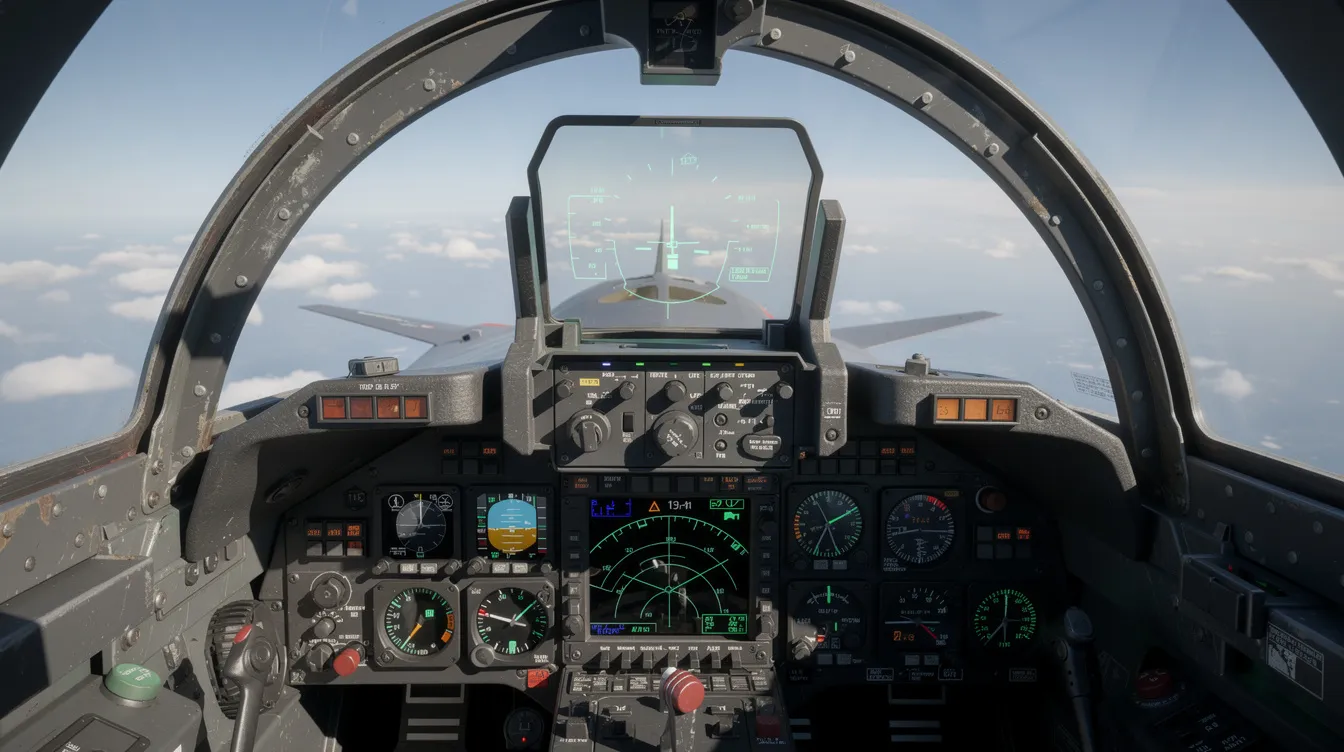
Aviation history tracks an extraordinary arc from fragile biplanes to radar-invisible jets. Here are the milestones that shaped the modern jet fighter.
World War I. The first fighter to shoot down another aircraft was a Voisin III in 1914. By 1915, the Fokker Eindecker was the first aircraft with synchronized machine guns, allowing pilots to fire through the propeller arc. Aerial combat was born from improvisation - pilots initially carried pistols and rifles before engineers designed purpose-built weapons.
Between the wars. Fighter aircraft engines increased from 180 hp in 1918 to 900 hp by 1936, driving dramatic improvements in speed, climb rate, and ceiling. Monoplanes replaced biplanes; retractable landing gear and enclosed cockpits became standard.
World War II. Iconic propeller-driven fighters like the Spitfire, Bf 109, and P-51 Mustang defined the battle for air superiority over Europe and the Pacific. The first operational jet fighter, the Me 262, introduced in 1944, was faster than piston-driven aircraft, signaling the end of the propeller era. World War II also saw the introduction of airborne radar on fighters, enhancing night and all-weather combat capabilities.
Post-war milestones. Korean War duels between the F-86 Sabre and MiG-15 marked the first jet-versus-jet dogfight in 1950, proving swept-wing jet combat was the future. The F-4 Phantom II in Vietnam pioneered multirole tactics. Cold War interceptors like the MiG-25 and F-106 pushed speed and altitude boundaries. Each generation layered new technology - radar-guided missiles, fly-by-wire, and eventually stealth - onto the fighter concept.

"Generations" are informal but useful labels analysts and air forces use to group fighter design eras and their defining technologies.
First and second generations (late 1940s–early 1960s). Early jets like the MiG-15, F-86 Sabre, F-100 Super Sabre, and MiG-21 transitioned from straight wings to swept wings. Armament shifted from guns to early air-to-air missiles, though guns remained essential. Radar was limited, and pilots relied heavily on visual contact and ground control.
Third generation (1960s–1970s). Aircraft designed in this era - such as the F-4 Phantom II and MiG-23 - introduced more capable radar, beyond-visual-range missiles, and early look-down/shoot-down capability. The F-4 famously entered service without a gun, a decision pilots and engineers later reversed.
Fourth generation (1970s–2000s). The F-14 Tomcat, F-15 Eagle, F-16 Fighting Falcon, MiG-29, and Su-27 defined this era. Fourth-generation fighters rely on speed, high-capacity external weapon payloads, and advanced avionics. Fly-by-wire flight control became standard. These fighters remain the backbone of many air forces worldwide.
Fifth generation (2000s–present). The defining feature of fifth-generation fighters is their stealth capabilities. The F-22 Raptor (introduced in 2005) and F-35 Lightning II represent this generation, along with emerging designs like China's J-20. Fifth-generation fighters are equipped with internal weapon bays and advanced sensors. Sensor fusion, internal weapons bays, and network-centric warfare define how these fighters fight.
Sixth generation (in development). The U.S. Next Generation Air Dominance (NGAD) program awarded its crewed fighter component - designated F-47 - to Boeing in March 2025, with fielding targeted for the 2030s. The UK-Japan-Italy Global Combat Air Programme (GCAP) plans operational service by 2035 with a £4.6 billion contract awarded in July 2026. The Franco-German-Spanish FCAS represents another European sixth-generation effort. All emphasize manned-unmanned teaming, AI, and collaborative combat aircraft.
The distinction between air superiority and multirole fighters shapes how nations build and deploy their fleets.
Air superiority fighters like the F-22 Raptor and Su-35 are optimized for air-to-air combat. They prioritize speed, altitude, maneuverability, and powerful radar over ground-attack capability. Their mission is to control the skies so that everything below - ground forces, naval assets, bombers - can operate safely.
Multirole fighters trade some air-to-air optimization for flexibility. Aircraft like the F-16, Rafale, F/A-18E/F Super Hornet, Gripen, and F-35 can handle both air-to-air and air-to-ground missions with configuration changes. Carrier-capable jets like the F/A-18E/F and F-35C are reinforced for operations from moving aircraft carriers, adding another layer of structural engineering.
Most air forces now prioritize multirole fleets. The U.S. Air Force, Royal Australian Air Force, and many NATO allies field multirole platforms as their primary fighters while preserving a core air superiority edge with select designs. Heavy fighters like the F-15EX Eagle II - with greater fuel capacity and payload - serve homeland defense and escort missions where range and endurance matter more than stealth.
As radar and sensors improved, fighters evolved into specialized roles beyond classic daytime dogfighting.
Night and all-weather fighters. Night fighters operate effectively in low visibility conditions. This lineage runs from WWII radar-equipped aircraft like the de Havilland Mosquito NF variants and P-61 Black Widow to today's all-weather fighters with AESA radars, IRST, and advanced datalinks. Modern fighters no longer need a separate "night" variant - all-weather capability is standard in fourth- and fifth-generation designs.
Interceptors. Platforms like the F-106 Delta Dart and MiG-25/31 were optimized for rapid-response air defense against bombers and cruise missiles. They prioritize speed and climb rate over sustained maneuverability, designed to break through to a target quickly, fire missiles, and return.
Escort and fighter-bomber roles. Escort fighters protect bombers during missions, a role critical since WWII's strategic bombing campaigns over Germany and the Pacific. Fighter-bombers can perform both air-to-air and ground-attack roles, giving a commander flexibility. Heavy fighters typically have greater fuel capacity and armament, making them suitable for long-range strike and deep escort.
Electronic attack. The EA-18G Growler specializes in suppressing enemy air defenses (SEAD/DEAD) using broadband jamming, DRFM systems, and anti-radiation missiles. This role is critical for opening corridors in defended airspace before large-scale combat operations.
Fighter jets stay busy even outside of war. Training, alert duty, exercises, and presence missions keep pilots sharp and fleets visible, just as charter and private operators maintain high utilization across a wide range of charter airlines and private flight providers.
Quick reaction alert (QRA). Fighters like the Eurofighter Typhoon in the UK or F-22s in Alaska sit on constant standby. When radar detects an unidentified aircraft approaching national airspace, QRA fighters scramble within minutes to intercept, identify, and if necessary, escort the contact away. NATO allies in the Baltic States rely on rotational fighter deployments to maintain this capability.
Multinational exercises. Red Flag at Nellis AFB, Pitch Black in Australia, and NATO's Air Defender exercise bring together pilots from multiple nations to practice complex missions - air-to-air combat, aerial refueling, joint air superiority tactics, and combined arms operations over simulated battlefields. These exercises build the trust and interoperability that allies depend on in a real fight.
Crisis response and humanitarian operations. Fighters provide overwatch during evacuations, enforce no-fly zones over conflict areas, and deter escalation by their visible presence. A flight of fighters overhead can deliver a clear message to adversaries without firing a single shot - a powerful force for stability in volatile regions.
True front-line fighters like the F-22, F-35, and Typhoon are restricted to military pilots. Security classifications, weapons systems, and operational requirements make civilian access impossible.
However, civilian fighter jet flights are offered using demilitarized trainers and ex-military jets. Common aircraft used for public experiences include:
L-39 Albatros - Czech-built trainer, popular in North America and Europe
MiG-15UTI - Cold War-era Soviet trainer
T-33 Shooting Star - Classic American jet trainer
Aero L-29 Delfín - Another Eastern Bloc trainer
Marchetti S-211 - Italian military trainer
These flights typically happen from locations across the U.S., Canada, and Europe. A MiG-21 flight can exceed the speed of sound, offering a true supersonic experience for those willing to pay the premium.
What customers can expect:
Pre-flight briefing and G-force training
Aerobatic maneuvers (rolls, loops, high-G turns)
Limited stick time under instructor supervision
Video and photo recording of the flight
Fighter jet experiences often involve strict medical checks and waivers. Most fighter jet flights last around 20 minutes of actual flight time, though total experience time (briefing, suit-up, debrief) is longer. Sky Combat Ace offers flights starting at $599 for introductory aerobatic sessions in lighter aircraft, while more intense fighter jet rides typically cost between $5,000 and $10,000 depending on the platform and profile, whereas smart strategies can make private jet travel feel like affordable luxury by comparison.
The MiG-21 in Florida is notable for offering genuine supersonic flight experiences, a rare opportunity for civilians to break the sound barrier.
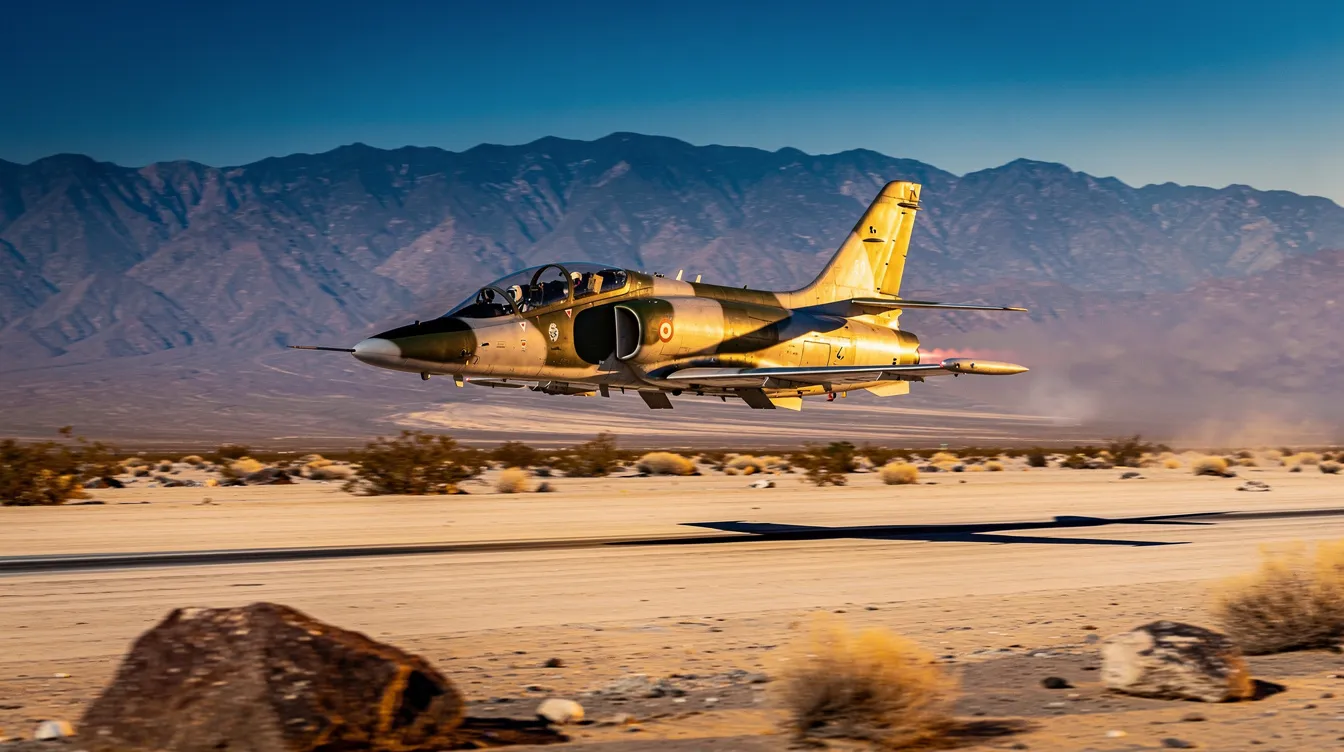
Fighter jet flights and private jet charters are both premium aviation experiences, but they serve completely different purposes.
Fighter experiences are adrenaline-focused, short-duration thrill rides in a tandem cockpit. Private jet charters are about efficient, comfortable point-to-point travel for business or leisure, often using the cheapest private aircraft options that still meet mission requirements.
|
Factor |
Fighter Jet Experience |
Private Jet Charter |
|---|---|---|
|
Purpose |
Thrill, aerobatics, bucket list |
Business travel, leisure, events |
|
Duration |
20–60 minutes |
1–14+ hours |
|
Passengers |
1 (plus instructor pilot) |
4–19 depending on aircraft, or a single seat on a shared charter if you buy a seat on a private jet |
|
Comfort |
Tight cockpit, G-suit, helmet |
Stand-up cabin, reclining seats, catering |
|
Baggage |
None |
Full luggage capacity |
|
Airports |
Specialty airfields, warbird centers |
5,000+ business airports globally |
|
Pricing |
$599–$35,000+ per sortie |
Hourly rate by aircraft class, with options to crowdsource private jet flights and share empty seats to lower costs |
|
Regulation |
Warbird/experimental categories |
Part 135 / charter regulations |
Jettly operates as a private jet charter platform, not a combat flight provider. That said, some charter customers - defense contractors, government teams, aerospace firms - travel to test sites, air shows, and training facilities where fighter jets operate. For those trips, a private charter from a NetJets alternative like Jettly gets a team to a remote location faster than any commercial connection.
Jettly operates a digital private aviation marketplace, connecting travelers to over 20,000 private charter aircraft for business and leisure travel. The platform covers high-performance private jets - light, midsize, and heavy categories - but does not provide armed fighter aircraft or combat experiences.
What Jettly does offer is relevant to anyone in the aerospace and defense world who needs rapid, flexible travel. Executives flying to defense expos like the Paris Air Show, teams visiting OEM facilities, or families attending air shows can use the platform to reach destinations that commercial airlines serve poorly or not at all.
Key features for performance-minded travelers, including structured jet card programs for predictable hourly rates:
Instant pricing - No waiting for quotes; see costs immediately
On-demand booking - Via app or web, with no long-term commitment required, alongside other ways to get a seat on a private jet easily
Transparent cost structures - Compared to traditional jet cards or fractional ownership, the platform removes guesswork from the booking process and ties into Jettly's jet card flight cost estimator for upfront pricing.
Charter flights arranged through Jettly use licensed operators and regulated aircraft categories (Part 135 charter companies in the U.S. or equivalents in other countries). This is distinct from military fighter operations, but the emphasis on rigorous safety and operational standards is shared.
Private aviation offers several aircraft categories, each suited to different missions, and Jettly's global private charter aircraft inventory spans everything from turboprops to ultra-long-range jets:
Turboprops - Regional hops under 500 miles, cost-effective
Verylight/lightt jets - Short routes, 2–4 hours, seats for 4–7
Midsize jets - Transcontinental range, stand-up cabins, 7–9 seats
Super midsize jets - Coast-to-coast range with larger cabins
Heavy jets - Intercontinental, 10–19 seats, full amenities, ideal when you understand how many passengers a private jet can carry for your mission
How do these compare to fighters? Business jets cruise at subsonic speeds around Mach 0.7–0.9, while fighters routinely exceed Mach 1.5. Business jets offer pressurized stand-up cabins with catering and connectivity; fighters have cramped cockpits designed for one or two crew in ejection seats.
But modern business jets share more DNA with fighters than most people realize. Some feature fly-by-wire controls, advanced glass cockpits, and steep-approach capability. High-speed private aircraft like the Gulfstream G650 or Cessna Citation X+ push the subsonic envelope, cruising near Mach 0.9 - fast enough to shave meaningful time off transcontinental routes, especially when chosen from the best private plane manufacturers for your needs.
For travelers who appreciate the engineering behind fighter jets, stepping into a modern business jet reveals similar principles at work: lightweight composites, digital flight management, and engines optimized to deliver performance at altitude.
Booking a private flight through Jettly follows a straightforward process:
Search - Enter your route and dates on the platform
Price - Get instant pricing across available aircraft
Select - Choose the jet that fits your mission (size, range, budget)
Confirm - Book and pay digitally
Frequent flyers can explore private jet memberships for lower per-flight costs, while occasional users can book on demand without long-term commitments. This flexibility mirrors how air forces manage assets - deploying capability when and where it's needed.
Popular high-demand routes include New York–Miami, Los Angeles–Las Vegas, Toronto–Vancouver, and London–Geneva, alongside regional corridors served by dedicated city pages such as private jet charter in Kolkata. Tools like Jettly's airport locator help match routes to the most convenient departure and arrival airfields. Light jets handle shorter hops efficiently, while heavy jets cover intercontinental distances with full passenger loads.
For a detailed breakdown of the booking process, see How to Book a Private Jet. To estimate costs for a specific route, use the Private Jet Cost Calculator or Jettly's jet card flight cost estimator if you're comparing membership-style pricing.
Both fighter pilots and charter pilots operate in highly regulated environments, but their training pipelines differ significantly.
Fighter pilot training spans years. In the U.S., it includes undergraduate pilot training, advanced tactical instruction, and assignment to a weapons school or operational squadron. Programs like the U.S. Air Force Weapons School and U.S. Navy TOPGUN (formally NAWDC) produce tacticians who can handle high-G combat scenarios, complex air-to-air engagements, and life-or-death decisions at Mach 1.5+. Recurrent simulator work and live-fly training keep skills sharp.
Charter and airline pilot requirements follow a different but equally rigorous path. Pilots hold commercial pilot licenses with instrument ratings and type-specific certifications for each aircraft they fly. Regular proficiency checks, line checks, and adherence to civil aviation authorities - FAA, EASA, Transport Canada - ensure consistent safety standards.
Jettly's partner operators use certified, experienced crews who meet or exceed regulatory requirements. The training ethos mirrors the discipline of fighter aviation - preparation, proficiency, and procedural rigor - without combat risk or weapons.
Both fighter jet experiences and private jet charters are premium offerings, but they serve different purposes and carry different price tags.
Fighter jet experience costs:
Introductory aerobatic flights (Sky Combat Ace, lighter aircraft): from $599
L-39 Albatros rides (30–60 minutes): $3,500–$7,500
Supersonic MiG-21 or F-104 experiences: $15,000–$35,000+
Most sessions last 20–40 minutes of flight time. The cost per minute is high, reflecting fuel burn, specialized maintenance, and insurance for ex-military aircraft.
Private jet charter costs are calculated differently. For a detailed guide, see Private Jet Charter Costs. Pricing factors include:
Hourly rate by aircraft class (light jets from ~$3,000/hr, heavy jets $8,000–$15,000+/hr)
Positioning fees, airport charges, and landing fees
Optional services: catering, ground transport, Wi-Fi
A same-day business round trip on a light jet - say, New York to Washington, D.C. - might run $8,000–$12,000 total for up to six passengers. That's comparable to a single fighter-jet ride, but it moves an entire team to a productive meeting and back.
Environmental concerns affect both military and civilian aviation. High-performance jets consume significant fuel and produce emissions proportional to their thrust output.
Military fighters are optimized for combat performance, not fuel efficiency. Full afterburner operations can consume fuel at rates that would make any airline CFO flinch. However, some programs explore synthetic fuels, more efficient engine cycles, and optimized mission planning to reduce unnecessary flight hours.
Private aviation - including flights booked through Jettly and supported by services like Jettly Eats in-flight catering - is increasingly focused on reducing its footprint:
Carbon offsetting programs allow passengers to offset emissions
Newer aircraft models feature more fuel-efficient engines
Sustainable aviation fuel (SAF) is entering the supply chain at select airports
Route optimization and empty leg utilization reduce wasted positioning flights
The challenges are real, but the trajectory is toward greater efficiency. Both military and civilian aviation treat fuel as a limited, expensive resource - one where every improvement in engine technology or operational planning pays dividends in cost and environmental impact.
Sixth-generation fighter programs are redefining what air combat will look like. The U.S. F-47 (NGAD), GCAP, and FCAS programs all aim to integrate AI-driven decision support, loyal wingman drones (collaborative combat aircraft), adaptive cycle engines, and more advanced stealth into the next wave of fighters.
Innovations from fighter programs consistently migrate into civilian aviation. Composite materials, digital flight controls, advanced simulation, and predictive maintenance practices all moved from military R&D into business jets and commercial airliners over the past decades. That pipeline continues.
On the civil side, there's renewed interest in supersonic business jets. NASA's X-59 is demonstrating quiet supersonic technology, and the FAA is developing noise standards that could permit overland supersonic flight by mid-2027. If supersonic business jets enter service, private charter platforms like Jettly could offer them for routes where speed is a priority - shrinking a New York-to-Los Angeles trip to roughly three hours.
Fighter jets will remain essential tools for deterrence and crisis response for the foreseeable future. In parallel, private aviation evolves to support fast, flexible global mobility for governments, businesses, and organizations that can't wait for commercial schedules.
Fighter jets underpin air superiority, deter conflict, and support global security through advanced technology programs that span nations and decades. From the first Voisin III shooting down an adversary in 1914 to today's F-35 integrating data across every domain, the fighter jet remains one of the world's most capable and complex machines.
The distinction between combat fighters and private jets is clear, but both draw on high-performance engineering to move people and protect interests efficiently. Civilian fighter jet flights offer a taste of that world for aviation enthusiasts, while private charter delivers the speed, flexibility, and comfort that modern travel demands, whether you're booking a transatlantic mission or a private jet charter in New Delhi.
Ready to experience private travel on your terms? Explore flight options or request a quote at https://www.jettly.com, where you can compare charter airlines and private flight options in one place.
Below are answers to common questions not fully covered in the main article.
Civilians cannot fly in active front-line fighters like the F-22 or F-35. Military and security restrictions make this impossible - these aircraft carry classified systems, weapons, and operational software that require security clearances.
However, civilians can fly in ex-military jets and trainers such as the L-39 Albatros, T-33 Shooting Star, and MiG-15UTI. These aircraft operate under civil aviation regulations in countries including the U.S., Canada, and several European nations. They fall under experimental, exhibition, or "warbird" safety categories.
Even in these flights, a qualified instructor or owner-pilot remains pilot in command. Any hands-on control by the guest is carefully supervised and limited to straight-and-level flight or gentle maneuvers, with the instructor ready to take over instantly.
Most operators set requirements including:
Minimum age (typically 18, sometimes 16 with parental consent)
Maximum weight (usually 220–250 lbs / 100–113 kg, depending on cockpit and ejection seat limits)
General good health with no uncontrolled heart conditions, blood pressure issues, or spinal problems
Passengers must disclose medical conditions before booking. G-forces in aerobatic or simulated combat profiles can reach +4 to +6 G, which stresses the cardiovascular system significantly. Operators provide G-tolerance briefings and may adjust the flight profile based on passenger comfort and response during the sortie.
No. Jettly does not provide military fighter jet flights or mock combat experiences. The platform is focused exclusively on private jet charter for business and leisure travel, using certified civil aircraft operated by licensed charter companies.
That said, aviation enthusiasts can use Jettly to reach air shows, warbird flight centers, aerospace museums, or defense industry events efficiently by private charter. If you're flying to EAA AirVenture in Oshkosh, the Paris Air Show, or a fighter-experience provider in Florida or California, Jettly can get you there faster than a commercial connection.
Charter safety depends on certified operators, rigorous maintenance standards, and experienced crews. Reputable platforms like Jettly work exclusively with regulated operators who meet or exceed national safety requirements set by the FAA, EASA, Transport Canada, and equivalent bodies.
Fighter operations involve inherent combat training risks - high-G maneuvers, weapons employment, and operations in hostile environments. Scheduled airlines operate under slightly different regulatory frameworks but with similarly rigorous oversight. Private charters occupy a highly controlled, professionally managed segment of aviation with an excellent safety record when operated by certified companies under proper regulatory supervision.
Not with current production aircraft. The fastest long-range business jets - like the Gulfstream G700 and Bombardier Global 7500 - cruise around Mach 0.9. Fighters routinely exceed Mach 1.5 and can break the sound barrier in combat profiles.
Historically, the Concorde proved supersonic civil travel was technically feasible, cruising at Mach 2.04. Today, programs like Boom Supersonic and NASA's X-59 are working to bring supersonic speed back to civil aviation. If new supersonic business jets enter service and regulatory barriers around overland flight are resolved, private charter platforms like Jettly could eventually offer them for time-critical routes where every hour saved matters.
Share this post:
Jay Franco Serevilla
Jul 26, 2026
|
5
min read
Discover tips and trends in the industry.
5
min read
Latitude Airlines & Private Aviation: How Jettly Makes Booking Simple
Many travelers seeking private flights often search for 'latitude airlines,' a term that encompasses various private aviation options. Jettly simplifies the booking process by connecting users to over 20,000 aircraft worldwide, offering flexible scheduling and transparent pricing. This guide explains how Jettly serves as a digital marketplace for private jet charters, catering to both business and leisure travelers.
Read More
5
min read
Lunken Airport Private Charter: Jet Charters at Cincinnati Municipal Lunken Airport (LUK)
Cincinnati Municipal Lunken Airport (LUK) offers a convenient private charter service for travelers seeking quick access to downtown Cincinnati. Jettly connects clients to a wide range of aircraft options, ensuring a seamless booking experience with transparent pricing. With amenities designed for comfort and efficiency, Lunken Airport is the ideal choice for both business and leisure flights.
Read MoreStay updated with our latest insights and tips to elevate your journey with us.
MEMBERSHIPS AND ASSOCIATIONS



Disclaimer: Jettly operates as a charter broker, offering access to a global digital jet charter marketplace. Jettly is not a direct air carrier and does not own or operate aircraft. All advertised flights are conducted by third-party air carriers that are fully licensed and hold the appropriate Part 135 or Part 121 certifications issued by the Federal Aviation Administration (FAA) or equivalent regulatory authorities under U.S. or foreign law. Jettly complies fully with the U.S. Department of Transportation's Part 295 and Part 298 Charter Broker regulations. Jettly does not carry additional liability insurance. Passengers are covered by aircraft operator insurance. TICO: 50023770


