


Login
Get Instant Pricing On 23,000+ Aircraft

>
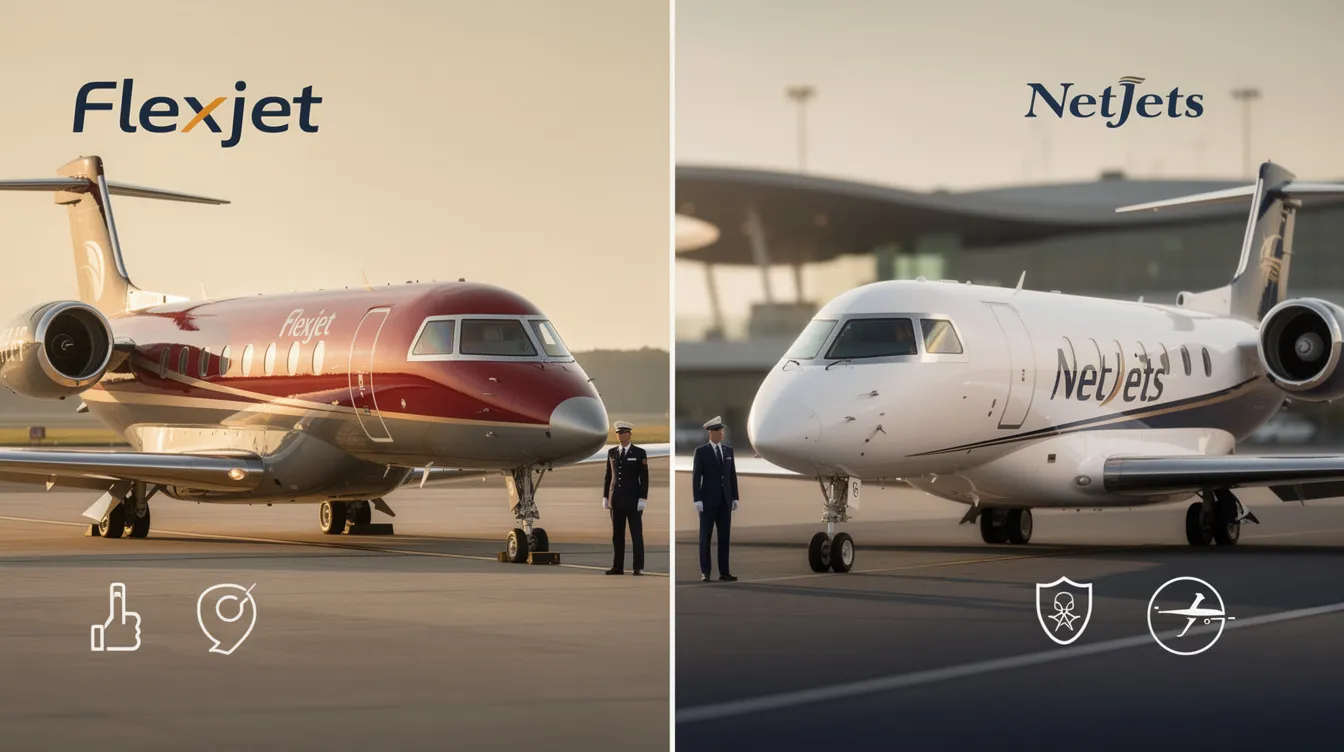
Choosing between Flexjet and NetJets is one of the biggest decisions in private aviation. Both companies dominate fractional ownership programs, but they differ sharply in fleet size, service philosophy, and cost. And for many travelers, neither fractional provider may be the right fit at all. This guide breaks down the key differences, walks through real cost figures, and explains when an on-demand charter through a platform like Jettly makes more sense than a multi-year ownership commitment.
NetJets and Flexjet are the two largest competitors in the fractional jet ownership market. Both Flexjet and NetJets are leaders in private aviation, yet they serve slightly different customer profiles. Jettly offers an alternative path through on-demand charter with no long-term commitment, no upfront capital, and trip-based pricing.
NetJets operates a fleet of over 800 aircraft and tends to deliver a more standardized, infrastructure-heavy experience. Flexjet has a fleet of around 300 aircraft and takes a boutique approach with more customization and white-glove service.
Fractional ownership with either provider involves multi-year contracts and large upfront capital. A 1/16 light jet share can cost anywhere from $500,000 to over $1,000,000 before you add ongoing management fees and hourly rates.
Travelers who fly fewer than roughly 50–75 annual hours, or who want maximum flexibility across aircraft types like light jets, mid-sized jets, and large cabin jets, are often better served by on-demand charter platforms like Jettly.
The sections below compare Flexjet vs NetJets across fleet, cost, service, and flexibility, then show how Jettly's access-first model fits a different type of flyer.
Both Flexjet and NetJets are leaders in fractional ownership for private jets, but they differ in scale, style, and pricing. Understanding these differences early helps narrow down which model - or whether a charter alternative - fits your flying life best.
NetJets traces its roots to 1964, when it was founded as Executive Jet Aviation. It pioneered the fractional ownership concept in the 1980s and was later acquired by Berkshire Hathaway in 1998. Today it operates a global fleet of over 800 aircraft with access points across North America, Europe, and beyond, giving it the broadest global reach of any fractional provider. NetJets has a strong reputation for operational depth, and the company emphasizes operational scale and availability across its programs.
Flexjet was founded in 1995, originally as a Bombardier division, and is now owned by Directional Aviation. With around 300 aircraft, it positions itself as a boutique fractional provider. Flexjet emphasizes a personalized approach to service, focusing on designer interiors, curated experiences, and a more intimate owner community. NetJets offers global access points for its fleet, while Flexjet competes on craft and customization.
Both operate fleets spanning light jets, mid-sized jets, and large cabin jets, though their aircraft types and cabin design philosophies differ significantly. The next sections explore who each provider is best for, followed by how charter marketplaces like Jettly compare, including how Jettly positions itself as a NetJets alternative with flexible on-demand charter.
|
Feature |
Flexjet |
NetJets |
Jettly On-Demand Charter |
|---|---|---|---|
|
Fleet Size |
~300 aircraft |
800+ aircraft |
20,000+ aircraft (third-party) |
|
Ownership Model |
Fractional ownership (3-5 years) |
Fractional ownership (3-5 years) |
Pay-per-trip charter, no ownership |
|
Entry Cost (1/16 share, light jet) |
$500,000–$600,000 |
~$850,000 |
None |
|
Monthly Management Fees |
$7,000–$13,000 |
$12,000–$28,000 |
None |
|
Hourly Flight Rates |
$2,500–$9,000 |
$8,500–$18,500 |
Varies per trip, transparent pricing |
|
Fleet Customization |
High (bespoke interiors, Red Label) |
Standardized interiors |
Varies by operator |
|
Service Style |
Boutique, personalized |
Standardized, scale-driven |
Digital-first, optional concierge |
|
Contract Length |
Multi-year |
Multi-year |
None |
|
Flexibility in Aircraft Choice |
Moderate (tied to share class) |
Moderate (tied to share class) |
High (choose per trip) |
|
Ability to Sell Unused Hours |
Up to 25% through Versatility Plus |
Limited resale options |
Not applicable |
|
Access to Exclusive Events |
Curated events, club atmosphere |
High-profile event access |
None |
|
Ideal For |
Personalized service seekers |
Large corporations, frequent flyers |
Occasional flyers, flexible schedules |
Fractional ownership suits high-frequency private jet flyers - typically those logging 50 to 400+ hours per year - who want guaranteed access and a predictable operating structure. But the ideal customer profile for each company looks different, and understanding the pros, cons, and costs of fractional jet ownership is critical before committing.
Flexjet's ideal customer: Individuals or companies flying regularly who value personalized service, interior design, and flexible annual hours. Flexjet appeals to owners drawn to white-glove service, curated events, and features like the ability to resell unused hours. Flexjet's Red Label program includes dedicated flight crews and highly trained flight attendants who undergo extensive hospitality training, elevating the in-flight experience. Both providers offer the option to buy a share of a specific aircraft, but Flexjet leans harder into making that share feel personal.
NetJets' ideal customer: Large corporations, family offices, and ultra-frequent flyers who prioritize reliability, global infrastructure, and brand stability over customization. NetJets is a great company for travelers who want deep operational redundancy, an institutional concierge service, and exclusive access to high-profile events without needing a bespoke cabin on every flight.
When fractional ownership is not a great fit: Flyers below about 50 annual hours, those with highly variable schedules, or travelers who do not want multi-year commitments and high upfront capital outlays. Both providers typically involve multi-year agreements for fractional ownership, which creates risk if your flying patterns shift.
Those lower-usage or flexible flyers typically benefit more from on-demand charter through platforms like Jettly, which charges per trip with no buy-in or contract term. More on this later.
Both Flexjet and NetJets operate multi-category fleets, from smaller jets for short hops to ultra-long-range aircraft for transcontinental or transatlantic flights. The aircraft type you fly heavily influences cost, comfort, and how many people can travel with you.
NetJets' fleet includes representative models like the Embraer Phenom 300E (light jet), Cessna Citation Latitude (mid-sized jet), Bombardier Challenger 350 and 650 (super-mid and heavy jets), and Bombardier Global 6000 or Gulfstream G450/550 (large cabin jets). Interiors are standardized across aircraft in the same category, delivering a consistent experience no matter which tail number you board. Pilots and co-pilot crews follow uniform operating procedures across the fleet.
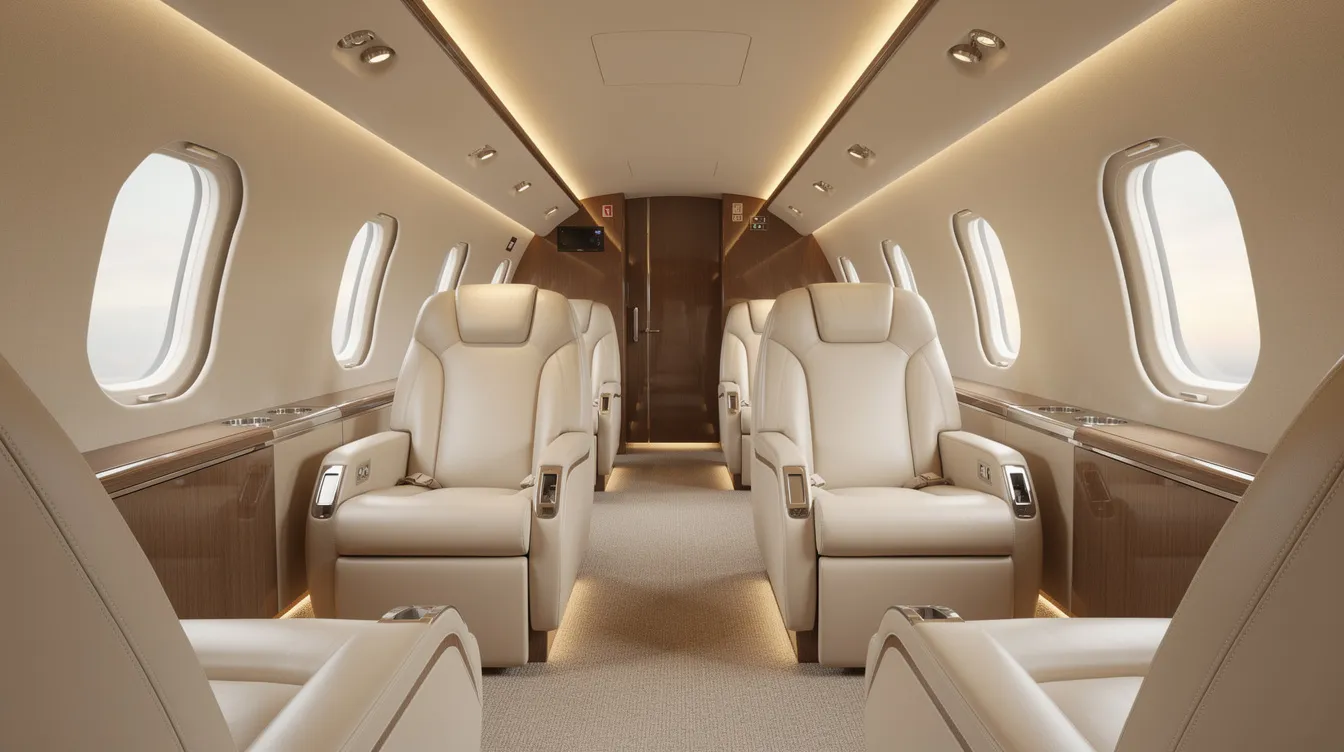
Flexjet's fleet features models like the Phenom 300 (light), Challenger 3500 (super midsize), Praetor 600, and Gulfstream G650 and G700. Flexjet generally operates a younger fleet with an average aircraft age of 5 to 6 years, and the company invests in bespoke interiors through its LXi Cabin Collection, drawing heavily on innovations from the best private plane manufacturers for different mission profiles. The result is a more boutique feel from the moment you step through the aircraft door.
NetJets' larger fleet size generally improves aircraft availability during peak periods. When one plane is unavailable, another within the same category can be dispatched quickly. Flexjet's smaller, more curated fleet competes on experience rather than sheer scale.
Jettly takes a different approach entirely. The platform connects travelers with thousands of third-party operators globally, giving access to a wide mix of turboprops, light jets, mid-sized jets, heavy jets, and large cabin jets on a trip-by-trip basis. Instead of being tied to one provider's owned fleet, users match the right aircraft to each mission - whether that's a short-term regional hop or a long-haul flight across the world.
Fractional ownership cost includes three main components: the upfront share purchase, monthly management fees, and hourly occupied flight charges. These components differ between Flexjet and NetJets, and both differ dramatically from the pay-per-trip model of on-demand charter; a detailed fractional jet ownership cost breakdown shows how quickly these line items add up.
NetJets pricing (Q1 2026 estimates): NetJets' initial purchase for a 1/16 share is approximately $850,000 for a light jet. Monthly management fees range from roughly $12,000 to $28,000, depending on aircraft size. Hourly rates start around $8,500 for light jets and climb to approximately $18,500 for large cabin jets. NetJets' first-year cost for a 1/16 share can reach around $1 million when you combine the acquisition, fixed costs, variable usage, and taxes; you can also look at an in-depth overview of NetJets as a private aviation leader to see how these costs support its service model.
Flexjet pricing (available estimates): Flexjet's initial purchase for a 1/16 share is $500,000–$600,000 for a light jet like the Phenom 300, and $800,000–$950,000 when you expand into super midsize aircraft such as the Challenger 3500. Flexjet's monthly management fees range from roughly $7,000 to $13,000 by category, and Flexjet's occupied hourly rates range from $2,500 to $9,000 depending on cabin class. Flexjet's fractional share acquisition and management costs tend to be lower overall than NetJets', making the entry point more accessible. Flexjet first-year costs for a light jet can be approximately $800,000, with subsequent years closer to $350,000, aligning with broader comparisons of leading fractional jet ownership companies.
For NetJets, following years after the initial purchase typically run $350,000–$450,000 in annual cost, depending on usage and the specific aircraft. Real quotes will always vary based on share size, region, and flight time patterns.
Commitment length: Both companies provide fractional ownership, usually for 3 to 5 years. Exit involves selling your share back to the provider at a depreciated residual value - often 50–70% of the original price. Early exit can trigger penalties or delays, and the money tied up in the share is not liquid capital during the contract term.
Jettly's cost structure: Jettly's on-demand charter model has no upfront ownership buy-in, no multi-year contract, and trip-based pricing. Users pay only when they fly, with transparent estimates shown before booking through the platform's private jet charter cost estimator. There is no need to tie up a million dollars or more in aircraft equity.
Rule of thumb: Fractional ownership tends to make financial sense above roughly 50–75 occupied hours of flying per year on consistent routes. Below that threshold, on demand charter through platforms like Jettly is usually more efficient - and far less risky from a capital perspective, as outlined in Jettly's guide to affordable private jet charter pricing and cost factors.

Beyond pure cost, the main difference between a fractional program and a charter is how flexible the program is when flying patterns change. Life and business are not always predictable, and what looks like 75 hours per year today could drop to 20 next year.
NetJets usage structure: Fractional owners receive a fixed annual hour allocation and must provide minimum notice to book - as little as 4–10 hours for Share program flights, but with peak days subject to restrictions. Unused hours and overages are governed by contract terms that may not favor highly irregular flying. Departure time flexibility is strong, but the system is built for consistent demand.
Flexjet's approach: Flexjet allows owners to sell back up to 25% of unused flight hours through programs like Versatility Plus, adding slightly more flexibility if actual flying falls short. Still, hours are governed by contract structures and minimums, and the fixed costs keep running regardless.
If a fractional owner's usage drops significantly mid-contract, they continue paying management fees and capital costs whether or not the plane leaves the ground. Selling a share before term end can involve friction, delays, and exposure to market depreciation. The security of guaranteed access comes with the risk of paying for access you don't use.
Both companies also offer jet card programs without committing to ownership. Jet cards are prepaid blocks of hours - often 25 to 50 - with fixed or capped hourly rates. They sit between fractional ownership and pure on-demand charter, requiring sizable prepayment but less capital than a fractional share. Players like Sentient Jet also operate in this space, offering cards without fleet ownership. Pricing for jet cards typically runs $200,000–$280,000 for 25 hours on a light jet, depending on the provider, and broader comparisons of the best jet card programs can help benchmark these options.
Jettly's model stands in contrast: charter flights booked through Jettly are fully usage-based. There are no penalties for not flying, no need to "use up" hours, and the ability to increase or decrease trip frequency immediately. One-way pricing is available for applicable routes, and empty-leg flights can reduce costs further.
Flexjet and NetJets compete not only on aircraft and cost, but also on service quality, in-flight experience, and lifestyle benefits around private jet travel. For some buyers, the service layer matters as much as the plane itself.
NetJets emphasizes consistency and professionalism across its global operation. NetJets provides an institutional concierge service backed by extensive operational redundancy - standardized cabin layouts, well-established safety protocols, and structured support for ground transportation, catering, and itinerary changes. NetJets provides exclusive access to high-profile events for its owners, adding a premium layer beyond air travel. The industry views NetJets as a reliable, scale-driven provider where you know exactly what to expect every time you fly, and it frequently appears in rankings of the best private jet charter companies.
Flexjet leans into a more boutique, white glove positioning. Flexjet offers highly customized interiors and a boutique experience, with partnerships spanning luxury automotive and yachting brands. Flexjet offers personalized in-flight catering and service, and Flexjet's Red Label program includes dedicated flight crews assigned to specific aircraft, so owners see the same faces on every trip. Flexjet's flight attendants undergo extensive hospitality training, sometimes including a rigorous interview process that filters for both technical skill and personal warmth. The company hosts curated events and cultivates a "club-like" atmosphere for its ownership community.
For context, competitors like VistaJet offer menus created by Michelin-star chefs, showing how the broader industry continues to push the premium service envelope across private aviation providers; specialized offerings such as Jettly Eats in-flight catering for private jets underscore how food and service are becoming key differentiators.
Both Flexjet and NetJets offer perks like priority access during peak periods, dedicated account managers, and membership programs tailored to frequent private jet users. Both may offer optional carbon offset programs.
Jettly's service model is digital-first: transparent operator information, optional concierge add-ons (catering, ground transfers), and access to a broad range of aircraft types through its platform. The focus is on efficiency, control, and letting travelers book private flights without the overhead of a membership-only ecosystem.
The core comparison here is not "Jettly vs Flexjet vs NetJets as like-for-like products." It is an access-first charter model versus an ownership-based fractional model. Many travelers move from fractional to charter - or vice versa - as their needs change. The question is which model fits your current reality, not which company is better in the abstract.
Jettly's marketplace model aggregates over 20,000 unique aircraft globally, allowing travelers to choose the right aircraft for each mission. Turboprops for short hops. Light jets for regional trips. Mid-sized jets for coast-to-coast. Large cabin jets for long-haul or group travel. No single fractional provider matches that breadth of operating inventory, which mirrors the diversity showcased in Jettly's catalog of private charter aircraft across all major categories.
On-demand charter is more cost-effective for occasional flyers. Instead of paying capital plus management fees every year, users pay per trip with pricing visible upfront on Jettly's platform. Capital stays fully liquid, and there is no depreciation risk on an aircraft share you own, and options like crowdsourced private jet flights and shared empty seats can push effective per-seat costs even lower.
Example use case: A business owner flying 10–20 times per year between New York and Miami. Instead of entering a 5-year fractional contract worth over a million dollars in the first year, they use Jettly's instant pricing to book each trip individually. Some years they fly 25 times; other years, 8. They pay only for what they use, scaling with demand rather than against a contract. The money saved on fixed costs stays in the business.
Second use case: A family taking seasonal vacations and last-minute trips. One month, they need a smaller jet for a couple; the next, a heavy jet for extended family. Through Jettly, they choose different aircraft sizes each time - matching the plane to the trip rather than being locked into one category, sharing with a specific aircraft and a smaller operator's fleet, similar to broader strategies for getting a seat on a private jet easily and affordably.
High-usage, schedule-stable flyers may still prefer fractional ownership with Flexjet or NetJets for guaranteed access and consistency. But many travelers in the market today favor charter flexibility, digital booking, and the ability to sell nothing, own nothing, and simply fly when they need to.

The choice comes down to flying hours, financial structure, and your preference for flexibility versus ownership. There is no universally correct answer - only the one that fits your situation.
Estimate your annual hours realistically. Are you under 50 hours, between 50 and 150, or above 150? And how stable is that number over the next 5 years? Fractional ownership rewards consistency. Charter rewards variability.
Consider your capital preference. Do you want to tie up $500,000–$1,000,000+ in an aircraft share, or keep funds liquid and pay for flights only when needed via on-demand charter?
Evaluate fleet access vs. fleet consistency. If guaranteed access within a single branded fleet matters - same cabin, same crew, same experience - NetJets or Flexjet delivers that. If maximum flexibility across operators, aircraft categories, and regions matters more, Jettly's broad inventory of over 20,000 aircraft is the stronger fit.
Weigh lifestyle and perks. Those who value membership programs, branded experiences, and a club atmosphere may be drawn to Flexjet or NetJets. Those prioritizing efficient travel, fast digital booking, and transparent pricing may lean toward Jettly.
Ready to experience private travel on your terms? Discover more about Jettly's private jet charter offerings and get an instant quote at https://www.jettly.com.
These FAQs cover practical questions not fully addressed in the main sections, particularly around contract details, program structures, and how Jettly's model fits in. Answers remain neutral on Flexjet and NetJets while positioning Jettly as an alternative for those who prefer on demand charter, and complement a broader look at fractional private jet ownership: the good, the bad, and the ugly.
Most fractional ownership agreements with Flexjet and NetJets run around three to five years, with defined exit windows and buyback terms. Exiting early can trigger penalties or require waiting for a resale process, and the share's residual value will reflect aircraft depreciation over the holding period. Owners typically recover 50–70% of their original purchase price at contract end. Jettly's on-demand charter carries no contract term - travelers can stop at any time with no exit friction or capital loss, and optional private jet membership plans from Jettly add perks without imposing long-term ownership commitments.
A jet card is a prepaid block of flight hours, often 25–50 hours, with fixed or capped hourly rates and some program rules, but without owning any part of the aircraft. Fractional ownership includes an actual equity share in a specific aircraft with higher upfront cost and ongoing management fees. Jettly's model uses no prepayment requirement and charges per trip booked through its platform, making it the lightest commitment option, while its jet card programs for frequent corporate travelers serve those who still want fixed rates without equity.
Fractional ownership can become more economical when a traveler consistently flies at higher volumes - for example, 100–200+ occupied hours per year on similar routes - values guaranteed access, and is comfortable with multi-year commitments. Travelers flying fewer hours or with uncertain long-term needs often find that paying per trip via Jettly keeps overall costs and risk lower.
Fractional shares are usually tied to a specific aircraft category, such as light jets or mid-sized jets, with some flexibility to upgrade or downgrade at different rates. Jet cards may allow more variation within a program. Jettly is inherently mission-based: each trip can be booked on the most suitable aircraft - turboprops for short runs, light jets for regional travel, mid-sized jets for coast-to-coast, and large cabin jets for long-haul - without being bound to a single category or share size.
Flexjet and NetJets typically require set lead times for standard and peak-day flights, often several days to weeks during holidays or major events, depending on your ownership level and program rules. Jettly lets users search live availability and pricing on demand, making it possible to secure flights on shorter notice when operators have open aircraft. Tools like Jettly's airport locator and charter booking platform streamline finding suitable departure and arrival points worldwide. Constraints around airport slots, crew scheduling, and security clearance still apply, but the booking process itself is faster and fully digital.
Deciding between Flexjet, NetJets, and on-demand charter platforms like Jettly depends on your flying habits, budget, and flexibility needs. Fractional ownership with Flexjet or NetJets offers guaranteed access, personalized service, and a consistent experience, but requires significant upfront investment and long-term commitment. These programs suit frequent flyers logging 50 or more hours annually who value a branded fleet and dedicated perks.
For travelers seeking flexibility without the capital tie-up, Jettly provides a compelling alternative. With access to over 20,000 aircraft worldwide, transparent pricing, and instant digital booking, Jettly allows users to charter the right aircraft for each trip without contracts or ownership obligations. This model is ideal for those flying less frequently, with variable schedules, or who prefer paying only when they fly.
Explore Jettly’s extensive private jet charter options and get an instant quote to find the best fit for your travel needs at https://jettly.com.
Share this post:
Jay Franco Serevilla
Jul 3, 2026
|
5
min read
Discover tips and trends in the industry.

5
min read
When Are Flight Tickets Cheapest? Timing, Trends, and Smart Alternatives
Knowing when flight tickets are cheapest can lead to significant savings. This guide explores optimal booking windows, travel days, and strategies for both commercial and private flights, emphasizing the importance of tracking prices and flexibility in travel plans.
Read More
5
min read
How to Get Lower Ticket Prices on Private Jet Flights with Jettly
Discover how to lower ticket prices on private jet flights with Jettly's expert strategies. By understanding pricing dynamics and utilizing tools like empty leg flights and flexible bookings, travelers can secure significant savings. This guide empowers both frequent and first-time flyers to make informed decisions for a cost-effective private jet experience.
Read MoreStay updated with our latest insights and tips to elevate your journey with us.
MEMBERSHIPS AND ASSOCIATIONS



Disclaimer: Jettly operates as a charter broker, offering access to a global digital jet charter marketplace. Jettly is not a direct air carrier and does not own or operate aircraft. All advertised flights are conducted by third-party air carriers that are fully licensed and hold the appropriate Part 135 or Part 121 certifications issued by the Federal Aviation Administration (FAA) or equivalent regulatory authorities under U.S. or foreign law. Jettly complies fully with the U.S. Department of Transportation's Part 295 and Part 298 Charter Broker regulations. Jettly does not carry additional liability insurance. Passengers are covered by aircraft operator insurance. TICO: 50023770


