



Login
Get Instant Pricing On 23,000+ Aircraft

>
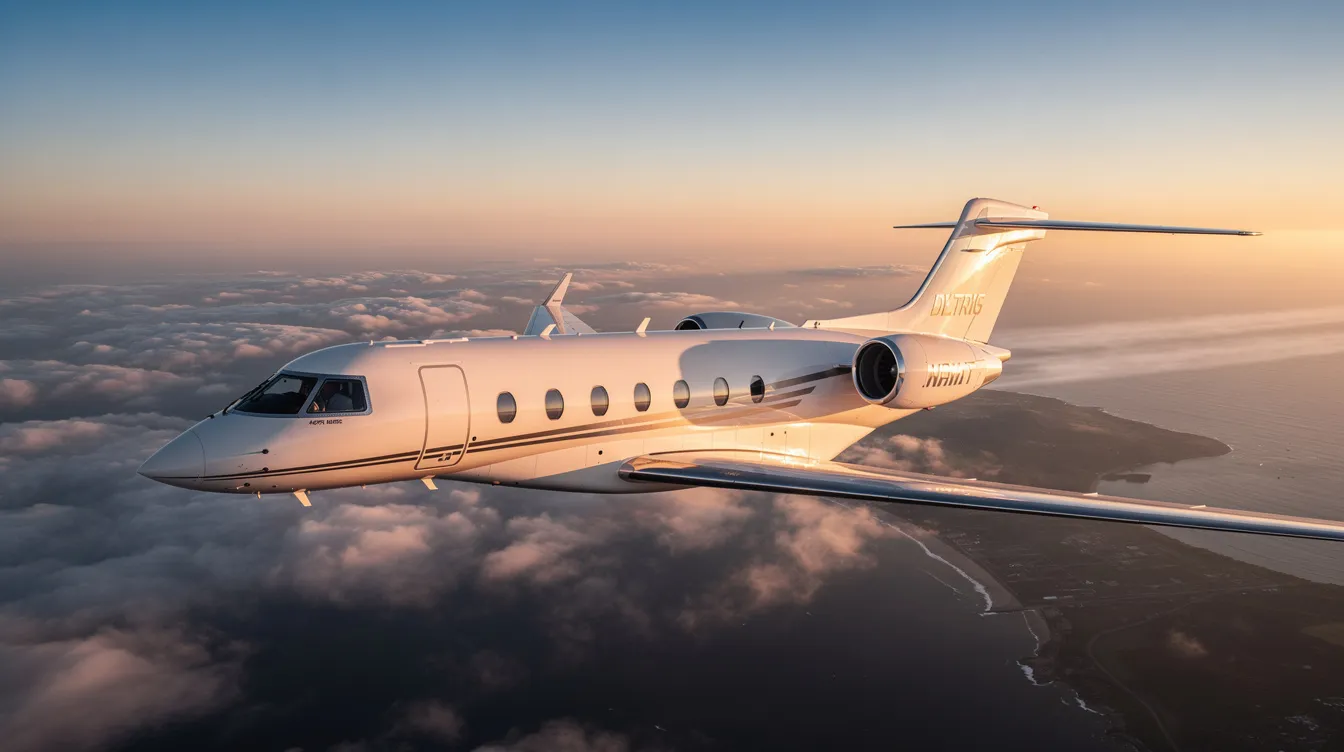
Private air travel used to feel out of reach for most people. That's changing fast. Platforms like Jettly now make it possible to fly in a private jet with transparent pricing, digital booking, and access to thousands of aircraft around the world. Whether it's a same-day business trip or a weekend getaway, this guide covers everything from charter costs and aircraft selection to what happens when you step onto the tarmac.
Flying private with Jettly is digitally bookable, often time-saving compared with commercial airline first class, and accessible to a wider range of travelers than most people assume. The platform offers instant pricing on thousands of aircraft and lets users book charter flights or empty-leg flights directly.
People fly private for concrete reasons: flexible scheduling, privacy, access to smaller airports closer to final destinations, and the freedom to choose from many aircraft types and cabin layouts suited to specific travel needs.
Jettly provides access to over 20,000 unique aircraft globally, connecting clients with vetted operators so travelers can compare charter options side by side without long-term commitments.
This guide walks through the booking process, charter costs, aircraft options, what first-time private flyers should expect on the day of their flight, and how to make the most of every trip.

The contrast between private jet travel and a commercial airline experience is stark. There are no security lines, no layovers, no crowded gates, and no rigid departure schedules. Private flights typically operate from private terminals, giving travelers direct routes between cities like New York Teterboro and Miami Opa-locka without setting foot in a major commercial terminal.
Private jets enable travelers to skip long TSA lines and boarding delays.
Passengers can bypass TSA security lines entirely, often arriving just 10 to 20 minutes before takeoff.
This efficiency means less time spent waiting and more time at your destination.
Private jets can access over 5,000 general aviation airports in the U.S. alone.
This includes smaller fields near second homes in places like Aspen, Jackson Hole, or Nantucket.
Private jet travel even allows direct access to over 25 airports in Morocco for those heading to destinations like Marrakesh.
The cabin of private jets allows for complete confidentiality.
Ideal for executives, high-profile individuals, and families.
Private flights enable greater productivity for business travelers who can work uninterrupted.
Private jets fly at higher altitudes, reducing turbulence.
Often, it has a lower simulated cabin altitude pressure, which means passengers arrive feeling less fatigued.
Traveling with children or pets is simpler when you control the entire aircraft environment.
Pets can travel in the cabin with their owners.
Private jets allow travelers to set their own schedules.
Flights are built around the traveler's itinerary, not the other way around.
Consider a Toronto-to-Vancouver same-day business round-trip. On a commercial airline, that's a full travel day with connections and airport waits. On a midsize private charter, executives depart on their schedule, hold their meetings, and return the same evening. Or picture a Los Angeles-to-Las Vegas weekend: a 45-minute hop from Van Nuys to Henderson Executive, skipping the LAX crowds entirely.
Flying in a private jet offers significant advantages over commercial airlines for anyone who values time and flexibility.
Jettly is a digital marketplace and private jet broker, not an owner-operator, providing access to a global network of licensed operators who own and maintain their fleets. This model gives users access to over 20,000 unique aircraft without the complexity of owning or managing a plane.
Private jet chartering involves renting an entire aircraft rather than buying individual seats.
Every flight is on-demand: the traveler pays per trip with no fractional ownership, jet cards, or long-term contracts required.
Private jets can accommodate between 2 and 18 passengers depending on the aircraft, making them practical for solo executives and larger groups alike.
When a request comes in, Jettly sources aircraft from certified operators.
Availability and pricing are shaped by the broader private aviation market.
Jettly checks real-time availability, reviews pricing and safety records, then presents curated options.
Most private jet operators provide aircraft options based on the traveler's criteria—route, passenger count, baggage, and budget.
Customers can search, compare aircraft, and confirm trips online.
For more complex itineraries—multi-leg flights, international flights, or special needs—Jettly's aviation experts step in to build a tailored plan.
Transparent pricing and clear charter costs are a core focus, with itemized fees upfront rather than surprise charges for positioning, handling, or fuel surcharges.
If you've never booked a private charter before, the process is more straightforward than most people expect. Here's a practical walkthrough from quote to takeoff.
Enter Trip Details
Input dates, city pairs, and the number of passengers on Jettly's search interface.
Use filters for aircraft types and the ability to add or edit legs.
Review Instant Pricing and Aircraft Options
Results display available aircraft with approximate costs, cabin layouts, and range information.
Compare a light jet against a midsize or heavy jet for the same route.
Confirm Preferred Aircraft and Schedule
Select the specific aircraft and lock in the departure time.
If the route or timing is complex, a specialist can review and optimize.
Sign the Charter Agreement
Confirmations require a signed charter agreement and payment.
This formalizes the trip details, cancellation terms, and operator responsibilities.
Make Payment
Secure the flight via wire transfer or another approved method.
Full payment is typically due before departure.
Receive Itinerary and FBO Details
Jettly sends the complete itinerary, including the Fixed Base Operator address, crew contact info, and any ground transportation details.
Booking a private jet can take 3 to 6 hours from initial inquiry to confirmed itinerary, though same-day charters can sometimes be arranged within 3 hours of signing a contract. Booking 24 to 72 hours in advance offers the best selection of aircraft and pricing.
For first-timers:
Have passports ready.
Know your approximate luggage count.
Provide passenger details to expedite the booking process.
Flag any special requests—pets, in-flight catering preferences, medical equipment—before finalizing.
Learn more about the full booking process here.

Charter costs vary widely. A short regional hop on a turboprop and a transatlantic crossing on a heavy jet are vastly different price points, and understanding the drivers helps travelers budget accurately, especially when using a dedicated private jet charter cost estimator to model different routes and aircraft types.
Aircraft type: The single biggest variable. Charter rates range from $1,800 to over $15,000 per hour, depending on the category.
Routing and positioning flights: If the aircraft isn't already at the departure airport, a "ferry" or repositioning flight adds cost.
Airport and handling fees: Landing fees, ramp charges, and FBO handling vary by location.
Peak vs off-peak timing: Holiday weekends, major events (Art Basel, Formula 1), and summer travel corridors push prices up.
De-icing and overnight crew: Cold-weather operations and multi-day trips add line items.
Short-notice bookings: Last-minute demand can limit options and increase rates.
|
Aircraft Category |
Hourly Rate (USD) |
Typical Passengers |
|---|---|---|
|
Turboprops / Small Planes |
$300–$4,000+ |
2–9 |
|
Light Jets |
$3,500–$6,000 |
4–7 |
|
Midsize Jets |
$4,000–$6,500 |
6–9 |
|
Super-Midsize Jets |
$7,000–$11,000 |
8–10 |
|
Heavy / Long-Range Jets |
$8,500–$14,000 |
10–16 |
|
Ultra-Long-Range / VIP Airliners |
$12,000–$17,000+ |
12–18+ |
Luxury private jet travel costs between $2,000 and over $20,000 per hour at the top end. One-way pricing may include aircraft repositioning, and roundtrip pricing can sometimes be more efficient if the aircraft waits for the return leg, as outlined in more detail in guides on how much to rent a private jet for common routes and use cases.
Jettly's instant pricing helps users see approximate costs upfront and then refine them with a human expert if needed. For a deeper breakdown, explore Jettly's charter cost guide and additional resources explaining the cost of a private jet flight from takeoff to landing.
Empty leg flights are repositioning flights that would otherwise fly without passengers. They occur when, for example, an aircraft flies from New York to Miami for a client and must return empty to its home base or continue to another city to pick up the next booking.
These leg flights can be discounted significantly versus standard charter flights.
Empty-leg flights can save travelers 25–75% on charter costs.
On a route like Los Angeles to Las Vegas, where the standard charter runs about $9,800, empty leg deals have been observed between $2,900 and $4,400.
Routes like London to Nice or New York to Miami also see frequent empty leg availability due to high private traffic volumes.
Limited routes, last-minute changes, and less flexible scheduling.
The operator controls the timing, and cancellations can happen if the primary leg shifts.
Empty legs work best for leisure trips, flexible travelers, and short-notice getaways where the destination matters more than the exact departure time.
Jettly lists available empty-leg flights on its platform, allowing travelers to search by route, date, and aircraft type. For travelers with rigid schedules or business-critical itineraries, a full on-demand charter is the more reliable choice.
The cost per seat on a private jet is almost always higher than a first-class ticket. But for groups, time-critical trips, or travelers who need privacy, the overall value equation shifts.
Check-in and security: Passengers typically arrive just 10 to 20 minutes before takeoff on private jets at an FBO, versus 1.5 to 3 hours at a commercial airline terminal for international flights.
Boarding: On a private charter, there's no gate, no jet bridge queue, and no overhead bin competition. Passengers usually depart from a Fixed-Base Operator rather than a commercial terminal.
Privacy: First class shares the aircraft with hundreds of other passengers. On a charter flight, travelers control who is on board—useful for confidential meetings, high-profile individuals, or families wanting a quiet space.
Schedule: Commercial airlines set the timetable. Private flyers choose departure times, often down to the hour.
Productivity: Travelers can enjoy a private and quiet space in private jets, turning flight time into focused work time without interruptions.
Consider four executives flying from New York to Chicago round trip. Four first-class tickets might run $2,000 to $4,000 each ($8,000 to $16,000 total), with 6+ hours of airport time across the day. A light jet charter for the same route could cost $12,000 to $18,000 round-trip, but the group saves 3 to 4 hours, avoids two commercial airports, and gains productive meeting time in the air. For many businesses, that math works.
Private jets can reduce travel time significantly compared to commercial flights, especially on routes with poor direct service or multiple connections.
Jettly connects users to a broad range of aircraft types. Choosing the perfect plane depends on the route, passenger count, baggage, and budget, and Jettly's private charter aircraft listings make it easier to compare configurations and capabilities side by side.
Turboprops: Aircraft like the King Air 200, a versatile turboprop aircraft, seat 6 to 9 passengers and handle short regional hops (under 1,000 miles) and remote airstrips. Ideal for routes like Martha's Vineyard shuttles or mountain airstrips.
Light jets: Models such as the Citation CJ3 carry 4 to 7 passengers with ranges suited to routes like Boston to Chicago or Dallas to Denver. A cost-effective option for shorter trips.
Midsize jets: Midsize jets typically seat 6 to 9 passengers. Aircraft like the Learjet 45 offer stand-up cabins, enclosed lavatories, and enough range for cross-country U.S. or Canada flights.
Super-midsize jets: The Challenger 350 and similar models bridge the gap between comfort and range, handling routes like New York to Los Angeles or Miami to Bogotá.
Heavy / long-range jets: The Gulfstream G550 and its peers carry 12 to 16 passengers with transatlantic capability—New York to London nonstop.
Ultra-long-range aircraft: These jets can fly for over 10 hours, connecting cities like Los Angeles to Tokyo or Dubai to London without fuel stops.
VIP-configured airliners: For larger groups—sports teams, corporate events, or incentive trips—converted airliners offer 30+ seats with full-service cabins.
Helicopters are also available for short transfers, such as from Manhattan to the Hamptons. Explore the full range of aircraft categories to understand which suits your journey.
When reviewing aircraft options in Jettly's search results, balance budget against comfort, baggage capacity, and range. A turboprop might be ideal for a 200-mile hop but impractical for a cross-country flight.

One of the biggest advantages of flying privately is flexible scheduling. Travelers choose departure times, adjust plans as needed, and build itineraries that would be impossible on a commercial airline.
Private jets allow for simple one-way trips, same-day returns, or multi-city itineraries.
An executive could fly from New York to Boston for a morning meeting, continue to Washington DC for an afternoon session, and return home by dinner—all in one day.
This pattern is common across many operators featured in comprehensive charter airline guides.
Departing from and arriving at secondary airports closer to the final destination is a major advantage.
London Luton instead of Heathrow, Dallas Love Field instead of DFW, Teterboro instead of JFK.
Private jets can land at smaller, more convenient airports that commercial carriers don't serve.
Schedule flexibility has practical limits. Changes requested well in advance typically carry no penalty.
Last-minute adjustments may limit aircraft availability or trigger price changes.
Airport slot restrictions and curfews (common in Europe) also factor in.
For business travelers, build in buffer time for ground transfers and coordinate with hotels or meeting venues on arrival timing.
Leisure travelers should align flight schedules with villa check-ins, resort transfers, or yacht departures.
This kind of door-to-door planning is where private charter delivers its strongest value proposition, especially on international private jet flights where border control and remote destinations are factors.
On the day of the flight, passengers head to a Fixed Base Operator—facilities like Signature Flight Support or Atlantic Aviation—rather than the main commercial terminal. Private terminals known as FBOs are used for private flights and offer a fundamentally different experience.
Passengers typically arrive just 15 to 30 minutes before departure.
Private jets allow passengers to arrive shortly before departure time, with minimal pre-flight processing.
Document checks include a valid passport or government ID.
In the U.S., there's no TSA screening line. In certain regions (EU, UK, Canada), light security procedures may apply, but they're quick and private.
Inside the FBO, expect a lounge environment: comfortable seating, Wi-Fi, refreshments, business workspace, and large windows overlooking the ramp.
Some FBOs offer conference rooms, showers, and concierge services.
It feels more like a hotel lobby than an airport terminal.
Boarding is seamless. The crew greets passengers at the aircraft or in the lounge.
Baggage is loaded directly—no carousel, no claim ticket.
A safety briefing tailored to the specific aircraft type follows, and departure happens as soon as everyone is settled.
Many FBOs allow private car drop-off directly at the aircraft, enhancing discretion and speed for VIP travelers.
For a complete walkthrough of what to expect, Jettly's first-time flying private guide covers every detail.

Cabin layouts on private jets vary by aircraft size but share a common thread: space designed around the passenger, not the airline.
Club-style seating, divans, and fold-out tables for laptops or dining.
On long-range jets, separate zones for work, dining, and rest.
Layouts are designed for comfort and privacy.
Common amenities include:
Connectivity: Many private jets include Wi-Fi and entertainment systems, though availability depends on aircraft age and operator.
Power and workspace: Outlets at every seat, USB ports, and enough table space for a full laptop setup.
Lavatories: In-flight amenities may include enclosed lavatories, a significant upgrade over curtained-off spaces on smaller commercial aircraft.
Rest: On longer flights, lie-flat seating or dedicated bedrooms are available on heavy and ultra-long-range jets.
Private jets offer personalized in-flight catering options that scale with the flight.
A 45-minute hop from Los Angeles to San Diego might include light snacks and beverages.
A transatlantic crossing can feature full hot meals, wine pairings, and custom menus.
Private jet kitchens can prepare gourmet meals at high altitudes.
Dietary requirements, children's meals, and preferred coffee brands can all be arranged in advance.
Private jets allow for customized in-flight experiences tailored to passenger preferences. The crew-to-passenger ratio is typically high, allowing attentive service that remains discreet. Travelers can enjoy a private and quiet space, whether they're working, sleeping, or simply unwinding.
Luggage and pet policies vary by aircraft type and operator, so confirming details during the booking process is essential. Private jets typically allow more flexible baggage handling than commercial carriers, but physical cargo space has limits.
Light jets and turboprops: Smaller cargo holds favor soft-sided bags. Hard-shell suitcases may not fit in very light jet compartments.
Midsize and heavy jets: Generous baggage space handles multiple full-size suitcases, golf clubs, skis, and oversized items.
Specialty gear: Film equipment, musical instruments, and sporting gear can be accommodated with advance notice.
Private jets can accommodate pets with prior arrangements.
Dogs and cats travel in the cabin alongside their owners rather than in a cargo hold.
International routes require vaccination records and health certificates.
Some operators charge a cleaning fee for pet travel.
For travelers open to sharing a cabin, crowdsourced private jet flights and shared empty seats can further reduce costs. For more details on traveling with pets, check out Jettly's guide to empty-leg flights for dogs.
Wheelchair access, medical equipment, and stretchers on dedicated medical-configured aircraft are available.
First-time flyers should disclose oversized items and mobility concerns early so Jettly can match them with suitable aircraft types.
Private jets used for charter must comply with national aviation regulations. In the United States, that means FAA Part 135, which governs pilot certification, maintenance schedules, duty-time limits, and operational control. There are approximately 1,837 Part 135 certificate holders operating around 11,582 aircraft in the U.S.
Operator certification: Valid Part 135 (U.S.), EASA (Europe), or Transport Canada certificates.
Pilot qualifications: Type ratings for specific aircraft, minimum flight hours, and recurrent training.
Maintenance: Mandatory inspection intervals, documented maintenance history, and airworthiness compliance.
Crew limits: Duty-time restrictions to prevent fatigue-related incidents.
ARGUS Platinum designation indicates high safety standards for operators who undergo rigorous third-party audits. Jettly connects clients with vetted operators meeting safety standards, reviewing credentials and audit history before listing aircraft on the platform.
To put safety records in context: NetJets has operated over 792 aircraft without a passenger fatality for over 50 years. Airshare has received IS-BAO Stage 3 certification and is an FAA Part 145 Repair Station, reflecting its commitment to maintenance excellence. These benchmarks illustrate the level of professionalism common among established charter operators.
Readers should feel comfortable asking questions about safety records, insurance, and operator credentials during the booking process. A reputable private jet broker or private jet charter service will always provide this information, and understanding how Part 135 charter companies operate helps travelers verify that they are flying with compliant, safety-focused operators.
Private aviation offers different access models, and the right one depends on how often and how far you fly, as well as which private jet charter companies best match your safety, service, and budget preferences.
No long-term contract.
Travelers pay only when they fly, making it ideal for occasional or seasonal private flyers.
No upfront investment, no monthly management fee, and no commitment beyond the individual trip.
This is the entry point for most users.
Offer benefits for more frequent travelers: lower charter costs, capped hourly rates, or priority access to specific aircraft categories.
Options such as private jet memberships and Jettly's Cloud Fraction program provide fractional-style access without requiring ownership of a specific tail.
Travelers are tied to a class of aircraft rather than one jet.
By contrast, traditional jet card programs typically require depositing hours upfront (often $100,000+), and fractional ownership means purchasing equity in an aircraft with ongoing management and depreciation costs.
Jettly aims to remove large upfront investments and ongoing management complexity. For travelers flying fewer than 200 to 250 hours per year, on-demand charter or a flexible membership tends to be the more cost-effective option compared with traditional providers, making Jettly a compelling NetJets alternative. Beyond that threshold, structured programs may become financially favorable.
Estimate your annual flying hours and typical routes before committing. A private jet company that offers both models gives you the freedom to scale up or down as your travel needs change.
Private aviation carries a higher carbon footprint per passenger than most commercial flights. That's a fact worth acknowledging, and the industry is responding with several mitigation strategies.
Aircraft selection: Newer, more fuel-efficient aircraft types consume less fuel per mile. Turboprops are more efficient than jets for short legs.
Group consolidation: Putting 6 to 8 travelers on one aircraft instead of booking multiple commercial tickets can improve per-person efficiency on certain routes.
Sustainable Aviation Fuel (SAF): Some operators offer SAF blending, which reduces lifecycle carbon emissions. Availability is growing but is still limited by region.
Carbon offset programs: Voluntary offset purchases can be arranged through operators or third-party providers.
Itinerary planning: Avoiding unnecessary repositioning legs and designing efficient multi-stop routes reduces total fuel burn.
Jettly can help travelers compare aircraft options with an eye on both cost and fuel efficiency for certain routes. Thoughtful planning—choosing the right-sized aircraft, combining legs, and selecting efficient airports—makes a meaningful difference.
Private flights serve business, family, lifestyle, and urgent travel across major corridors worldwide. Here are some of the most popular route examples:
|
Route |
Typical Aircraft |
Approx. Flight Time |
|---|---|---|
|
New York (TEB) – Miami (OPF) |
Light / Midsize Jet |
2.5–3 hours |
|
Los Ángeles – Las Vegas |
Light Jet |
45–55 minutes |
|
London – Geneva |
Light / Midsize Jet |
1.5 hours |
|
Toronto – Vancouver |
Midsize / Super-Midsize |
4.5 hours |
|
Dubai – Riyadh |
Midsize Jet |
2 hours |
Common use cases include a wide range of budgets and aircraft, from entry-level turboprops to the cheapest private aircraft options suitable for smaller groups:
Roadshow business trips: Multiple stops in a single day—New York, Boston, Philadelphia—without overnight stays in hotels.
Ski trips: Flying into Aspen, Jackson Hole, or Chambéry airports that sit minutes from the slopes, avoiding long drives from major hubs.
Last-minute family travel: A medical situation, a celebration, or a family reunion on short notice. Private jet charters can be booked within 3 hours of signing a contract in many cases.
Event travel: Sports finals, concerts, weddings, and destination events where commercial options are sold out or inconvenient, situations where understanding how renting a plane works helps organizers plan group travel efficiently.
Jettly's global coverage allows cross-border itineraries and less common pairs—Houston to Belize City, Paris to Marrakesh—as long as aircraft and permits are available. Private travel can cut an entire day off itineraries that would otherwise require connections, layovers, and long drives from distant airports, especially on international private jet routes where hub-and-spoke commercial networks are inefficient.
Below are answers to common questions that first-time and returning travelers ask about private charters. These cover practical details that go beyond the main sections above and complement broader guides on how to get a seat on a private jet easily.
Many flights can be arranged within 24 to 48 hours, but booking 5 to 10 days ahead usually provides better aircraft choice and more competitive pricing.
During peak periods—New Year's Eve, Super Bowl weekend, Art Basel, Formula 1 races—demand surges and popular routes fill up fast.
For holiday travel or major events, book at least two to three weeks in advance to secure a specific aircraft and lock in rates before prices climb.
Last-minute availability is possible, especially on popular corridors, but options narrow quickly.
Flexible scheduling is a key benefit of private charter, and minor time shifts on the day of departure are often accommodated without issue.
However, same-day changes depend on aircraft and crew availability, airport slot restrictions, and any curfew rules at the destination airport.
Larger changes—such as moving the flight by several hours or shifting to a different day—may trigger price adjustments or change fees as outlined in the charter agreement.
Communicate changes to Jettly as early as possible for the best outcome.
No. Passengers typically use private terminals (FBOs) with streamlined security procedures.
In the U.S., there are no TSA lines. ID and document checks happen at the FBO counter or directly at the aircraft.
In some regions, light screening may be required.
For international flights, immigration and customs still apply, but processing is usually faster and more private than in a main commercial terminal.
In many cases, customs officers come directly to the FBO or even to the aircraft.
Many charter aircraft are equipped with Wi-Fi, but not all.
Availability depends on aircraft age, operator investment, and regional satellite coverage.
Older light jets and some turboprops may lack connectivity, while most super-midsize and heavy jets offer reliable onboard Wi-Fi.
If internet access is important for your trip, flag it as a requirement during the booking process so Jettly can filter for suitable aircraft.
Some operators charge a separate connectivity fee, which should be confirmed before the flight.
Flights are typically secured by wire transfer or an approved payment method once the charter contract is signed, with full payment due before departure.
Cancellation policies vary by operator and booking terms.
Most use a sliding scale: cancellations made well in advance incur minimal or no fees, while those closer to departure may carry charges of 25% to 100% of the charter cost.
These terms are always disclosed in the charter agreement before signing, so there are no surprises.
Review the cancellation policy carefully, especially for peak-season bookings where demand is high.
Flying private delivers measurable time savings, comfort, and control over the journey. Jettly's digital platform makes charter flights, empty-leg flights, and aircraft comparison straightforward—whether it's a first charter or a regular business trip. The ability to see instant pricing, choose from thousands of aircraft, and work with aviation specialists removes much of the friction that has historically kept people from exploring private aviation.
The decision to fly private depends on budget, schedule demands, group size, and how much you value privacy and productivity while traveling. For some trips, a commercial flight is perfectly fine. For others—time-critical meetings, multi-city itineraries, remote destinations, or travel with larger groups—chartering makes clear financial and practical sense.
Ready to experience private travel on your terms? Explore flight options or request a quote at jettly.com. Whether you want to fly private for the first time or streamline your regular air travel, the platform is built to serve travelers who want transparency, flexibility, and access to the world's aircraft fleet, whether booking entire aircraft or simply buying a seat on a private jet through shared options.
Share this post:
Jay Franco Serevilla
Jul 15, 2026
|
5
min read
Discover tips and trends in the industry.
5
min read
Size of Boeing Planes: From 737 MAX to the Largest Boeing Aircraft
Boeing planes vary significantly in size, from the compact 737 MAX to the expansive 747-8. Understanding these dimensions helps travelers make informed decisions about comfort and capacity, whether flying commercially or considering private jets. This guide details the key metrics of Boeing aircraft, aiding in the selection of the right plane for any journey.
Read More
5
min read
Airbus A380 Weight: How the World's Heaviest Passenger Jet Really Adds Up
The Airbus A380, with a maximum takeoff weight of approximately 575,000 kg, is the heaviest passenger aircraft ever built. Its weight impacts everything from fuel efficiency to airport compatibility, making it a marvel of engineering. While it excels in capacity and range, the shift towards lighter, more flexible aircraft has changed the landscape of commercial aviation.
Read MoreStay updated with our latest insights and tips to elevate your journey with us.
MEMBERSHIPS AND ASSOCIATIONS



Disclaimer: Jettly operates as a charter broker, offering access to a global digital jet charter marketplace. Jettly is not a direct air carrier and does not own or operate aircraft. All advertised flights are conducted by third-party air carriers that are fully licensed and hold the appropriate Part 135 or Part 121 certifications issued by the Federal Aviation Administration (FAA) or equivalent regulatory authorities under U.S. or foreign law. Jettly complies fully with the U.S. Department of Transportation's Part 295 and Part 298 Charter Broker regulations. Jettly does not carry additional liability insurance. Passengers are covered by aircraft operator insurance. TICO: 50023770


