


Login
Get Instant Pricing On 23,000+ Aircraft

>
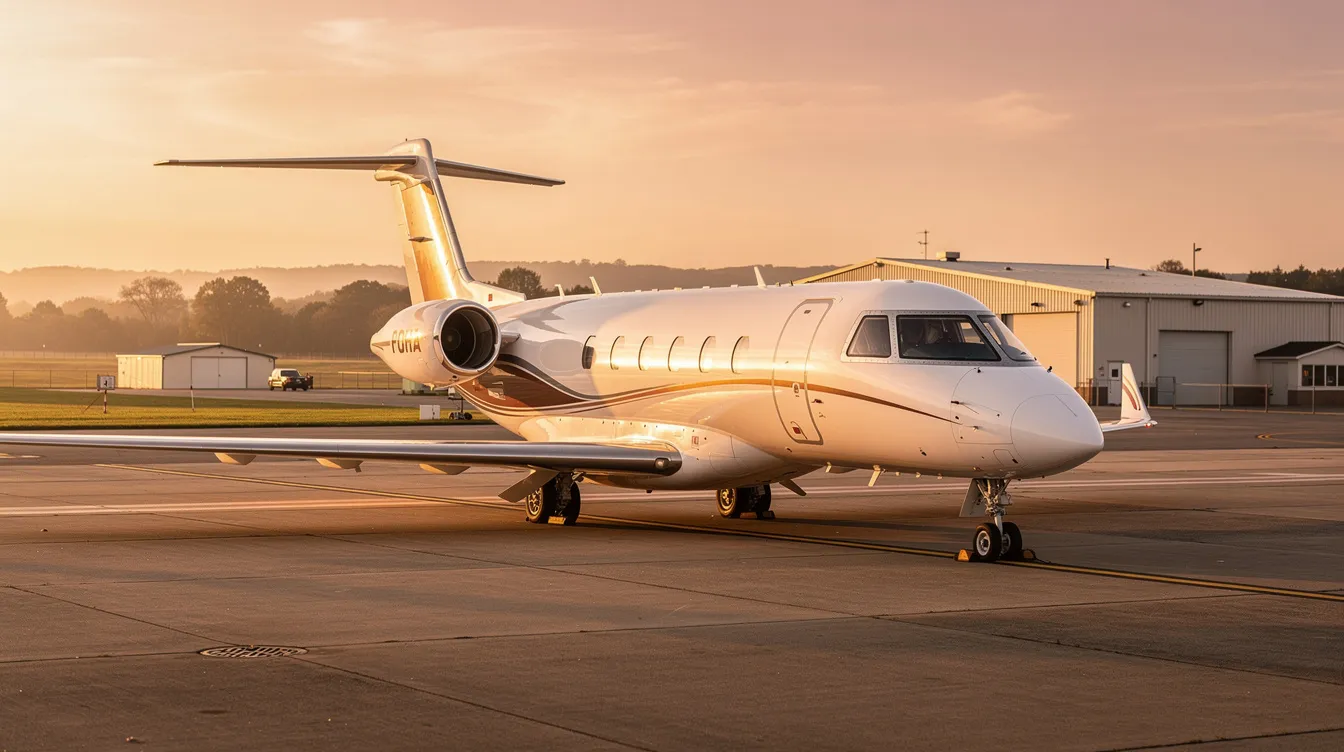
Private jet travel used to mean writing six-figure checks. That's no longer the only path. Today, it's entirely realistic to fly on a private jet cheaply by combining empty leg flights, right-sized aircraft, and on-demand charter platforms that skip the traditional overhead. This guide breaks down practical ways to reduce what you pay and shows how Jettly makes it happen.
Flying private cheaply is achievable when travelers use empty leg flights, light jets, and on-demand charter instead of fractional ownership or traditional jet cards. Private jet charter costs range from $2,000 to $14,000 per hour, but flexible travelers can save 30–75% with the right approach.
Hourly rates start around $1,200–$2,200 for turboprops and climb past $10,000 for ultra-long-range aircraft. The cheapest way to fly private depends on route length, passenger count, and schedule flexibility.
Jettly is a digital private aviation marketplace with access to over 20,000 aircraft worldwide, offering instant pricing and both on-demand and membership programs designed to lower private jet travel costs.
This article includes real-world pricing for routes like New York–Miami and LA–Las Vegas, plus a step-by-step checklist to help first-time and frequent flyers book smarter.
Private jet flights can start around $2,000–$4,000 total for very short hops on smaller aircraft. But without cost-saving strategies, a typical charter flight easily exceeds $10,000. A 2-hour private jet flight can cost between $8,000 and $37,000, depending on aircraft size and route.
Here's how hourly rates break down by aircraft type in 2026:
|
Aircraft Type |
Hourly Rate Range |
Typical Use Case |
|---|---|---|
|
Turboprops |
$1,200 – $2,200 |
Flights under 1.5 hours, up to 8 passengers |
|
Very Light Jets |
$1,800 – $2,800 |
Short regional flights, 2-4 passengers |
|
Light Jets |
$2,500 – $4,000 |
Domestic flights 2-4 hours, 5-7 passengers |
|
Super Midsize Jets |
$5,000 – $8,000 |
Transcontinental, larger groups |
|
Heavy Jets |
Around $10,000 |
Long-range, international flights |
|
Ultra Long-Range Jets |
$9,000 – $15,000+ |
International, extended range missions |
The total cost of a specific trip equals hourly rates multiplied by billable flight hours, plus taxes, including the 7.5% Federal Excise Tax on all domestic charter flights, plus additional fees like landing fees, crew member expenses, and any short leg fees for very brief segments.
Two concrete examples using approximate 2025–2026 market pricing:
Los Angeles to Las Vegas on a light jet (about 1 hour): roughly $6,000–$9,000 all-in
New York to Miami on a super midsize jet (about 2.5–3 hours): approximately $18,000–$25,000 all-in
The phrase "fly on private jet cheap" typically means finding ways to fly privately while reducing those baseline numbers by 30–75% through smart timing, aircraft choice, and flexible routing.
This section covers five core strategies that make flying private genuinely affordable in 2026. Each works differently depending on travel patterns.
Empty leg flights - repositioning flights sold at steep discounts, often saving 30–75% off regular charter prices.
Shared or semi-private flights - pay per seat rather than chartering an entire aircraft, sometimes starting as low as $250 per seat, or use Jettly's platform to crowdsource charter flights and share empty seats.
On-demand light jet charters - choosing smaller aircraft for short routes cuts hourly rates nearly in half versus midsize or heavy options.
Membership programs - recurring travelers can lock in lower hourly rates and priority aircraft availability through programs like Jettly's membership tiers.
Last-minute deals - operators discount unsold inventory close to departure, rewarding flexible travelers.
Flexibility in booking is key to finding low-cost private jet flights across all five strategies.
Quick decision guide: Start by defining your flexibility on dates and times. Then check empty legs on Jettly. Compare light jets versus turboprops for your route. Finally, decide between a one-off charter and membership programs based on how often you fly private each year.
Empty leg flights occur when jets reposition without passengers, flying back to base or moving to pick up the next charter. Because fuel and crew costs are already covered, these flights are offered at significantly reduced rates, typically 40–75% below standard charter prices.
On Jettly, travelers can browse thousands of empty leg flights worldwide, filtered by origin, destination, date, aircraft type, and passenger count. Prices for empty leg flights range from $2,000 to $5,000 on popular short-haul routes using light jets.
Real examples:
A Los Angeles (VNY) to Las Vegas empty leg on a light jet sometimes appears from roughly $3,000 total versus $6,000+ as a standard charter
A London–Nice leg flight directly on a super midsize jet might run $9,000–$12,000 versus $18,000–$20,000 at full price
Empty leg flights can save travelers up to 75%, but there are trade-offs. Routes and departure windows are fixed. Schedules can shift with little notice since they depend on another client's booking. Most are one-way flights, best suited to flexible leisure travelers or spontaneous business trips.
Flexibility is essential for booking empty leg flights. Jettly members can set up alerts or work with concierge support to catch relevant leg flights as soon as aircraft availability opens up.
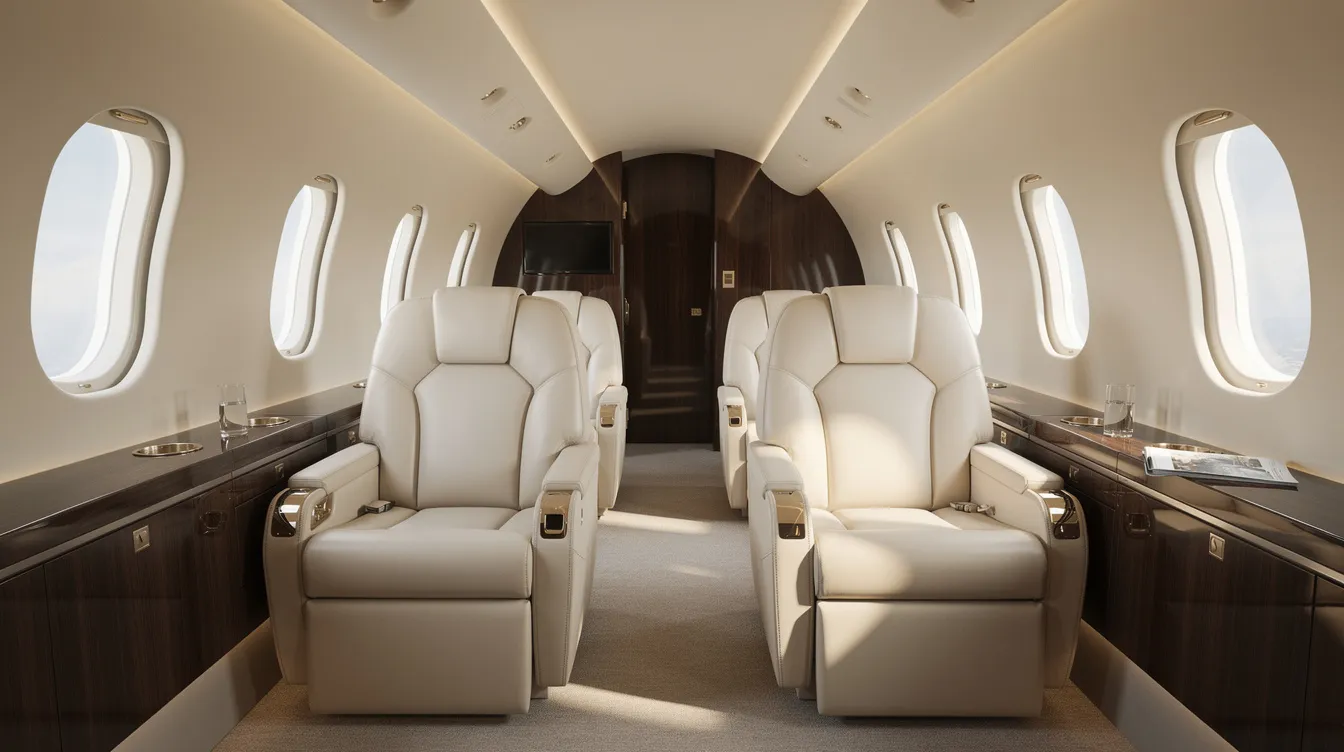
Shared charter services allow booking a single seat on a jet rather than chartering the entire plane. Semi-private flights use light jets, super midsize jets, or regional aircraft on busy routes, with per-seat prices that dramatically lower the barrier to flying privately.
Semi-private airlines can cost $100 to $500 for one-way trips on popular city pairs like Los Angeles–Las Vegas or New York–South Florida, with semi-private flights starting at around $250 per seat on many routes. Sharing a jet's total charter cost can reduce the per-person price comparable to commercial first-class tickets, especially when you apply tips for booking the cheapest private jet flights.
Key benefits include access to private terminals at fixed base operators, shorter check-in times (often 20–30 minutes), and a more spacious private cabin than typical commercial business class. You can learn more about this approach in Jettly's guide on how to buy a seat on a private jet.
The trade-offs versus a full private charter: fixed departure times, shared cabin with a small number of other passengers, and less flexibility for last-minute schedule changes. While Jettly focuses on full private jet charter and empty legs, the same cost logic applies-filling more seats on an entire aircraft spreads hourly rates across more passengers, making flying private cheaper per person.
Choosing the optimal aircraft type is one of the most reliable practical ways to reduce private jet cost without sacrificing safety. Choosing turboprop aircraft can cut hourly charter rates nearly in half for short trips compared to chartering a midsize or larger aircraft, and Jettly's guides to the cheapest private aircraft options can help you understand where each category fits your budget.
Key categories and when each fits best:
Turboprops ($1,200–$2,200/hr): ideal for flights under 1.5 hours with up to 8 passengers. Great for regional airports with shorter runways and widely available across Jettly's private charter aircraft fleet.
Light jets ($2,500–$4,000/hr): 5–7 passengers, flights of 2–4 hours. The sweet spot for most domestic private flight needs.
Super midsize ($5,000–$8,000/hr): transcontinental range, bigger cabin, more luggage. Best for longer flights with larger groups.
Heavy and ultra-long range ($10,000+/hr): international, high-comfort missions where flight time exceeds three hours significantly.
Route examples where downsizing saves tens of thousands:
New York–Boston on a turboprop instead of a midsize jet: roughly $3,500 versus $8,000+
Dallas–Denver on a light jet instead of a super midsize: approximately $9,000 versus $16,000+
Jettly's platform lets users filter by aircraft category and see instant hourly rates, making it easy to compare a Pilatus PC-12 versus a Citation CJ3+ for the same trip. For most flights under about two hours with up to six passengers and light luggage, a turboprop or light jet is usually the cheapest way to fly private.
While government charges like the 7.5% U.S. federal excise tax and per-segment fees are unavoidable on qualifying domestic flights, travelers can still lower their overall invoice through smart planning, especially when they understand the broader picture of how much a private jet really costs.
Main additional fees that affect private jet charter costs:
Landing fees and ramp handling at major airports ($400–$1,500+)
Crew overnight and per diem charges on multi-day trips
Short leg fees triggered by ultra-brief segments
Deicing charges in the winter months
Wi-Fi, catering, and ground transportation add-ons
Aircraft positioning fees when the plane must reposition to your departure point
Using secondary airports can save thousands in landing fees and fuel costs. Flying out of Teterboro instead of JFK, or Opa-Locka instead of Miami International, often cuts handling costs significantly. Jettly's quotes itemize these costs up front through its charter cost estimator, letting travelers see exactly where savings are possible, similar to the detailed breakdowns in Jettly's guide on how much it costs to rent a private jet.
Two practical tips: avoid repeated ultra-short segments that trigger daily minimums and short leg fees, and consider daytime flights in winter to reduce the likelihood of expensive deicing.
Membership programs can reduce private jet costs for frequent flyers by offering fixed hourly rates, priority aircraft availability, and reduced aircraft positioning fees. Jet cards offer fixed hourly rates for prepaid flight hours, typically requiring deposits of $100,000–$250,000 for 25–50 hours, and resources that explain jet card costs and pricing structures can clarify whether this model fits your budget.
Membership makes financial sense for travelers flying 25–50+ flight hours per year on regular business routes who want predictable charter costs across light jets, midsize, and super midsize categories. Compare options at Jettly's jet card pricing breakdown.
For occasional travelers under roughly 25 hours per year, pure on-demand charter via Jettly is usually the cheapest way. The platform provides access to the same global fleet without long-term contracts or large deposits-no fractional ownership commitment needed, and serves as a flexible NetJets alternative for flying private for less.
Jettly's membership options start at $370/month with lower booking fees, better access to empty legs, transparent hourly rates, and concierge support for optimizing aircraft selection and routing.
Rule of thumb: Calculate your expected annual hours. Multiply by average hourly rates for your preferred aircraft size. Then compare membership program costs versus on-demand pricing. If the membership savings exceed the annual fee, it's a better deal.

Jettly is a digital private aviation marketplace that connects travelers to over 20,000 unique aircraft worldwide, and is an option travelers may compare with providers such as Stratos Jets, from turboprops and light jets to heavy and ultra-long range jets. The platform functions as a charter broker with transparent pricing, no traditional jet card lock-ins, and clear breakdowns of taxes, fuel, and any applicable fees.
The platform offers instant pricing, real-time aircraft availability, and side-by-side comparisons of aircraft type, hourly rates, and operating costs for any chosen route. Every charter operator in Jettly's network holds the appropriate air carrier certification-FAA Part 135 in the U.S., EASA in Europe, or equivalent-and many carry third-party safety ratings from ARGUS, Wyvern, or IS-BAO stage audits.
Three quick use-case scenarios, all of which illustrate how Jettly offers affordable private jet charter:
Same-day business trip: A CEO books a Toronto–Vancouver round trip through Jettly, selecting a midsize jet with instant pricing and confirmed crew member availability within hours.
Family ski holiday: A family searches for Los Angeles–Jackson Hole on a light jet, comparing it against a larger aircraft to find the best value for luggage and passengers.
Last-minute getaway: A couple grabs a New York–Miami empty leg listed on Jettly at 50% off regular charter prices, flying on a next charter repositioning flight.
Learn more about Jettly's charter options at https://www.jettly.com.
These examples use approximate 2025–2026 market figures. Real-time quotes via Jettly will always give the most accurate, route-specific numbers.
New York to Miami (~2.5 hours)
Light jet: approximately $12,000–$18,000 all-in
Super midsize: approximately $18,000–$24,000 all-in
Empty leg on light jet: potentially $5,000–$9,000
Los Angeles to Las Vegas (~1 hour)
Light jet or VLJ: approximately $6,000–$9,000
Super midsize or heavy jet: $14,000–$20,000
Empty leg on smaller aircraft: potentially $3,000–$5,000
London to Ibiza (~2.5 hours)
Light jet: approximately $14,000–$20,000
Heavy jet: up to $30,000–$45,000 depending on cabin and other features
Empty leg if timing aligns: $8,000–$12,000
Peak demand periods-Christmas, New Year's Eve, major sporting events, and holiday weekends-can push charter prices 20–40% higher. Weekend departures and flights into Las Vegas during fight weekends or conventions also carry surcharges. Mid-week travel and shoulder seasons consistently offer the best rates.
A concise playbook for first-time private flyers who want to minimize total cost without cutting safety corners:
Define your travel window and passenger count. Even a few hours of flexibility on departure time dramatically increases your options. Know your exact headcount and luggage needs.
Compare nearby departure and arrival airports. Smaller airports and regional airports typically have lower landing fees and faster turnaround. Teterboro over JFK. Opa-Locka over Miami International.
Check empty legs first. Browse Jettly's empty leg listings for your route and dates. These can slash costs by up to 75%.
Choose the right aircraft type. Favor light jets and turboprops for short flights. Don't book an entire jet that's twice the size you need.
Request multiple quotes on Jettly. Compare all-in pricing, not just hourly rates. Review itemized quotes for federal excise tax, landing fees, and any short leg fees.
Confirm safety credentials. Look for Part 135 operators with ARGUS or Wyvern ratings. Jettly vets every charter operator in its network against these standards.
Once you understand this process, save time on future bookings by using Jettly memberships or saved preferences for frequently flown routes.

The value of flying private extends well beyond the ticket price. Time savings, direct access to smaller airports, zero security lines, and a quiet cabin for work or rest all factor into the equation. Flying commercial on a busy route can burn half a day in connections and layovers that a private flight eliminates in under an hour.
Consider a team of 8 executives needing to visit three cities in one day. Commercial flights make this logistically impossible. A chartered midsize jet handles it in a single itinerary.
Per-person math can also surprise: a light jet carrying 6 passengers at $6,000 total works out to $1,000 per person, comparable to last-minute business-class commercial flights on busy routes. Read Jettly's analysis on how you can fly private for the cost of commercial, and explore their guide to budget-friendly aircraft choices for owners if you're also considering owning an economical plane.
On environmental considerations, choosing newer, fuel-efficient aircraft types and consolidating trips into fewer segments reduces impact. Some operators accessible through Jettly offer carbon offset options.
Flying private cheaply is about optimizing value per hour saved and per person, not just chasing the lowest possible headline price.
The cheapest single experience typically comes from a deeply discounted empty leg or a shared semi-private seat on a short route. Semi-private flights start at around $250 per seat on popular city pairs. Catching these prices requires flexibility on dates and times and a willingness to accept preset routes. Browsing Jettly's empty leg listings is a practical first step. For a small group willing to split costs, a short hop on a turboprop booked via Jettly can also be cost-effective compared to multiple last-minute commercial flights.
For standard on-demand charters, booking 1–3 weeks in advance often yields better aircraft choice and rates. During peak demand seasons like Christmas, New Year, or major events, 4–8 weeks is safer. Empty leg deals often appear only a few days before departure because they depend on other customers' itineraries, so last-minute can actually be best for cheap private jet opportunities. Use Jettly's platform regularly or set alerts to monitor route pricing over time.
Reputable charter operators must meet strict regulatory standards such as FAA Part 135 in the U.S. or equivalent abroad, regardless of whether a flight is discounted. Jettly works exclusively with certified operators and encourages travelers to look for third-party safety ratings from organizations like ARGUS, Wyvern, and IS-BAO stage audits. A discounted empty leg or a right-sized aircraft reflects operational efficiency, not safety shortcuts.
Baggage capacity depends heavily on aircraft type. Turboprops and light jets have more limited holds than super midsize or heavy jets. Declare luggage type and volume up front, especially skis, golf bags, or surfboards, so Jettly can match you with an appropriate aircraft and avoid last-minute upcharges. In some cases, choosing a slightly larger aircraft may be more economical than shipping equipment separately. Learn more about choosing the right aircraft for your needs.
International private jet flights add costs like overflight permits, handling, and international head taxes, so absolute prices run higher than domestic hops. Savings are still possible: using efficient super midsize jets for medium-haul routes, booking empty legs on transatlantic repositioning flights, and choosing less congested airports all reduce the additional cost. Travelers interested in international routes can use Jettly to compare multiple aircraft types and routings, and discuss complex itineraries with concierge support.
Flying private does not have to mean six-figure trips. With the right combination of empty legs, smart aircraft selection, and on-demand private charter via Jettly, it's genuinely possible to fly on a private jet cheaply while still enjoying the comfort, privacy, and time savings that make private jets worth considering.
Your checklist:
Be flexible with dates and departure times whenever possible
Favor light jets or turboprops for flights under two hours
Always check empty leg flights first—they remain the single biggest discount lever
Compare multiple quotes and review every line item for additional cost surprises using Jettly's charter cost estimator
Consider membership programs if you're flying frequently enough to justify the monthly fee
Market conditions, fuel prices, and aircraft availability shift quickly in 2026. Explore real-time pricing on Jettly rather than relying on generic price ranges.
Experience private travel on your terms by exploring flight options or requesting a quote at https://www.jettly.com.
Share this post:
Jay Franco Serevilla
Jun 24, 2026
|
5
min read
Discover tips and trends in the industry.

5
min read
How Much Does It Cost to Fly a Fighter Jet? (Real Numbers, Not Hype)
Flying a fighter jet is a thrilling experience that can range from $2,500 for a brief trainer ride to over $35,000 for a supersonic mission. This guide details the costs, aircraft types, and factors influencing pricing, helping aviation enthusiasts plan their dream flight. Whether you're seeking a short orientation or an adrenaline-pumping aerobatic mission, understanding these costs is essential for budgeting your adventure.
Read More
5
min read
Types of Military Jets: Generations, Roles, and How They Shape Modern Aviation
Military jets play crucial roles in modern aviation, ranging from fighter jets to bombers and trainers, each designed for specific missions. The evolution from early subsonic designs to advanced fifth-generation fighters showcases significant technological advancements that have transformed air combat. Innovations in military aviation also benefit civilian and business aviation, enhancing safety and performance.
Read MoreStay updated with our latest insights and tips to elevate your journey with us.
MEMBERSHIPS AND ASSOCIATIONS



Disclaimer: Jettly operates as a charter broker, offering access to a global digital jet charter marketplace. Jettly is not a direct air carrier and does not own or operate aircraft. All advertised flights are conducted by third-party air carriers that are fully licensed and hold the appropriate Part 135 or Part 121 certifications issued by the Federal Aviation Administration (FAA) or equivalent regulatory authorities under U.S. or foreign law. Jettly complies fully with the U.S. Department of Transportation's Part 295 and Part 298 Charter Broker regulations. Jettly does not carry additional liability insurance. Passengers are covered by aircraft operator insurance. TICO: 50023770


