



Login
Get Instant Pricing On 23,000+ Aircraft

>
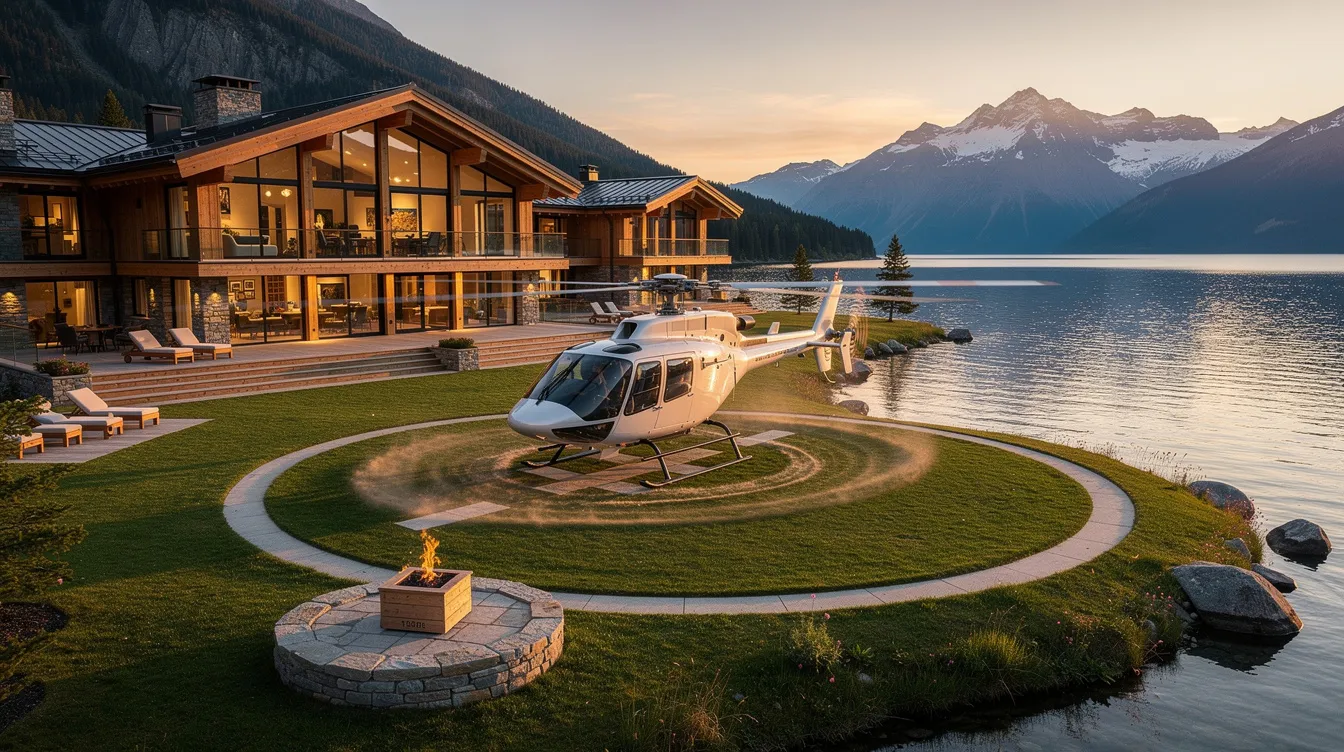
This article explores the history and legacy of the flying RV, focusing on the Winnebago Heli-Home—a unique blend of aviation and recreational vehicle innovation. Whether you're an aviation enthusiast, an RV fan, or simply curious about unusual travel concepts, you'll discover how the dream of a flying camper captured imaginations and what modern alternatives exist today. The topic matters because it highlights the fascinating intersection of aviation and RV culture, and the ongoing allure of flying campers for adventurous travelers.
The flying RV concept became real in the 1970s when Orlando Helicopter Airways and Winnebago partnered to build the Heli-Home, a camper-aircraft hybrid based on retired Sikorsky helicopter airframes. The idea was to combine air travel with camping utility, letting travelers fly directly to remote lakes, ranches, and bush airstrips instead of driving for days.
Only six Winnebago Heli-Home units were ever built, making them uncommon publicity showpieces rather than a mass-market product.
The flying camper struggled commercially due to high purchase price ($185,000 to $300,000 in the 1970s), fuel burn of roughly 75 gallons per hour, and the requirement for a licensed helicopter pilot.
A flying RV requires a pilot's license for operation, must adhere to strict Federal Aviation Administration weight limits, and relies on aviation infrastructure for landing.
Platforms like Jettly now offer a practical alternative: on-demand helicopter and private jet charters that provide quick access to remote destinations without the burden of owning a purpose-built flying camper.
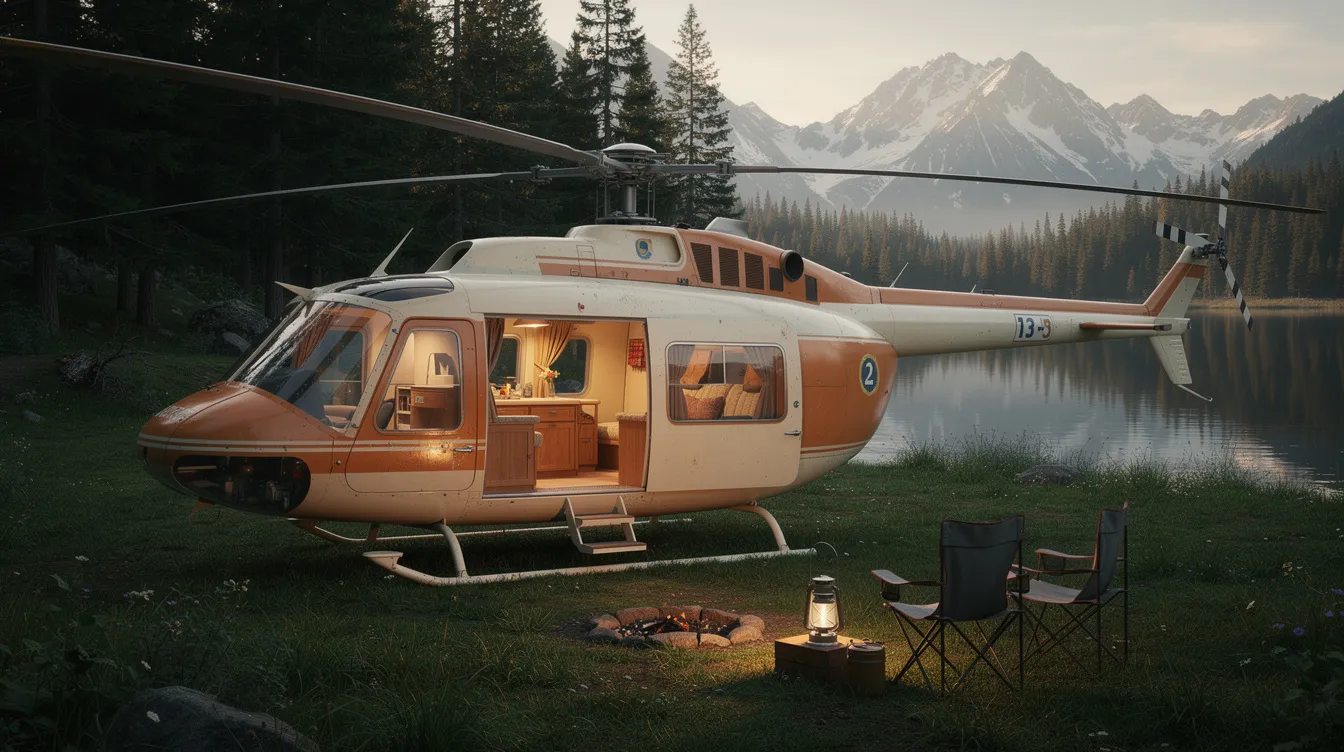
The 1960s and 1970s saw parallel booms in recreational vehicles and general aviation across the United States. In this context, a flying RV meant a hybrid vehicle that combined an aircraft—most notably a helicopter—with camper-style living space, exemplified by the Winnebago Heli-Home. A flying RV is a literal camper-aircraft hybrid that combines air travel with camping utility. RV sales climbed as families hit the highway; at the same time, surplus military helicopters flooded the market after Vietnam-era drawdowns. That overlap created the conditions for the flying camper idea.
The appeal of a flying RV is combining home-like comfort with flight. A camper that could fly promised point-to-point adventure travel: skip the interstate, land at a remote lake, and cook dinner on board. For affluent or adventure-seeking travelers drawn to unusual ways to reach remote destinations—and for readers curious why flying campers never caught on—this story looks at how the Heli-Home was designed, what it cost, how it performed, and why FAA certification, airworthiness requirements, and economics kept the concept from going mainstream. It also connects that idea to the modern, more practical alternative: using services like Jettly for private jet or helicopter access, then pairing the flight with a ground-based RV stay instead of owning a flying camper.
Van's RV series, while unrelated to flying campers, refers to high-performance, experimental kit planes, illustrating how the term "RV" crosses into aviation.
Orlando Helicopter Airways, based near Sanford, Florida, obtained surplus Sikorsky S-55 (military designation H-19) airframes from government auctions in the early 1970s. The company converted these helicopters for civilian cargo and transport use, then took the next step: outfitting them as airborne motorhomes called Helicampers.
The first Helicamper prototype was, by definition, the first true flying camper. Engineers stripped the military interiors, reinforced floor structures, routed electrical and plumbing systems, and integrated RV-style windows and finishes. The S-55's nose-mounted 800 hp Wright R-1300-3 radial engine was part of the helicopter's propulsion system, and these engines powered the aircraft at the ground-level altitudes common for helicopter operations. Demonstrations at Florida airshows and regional events proved the aircraft could fly and function as a portable living space, but also exposed the high operating costs and limited market.
Around 1975, Winnebago's Itasca division formalized a partnership with Orlando Helicopter Airways, and the Heli-Home was born. The Winnebago Heli-Home was introduced in the late 1970s as a branded flying RV product line, marketed to wealthy consumers and used heavily for company promotion.
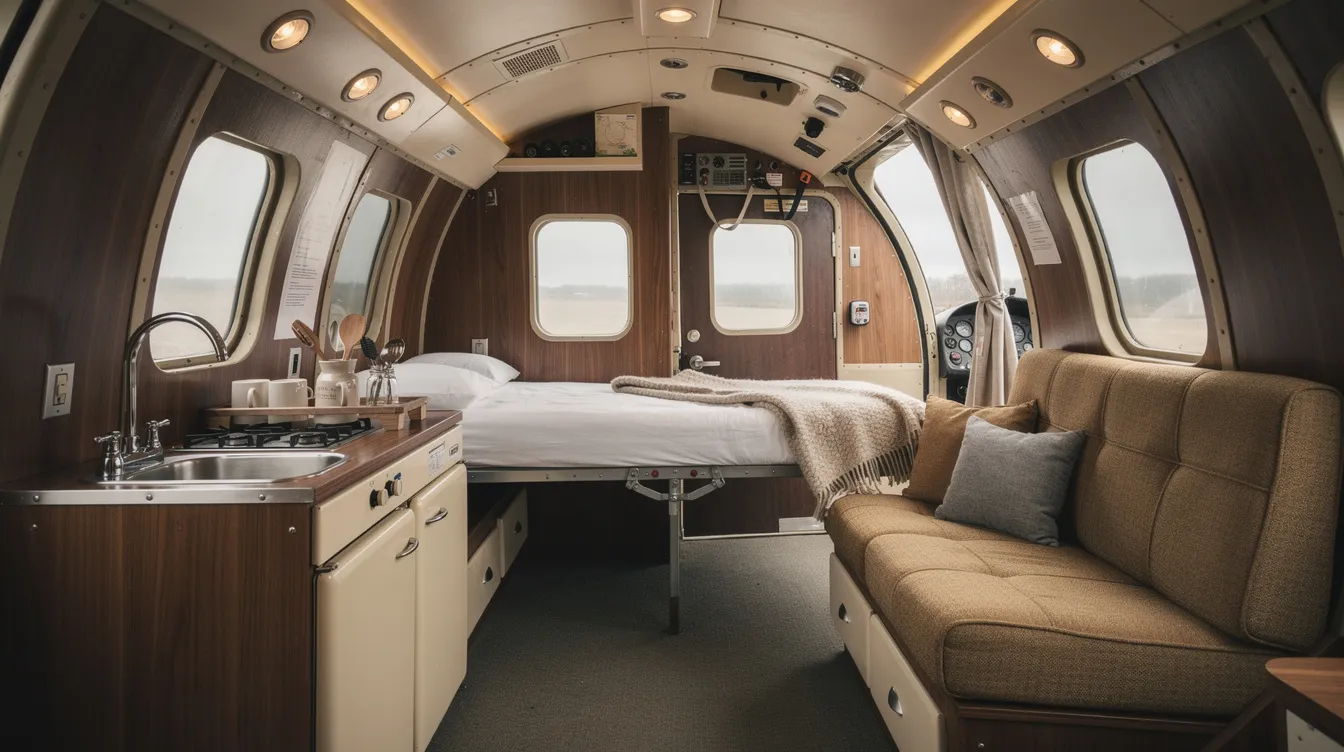
The cabin featured wall-to-wall carpet, a dinette that converted to a bed (the Heli-Home could sleep six people comfortably), a color TV and stereo, and a compact bathroom with shower and chemical toilet. It also included a 6,000 BTU air conditioner and a 40,000 BTU furnace, a 120 V generator, a refrigerator, and a cooking stove. A screened awning extended from a side door, creating an outdoor living area at camp. Optional floats allowed some configurations to land on lakes and calm coastal inlets.
Contemporary sources differ on exact production numbers. Most agree that only about six to eight Winnebago Heli-Home units were built and sold. The story of the flying RV was always more about the news coverage and display at RV trade shows than about volume sales.
The Heli-Home's performance profile was impressive on paper but expensive in practice. It could travel at speeds of 100 to 110 miles per hour, with a flight range of about 300 miles or roughly 3.5 hours on a full fuel load. Piston-powered S-55 examples burned approximately 75 gallons per hour. A turbine-powered variant using the Pratt & Whitney PT6T-3 offered better climb performance and power (nearing 1,525 hp) at even higher fuel burn.
The Heli-Home was priced between $185,000 and $300,000 in the 1970s. Adjusted for inflation, that equates to roughly $880,000 to over $1.5 million in today's money. Winnebago also marketed packages to rent it at about $10,000 per week, though pilot fees and fuel were excluded in some arrangements. Most documented flights were short-range demos, promotional tours, and features in magazines like Popular Mechanics, rather than extended backcountry camping trips. Flying RVs incur higher maintenance costs than standard RVs, and the weight of a fully equipped model (around 9,200 pounds empty) left limited payload for passengers, gear, and fuel.
|
Feature |
Specification |
|---|---|
|
Flight Speed |
100-110 miles per hour |
|
Flight Range |
About 300 miles (3.5 hours) |
|
Fuel Consumption |
Approx. 75 gallons per hour |
|
Passenger Capacity |
Sleeps six people comfortably |
|
Air Conditioning |
6,000 BTU |
|
Heating |
40,000 BTU furnace |
|
Weight (Empty) |
Around 9,200 pounds |
|
Price (1970s) |
$185,000 to $300,000 |
|
Rental Price |
Approx. $10,000 per week |
The high acquisition cost alone was a barrier. A top-level motorhome in the late 1970s cost a fraction of a Heli-Home, and a small private airplane covered longer range at lower per-mile expense. The mid-1970s oil crisis made fuel-hungry helicopters even harder to afford.
Operational complexity compounded the problem. Owners needed to hire a type-rated helicopter pilot or hold rotorcraft ratings themselves. Certified mechanics handled maintenance. Hangar space, insurance, and FAA compliance added recurring expenses. The landing dilemma was just as limiting: ideal camping locations (dense forest, narrow valleys, rocky bush terrain) rarely coincide with safe helicopter landing zones. A rotor sweep length of 56 feet demands a clearing free of obstacles. Without pre-arranged refueling stops, the limited range made deep wilderness expeditions impractical.
Flying RVs must adhere to strict Federal Aviation Administration weight limits, which restrict payload and operational flexibility.
Fred Clark of Orlando Helicopter Airways later estimated that sales "topped out at a half-dozen, possibly seven." It turns out the Winnebago Heli-Home and related flying camper projects became memorable marketing icons rather than viable product lines. None of the Heli-Home units are confirmed to survive today in flying condition.
The dedicated flying RV faded, but the desire for flexible, point-to-point air travel paired with camping-style experiences remains strong at every level of the market.
Flying RVs offer greater routing efficiency than traditional RVs, but modern travelers often prefer to separate air travel from camping accommodations.
Affluent travelers now split the experience: fly by charter helicopter or private jet to a regional airport, then continue by luxury motorhome, SUV, or lodge stay. This approach delivers the same benefit (skip the highway, arrive fast) without the engineering risk of bolting a house inside an aircraft. Examples include:
Families chartering a light jet for a weekend at a national park, then picking up a rented motorhome nearby.
Adventure travelers booking a helicopter transfer to a lakeside lodge that offers RV hookups or glamping tents.
Practical advantages over owning a flying camper: on-demand access to over 20,000 aircraft through platforms like Jettly, transparent instant pricing, no long-term ownership costs, and the ability to choose the right aircraft type for each trip.
The futuristic Airlander 10 concept represents the next generation of flying RV ideas, blending aircraft and living space in innovative ways, though it remains a concept rather than a commercial product.
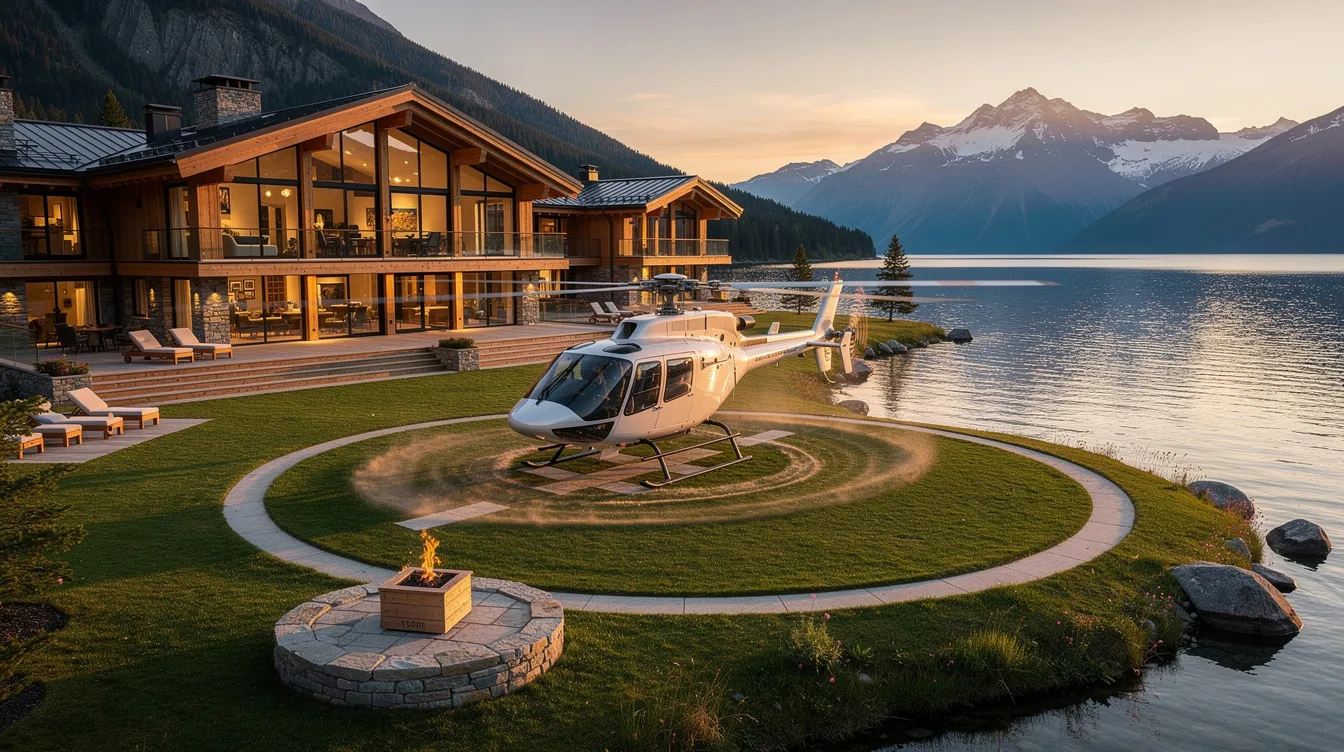
No modern equivalent of the Winnebago Heli-Home is in regular production. Helicopter charter still fills many of the same roles for high-end travel: short regional hops into remote lodges, island resorts, ski bases, ranches, or yacht transfers where no wing-equipped airplanes can land.
Jettly's booking process works in a few steps: request a quote, compare aircraft options, review pricing, confirm details, and book digitally. Travelers enjoy RV-like comforts on the ground (modern fifth-wheel trailers, Class A coaches, luxury cabins) while using the helicopter purely as fast, flexible transport. This model avoids the financial and technical burden of building or owning an experimental heli home. Customers can charter on demand or through membership options depending on annual flight hours. Efficient routing, right-sizing the aircraft to passenger count, and carbon offset programs also help mitigate environmental impact compared with operating a vintage, one-off helicopter-RV conversion.
Yes. Winnebago partnered with Orlando Helicopter Airways in the 1970s to create the Winnebago Heli-Home, a flying RV based on Sikorsky S-55 helicopters fitted with full RV interiors. The literal flying RV is a camper-aircraft hybrid that was designed to land in remote areas and function as a self-contained living space.
Only a small number (likely six units) were ever completed. They were marketed at trade shows, sold to a handful of buyers, and featured in photo spreads across national magazines, but they never reached mass production.
Original prices ranged from $185,000 to $300,000 in late-1970s dollars. Adjusted for inflation, that comes to about $880,000 to more than $1.5 million today. That figure does not include ongoing pilot, maintenance, insurance, and fuel expenses, which would push total annual costs far beyond most modern RV setups. For comparison, you can review what current helicopter rental costs look like.
No widely documented Heli-Home examples remain in active service. Most converted aircraft were scrapped, reconverted to standard configuration, or retired. One S-55 unit was once on display at the Valiant Air Command museum in Titusville, Florida, but without its Winnebago interior. Readers interested in the history can search for archival photo collections, period articles in magazines like Popular Mechanics, or YouTube video footage of promotional flights. Watch for occasional museum exhibits as well.
In theory, a private owner could attempt a similar conversion using surplus helicopters or large amphibious aircraft. Van's RV series, for example, refers to high-performance experimental kit planes, not motorhomes, but illustrates how the term "RV" crosses into aviation. Future concepts like the Airlander 10 represent a futuristic flying RV idea, though none are in consumer production. Aviation regulations, certification hurdles, and liability risks make any such project extremely complex and expensive.
Most travelers seeking a flying camper experience are better served combining modern private aviation charter with premium RV rentals or lodge stays.
Jettly allows travelers to charter helicopters, turboprops, and private jets on demand, reaching remote destinations quickly while keeping the "home" aspect on the ground via RVs, villas, or yachts. The sky is the limit in terms of where you can go, without the cost and risk of building a one-off heli home.
Ready to reach remote destinations on your terms? Explore aircraft options and request a personalized quote at https://www.jettly.com.
The Winnebago Heli-Home stands as a fascinating chapter in the history of recreational travel—a bold attempt to merge the convenience and capability of air travel with the comfort and utility of an RV. Despite its innovative design and unique appeal, the flying RV concept faced significant challenges in safety, operational complexity, cost, and regulatory compliance that prevented it from becoming mainstream. Today, travelers seeking the flexibility and adventure of flying campers can turn to modern alternatives like Jettly's private jet and helicopter charters, which offer efficient, safe, and cost-effective access to remote destinations. By separating air travel from ground accommodations, Jettly provides a practical way to enjoy the benefits of both worlds without the burdens of owning and maintaining a flying RV.
Ready to experience private travel on your terms? Explore flight options or request a quote at https://www.jettly.com.
Share this post:
Jay Franco Serevilla
Aug 24, 2026
|
5
min read
Discover tips and trends in the industry.
5
min read
Airport Charter Service: How Jettly Makes Private Charter Flights Simple
Jettly simplifies private charter flights, offering travelers on-demand access to over 20,000 aircraft worldwide. With flexible scheduling and transparent pricing, it caters to business, family, and group travel needs, ensuring a seamless experience from booking to arrival.
Read More
5
min read
How Many Passengers on a 737? Boeing 737 Seat Capacity Explained
The Boeing 737 is a versatile aircraft with a passenger capacity ranging from 85 to 230, depending on the variant and layout. Most commonly, the 737-800 and 737 MAX models accommodate between 162 and 200 passengers. This guide details the seating capacities across different generations and compares them to private jet options for tailored travel experiences.
Read MoreStay updated with our latest insights and tips to elevate your journey with us.
MEMBERSHIPS AND ASSOCIATIONS



Disclaimer: Jettly operates as a charter broker, offering access to a global digital jet charter marketplace. Jettly is not a direct air carrier and does not own or operate aircraft. All advertised flights are conducted by third-party air carriers that are fully licensed and hold the appropriate Part 135 or Part 121 certifications issued by the Federal Aviation Administration (FAA) or equivalent regulatory authorities under U.S. or foreign law. Jettly complies fully with the U.S. Department of Transportation's Part 295 and Part 298 Charter Broker regulations. Jettly does not carry additional liability insurance. Passengers are covered by aircraft operator insurance. TICO: 50023770


