


Login
Get Instant Pricing On 23,000+ Aircraft

>
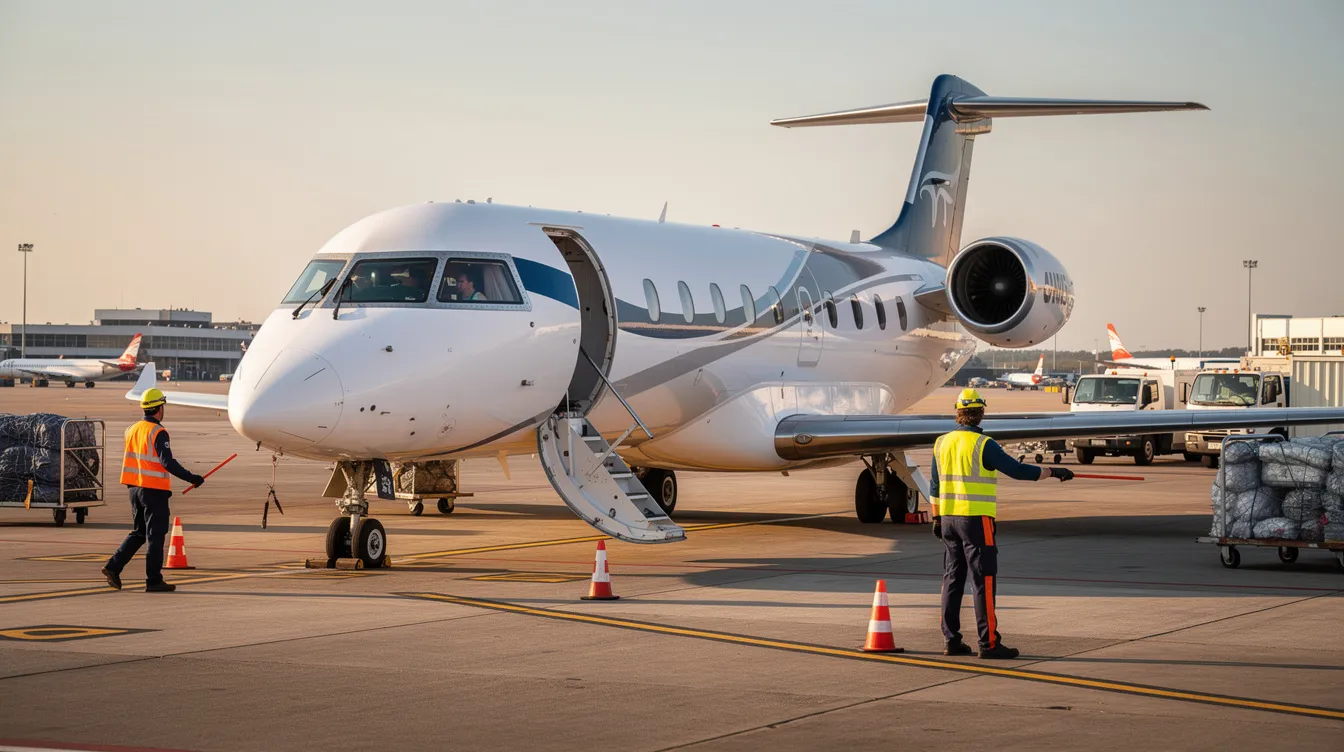
If you're researching a Fokker F100 for sale, you're likely weighing two very different paths: purchasing a pre-owned airframe or chartering one on demand. The Fokker 100 remains one of the most capable regional jets ever built, with seating for up to 122 passengers and a proven track record across decades of airline and charter operations. But acquiring one in the mid-2020s requires careful planning, realistic budgets, and a clear understanding of what you're getting into.
This guide covers everything from technical specifications and pricing to maintenance realities and charter alternatives, so you can decide whether buying or chartering a Fokker 100 is the right move.
Complete, airworthy Fokker 100 aircraft are still available on the secondary market, but they're not easy to find. The Fokker 100 is rarely listed on the open market for resale, and most transactions happen through specialized brokers rather than public retail platforms. For most travelers and organizations, the fastest way to access a Fokker 100 is through charter services, including platforms like Jettly that connect customers with operators flying regional jets worldwide.
Serviceable Fokker 100 aircraft are typically priced between $1 million and $5 million, with the average purchase price of a pre-owned Fokker 100 sitting around $1,875,000. Fokker 100 prices can vary based on condition and configuration. Year of manufacture, total airframe cycles, engine status, and interior condition all drive the final number. Parted-out hulls from defunct airlines have sold for as little as €85,000–€116,000 at auction, but these are not airworthy and would require massive investment to return to flying status.
Two clear paths exist for accessing this aircraft:
Buy and operate a Fokker 100. You take on acquisition cost, crew hiring, maintenance logistics, regulatory compliance, hangar fees, insurance, and parts sourcing. Best suited for operators with existing infrastructure and high-volume, recurring missions.
Charter a Fokker 100 (or similar regional jet) through Jettly on demand. You pay per flight hour, avoid capital investment, and let certified operators handle the operational burden. Ideal for project-based, seasonal, or occasional large-group travel.
Executives, mining companies, government agencies, and sports teams often find on-demand charter more cost-effective than ownership for an aircraft of this class. The math changes when you factor in idle days, aging systems, and the operational complexity of maintaining a vintage regional jet.
Looking for regional-jet capacity without the ownership headaches? Explore charter options or request a quote at Jettly.
The Fokker 100—sometimes written as Fokker F100—is a twin-engine regional jet designed and built in the Netherlands. In a typical airline configuration, it seats roughly 85 to 109 passengers, making it a workhorse for short- to medium-haul routes where larger narrow-body airliners would be overkill.
The aircraft was developed from the Fokker F-28 Fellowship, an earlier generation regional jet that first flew in the 1960s. Fokker stretched the fuselage, redesigned the wings with a supercritical wing profile, upgraded the cockpit with glass displays, and fitted more efficient Rolls-Royce Tay turbofans. The result was a modern, capable jet that became Fokker's best-selling jetliner.
Fokker produced and sold 283 Fokker 100 aircraft between 1986 and 1997, targeting airlines across Europe, Australia, the Americas, and parts of Asia. The type found a strong presence on dense regional routes where its capacity, runway performance, and operating economics gave it a competitive edge.
Original Fokker F100 production ended in 1997 after the company's bankruptcy. Despite that, a significant number of Fokker 100s remain active in charter, contract, and airline operations around the world. Anyone searching for one today should understand a key point: there are no new-build Fokker 100s. Every aircraft available is pre-owned.
Whether you're evaluating a Fokker 100 for purchase or considering it for charter, the core specifications determine whether the aircraft fits your mission. Here are the details that matter most.
The Fokker 100's typical seating capacity ranges from 85 to 109 passengers in standard airline layouts, with corporate shuttle configurations reducing that to 50–70 seats for additional legroom and amenities. In a high-density single-class arrangement, the Fokker 100 seats up to 122 passengers. The fuselage stretches approximately 35.5 meters (about 117 feet) in length, with a wingspan of roughly 28 meters (92 feet).
The aircraft has a maximum takeoff weight of 100,000 pounds (approximately 45,000 kg), and its maximum takeoff weight may be certified slightly higher on some variants depending on engine and fuel configuration. Loaded weight and passenger count directly affect range and takeoff distance.
Power comes from two rear-mounted Rolls-Royce Tay turbofan engines-either the Tay 620-15 (producing around 13,850 lbf of thrust each) or the more powerful Tay 650-15 (approximately 15,100 lbf). The rear mounting keeps the cabin quieter than wing-mounted alternatives and improves ground clearance during taxiing.
Performance numbers include:
Cruise speed: Approximately Mach 0.73–0.77, which translates to roughly 460 knots or about 525 miles per hour depending on altitude and conditions.
Range: The aircraft has a maximum range of 1,710 miles (around 1,300–1,500 nautical miles with full payload), varying by variant and fuel load.
Service ceiling: Around 35,000 feet, which helps with weather avoidance and efficient cruise on regional jet routes.
Runway requirements: Typical distance to take off is 1,400–1,700 meters, depending on weight and conditions.
In the early 1980s, Fokker recognized that its F28 Fellowship was aging out of competitiveness. The company developed what was internally known as Project 332-a stretched, modernized successor designed to capture a growing regional jet market. The goal was to retain the F28's proven rear-engine layout while upgrading nearly everything else.
The Fokker 100 first flew in 1986, on November 30. It entered service in 1988 with Swiss Air, following a roughly two-year flight test and certification process that included modifications to doors, avionics, and systems based on airline feedback. The cockpit featured glass displays with autoland capability, a significant step forward from the earlier F28.
Fokker evolved the F28 airframe considerably. The fuselage was stretched both forward and aft of the wings, the wing itself was redesigned with improved flaps and ailerons, and the landing gear was strengthened to handle the higher maximum takeoff weight. The Rolls-Royce Tay engines replaced the older Spey powerplants, delivering better fuel efficiency and reduced noise—a successful combination for airports with strict noise regulations.
During the 1980s, regional-jet competition was intensifying. Embraer and Bombardier were entering the niche, but airlines favored the Fokker 100 for its capacity on dense short-haul routes, particularly in Europe and Australia where point-to-point operations on shorter runways were common.
Despite the type's commercial success-Fokker produced 283 units-the company's broader financial difficulties proved insurmountable. Fokker declared bankruptcy in March 1996, and production was completed by 1997.
Multiple Fokker 100 variants were created over the production run to serve different missions, and understanding these variants matters for anyone evaluating a Fokker F100 for sale today.
The extended-range variant, introduced around 1993, came equipped with additional fuel tanks installed in the center fuselage. This pushed the aircraft's range toward approximately 1,700 nautical miles, making it viable for longer sectors that the standard configuration couldn't cover efficiently.
The Fokker 100QC (Quick Change) variant arrived around 1994, designed for operators needing rapid reconfiguration between passenger and cargo layouts. This flexibility made it attractive for airlines and charter operators running mixed operations.
Perhaps the most interesting variant for today's market is the Fokker 100EJ (Executive Jet). Launched in the early 2000s by Fokker Services, the EJ conversion takes retired airline frames, strips them down, and installs bespoke business interiors with auxiliary fuel systems and lower seat counts—typically 19 to 50 seats depending on the configuration chosen. Early quotes for high-spec VIP conversions ran as high as USD 12–15 million.
The related Fokker 70 derivative, introduced in 1993, is a shorter airframe seating roughly 80 passengers. It shares many systems and parts with the Fokker 100, making it relevant for operators who don't need the full capacity of the larger variant.
These variants affect resale value significantly. An extended-range example with low cycles commands a premium over a standard-range, high-time airframe. EJ conversions, if well maintained, can be worth more than standard airline interiors.
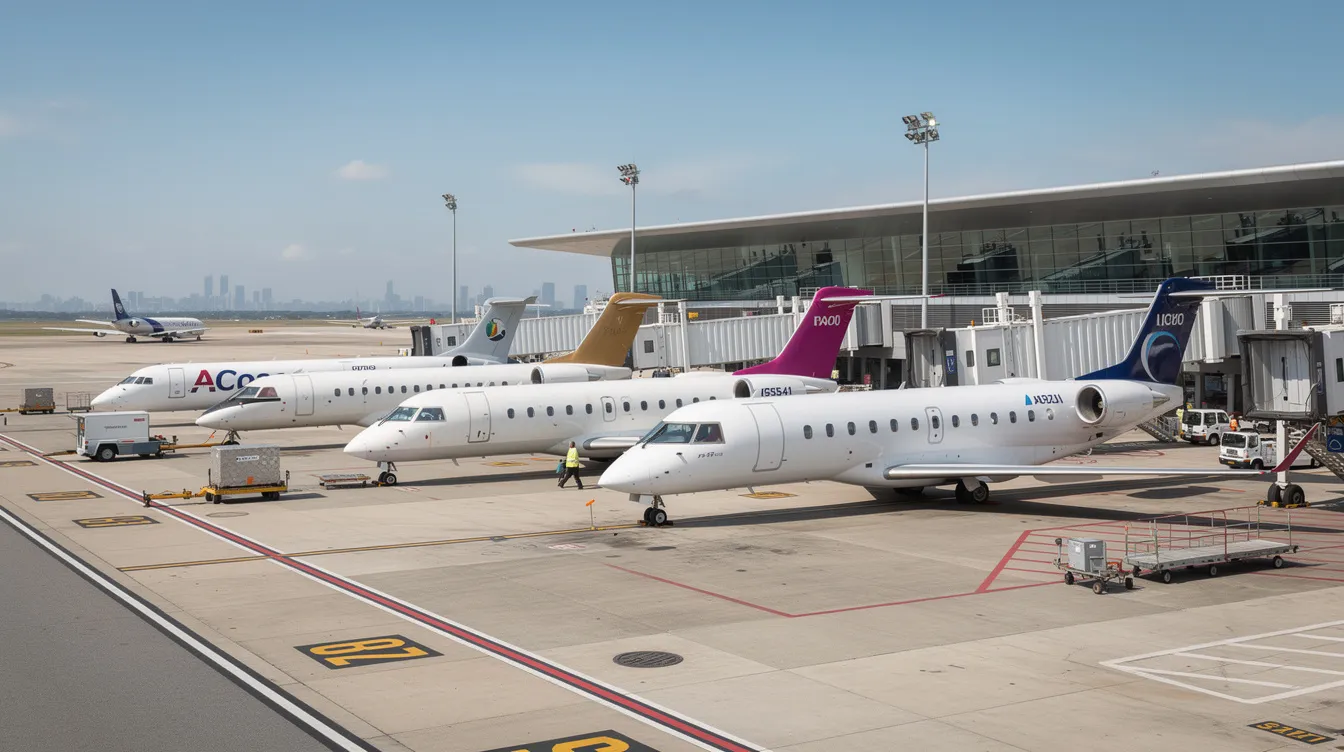
The Fokker 100's operational story begins with European airlines. Swissair was the launch customer, followed quickly by KLM Cityhopper, USAir, and several Australian carriers. By the early 1990s, Fokker had delivered around 70 aircraft with more than 200 on order-a strong anticipated demand that unfortunately coincided with the company's financial struggles.
By the time production ended at 283 units, the Fokker 100 had established itself across four continents. Over the following decades, the aircraft transitioned from major airline fleets into secondary markets. Airlines replaced their Fokker 100s with newer Embraer E-Jets and Bombardier CRJs, while the retired frames found new life with regional airlines, ACMI providers, charter firms, and corporate shuttle operators.
Present-day use cases reflect the aircraft's unique strengths:
Fly-in/fly-out (FIFO) mining contracts in Australia, where operators like Alliance Airlines transport work crews to remote sites.
Government and military shuttle services in several countries.
Sports team travel and large-group event transport.
Ad-hoc group charters for corporate roadshows, incentive trips, and music tours.
Current geographic hotspots for active Fokker 100 fleets include Australia, parts of Eastern Europe, Iran, and South America.
For Jettly customers, typical use cases involve large corporate events, incentive travel for 80–100 people, and high-capacity airport shuttles where commercial airline charter schedules don't align with the group's needs, mirroring many of the scenarios covered in Jettly's comprehensive guide to charter airlines and private aviation.
The Fokker 100 offers a relatively wide cabin for a regional jet, with a nominal interior width of approximately 3.10 meters (about 10 feet 2 inches). The typical seating configuration is 3-2 across the cabin-three seats on one side of the aisle and two on the other-which gives passengers more shoulder room than the 2-2 layouts found in some competing aircraft.
Standard airline layouts seat around 97 passengers in two-class or up to 109 in single-class economy. High-density configurations push to 122 seats, though legroom suffers. Seat pitch in standard layouts runs about 30–32 inches; in dense economy, less.
The aircraft features four full-service galleys (positioned forward and aft) and two rear lavatories, supporting complete in-flight service on flights of one to three hours. The galley capacity is notable for a regional jet and allows operators to offer meal service on longer sectors.
Corporate shuttle refits look quite different from airline interiors. Operators reduce the seat count to 50–70, increase pitch, and sometimes install club-style seating arrangements or small meeting areas. Some executive conversions go further, creating lounge-like interiors with just 19–31 seats.
Common cabin upgrade themes for refurbished aircraft include LED lighting retrofits, new sidewall and ceiling panels, fresh carpeting, refreshed lavatories, and updated galley equipment. Fokker Services has offered complete interior lining kits and seat refurbishment programs.
Jettly's role here is to match clients with operators whose specific Fokker 100 cabin layout—whether high-density or spacious-best fits the group's size and comfort expectations.
Buyers and charter customers often compare the Fokker 100 to alternatives like the Embraer ERJ-145, Embraer E170/E190, Bombardier CRJ series, and Boeing 717.
The Fokker 100's advantages include:
Comfortable 3-2 seating with a wider cabin than many CRJ variants.
Robust performance from shorter runways, helped by its rear-mounted engines and clean wing design.
Favorable purchase price relative to younger regional jets, thanks to its age.
The trade-offs are real:
Older airframes (most are 30–40 years old) mean higher maintenance costs and increasing parts scarcity.
Fuel burn is less efficient than modern turbofan engines on E-Jets or newer CRJs.
The support network is more limited, with fewer MRO providers compared to Embraer or Bombardier fleets.
For charter customers, the choice usually comes down to availability, route length, required passenger count, and budget. A Fokker 100 is ideal when you need to move 85–100 travelers on sub-two-hour sectors and want to minimize per-seat cost. For smaller groups (under 30), a midsize or super-midsize business jet is more practical. For longer routes, a newer E190 or even a narrow-body might be preferable.
Jettly can quote both Fokker 100 and comparable aircraft side-by-side, letting clients decide based on real numbers rather than assumptions.
Cost is the central question for anyone searching for a Fokker F100 for sale. Acquiring Fokker 100 aircraft involves careful consideration due to its vintage status, and the total cost of ownership extends well beyond the purchase price.
Acquisition prices in the mid-2020s:
|
Condition |
Typical Price Range |
|---|---|
|
Airworthy, airline configuration |
USD 1M–5M |
|
Executive conversion (EJ) |
Higher, depending on spec |
|
Non-airworthy / stored |
USD 85K–250K (parts value) |
The average purchase price of a pre-owned Fokker 100 is approximately $1,875,000, though this varies widely with year, cycles, and maintenance status. Buyers should also review listing images carefully and verify source and usage rights before reusing them in marketing or documentation.
Refurbishment costs add up quickly. A mid-level cabin reline with seat refurbishment can run several hundred thousand dollars. Engine overhaul on each Rolls-Royce Tay unit is a multi-hundred-thousand-dollar event. Avionics upgrades to meet current navigation and safety requirements (ADS-B, TCAS II, EGPWS) add further cost, potentially reaching six to seven figures for comprehensive work.
Direct operating costs include fuel burn, crew salaries, maintenance reserves, navigation and airport fees, and insurance. Older engines consume more fuel per seat-mile than modern alternatives, and parts sourcing adds a premium.
Charter rates offer a different perspective. Jettly's private jet charter cost estimator can help benchmark pricing across aircraft types, but Fokker 100 charter rental rates typically range from $8,000 to $10,500 per flight hour, with an average hourly rental rate of $9,900. While that's well above light and midsize jet rates, the per-seat cost for 85–100 passengers can be remarkably affordable compared to buying blocks of commercial tickets or operating a smaller jet with multiple rotations.
For organizations that primarily need lift rather than ownership, comparing total cost of ownership against on-demand charter through Jettly is worth the exercise, and resources like Jettly's in-depth guide to private jet costs and ownership models can help frame that analysis.
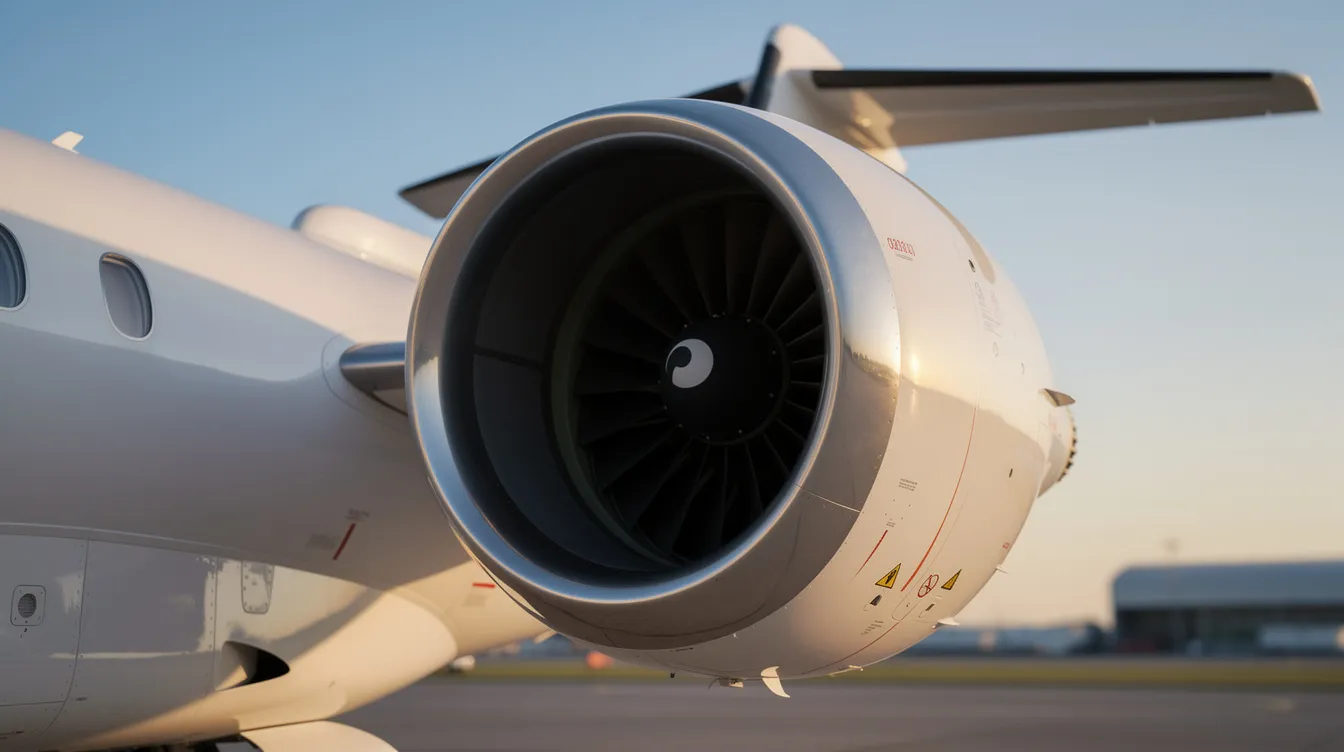
Supportability is the most critical factor when buying older regional jets like the Fokker 100. Most global operators of the Fokker 100 rely on specialized fleet support networks, and tracking down replacement parts for the Fokker 100 can be challenging and expensive as the fleet shrinks.
Fokker Services (now part of GKN Aerospace) and a handful of other MRO providers continue to supply spares, engineering support, service bulletins, and modification kits. These organizations are responsible for keeping the remaining fleet airworthy, from interior upgrades to structural repairs and avionics compliance.
Heavy maintenance intervals for regional jets are driven by both calendar time and flight cycles. The Fokker 100's structural life limits are measured primarily in pressurization cycles—many active aircraft have accumulated 20,000–30,000 cycles. Guidance from industry sources suggests that many 1990s-built Fokker 100s were expected to remain technically viable into the 2030s with proper maintenance.
When evaluating any Fokker 100 for sale, five items should top the inspection list:
Full logbooks with continuous maintenance history, including all heavy checks.
Compliance with current airworthiness directives and service bulletins.
Corrosion inspections, especially for airframes operated in hot, humid, or coastal environments.
Engine status: cycles remaining to next overhaul and any past anomalies.
Avionics standard: whether the aircraft meets current regulatory requirements or needs upgrades.
Charter customers using Jettly benefit from the platform's operator vetting process, which ensures that every aircraft is operated by properly certified operators meeting FAR Part 135 or equivalent standards, helping mitigate maintenance-related risk; Jettly also provides education on how Part 135 charter companies operate and why their certification matters.
The Fokker 100 has a long service history that is largely routine, with a few notable incidents that prompted design and operational changes. It's worth addressing this topic clearly because safety data directly affects both purchasing decisions and charter confidence.
Certain regulators, including those in Kazakhstan around 2019–2020, temporarily suspended Fokker 100 operations following a serious accident, prompting heightened oversight and inspection requirements. The Fokker 100 features a supercritical wing design sensitive to cold-weather wing contamination, which has been a factor in some operational incidents and requires strict adherence to de-icing procedures.
The distinction between type design safety and operator compliance matters enormously. Training quality, maintenance rigor, and operational standards at the airline or charter company level have a far greater impact on accident risk than the aircraft's fundamental design. Approved modifications—such as enhanced thrust reverser controls mandated after an in-flight deployment incident in Brazil-have addressed known design vulnerabilities.
Common modern safety upgrades on active Fokker 100s include:
Enhanced ground proximity warning systems (EGPWS/TAWS)
Modern flight management systems (FMS) with GPS/RNAV capability
Improved flight-deck displays
TCAS II for traffic awareness
ADS-B Out for surveillance compliance
Jettly's marketplace works only with operators that hold appropriate national or regional air operator certificates and adhere to current safety regulations. Prospective buyers, meanwhile, should commission independent safety and technical audits before any purchase—especially for aircraft built in the late 1980s and early 1990s.
The Fokker 100 is a niche product in today's aircraft sales market. Public retail platforms rarely feature inventory for the Fokker 100, and finding a clean, active listing requires specialized brokerages.
The primary channels for sourcing one include:
Specialist aircraft brokers with experience in regional jet transactions. Most transactions for the Fokker F100 are handled via off-market broker transactions.
Online aircraft sales platforms such as Global AVX, where listings show year, total airframe time, cycles, interior condition, and listing images that help assess overall presentation. For example, a 1992 Fokker 100 with over 43,000 hours and a 109-seat interior has been listed via such a platform.
Direct approaches to current operators planning fleet renewal. Aircraft may be available through fleet retirements and leasing company disposals.
Auction or part-out dealers, where former airline fleets are liquidated—sometimes at very low starting bids for non-airworthy frames.
When evaluating any listing, filter for these key data points: year of manufacture, engine type (Tay 620 vs 650) and cycle status, proximity to the next heavy check, avionics standard, and cabin condition. Be aware that some aircraft advertised "for sale" may actually be most suitable as parts donors rather than airworthy assets.
Listing images may not always be current or owned by the seller, so confirm their source and recency before relying on them.
The secondary market for Fokker 100s is tight, affecting resale liquidity in both directions—difficult to find a good one, and potentially difficult to sell one later.
Engage an experienced aviation lawyer and technical consultant to handle letters of intent, escrow, pre-purchase inspection, and closing. Jettly focuses on charter rather than brokering whole-aircraft sales, but its network may help buyers understand which operators are divesting Fokker 100s.
Many organizations search for a Fokker F100 for sale when what they actually need is flexible access for seasonal or project-based flying. In those cases, chartering is almost always the smarter financial decision.
Typical charter scenarios where a Fokker 100 makes sense:
Month-long corporate roadshows with multiple city stops.
Shuttle services between two hubs during a conference or event season.
Large-group leisure trips where 80–100 people travel together.
FIFO crew transport for mining or energy operations with defined contract periods.
On-demand charter via Jettly works in a straightforward process: submit a request, receive instant or rapid pricing, confirm the flight, and coordinate extras like catering and ground transport. The platform handles operator selection, safety compliance, and scheduling, and Jettly's overview of affordable private jet charter pricing and cost drivers can help set realistic budget expectations.
The benefits of charter over ownership for this aircraft type are clear, especially when you consider broader options for affordable aeroplane rental and access models:
No capital lock-up or depreciation risk on a 30+ year-old airframe.
No need to hire and manage crew, maintenance staff, or regulatory compliance.
Ability to switch aircraft categories per trip-scale up to a narrow-body or down to a midsize jet as passenger numbers change.
Payment only for flying hours, not for days sitting idle in a hangar.
If a Fokker 100 isn't available in a customer's region, Jettly can propose similar aircraft with comparable capacity—Embraer E190s, Bombardier CRJ-900s, or Boeing 717s where they operate.
Chartering allows clients to focus on route, schedule, and budget while Jettly and its operators handle the regulatory and operational complexity.
Jettly is a digital private jet charter marketplace providing access to thousands of aircraft worldwide, including regional jets in the Fokker 100 class. The platform connects travelers with certified operators, making it straightforward to arrange high-capacity flights without the overhead of aircraft ownership.
Key platform features include:
Global aircraft inventory spanning multiple continents and aircraft categories.
Transparent pricing with instant or rapid quote turnaround.
Digital booking workflow that simplifies complex itineraries.
Customer support for multi-leg trips, ground logistics, and special requirements.
Jettly can arrange large-group travel solutions—from corporate shuttles to sports team charters—using high-capacity aircraft where available. There's no requirement for jet cards or fractional ownership; customers can book on demand or via private jet memberships, depending on their flying frequency.
The value proposition for groups considering a Fokker 100 or similar regional jet is clear: time savings versus night connections on commercial flights, access to smaller regional airports, tailored schedules, and optional extras like catering and ground transfers.
Learn more about Jettly's private charter aircraft and broader charter options at https://www.jettly.com.
Older regional jets like the Fokker 100 are generally less fuel-efficient per seat than the latest generation of aircraft. The Rolls-Royce Tay engines, while reliable, were designed in the 1980s and lack the bypass ratios and combustion efficiency of modern turbofans.
Several factors influence the Fokker 100's environmental footprint:
Maximum takeoff weight and payload management: flying with optimal loads reduces unnecessary fuel burn.
Engine technology: the Tay series meets ICAO Chapter 3 noise standards but produces higher emissions per seat-mile than new-generation powerplants.
Route structure: direct routings at optimal cruise altitude and speed minimize fuel consumption.
Thoughtful operational planning—selecting efficient climb and cruise profiles, avoiding unnecessary distance or altitude deviations, and managing weight—can improve fuel efficiency for Fokker 100 flights measurably.
On the broader sustainability front, many operators participate in carbon offset programs and voluntary emissions reporting. Fleet renewal strategies are gradually introducing newer, more efficient aircraft to replace aging types, and innovative models like crowdsourced and shared private jet flights can also improve seat utilization and reduce per-passenger impact.
Jettly can help environmentally conscious customers compare aircraft options and, where available, add carbon offsetting to charter arrangements. The choice between a Fokker 100 and a newer type often comes down to balancing heritage, availability, and sustainability objectives.
The global Fokker 100 fleet is shrinking, but the aircraft remains relevant in specific niches. Active operations continue strongest in Australia, where the type supports mining and resource-sector logistics, and in select developing markets where acquisition cost matters more than fuel efficiency.
Many airframes are anticipated to continue flying into the early-to-mid 2030s, provided maintenance economics remain favorable and regulatory environments don't impose prohibitive restrictions. After that date, a combination of rising fuel prices, tightening emissions regulations, and the increasing availability of used E-Jets and other modern regional jets will likely accelerate retirements.
Secondary uses for retired aircraft include:
Part-out operations, providing spares for remaining in-service frames.
Ground training platforms for flight schools and maintenance academies.
Museum and educational displays preserving aviation history.
Conversion to VIP or combi roles where structurally sound airframes justify the investment.
For buyers today, the Fokker 100 is best viewed as a medium-term solution for specific missions—perhaps five to ten years of viable operations-rather than a long-horizon fleet backbone. The aircraft's leading role in aviation history doesn't change the economic reality of operating a vintage jet with a dwindling support network.
Charter customers using Jettly will naturally transition to whatever types operators bring in next, without needing to manage fleet renewal, parts obsolescence, or regulatory adaptation themselves, much like choosing a flexible NetJets alternative through Jettly instead of committing to fractional ownership.
Buying a Fokker F100 requires evaluating the aircraft's maintenance history, engine cycles, avionics compliance, and overall condition. It's important to factor in ongoing costs like parts sourcing, crew training, and regulatory compliance due to the aircraft's vintage status.
Charter rates for the Fokker 100 typically range from $8,000 to $10,500 per flight hour, with an average hourly rate around $9,900. Costs vary depending on operator, region, and additional services.
Yes, specialized fleet support networks and companies like Fokker Services continue to provide maintenance, parts, and upgrades, although availability is more limited compared to newer aircraft.
Chartering avoids capital investment, reduces operational complexity, and offers flexibility to scale flights as needed. It also eliminates risks related to aging airframes and maintenance.
Yes, the Fokker 100EJ (Executive Jet) variant features customized interiors with fewer seats, galleys, and sometimes shower-equipped suites, designed for luxury and comfort on regional routes.
The Fokker 100 offers a wider cabin with 3-2 seating and strong performance on shorter runways. However, it has higher fuel burn and maintenance costs than newer models like Embraer E-Jets or Bombardier CRJs.
Active fleets are concentrated in Australia, parts of Europe, and select developing markets, often supporting mining contracts, government shuttle services, and charter operations.
While reliable, the Fokker 100's Rolls-Royce Tay engines are older technology, resulting in higher fuel consumption and emissions compared to modern regional jets. Some operators participate in carbon offset programs to mitigate impact.
For more details or to explore Fokker 100 charter options, visit Jettly's website at https://www.jettly.com.
Purchasing a Fokker 100 makes sense for experienced operators with existing maintenance capability, type-rated crew, and stable, high-volume routes that justify the fixed costs. These buyers can extract real value from an aircraft with an attractive acquisition price and proven regional performance.
For businesses, travel planners, and private groups that primarily need flexible, project-based lift, on-demand charter via a platform like Jettly-or structured solutions such as Jettly's jet card programs for frequent flyers—is usually the more practical path. There's no capital risk, no wait for overhaul cycles, and no responsibility for keeping a decades-old airframe compliant with evolving regulations.
The Fokker 100's strengths are clear: solid passenger capacity, reliable performance from a proven airframe powered by Rolls-Royce Tay engines, and competitive pricing on the secondary market. Those strengths are balanced against the realities of age, diminishing parts availability, and higher operating costs relative to newer types.
Whether you're seriously evaluating a Fokker F100 for sale or simply need to move a large group efficiently, the key is matching the right aircraft to the right mission—and being honest about whether ownership or charter delivers better value for your specific situation; tools like Jettly's jet card flight cost estimator can support those comparisons.
Ready to move your team or clients with regional-jet efficiency? Explore group charter options, run a quick check with Jettly's private jet charter cost estimator, or, if you serve this market yourself, consider joining Jettly's ULTRA high ticket affiliate program to earn by referring clients, and request a quote at https://www.jettly.com.
Share this post:
Jeff Ryan Serevilla
Sep 24, 2026
|
5
min read
Discover tips and trends in the industry.
5
min read
Fokker F100 for Sale: Buying, Chartering, and Operating the Classic Regional Jet
The Fokker F100 is a versatile regional jet available for purchase or charter. With a capacity of up to 122 passengers, it offers a cost-effective solution for organizations needing reliable air travel. This guide explores the intricacies of buying, chartering, and operating the Fokker 100, helping you make an informed decision.
Read More
5
min read
N701DB Gulfstream G-IV Heavy Jet: Registration, Ownership & Charter Guide
The N701DB is a 1987 Gulfstream G-IV heavy jet known for its impressive range and speed, making it a popular choice for private charters. With advanced avionics and spacious cabins, it caters to both executive and group travel needs. Available for charter through Jettly, this aircraft offers a seamless booking experience and instant pricing for travelers seeking luxury in the skies.
Read MoreStay updated with our latest insights and tips to elevate your journey with us.
MEMBERSHIPS AND ASSOCIATIONS



Disclaimer: Jettly operates as a charter broker, offering access to a global digital jet charter marketplace. Jettly is not a direct air carrier and does not own or operate aircraft. All advertised flights are conducted by third-party air carriers that are fully licensed and hold the appropriate Part 135 or Part 121 certifications issued by the Federal Aviation Administration (FAA) or equivalent regulatory authorities under U.S. or foreign law. Jettly complies fully with the U.S. Department of Transportation's Part 295 and Part 298 Charter Broker regulations. Jettly does not carry additional liability insurance. Passengers are covered by aircraft operator insurance. TICO: 50023770


