



Login
Get Instant Pricing On 23,000+ Aircraft

>
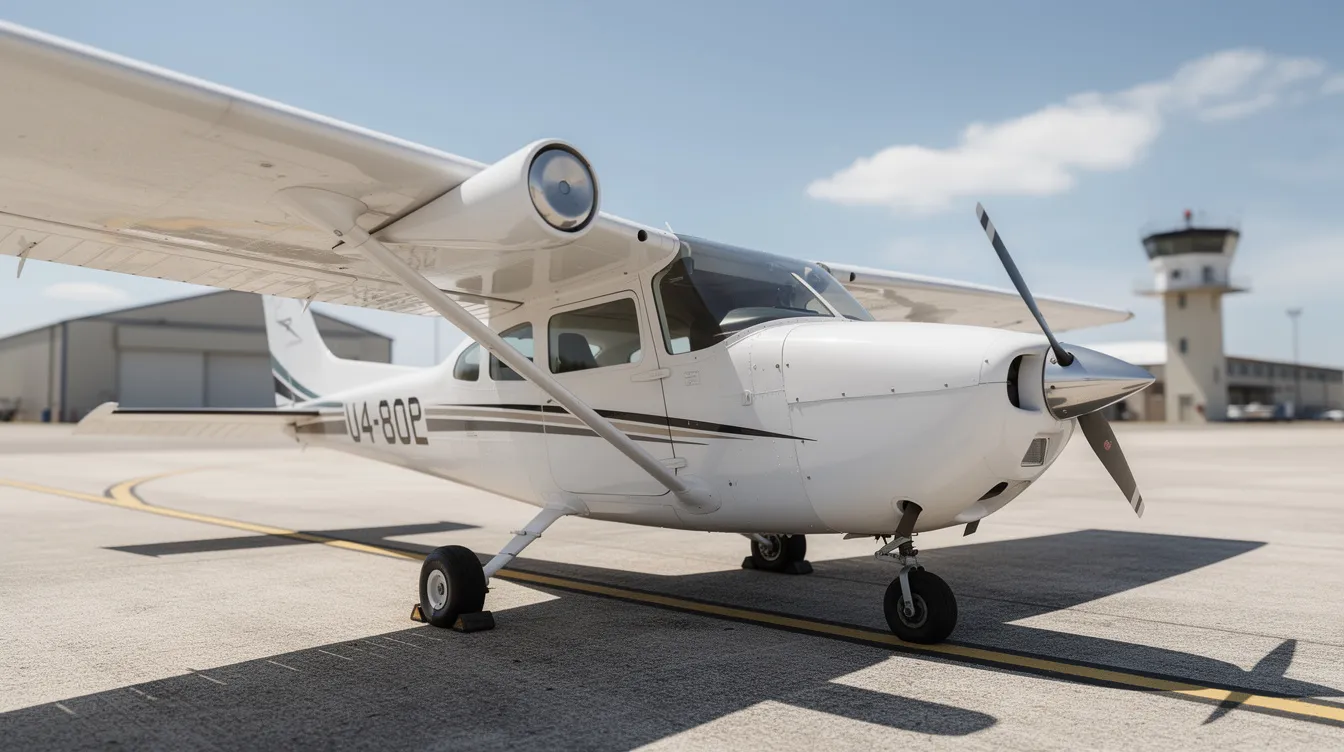
A modern Cessna 172S holds 56 gallons of fuel total (53 gallons usable), split between two wing tanks at 28 gallons each. Older models like the 172N hold 43 gallons total.
Average fuel consumption in cruise ranges from 8 to 10 gallons per hour depending on power setting, altitude, and aircraft weight. At 9 GPH with 53 usable gallons, practical endurance is roughly 4 hours after subtracting a 45-minute reserve.
The fuel system is gravity-fed through a fuel selector with four positions (BOTH, LEFT, RIGHT, OFF), a fuel strainer (gascolator), and then to the engine. The high wing design makes gravity feed possible without a primary fuel pump on carbureted models.
Many fuel-related incidents documented in NTSB report narratives trace back to miscalculated fuel burn or poor fuel management, not mechanical failure, and similar planning discipline is required when accounting for the cost of fueling a private jet.
Fuel management habits built in a Cessna 172 during flight training carry directly into larger aircraft operations, including turbine-powered charter planes arranged through platforms like Jettly.
Understanding fuel for Cessna 172 operations is one of the first and most consequential skills a student pilot learns. This guide is intended for student pilots, flight instructors, and general aviation enthusiasts seeking a comprehensive understanding of Cessna 172 fuel systems and safe fuel management. The 172 is the world's most-produced aircraft, with over 45,000 built since 1956, and it remains the backbone of flight school fleets across the globe. Every training flight, every cross-country solo, and every checkride in this airplane demands accurate fuel planning.
This article covers fuel tanks, fuel consumption, fuel selector use, endurance calculations, preflight inspection procedures, and lessons pulled from official safety investigations. While Jettly focuses on private jet charter, the same conservative fuel planning principles taught in a Cessna 172 apply to turboprops and business jets operating on the platform.
The Cessna 172 is a high-wing design, four-seat, single-engine airplane with a fuel system built around simplicity. The Cessna 172's fuel system is gravity-fed: fuel flows from dual wing tanks down through a fuel selector valve, then through a gascolator (fuel strainer), a filtering device that also separates water, and finally to the engine.
The Cessna 172 fuel system includes multiple filtration stages before fuel reaches the cylinders. Gravity-fed systems on certified aircraft must deliver 150% of the engine's fuel consumption rate to ensure reliable fuel flow in all approved flight attitudes and support overall system reliability.
Older carbureted models like the 172N feed fuel directly to the carburetor with no fuel pump required for normal operation. Cessna 172S models, by contrast, use fuel injection systems with dual pumps: an engine-driven pump for normal operation and an electric auxiliary pump for priming and backup.
Under 14 CFR 91.205, fuel gauges and the fuel selector must be functional for the aircraft to be airworthy. In training and rental operations, where multiple pilots fly the same plane daily, this requirement takes on extra weight.
A Cessna 172S has two wing tanks holding 56 gallons total. Each wing tank holds 28 gallons, and the usable fuel is 53 gallons. The remaining 3 gallons (roughly 1.5 per side) sit below the fuel pickup and cannot be safely consumed in flight.
Usable fuel refers to the amount of fuel that can be safely consumed in flight, as specified in the aircraft's documentation. For example, a Cessna 172S holds 56 gallons total, but only 53 gallons are usable; the remaining 3 gallons are below the fuel pickup and cannot be safely used.
Older 172N models have a total capacity of 43 gallons with standard tanks (about 40 gallons usable). Some P-model variants equipped with long-range tanks hold up to 54 gallons total. Different Cessna 172 models have different fuel requirements and specifications, so pilots must check the specific aircraft's POH before every flight.
The high wing position lets gravity do the work. Proper venting prevents vacuum formation in fuel tanks; each tank has a vent line that allows air in as fuel flows out. A blocked vent can starve the engine even with full tanks.
During preflight, student pilots learn to:
Visually check fuel levels in each wing tank using a calibrated dipstick
Confirm fuel caps are secure and seals are intact on the left wing and right wing
Look for staining or leaking around cap areas and tank seams
100LL aviation gasoline is the standard-approved fuel for the Cessna 172. It weighs about 6 pounds per gallon, meaning full usable fuel adds roughly 318 pounds to the aircraft's weight.
The fuel selector sits on the cockpit floor between the front seats in most 172s. The fuel selector valve has four positions: BOTH, LEFT, RIGHT, and OFF.
BOTH is the standard position for takeoff, climb, cruise, descent, and landing. Nearly all flight training is conducted with the selector on BOTH.
LEFT or RIGHT isolates one wing tank. Pilots use these positions in level flight to balance fuel between tanks when one side is heavier. Caution applies: during prolonged slips or steep turns with a low tank selected, the fuel pickup can unport and starve the engine.
OFF shuts fuel flow entirely. It is used on the ground for maintenance and, rarely, during an in-flight emergency such as an engine fire.
Checklist discipline matters here. Pilots should also confirm required documents and emergency equipment are on board before flight. Confirming the selector on BOTH before engine start, run-up, takeoff, and landing is standard procedure. Mishandling the fuel selector; selecting the wrong tank, or bumping it to OFF, has been cited in NTSB findings as a cause of engine power loss.
How much fuel does a Cessna 172 actually burn? According to AOPA's aircraft guide for the 172S, fuel consumption at 75% power is about 9.9 GPH, producing roughly 124 knots true airspeed. At economy cruise (55-65% power), fuel burn drops to 7.7-8.5 GPH.
During full-power climb and training maneuvers, burn rates run closer to 10 GPH or above. A climb from 2,000 ft to 8,000 ft in standard conditions uses about 2.2 gallons; on a hot day with density altitude 166 ft above standard, that figure rises to around 2.6 gallons.
With 53 gallons usable and a pretty conservative 9 GPH cruise burn:
Theoretical max endurance: 53 9 5.9 hours
Subtract 45-minute reserve (6.75 gallons): 46.25 9 5.1 hours
After adding taxi, climb, and approach fuel, practical planned flight time is roughly 3.5 to 4.0 hours
Factors that shift fuel burn include aircraft weight, cruise altitude, mixture leaning, propeller condition, throttle setting, and headwinds. Heavier loads increase fuel burn. Higher altitudes improve fuel economy at the same power percentage but require more fuel to reach.
|
Flight Phase |
Fuel Consumption (GPH) |
Typical Speed (Knots) |
|---|---|---|
|
Economy Cruise (55-65%) |
7.7 - 8.5 |
105 - 115 |
|
Cruise (75%) |
~9.9 |
~124 |
|
Full-Power Climb |
10+ |
Variable |
This table highlights the relationship between fuel consumption and speed for typical Cessna 172 flight phases, illustrating how fuel burn increases with power and speed.
Many early cross-country flights are constrained more by fuel onboard than by a student pilot's endurance. Calculating fuel burn accurately is the core skill.
Step-by-step best practice:
Start with POH cruise fuel flow at the planned power setting (e.g., 9 GPH at 65% power).
Add taxi and run-up fuel: typically 0.5-1.0 gallons for a local lesson.
Add climb fuel using POH charts for the planned altitude gain.
Add approach and landing fuel (0.3-0.5 gallons).
Add legal reserves: 30-45 minutes at cruise burn (per FAR and flight school policy).
Add a personal safety margin.
Over time, pilots should track actual fuel burn by recording Hobbs or tach time at each flight, noting gallons added at refueling, and computing a personal GPH figure for each power setting. Book values are a starting point; real-world data is more accurate, just as renters benefit from understanding affordable airplane rental costs and options.
Before every flight, compare fuel left in the tanks (checked with a dipstick and visual inspection) against the logbook and refueling records. If the numbers disagree, resolve the discrepancy before flying.
Every Cessna 172 pre-flight inspection includes hands-on fuel checks. In a training fleet where multiple students and instructors fly the same plane daily, these checks are the last line of defense against contamination.
Standard fuel checks:
Confirm fuel levels in each wing tank with a calibrated dipstick; do not rely solely on fuel gauges
Verify fuel caps are secure and gaskets intact to prevent water ingress
Drain fuel samples from each wing tank sump and the fuel strainer using a clear sampler cup
Check the sample for water (visible as bubbles or a separate layer at the bottom), sediment, and correct color (blue for 100LL)
Water contamination in aviation fuel can cause engine power loss. In severe cases, water contamination can cause immediate engine failure if it reaches the cylinders. Daily fuel drain procedures are critical for contamination detection, especially after rain or when the aircraft sits outside overnight.
Visual inspection of fuel before flight is recommended to check quality. Any discoloration, cloudiness, or particulate matter should ground the aircraft until a qualified mechanic investigates. Preflight fuel inspections are essential for identifying contamination, and proper maintenance of the fuel strainer can help prevent contaminated fuel from reaching the engine- practices mirrored across the wider charter airline and private aviation industry.

Managing fuel in flight means tracking time, position, and reserves continuously.
At takeoff, note the clock time. Then estimate when key fuel milestones occur: "At this burn rate, I'll hit one hour of fuel remaining at 14:30." Compare expected fuel burn (GPH time airborne) against indicated fuel quantity periodically. If the numbers diverge, investigate.
Fuel gauges in light airplanes are imprecise. Treat them as trend indicators, not precise measurement devices. A gauge reading "half" might represent anywhere from 40% to 60% of capacity depending on sender calibration and flight attitude.
To balance fuel between wing tanks, some pilots switch the selector from BOTH to LEFT or RIGHT briefly during level cruise, following POH guidance. This corrects wing heaviness when one tank burns faster. Never attempt this during maneuvers or at low fuel levels.
Conservative decision-making defines professional airmanship: if reserves look tight, divert to an en-route airport for refueling rather than pressing on. Enough fuel to reach the destination is not enough fuel to fly safely, and the same mindset applies when evaluating what a single private flight really costs end-to-end.
Fuel starvation symptoms include engine roughness and power loss. Many loss-of-power events in the Cessna 172 trace not to mechanical failure but to pilot error in fuel management.
In the WPR20LA147 NTSB investigation (Tucson, AZ, May 2020), a Cessna 172 experienced engine sputter about 3.5 hours into a flight. The pilot observed the left wing tank gauge reading empty while the right tank still showed fuel. Post-accident examination found no mechanical defect; fuel imbalance was the likely cause.
In a 2010 incident near Portland, a 172N pilot believed roughly 13 gallons remained for the final leg. Examination found the right tank dry and approximately 1 gallon in the left tank, below the 1.5-gallon unusable threshold. The pilot had launched with inadequate fuel based on a faulty estimate.
The pattern across these cases is consistent:
Flights launched with miscalculated fuel requirements
Over-reliance on gauges instead of dipstick and logbook cross-checks
Failure to account for higher-than-planned fuel burn from headwinds or training maneuvers
Studying NTSB report narratives on fuel exhaustion is part of broader risk management training. The Safest Small Plane: Top Single-Engine Picks and Safety Data resource provides additional context on single-engine safety records, and similar due diligence helps travelers compare Jettly as a flexible alternative to NetJets-style programs.
Local pattern work and long cross-country flights demand different fuel plans, and choosing alternates is easier when you can quickly reference an airport locator tool for available destinations.
1.5-hour local lesson with touch-and-goes: At 9 GPH base burn, the flight itself needs about 13.5 gallons. Add 1 gallon for start, taxi, and run-up. Add a 45-minute reserve (6.75 gallons). Total: roughly 21 gallons usable at departure. Most flight schools set a minimum departure fuel level of 20-25 gallons for this scenario.
250-nautical-mile cross-country at 110 knots TAS: Flight time is approximately 2.3 hours in still air. At 9 GPH, that's 20.7 gallons. With a 20-knot headwind reducing groundspeed to 90 knots, flight time jumps to 2.8 hours and fuel needed climbs to 25.2 gallons. Add climb fuel (2-3 gallons), taxi fuel, and a 45-minute reserve, and the total reaches roughly 35 gallons. A flight planner tool handles these calculations systematically, much like a private jet charter cost estimator helps travelers budget fuel and operating expenses for on-demand flights.
Many schools require minimum fuel remaining at landing (often 1 hour's worth) and mandate refueling stops on student solo cross-countries. For more on how far a Skyhawk can travel on a full load, see the Range of Cessna 172 breakdown, or compare it with other piston singles like the Cessna 207 specifications and range.
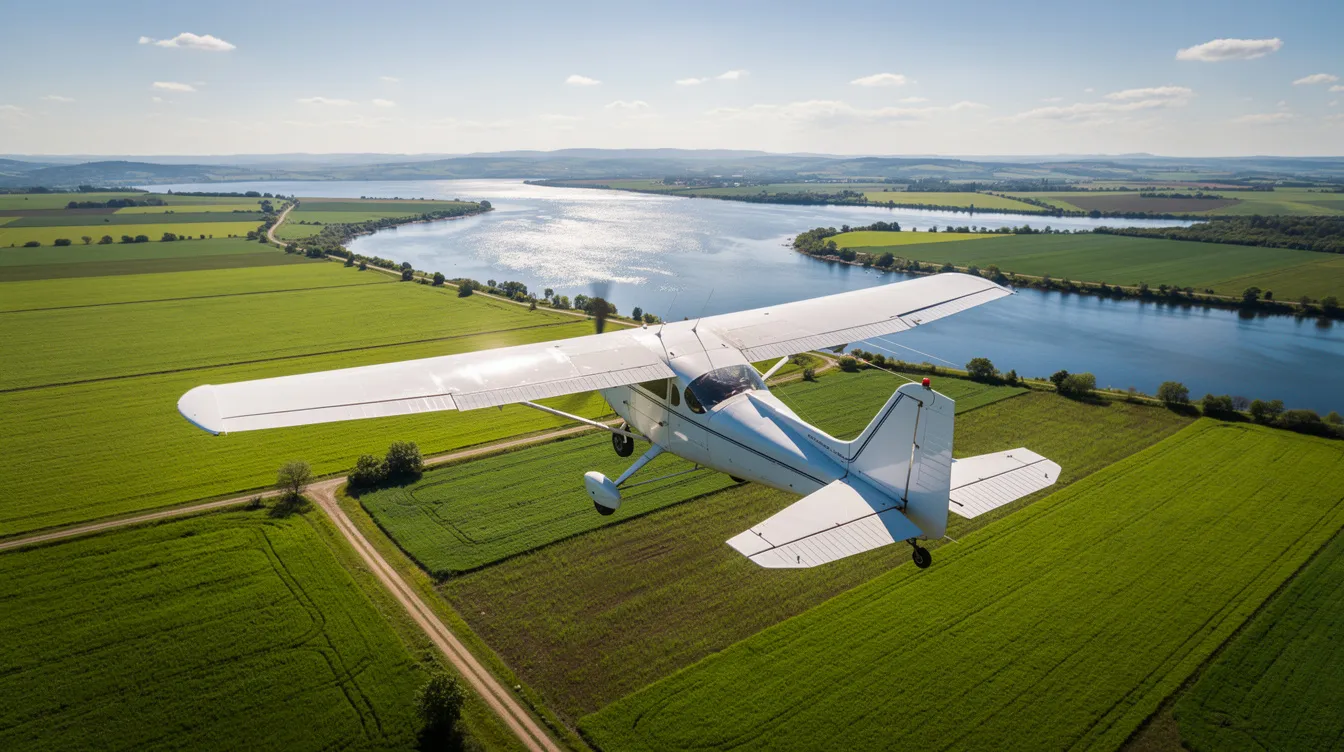
Pilots are not mechanics, but recognizing common fuel system issues prevents launching in an unairworthy aircraft.
Common maintenance items include:
Regular inspection of fuel tanks for corrosion or leaks
Replacement of worn fuel caps, seals, and vent lines
Cleaning or replacement of fuel strainers and filters
Regular fuel system inspections are essential for contamination detection
In-service issues to watch for:
Blocked vents cause partial vacuum in the tank, reducing fuel flow. Symptoms: engine roughness or gradual power loss at altitude.
Sticking fuel selector valves make switching tanks difficult; report any stiffness to maintenance.
Degraded fuel gauge senders produce unreliable cockpit readings; a float that sticks can show fuel left when the tank is nearly dry.
Anti-icing additives must be used within strict concentration limits to avoid damaging fuel system components. Fuel contamination can manifest as engine roughness or power loss; if this occurs in flight, the POH provides a sequence: check mixture, apply carburetor heat (on carbureted models), switch fuel selector to another tank, and verify fuel pump operation on equipped models. Oil pressure and temperature gauges can provide secondary cues to engine health during troubleshooting.
The discipline of time-based fuel planning, preflight fuel quality checks, and continuous in-flight monitoring applies at every level of aviation. A commercial pilot flying a turboprop or business jet follows the same foundational logic: never launch without sufficient fuel and reserves, whether they're commanding a Skyhawk or one of thousands of private charter aircraft available worldwide.
Jettly's digital charter platform connects travelers with operator fleets that use sophisticated dispatch tools and performance data for fuel planning on longer routes. But the core principle is identical to what a student learns on their first training flight in a 172: plan conservatively, verify physically, and adjust dynamically. For a look at how much fuel a private jet uses and what a private jet itself costs, the numbers scale up, but the mindset stays the same.
Understanding fuel for a Cessna 172 is a first step toward professional aviation decision-making, whether the next cockpit is a turboprop charter or a midsize business jet, and it also offers perspective on the rapidly expanding global fleet of private jets and usage trends.
These FAQs cover practical questions that go beyond the main sections above.
100LL aviation gasoline is the standard-approved fuel for the Cessna 172, dyed blue for identification. Grade 100 aviation gasoline has historically been approved as well. Note that 100LL contains tetraethyl lead, which can lead to spark plug fouling over time.
The Cessna 172 can also use cleaner-burning alternative fuels like 91UL and 100VLL where available. The FAA has granted Supplemental Type Certificates for unleaded avgas like 100R. Certain Cessna 172s can operate on automotive gasoline with a third-party STC, but automotive gasoline must be ethanol-free for safe aviation use; ethyl alcohol is prohibited in aviation fuel to prevent system damage, just as turbine aircraft must carefully match jet A-type fuels to engine requirements outlined in a comprehensive guide to jet fuel types.
The FAA recommends using fuel with an octane rating suitable for the engine. The selected fuel grade must always be verified against the aircraft's approved documentation before refueling.
Most flight schools plan a minimum of 1.5 to 2.0 hours of usable fuel for a one-hour lesson. At 9 GPH, that means departing with at least 18-20 gallons usable in the tanks. This ensures 30-60 minutes of reserve beyond planned airborne time, with a buffer for unexpected delays, go-arounds, or diversions. Some schools set the bar higher and require 25 gallons minimum for any departure, and pilots who regularly log higher annual hours may eventually consider fractional ownership of a Cessna 172 instead of renting.
For most phases of flight, yes. The selector should be on BOTH for start, run-up, takeoff, climb, descent, and landing. In level cruise, the POH for some models permits switching to LEFT or RIGHT briefly to balance fuel between tanks. Pilots must follow the specific procedures in their aircraft's POH and never operate on a single tank during ground operations, takeoff, or landing.
Properly leaning the mixture at cruise altitude can reduce fuel consumption by roughly 0.5-1.0 GPH and improve engine efficiency. On carbureted models, leaning is done by slowly pulling the mixture control until RPM peaks, then enriching slightly. On fuel-injected 172S models, pilots lean by monitoring exhaust gas temperature or fuel flow. Students should learn correct technique from their instructor and the POH; running too lean risks engine damage, while running too rich wastes fuel and fouls spark plugs.
Storing with full tanks reduces internal air space, which limits condensation and water contamination. This is generally recommended for short-to-medium storage periods. Over many months, fuel can degrade, and additives may break down. Operators should follow manufacturer guidance, perform regular sump drains, and consider replacing fuel if the aircraft sits unused for extended periods, just as owners of business aircraft must factor long-term storage and fuel turnover into their private jet operating cost calculations.
Effective fuel management in the Cessna 172- understanding fuel tanks, fuel selector operation, realistic fuel consumption numbers, and contamination prevention- is central to safe flying. These habits, built during the first hours of flight training, directly transfer to larger, more complex aircraft.
Mastering fuel for Cessna 172 operations is part of becoming a confident, safety-focused pilot. Professional charter operators rely on the same conservative fuel planning standards for business jets and turboprops that student pilots learn in a four-seat trainer.
Ready to experience private travel on your terms? You can explore on-demand options through affordable private jet charter services, lock in predictable rates with jet card flight cost estimators and dedicated jet card programs, or even opt for flexible private jet memberships and crowdsourced shared flights that fill empty seats.
Share this post:
Jay Franco Serevilla
Oct 13, 2026
|
5
min read
Discover tips and trends in the industry.

5
min read
Private Plane Stewardess Jobs: How to Start and Grow a Career in Private Aviation
Private plane stewardess jobs combine aviation safety with luxury service, offering professionals opportunities for global travel and high earnings. With a focus on personalized care for high-net-worth clients, these roles require specialized training and experience in premium hospitality. Candidates can find positions through networking and platforms like Jettly, which connect them with private aviation operators.
Read More
5
min read
Private Jets Manufacturers: A Practical Guide for Charter Travelers
Private jet travel offers unparalleled convenience and comfort, with various manufacturers providing tailored options for charter travellers. This guide explores leading private jet manufacturers, their key models, and how their designs influence the charter experience. Understanding these manufacturers helps clients make informed choices for their travel needs, whether for short hops or long-haul flights.
Read MoreStay updated with our latest insights and tips to elevate your journey with us.
MEMBERSHIPS AND ASSOCIATIONS



Disclaimer: Jettly operates as a charter broker, offering access to a global digital jet charter marketplace. Jettly is not a direct air carrier and does not own or operate aircraft. All advertised flights are conducted by third-party air carriers that are fully licensed and hold the appropriate Part 135 or Part 121 certifications issued by the Federal Aviation Administration (FAA) or equivalent regulatory authorities under U.S. or foreign law. Jettly complies fully with the U.S. Department of Transportation's Part 295 and Part 298 Charter Broker regulations. Jettly does not carry additional liability insurance. Passengers are covered by aircraft operator insurance. TICO: 50023770


