


Login
Get Instant Pricing On 23,000+ Aircraft

>
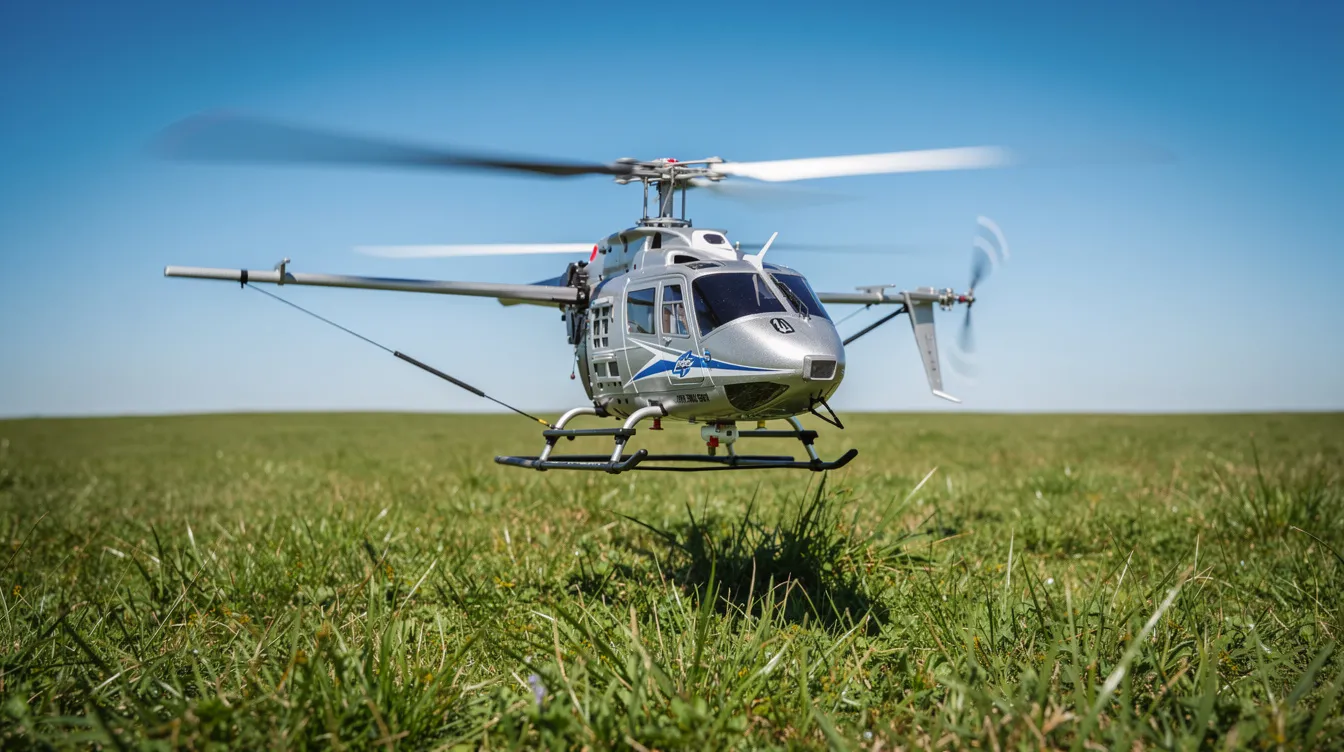
The term helicopter motor covers a surprisingly wide range of technology, from the electric brushless motor in an RC helicopter to the piston or turboshaft engine that powers a full-size rotorcraft. At one end, hobbyists choose a brushless motor for an RC 700 class build; at the other, turbine-powered charter helicopters carry passengers across cities with engines that turn the rotor system and support onboard systems such as electrical generators and hydraulics.
This guide breaks down both worlds for RC pilots, comparing motors, and for travelers or private charter clients who want to understand the engines behind charter-ready aircraft. You’ll see the main helicopter motor types, how RC motor specs affect power, efficiency, cooling, and flight time, and how full-size helicopter engines are selected and maintained for performance, reliability, and safety.
A helicopter motor can refer to an electric brushless motor in RC models or a turboshaft/piston engine in full-size rotorcraft.
In 700–800 class helicopters, kV rating, torque, and cooling are the main factors that separate a good motor from a great one.
Helicopter engines are classified into turboshaft and piston engines, each suited to different aircraft sizes and missions.
Jettly does not sell helicopter motors or related products. The platform connects travelers with professionally operated helicopters whose powerplants meet strict safety standards.
Electric motors are increasingly used in unmanned multicopters, but certified turboshaft and piston engines remain the standard for crewed flight.
In the RC hobby world, "motor" means the electric brushless motor that spins the rotor head through a pinion and main gear. In full-size rotorcraft, the term is informal shorthand for a turboshaft or piston engine that converts fuel into rotational power for rotor operation. The engine provides power for the main rotor, tail rotor, and onboard systems, including extras like electrical generators and hydraulics.
RC class helicopters such as the SAB Goblin 700 or Align Trex 700 are powered by outrunner brushless motors paired with high-cell LiPo batteries. These models weigh a few kilograms and fly for minutes at a time.
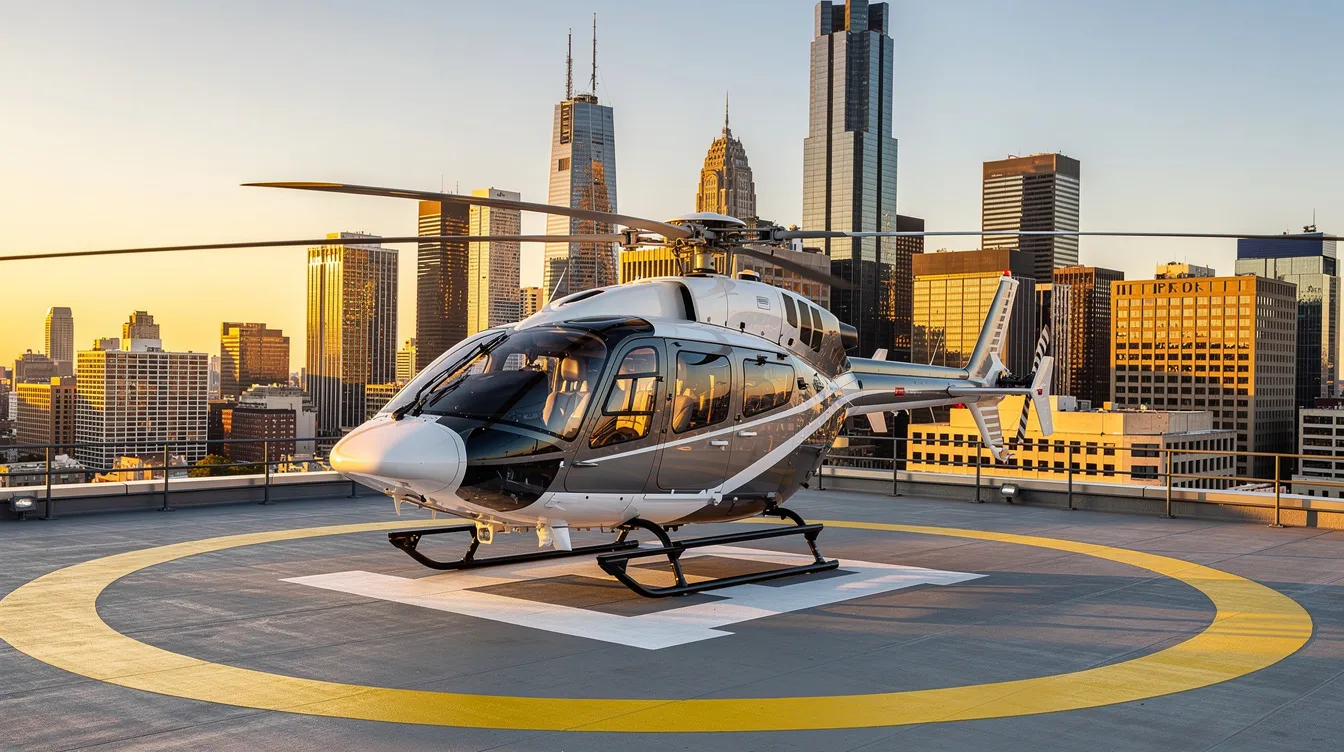
Charter-ready turbine helicopters like the Airbus H125 or Bell 407 serve real passengers. The Bell 407, for instance, delivers roughly 862 shaft horsepower from its Rolls-Royce 250-C47 turboshaft engine.
Helicopter engines are classified into turboshaft and piston engines. Piston engines power small and light helicopters used for training and personal use but have limited performance at high altitudes. Turboshaft engines provide excellent power-to-weight ratios and reliable performance in demanding conditions, dominating medium-to-large helicopters.
Helicopter engines convert fuel into rotational power that drives the rotor system. They also power extra systems such as electrical generators and hydraulics critical for flight safety and operation.
Autorotation is a key safety feature allowing controlled descent during engine failure, built into every certified helicopter design.
Jettly operates as a digital charter marketplace, giving customers access to helicopters powered by certified engines maintained under FAA Part 135 or equivalent regulations and other Part 135 charter companies. The platform does not shop or sell hardware.
A brushless motor uses permanent magnets and electromagnetic coils without physical brushes. The result is higher efficiency, less heat, and lower maintenance. Brushless motors provide high efficiency and cool operation, which is why they dominate modern RC helicopter builds from 380 class up to 800.
|
Motor |
Stator Size |
kV Rating |
Power Rating |
Shaft Diameter |
Notes |
|---|---|---|---|---|---|
|
A50-10L Turnado V4 |
45xx series |
530 kV |
- |
- |
Suitable for 12S scale and sport builds |
|
EGODRIFT Tengu 4530HT |
4530 |
550 kV |
- |
- |
EGODRIFT motors fit 380 to 800 size helicopters |
|
Xnova Lightning 4535 |
4535 |
Varies |
- |
- |
Designed for 700-800mm helicopters; built for extreme 3D flying |
|
Scorpion HK5-5024 |
50xx series |
535 kV |
- |
6 mm |
Mid-range option for 12S setups |
|
VGEBY H700 4135 |
4135 |
- |
4500 W |
- |
Weighs approximately 506g; high power rating |
Stator diameter scales with class: 220–380 class helicopters use 22–32 mm stators, 500–600 class use 40xx series, and 700–800 class use 45xx or 47xx motors. Shaft length also matters. Long-shaft variants are common in 700–800 class helicopters because the extended shaft reaches the pinion gear with less angular misalignment and lower vibration. Standard-shaft models work well for smaller frames.
Premium hand-wound lines like the Tengu series emphasize low cogging torque, thin stator laminations, and optimized cooling. The Tengu 4530HT motor has a kV rating of 550 and is a popular pick on spec lists for demanding 3D pilots. The Xnova 4530 motor offers consistent power delivery, making it a reliable choice for serious RC enthusiasts.
When you review the options and decide on a 700–800 class build, the motor choice shapes everything from flight time to rotor response. Here is a practical framework to help you choose.
kV to voltage match: Select a ~400–450 kV motor on 12S for scale and long-duration flights. For aggressive 3D, 530–570 kV on 12S delivers faster head speeds. Some pilots start with an 850 kV motor on a lower cell count for maximum RPM, but heat and shorter flights are the trade-off.
Key decision factors: Take into account torque vs. speed, ESC current rating, all-up weight, and rotor diameter (700 mm vs. 770 mm blades). A heavier build needs more torque to meet performance expectations.
Physical fit: Most 700–800 frames accept a 45 mm diameter motor with a 6 mm shaft. Check the page or product listing for shaft length specs—typically 32–36 mm—so installation requires no airframe modification.
Price expectations: Mid- to high-end motors like the A50-10L Turnado V4 (kV 530) fall in the USD $210–$275 range. Premium items such as hand-wound special editions can exceed $400. Add a suitable ESC, high-rate batteries, and connectors to your cart, and the total power system cost easily doubles.
Usage scenario: A pilot who decided on a torque-focused 400 kV long-shaft motor on 12S for a scale build can expect 12–15 minute flights at moderate head speed. Swap to an 850 kV motor for speed flights in the same frame, and flight times drop to 7–9 minutes with higher current draw and more heat. Both setups use stock frames—only the motor and battery configuration change.
While RC pilots add brushless motors to their builds, private charter clients interact with turbine and piston-engine helicopters selected for reliability, range, and payload. Helicopter engines convert fuel into rotational power, and fuel efficiency varies by engine type and operational conditions.
Engine types: Single turboshaft engines power light models like the Airbus H125 and Bell 407. Twin-engine helicopters such as the Leonardo AW109 or Airbus H145 provide redundancy for IFR operation and higher safety margins.
Power and payload: Turboshaft engines provide excellent power-to-weight ratios for helicopters. The Bell 407 produces roughly 862 SHP, supporting 4–6 passengers plus luggage, and helicopter passenger capacity varies significantly by model and mission profile. Piston engines have limited performance at high altitudes, which is why turboshaft engines offer reliable performance in demanding conditions like mountain or desert landings.
Safety feature: Autorotation allows controlled descent during engine failure, a critical capability built into every certified helicopter design.
Maintenance: Engine overhauls, life-limited parts, and trend monitoring follow strict schedules. Operators on Jettly hold Part 135 certificates and comply with manufacturer maintenance manuals, so the complexity stays on the operator's side.
Popular routes: Short hops like Los Angeles to Las Vegas, New York to the Hamptons, or Toronto to Niagara Falls benefit from cruise speeds of 120–150 knots and vertical takeoff. Learn more about helicopter rental costs on Jettly.
Chartering through Jettly shifts ownership burdens—engine overhauls, insurance, hangar fees—entirely to the operator, letting clients focus on the trip itself instead of navigating complex private jet maintenance costs and equivalent helicopter expenses.
Whether it is a 45 mm brushless outrunner or a turboshaft engine, cooler operation means longer life and better performance. This principle applies across every class of helicopter.
Premium RC motors achieve 85–90% peak efficiency through low-resistance windings, high-temperature enamel wire rated to 220°C, and robust shaft support. These features help the motor handle aggressive collective changes during 3D flight without overheating.
Full-size turbine helicopters use multi-stage compressors, advanced superalloy blades, and FADEC (full authority digital engine control) to keep turbine temperatures within limits during takeoff and hover. Helicopter engines can run extra systems like electrical generators and hydraulics without sacrificing rotor power.
Jettly's partner operators follow manufacturer service bulletins and engine-monitoring programs. Every helicopter's powerplant is inspected, logged, and tracked to date before each flight, giving charter customers confidence in safety.
Well-maintained powerplants are a core part of a smooth travel experience, and Jettly's global network of private charter aircraft extends those standards across jets and helicopters alike. Explore on-demand helicopter charter options at jettly.com.
Below are practical questions readers often ask about helicopter motors in both RC and charter contexts.
kV is the RPM per volt under no load. A 530 kV motor on a 44.4 V (12S) pack spins at roughly 23,500 RPM unloaded. Under real flight load and gearing, actual head speed is lower. Lower kV generally means more torque and cooler running on the same voltage, which many 700-class helicopter pilots prefer. You can email manufacturers directly for detailed dyno data if spec lists on the product page do not provide enough detail.
Expect USD $210–$275 for mid- to high-end 45xx series motors. Some special-edition products exceed $400. Budget for a suitable ESC, high-current batteries, and connectors—these items can double or triple the motor price. Beginners can start with more affordable stock options and upgrade as their needs grow.
Engine type is one factor among many. Twin-engine helicopters tend to cost more per hour than single-engine models due to fuel burn, maintenance, and certification. However, route length, heliport fees, and positioning flights typically influence the final quote more, similar to how affordable private jet charter pricing is structured. Use Jettly's platform to compare live pricing across different helicopter categories for your exact itinerary.
Charter customers handle zero technical maintenance. Operators listed on Jettly manage compliance with all engine inspections, overhauls, and airworthiness requirements. Travelers evaluating best private jet charter companies apply similar standards. Reputable charter operators follow manufacturer maintenance manuals and aviation authority regulations, logging every task performed on engines and critical components.
Modern turbine helicopters still produce rotor and exhaust noise, but advances in blade design and engine muffling have reduced cabin noise compared with older models. Many charter helicopters provide headsets with active noise reduction to keep communications clear, much like thoughtfully chosen cross-country planes for your travel journey balance performance and cabin comfort. Communities around busy heliports also follow local noise abatement procedures during departures and arrivals.
Ready to experience helicopter travel on your terms? You can compare on-demand flights, structured private jet memberships, and jet card programs, or even join Jettly's ULTRA high-ticket affiliate program if you regularly refer new travelers. Budget-conscious flyers might crowdsource private flights and share empty seats or use tools like the airport locator to plan complex itineraries. Jettly also highlights itself as a NetJets alternative for flying private within a broader ecosystem of charter airlines and private flight providers, including regional partners such as Dexter Air Taxi. Adventure seekers can book top military jet flight experiences, arrange bespoke in-flight catering with Jettly Eats, or focus on specific destinations like private jet charter in Houston, Texas. Helicopter-focused travelers can compare models like the Eurocopter EC30 alongside jets, all while enjoying coordinated service across Jettly's network. Explore flight options or request a quote at jettly.com.
Understanding helicopter motors, from brushless RC motors to full-scale turboshaft engines, reveals the complexity and precision behind rotorcraft operation. For RC enthusiasts, selecting the right motor involves balancing kV ratings, torque, and cooling to achieve optimal flight performance. For private charter travelers, the reliability and efficiency of certified turboshaft and piston engines ensure safety and comfort on every flight. Jettly connects customers with professionally operated helicopters powered by well-maintained engines, offering a seamless and transparent charter experience. Whether for hobby or travel, knowing the fundamentals of helicopter motors enhances appreciation for this remarkable aviation technology.
Ready to experience helicopter travel on your terms? Explore flight options or request a quote at https://www.jettly.com.
Share this post:
Jay Franco Serevilla
Jul 25, 2026
|
5
min read
Discover tips and trends in the industry.

5
min read
Private Plane Flight Times: How Long Your Charter Really Takes
Private plane flight times are significantly shorter than commercial travel, influenced by factors like distance, aircraft type, and weather conditions. Understanding these variables is crucial for efficient scheduling and cost management, especially for corporate travelers and families. Jettly offers tools to provide accurate flight time estimates, enhancing the private flying experience.
Read More
5
min read
Private Jet Cost Comparison: Light Jets vs. Heavy Jets
This article compares the costs of light jets and heavy jets for private travel, highlighting key factors such as hourly rates, passenger capacity, and trip efficiency. Light jets are more cost-effective for shorter domestic flights with smaller groups, while heavy jets excel in long-range travel and larger passenger capacities. Understanding these differences can help travelers make informed decisions based on their specific needs and budgets.
Read MoreStay updated with our latest insights and tips to elevate your journey with us.
MEMBERSHIPS AND ASSOCIATIONS



Disclaimer: Jettly operates as a charter broker, offering access to a global digital jet charter marketplace. Jettly is not a direct air carrier and does not own or operate aircraft. All advertised flights are conducted by third-party air carriers that are fully licensed and hold the appropriate Part 135 or Part 121 certifications issued by the Federal Aviation Administration (FAA) or equivalent regulatory authorities under U.S. or foreign law. Jettly complies fully with the U.S. Department of Transportation's Part 295 and Part 298 Charter Broker regulations. Jettly does not carry additional liability insurance. Passengers are covered by aircraft operator insurance. TICO: 50023770


