


Login
Get Instant Pricing On 23,000+ Aircraft

>
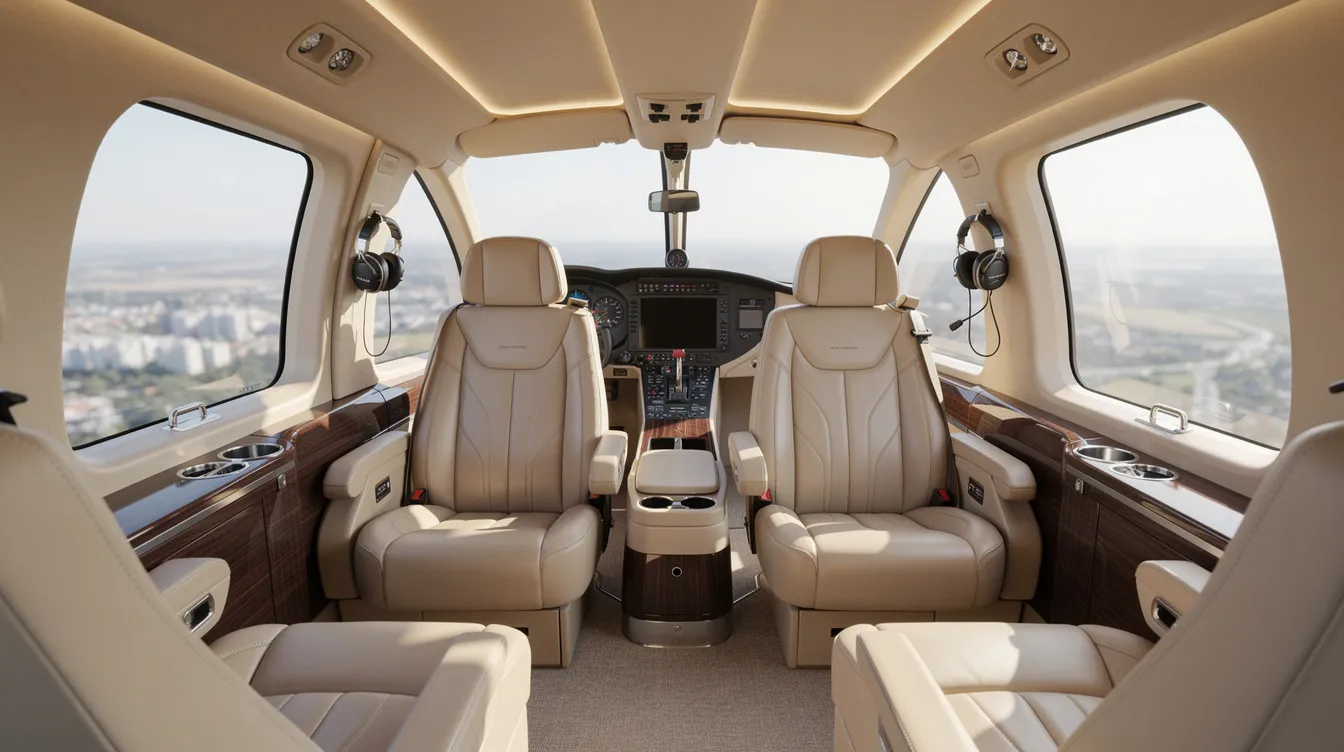
Every helicopter seat you sit in reflects a set of engineering trade-offs: crash protection versus weight, comfort versus capacity, luxury versus quick reconfiguration. For travelers booking a helicopter charter, understanding these trade-offs helps you pick the right aircraft for a city transfer, a business meeting in the air, or an adventure trip to a remote lodge. This guide breaks down the types of helicopter seats you'll encounter, what makes them safe, and how to match a cabin layout to your trip through Jettly.
Modern helicopter seats are often crashworthy passenger seats engineered to absorb vertical and forward impact energy, protecting occupants during hard landings.
Cabin layouts vary widely by mission: VIP interiors use plush recliners and club seating, while utility and troop seat configurations prioritize passenger capacity and fast loading.
Seat type directly influences comfort, baggage space, and sometimes charter pricing, so reviewing cabin photos and seating diagrams before confirming a booking is worth the time.
Manufacturers like Martin Baker, Oregon Aero, and AUTOFLUG supply seats that meet strict FAA and military certification standards across civil and defense applications.
Jettly's platform lets travelers compare helicopter options, view seat configurations, and request quotes that factor in cabin style.
Helicopter seat designs differ from those in fixed-wing applications because rotorcraft cabins are smaller, weight limits are tighter, and vibration from the rotor system is a constant factor. These constraints mean manufacturers must balance crashworthiness, passenger count, and ride quality in a much more compact space than a business jet offers, and they directly influence overall helicopter passenger capacity across different models.
Popular charter models like the Airbus H125, H130, and H145, as well as the Leonardo AW109, typically carry four to eight passengers in upright, forward-facing configurations. These seats use energy-attenuating bases and integrated restraint systems that comply with standards such as TSO-C127a and FAA Part 27/29 rotorcraft rules. The H125, for example, seats up to six passengers in a tourism layout or four in a VIP arrangement. Over 6,000 utility seats are available for helicopters across the industry, reflecting the sheer variety of configurations operators can choose from.
Martin-Baker seats, known for being lightweight and affordable, are common in helicopter applications. They meet TSO C127a requirements and come in two types of crashworthy passenger seats designed to meet fore- and aft-facing standards. Oregon Aero, with over 30 years of experience, offers seating systems that comply with FAA regulations and include cushions that shift hips and back for comfort. These seats can be customized with upholstery and embroidery options to match cabin aesthetics.
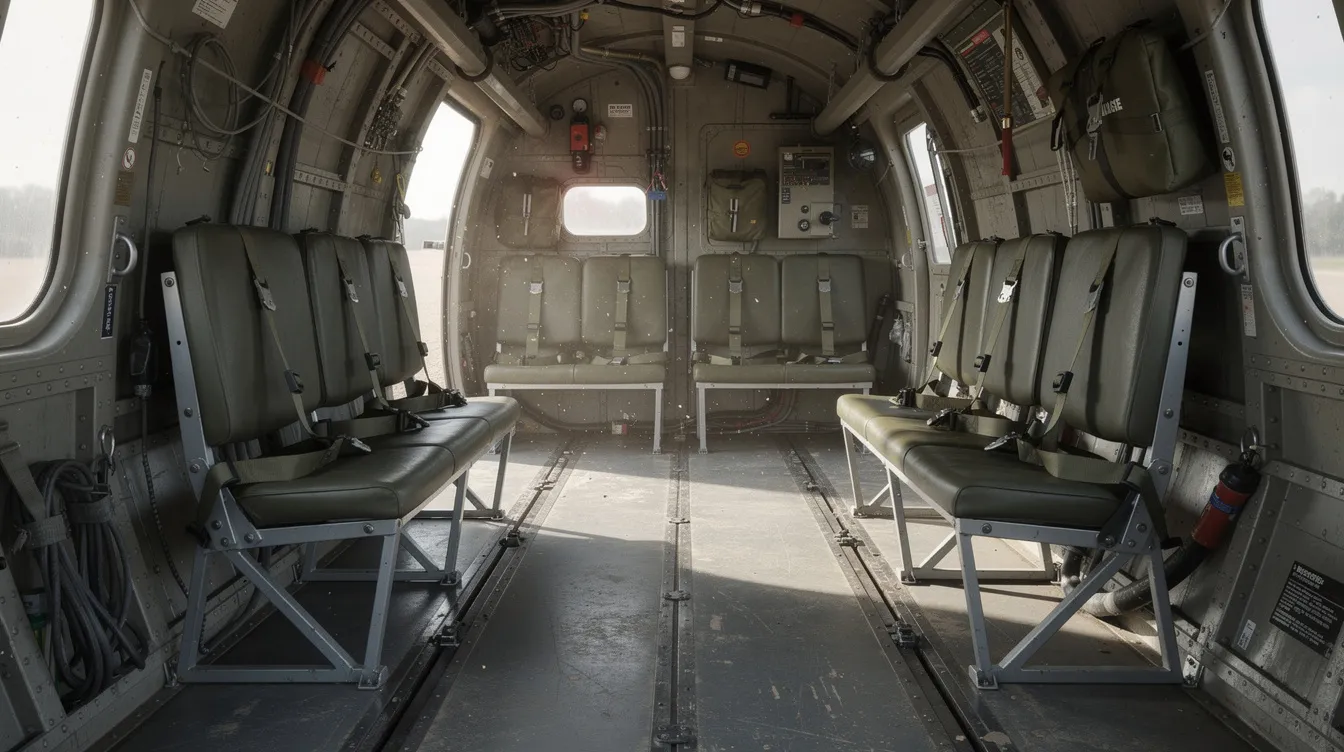
In utility helicopters such as the Bell 412 or Sikorsky S-92 in offshore mode, you'll find lightweight, fold-down troop seats mounted along the cabin walls. These maximize floor space for equipment and personnel. AUTOFLUG develops modular seat concepts for military helicopters, and its troop seats meet military crash safety standards, including compliance with flammability and crashworthiness tests. Some AUTOFLUG seats also include ballistic protection features, emphasizing safety in demanding missions. These seats are designed for quick installation and removal, allowing rapid reconfiguration between passenger and cargo use.
At the other end of the spectrum, VIP cabins feature individual leather seats, club-four layouts with face-to-face seating, and adjustable seat tracks that let operators reconfigure the cabin for meetings or family trips. The EC145 Stylence package, for instance, includes leather upholstery, wood trim, and acoustic optimization. The S-92 in VIP mode can accommodate 9 to 14 passengers with executive-style chairs and a refreshment center.
For air ambulance and medical flights, cabins are fitted with stretchers on floor tracks, foldable seats for crew members, and sidewall brackets for medical gear. These layouts prioritize patient access and rapid loading over passenger comfort.
Many helicopters support quick-change interiors, allowing operators to swap between high-density seating and more spacious executive layouts depending on the mission. Jettly's aircraft profiles typically show cabin photos and seating diagrams, so travelers can find a layout that fits a business transfer, leisure trip, or point-to-point city hop while also understanding helicopter range and how far they can fly for different mission types.
|
Seat Type |
Typical Use Case |
Key Features |
Safety Standards |
Comfort & Customization |
|---|---|---|---|---|
|
Standard Passenger |
City transfers, tourism |
Forward-facing, energy-absorbing bases |
TSO C127a, FAA Part 27/29 |
Cushions that shift hips and back; upholstery options |
|
Troop / Utility |
Military, offshore, cargo |
Fold-down, wall-mounted, lightweight |
Military crash safety, ballistic protection optional |
Quick installation/removal, modular design |
|
VIP / Executive |
Business, VIP charters |
Leather seats, club layouts, adjustable tracks |
FAA certified, crashworthy |
Leather, wood trim, acoustic optimization |
|
Medical / EMS |
Air ambulance |
Stretchers, foldable crew seats |
FAA Part 135 compliance |
Prioritizes patient access over comfort |
Helicopter seat engineering balances three priorities: crash protection, fatigue reduction on short flights, and flexibility for different charter use cases. Getting all three right is what separates a well-designed cabin from one that simply meets minimum requirements.
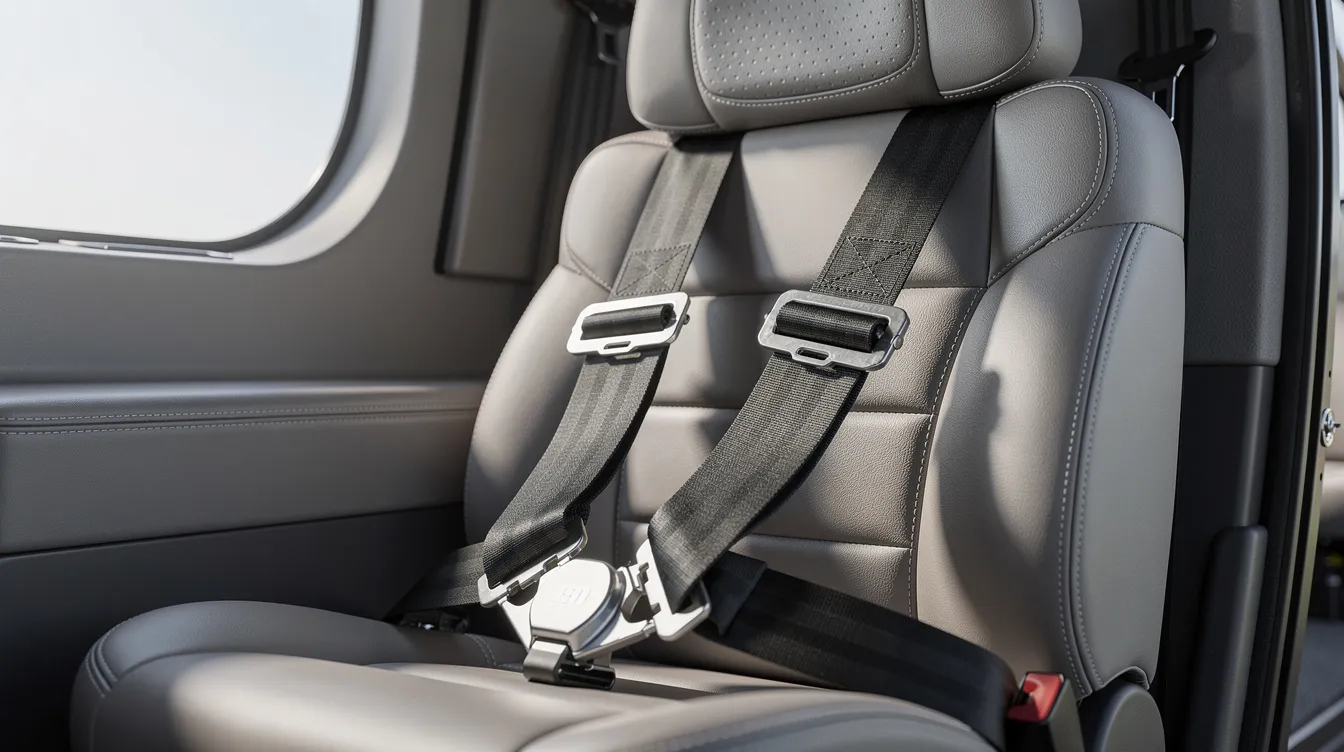
Certified helicopters must pass dynamic impact testing under FAA Part 27 § 27.562, which simulates vertical impacts at 30 ft/s and forward impacts at 42 ft/s using a 170-lb test dummy. Seat designs meet these thresholds through energy-absorbing bases, deformable seat structures, and robust harness systems. Five-point harnesses are common in helicopter seating to enhance safety and comfort by preventing flailing during impacts. Helicopter operators assign seats based on passenger weight to maintain proper weight and balance, which is critical for flight safety, and reputable operators adhere to stringent Part 135 charter company regulations when conducting commercial flights.
Martin-Baker's crashworthy seats comply with TSO C127a standards and are standard fitment on models like the S-92 and EC145. Oregon Aero seating systems comply with FAA regulations, and AUTOFLUG seats meet military crash safety requirements, including flammability standards with fire-resistant and breathable fabrics that prevent heat buildup. Some AUTOFLUG seats also feature ballistic protection for military applications.
Helicopter seat geometry is carefully designed to protect the head and spine, reducing injury risk during hard landings. Modern seats use lightweight materials such as aluminum and composites, balancing crashworthiness with weight reduction and modularity. Seats are engineered for quick installation and removal to support rapid cabin reconfiguration.
For charter clients, comfort matters even on a 20-minute hop. Oregon Aero's cushions shift hips and back to redistribute pressure and reduce fatigue, enhancing ride quality for passengers who might otherwise be comparing different forms of affordable aeroplane rental options and costs. The Oregon Aero Multi-Functional Crew Seat offers quick lateral tracking and a quick-release harness, providing versatility and ease of use for crew members. Custom upholstery and embroidery options allow operators to tailor seats to VIP standards.
Proper fit and vibration reduction are key elements in seat design, ensuring passengers experience less fatigue and discomfort. Comfort seats are often required for individuals over 240 pounds, providing additional support and cushioning.
Crew seats with lateral tracking, quick-release mechanisms, and removable bases allow fast switching between cargo, troop, or passenger roles, and these flexible layouts interact closely with overall helicopter rental pricing structures since time, configuration, and aircraft type all affect the hourly rate. These are common in aircraft that serve both utility and charter markets. Fore and aft facing requirements are addressed through different seat orientation certifications, with side-facing observer seats covered under separate TSOs. Operators who pride themselves on fleet flexibility often highlight seats that handle multiple mission profiles without downtime.
Travelers should discuss specific needs—such as seating for children, limited mobility, or a preference for all forward-facing seats—when requesting a quote through Jettly so the broker can match the right cabin.
Helicopter seat choices connect directly to how you plan to use the flight, just as choosing among different categories of private charter aircraft shapes comfort, range, and total trip cost. Whether it's a city transfer, resort access, an event shuttle, or a last-mile connection from an airport located via an airport locator tool for private flights, the cabin layout shapes the experience.
Short city hops (New York to the Hamptons, Los Angeles to Palm Springs): Standard upright seats in light helicopters are usually sufficient and cost-efficient, especially in compact models like the Eurocopter EC30 with its short‑range performance. Flights under 30 minutes don't demand VIP interiors to be comfortable.
Business meetings or sensitive travel: Executive or VIP interiors with club seating and fold-down tables support face-to-face interaction and privacy, similar in spirit to the premium experience offered by structured jet card programs for frequent travelers. The EC145's club-four layout is a strong fit here.
Group transfers (events, ski resorts, adventure trips): Troop seat-style or high-density layouts trade individual space for capacity and ease of loading gear like skis, golf bags, or camera equipment, and groups can weigh these layouts against options like shared charter flights versus full charters when planning the overall trip.
Review cabin photos, seat counts, and seating orientation on Jettly's aircraft detail pages. Contact support if you need baggage space that competes with seating, or if you want to compare helicopter ride pricing across configurations or use a private jet charter cost estimator to benchmark pricing against fixed‑wing options.
Ready to find the right cabin for your next trip? Explore helicopter options and get instant charter pricing at https://www.jettly.com or consider enrolling in one of Jettly's private jet membership plans if you also fly frequently by jet.
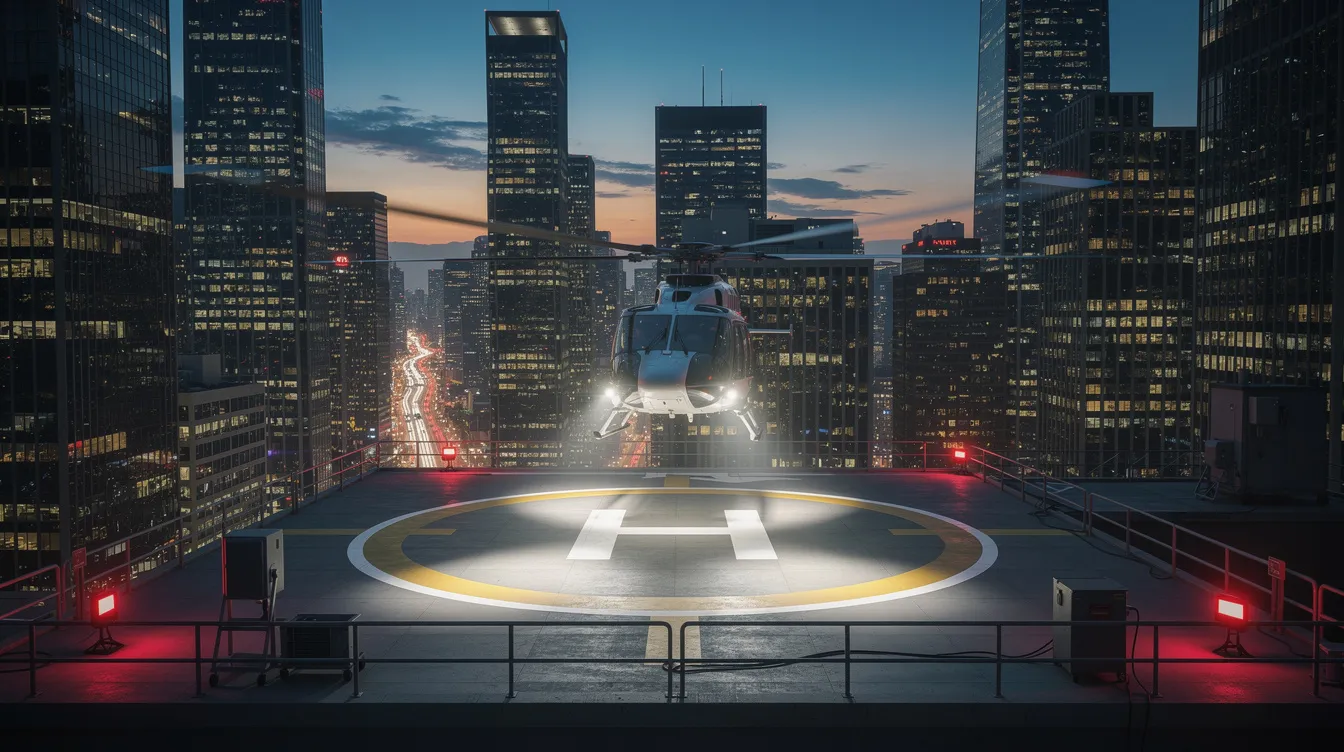
These FAQs address practical passenger questions about helicopter seats that go beyond technical design details.
Most modern charter helicopters use crashworthy passenger seats that meet current certification standards, especially newer types like the H145 or S-92. Older airframes may have legacy seating, but commercial operators must still meet national safety regulations. Jettly works only with licensed, regulated operators. Safety-conscious travelers can ask specifically about crashworthy seating when comparing aircraft options on the platform.
Seat assignment on a chartered helicopter is more flexible than on airlines. In many small helicopters, groups can decide who sits where, subject to the pilot's weight-and-balance requirements. The front left seat next to the pilots may or may not be available for passengers, depending on the operator's policy and mission profile. Adding a note about preferred seating - window, forward-facing, or near the door - when submitting a request on Jettly helps the operator plan accordingly.
A troop seat is a lightweight, foldable seat often installed along the cabin walls in utility or military-style helicopters to carry several passengers or personnel. Some civil utility helicopters used for charters - especially for adventure trips or remote lodge transfers - may still use troop seat layouts to maximize capacity and gear space, much like certain fixed‑wing aircraft available when renting a plane for private travel. Travelers seeking more cushioning or executive styling can filter for VIP or executive configurations in Jettly's aircraft search or specify that style in their quote, just as they might when learning how to buy a seat on a private jet with particular luxury expectations.
Helicopter seats are generally more upright and compact, designed for shorter sectors (often under one to two hours) and vertical flight loads. Private jet cabins usually feature wider, reclining seats with more legroom and quieter environments, better suited to longer flights. Helicopters are best for short regional hops, city transfers, and access to remote locations, while jets handle cross-country or international legs, especially when you select the best cross‑country plane for your journey based on range, speed, and comfort. Jettly covers both, so travelers can compare aircraft categories in one place and review detailed guides on affordable private jet charter costs alongside its global inventory of private charter aircraft.
Pricing is driven primarily by aircraft type, flight time, and availability, but executive interiors and newer cabins with advanced seats may command higher hourly rates, which aligns with broader trends in helicopter rental cost guides that break down how configuration affects price. High-density seating can reduce per-person cost for groups, while VIP layouts focus on comfort rather than maximum seat count; some travelers further lower their expenses by using crowdsourced private jet flights and shared empty seats on suitable routes. Travelers can compare several helicopter options and instant prices on https://www.jettly.com, paying attention to both cost and seating style, and apply similar tips for booking the cheapest private jet flights when evaluating alternative fixed‑wing legs.
Choosing the right helicopter seat setup is essential for a comfortable, safe, and efficient flight experience. Whether you prioritize crashworthy passenger seats for safety, ergonomic cushions for comfort, or flexible troop and utility layouts for group transfers, understanding these options helps you make informed decisions. Jettly’s platform offers transparent access to detailed cabin configurations, allowing travelers to select helicopters that match their mission and preferences. With a wide range of aircraft and seating styles, Jettly makes booking a helicopter charter straightforward and tailored to your needs.
Ready to experience private travel on your terms? Explore helicopter seat options and request a quote at https://www.jettly.com.
Share this post:
Jay Franco Serevilla
Jul 25, 2026
|
5
min read
Discover tips and trends in the industry.
5
min read
Medical Air Insurance: How Air Ambulance Coverage Works and When You Need It
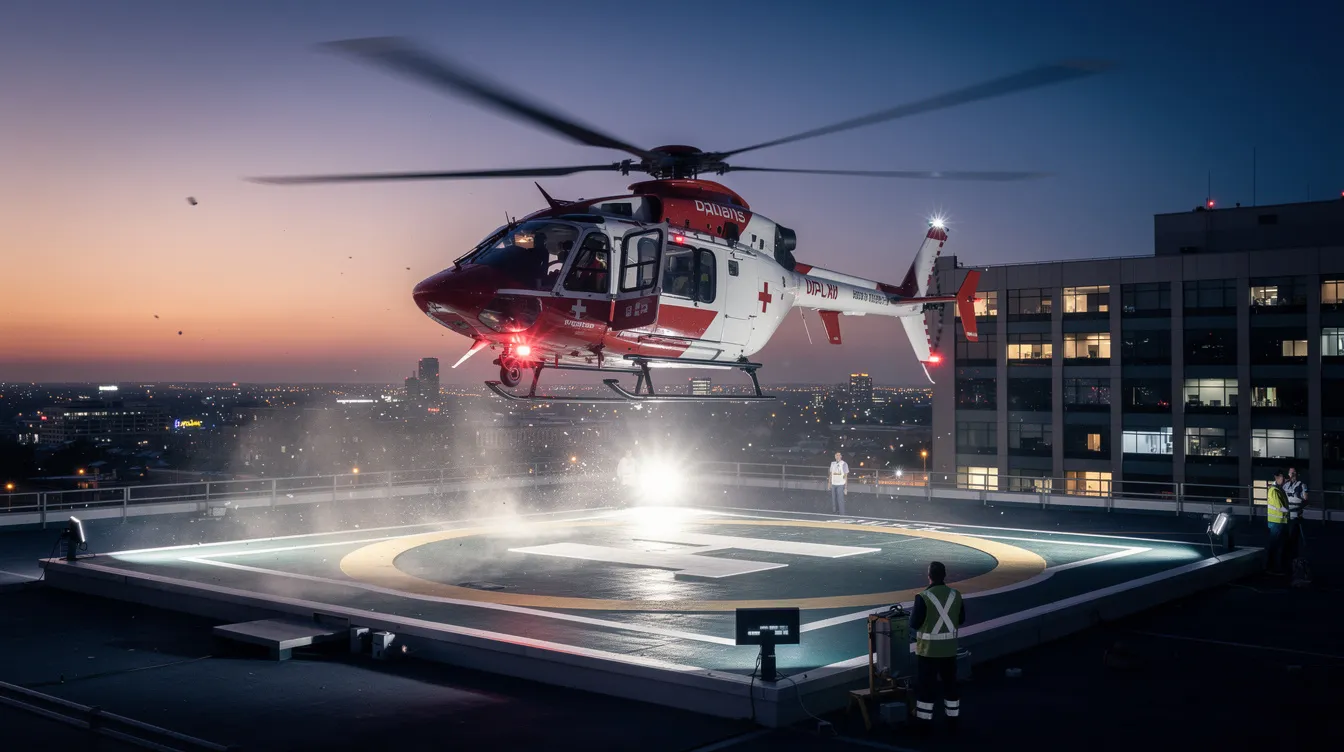
Medical air insurance is essential for covering the high costs of emergency air ambulance transport, which can range from $10,000 to over $100,000. It supplements traditional health insurance, providing coverage in situations where ground transport is inadequate. Understanding the differences between medical air insurance, air ambulance memberships, and travel insurance is crucial for comprehensive protection during medical emergencies.
Read More
5
min read
US Commercial Airline Fatalities by Year: Trends, Data, and Safety Progress
U.S. commercial airline fatalities have significantly decreased over the decades, showcasing a remarkable improvement in aviation safety. With many recent years recording zero fatalities, travelers can feel confident in the safety of commercial flights. This article analyzes trends, key accidents, and the role of regulatory changes in shaping the current landscape of airline safety.
Read MoreStay updated with our latest insights and tips to elevate your journey with us.
MEMBERSHIPS AND ASSOCIATIONS



Disclaimer: Jettly operates as a charter broker, offering access to a global digital jet charter marketplace. Jettly is not a direct air carrier and does not own or operate aircraft. All advertised flights are conducted by third-party air carriers that are fully licensed and hold the appropriate Part 135 or Part 121 certifications issued by the Federal Aviation Administration (FAA) or equivalent regulatory authorities under U.S. or foreign law. Jettly complies fully with the U.S. Department of Transportation's Part 295 and Part 298 Charter Broker regulations. Jettly does not carry additional liability insurance. Passengers are covered by aircraft operator insurance. TICO: 50023770


