


Login
Get Instant Pricing On 23,000+ Aircraft

>
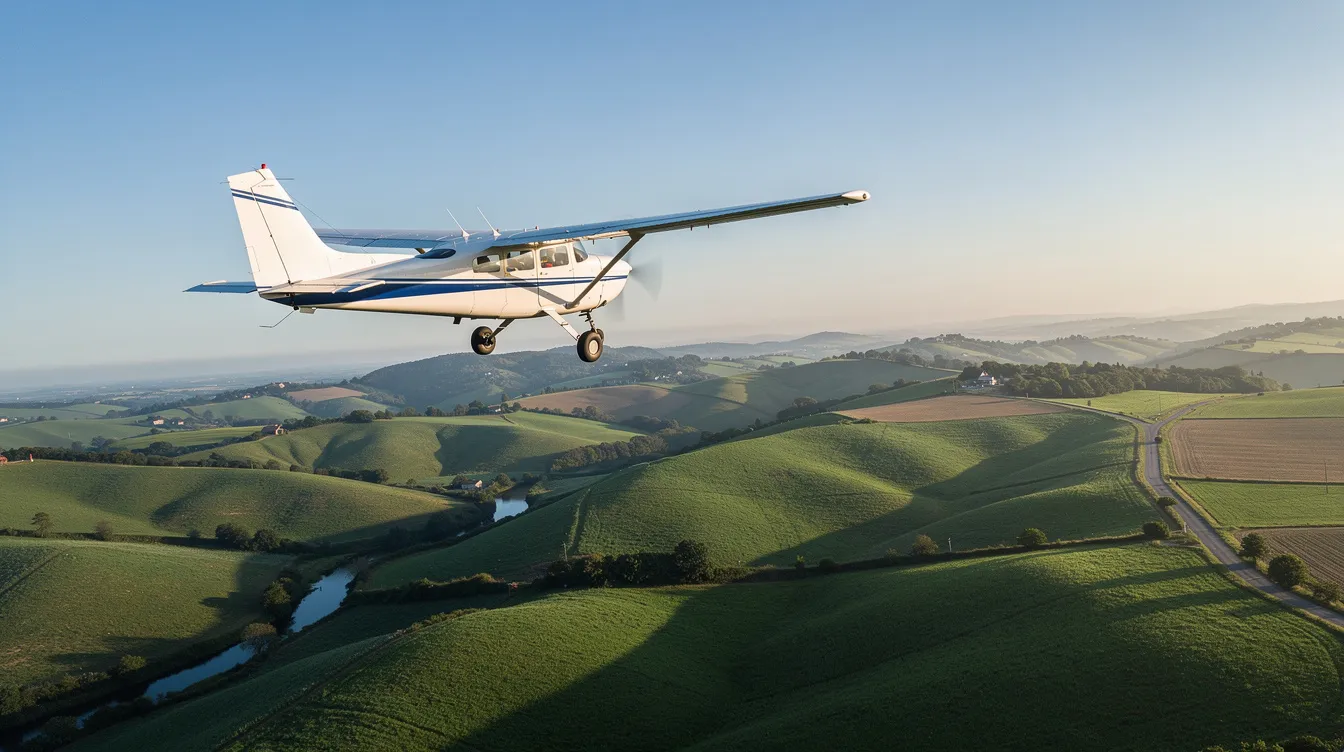
The Cessna 172 Skyhawk is the most produced aircraft in aviation history, trusted by student pilots and weekend flyers alike. But how high can a Cessna 172 fly, really? The answer depends on the model, the weather conditions, and how much weight is on board. Below is everything you need to know about its altitude limits, practical cruise altitude, fuel management at height, and when it makes sense to step up to a private jet.
Most modern Cessna 172 Skyhawk models have a service ceiling around 13,500 to 14,000 feet, with a maximum altitude of approximately 15,000 feet for some lighter variants.
Typical cruise altitude for a Cessna 172 flight leg is 3,000 to 9,500 feet MSL, depending on direction of flight, terrain, and weather.
Higher altitudes demand careful fuel management, leaner fuel mixtures, and awareness of oxygen requirements for pilots and passengers.
Density altitude, aircraft weight, and atmospheric conditions can significantly reduce how high the aircraft can climb on a given day.
While the Cessna 172 is ideal for flight training and short regional trips, Jettly's private jet marketplace is better suited when travelers need to cruise higher, faster, and farther.
So, how high can a Cessna 172 fly? The published service ceiling for most modern Cessna 172 models is 13,500 to 14,000 feet MSL. Some older or lighter variants can reach a maximum altitude of roughly 15,000 feet under optimal conditions. The absolute ceiling-where climb rate drops to zero-is usually around 1,000 feet higher than the service ceiling, but reaching it is impractical and rarely attempted.
There is an important distinction between service ceiling and comfortable cruise altitude. Service ceiling is the maximum height at which an aircraft can maintain a climb rate of 100 feet per minute. In practice, most pilots fly the Cessna 172 Skyhawk at much lower altitudes where the aircraft's performance is strong and the cabin environment is comfortable.
Density altitude, temperature, and aircraft weight all affect how high a particular Cessna 172 can climb on a given day. Reaching maximum altitude requires a light payload and cool temperatures. Compare this to private jets chartered via Jettly, which routinely cruise at 35,000 to 45,000 feet in pressurized cabins-a completely different operating environment.
The Cessna 172 is a four-seat, single-engine, high-wing design aircraft and the most produced aircraft in aviation history, with over 44,000 units built since its first production model debuted in the mid-1950s. Its stable handling, forgiving stall characteristics, and great visibility from the cabin make it the go-to trainer for flight schools worldwide.
Cessna 172s use naturally aspirated piston engines-typically a Lycoming O-320 (about 150 hp) on older models or a fuel-injected IO-360 (about 180 hp) on the modern Cessna 172S. Maximum cruise speed sits around 124 knots true airspeed at 75% power. That is not fast by jet standards, but it gives student pilots a stable platform to learn altitude selection, fuel mixture management, and effective flight planning before they graduate to more advanced aircraft.
The aircraft's altitude performance is optimized for training and regional trips rather than high-altitude cruise. Any aviation enthusiast will tell you: the Cessna 172 teaches fundamentals that apply all the way up to turboprops and business jets.
Service ceiling is a performance limit-the altitude where maximum climb rate drops to 100 feet per minute under standard atmospheric conditions. Practical cruise altitude is the comfortable height a pilot actually chooses for most flights.
Here are the specifics:
|
Metric |
Cessna 172S (Modern) |
Older Variants (e.g., 172L) |
|---|---|---|
|
Service Ceiling |
~14,000 ft MSL |
~13,000–13,500 ft MSL |
|
Typical Cruise Altitude |
3,000–9,500 ft |
3,000–9,500 ft |
|
Maximum Cruise Speed |
~124 kts TAS |
~110–120 kts TAS |
|
Maximum Range |
~640 NM |
~550–640 NM |
For VFR cross-country flights, pilots typically cruise between 3,000 and 6,500 feet for short hops, and 6,500 to 9,500 feet for longer flights when favorable winds and terrain allow. Using an airport locator tool helps pilots and travelers visualize nearby fields and plan efficient routes. U.S. hemispheric altitude rules (odd thousands plus 500 feet eastbound, even thousands plus 500 feet westbound) further shape the choice.
Pilots rarely climb all the way to service ceiling. The absolute ceiling is impractical, climb performance degrades significantly as altitude increases, and fuel burn during the climb often offsets any cruise efficiency gains on shorter routes.
Although the POH lists a maximum limit speed and ceiling, real-world limits come from air, aircraft, and human factors.
Aircraft weight: More passengers, baggage, and a full tank of fuel add excess weight and unnecessary weight that reduces maximum climb rate. A heavily loaded Cessna fly profile may top out thousands of feet below published ceiling.
Temperature and density altitude: Hot, high conditions at airports like those in Colorado push density altitude well above field elevation. Ground roll increases, landing distance extends, and the aircraft may struggle to reach even 10,000 feet. Climb rate slows considerably above 10,000 feet due to thinner air.
Engine performance: Engine power decreases as altitude increases due to reduced air density. The normally aspirated engine cannot compensate the way a turbocharged powerplant can. Propeller efficiency also drops in thinner air, giving the prop less bite.
Operational conditions: Controlled airspace structure, ATC instructions, and weather conditions can cap practical altitude choices regardless of what the aircraft can theoretically reach. Operational conditions greatly affect climb performance at high altitudes.
Even if a Cessna 172's fly ceiling is listed above 13,000 feet, pilots must consider human physiology. The cabin of a Cessna Skyhawk is not pressurized, so cabin altitude equals flight altitude.
Here are the key oxygen thresholds:
Above 12,500 feet MSL for more than 30 minutes: Regulatory oxygen requirements apply-the flight crew must use supplemental oxygen.
Above 14,000 feet MSL: Supplemental oxygen must be provided for all occupants continuously.
Above 15,000 feet MSL: Every person on board must have oxygen available at all times.
Hypoxia can impair decision-making, vision, and reaction time well before a pilot notices symptoms. Most training and recreational flights therefore stay below 10,000 to 12,500 feet, where supplemental oxygen is not normally required.
Pressurized private jets reachable through Jettly routinely cruise at 35,000 feet and higher because their cabins maintain a comfortable pressure equivalent to roughly 6,000–8,000 feet-no oxygen mask needed.
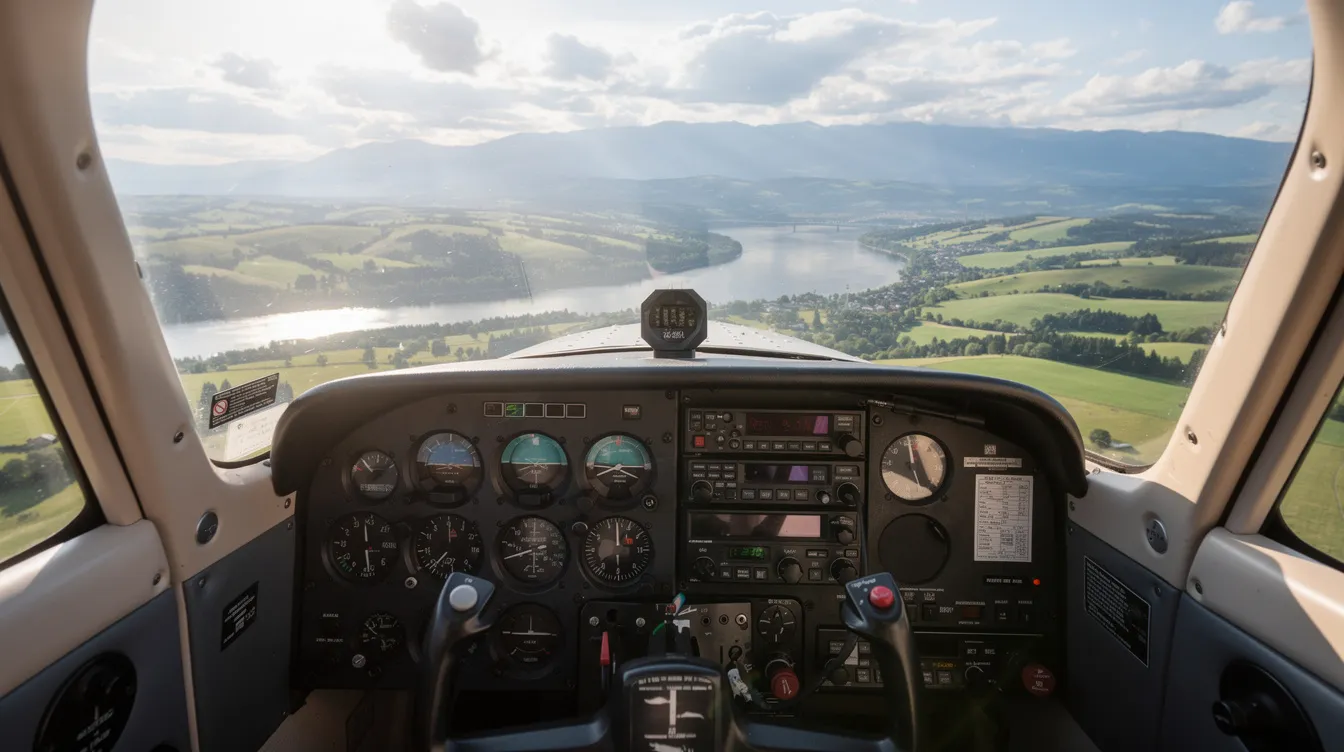
The Cessna 172S carries 56 gallons of fuel in its fuel tanks, with usable fuel of about 53 gallons-usable fuel slightly less than total because some fuel remains inaccessible to the engine. Older variants may carry 40 to 50 gallons depending on configuration.
Typical fuel consumption at cruise sits around 8 to 10 gallons per hour at economy power settings and 75% power. At best economy power settings, fuel burn drops further, stretching flight time to about five hours and yielding a maximum range of roughly 600 to 800 nautical miles on a full tank. For longer flights, pilots plan multiple fuel stops along the route, and some missions that stretch beyond a Cessna 172’s capability may call for a larger single-engine option like the Cessna 207 for charter.
How much fuel the climb consumes matters. A long climb to higher altitudes at full power settings burns a disproportionate amount, and on short legs the savings from better fuel efficiency at altitude may not offset that cost. At higher cruise altitude, pilots lean the fuel mixture appropriately to compensate for thinner air, conserving fuel and protecting the engine. Monitoring exhaust gas temperature helps dial in leaner fuel mixtures accurately.
Smart flight planning means understanding that weight affects a Cessna's range by increasing fuel consumption. Removing extra weight and unnecessary weight, carrying only the fuel needed, and choosing optimal altitudes all contribute to maximizing range and increasing endurance, just as understanding affordable airplane rental options and costs helps match the right aircraft to each mission.
"How high should a Cessna 172 fly?" is a flight planning question, not just a performance question, similar to how choosing the best personal plane for your needs requires weighing performance, cost, and typical mission profile. Pilots balance several factors:
Short regional flights (under 100 NM): 3,500–5,500 feet. Climbing higher wastes fuel and time; staying low keeps ground speed predictable and reduces fuel advantage at altitude.
Cross country flights (100–400 NM): 7,500–9,500 feet, where true airspeed improves, and air is often smoother. Wind conditions and winds-aloft forecasts help determine whether favorable winds exist at a given level flight altitude.
Longer flights near maximum range: Pilots weigh whether more speed and better fuel efficiency at higher altitudes justify the climb time, especially when headwinds can decrease a Cessna's range significantly.
Flying at higher altitudes improves fuel efficiency in a Cessna 172 because the engine runs on leaner fuel mixtures and produces the same amount of thrust with less fuel. But on very short hops, staying lower is almost always smarter. Effective flight planning tools and digital weather briefings make these decisions easier than ever, much like guides to the cheapest private aircraft options help owners and charter clients align altitude capability with budget.
For travelers comparing options on Jettly, similar logic applies at a different scale: choosing a jet that cruises higher above weather reduces turbulence and cuts overall flight time on longer routes.
Pilots who learn altitude management, fuel mixture technique, and cross-country planning in a Cessna 172 develop an intuitive sense for how altitude choices affect every flight. That same logic scales up dramatically in the jet world.
|
Metric |
Cessna 172 Skyhawk |
Light/Midsize Jet (via Jettly) |
|---|---|---|
|
Cruise Speed |
~110–125 kts |
400–530 kts |
|
Cruise Altitude |
3,000–10,000 ft typical |
35,000–45,000 ft |
|
Range |
600–800 NM |
1,500–4,000+ NM |
|
Pressurized Cabin |
No |
Yes |
Higher cruise altitudes in jets help avoid weather systems, reduce delays, and cut travel time on routes like New York–Miami or Los Angeles–Dallas. Jettly offers on-demand access to over 20,000 private charter aircraft worldwide with instant pricing and transparent, ownership-free booking for corporate and family travel. Efficient flight planning and appropriate aircraft selection at optimum altitude reduce unnecessary fuel burn compared with flying multiple low-altitude legs in a small piston aircraft for long trips.
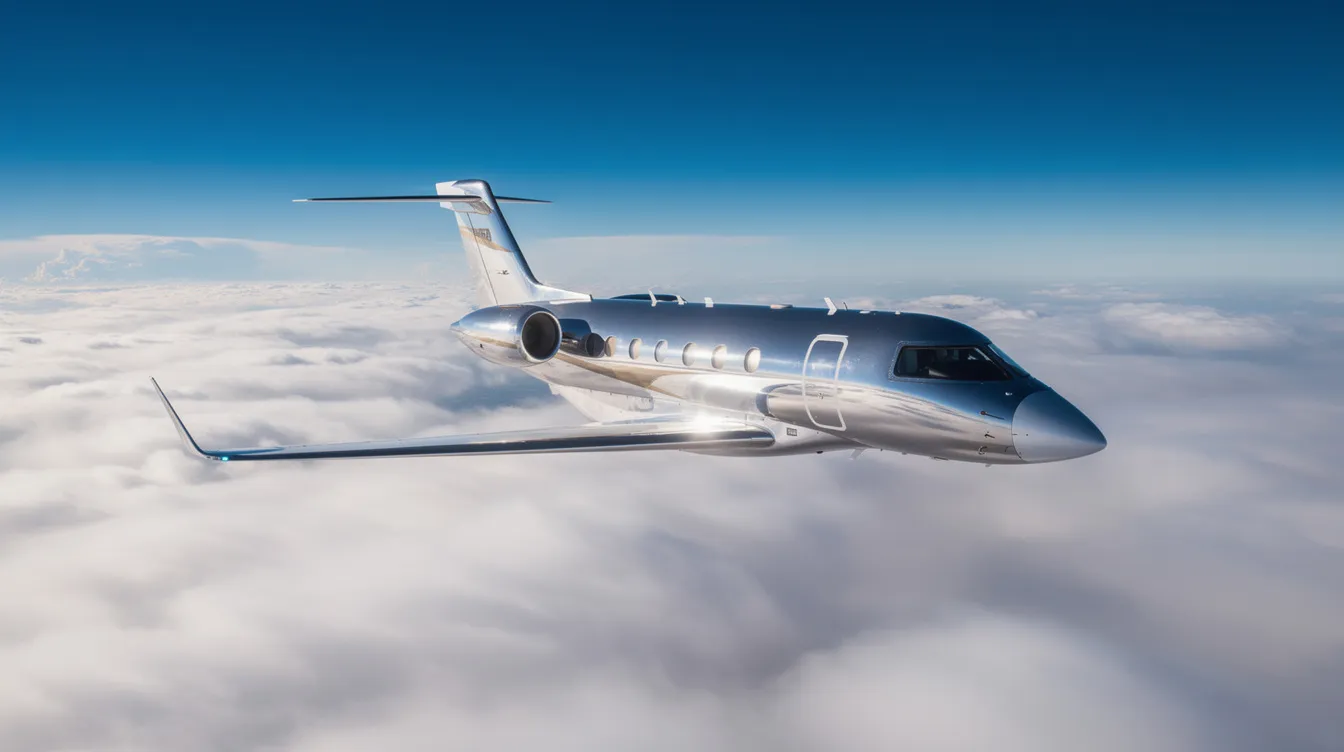
Consider your typical trip length, passenger count, schedule constraints, and comfort expectations.
A Cessna 172 makes sense for:
Short regional hops under 300–400 nautical miles
Initial flight training and building hours
Scenic flights and local weekend trips where easy access to small airports matters
A private jet via Jettly is the better fit for:
If cost is a concern, Jettly’s guide on affordable private jet charter pricing explains how aircraft type, distance, and timing influence what you pay.
Coast-to-coast business travel or same-day multi-city meetings, where using a private jet charter cost estimator helps you budget and compare options
Family vacations spanning 1,000+ nautical miles
Routes requiring higher cruise altitude to get above weather or terrain, which is where a jet card flight cost estimator can clarify the long-term economics of frequent high-altitude charters
Trips where the same amount of travel time in a Cessna would require multiple fuel stops
Jettly's platform lets users compare aircraft categories-turboprops, light jets, midsize jets, and long-range jets-with clear range and altitude information for each. Travelers who fly frequently can also consider private jet memberships that offer wholesale rates and added flexibility. When your travel needs go beyond what a Cessna 172 can comfortably handle, explore your options at jettly.com.
These questions cover common details about Cessna 172 altitude performance and practical flight planning that go beyond the main sections above.
A Cessna 172 can cross moderate mountain ranges using passes and careful planning, but it may not safely overfly the highest peaks due to engine performance limits and oxygen constraints. Pilots typically select routes through lower passes, wait for favorable weather windows, and plan conservatively for aircraft weight and fuel. For winter or poor-weather crossings of high terrain, many travelers prefer higher-flying turboprops or jets, which can be arranged through platforms like Jettly. Regional jets such as the Canadair CRJ-200 offer higher cruise altitudes and better performance over mountainous terrain than a Cessna 172. Finding the best cross-country plane depends on the terrain and distance involved.
Most training flights take place between about 2,500 and 7,500 feet AGL or MSL, depending on local terrain and airspace. Instructors choose altitudes that maintain a safe margin above obstacles, remain below controlled airspace, and stay within comfortable oxygen-free limits for student pilots. Local procedures and the supervising flight school's policies guide altitude selection for each lesson.
Not always. Higher cruise altitude can improve true airspeed and fuel efficiency in smooth air, but the extra fuel burned during a long climb can offset those gains on short routes. Pilots use winds-aloft forecasts to decide whether climbing higher saves time and fuel. For very short flights-say 50 to 80 nautical miles-staying at a lower cruise altitude and conserving fuel is almost always more efficient than climbing aggressively.
A Cessna 172 can make shorter overwater legs, such as island-hopping with proper survival equipment, but it is not ideal for long oceanic crossings due to range and altitude limitations. Pilots must carry life rafts, vests, and ensure adequate radio and navigation coverage. For transoceanic and long-range international routes where higher altitude and speed are essential, private jets accessible via Jettly are the more practical choice, including widebody options like the long-range Boeing 767-300ER for charter.
Non-pilots curious about higher-altitude flight can book discovery flights or sightseeing trips in light aircraft through local operators to experience cruise altitude and basic aircraft handling firsthand. For business or family travel at high-altitude, high-speed cruise without ownership complexity, Jettly's platform offers on-demand access to jets and turboprops with instant pricing and global coverage, as well as jet card programs for travelers who value fixed hourly rates and guaranteed availability.
Ready to fly higher and farther than a Cessna 172 can take you? Explore charter options or request a quote at jettly.com.
The Cessna 172 Skyhawk remains a reliable and widely used aircraft for flight training and short regional trips, with a typical service ceiling around 13,500 to 14,000 feet and a maximum altitude near 15,000 feet under ideal conditions. Pilots must consider factors such as aircraft weight, temperature, density altitude, and oxygen requirements when planning flights at higher elevations. While the Cessna 172 offers excellent value for many missions, its altitude and range limitations mean it is not suited for long-distance or high-altitude travel.
For travelers or business flyers needing faster speeds, longer ranges, and higher cruising altitudes, private jets available through platforms like Jettly provide a more practical and comfortable solution. These jets cruise at altitudes above 35,000 feet in pressurized cabins, significantly reducing travel time and exposure to weather. Learn more about Jettly's private jet charter options and how they compare to smaller aircraft.
Understanding the strengths and limits of the Cessna 172 helps pilots and travelers make informed decisions about aircraft selection. Whether building flight hours in a Skyhawk or chartering a private jet for a business trip, aligning the aircraft capabilities with mission requirements ensures a safer, more efficient, and enjoyable flying experience. Explore insights on choosing the right private jet and affordable private jet charter pricing to plan your next flight.
Ready to experience private travel on your terms? Explore flight options or request a quote at https://www.jettly.com.
Share this post:
Jay Franco Serevilla
Aug 13, 2026
|
5
min read
Discover tips and trends in the industry.
5
min read
Renta de Jet Privado: Guía Completa para Vuelos Privados con Jettly
Renta de jet privado has transformed into a seamless digital experience, allowing travelers to book flights without ownership or long-term commitments. This comprehensive guide details how private jet rentals work, the types of aircraft available, and how Jettly simplifies the booking process for business and leisure travelers alike.
Read More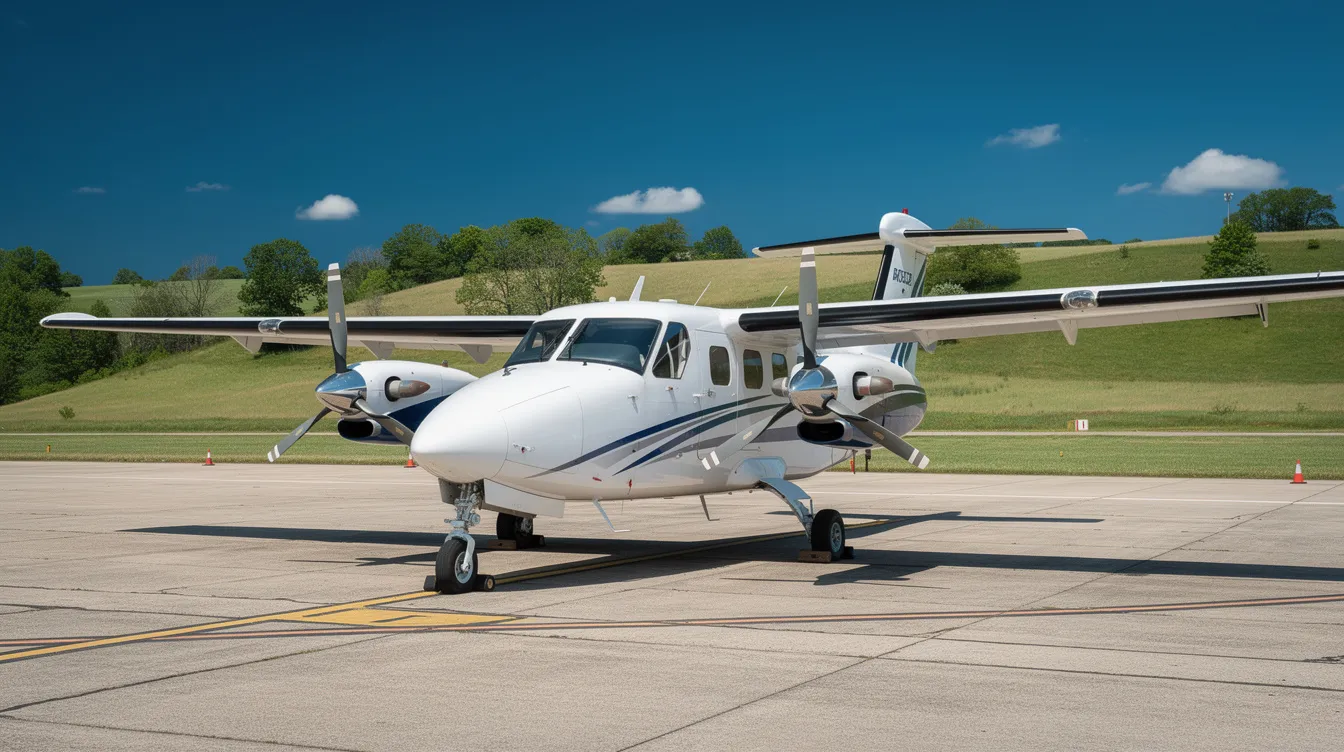
5
min read
Cessna 402: History, Performance, and Charter Use
The Cessna 402 is a versatile light twin-engine aircraft known for its reliability and efficiency in regional travel. With a spacious cabin accommodating up to 10 passengers, it serves various roles including commuter service and cargo transport. Its long history and proven performance make it a popular choice among charter operators and aviation enthusiasts alike.
Read MoreStay updated with our latest insights and tips to elevate your journey with us.
MEMBERSHIPS AND ASSOCIATIONS



Disclaimer: Jettly operates as a charter broker, offering access to a global digital jet charter marketplace. Jettly is not a direct air carrier and does not own or operate aircraft. All advertised flights are conducted by third-party air carriers that are fully licensed and hold the appropriate Part 135 or Part 121 certifications issued by the Federal Aviation Administration (FAA) or equivalent regulatory authorities under U.S. or foreign law. Jettly complies fully with the U.S. Department of Transportation's Part 295 and Part 298 Charter Broker regulations. Jettly does not carry additional liability insurance. Passengers are covered by aircraft operator insurance. TICO: 50023770


