



Login
Get Instant Pricing On 23,000+ Aircraft

>
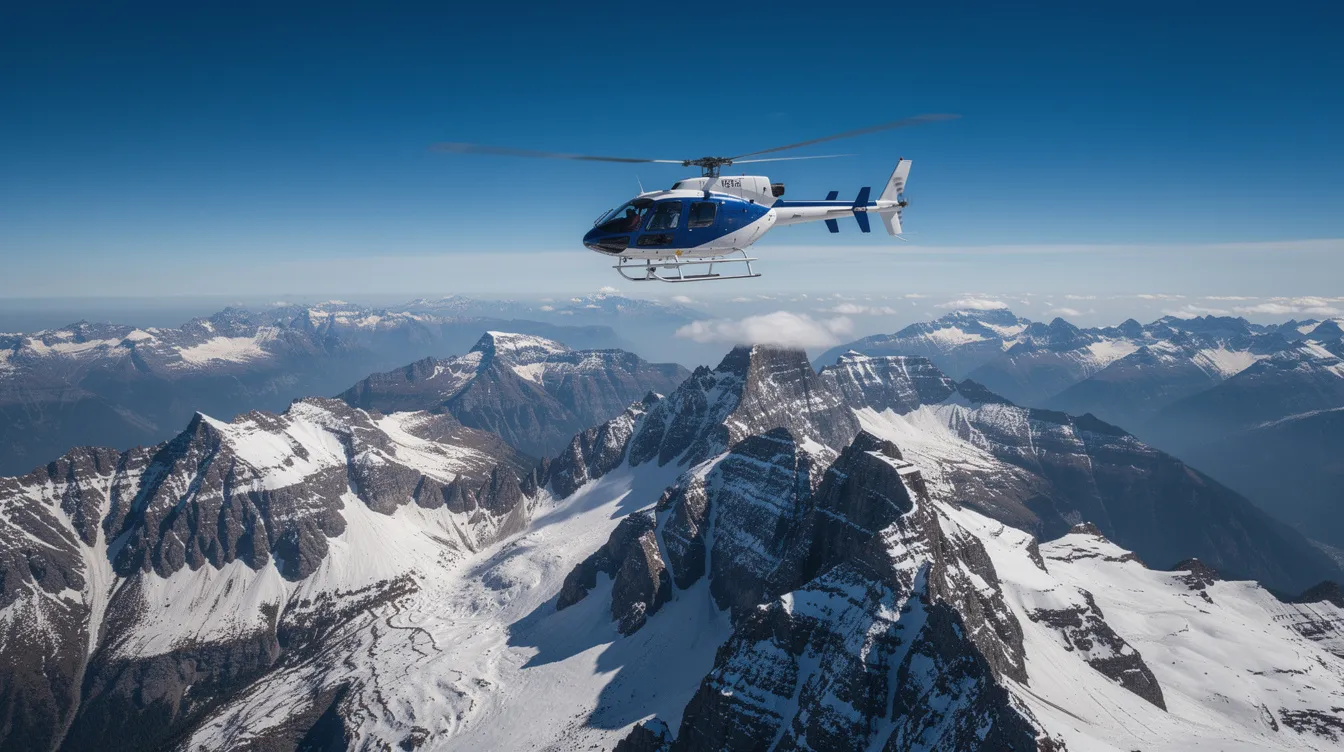
How high does a helicopter fly? The answer depends on the machine, the mission, and the atmosphere. Most civilian helicopters cruise between 500 and 5,000 feet above ground level during routine operations, but some turbine-powered models can reach service ceilings of 20,000 feet or more. The absolute record sits at 40,820 feet (12,442 meters), set under extreme test conditions in 1972. This article breaks down the factors that determine helicopter altitude, from air density and engine power to rotor design and mission type, and explains what these numbers mean for travelers considering private helicopter or jet charter.
Most helicopters typically cruise between 500 feet and 5,000 feet above ground level, with service ceilings for many civilian models ranging from 10,000 to 20,000 feet depending on engine type and configuration.
Helicopters fly higher or lower based on several key factors: air density, engine power, aircraft weight, and helicopter design. Pilot skill matters, but physics sets the ceiling.
The highest recorded helicopter flight reached 40,820 feet (12,442 meters) in 1972, a record that remains unbroken. This is far above any normal operating altitude.
Working altitudes vary by role: search and rescue crews may operate above 12,000 feet in mountain terrain, while sightseeing flights stay between 500 and 3,000 feet for better views and safety.
For high-altitude or longer-range missions, many Jettly customers combine helicopters with private jets; the helicopter handles the short final segment to a helipad, yacht, or remote lodge, while the jet covers the main route.
Most helicopters fly between about 500 and 10,000 feet above sea level during normal operations. The exact altitude depends on the mission, the airspace, and local regulations.
For city sightseeing and law enforcement patrols, typical cruise altitudes fall between 1,000 and 3,000 feet above ground level. Point-to-point transport flights often climb higher, usually between 3,000 and 8,000 feet MSL, where the air is smoother and engine performance is more efficient. Helicopters operate efficiently at lower altitudes due to rotor dynamics, which is one reason they rarely push toward their published ceilings during everyday work.
For comparison, commercial airliners cruise at 30,000 to 40,000 feet. To understand how high planes fly and why private jets often fly higher, the distinction comes down to aerodynamic design and where private jets typically land and operate: fixed-wing aircraft generate lift from long, static wings optimized for thin air at altitude, while rotary-wing aircraft rely on spinning rotor blades that lose efficiency as air density drops. Helicopters typically operate at altitudes below 10,000 feet for exactly this reason.
A helicopter pilot selects altitude based on safety, terrain, weather, and regulatory requirements. Many civilian helicopters used for charter and transfers through platforms like Jettly comfortably operate in this low-to-mid altitude band, where ride quality and performance margins remain strong.
Before comparing helicopter models, three terms need clear definitions. These numbers appear in every flight manual and directly shape how high a given helicopter can operate.
Service ceiling: The maximum density altitude at which a helicopter can still climb at 100 feet per minute under standard atmospheric conditions (ISA). Above this altitude, climb performance drops to near zero. For most everyday civil and utility helicopters, service ceiling falls between 10,000 and 15,000 feet MSL.
Hover ceiling in ground effect (IGE): The highest altitude at which the helicopter can maintain a stable hover while close to the ground (within roughly one rotor diameter). Ground effect boosts rotor efficiency, so IGE ceilings are higher than OGE.
Hover ceiling out of ground effect (OGE): The highest altitude for a stable hover when the helicopter is well clear of any surface. OGE ceilings are lower because the rotor system loses the aerodynamic benefit of nearby ground.
Practical cruising altitude: The altitude a pilot actually selects, which sits some margin below the service ceiling to preserve safety in case of downdrafts, weather changes, or engine issues.
Helicopter rotor systems generate lift through horizontally spinning rotors, while helicopter engines provide the power that the transmission sends to the rotors. Lift is created by a pressure differential above and below rotor blades. Operating altitude is limited by density altitude, engine power, and rotor blade aerodynamics. A Robinson R44 Raven II, for instance, has a service ceiling of about 14,000 feet, with an IGE hover ceiling around 8,950 feet and an OGE hover ceiling of roughly 4,500 feet at maximum gross weight.
Air density is the crucial factor that caps helicopter altitude. As a helicopter climbs, the surrounding air becomes thinner; there are fewer air molecules per cubic meter for the rotor blades to push against.
Air density decreases at higher altitudes, affecting lift. The main rotor blades collectively must pitch to a steeper angle to generate enough lift in thinner air, which demands more engine power. At the same time, the engines themselves produce less power because thinner air delivers less oxygen to the combustion process. This creates a compounding problem: the rotor needs more power while the engine delivers less.
Air temperature, atmospheric pressure, and humidity also affect helicopter performance at altitude. Hot, humid conditions at a high-elevation airport can push density altitude well above the field's physical elevation. A helicopter sitting at 6,000 feet on a 95°F day may perform as though it is at 9,000 or 10,000 feet. The maximum usable altitude decreases for helicopters as density altitude increases.
Rotor blade efficiency decreases with reduced air density. The rotor must generate more power to produce adequate lift at higher altitudes, and at some point the engine simply cannot deliver. This is why air density, not just raw altitude, is the primary natural limit on how high helicopters fly.
Engine power and aircraft weight together determine how much excess lift a helicopter has available as it climbs. When excess lift reaches zero, the helicopter cannot climb further.
Engine power diminishes as altitude increases. Piston engines lose roughly 3 to 4 percent of rated power for every 1,000 feet of altitude gain. Turboshaft engines handle altitude better but still lose output as compressor inlet air thins.
Turboshaft engines provide high power with low weight for helicopters, which is why turbine-powered models generally reach higher service ceilings than piston helicopters.
Heavier helicopters require more lift and power to maintain flight at altitude. Adding passengers, fuel, and cargo raises gross weight, directly lowering the maximum safe altitude under the same conditions.
Weight affects a helicopter's ability to maintain lift at high altitudes. A helicopter loaded to maximum gross weight at a mountain helipad on a warm afternoon may not be able to hover OGE at all, even though the same aircraft could hover at that altitude in cooler conditions with a lighter load.
Mission configuration matters: auxiliary fuel tanks, hoist equipment, or medical gear all add weight, limiting how high the helicopter can fly.
Pilots must often refer to performance charts to balance fuel load and payload against altitude requirements, just as they evaluate how far different helicopter types can fly under varying conditions. Charter customers planning mountain or hot-weather operations should ask about engine power margins and weight limits when booking through a platform like Jettly.
Helicopter design choices directly shape altitude capability. Three areas matter most: rotor system, anti-torque mechanism, and airframe materials.
Rotor diameter and blade airfoil profile determine how much lift the rotor system can extract from a given volume of air. Wider rotor discs move more air at lower speeds, which helps at altitude but adds weight and drag. Blade airfoil sections optimized for higher altitudes resist stall at steep pitch angles, maintaining sufficient lift where standard profiles would fail.
Some helicopter models prioritize high-altitude performance. The Airbus H125 (AS350 B3), for example, was designed for mountain operations and has been used for rescues and landings above 20,000 feet in the Himalayas. Other designs focus on lifting capacity at lower altitudes, trading altitude performance for payload.
Helicopter design includes features to counteract torque from the main rotor. The tail rotor provides yaw control by generating a force in the opposite direction of the main rotor's torque. In thinner air at higher altitudes, the tail rotor loses effectiveness, which can compromise directional control. Some modern helicopters use counter-rotating rotors or tandem rotors to eliminate tail rotor limitations entirely.
Aerodynamically designed helicopters handle altitude better than older piston models, in part because lightweight materials reduce airframe weight and advanced rotor systems extract more lift per unit of engine power. These versatile aircraft can serve roles from aerial photography to mountain transport.
Ground effect is the increase in rotor efficiency that occurs when a helicopter hovers within approximately one rotor diameter of a surface. Air moving downward through the rotor disc bounces off the ground and creates a cushion of higher air pressure beneath the helicopter. In-ground effect hovering requires less power compared to out-of-ground effect hovering.
Helicopters can hover due to their ability to generate lift without forward motion. This is one of the defining capabilities that separates them from fixed-wing aircraft. But as the helicopter climbs away from the surface and exits ground effect, power requirements increase sharply. Hovering requires more power than forward flight at higher altitudes, because in forward flight the rotor disc encounters undisturbed air continuously, which is more efficient than recirculating the same column of air in a hover.
Helicopters can fly higher than their operational ceilings in forward flight but may struggle to hover at those same altitudes. This distinction matters for high-altitude rescue operations, where a crew might need to hold a hover near a cliff face or ridgeline at 12,000 feet or above. Pilots must carefully calculate hover ceilings (both IGE and OGE) based on weight, temperature, and wind conditions. Wind conditions influence helicopter performance during takeoff and hovering, making these calculations even more variable in mountain environments.
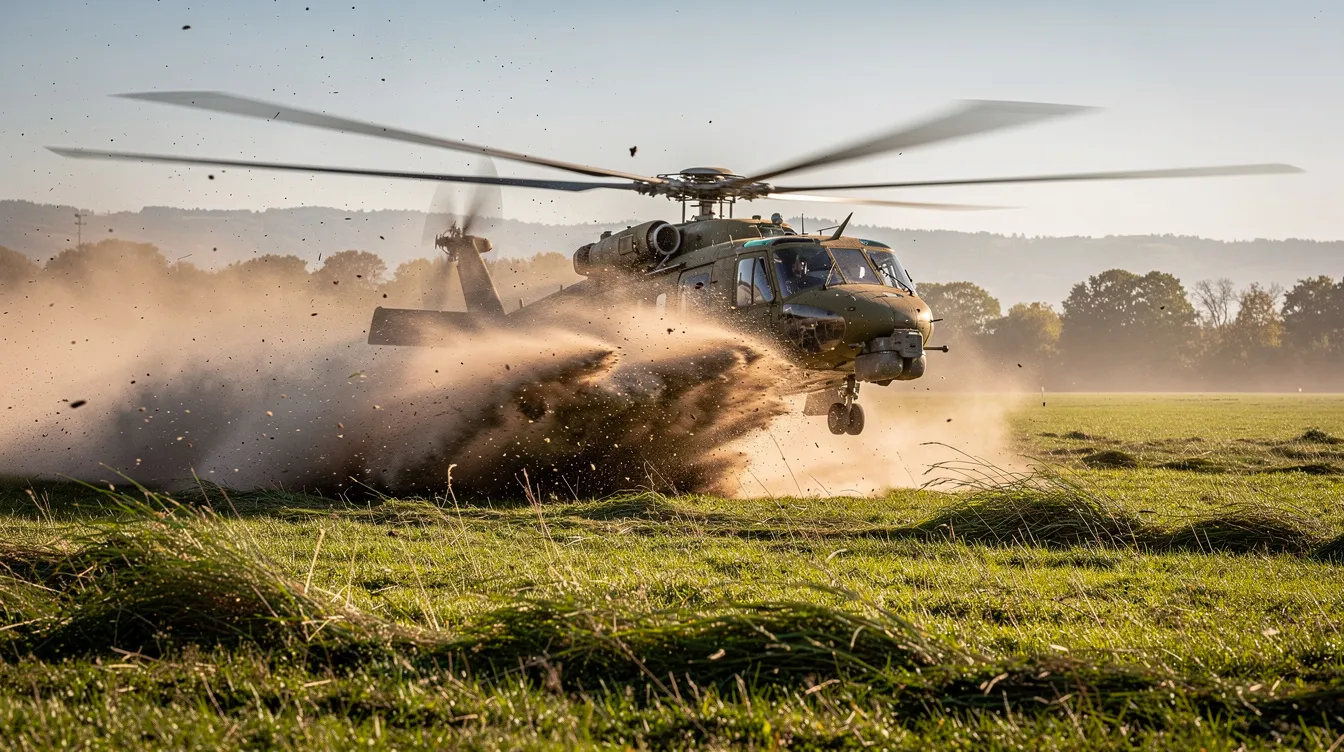
Service ceilings vary by category. The table below shows representative ranges under standard conditions at typical operating weights.
|
Category |
Typical Service Ceiling |
Example Models |
|---|---|---|
|
Light piston helicopters |
10,000–14,000 ft |
Robinson R22, Robinson R44 |
|
Light/medium turbine helicopters |
15,000–20,000+ ft |
Bell 206L LongRanger, Airbus H125 |
|
Heavy-lift civilian/military rotorcraft |
15,000–20,000 ft |
CH-47 Chinook, Sikorsky S-92 |
Specially engineered military helicopters can operate up to 20,000 feet. The CH-47 Chinook, with its tandem rotor configuration, has a published service ceiling of 20,000 feet, though payload drops at altitude. Military helicopters may also operate lower than their ceilings due to mission constraints and equipment weight added for military operations.
These numbers assume ideal weight and weather. Real operational ceilings are often lower, and passenger capacity limits play a direct role in how much usable altitude margin remains. A light turbine helicopter rated for 20,000 feet at minimum weight under ISA conditions might only reach 15,000 feet when loaded with four passengers on a warm day.
For detailed comparisons across models, Jettly's helicopter specs guide breaks down performance numbers for commonly chartered aircraft.
The Bell 206L LongRanger has a service ceiling of 4,115 meters (approximately 13,500 feet). As a light turbine helicopter, it combines a proven turboshaft engine, an efficient main rotor system, and a relatively light airframe to deliver solid performance in higher-elevation environments.
Typical high-altitude roles for the 206L include aerial photography in mountain terrain, utility work at remote sites, and passenger transfers to lodges or facilities above 8,000 feet. Its cruising speed of around 110 to 130 mph and range suited to regional hops make it a practical choice for operators in the western United States, the Alps, and parts of South America, similar in mission profile to other light utility helicopters such as the Eurocopter EC30.
At altitude, the 206L's performance margins narrow. A pilot operating near 12,000 feet must account for reduced climb rate, lower hover ceiling OGE, and the need for careful power management. When operating at higher altitudes, pilots must adjust the helicopter's settings based on weight and environmental conditions to maintain altitude safely.
Platforms like Jettly may offer access to similar light turbine helicopters for regional transfers into mountainous areas where runways are unavailable. For details on helicopter charter options, travelers can compare models directly through the platform.
The highest recorded helicopter flight reached 40,820 feet (12,442 meters), set on June 21, 1972, by French test pilot Jean Boulet flying an Aérospatiale SA-315B Lama at Istres, France. The record still stands according to Guinness World Records.
At 40,820 feet, the air is so thin that the Lama's engine flamed out during the climb. Boulet autorotated the helicopter back to a safe landing, a controlled unpowered descent using rotor inertia. Air density at that altitude is roughly a quarter of sea-level density; engine performance, rotor efficiency, and control margins are all at their absolute minimum.
This world record is far above the typical operational ceiling of any civilian or military helicopter in regular service. It demonstrates the physics of what is possible when an aircraft is stripped of payload, flown by a skilled test pilot, and pushed beyond certified limits. For everyday operations, no operator would fly passengers anywhere near this altitude.
The record underscores a pattern: helicopters can technically reach heights that far exceed their normal working range, but the gap between "possible under test conditions" and "safe for passengers" is measured in tens of thousands of feet.
As altitude increases, available power margins shrink. A helicopter pilot sitting in the pilot's seat at 14,000 feet has fewer options than the same pilot at 3,000 feet.
Speed envelope narrows. At higher altitudes, maximum speed drops because the rotor needs more of the engine's power just to maintain altitude, leaving less for acceleration. Retreating blade stall becomes a concern earlier; the retreating blade (moving in the same direction as the helicopter but against its forward motion) loses lift as airspeed increases, and thinner air worsens the effect.
Climb rate drops. Near the service ceiling, climb may fall to 100 feet per minute or less. Aggressive maneuvers become impractical.
Control authority decreases. Tail rotor and cyclic control inputs feel less responsive in thinner air. The tail rotor, which counteracts the main rotor's torque and provides yaw control, generates an opposing force that weakens as air pressure drops.
Rotor RPM management becomes critical. Pilots monitor rotor RPM closely to avoid droop; if blades slow below minimum RPM, lift drops abruptly.
Advanced avionics help pilots track these limits in real time, but at high altitude, helicopter aerodynamics demand more precision and planning from the crew.
Altitude is chosen based on mission type. Here are typical altitude bands for common operations:
Sightseeing and tourism: 500–3,000 feet AGL. Low enough for passengers to see landmarks clearly. Traditional helicopters used for scenic tours rarely need to climb above this range.
City law enforcement and air ambulance: 1,000–2,500 feet AGL. Close enough to observe ground activity, high enough to maintain obstacle clearance and safety considerations over congested areas.
Offshore operations: 3,000–8,000 feet MSL. Transport helicopters moving crews to oil platforms cruise at these altitudes for smoother air and better fuel efficiency.
Executive and corporate transport: 2,000–6,000 feet MSL. Comfortable altitudes that balance smooth ride quality with efficient routing.
Mountain search and rescue: Variable, often up to 12,000 feet or more. Rescue helicopters operating in the Himalayas, Alps, or Rockies may push close to their hover ceilings during rescue missions.
Specialized operations and aerial photography: altitude varies by objective; aerial work may require precise positioning at specific heights.
Some missions stay low for better visibility and quicker landings. Others cruise at higher altitudes for smoother air and fuel efficiency. Corporate travelers or families booking through charter platforms may prefer altitudes that balance comfort, views, and weather avoidance, and understanding how helicopter rental pricing works can help them match mission profiles to budget.
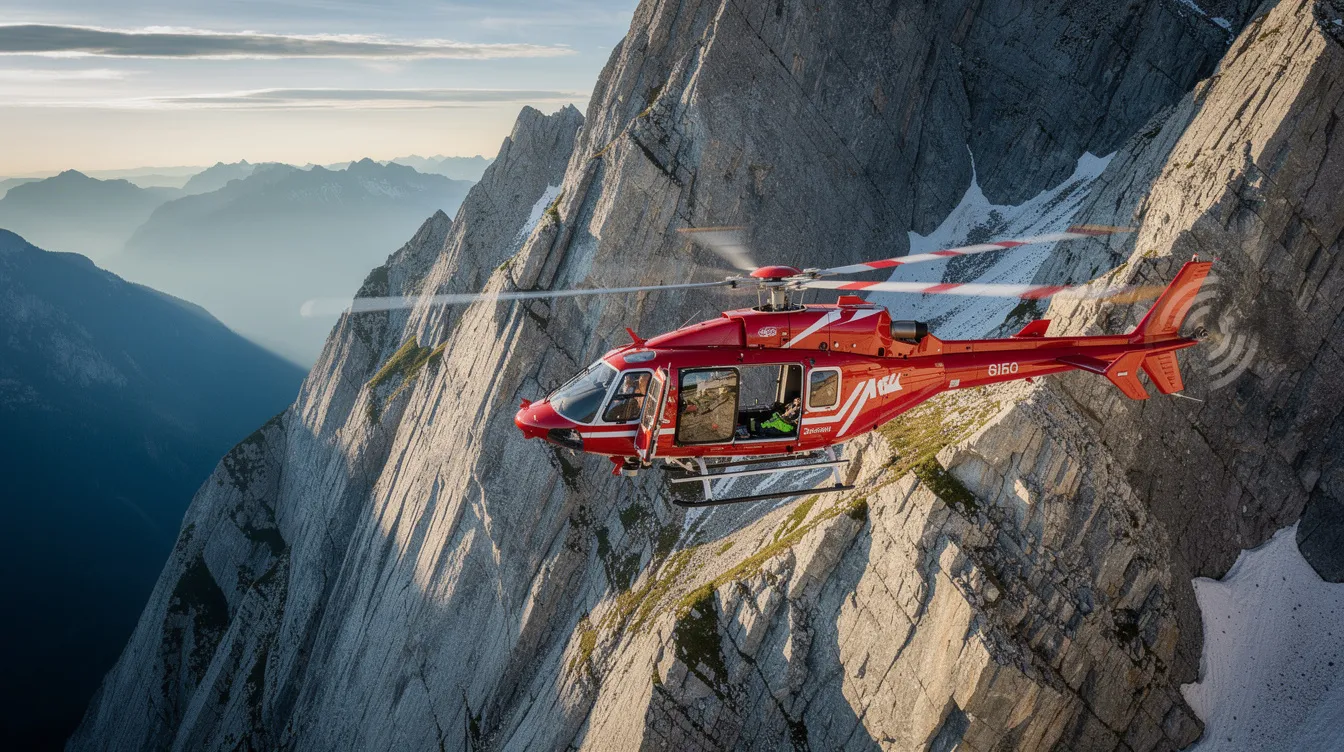
Mountain search and rescue helicopters often work close to their hover ceilings. In the Alps, the Rockies, and the Himalayas, rescue operations routinely take place above 10,000 feet. In the Everest region, the Airbus H125/AS350 B3 has performed rescues and even landed on the summit at approximately 29,029 feet in 2005 during a test flight by pilot Didier Delsalle.
The challenges at altitude are compounded:
Thinner air reduces both rotor lift and engine power simultaneously.
Unpredictable mountain winds and downdrafts can rob a helicopter of altitude without warning.
Obstacles (ridgelines, cables, rock faces) demand precise cyclic control near terrain.
Payload is often reduced to a minimum: fewer rescuers, less fuel, stripped interiors.
Rescue helicopters used in these environments are specifically selected for high-altitude performance. The H125's turboshaft engine and rotor blade design give it better power-to-weight margins at altitude than most competitors. Even so, rescue operations at 20,000 feet or above are specialized operations that push both machine and crew to their limits.
These missions should not be confused with routine charter flying or sightseeing trips. Operators arranging flights through platforms like Jettly use performance data and conservative planning margins that keep passengers well within safe altitude envelopes.
Most helicopters fly much lower and slower than fixed-wing aircraft, but they offer capabilities no airplane can match: vertical takeoff, hovering, and point-to-point flexibility in confined spaces. A helicopter can land vertically on a rooftop helipad, a yacht deck, or a mountain clearing. No runway required.
The trade-offs show up in the numbers:
|
Metric |
Typical Helicopter |
Typical Private Jet |
|---|---|---|
|
Cruising altitude |
1,000–8,000 ft |
35,000–45,000 ft |
|
Cruising speed |
95 to 160 mph |
400–600 mph |
|
Range |
200–400 miles (most models) |
1,500–6,000+ miles |
Helicopters typically fly between 95 and 160 mph. The fastest helicopter on record, the Westland Lynx, holds the speed record at 249.09 mph (400.87 km/h), set in 1986. The Sikorsky X2 reached a speed of 290 mph in testing, using coaxial counter-rotating rotors and a pusher propeller. Military helicopters can achieve ranges up to 1,200 miles with extended tanks.
In 1989, a Bell 412 set a record for the longest non-stop helicopter flight at 2,213 miles. The first circumnavigation by helicopter covered 26,000 miles in 1982. These records illustrate what helicopters can accomplish, though they remain far from the same speed and range that wing aircraft achieve routinely—factors that also shape aircraft rental choices and costs for travelers weighing helicopters against fixed-wing options.
Many Jettly customers use helicopters for short final legs (city center to airport, ski resort, yacht) after flying the main route by private jet. Understanding how many passengers different private jets can carry helps travelers decide which aircraft should handle the long leg versus the rotorcraft transfer. This combination captures the strengths of both aircraft types.
In forward flight, helicopters are more efficient than in hover. The rotor disc encounters fresh, undisturbed air continuously, which produces lift with less power. Thrust is generated by tilting the rotor disc in flight, pushing the helicopter forward through the air in such a way that the entire disc acts as both a lifting surface and a propulsive device.
At higher altitudes, helicopter speed for best range or endurance shifts. Drag characteristics change in thinner air, and the power required to maintain altitude increases. Maximum speed may be limited earlier by power availability or rotor dynamics, affecting how quickly the helicopter can clear terrain or reach a destination.
Advancing and retreating blades play a role. The advancing blade (moving in the same direction as the helicopter's flight path) encounters air at a higher relative speed than the retreating blade. At higher altitudes with thinner air, this asymmetry can narrow the speed envelope and increase the risk of retreating blade stall, where the retreating blade can no longer generate sufficient lift. The rotor is designed in such a way that cyclic control compensates for this asymmetry, but the margin for compensation shrinks at altitude.
Tiltrotor aircraft like the Bell V-280 Valor, with a range of 2,416 miles (3,888 kilometers), blur the line between helicopters and airplanes by converting rotor lift to wing-borne flight at high speed, but these remain specialized military platforms for now and sit alongside many other cross-country aircraft options that travelers and operators evaluate for long-range missions.
Two primary controls shape how a helicopter moves through the air:
Collective: The collective control adjusts the pitch of all rotor blades simultaneously. Pulling it up increases pitch across all blades, generating more lift and initiating a climb. Lowering it reduces pitch and begins a descent. The collective directly controls altitude.
Cyclic: The cyclic control tilts the rotor disc to change helicopter direction. Pushing it forward tilts the disc forward, moving the helicopter ahead. Lateral inputs tilt it sideways. The cyclic handles the main rotor blades collectively in terms of directional tilt, while the collective handles the main rotor system's overall pitch angle.
At high altitude, pilots use smaller, more deliberate collective and cyclic inputs. Over-pitching the blades in thin air can cause rotor RPM to droop below safe limits, reducing lift abruptly and risking loss of control. Engine failure at altitude is particularly dangerous because autorotation (the unpowered descent technique) must begin promptly; helicopters rely on rotor inertia and precise collective management to execute it safely.
Power management dominates the workload. Pilots monitor torque, turbine gas temperature, and rotor speed continuously as they approach altitude limits. High-altitude operations are restricted to experienced, well-trained crews for this reason. From the pilot's seat, the margin for error shrinks with every thousand feet of altitude gained.
Aviation regulations and standard operating procedures require performance margins above the minimums. For commercial or charter flights, this means operators plan to fly below the theoretical service ceiling to preserve reserves for unexpected events.
Key regulatory and operational constraints:
Airspace structure: Class A airspace (above 18,000 feet in the U.S.) requires IFR clearance and equipment that many helicopters lack. Most helicopter traffic stays in Class E or G airspace at lower altitudes.
Obstacle clearance: Over congested areas, FAA regulations require a minimum of 1,000 feet above the highest obstacle within 2,000 feet. This pushes helicopter routes to specific altitude bands over cities.
Noise abatement: Many municipalities impose altitude and routing restrictions to limit helicopter noise over residential areas.
Oxygen requirements: Above approximately 12,500 feet for more than 30 minutes, supplemental oxygen is required for the crew. Above 14,000 feet, oxygen is required at all times. Most routine helicopter flights stay well below these thresholds.
Engine failure planning: Operators must ensure that at any point during flight, the helicopter can safely descend or land if an engine fails. Flying near the service ceiling leaves almost no margin for this.
Reputable charter platforms like Jettly work only with operators who follow strict safety regulations and conservative performance planning, ensuring that safety considerations always take priority over altitude ambitions.
Ongoing advances in several areas are gradually expanding what modern helicopters can do at altitude:
Engine technology: Newer turboshaft engines deliver more power per pound of weight, improving climb performance and hover ceilings in thin air. Turbine engines continue to evolve with better compressor designs and thermal management.
Rotor aerodynamics: Blade designs optimized through computational fluid dynamics reduce drag and delay stall at steep pitch angles. Some manufacturers are testing rotor blade profiles that maintain enough lift at density altitudes where older blades would fail.
Lightweight materials: Carbon fiber composites and advanced alloys reduce airframe weight without sacrificing strength, improving power-to-weight ratios across helicopter models.
Advanced avionics and automation: Digital flight management systems track engine performance, rotor speed, and atmospheric data in real time, helping pilots manage performance envelopes more precisely during specialized operations.
Hybrid and electric assist: Experimental programs are exploring electric motor augmentation for short bursts of additional power during hover or climb at altitude.
The Bell V-280 Valor, a tiltrotor aircraft with a range of 2,416 miles, represents one direction for future rotorcraft: combining vertical takeoff capability with the high speed and altitude performance of fixed-wing flight. While helicopters may not approach jet altitudes, incremental improvements continue to make hot-and-high operations safer and more capable for air moving through challenging environments.
Travelers can expect newer helicopter models on charter platforms over time, offering better helicopter performance at remote locations and challenging airports, while a growing ecosystem of private charter airlines and operators expands the range of rotorcraft and fixed-wing options available.
Jettly primarily focuses on private jet charter but also connects travelers to helicopters for specific routes and use cases where fixed-wing aircraft cannot operate.
Common helicopter charter scenarios (which can be planned more precisely using tools like Jettly's airport locator and booking platform):
Airport-to-downtown transfers: Skip ground traffic entirely. A helicopter covers the maximum distance between a major airport and a city-center helipad in minutes rather than hours.
Ski resort and mountain access: Reach lodges and resorts where runways are unavailable or too short for jets. Check Jettly's mountain aviation guide for details.
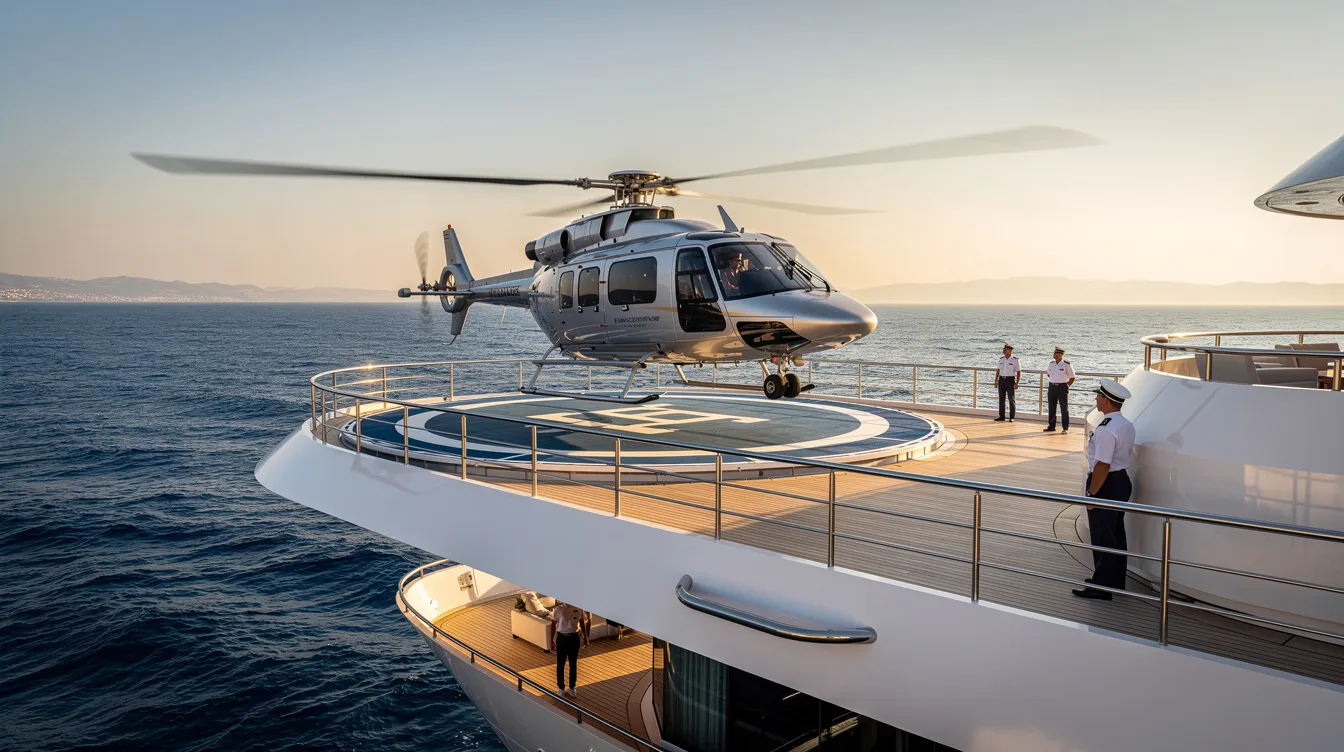
Island hops and yacht access: Land directly on a yacht helipad or island clearing without needing an airport.
Remote lodges and estates: Access properties in locations too rugged for ground transport or conventional runways.
Helicopters fly at lower altitudes that often provide better sightseeing opportunities and more direct routing than ground transport. For longer, higher-altitude legs, customers often book a jet for the main route and a helicopter for the final short segment, using tools such as Jettly's private jet charter cost estimator to compare scenarios. This combination captures the efficiency of jet cruise altitude with the point-to-point flexibility of a helicopter.
For pricing guidance, Jettly's helicopter flight cost breakdown covers what to expect across different aircraft types and routes.
These FAQs address common altitude-related questions not fully covered above. They are aimed at travelers planning charter, scenic, or transfer flights.
No. Most helicopters have service ceilings between 10,000 and 20,000 feet, while commercial airliners cruise at 30,000 to 40,000 feet. The highest recorded helicopter flight reached 40,820 feet (12,442 meters), which overlaps with airliner territory, but that was a one-time test record, not a repeatable passenger operation. Engine power, air density, and rotor design limit how high most civilian helicopters fly on a daily basis. Flying higher requires fundamentally different aerodynamics, which is why wing aircraft dominate at altitude.
Maximum passenger altitude is usually lower than the published service ceiling because operators maintain extra safety margins for weight and weather. A realistic range for many civilian helicopters under typical loads is 8,000 to 15,000 feet, depending on the model. A heavy-lift helicopter at maximum payload will top out lower than the same aircraft flying light. Travelers considering high-elevation charters should discuss altitude plans with their broker or operator before booking, especially if they are open to sharing or crowdsourcing private flights to reduce costs on certain legs.
Above approximately 12,500 feet for extended periods, regulations require supplemental oxygen for crew. Above 14,000 feet, oxygen is mandatory at all times. Most routine helicopter flights stay low enough that oxygen is not necessary. High-mountain rescue missions and scenic flights near peaks in the Rockies, Alps, or Himalayas are a different case; operators flying at these altitudes equip aircraft with supplemental oxygen for both crew and passengers.
Yes. Hot temperatures combined with high field elevation raise density altitude, reducing both rotor lift and engine performance. On a 95°F day at a 7,000-foot airport, density altitude could reach 10,000 feet or more. This limits how much weight the helicopter can carry and how high it can safely climb after takeoff. Reputable operators may adjust departure times (early morning is cooler), reduce payload, or select a different aircraft type with better engine performance to maintain safe performance in such conditions, all of which feed into the overall cost of a private charter when comparing aircraft and routing options.
Share your route details, expected weather, passenger count, and luggage needs with a charter specialist. The operator or platform will match those requirements to specific helicopter models with appropriate service ceilings and performance margins. Jettly's team can provide clear information on altitude limits, expected cruise levels, and safety considerations before confirming a booking, and frequent flyers may benefit from exploring Jettly's private jet membership options for more predictable access and pricing. For a starting point, browse helicopter specs to compare performance across commonly chartered models.
While helicopters can technically reach impressive heights, with some civilian models certified to 20,000 feet and the world record sitting at 40,820 feet, most helicopters fly much lower in everyday use. Air density, engine power, weight, helicopter design, and safety margins all shape how high helicopters fly on real missions.
Knowing these limits helps travelers decide when a helicopter is ideal (short hops, remote access, scenic routes) and when a higher-flying private jet is the better option. For many trips, the answer is both: a jet for the long-distance cruise and a helicopter for the final segment to a helipad, resort, or dock. Jettly offers access to a wide range of private charter aircraft, along with structured jet card programs and flexible NetJets alternatives that can make mixed helicopter–jet itineraries more predictable in terms of cost and availability.
Ready to find the right aircraft for your next trip? Explore Jettly's private jet and helicopter charter options or request a quote at https://www.jettly.com.
Share this post:
Jay Franco Serevilla
Oct 20, 2026
|
5
min read
Discover tips and trends in the industry.
5
min read
What Airlines Have Had Crashes? Major Airline Accidents, Safety Records, and What They Mean for Air Travel
Many major airlines, including American Airlines and Japan Airlines, have experienced fatal crashes throughout their histories. While these incidents are significant, they must be viewed in context, as air travel remains one of the safest modes of transportation today. Understanding the historical data and safety improvements can help travelers make informed decisions about their flight options.
Read More
5
min read
Elon Musk Aircraft: Inside Elon Musk's Private Jets, Fleet History, and How to Fly Similar Jets with Jettly
Elon Musk's private jet fleet, primarily consisting of Gulfstream models, showcases the intersection of luxury and necessity in modern aviation. This guide explores Musk's aircraft history, the evolution of his fleet, and how platforms like Jettly provide access to similar jets for those who seek the convenience of private travel without ownership. Discover the details of Musk's jets and how they reflect his dynamic lifestyle and business needs.
Read MoreStay updated with our latest insights and tips to elevate your journey with us.
MEMBERSHIPS AND ASSOCIATIONS



Disclaimer: Jettly operates as a charter broker, offering access to a global digital jet charter marketplace. Jettly is not a direct air carrier and does not own or operate aircraft. All advertised flights are conducted by third-party air carriers that are fully licensed and hold the appropriate Part 135 or Part 121 certifications issued by the Federal Aviation Administration (FAA) or equivalent regulatory authorities under U.S. or foreign law. Jettly complies fully with the U.S. Department of Transportation's Part 295 and Part 298 Charter Broker regulations. Jettly does not carry additional liability insurance. Passengers are covered by aircraft operator insurance. TICO: 50023770


