


Login
Get Instant Pricing On 23,000+ Aircraft

>
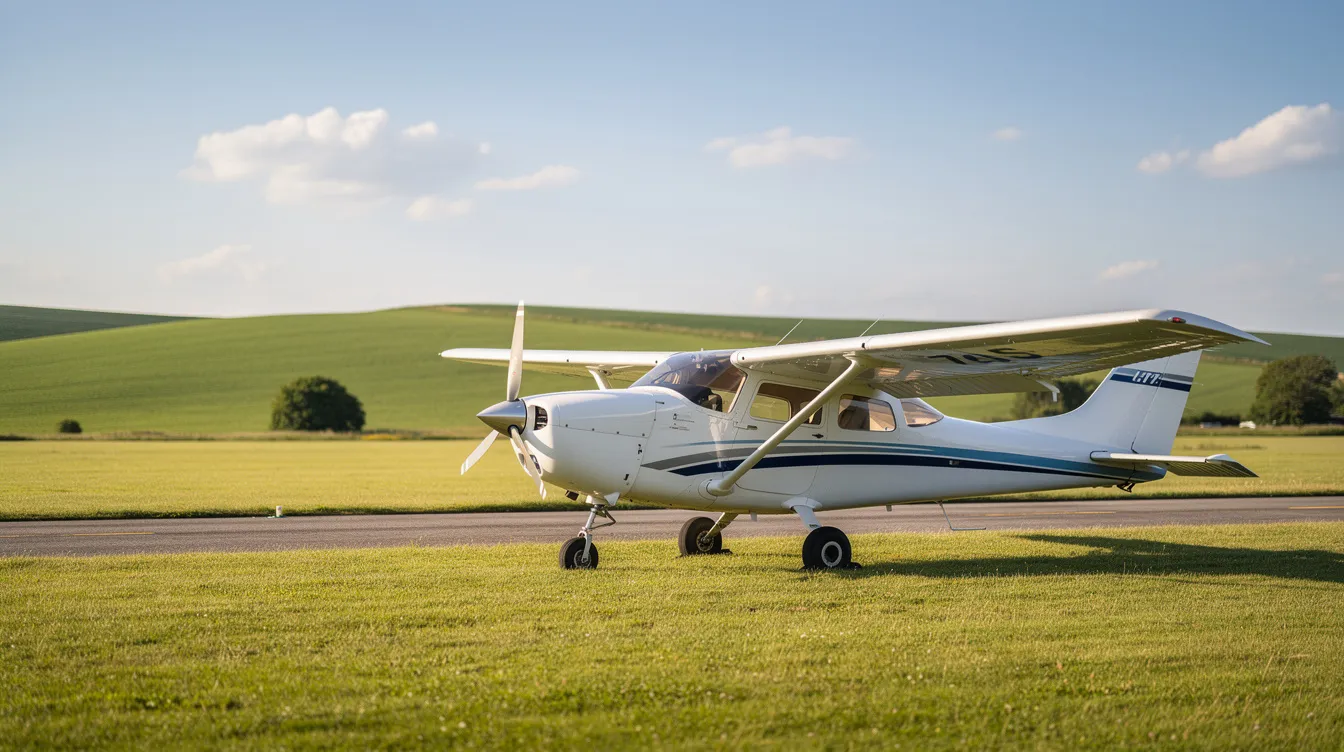
Every year, thousands of private flights take off across the United States without incident. Still, if you’re asking how many private planes crash a year, the short answer is that the U.S. sees about 1,000 to 1,200 private plane accidents annually, including roughly 200 fatal accidents and 300 to 400 deaths—most involving small, owner-flown aircraft rather than professionally operated private jets. For corporate executives, high-net-worth travelers, families booking private air travel, and anyone weighing the safety of flying private, that distinction matters far more than the headline number alone.
The answer depends heavily on what type of aircraft is flying, who is flying it, and under which regulations it operates. This guide breaks down the latest accident data, compares private planes with commercial airlines and different kinds of private aircraft, explains the main causes and risk factors behind crashes, and shows what travelers can do to book safer private flights, including through vetted charter platforms such as Jettly. Understanding the numbers helps private flyers assess real risk, make better booking decisions, and choose safer options with more confidence.
Private planes experience an average of 1,000 to 1,200 accidents annually in the U.S., with roughly 200 fatal accidents and about 300 to 400 fatalities each year. In some years, fatalities from private plane accidents exceed 400 to 500 deaths.
"Private planes" primarily fall under general aviation, which includes owner-flown aircraft operating under FAA Part 91 and charter or private jet operations under Part 135.
Business jets and professionally crewed charters account for far fewer accidents than the broader general aviation category. Business jet accidents number in the low dozens annually in the U.S., with fatal events typically in the single digits.
Major scheduled commercial airlines have had near-zero fatal accident rates in recent years. In both 2017 and 2023, U.S. scheduled commercial flights recorded zero onboard passenger fatalities.
Digital charter platforms like Jettly focus on vetted, audited operators to keep private jet travel risk much closer to commercial aviation than to owner-flown small planes.
Private plane accidents occur over 1,000 times annually in the U.S., making private planes average around five accidents per day. According to data tracked by the National Transportation Safety Board and reported through the Federal Aviation Administration, U.S. general aviation recorded 1,097 total accidents in 2023 alone, with 186 classified as fatal accidents.
When people ask about private aircraft crashes, the term "private planes" covers a broad range of general aviation aircraft. This includes small piston-engine planes, turboprops, and private jets used for non-scheduled flights. It does not include larger commercial aircraft operating on published airline schedules. Of the roughly 1,097 accidents in 2023, 929 involved non-commercial fixed-wing small planes, with 156 of those being fatal.
Over the 2014–2023 decade, annual figures have remained relatively consistent. Approximately 200 to 300 private plane accidents result in fatalities each year, producing about 300 to 400 fatalities annually due to private plane accidents in the U.S. More than 80% of all aviation accidents are non-fatal, meaning most involve property damage or minor injuries rather than loss of life.
Globally, comprehensive data is fragmented because reporting standards vary by country. U.S. numbers represent the largest and best-tracked segment of private aviation and serve as a meaningful benchmark. Meanwhile, fatal accidents on scheduled commercial airlines have become exceptionally rare throughout the 2010s and early 2020s, with commercial airlines maintaining a record that often includes zero U.S. passenger fatalities in a given year.
The gap between private planes and commercial flights in terms of crash risk is significant when measured per 100,000 flight hours. Private planes have a fatal accident rate of 2.3 per 100,000 flight hours when combining all aircraft types. General aviation shows a fatal accident rate of 0.9 to 1.1 per 100,000 flight hours. By comparison, commercial airlines maintain a fatal accident rate of 0.01 per 100,000 flight hours, and in many recent years the number has been effectively zero.
Charter flights under FAA Part 135 have 0.201 fatal accidents per 100,000 hours, placing them between the broader general aviation average and the near-perfect record of scheduled commercial airlines. Owner-flown private aircraft under Part 91 account for the vast majority of private aviation accidents, while on-demand charter and corporate operations show significantly better safety performance.
Commercial aviation benefits from stricter regulations, multi-pilot crews of airline pilots, larger commercial airplanes designed with redundant systems, and advanced infrastructure, including full air traffic control coverage. These factors drive the very low accident and fatality rates for commercial airline accidents.
Many headlines about an airplane crash actually refer either to rare commercial accidents or to small private planes. Business jets occupy a middle ground in risk. For a detailed breakdown of how private jet safety compares, this Jettly resource covers the key distinctions.
General aviation encompasses all civil aviation accidents outside of scheduled commercial airlines. This includes recreational private flying, flight training, air taxi services, and corporate and charter operations. The aviation industry tracks these figures through the transportation safety board NTSB and FAA reporting systems.
Here are the key data points:
|
Metric |
Figure |
|---|---|
|
Total GA accidents per year (U.S.) |
~1,000–1,100 |
|
Fatal GA accidents per year |
~180–220 |
|
GA fatalities per year |
~300–450 |
|
GA share of all aviation fatalities |
Over 90% |
|
Total GA accident rate |
Approximately 4 to 5 per 100,000 flight hours |
Most aircraft accidents in private aviation do not involve corporate-type jets. The higher fatality rate figures often cited for "private aviation" combine jets, turboprops, and small piston planes, which inflates the perceived risk for private jets specifically.
The good news: private aviation accidents have declined by 25% since 2002. The NTSB's historical data shows the fatal accident rate dropped from roughly 1.27 per 100,000 flight hours in 2001 to about 0.65 in 2023. Improvements in pilot training, modern avionics, and stronger safety culture have driven this decline, even as flight hours have increased.
Small plane accidents often occur at non-towered airports with less infrastructure than major airline hubs. Takeoff and landing phases remain the highest-risk moments, especially at shorter runways and airstrips lacking instrument approach capabilities, which makes using an airport locator tool for vetted charter airports particularly valuable when planning private flights.
Private jets in this context mean turbine-powered business jets such as Gulfstream, Bombardier, and Cessna Citation models. These aircraft are statistically far safer than small piston planes.
Business jet accidents number in the low dozens annually in the U.S., with fatal accidents usually in the single digits. The fatal accident rate for business jets is 0.1 to 0.3 per 100,000 flight hours, a fraction of the broader general aviation average. Globally, the Business Aviation Safety Review 2024 reported just eight fatal business jet accidents and 21 fatalities worldwide.
|
Aircraft Type |
Fatal Accident Rate (per 100,000 flight hours) |
|---|---|
|
Small piston (owner-flown) |
~1.0–2.3 |
|
Business jets |
0.1–0.3 |
|
Part 135 charter |
~0.2 |
|
Scheduled commercial airlines |
~0.01 |
Most aircraft accidents in private aviation do not involve corporate-type jets. The higher fatality rate figures often cited for "private aviation" combine jets, turboprops, and small piston planes, which inflates the perceived risk for private jets specifically.
Professionally flown business jets operating under commercial standards or corporate flight departments narrow the safety gap versus commercial aviation considerably. This is especially true when the operator undergoes third-party safety audits and maintains rigorous maintenance schedules. For a broader context on private aviation operators and how they compare, Jettly's guide to the ultimate list of charter airlines complements its resource on the safest private jets.
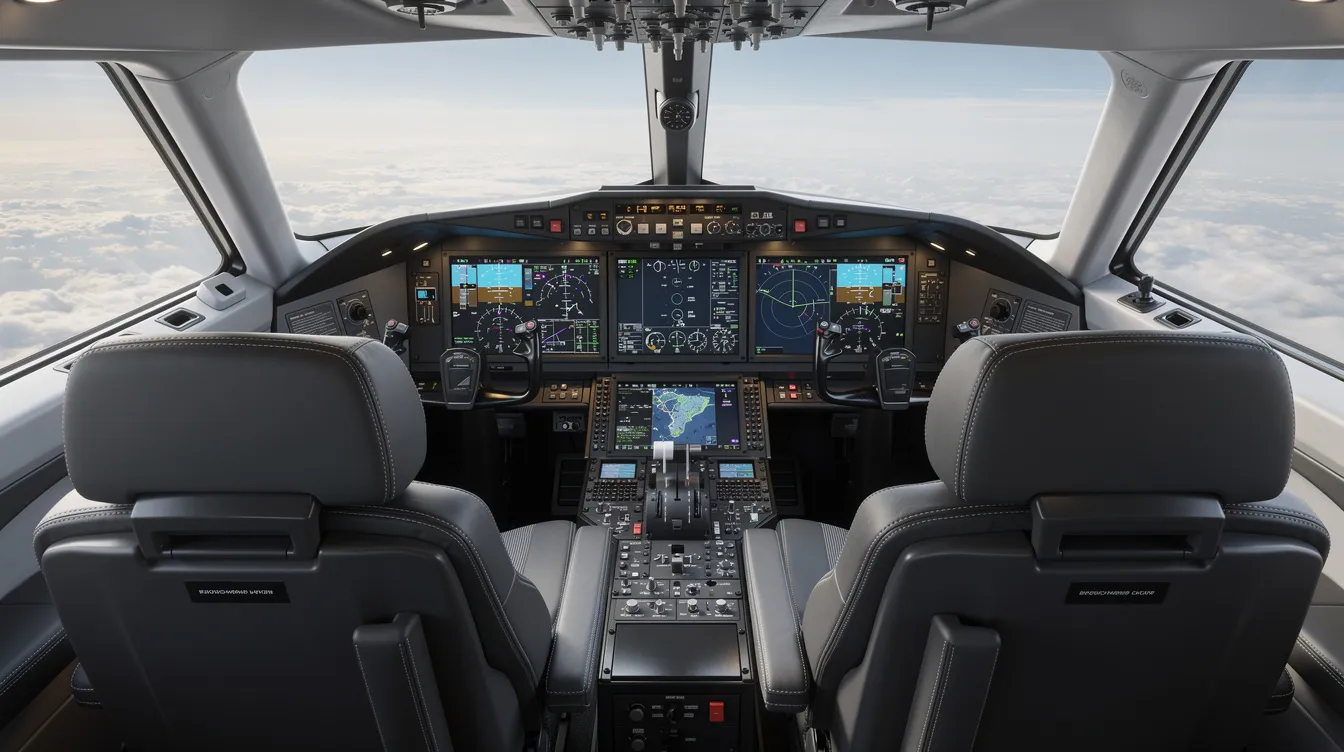
Every aviation accident typically results from a chain of contributing factors rather than a single cause. Most aircraft accidents are preventable through better training, decision-making, and maintenance.
Landing is the most dangerous phase of flight for private aviation accidents, and the most dangerous phases of flight overall are landing and initial climb or approach. These phases involve higher pilot workload, proximity to terrain, and frequent configuration changes.
Here are the primary causes of a private plane crash or small plane crash, broken down by category:
Pilot error and human factors: Human error is the leading cause of aviation accidents, contributing to approximately 53% to 85% of incidents, depending on the study. Pilot error accounts for 70 to 80% of general aviation accidents, and approximately 75% of small plane crashes. Human and pilot error contribute to roughly 70% to 75% of private aviation accidents overall. Private pilots with less recurrent training and fewer flight hours are disproportionately represented.
Loss of control in flight: Represents over 40% of fatal accidents, often linked to stall/spin scenarios.
Controlled flight into terrain (CFIT): Accounts for 20 to 25% of fatal accidents, where a functioning airplane descends into terrain because the pilot lacks situational awareness.
Adverse weather conditions: Cause approximately 11% of private aviation accidents overall, with weather-related incidents contributing to 15 to 20% of fatal crashes specifically.
Mechanical failure: Involved in about 18% of general aviation accidents, including engine failure, structural issues, and maintenance lapses.
Fuel mismanagement: Running out of fuel or selecting the wrong tank remains a recurring but preventable factor.
Advanced avionics such as GPS, terrain awareness systems, and traffic collision avoidance significantly reduce these risks for private jets compared with less-equipped small planes. An aircraft manufacturer that integrates modern safety systems into its designs directly contributes to lower accident rates.
What actually drives risk in private operations comes down to three variables: who operates the flight, what aircraft is used, and under which regulations it flies.
Regulatory framework matters. Part 91 private owner-flown operations have higher variability in pilot experience and maintenance standards. Stricter Part 135 controls reduce the variability that can exist for some private plane owners managing aircraft and maintenance under Part 91. Part 135 charter flight operators must meet commercial-grade requirements, including minimum crew qualifications, maintenance intervals, and operational controls. The difference in safety record between these two categories is substantial.
Key risk multipliers include:
Single-pilot vs. two-pilot crews: Professional pilots operating in pairs provide redundancy and cross-checking that a single aircraft owner flying alone cannot match.
Aircraft type: Older piston aircraft vs. modern turbine jets with redundant systems.
Airport environment: Non-towered, short runways vs. large controlled airports with full air traffic control.
Conditions: Challenging weather, night flying, mountainous terrain, or in-flight fire scenarios.
Human factors like fatigue, inadequate recurrent training, and poor aeronautical decision-making contribute heavily to general aviation accident statistics. Commercial pilots undergo structured safety programs, simulator training, and regular check rides that dramatically lower risk, and instant-book charter platforms like Zenflight private jet operator services work only with operators that meet strict regulatory and safety requirements.
Choosing flights under stricter commercial standards, with documented safety management systems and third-party safety audits, remains one of the most effective ways for passengers to reduce individual risk. For a deeper look at private jet safety standards, Jettly provides a comprehensive overview.
A digital private aviation platform can help passengers avoid higher-risk operations while enjoying the convenience and time savings of private jet travel. Jettly operates as a global digital charter marketplace connecting travelers to over 20,000 unique aircraft, supported by flexible private jet memberships, with listed operators that are commercially certified under Part 135 or equivalent international aviation authorities standards rather than informal, owner-flown arrangements.
The platform prioritizes operators with recognized third-party safety audits from organizations like ARGUS, Wyvern, and IS-BAO. Travelers can review transparent information about aircraft age, type, and operator credentials at the time of booking. Jettly's instant pricing model and private jet charter cost estimator allow customers to compare options not only by aircraft category and price but also by safety-related criteria.
Here are a few real-world use cases, including travelers who use Jettly's ability to crowdsource private jet flights and share empty seats to reduce costs while still flying with vetted operators:
Executive travel: A corporate team selects a professionally crewed midsize jet for a New York-to-Miami trip through Jettly's jet card corporate programs, verifying two-pilot operations and current safety ratings before booking.
Family vacation: A family charters a turboprop to a regional vacation airport, comparing aircraft options and pilot credentials through the platform.
Last-minute access: A traveler arranges a charter flight to a smaller airfield lacking regular commercial flights using Jettly's private charter aircraft network, confident that the operator meets Part 135 standards.
Learn more about how to charter a private jet through Jettly's step-by-step guide.

Before booking any private plane or private jet travel, use this checklist to reduce personal risk:
Verify operator certification. Confirm the operator holds a valid FAA Part 135 certificate (or equivalent for international flights). Avoid informal Part 91 arrangements unless you know the aircraft owner and pilot personally, since those trips rely much more heavily on the judgment and practices of private plane owners.
Ask about pilot qualifications. Request total and type-specific flight hours, date of last recurrent training, and whether the crew includes professional pilots with airline-grade experience.
Check safety ratings. Look for ARGUS Gold or Platinum, Wyvern Wingman, or IS-BAO registration. Operators who implement safety management systems demonstrate a structured approach to risk reduction.
Choose two-pilot crews. This is especially important for longer flights, night operations, or routes through adverse weather conditions and complex terrain.
Be flexible with timing. Avoid pressuring pilots to fly in marginal weather. Accept delays or diversions when flight safety requires them.
Use curated platforms. A marketplace like Jettly centralizes operator data, shows aircraft details, and provides instant comparisons, which is far better than booking through unknown brokers or informal arrangements.
For more on what to look for, see Jettly's guide to private plane safety statistics.
Raw accident counts can be misleading. Normalized risk per mile or per hour is a better way to compare air travel to driving or rail travel.
Commercial airline travel remains the safest mode of transport per passenger-mile. Professionally operated private jets have a higher risk than commercial aviation but can approach or compare favorably with driving on a per-mile basis, depending on the operation, especially when using a NetJets alternative like Jettly that emphasizes safety oversight and flexible access instead of fractional ownership. For most travelers, cumulative lifetime risk is still dominated by car travel simply because they spend far more hours on the road than in the air.
Private aviation accident investigations are handled by specialized agencies. The NTSB investigates every civil aviation accident in the U.S., and findings lead to safety recommendations that benefit all future passengers. Some of history's most significant aviation safety improvements came after major incidents. The deadliest aviation disaster events, including incidents like the Korean Air flight tragedies, reshaped how international aviation authorities approach crew resource management, training standards, and regulatory oversight across the entire aviation industry.
When operated under strong safety standards, private jets offer a practical balance of convenience, time savings, and statistically low accident rates compared with many everyday activities. The federal government and the FAA continue to refine regulations that reduce risk across both commercial and private operations.
The following questions address common concerns not fully covered in the sections above. These answers are informational and not legal or insurance advice. Readers should consult qualified professionals or official aviation authorities for case-specific guidance.
Yes. When measured per 100,000 flight hours, private planes in general aviation experience significantly more accidents and fatal events than scheduled commercial airlines. General aviation shows a fatal accident rate of 0.9 to 1.1 per 100,000 flight hours, while private planes have a fatal accident rate of 2.3 per 100,000 hours when all private aircraft types are combined. Commercial airlines sit at approximately 0.01 per 100,000 flight hours.
The gap is mainly driven by differences in regulatory oversight, pilot experience, aircraft size, and airport infrastructure. Commercially operated air travel is not inherently unsafe. Professionally crewed private jets under commercial standards significantly reduce this gap compared with casual, owner-flown private operations. General aviation has an accident rate of approximately 4 to 5 per 100,000 flight hours for all incidents, not just fatal ones.
No. According to long-term NTSB and FAA data, the overall accident rate in general aviation has generally trended downward since the early 2000s, even if individual years show fluctuations. Some short-term upticks occur during years when private flying increases or when economic conditions change how and where people fly.
Safety improvements, including better avionics, improved training for private pilots, and the adoption of safety management systems, have helped lower the rate of civil aviation accidents even as total flight hours rise. Media coverage of a serious crash or airplane accident can make it seem like small plane accidents are rising, but statistics show a flat or declining long-term trend.
Start with this checklist:
Verify they hold FAA Part 135 or equivalent commercial certification.
Ask about pilot total hours, type-specific hours, and recent recurrent training dates.
Look for third-party safety ratings: ARGUS, Wyvern, or IS-BAO.
Review aircraft age and maintenance history, including whether the operator follows rigorous maintenance schedules, especially when assessing operators or private plane owners responsible for upkeep outside airline-style systems.
Confirm they use a safety management system consistent with modern aviation standards.
A digital charter platform like Jettly centralizes this information and connects travelers only with vetted, regulation-compliant charter flight operators. For a full overview, visit Are Private Jets Safe?
Liability after a private plane accident can involve multiple parties. Multiple parties can share liability in a private plane crash, potentially including the pilot, the aircraft owner, the operating company, maintenance providers, the aircraft manufacturer, or even air traffic control, depending on the circumstances.
Aircraft accident investigation by the NTSB identifies probable causes, but determining liability and compensation is handled through civil claims and courts. Negligence claims can arise from pilot error or poor maintenance. A family member or injured party affected by an airplane crash often consults an aviation accident attorney or private plane crash lawyers to understand their rights, time limits for filing, and possible recovery options. Private plane crash attorneys at a qualified law firm can advise on lost wages, medical bills, and other damages within the scope of personal injury law. This article does not recommend specific firms or provide state-specific legal guidance on any aviation accident case.
Air travel safety ultimately depends on the aircraft, crew, operator, and regulatory compliance, not just the booking channel. However, curated platforms like Jettly improve transparency by clearly displaying operator certifications, aircraft details, and safety information. The platform excludes operators who do not meet required standards.
This additional layer of due diligence helps travelers avoid informal, poorly regulated private operations that contribute disproportionately to private aviation accident statistics. Compared to arranging a private flight through unknown brokers or informal contacts, a vetted marketplace provides more confidence that air crashes are far less likely with the operators available for booking.
Around a thousand general aviation accidents occur annually in the U.S., but most involve small, owner-flown private airplanes rather than professionally operated private jets. The data is clear: most private planes that crash are small piston aircraft flown under less stringent oversight, not the turbine-powered business jets or charter operations that most private jet travelers use.
Scheduled commercial aviation maintains the lowest fatal accident rate of any transport mode. On-demand charter jets and corporate operations can come close to that safety record when they operate under strict safety and regulatory frameworks with professional pilots and modern equipment. The safety record of larger commercial aircraft sets the benchmark, but well-run private jet operations are far closer to it than raw general aviation statistics suggest.
The key takeaway for any traveler: individual passengers can meaningfully reduce their risk by choosing vetted commercial operators, favoring modern aircraft and professional crews, and using transparent platforms like Jettly to compare options based on safety, not just price.
Ready to experience private travel on your terms? Explore flight options or request a quote at https://www.jettly.com.
Share this post:
Jay Franco Serevilla
Jun 25, 2026
|
5
min read
Discover tips and trends in the industry.
5
min read
Small Private Jet Price: What It Really Costs to Fly vs Own in 2026
In 2026, the cost of small private jets varies significantly based on whether you choose to charter or own. Charter rates for very light jets range from $2,000 to $3,000 per hour, while ownership costs can exceed $1 million annually. This guide provides a comprehensive breakdown of purchase prices, operating costs, and the advantages of chartering versus owning a private jet.
Read More
5
min read
Delta Carrier Code: DL Airline Code, DAL ICAO & How They Affect Your Flights
Understanding Delta's carrier code, DL, and its ICAO code, DAL, is essential for navigating flight bookings and connections. These codes are crucial for identifying Delta flights across various systems, ensuring travelers can manage their itineraries effectively. Whether flying commercially or coordinating private charters, knowing these identifiers enhances the travel experience.
Read MoreStay updated with our latest insights and tips to elevate your journey with us.
MEMBERSHIPS AND ASSOCIATIONS



Disclaimer: Jettly operates as a charter broker, offering access to a global digital jet charter marketplace. Jettly is not a direct air carrier and does not own or operate aircraft. All advertised flights are conducted by third-party air carriers that are fully licensed and hold the appropriate Part 135 or Part 121 certifications issued by the Federal Aviation Administration (FAA) or equivalent regulatory authorities under U.S. or foreign law. Jettly complies fully with the U.S. Department of Transportation's Part 295 and Part 298 Charter Broker regulations. Jettly does not carry additional liability insurance. Passengers are covered by aircraft operator insurance. TICO: 50023770


