



Login
Get Instant Pricing On 23,000+ Aircraft

>
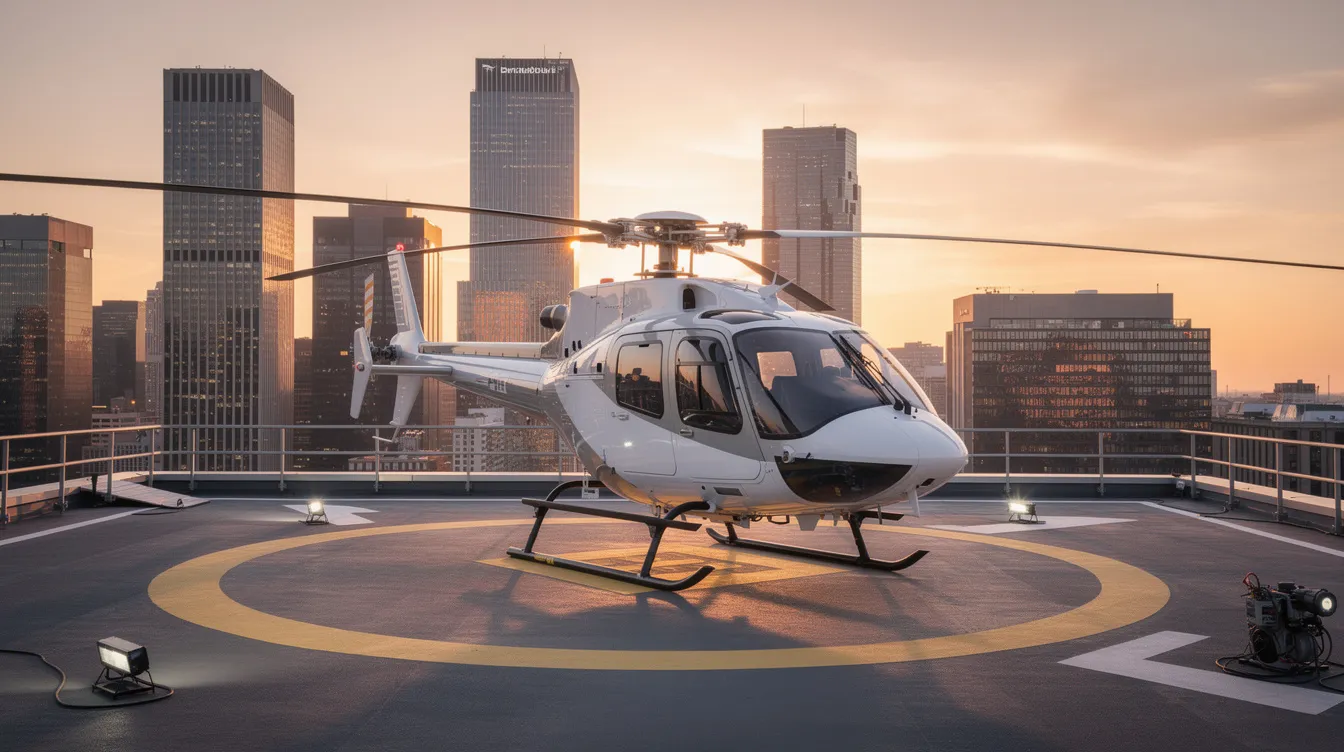
Helicopter weights range from ultra-light models under 300 lbs to heavy-lift machines over 60,000 lbs. A small training helicopter like the Robinson R22 tips the scales at roughly 880 lbs empty, while the Sikorsky CH-53K King Stallion can reach an MTOW above 88,000 lbs. The spread is enormous because helicopter size, lifting capability, and overall weight are matched to the specific job the aircraft is built to do.
When someone asks how much a helicopter weighs, the answer depends on whether you mean empty weight, maximum gross weight, or maximum takeoff weight. Each figure tells a different story about payload, performance, and safety margins, which is why weight matters when comparing helicopters for range, route conditions, and operating efficiency.
For private charter travellers, frequent flyers, and anyone booking a helicopter through Jettly, these numbers shape practical decisions: how many passengers and bags can fly, how far the aircraft can travel, and which helicopter is the most suitable and cost-effective option for the journey. This article breaks down the main weight definitions, typical ranges across helicopter classes, useful load and weight limits, how weight affects performance and safety, and real-world examples for news, medical, military, and charter aircraft.
Helicopters can vary in weight from under 600 lbs for ultra-lights to over 56,000 lbs for heavy-lift models, depending on size and mission profile.
Light helicopters typically weigh 900 to 3,000 lbs empty and max out around 4,000 lbs, while heavy types can exceed 50,000 lbs at maximum takeoff weight.
The answer to how much a helicopter weighs depends on three figures: empty weight, maximum gross weight, and maximum takeoff weight (MTOW). A Robinson R22, for example, has an MTOW of about 1,100 lbs, while an Airbus H225 reaches 24,250 lbs.
A helicopter's weight directly determines how much weight it can safely carry, where it can land, and how far it can fly on a given fuel load.
For charter customers booking through Jettly, weight specs matter because they drive aircraft selection, matching group size and luggage to a helicopter with adequate useful load for the route and conditions.
Three specifications define how much helicopters weigh: empty weight, maximum gross weight, and maximum takeoff weight. Understanding each one is critical for anyone involved in flight planning.
Empty weight includes all installed equipment without fuel or payload. Basic empty weight refers to the helicopter's weight with fluids and unusable fuel-think engine oil, hydraulic fluid, and any fuel that cannot be drained. The empty weight is crucial for calculating load capacity because it sets the baseline from which every other figure is derived. It also affects a helicopter's lifting capacity and fuel efficiency.
Maximum gross weight is empty weight plus useful load-fuel, pilot, passengers, baggage, and any removable equipment. Exceeding this figure is not permitted in certified operations. Light helicopters have a maximum gross weight of around 4,000 pounds, while larger helicopters can have a maximum gross weight of up to 10,000 pounds or more depending on the class.
Maximum takeoff weight is the heaviest weight at which a helicopter is certified to take off. The MTOW includes the aircraft, fuel, crew, and payload. In most configurations, it equals the published maximum gross weight. The Robinson R22 has a maximum takeoff weight of 1,100 lbs, while the Airbus H225 has a maximum takeoff weight of 24,250 pounds. These specifications are listed in each aircraft's flight manual and are central to every operation, whether commercial or private.
A helicopter's weight is tied to performance, fuel burn, and safety margins in ways more sensitive than with fixed-wing aircraft. Rotorcraft rely on rotor lift to hover, climb, and maneuver, and every additional pound demands more power from the engine.
Heavier takeoff weight increases the power required to fly, limiting climb rate, hover capability, and service ceiling. These effects intensify in "hot and high" conditions-high temperatures and high altitudes reduce air density, meaning the rotor blades generate less lift per revolution. Weight distribution impacts helicopter performance, passenger capacity, and payload across all phases of flight.
Weight limitations protect the fuselage, rotor system, and transmission from excessive stress. Manufacturers and regulators test structural integrity up to the certified maximum gross weight. Overloading can lengthen takeoff distance, reduce speed and manoeuvrability, and degrade autorotation performance during an emergency engine-out scenario. That is why operators calculate weight and balance for every flight.
For charter travellers, this means an operator may reduce passenger count or luggage on hot days or at high-altitude helipads. Tools like Jettly’s airport locator and charter booking platform help match aircraft performance to specific airports and routes. Weather conditions, elevation, and even wind direction can shrink the usable payload below the published MTOW, so the aircraft's weight must be weighed against real-world factors before departure.
Helicopters are classified into five weight categories based on maximum takeoff weight. Weight categories include ultra-light, light, intermediate, medium, and heavy helicopters. Each class is suited to different missions and charter profiles.
Light helicopters typically weigh 900 to 3,000 lbs and are used for training and private transport. Their maximum gross weight tops out around 4,000 pounds. Common models include:
Robinson R22 - MTOW ~1,100 lbs (the maximum takeoff weight of the Robinson R22 is 1,100 pounds)
Robinson R44 - MTOW ~2,500 lbs
Bell 206B JetRanger - MTOW ~3,200 lbs
These aircraft handle aerial photography, short executive hops, and training.
Medium helicopters weigh between 5,000 to 12,500 lbs and are often used for utility and emergency services. Typical models include:
Bell 407 - MTOW ~5,250 lbs
Leonardo AW109 - MTOW ~7,000 lbs
Airbus H145 - MTOW ~8,000 lbs
Twin-engine helicopters like the AW109 and H145 are popular for executive charter, offshore support, and air ambulance operations.
Heavy-lift helicopters can exceed 12,500 lbs and are designed for substantial cargo transport. Examples include:
Sikorsky S-92 - MTOW ~26,500 lbs
Boeing CH-47F Chinook - MTOW ~50,000 lbs
Airbus H225 - MTOW ~24,250 lbs
These aircraft serve military, search and rescue, and heavy-lift roles rather than routine luxury charter. Jettly primarily works with light and medium helicopters for private travel, since those classes balance performance, comfort, and operating cost for most civilian missions, drawing from a broad catalogue of private charter aircraft matched to each mission profile.
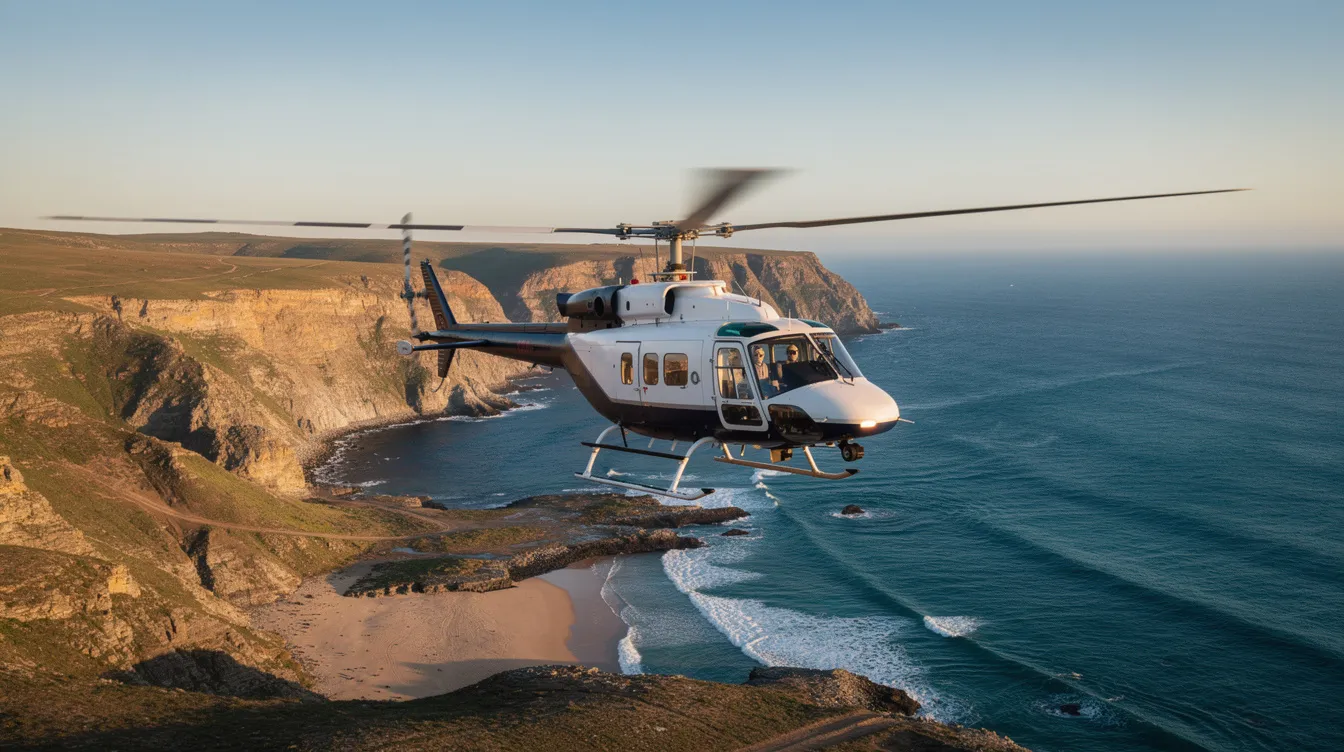
How much weight a helicopter can safely carry comes down to useful load. The load-carrying capacity is the difference between maximum gross weight and empty weight.
Consider the Bell 429. The Bell 429's empty weight is 4,465 lbs, and the Bell 429 has a maximum gross weight of 7,500 pounds in its standard configuration (some variants are certified up to 8,000 lbs). That yields a useful load of roughly 3,035 to 3,535 lbs, shared among fuel, flight crew, passengers, and cargo.
Fuel can consume a large share of that figure. A short 20-minute transfer requires less fuel, freeing capacity for additional passengers or luggage. A longer journey demands more fuel, which reduces the payload available. Operators may also install auxiliary fuel tanks for extended range missions, adding to the aircraft's own weight and cutting into seat or cargo capacity.
Weight limitations also shift with environmental and operational factors. High altitudes, high temperatures, and gusty wind conditions can reduce the maximum payload an operator will accept, even if the published MTOW technically permits more. The overall weight must leave adequate safety margins for the pilot to maintain control throughout the flight.
For charter bookings through Jettly, providing accurate passenger counts and estimated baggage weights at the time of booking helps operators verify weight and balance before confirming a flight, keeping every operation safe and on schedule. Travelers can also use Jettly’s private jet charter cost estimator to see how aircraft size and trip profile influence pricing when weight and range requirements change.
Helicopters are optimised around intended use, and mission profile strongly shapes both empty weight and maximum gross weight. Passenger capacity is influenced by helicopter size and design, but so is the equipment each variant carries.
New aircraft are agile light or light-medium helicopters with MTOW typically between 3,500 and 6,000 lbs. Models like the Robinson R44 and Bell 206 are common. Camera systems, search lights, and broadcasting gear add to empty weight, reducing the space and payload available for extra passengers. Small helicopters typically carry 1–4 passengers in these configurations.
Hospital and air ambulance operators commonly use platforms like the Bell 407 (MTOW ~5,250 lbs), Airbus H135 (~6,415 lbs MTOW), and Leonardo AW109 (~7,000 lbs MTOW). Medical interiors-stretchers, life-support systems, life vests, and additional equipment-add structural weight but are offset by higher certified maximum gross weight. These aircraft often trade a spacious cabin for specialised emergency rescue systems and ample storage for medical supplies.
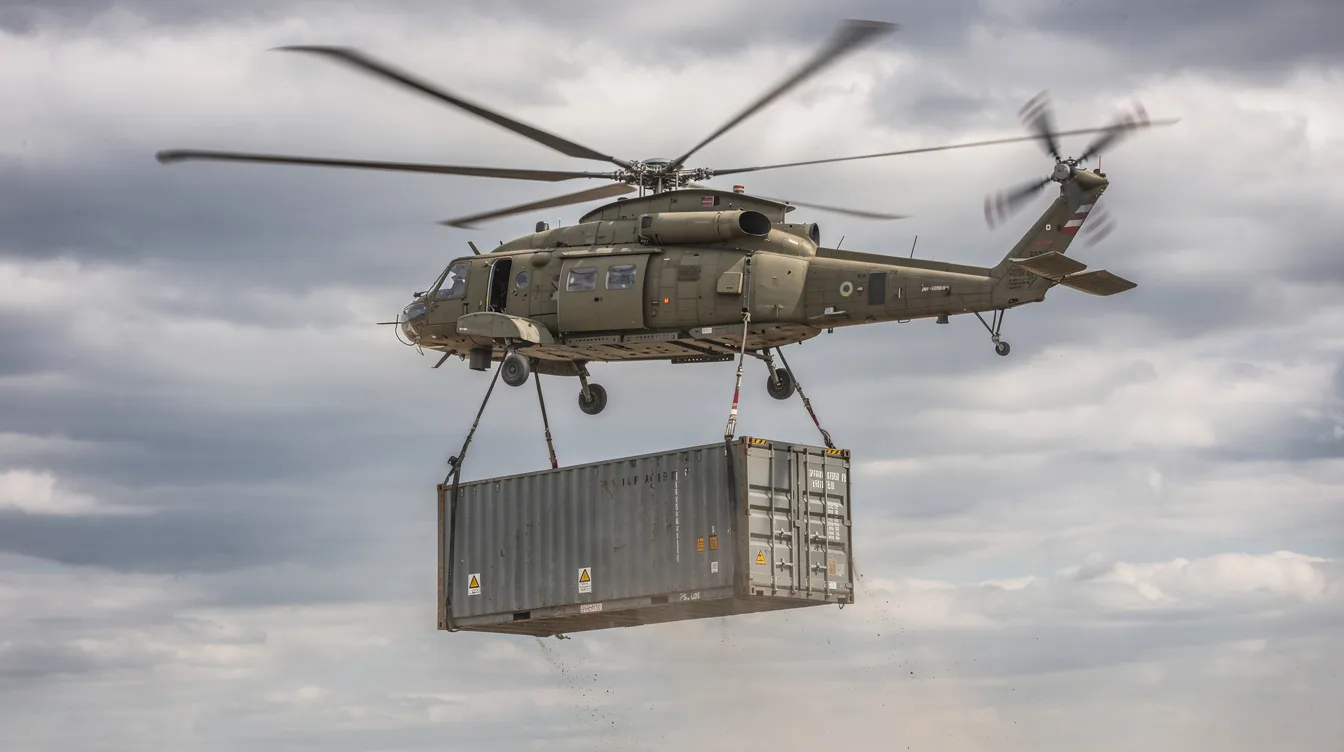
Military helicopters tend to be significantly heavier due to armour, avionics, and weapons systems. The UH-60 Black Hawk has an MTOW of roughly 22,000 lbs, while military helicopters like the CH-47 Chinook can carry 33–55 troops and reach an MTOW of about 50,000 lbs. The Boeing CH-54 Chinook can lift over 20,000 lbs of external cargo. These aircraft operate outside typical civilian charter fleets.
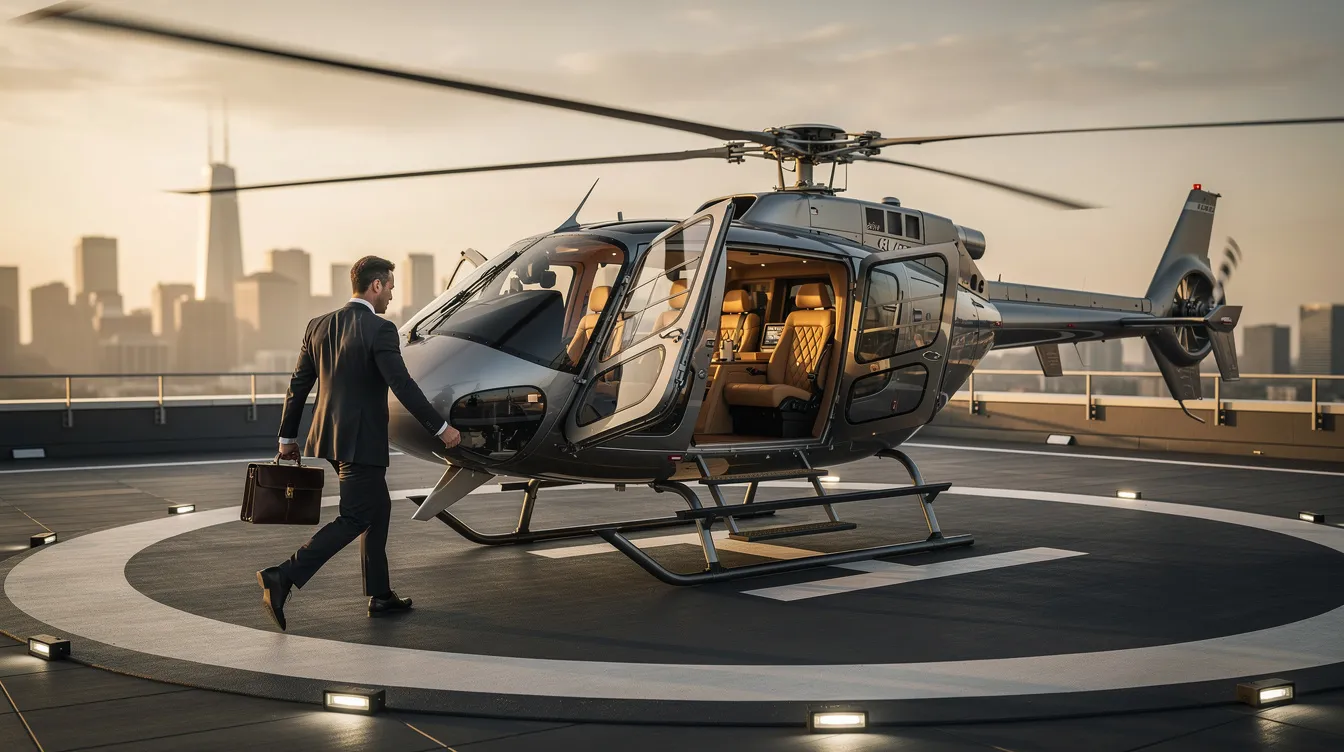
Many VIP configurations are based on medium helicopters such as the AW109, H145, and Bell 429. The Bell 429 has a maximum seating capacity of 1 + 7, making it suitable for small group transportation. Comparable models like the Eurocopter EC30 light utility helicopter offer different balances of payload and performance for short missions. Medium helicopters accommodate 5–10 passengers, while large helicopters can carry 11 or more passengers depending on interior layout. Soundproofing and luxury seat finishes increase empty weight but fit within the same certified maximum takeoff weight limits.
Named models make abstract weight figures concrete. Here is how several popular civilian and heavy helicopters compare when weighed side by side:
|
Model |
Approx. Empty Weight |
Approx. MTOW |
Typical Role |
|---|---|---|---|
|
Robinson R22 |
~880 lb |
~1,370 lb |
Training, short hops |
|
Robinson R44 Raven II |
~1,450 lb |
~2,500 lb |
Touring, light charter |
|
Bell 206B JetRanger |
~1,800 lb |
~3,200 lb |
Utility, news, charter |
|
Airbus H125/AS350 B3 |
~2,800 lb |
~4,960 lb |
Touring, utility |
|
Bell 429 |
~4,465 lb |
~7,500–8,000 lb |
VIP charter, EMS |
|
Sikorsky S-92 |
~17,000 lb |
~26,500 lb |
Offshore, SAR |
|
Airbus H225 |
~11,000+ lb |
~24,250 lb |
Offshore, heavy transport |
Heavy models like the S-92 and H225 are usually reserved for offshore and search-and-rescue roles rather than day-to-day private charters. Exact certified numbers can vary by configuration year, optional avionics, and national certification, so operators always reference the specific aircraft's flight manual during maintenance checks and flight planning.
Charter platforms like Jettly use these figures, together with passenger and route details, to recommend a helicopter that is neither oversized and costly nor underpowered for the mission. For fixed-wing travellers, Jettly’s jet card flight cost estimator applies similar logic, tying aircraft size, route, and operating limitations into a clear hourly rate. A typical helicopter selection balances the right capacity against the right operating cost.
For Jettly users, helicopter weight primarily matters because it drives capacity, range, and final charter price. A heavier aircraft burns more fuel per hour and may require larger landing areas, both of which influence the quote, and Jettly’s guidance on affordable private jet charter pricing explains how these factors translate into real-world costs.
Digital booking platforms request passenger counts and estimated baggage weight so that operators can verify weight and balance against empty weight and maximum gross weight before confirming a flight. Accurate information at booking prevents last-minute surprises, and structured private jet membership programs can streamline this process for frequent flyers.
Light helicopters are ideal for 2–4 passengers with light luggage on short hops-downtown-to-airport transfers or resort shuttles. Medium helicopters handle 5–8 passengers or heavier bags over longer sectors, and their twin-engine configuration adds a layer of safety and speed, especially when paired with a flexible NetJets alternative in Jettly’s charter model for mixed jet-and-helicopter itineraries or city pairs such as private jet charter services in Houston and private jet charter in Kolkata.
Jettly typically proposes the lightest suitable helicopter that stays comfortably within weight limitations for the intended route and conditions. This approach keeps efficiency high and cost reasonable, much like its broader role as a modern charter airline alternative platform across private aviation. Customers can explore instant pricing and the full range of helicopter and fixed-wing charter options at jettly.com, or join Jettly’s high-ticket affiliate referral program to earn commissions by introducing new charter clients.
Advances in materials and propulsion technology are changing how much helicopters weigh and how efficiently they use their allowable weight. Modern composite materials reduce empty weight while preserving structural integrity, allowing designers to keep maximum gross weight the same but increase useful load or improve fuel efficiency.
Emerging electric and hybrid-electric VTOL aircraft are being developed for urban air mobility. Battery weight currently limits range and payload, but improvements in energy density could reshape weight balance and cabin layout. Lower empty weight and more efficient propulsion may eventually improve operating economics for short-range charter, expanding options for on-demand urban and regional air transportation, alongside more traditional options like affordable aeroplane rentals and charter services.
While these aircraft are still in certification or early deployment phases as of mid-2026, platforms like Jettly monitor developments to understand when new aircraft categories might enter future inventories. For now, turbine-powered light and medium helicopters remain the workhorses of private helicopter charter, with newer models sometimes offered through shared and crowdsourced private flights that fill empty seats and optimise fleet utilisation.
These questions address common details about helicopter weight not fully covered above, and sit alongside broader considerations like choosing the best cross-country plane for long trips when helicopters are not the ideal fit or exploring on-demand private jet operators like Dexter Air Taxi for fixed-wing segments.
It depends on which figure you are looking at. Empty weight does not include usable fuel. Maximum takeoff weight does-it accounts for the aircraft, fuel, crew, and payload combined. When a helicopter is weighed during maintenance, it is typically recorded at its basic empty weight.
Operators generally ask for estimated passenger weights at booking. Some use standard per-seat assumptions (often around 170–200 lbs per adult), but accurate figures matter for safety and balance. On smaller light helicopters, even a 30 lb difference per person can affect performance at high altitudes.
Yes. VIP finishing, soundproofing, entertainment systems, and upgraded seating add to the aircraft's empty weight and reduce the useful load available for passengers, baggage, and fuel. The overall weight increase is typically a few hundred pounds, but on a medium helicopter it can mean one less passenger or less fuel for longer trips, even as services like Jettly Eats in-flight catering enhance the onboard experience without changing certified weight limits.
Structural and certification constraints usually prevent any major change to maximum gross weight or MTOW after the aircraft leaves the factory. Modifications that add weight-like auxiliary fuel tanks or additional equipment-reduce useful load rather than raise the certified ceiling, which is why prospective owners often consider affordable, lighter aircraft choices instead of pushing existing limits.
Helicopters weigh from under 1,000 lbs to well over 20,000 lbs in civilian operation, and key figures-empty weight, maximum gross weight, and maximum takeoff weight-determine how much weight they can safely carry. The right helicopter depends on intended use, passenger count, luggage, and the operating environment.
Understanding how much a helicopter weighs helps travellers make sense of aircraft suggestions and pricing when comparing charter options, and complements research into the cheapest private aircraft options for ownership or charter. Every figure matters, from the fuel load to the balance of cargo in the cabin.
Ready to find the right helicopter for your next flight? Explore options or request a quote at jettly.com.
Share this post:
Jay Franco Serevilla
Jul 20, 2026
|
5
min read
Discover tips and trends in the industry.

5
min read
Chesapeake Regional Airport (KCPK) Private Jet & Traveler Guide
Chesapeake Regional Airport (KCPK) is a premier destination for private and charter aviation in coastal Virginia, offering a 5,500-foot runway and dedicated facilities. This guide provides essential information for pilots and travelers, including booking options through Jettly, making it an ideal choice for efficient and private travel.
Read More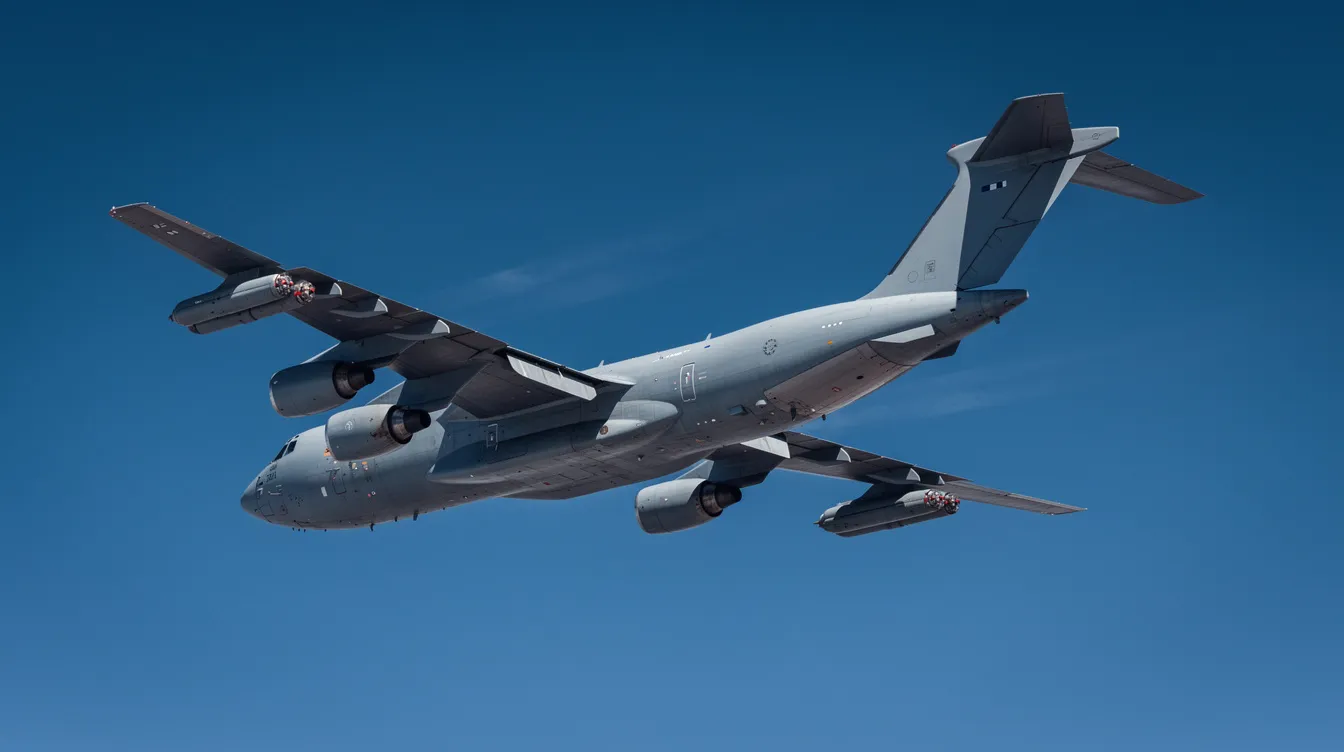
5
min read
KC-135 Accidents: History, Recent Crashes, and Safety Lessons
The KC-135 Stratotanker has a long history of accidents, with over 50 fatal crashes since its introduction in the 1950s. Recent incidents, including a crash in March 2026 that killed six crew members, highlight ongoing safety challenges in military aviation. Lessons learned from these accidents have led to significant improvements in training and operational procedures, benefiting both military and civilian aviation.
Read MoreStay updated with our latest insights and tips to elevate your journey with us.
MEMBERSHIPS AND ASSOCIATIONS



Disclaimer: Jettly operates as a charter broker, offering access to a global digital jet charter marketplace. Jettly is not a direct air carrier and does not own or operate aircraft. All advertised flights are conducted by third-party air carriers that are fully licensed and hold the appropriate Part 135 or Part 121 certifications issued by the Federal Aviation Administration (FAA) or equivalent regulatory authorities under U.S. or foreign law. Jettly complies fully with the U.S. Department of Transportation's Part 295 and Part 298 Charter Broker regulations. Jettly does not carry additional liability insurance. Passengers are covered by aircraft operator insurance. TICO: 50023770


