


Login
Get Instant Pricing On 23,000+ Aircraft

>
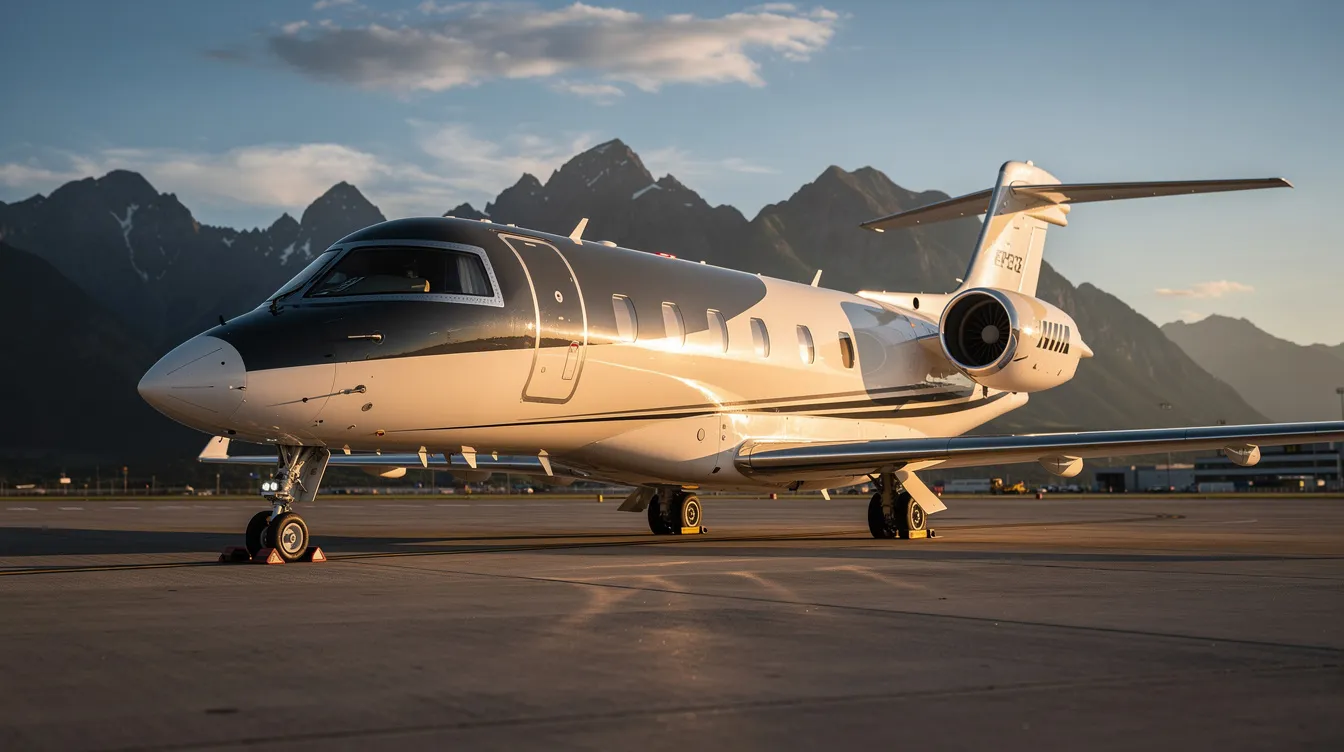
This guide explains how much private flights cost in 2026, breaking down pricing for frequent flyers, corporate executives, and families. You'll learn what factors drive private jet charter prices, see real-world examples, and discover ways to reduce your total bill. Whether you're new to private aviation or comparing quotes, this resource helps you understand and budget for private jet travel.
Private flight costs typically range from about $2,000 to over $20,000 per flight hour, depending on the aircraft category, and the final trip price often rises another 20% to 40% once taxes, airport charges, crew expenses, and positioning are added. If you've searched "how much does private flight cost," you've probably found vague answers and wide ranges. This guide cuts through the noise with a clear look at private jet charter pricing in 2026 for frequent flyers, corporate executives, and families weighing the convenience and flexibility of private travel without the burden of ownership.
Below is a detailed breakdown of hourly rates by jet size, real route examples, hidden fees, ways to reduce the total bill, and when membership programs make more sense than on-demand booking. Whether you're pricing a short domestic hop or a transatlantic mission, the numbers here reflect current market conditions and help you budget realistically, compare quotes fairly, avoid surprise charges, and choose the right aircraft for the trip.
The short answer: private flight costs typically range from $2,000 to over $20,000 per flight hour, depending on aircraft size and category. But the hourly rate is only the starting point. The total trip price — including taxes, airport fees, crew expenses, and aircraft positioning — is what actually hits the invoice.
Here are the key ranges and examples for 2026:
Private jet charter costs range from $2,000 to $14,000 per hour for most aircraft categories. Turboprop charters start at around $2,000 per hour, while heavy jet charters can cost $10,000 or more per hour.
A one-way private jet flight from New York to Miami on a light jet runs approximately $9,000–$14,000 all-in.
Los Angeles to Las Vegas on a very light jet or light jet costs roughly $6,000–$10,000 one-way.
New York to London on a heavy jet or ultra-long-range aircraft typically falls between $80,000 and $120,000+ one-way.
Total trip costs may exceed the hourly rate by 20% to 40% due to additional fees such as federal excise tax, landing fees, repositioning, and crew overnights.
Jettly is a digital private jet charter marketplace that shows transparent pricing with itemized breakdowns - so travelers see the full cost to charter before confirming a booking.
Private jet cost depends on a handful of core variables. Understanding these makes it easier to read a quote and predict where the final number will land.
Aircraft type significantly influences charter pricing. A turboprop on a 90-minute hop costs a fraction of what an ultra-long-range jet burns on a transatlantic crossing.
Flight duration directly affects private flight pricing. Longer routes mean more flight hours, more fuel, and higher total bills.
Distance to destination affects fuel consumption and costs, which is why a coast-to-coast trip on a heavy jet costs several times more than a regional shuttle.
Factors influencing private flight pricing include aircraft size and category, passenger count, trip shape (one-way, round trip, or multi-leg), and seasonal demand.
Charter costs largely depend on operational logistics and current market conditions. A holiday weekend with tight aircraft availability can push rates well above normal, though platforms that focus on affordable private jet charter pricing can help mitigate some of that volatility.
Most private jet charters are quoted per hour, but extras like the 7.5% federal excise tax on domestic flights, landing fees, crew costs, and aircraft positioning fees create variation between quotes for the same route.
Jettly's platform pulls real-time pricing from a global network of operators, so users can see how these factors shape their quote instantly using tools like the Private Jet Cost Calculator.
Hourly rates are the starting point for any private jet charter quote. The table below summarizes 2026 per-hour ranges across major aircraft categories.
|
Aircraft Category |
2026 Hourly Rate Range |
Typical Passengers |
Best For |
|---|---|---|---|
|
Turboprop |
$1,500–$4,000/hr |
4–8 |
Short regional hops under 2 hours |
|
Very Light Jet |
$2,000–$4,500/hr |
3–5 |
Quick city pairs, small groups |
|
Light Jet |
$2,500–$6,000/hr |
5–7 |
Regional domestic flights, 2–3 hours |
|
Midsize Jet |
$3,500–$8,500/hr |
7–9 |
Cross-country, 3–4 hour routes |
|
Super Midsize Jet |
$7,000–$12,000/hr |
8–12 |
Transcontinental, limited international |
|
Heavy Jet |
$8,000–$20,000+/hr |
10–16 |
Long international, overnight comfort |
|
Ultra Long Range |
$15,000–$28,000+/hr |
12–18 |
Nonstop intercontinental |
A few points to keep in mind:
Turboprop charters start at around $2,000 per hour and remain the most affordable entry point into private aviation.
Light jets typically cost between $2,600 and $3,500 per hour at the mid-range, though newer or recently refurbished airframes can push toward $6,000.
Chartering a midsize jet typically costs between $3,500 and $5,500 per hour for standard models, with hourly rates for midsize jets ranging up to $8,500 per hour for premium configurations.
Hourly rates for super-midsize jets range from $7,000 to $12,000 per hour, reflecting larger cabins and greater range.
Heavy jets can cost $8,000 to $14,000 per hour for common models, with hourly rates for heavy jets reaching $20,000+ per hour for top-tier aircraft like the Gulfstream G650.
The age of the airframe, quality of cabin refurbishment, and operator safety standards can all move an aircraft toward the top or bottom of these ranges.
Private jet cost per hour is a necessary reference point, but it is only one part of the full private jet cost calculation. For a deeper dive, see Jettly's guide to private jet hourly rates by aircraft category.
Jettly shows these per-hour ranges in search results and then converts them into an all-in estimate, so clients are not misled by the hourly quote alone.
Picking the right aircraft category matters more for cost than brand name alone. A client flying two people from Dallas to Austin doesn't need a heavy jet, and matching the mission to the right category is the fastest way to control spending.
Very light jets seat 3–5 passengers with a range of roughly 1,000–1,200 miles. Aircraft like the Embraer Phenom 100 or HondaJet are ideal for short hops into smaller airports.
Light jets carry 5–7 passengers and handle regional domestic flights of 2–3 hours comfortably. The Citation CJ3+ is a common example in this category.
Midsize jets accommodate 7–9 passengers and cover 3–5 hour routes. Midsize jets can accommodate 8 to 10 passengers on models like the Citation XLS+, often featuring full stand-up cabins.
Super midsize jets seat 8–12 and bridge longer nonstops or limited international routes. The Challenger 350 is a popular choice for business travel requiring coast-to-coast range.
Heavy jets carry 10–14 passengers over long distances with more amenities, including sleep-through cabins. Heavy jets can carry 10 to 16 passengers over long distances on models like the Gulfstream G450 or Falcon 7X.
Ultra long range jets seat 12–18 and offer nonstop intercontinental capability — think New York to Dubai or Los Angeles to Tokyo. The Global 7500 is one example.
VIP airliners can accommodate 30 to 50 passengers in luxury configurations, though these are specialized charter flights for large groups or corporate delegations.
For a full breakdown, visit Jettly's guide to aircraft classes explained. The platform's filters let travelers select an aircraft category first for budget or mission fit, then refine by specific aircraft model if desired.
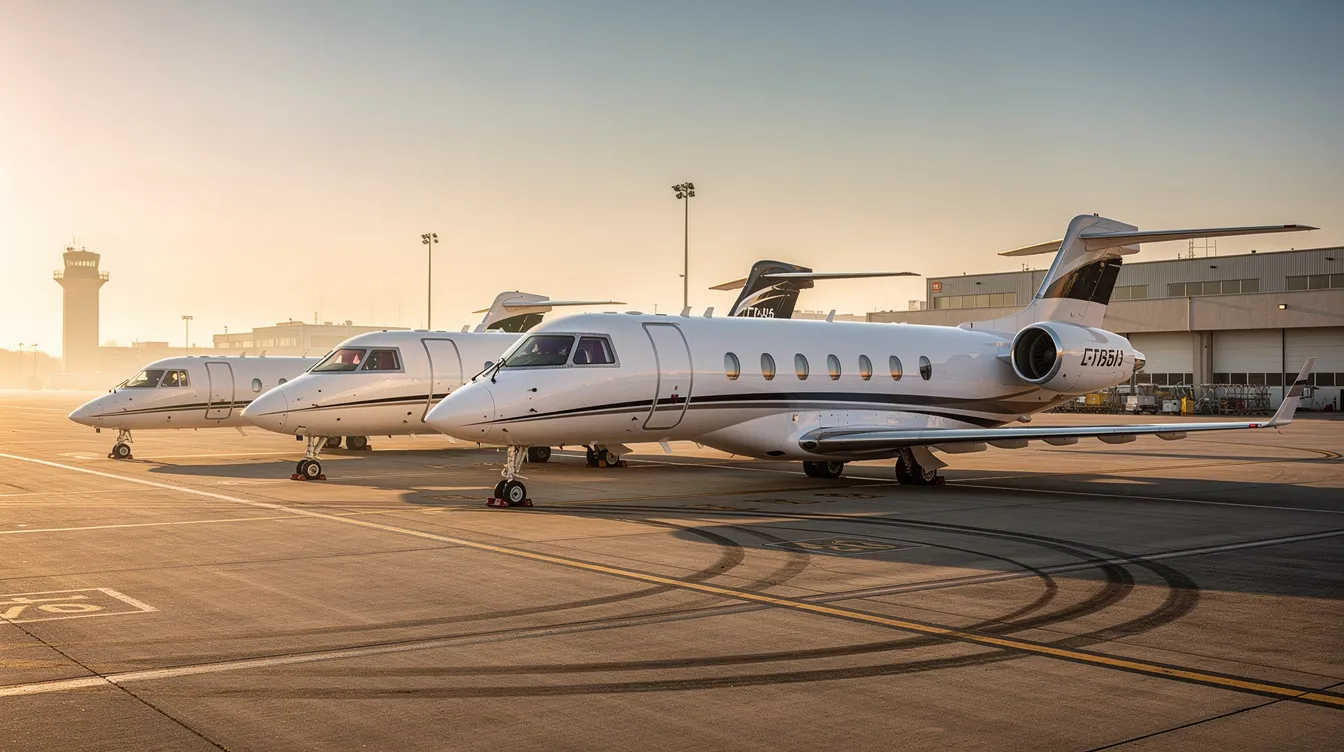
These are approximate all-in price ranges for popular routes in 2026, including base charter rate, typical positioning, and standard fees. Prices exclude optional extras like premium catering or limousine service.
New York (Teterboro) to Miami (Opa-locka) on a light jet: approximately $9,000–$14,000 one-way. Flight time is roughly 2.5–3 hours.
Los Angeles (Van Nuys) to Las Vegas on a very light jet or light jet: approximately $6,000–$10,000 one-way. A short hop of about 1–1.5 hours.
Toronto (Pearson) to Vancouver on a midsize jet: approximately $22,000–$32,000 one-way. A cross-country Canadian route of about 4.5 hours.
Chicago (Midway) to Aspen on a super midsize jet during ski season: approximately $25,000–$40,000 round trip over a weekend, factoring in crew overnight fees and hangar costs.
New York (Teterboro) to London (Luton) on a heavy jet: approximately $80,000–$120,000+ one-way, depending on specific aircraft and season.
For reference, a two-hour flight on a private jet can cost $8,000 to $37,000, depending on the aircraft category selected.
Flight prices may be higher on peak days — Christmas through New Year, Presidents' Day weekend, major F1 races, and events like Cannes or Art Basel Miami.
Jettly's platform can show multiple aircraft options and price points for the same route in seconds, making it easy to weigh flight time against budget. Round trip charters tend to cost roughly 1.6–1.9 times the one-way price rather than double, since return positioning is often eliminated or reduced.
Billable flight time is one of the most misunderstood elements of private jet flight costs. Many first-time charter clients assume they only pay for the minutes the aircraft is in the air. The reality is different.
Billable flight time generally runs from engine start to engine stop, covering taxi, takeoff, cruise, landing, and taxi-in. It does not start at wheels-up or end at wheels-down.
Operators holding a Part 135 air carrier certificate typically impose minimum billable hours per leg or per day — often 1.0 to 2.0 hours. A 40-minute hop can show as 1.5–2.0 billable hours on the invoice.
Short leg fees apply for flights under minimum billable time. This means very short private jet charter flights can carry an effective hourly rate far higher than the posted base rate.
Taxi time at congested departure airports like Teterboro or Van Nuys adds minutes that count toward billable time.
Aircraft positioning legs (flying the plane empty to your departure airport) are also billable, adding hours before passengers even board.
Jettly's itemized quotes clearly separate actual route time, positioning legs, and any daily minimum adjustments so clients can see exactly what is driving the number.
Aircraft positioning is one of the main reasons the total private jet cost differs between offers for the same route. It explains why two quotes for the same New York to Miami flight can be thousands of dollars apart.
Positioning (sometimes called a deadhead leg) happens when the aircraft isn't based at your departure airport. If a client departs from Teterboro and the jet is already at Teterboro, there's no positioning charge. But if the aircraft must fly in empty from Boston, that extra leg is billed to the client.
Positioning fees apply when aircraft must travel empty to the departure point. The farther the deadhead, the bigger the cost impact. Positioning costs apply if the aircraft is not based at the departure airport.
Positioning flights for empty legs may incur additional fees, but they also create opportunities. Empty leg flights are flights that need to happen regardless — the aircraft is repositioning anyway — and can be sold to flexible travelers at steep discounts.
Empty leg flights can save 25 to 75% off standard private jet rental rates, but they require flexibility on routing, timing, and sometimes aircraft type.
Empty-leg flights may provide significant cost savings for travelers who can adjust departure dates or accept nearby airports.
Jettly surfaces empty legs and nearby aircraft automatically, helping reduce or remove positioning fees when possible. This is one reason two quotes from different platforms can look dramatically different for the same route.
Government taxes and fees are non-negotiable line items on every private charter quote. They're easy to overlook when comparing headline rates, but they add up.
In the United States, Federal Excise Tax is 7.5% on domestic flights operated under Part 135. This applies to the base charter price and most accessorial charges. A per-passenger segment fee (approximately $5.30 per person per takeoff) also applies.
International flights may avoid U.S. FET but can incur overflight fees, customs and immigration handling, international handling fees, and country-specific government charges.
Example: a $20,000 domestic charter incurs roughly $1,500 in FET alone, plus segment fees, pushing the total closer to $21,600–$22,000 before optional extras or catering.
Reputable providers, including Jettly's partnered operators, itemize these taxes so clients see exactly how much goes to government charges versus operator revenue.
Taxes are a fixed part of private jet travel cost. They can't be negotiated, but they can be understood — and factored into any honest comparison of private jet charter prices.
Landing and handling fees vary significantly by airport. They're charged by the airport authority and the fixed-base operator (FBO) providing ground services, and they differ based on location, aircraft size, and congestion.
Landing fees range from $100 to $1,500 per flight. Smaller regional airports charge toward the low end, while busy hubs like JFK, LAX, or Teterboro can charge $1,000–$1,500+.
Ramp and handling fees (marshaling, ground crew, stairs, luggage service) typically run $150–$600 per stop, with fees at airports at major hubs charging even more for larger jets.
Airport choice impacts pricing due to varying landing and handling fees. Choosing secondary airports — Teterboro instead of JFK, Fort Lauderdale Executive instead of Miami International — can trim these line items and simplify ground transportation logistics.
Airport fees and handling costs are variable and affect pricing at every stop. Multi-leg itineraries with three or four landings accumulate these charges quickly.
Jettly's quote breakdown shows landing and handling fees as separate items so clients can compare the cost impact of different airport choices before booking.
When a trip requires the crew to stay overnight or the aircraft to remain away from home base, additional costs often apply. These are especially relevant for weekend getaways, multi-day business trips, or flights into remote destinations.
Crew expenses include overnight fees and per diems for pilots. Crew overnight fees can add $200 to $600 per crew member per night, depending on the city. A two-pilot crew staying two nights in Aspen during ski season could add $800–$2,400 to the trip.
Hangar fees range from $300 to $1,500 per night, depending on aircraft size and location. Winter destinations often require hangaring to avoid costly de-icing the next morning.
De-icing fees can vary from $1,500 to $15,000 based on aircraft size and conditions. At high-altitude airports like Aspen or Eagle-Vail in January, this is a real cost driver.
A weekend ski trip might add several thousand dollars in crew and hangar expenses compared with a simple same-day return flight.
Jettly's platform can present alternative trip structures — same-day out-and-back versus multi-day stay — so clients can see how overnight charges change the total private jet cost.
Fuel is one of the highest operational costs in private aviation, and fluctuations in jet fuel prices directly affect charter pricing.
Common additional fees include fuel surcharges and crew expenses. Many operators add fuel surcharges when jet-A prices exceed preset thresholds. Fuel surcharges start at around $300 per hour and can climb higher during price spikes, adding several thousand dollars to a transcontinental charter.
Sustainable aviation fuel (SAF) is increasingly part of the conversation in 2026. Some European and U.S. routes now show SAF premiums or environmental surcharges in response to mandates like ReFuelEU Aviation.
On a 5-hour transcontinental flight with a $500/hour fuel surcharge, that's an extra $2,500 on top of the base hourly rate — a meaningful addition to any private jet flight cost estimate.
Carbon offset options are available through some operators and platforms. Jettly allows users to ask about carbon-offset programs and clarifies any fuel or SAF-related surcharges in the quote details.
Environmental transparency in private jet travel is increasing across the private aviation industry, and line-item visibility on fuel and emissions costs is becoming standard practice.
Understanding what's inside the base price—and what falls outside it — prevents billing surprises after the flight.
The base price for most private jet charter flights typically includes:
Aircraft usage for the occupied flight hours
Crew wages for the flight
Standard fuel at current market price
Basic in-flight amenities: soft drinks, water, light snacks
Standard insurance and operator overhead
What is usually excluded or priced separately:
Premium or bespoke catering
Ground transport or airport limousine service
In-flight Wi-Fi on certain aircraft (especially metered connections on international flights)
Pet fees and extra cleaning
Overnight crew and hangar costs
Federal excise tax and government fees (sometimes included, sometimes listed separately)
Some quotes are labeled "all-inclusive" while others list each component separately. Travelers should always verify what "all-in" actually covers. Jettly's marketplace encourages operators to present clear inclusions and exclusions upfront so there are no surprises once the engines shut down.
Beyond the base charter price, optional services can meaningfully change the total bill. These aren't hidden fees — they're choices — but they need to be priced in advance.
Catering costs can range from $230 to $2,000 per leg depending on requests. A light breakfast spread for four costs far less than a multi-course dinner for ten with premium wine. Additional services like catering can increase overall charter costs significantly on longer flights.
In-flight Wi-Fi is sometimes included with the aircraft, but on some jets it's metered by the megabyte or sold in hourly packages. On long international flights, connectivity charges can reach several hundred dollars or more.
Cleaning fees can cost $250 and up after a flight, particularly if pets traveled on board or the cabin requires deep cleaning beyond normal turnover.
Ground transportation — from limousine pickups to helicopter transfers - is quoted separately. Some operators can arrange ground transport as part of the booking, but it's always an additional line item.
Special requests (custom floral arrangements, specific entertainment systems, child car seats) are typically quoted individually.
Jettly's booking flow lets travelers add these services during the quote stage and see their impact on total private jet cost in real time, keeping the process transparent.
Rather than thinking purely in hourly rates, it helps to anchor private jet rental cost to real-world trip profiles that match how people actually fly.
Very light jets: 2–4 passengers on a 1–2 hour hop like Los Angeles to Palm Springs. One-way all-in cost is often $5,000–$8,000.
Light jets: 4–7 passengers on 2–3 hour flights such as New York to Miami or Dallas to Scottsdale. Expect $9,000–$16,000 per leg depending on season and aircraft positioning.
Midsize jets: 6–8 passengers flying 3–4 hour routes like Toronto to Calgary or Chicago to Jackson Hole. Budget $18,000–$30,000 based on itinerary and whether crew overnights are needed.
Super midsize jets and heavy jets: 8–14 passengers on coast-to-coast or transatlantic missions. These range from $30,000 to well over $120,000 depending on distance, aircraft, and long-haul flight requirements.
A two-hour flight on a private jet can cost $8,000 to $37,000, depending on whether you're in a turboprop or a heavy jet—illustrating why aircraft category is the single largest price lever.
Matching the smallest suitable category to the mission saves thousands per flight. Jettly suggests the most cost-efficient aircraft category on each search and lets travelers trade up or down for more space or a lower price. For more on finding value, see the guide to cheap private jet charter prices.
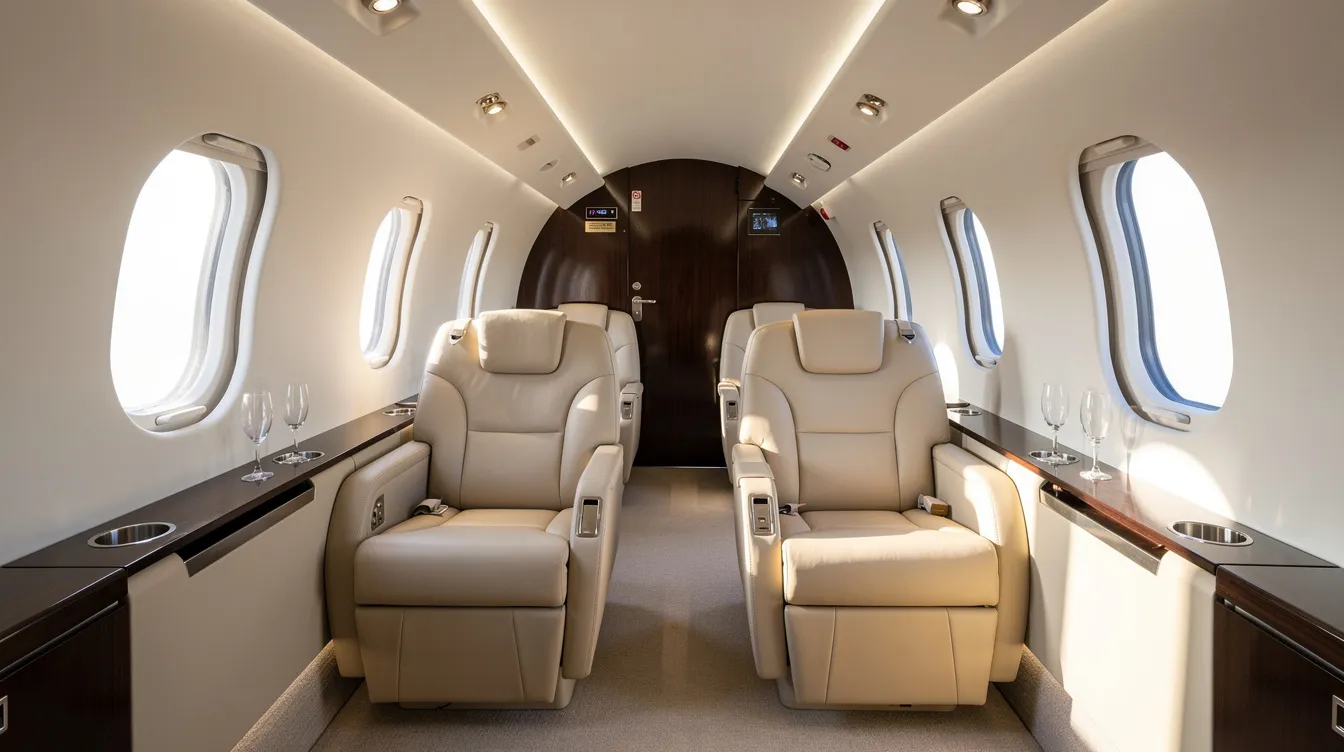
Timing and demand influence pricing for private jet charters more than many first-time flyers expect. The same route on the same aircraft can cost 30% more during a holiday weekend than on a regular Tuesday.
Demand factors such as holiday seasons can increase pricing. Late December, Thanksgiving week, Super Bowl weekend, Art Basel Miami, major F1 races, and international summits all drive surges.
Peak demand periods can increase charter costs by 20–40% above normal market averages. Aircraft availability tightens, especially for large-cabin and ultra-long-range jets.
Airport slots at key private aviation hubs like Teterboro, Aspen, and St. Barts become limited, sometimes forcing travelers onto less convenient airports.
Booking early can help secure better rates during peak travel. Travelers who lock in aircraft 4–8 weeks ahead of peak periods generally pay less and get better aircraft selection, especially when using tools like an airport locator and on-demand charter platform to compare options.
Jettly's marketplace can show fare trends over time and suggest alternate dates or nearby airports to help keep charter costs manageable during high-demand windows.
There are several models for accessing private aviation, and the right one depends on how often a person flies and how much flexibility they need.
On-demand private jet charters mean paying per flight with no fixed commitment. This model suits occasional flyers — those logging under 25–50 flight hours per year — who want maximum flexibility on aircraft type, routing, and timing.
Jet card programs offer prepurchased block hours (typically 25, 50, or 100 hours) at fixed hourly rates, sometimes with guaranteed aircraft availability. They suit travelers flying 25–100 hours per year who value rate predictability and may use a dedicated jet card flight cost estimator to model typical trip spend. For a detailed comparison, see the jet card pricing and rates guide.
Fractional jet ownership involves buying a share of a specific aircraft. It carries high acquisition cost, monthly fixed charges for hangar, maintenance, crew, and depreciation — making it viable mainly for travelers flying 200+ hours annually. For provider comparisons, see this overview of the best fractional jet ownership companies and learn more about fractional jet ownership cost.
A jet card membership can sometimes reduce the per-hour rate or waive certain fees, but travelers should compare total annual spend - not just headline hourly rates — before committing.
Some competitors rely heavily on jet cards with multi-year lock-ins, whereas Jettly focuses on digital on-demand private jet travel with optional membership benefits and no ownership complexity, positioning itself as a NetJets alternative for flexible flyers. Learn how to book a private jet through the platform's streamlined process.
Market data from late 2025 showed the average jet card hourly rate across several aircraft categories (inclusive of fuel surcharges and U.S. FET) at approximately $11,578, giving a useful benchmark for comparing charter access models.
For travelers weighing chartering a private jet against owning a private plane, the math almost always favors chartering unless annual usage is exceptionally high.
A new midsize or large private jet costs tens of millions of dollars. A Gulfstream G650, for instance, lists in the $70–80 million range before customization.
Annual fixed costs for a midsize jet — including crew salaries, hangar fees, insurance, maintenance, and regulatory training - can easily reach $1–$2 million per year, even before the aircraft flies a single hour.
Variable costs (fuel, wear and tear, inspections, unscheduled maintenance) add substantially with each flight hour, and depreciation further erodes the investment over time.
For those flying under roughly 200 hours per year, chartering is almost always more financially sensible. For a full breakdown, see the guide on how much it costs to purchase a private jet and a broader look at private jet costs across ownership, leasing, and charter.
Private jet charters through platforms like Jettly allow access to different aircraft categories for each trip—a light jet on Monday, a heavy jet on Friday — rather than being locked into a single owned jet's capabilities and operational costs.
Not all quotes are built the same. Here's a practical checklist for evaluating private jet charter prices on an apples-to-apples basis.
Compare quotes using the same dates, departure airport and arrival airport, aircraft category, passenger count, and requested services. Changing any variable makes comparison meaningless.
Check whether each private charter quote includes federal excise tax, landing fees, crew overnights, positioning, and catering - or lists them as separate items. A "lower" quote that excludes these will likely end up costing more.
Look at total trip price rather than just the per-hour number. One quote may show a lower hourly rate but include more billable hours due to aircraft positioning flights or higher daily minimums.
Ask how billable flight time is calculated. Does the operator use engine-on to engine-off? What are the minimum hours per leg or per day?
Verify the operator's safety credentials: a valid air carrier certificate, current insurance, and compliance with Federal Aviation Administration regulations.
Jettly's dashboard allows users to see and save multiple options side by side with transparent breakdowns that make fair comparison straightforward.
Flying privately doesn't have to mean paying top dollar on every trip. Several practical strategies can bring the total down without cutting corners on safety or comfort.
Choosing smaller aircraft that meet mission requirements can lower costs significantly. A turboprop or very light jet handles a 90-minute hop just as well as a midsize jet — at a fraction of the price.
Adjust the departure airport or arrival airport to reduce landing fees and positioning time. Smaller regional airports are often closer to your actual destination and cheaper to operate into than major hubs.
Booking flexibility can help reduce positioning and operational costs. Shifting departure by a day or accepting a nearby airport can unlock empty leg availability or off-peak pricing.
Combine multiple meetings or stops into one efficient itinerary rather than booking several separate direct flights. Multi-stop loops reduce repositioning and overnight charges.
For groups of 4–8 people on domestic trips, splitting the total cost of a light jet or midsize jet can approach or sometimes beat last-minute business-class fares on commercial airlines for busy routes.
Consider a shared flight option on popular corridors where operators offer per-seat pricing on scheduled private jet charter flights or use a crowdsourced private jet flight platform to share empty seats and reduce costs.
Jettly's platform can surface empty leg private jet flights, alternative airports, and aircraft options that naturally lower private jet cost without sacrificing safety or comfort.
The value of private jet travel isn't purely a dollars-per-mile calculation. For many, the return is measured in time, productivity, and flexibility.
Consider a team that needs to visit clients in New York, Cleveland, and Chicago in a single day. On commercial airlines, that loop would require overnight stays, layovers, and lost working hours. On a private jet, the team departs Teterboro at 7 a.m., lands at Burke Lakefront by 9 a.m., holds a meeting, flies to Midway by noon, takes a second meeting, and is back in New York by 6 p.m. - all without checking a bag or clearing security twice.
Time savings are the primary driver. Private flyers arrive 15–30 minutes before departure, skip TSA lines, and use thousands of smaller airports closer to final destinations. A commercial flight between two cities might save money, but it rarely saves time door-to-door.
Privacy matters for executives discussing sensitive deals, families traveling with young children, and medical travelers who need a controlled environment.
Access to airports unreachable by a commercial flight — ski resorts, small islands, remote business sites — is often the deciding factor for business and leisure travel alike.
Schedule control: cancellations, delays, and missed connections are largely eliminated. The aircraft waits for you, not the other way around.
Jettly's role is to make that time-saving value more accessible through transparent pricing and easy digital booking, bridging the gap between cost awareness and convenience.
Jettly is a global digital private jet charter marketplace giving charter access to over 20,000 unique private aircraft available for charter worldwide. This breadth means travelers can compare across aircraft categories, operators, and base locations for any given route, browsing a wide range of private charter aircraft suited to different missions.
The platform provides instant per-trip estimates with side-by-side comparison of aircraft categories and operators, showing clear line items: hourly rate, taxes, landing fees, positioning, crew overnights, and optional extras. No opaque markups.
Jettly supports on-demand private jet rental, empty leg flights, and membership options for frequent flyers who want predictable pricing without committing to a jet card from a single operator.
Safety is prioritized alongside cost. Partnered operators must hold valid Part 135 certificates (or equivalent international credentials) and meet audited safety standards. Lower private jet charter costs never come at the expense of compliance or crew quality.
The platform's Smart Match technology identifies the best-fit aircraft for each mission, factoring in passenger count, range, and budget to recommend specific aircraft that balance comfort and value.

So, how much does private flight cost in 2026? The answer depends on aircraft category, route, timing, and services — but here's the summary.
Expect roughly $2,000 to $18,000+ per hour depending on aircraft size. Typical one-way domestic flights range from about $6,000 to $40,000, while international flights on ultra-long-range jets often reach $80,000–$200,000+. For another angle on a single-trip budget, see this breakdown of one private flight cost and key drivers.
Final pricing hinges on aircraft category, actual flight time (including positioning), airport selection, federal excise tax and other mandatory fees, and optional services like premium catering and ground transportation.
Total trip costs regularly exceed the base hourly rate by 20–40% once all line items are included. Think in terms of an all-in trip budget rather than hourly rate alone, and always request itemized quotes.
The private aviation industry continues to grow more accessible through platforms that prioritize transparent pricing and digital convenience, making it easier than ever to understand what you're paying for before the wheels leave the ground.
Ready to see what your next private flight will cost? Explore aircraft options, compare private jet charter prices, and get an instant quote at https://www.jettly.com.
Share this post:
Jeff Ryan Serevilla
Sep 20, 2026
|
5
min read
Discover tips and trends in the industry.

5
min read
MYEN (Norman's Cay Airport) Guide for Private Jet Travelers
Norman's Cay Airport (MYEN) in the Bahamas is a small, unattended airport catering primarily to private jet travelers and charter flights. With its single paved runway and limited infrastructure, MYEN offers a direct and private access point to the beautiful Exuma Islands, making it ideal for travelers seeking a seamless arrival experience. This guide provides essential information on operations, safety considerations, and how to charter the right aircraft through Jettly.
Read More
5
min read
Gulfstream GV: Ultra Long Range Business Jet Guide
The Gulfstream GV is an ultra long range business jet designed for nonstop intercontinental travel, featuring a spacious cabin for up to 18 passengers. With a maximum range of 6,500 nautical miles and advanced avionics, it offers unparalleled comfort and efficiency for corporate executives and families alike. Chartering through Jettly provides a flexible, cost-effective alternative to ownership.
Read MoreStay updated with our latest insights and tips to elevate your journey with us.
MEMBERSHIPS AND ASSOCIATIONS



Disclaimer: Jettly operates as a charter broker, offering access to a global digital jet charter marketplace. Jettly is not a direct air carrier and does not own or operate aircraft. All advertised flights are conducted by third-party air carriers that are fully licensed and hold the appropriate Part 135 or Part 121 certifications issued by the Federal Aviation Administration (FAA) or equivalent regulatory authorities under U.S. or foreign law. Jettly complies fully with the U.S. Department of Transportation's Part 295 and Part 298 Charter Broker regulations. Jettly does not carry additional liability insurance. Passengers are covered by aircraft operator insurance. TICO: 50023770


