


Login
Get Instant Pricing On 23,000+ Aircraft

>
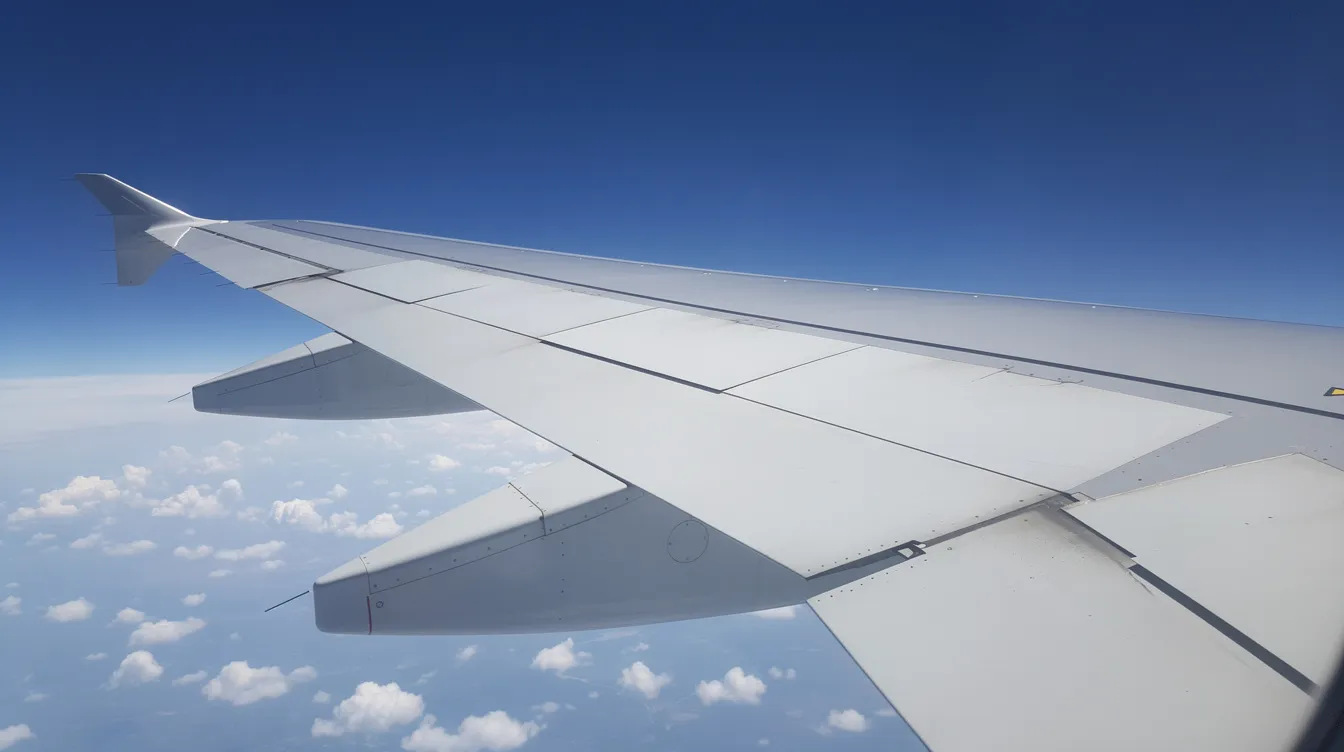
A Boeing 737 typically holds between 6,000 and 7,800 U.S. gallons of jet fuel, depending on the variant and whether auxiliary tanks are installed.
How much fuel a 737 holds depends on the specific model: the 737-800 carries about 6,875 gallons, while the 737 MAX 8 holds around 6,820 gallons in standard configuration.
All that fuel is stored mainly in the wings and a center tank, weighs tens of thousands of pounds, and is burned at roughly 750 to 900 gallons per hour during cruise.
Large long-haul jets like the Boeing 777 or 747 can carry several times more fuel, yet single-aisle aircraft like the 737 remain very fuel efficient on a per-passenger basis.
Modern jets achieve 70 to 100 miles per gallon per passenger, with a typical commercial jet burning 0.2 to 0.3 gallons per passenger per mile.
Newer jets, including the 737 MAX series, use 20 to 30% less fuel than older models, improving efficiency and reducing emissions.
Fuel capacity and fuel efficiency matter for private charters too. Platforms like Jettly help travelers compare aircraft and costs for missions where a smaller, more nimble jet makes better sense than a 737-sized airplane.
The Boeing 737 is the best-selling family of commercial jets in aviation history, with thousands of aircraft serving airlines on every continent. So how much fuel does a 737 hold? The short answer: a typical 737 carries roughly 6,000 to 7,800 U.S. gallons of jet fuel, depending on model and configuration, with a 737-800 holding about 6,875 gallons and a standard 737 MAX 8 around 6,820.
That number shapes how far the aircraft can fly, how much payload it can carry, what the flight costs to operate, and how airlines think about fuel efficiency and environmental impact. For aviation enthusiasts, frequent flyers, and business or leisure travelers comparing commercial aircraft with private charter options through Jettly, this guide breaks down fuel capacity across 737 variants, where the fuel is stored, how quickly it is burned, how the 737 compares with larger jets, and why those numbers matter when evaluating range, efficiency, and travel cost.
The name "Boeing 737" covers multiple generations, from the Original series that made its first flight in 1967 to the current MAX family. Fuel capacity varies by Boeing 737 model and generation, but most modern variants sit in the 6,000–7,800 gallon range.
Original and Classic Series models (737-100 through 737-500) hold between 4,720 and 5,311 US gallons of fuel. Next Generation models hold approximately 6,875 to 7,837 US gallons of fuel, with the higher figure reflecting auxiliary tanks. Boeing 737 models can include auxiliary tanks for extended-range versions, a feature often used on transcontinental or overwater routes.
The MAX series didn't dramatically increase tank size. Instead, Boeing focused on making the airplane more fuel efficient through new engines and a wider wingspan with split-tip winglets. MAX Series models typically hold around 6,820 US gallons of fuel.
To convert between weight and volume, keep in mind that jet fuel weighs about 6.7 pounds per U.S. gallon. When Boeing documents list fuel in pounds or kilograms, dividing by that density gives gallons.
|
Model |
Fuel Capacity (US Gallons) |
Fuel Capacity (Liters) |
Typical Max Range (nmi) |
|---|---|---|---|
|
737-300/400/500 (Classic) |
~4,720–5,311 |
~17,900–20,100 |
~2,000–2,400 |
|
737-700 (NG) |
~6,875–7,837 |
~26,000–29,700 |
~3,000–3,400 |
|
737-800 (NG) |
~6,875–7,837 |
~26,000–29,700 |
~2,900–3,100 |
|
737-900ER (NG) |
~6,875–7,837 |
~26,000–29,700 |
~2,800–3,000 |
|
737 MAX 8 |
~6,820 |
~25,800 |
~3,500–3,800 |
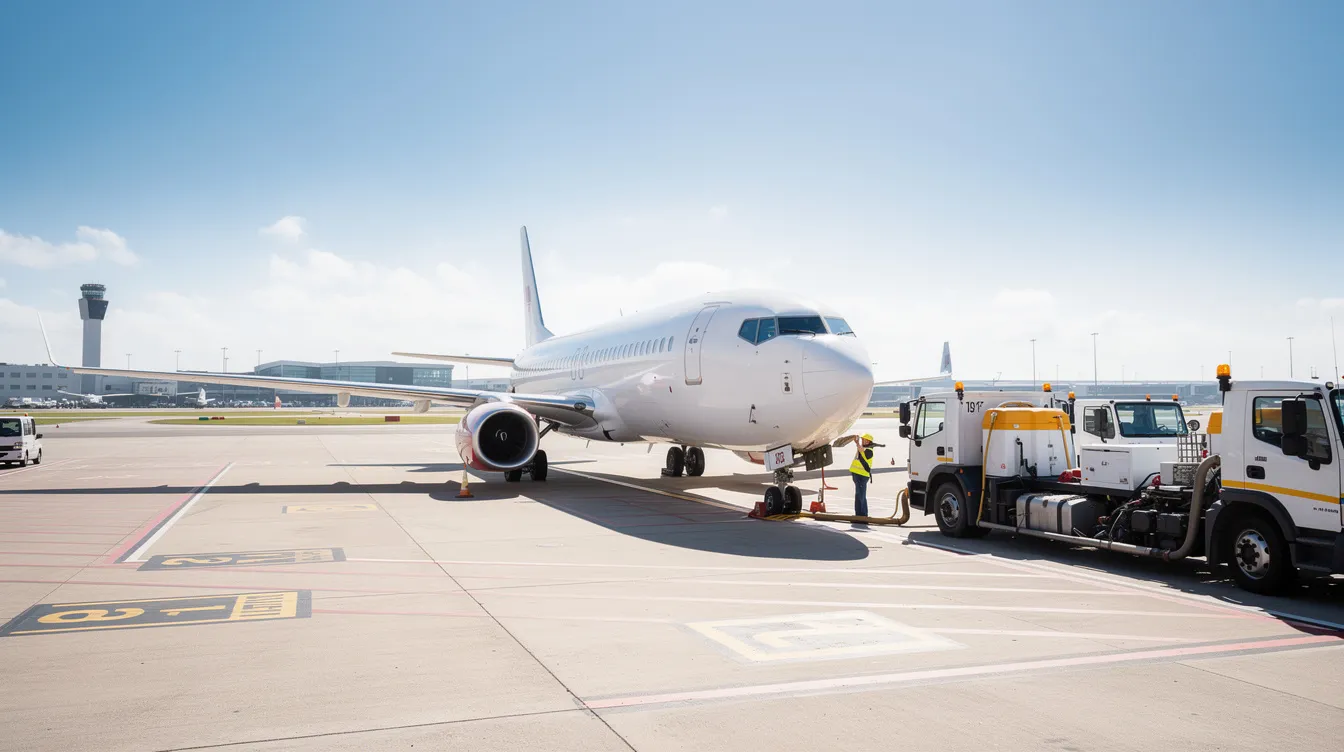
The Boeing 737-800 is one of the most widely used single-aisle aircraft in the world, operated by carriers like Ryanair, American Airlines, United Airlines, and many others among the largest operators globally. It's the stretched version of the 737-700 and a workhorse on short- and medium-haul routes, and airlines and charter customers value its Boeing 737-800 specs, range, and charter capabilities.
The Boeing 737-800 typically holds about 6,875 gallons of fuel in its main wing tanks and center tank. With two auxiliary tanks installed, that figure can climb to roughly 7,837 gallons. "Usable fuel" is slightly less than total tank volume because a small amount remains trapped in lines and tank sumps.
Key details for the 737-800:
The Boeing 737-800 can carry up to 189 passengers in a single-class layout.
A standard fuel load enables a range of roughly 2,900–3,100 nautical miles under typical conditions, though exact range shifts with payload, wind conditions, and required reserves.
On a New York–Miami flight (about 1,100 nautical miles, roughly 2.5–3 hours), a 737-800 might burn approximately 2,200 gallons total.
The 737-800 remains a benchmark for fuel use among single-aisle airliners, which is why many comparisons of fuel consumption and fuel capacity use it as the reference model.
The 737 MAX family (MAX 7, MAX 8, MAX 9, and MAX 10) shares similar fuel capacity with its predecessor but gains substantial efficiency through CFM LEAP-1B engines, lighter materials, and aerodynamic refinements.
MAX Series models typically hold around 6,820 US gallons of fuel in standard configuration, translating to about 25,817 liters or roughly 45,700 pounds. That's comparable to the 737-800's base capacity, but the MAX burns several hundred gallons less on equivalent routes thanks to its design improvements.
The efficiency gains are significant:
The 737 MAX achieves up to 14–20% better fuel efficiency than older 737 Next Generation models, depending on seating layout and airline operations.
Lower fuel burn per seat per mile directly reduces fuel costs and emissions for airlines.
If a 737-800 NG burns around 850 gallons per hour in cruise, a MAX 8 under similar conditions might burn closer to 720–750 gallons per hour.
Although Jettly primarily focuses on private jets rather than large commercial jets, the same drive toward fuel-efficient, newer aircraft also influences the business jet market available on the platform and the wide selection of private charter aircraft travelers can choose from.
Boeing 737 fuel is stored in three primary tanks: left wing, right wing, and center tank. This layout balances structural strength with center-of-gravity control throughout the flight.
Left and right wing tanks store fuel directly inside the structural cavities of each wing. The wings themselves are engineered to bear the weight of a full fuel load while in flight, and the fuel's position outboard helps reduce wing bending stress.
The center tank is located in the lower fuselage section between the wings. It doesn't always carry fuel on shorter routes, but it's filled for longer missions.
Some configurations add auxiliary tanks in the cargo hold area for extended-range operations, trading cargo space for extra range.
During flight operations, fuel from the center tank is used first to manage aircraft weight and keep the center of gravity stable. Once the center tank is depleted, fuel flow shifts to the wing tanks. This sequence is managed through cross-feed valves and fuel pumps monitored by pilots on the flight deck.
A small portion of fuel also powers the auxiliary power unit (APU) on the ground, running systems like air conditioning and electrical power before the main engines start for takeoff—a reminder that understanding how much it costs to fuel a private jet or airliner requires accounting for all phases of operation, not just time spent in cruise.
Even though a 737 can hold roughly 6,000–7,800 gallons, it rarely departs completely full except on longer routes. Airlines load only the fuel needed for the flight plan plus required reserves, because carrying extra weight burns more fuel.
A Boeing 737 burns approximately 750 to 900 gallons per hour during cruise, depending on weight, cruising altitude, and weather. That burn rate drops as the plane gets lighter throughout the flight.
Here's how fuel consumption breaks down by phase:
Takeoff and climb: These phases demand maximum thrust from the engines. Takeoff can consume 5–10% of total trip fuel. Taxiing and climbing use more fuel than cruising.
Cruise: Cruising is surprisingly efficient for fuel consumption. At altitude, the thinner air reduces drag, and the engines operate near their optimal speed.
Descent and landing: Fuel flow drops significantly as the airplane descends with engines at low power.
Worked example: A Boeing 737 burns about 2,200 gallons for a 2.5-hour flight. If the plane departed with a full standard load of ~6,875 gallons, roughly 4,600 gallons would remain after landing—more than enough for reserves and contingencies.
When fuel use is spread across a full cabin, the numbers become impressive. A typical commercial jet burns 0.2 to 0.3 gallons per passenger per mile, which can rival or beat the per-person efficiency of driving, especially when compared with the economics of affordable aeroplane rent and charter options in private aviation.
Modern jets achieve 70 to 100 miles per gallon per passenger, highlighting how fuel efficiency improves when passengers share the fuel burn.
A 737 is a single-aisle workhorse built for short- and medium-haul routes. Widebody, large long-haul jets operate in a different league when it comes to fuel capacity.
A Boeing 777-300ER holds approximately 47,700 US gallons of jet fuel.
A Boeing 787-9 carries roughly 33,000 gallons.
A Boeing 747-400 holds around 57,000 gallons—nearly eight times what a 737 carries.
These aircraft need that much fuel because their routes often stretch 7,000–8,000 nautical miles or more, connecting cities across the Middle East, North Africa, and beyond. Heavier maximum takeoff weight, larger fuselage dimensions, and more onboard systems all drive higher fuel requirements—factors that also shape the fleets of charter airlines and private operators offering long-range private flights.
|
Aircraft |
Approx. Fuel Capacity (US Gallons) |
Typical Max Range (nmi) |
|---|---|---|
|
737-800 / MAX 8 |
~6,820–7,837 |
~2,900–3,800 |
|
Boeing 787-9 |
~33,000 |
~7,600 |
|
Boeing 777-300ER |
~47,700 |
~7,300 |
|
Boeing 747-400 |
~57,000 |
~7,200 |
Despite burning much fuel in total, large jets can still be very fuel efficient per passenger because the fuel use is spread across hundreds of seats—the same principle that makes a full 737 efficient on shorter routes.
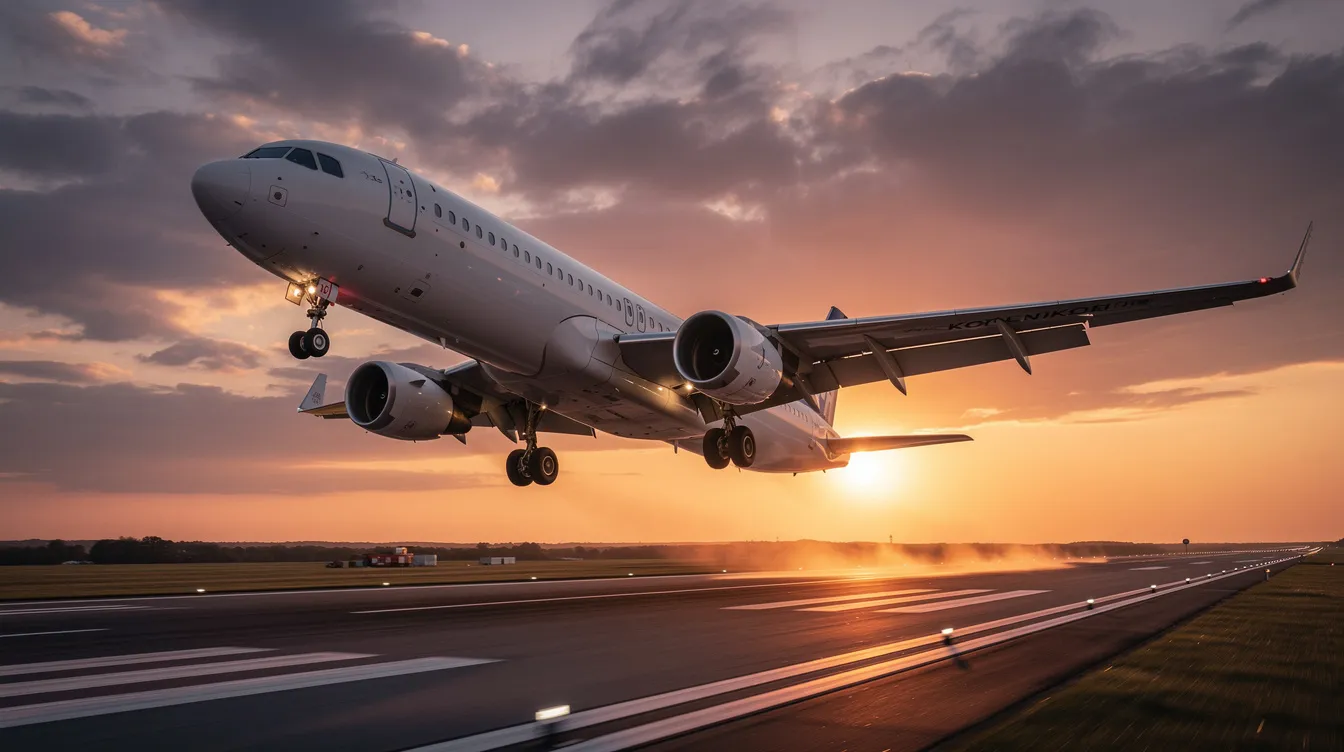
A 737 cannot always depart with maximum fuel and maximum payload at the same time. The aircraft's maximum takeoff weight imposes a hard ceiling, and runway performance adds further constraints.
Fuel capacity impacts the range and payload of the Boeing 737 in a direct trade-off, much like the variables that go into any private jet charter cost estimator when you change route length, aircraft size, or passenger load:
More fuel for a longer route may require limiting the number of passengers, baggage, or cargo.
Shorter routes can carry less fuel but load more payload, improving revenue per flight.
Planners factor in temperature, runway length, altitude, and obstacles to determine a safe takeoff weight for each departure.
Real-world scenario: At a hot, high-elevation airport like Denver in midsummer, the thin air reduces engine thrust and wing lift. A 737 might need to carry less fuel—or fewer passengers—to meet takeoff performance requirements, even though the tanks could technically hold more. On extreme days, airlines may offload cargo or plan a fuel stop at a lower-elevation airport along the way.
The landing gear and wing structure are designed for the certified maximum takeoff weight, so exceeding that limit is never an option regardless of how much fuel the tanks can physically hold.
Fuel is one of the highest costs in aviation, often accounting for 20–30% of an airline's operating expenses. Even a small improvement in fuel burn per flight multiplies across thousands of daily departures and directly influences affordable private jet charter pricing for travelers comparing options.
Newer aircraft like the 737 MAX improve fuel efficiency through:
Advanced LEAP-1B engines that deliver more thrust per unit of fuel
Lighter materials in the fuselage and wings
Split-tip winglets and refined aerodynamics that cut drag
Reduced emissions per seat compared with older 737 models
Airlines also manage fuel use through operational strategies: optimized flight plan routing, efficient taxi procedures, reduced-thrust takeoffs where runway length allows, and continuous descent approaches that minimize time at fuel-hungry low altitudes.
Airlines save millions by using newer, fuel-efficient aircraft across their fleets. Fuel costs directly impact airline ticket prices, so every gallon saved translates to better margins or more competitive fares. Many carriers are also exploring sustainable aviation fuel (SAF), including algae-derived biofuel blends, to further reduce their carbon footprint as global oil markets and regulatory pressure drive change, and similar cost and sustainability pressures drive interest in NetJets alternatives like Jettly on the private side of the market.
The same focus on fuel-efficient, newer aircraft and optimized routing applies in private aviation. Jettly's customers benefit when operators invest in modern jets with lower burn rates and cleaner emissions profiles.
Commercial jets like the Boeing 737 use kerosene-based jet fuel, not gasoline or automotive diesel. In North America, the standard is Jet A. Internationally, Jet A-1 is more common, with a slightly lower freezing point for high-altitude, long-duration flights, and the same fuel standards and regulations apply to Part 135 charter companies operating private jets.
Traditional jet fuel (Jet A/A-1) differs from aviation gasoline (AvGas), which powers small piston-engine aircraft and prop planes. Turbine engines on modern jets are designed specifically for kerosene-based fuel.
Jet fuel weighs about 6.5–7.0 pounds per U.S. gallon (roughly 0.8 kg per liter). A full 737 fuel load adds roughly 45,000–52,000 pounds to the aircraft's weight.
Pilots and dispatchers work primarily in kilograms or pounds when planning fuel, even though travelers tend to think in gallons or liters. Weight matters more than volume for performance calculations because it directly affects climb rate, speed, and range.
While Jettly's customers rarely charter a Boeing 737, they frequently fly on business jets whose fuel capacity and fuel efficiency follow the same underlying principles.
Smaller private jets and turboprops typically carry between a few hundred and a few thousand gallons of jet fuel. That's a fraction of what a 737 holds, but it's more than sufficient for common business routes like New York–Miami or London–Geneva—especially for frequent flyers who benefit from flexible private jet memberships.
Private travelers often prioritize time savings and airport access over raw fuel capacity. A light jet carrying far less fuel than a 737 can still be more convenient by using closer, less congested airports found with an airport locator tool and avoiding lengthy commercial flight-powered check-in procedures.
Jettly's digital platform helps customers compare aircraft types, approximate fuel-related costs, and overall charter pricing instantly, and tools like its jet card flight cost estimator give frequent flyers another way to benchmark trip budgets. Exact fuel planning always remains the responsibility of the certified operator and pilots, but transparent pricing lets travelers make informed decisions quickly.
Understanding how much fuel a 737 holds gives helpful context for appreciating how efficient and capable smaller charter aircraft can be for most private missions and for evaluating the best private jet charter companies when you compare them with commercial airline options.
Whether dispatching a 737 or arranging a private jet charter, fuel planning always considers capacity, reserves, route distance, and weather to ensure safety and efficiency.
Airline dispatchers plan fuel for a 737 in several categories, and private flyers can mirror some of that efficiency by using platforms that crowdsource private jet flights and share empty seats to keep aircraft fuller and per-seat costs lower:
Trip fuel: The amount needed to fly from origin to destination at the planned altitude and speed.
Contingency fuel: Typically 5–10% above trip fuel for unexpected deviations.
Alternate fuel: Enough to divert to a backup airport if needed.
Holding and final reserves: Fuel to circle the destination and maintain a minimum legal reserve upon landing.
Similar planning principles apply in private aviation. Charter operators and pilots perform comparable calculations based on the specific business jet or turboprop, balancing fuel load with passenger count and baggage weight, while travelers focus on how to get a seat on a private jet easily through memberships, apps, or shared flights.
Jettly simplifies the front-end experience for travelers by providing transparent pricing and aircraft options, while certified operators handle technical fuel calculations and regulatory compliance behind the scenes. Its jet card programs for frequent private flyers complement on-demand charter for those who travel often. Learn more about Jettly's charter options at https://www.jettly.com.
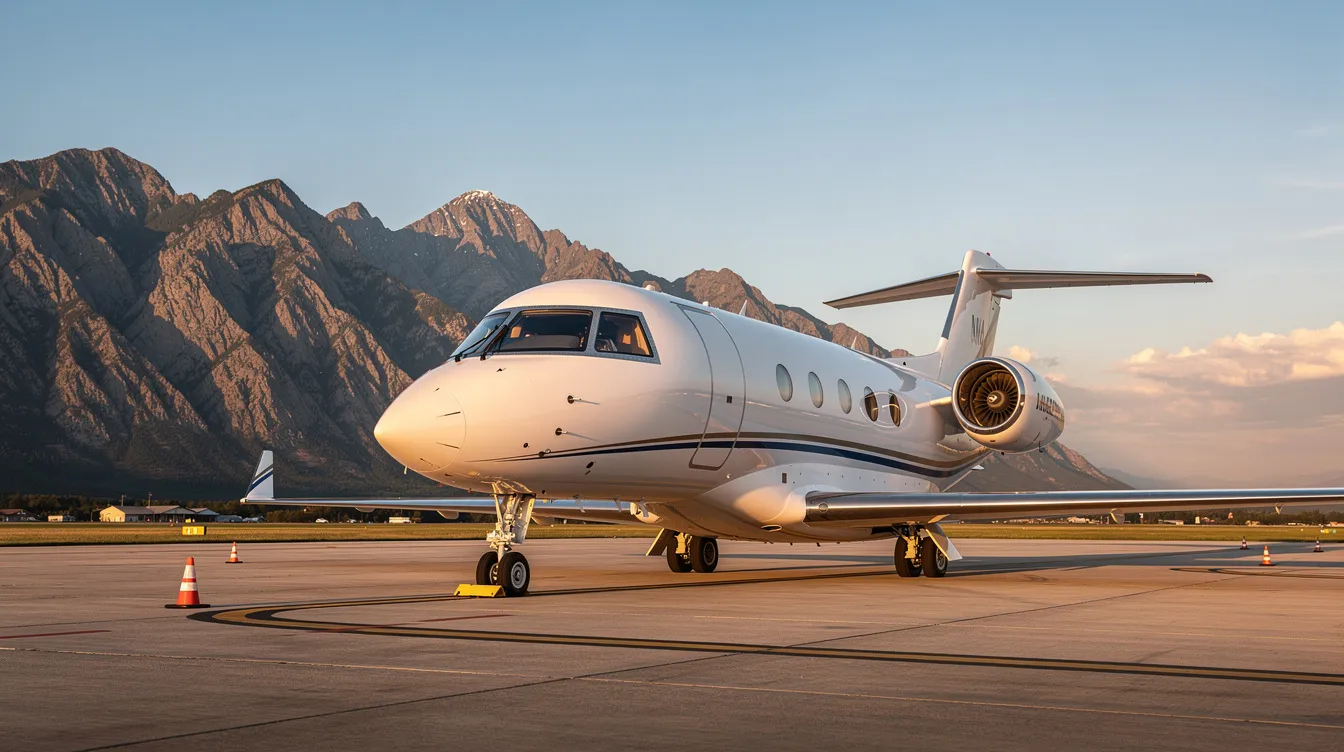
These FAQs address common follow-up questions about 737 fuel capacity, fuel use, and how commercial jet operations compare with private aviation.
Fueling a Boeing 737 at a commercial airport typically takes about 15 to 30 minutes, depending on how much fuel needs to be added, the flow rate of the fueling equipment, and standard safety checks performed by ground crews. A plane arriving with substantial fuel remaining from its previous flight will need less time than one requiring a near-full uplift. Airport-specific procedures and the number of available fuel trucks or hydrant connections also affect turnaround speed.
At a sample price of roughly $5.00–$6.00 per gallon of Jet A (prices fluctuate with global oil markets and regional taxes), filling a 737-800 with about 6,875 gallons would cost approximately $34,000–$41,000 at retail rates. Airlines rarely pay retail, however. Most carriers negotiate bulk fuel contracts and hedging arrangements that significantly lower their per-gallon cost. Actual fuel costs vary widely by region, season, and contract terms, and local conditions can be explored when planning private jet charter in Kolkata and other cities.
Airlines fill a 737's tanks to capacity only when the route demands it—typically longer flights near the aircraft's maximum range. On shorter routes, dispatchers load only the fuel required for the flight plan plus regulatory reserves. Carrying unnecessary fuel adds weight, which increases fuel burn, so loading less fuel on shorter trips is actually a deliberate efficiency strategy.
On a per-passenger basis, a full 737 carrying 160–189 passengers is generally more fuel efficient than a small private jet carrying 6–12 passengers. The commercial flight powered by those same engines spreads fuel consumption across many more seats. However, private jets offer distinct advantages—flexibility, privacy, access to smaller airports, and significant time savings—that make them the better choice for many business and personal missions, particularly on routes where private jet charter in New Delhi and other hubs can bypass congestion and connect closer to your final destination.
Most turbine-powered business jets use the same kerosene-based jet fuels (Jet A or Jet A-1) as commercial jets like the 737. The fuel type depends on engine design rather than whether the aircraft is used for airline or private service. Small piston-engine aircraft use a different fuel called AvGas, but virtually all modern jets—from light business jets to widebody airliners—run on the same class of turbine fuel, whether they're operated by major airlines or specialized providers like Dexter Air Taxi and other private charter operators.
A Boeing 737 typically holds roughly 6,000–7,800 gallons of jet fuel—enough to fly several hours while remaining surprisingly fuel efficient per passenger compared with everyday road travel. That fuel capacity, combined with modern engines and smarter aerodynamics, keeps the 737 family at the center of commercial aviation worldwide.
Fuel capacity figures vary by model (737-800 vs. 737 MAX and others), and airlines carefully balance fuel load with payload, cost, and environmental considerations on every flight. Understanding how much fuel a 737 holds helps frame the broader picture of how aviation manages its single largest operating expense.
While private jets carry much less fuel than a 737, smart aircraft selection and efficient routing via platforms like Jettly can still deliver impressive range and time savings for individuals and businesses, especially when paired with tailored services such as in-flight catering for private jets.
Ready to experience private travel on your terms? Explore flight options or request a quote at https://www.jettly.com.
Share this post:
Jay Franco Serevilla
Aug 9, 2026
|
5
min read
Discover tips and trends in the industry.

5
min read
Cessna 185 Takeoff Distance: Performance, Variables, and Real-World Planning
The Cessna 185 Skywagon is a versatile aircraft known for its impressive takeoff capabilities, requiring approximately 1,000 to 1,430 feet to clear a 50-foot obstacle under ideal conditions. Factors such as weight, density altitude, and runway surface can significantly affect these distances, making careful planning essential for safe operations. Understanding these variables is crucial for pilots and charter clients navigating remote airstrips.
Read More
5
min read
Private Plane India: How to Fly Private with Jettly
Flying private in India has become increasingly accessible for both business and leisure travelers. This guide provides insights on chartering private planes, including costs, benefits, and popular routes, making it easier to decide if private aviation suits your travel needs. With Jettly's platform, travelers can enjoy flexibility, luxury, and time savings while exploring over 20,000 aircraft options worldwide.
Read MoreStay updated with our latest insights and tips to elevate your journey with us.
MEMBERSHIPS AND ASSOCIATIONS



Disclaimer: Jettly operates as a charter broker, offering access to a global digital jet charter marketplace. Jettly is not a direct air carrier and does not own or operate aircraft. All advertised flights are conducted by third-party air carriers that are fully licensed and hold the appropriate Part 135 or Part 121 certifications issued by the Federal Aviation Administration (FAA) or equivalent regulatory authorities under U.S. or foreign law. Jettly complies fully with the U.S. Department of Transportation's Part 295 and Part 298 Charter Broker regulations. Jettly does not carry additional liability insurance. Passengers are covered by aircraft operator insurance. TICO: 50023770


