



Login
Get Instant Pricing On 23,000+ Aircraft

>
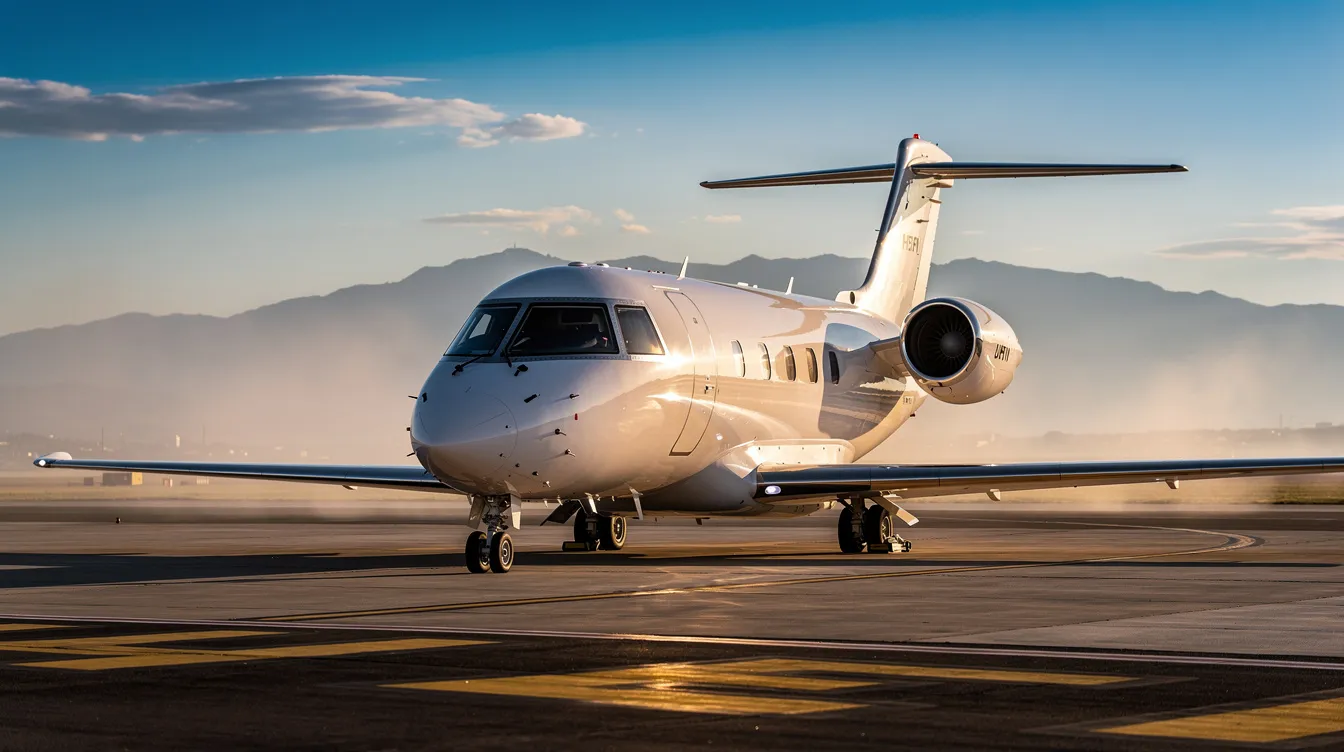
If you're wondering how much private jet hire costs, the short answer is that costs depend on the aircraft, route, and timing, but in 2026 private jet rental typically ranges from about $2,300 to more than $22,000 per hour, with many one-way domestic flights on light jets starting around $6,000 to $25,000. For corporate executives, high-net-worth individuals, and families comparing private charter for business or leisure, knowing those numbers upfront makes it easier to budget accurately, avoid surprise fees, and choose the right balance of speed, flexibility, and comfort without the burden of ownership.
This guide breaks down private jet hire costs by aircraft category, explains how pricing works beyond the hourly rate—including route variables, timing, taxes, and other fees—and shows where savings can come from, such as empty leg flights. It also compares on-demand charter with jet cards and ownership, and looks at how Jettly's digital marketplace makes pricing and booking more transparent.
How much does it cost to charter a private jet? The private jet cost per hour in 2026 breaks down roughly like this: turboprops from about $2,300, light jets from $3,500–$5,000, midsize jets $5,000–$8,000, super midsize jets $7,000–$10,000, and heavy or ultra long range jets from $10,000–$22,000+ per hour.
Hiring a private jet involves costs dictated primarily by hourly rates and variable trip fees. For a private jet charter flight, the quote is shaped mainly by aircraft type, flight time, and trip fees. A typical short trip when you rent a private aircraft means paying for the entire aircraft and crew rather than individual seats, and will often total $10,000–$25,000 depending on aircraft type and route.
Jettly operates as a digital private jet charter marketplace with access to over 20,000 aircraft globally, offering instant pricing so travelers can check real-time private jet prices for their specific route. Taxes, airport fees, and optional extras like catering are usually additional and can add roughly 10–30% on top of the flight-only price, sometimes more on complex international itineraries.
Most private jet charters are quoted per billable flight hour. The table below summarizes 2026 hourly ranges across common jet categories. Aircraft type affects hourly rates significantly, from $5,600 on certain light models up to $22,900 for top-tier ultra-long-range platforms.
|
Aircraft Category |
Typical Seats |
Typical Use |
Hourly Rate (2026) |
|---|---|---|---|
|
Turboprop (King Air 350i, PC-12) |
6–8 |
Short regional hops, small airfields |
$2,300–$3,500 |
|
Very Light Jet |
4–5 |
Short flights, lower cabin height |
|
|
Light Jet (CJ3, Phenom 300) |
6–8 |
Regional 2–3 hour legs |
$3,500–$5,200 |
|
Super Light Jet |
6–7 |
Slightly longer regional legs |
$3,750–$4,600 |
|
Midsize Jet (Citation XLS+, Learjet 60) |
7–9 |
Longer domestic, 3–5 hour flights |
$4,700–$7,500 |
|
Super Midsize Jet (Citation Sovereign+) |
8–10 |
Transcontinental, 4–6+ hour legs |
$6,200–$9,000 |
|
Heavy Jet (Challenger 604, Falcon 900) |
10–14 |
Larger groups, long-haul flights |
$8,500–$17,000 |
|
Ultra Long Range Jet (Global 7500, G700) |
12–18+ |
Nonstop intercontinental |
$12,000–$18,000+ |
|
VIP Airliner (BBJ, ACJ) |
19–50+ |
Head-of-state, large delegations |
$18,000–$23,000 |
Turboprops cost $2,300 to $3,500 per hour. Very light jets rent for $2,900 to $4,600 per hour. Midsize jets cost $4,700 to $7,500 per hour. Private jet rental costs range from $2,300 to $17,000 per hour for most categories, with VIP airliners sitting at the top of the scale.
These are averages. Actual private jet prices vary by aircraft age, configuration, region, and demand on the day of travel. Jettly's platform displays live per-hour estimates and total trip pricing before booking to maintain transparency and avoid hidden fees.
The cost to charter a private jet is determined by both the hourly rate and a set of trip-specific variables. Operational details and custom requests significantly influence private jet costs beyond the base number you see in a rate card.
Key cost drivers include:
Aircraft type and size. Aircraft size and range significantly affect private jet charter costs. A turboprop costs a fraction of a heavy jet per hour, and choosing a cabin larger than needed inflates the bill without adding value on shorter routes.
Flight distance and time. Flight distance and duration increase total billable hours and fuel costs. Flight distance significantly impacts overall charter costs, especially on routes requiring high cruise speeds or long-range nm coverage.
Passenger count. More passengers may require a larger, more expensive aircraft category with additional cabin space.
Airport choice. Landing fees, ramp handling, and FBO charges vary dramatically between major hubs and secondary airports. Choosing a private terminal at a regional airfield can lower airport fees considerably.
Timing and seasonality. Demand surges during peak travel seasons can limit aircraft availability. Prices can rise during holidays and major sporting events, sometimes by 10–20% over standard rates.
Repositioning. Positioning costs apply if the aircraft has to reposition from another base. These deadhead legs are billed at the same aircraft hourly rates even though no passengers are on board.
Special services. De-icing, premium catering, ground transportation, crew overnight lodging, and international overflight permits all add to the total.
A digital marketplace like Jettly can optimize these variables by matching each trip with the most efficient aircraft already positioned nearby, reducing repositioning cost and saving time.
Billable flight time usually includes taxi, climb, cruise, descent, and sometimes positioning legs, but not time sitting on the ramp between legs. Understanding this is essential because flight duration may incur minimum flight hours charged by operators, typically 1.5–2 hours per flight day regardless of actual air time.
Here's a concrete scenario: a day-return trip from New York to Boston on a light jet involves roughly 1 hour of air time each way. With taxi and ground movement, the block time might be 1.25 hours. But because of a 2-hour daily minimum, the client pays for 2 billable hours at the stated hourly rate, not 1.25.
Jettly's instant quotes clearly show estimated billable hours so travelers understand exactly how each billable flight hour is calculated. When estimating total hours for private jet hire, factor in both outbound and likely repositioning legs, particularly for one-way charter flight bookings.
Numbers in a table are helpful. But seeing how those numbers stack up on an actual trip makes the picture clearer. Below are three examples showing how base rates, landing fees, taxes, and extras combine into a final bill.
Base aircraft rate: ~$4,500/hr × ~2 hr each way × 2 legs = ~$18,000
Repositioning (if jet is not based near LA): $2,000–$6,000
Landing and handling at Aspen (snow operations) + LA FBO: $500–$2,000 per end
De-icing: $400–$1,500
Federal excise tax (7.5%) + segment fees: variable
Estimated round-trip total: $14,000–$20,000 for a day trip on a small light jet
Base rate: ~$6,000–$8,000/hr × ~2.75 hr each way × 2 = ~$33,000–$44,000
Airport fees, handling, catering, crew overnight if needed: several thousand more
Taxes and segment fees: 7.5% FET + per-passenger charges
A one-way flight from New York to Miami costs about $17,000 on a midsize jet; the round trip lands in the $30,000–$40,000 range under standard conditions
Repositioning flights can add high costs to a charter quote, especially when the aircraft's home base is far from the departure city. Final costs can exceed the base hourly calculation by 20% to 40% due to auxiliary fees including crew costs, handling, and government charges.
Base hourly: ~$15,000–$20,000 × ~7–8 hr flight time = ~$105,000–$160,000
International fees, overflight permits, customs, crew overnight, fuel premiums
Round trip could reach $200,000+ depending on aircraft model and season
Jettly's quotes group most of these line items into a single, all-in total so clients see a straightforward private jet cost for their itinerary.
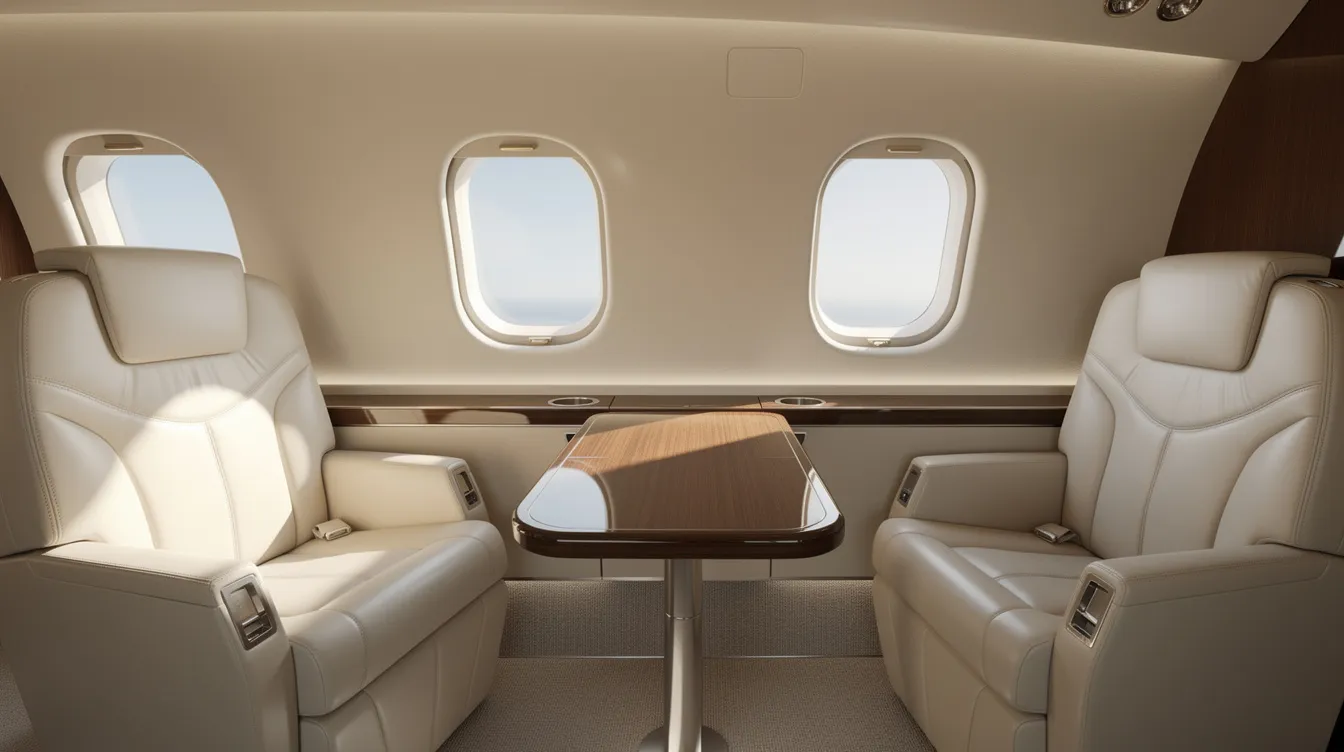
Some routes are chartered so frequently that price ranges are relatively consistent when using similar aircraft types. Here are approximate 2026 one-way price bands for weekday flights with standard luggage:
|
Route |
Light Jet |
Midsize Jet |
|---|---|---|
|
New York → Chicago |
$8,000–$12,000 |
$12,000–$18,000 |
|
Los Angeles → Las Vegas |
$8,000–$11,000 |
$12,000–$16,000 |
|
Dallas → Aspen |
$10,000–$15,000 |
$15,000–$20,000 |
|
Toronto → Vancouver |
$20,000–$30,000 |
$25,000–$40,000 |
|
London → Nice |
€12,000–€18,000 |
€18,000–€25,000+ |
Choosing a turboprop or light jet versus a larger aircraft can cut the trip's total cost significantly on short sectors, especially when you select convenient regional airports using an airport locator tool. For instance, a turboprop from LA to Vegas might run $5,000–$7,500, roughly half the midsize price.
These are illustrative "from" prices. Actual quotes vary with date, aircraft availability, and passenger count. Jettly's live pricing tool shows real-time figures for exact dates and routes.
Private jet charter service quotes generally include the aircraft, flight crew, standard fuel, and basic insurance. But base hourly rates rarely cover the entire bill. Here's what's typically bundled in and what's usually extra.
Aircraft rental at the stated hourly rate
Pilots and a flight attendant (on larger aircraft)
Fuel up to a specified reference price
Basic catering (water, coffee, light snacks)
Standard landing and handling at common airports during regular hours
Government taxes (U.S. federal excise tax at 7.5%, segment fees, VAT in Europe)
Positioning or ferry legs
Crew overnight lodging and per diem on multi-day trips - crew expenses can add thousands for multi-day trips
De-icing, premium in-flight catering services for private jets, in-flight Wi-Fi on certain aircraft
Hangar fees during weather events, customs handling on international flights
A 20% to 40% surcharge typically applies to the total cost due to additional services beyond the base rate. Jettly emphasizes transparent quotes, flagging potential variable items upfront so travelers can avoid surprises after the flight.
Some travelers worry about hidden fees in private jet rental, and the concern isn't unfounded. In parts of the private aviation market, quotes can omit charges that only appear on the final invoice.
Frequent "unexpected" charges include:
Last-minute de-icing or snow-removal fees
Short-notice schedule changes or cancellation penalties
After-hours airport surcharges and international permit fees
Fuel surcharges above a reference price during periods of jet fuel price volatility
Overnight crew accommodation when the flight crew exceeds duty-hour limits
These charges are often legitimate operational costs, but they should be disclosed in advance. Jettly's approach to transparent pricing means its quotes are designed to show all predictable costs in one place, with any as-incurred extras clearly labeled.
The best practice: always ask for an all-in estimate including taxes and potential surcharges when comparing private jet prices across providers.
Selecting the right aircraft category is one of the biggest levers for controlling private jet cost while maintaining comfort. Larger jets generally cost more to operate, so matching cabin space to actual passenger count and route length keeps spending in check.
Turboprops: Ideal for short hops under 2 hours and access to small or unpaved airfields. Cost-effective for regional passenger transport.
Very light jets: Budget-friendly for 2–4 passengers on flights under 2.5 hours. Lower cabin height but suitable aircraft for point-to-point hops.
Light jets: The workhorse for regional private flights - 4–7 passengers, 2–3 hour range, nm coverage.
Super light jets: Slightly more range and cabin space than standard light jets; good for medium-haul flights.
Midsize jets: Stand-up cabin, 5–9 passengers, comfortable on 3–5 hour legs. Great for coast-to-coast domestic flights.
Super midsize jet: Transcontinental range, full stand-up cabin, 8–10 passengers. Handles routes like New York to Los Angeles nonstop.
Heavy jets: 10–14 passengers, long-haul flights, separate living areas. Suited for routes like New York to London with a stop.
Ultra long-range jets: Nonstop intercontinental, Los Angeles to Tokyo, New York to Dubai. Maximum cabin comfort and range.
Flying a private aircraft that is larger or longer-range than needed often increases the price without adding value on short routes. Jettly's platform lets clients filter aircraft by category so they match capacity and range precisely to their trip.
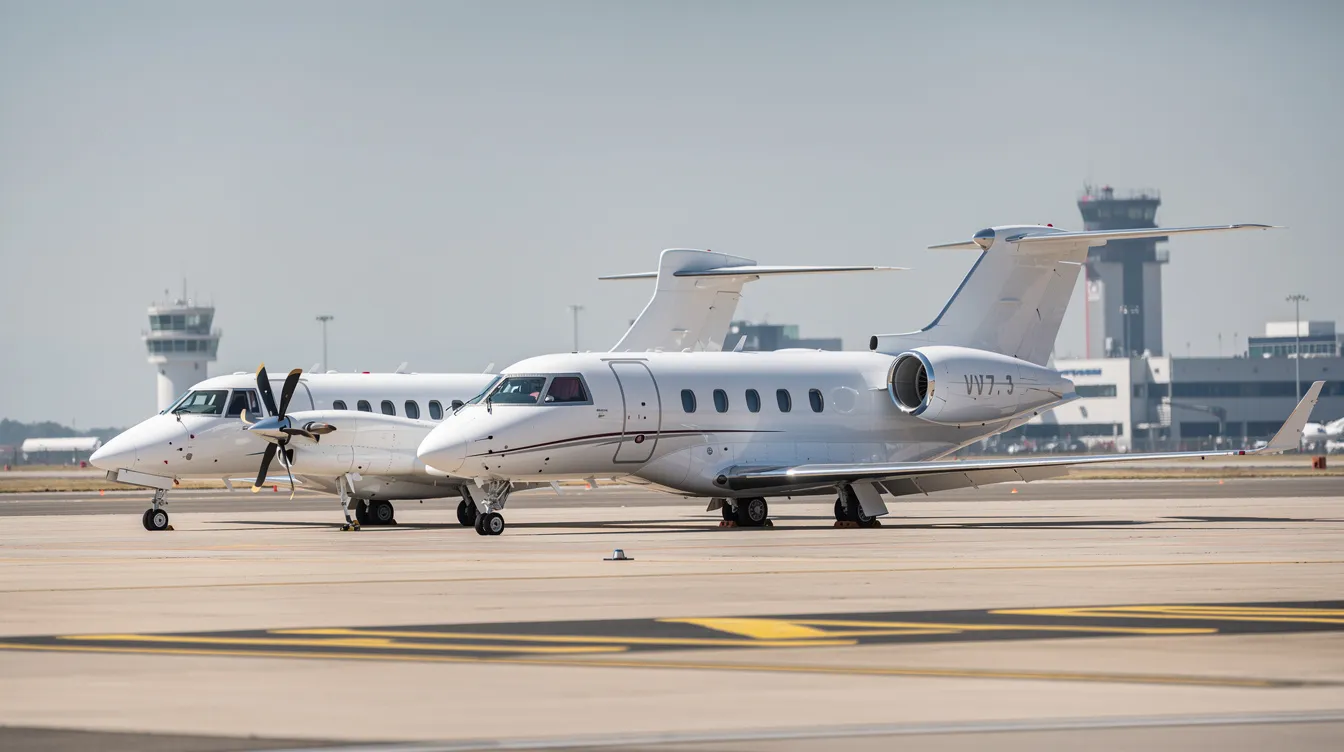
Light jets, super light jets, and midsize jets cover a large share of business and family trips in the private aviation market. Here's a closer look at each.
Models like the Cessna Citation CJ3+ seat 6–7 passengers comfortably and handle regional hops of 2–3 hours. They're the go-to for routes like New York to Miami or Chicago to Dallas. The cabin is compact but well-appointed, with enough luggage capacity for standard business bags.
Aircraft like the Embraer Phenom 300 sit between light and midsize categories. They offer slightly more range and cabin space than a standard light jet, making them cost-effective for medium-haul flights of 3–4 hours with 5–7 passengers.
The Citation XLS+ and Learjet 60 are typical examples. Stand-up cabins, enclosed lavatories, and room for 7–9 passengers make midsize jets the most efficient aircraft for 3–5 hour flights. They're popular for private charters on coast-to-coast U.S. routes or transatlantic legs with a fuel stop.
The comfort versus cost trade-off is real. Moving from a light jet to a midsize on a short 1.5-hour route adds several thousand dollars for cabin space that may not be needed. Jettly's advisors or digital tools can help first-time flyers compare these options quickly.
Heavy and ultra long range jets represent the top tiers of private jet travel, built for longer missions and larger groups.
Large jets rent for $8,500 to $17,000 per hour depending on model and configuration. Aircraft like the Challenger 604 or Falcon 900 carry 10–14 passengers with separate seating zones, galley service, and generous luggage holds. These are the standard choice for routes like New York to London (with a fuel stop) or Los Angeles to Honolulu nonstop.
The Gulfstream G700, Bombardier Global 7500, and Dassault Falcon 8X fly nonstop intercontinental routes, Dubai to London, New York to Tokyo, or São Paulo to Paris. VIP airliners cost $18,000 to $23,000 per hour and serve as flying offices or boardrooms for delegations and heads of state.
Their larger cabins, additional flight crew, higher aircraft weight, and greater fuel burn translate into higher overall private jet cost. But for 10+ passengers on long-haul flights, splitting the cost can bring the per-person price surprisingly close to commercial business class tickets.
Jettly provides options across multiple OEMs - Gulfstream, Bombardier, Dassault, and others - with transparent, side-by-side pricing where available, positioning itself as a flexible NetJets alternative for flying private.
On-demand private jet charters usually make economic sense for travelers flying under 50–75 hours per year. Beyond that threshold, structured jet card programs or fractional ownership may start to pencil out.
Ownership involves acquisition costs (often $3 million–$75 million), financing, depreciation, maintenance costs, hangar fees, full-time crew salaries, and insurance. Annual fixed costs alone can exceed $500,000–$1 million before the aircraft ever leaves the ground.
Jet cards and memberships typically require six-figure prepayments - often $100,000–$500,000+ - in exchange for fixed hourly rates and guaranteed aircraft availability. They suit frequent flyers who want rate predictability but are willing to commit capital upfront. For a deeper comparison, see Jettly's breakdown of jet card vs charter economics.
On-demand charter through a marketplace like Jettly offers access to thousands of aircraft without long-term ownership burdens. For many individuals and companies, paying per trip keeps private jet travel predictable and capital-light, though some may also evaluate longer-term options by reviewing private jet lease costs alongside charter pricing.
Jettly functions as a global digital marketplace where users can charter private aircraft on demand, similar to booking a car service, but for aircraft. Private jet charter offers instant pricing and flexible booking capabilities through Jettly's platform.
Key features include:
Access to 20,000+ private jets, turboprops, helicopters, cargo aircraft, and VIP airliners across 190+ countries
Aggregated operator options that surface competitive private jet prices, then simplify selection and booking in a single platform
Choice between pure on-demand access or optional memberships that may lower per-hour pricing for frequent travelers
Safety standards, regulatory compliance, and operator vetting built into the supplier selection process
Whether the trip is a short domestic hop or a long-haul international charter flight, Jettly matches travelers with suitable aircraft positioned nearby to minimize repositioning cost. Learn more about how to charter a private jet through the platform.
Structured programs and memberships can help frequent flyers predict or reduce private jet cost per hour. They typically offer benefits such as capped aircraft hourly rates, lower service fees, or priority access during peak periods.
Jettly's private jet membership offerings serve as an alternative to traditional jet cards and fractional ownership, with lower commitment and digital-first management. There's no need to lock in hundreds of thousands of dollars upfront; members get access to the same aircraft fleet as on-demand clients, often with improved pricing or booking priority.
Occasional travelers generally get better value from simple on-demand private jet charters without long-term agreements. But those who fly private multiple times per month should compare projected charter spend with available membership options and regional offerings such as private jet charter in New Delhi to find the most cost-effective structure.
Beyond the hourly aircraft cost, every private charter flight attracts a mix of government taxes and airport-related charges. These direct cost items can add roughly 10–35% to the base aircraft cost, depending on routing and jurisdiction, which is why using a jet card flight cost estimator or similar tool can be helpful when budgeting repeat routes.
Major items include:
U.S. Federal Excise Tax: 7.5% of the charter price on domestic flights
Domestic segment fee: $5.30 per passenger per takeoff and landing
International head tax: $23.40 per passenger for U.S. international departures
Landing fees and ramp handling fees at FBOs: these can significantly increase costs, ranging from a few hundred to several thousand dollars per landing depending on airport facilities and aircraft weight
Navigation and overflight charges on international routes
Fuel surcharges during periods of jet fuel price volatility
Domestic flights incur a 7.5% federal excise tax as a baseline. International legs add customs handling, permits, and potentially VAT in European jurisdictions.
Jettly's instant quotes incorporate known taxes and airport fees for the selected route so clients see a realistic all-in number. Travelers planning multi-leg international trips should request a detailed fee breakdown from their charter provider.
Private jets are premium travel. But there are practical ways to manage and reduce charter costs without sacrificing the experience, many of which overlap with broader strategies for affordable aeroplane rent costs and options.
Right-size the aircraft. Don't book a heavy jet for four passengers on a 90-minute route. A light jet or turboprop covers the same aircraft category at a fraction of the cost.
Travel on off-peak days. Midweek departures and non-holiday windows offer more aircraft availability and better rates. Booking during peak seasons increases private jet prices by 10% to 20%.
Use secondary airports. Choosing secondary airports can reduce landing fees significantly. Teterboro instead of JFK, Van Nuys instead of LAX, or Biggin Hill instead of Heathrow.
Book in advance. Booking 30 to 60 days in advance offers the best rates and the widest selection of suitable aircraft.
Share the cost. Sharing costs among passengers lowers individual expenses. A light jet at $12,000 split among 6 passengers is $2,000 each, competitive with last-minute commercial business class.
Book round trip. A round-trip charter often eliminates one repositioning leg, saving the cost of an empty ferry flight.
Use floating-fleet aircraft. Using floating-fleet aircraft can cut repositioning fees by 30%, since these jets are dispatched from wherever they happen to be rather than a fixed home base.
Jettly's marketplace lets clients experiment with dates, times, and aircraft types to see the impact on price instantly, a transparent pricing advantage.
Empty leg flights are repositioning segments with no passengers. When a jet drops off clients in one city and needs to fly back empty to pick up the next booking, operators offer those leg flights at discounted rates, often 25% to 75% off the full charter price.
Empty leg flights can save travelers 30% to 75% on what would otherwise be a standard charter, and some platforms even allow you to crowdsource private jet flights and share empty seats to lower individual costs further. According to 2026 industry data, the median empty leg listing price is about $8,600, and 78% of tracked empty leg flights come in under $10,000 for the whole aircraft.
The trade-offs are real: fixed departure times, limited route flexibility, and less choice over the same aircraft type. Flexibility is required for booking empty-leg flights, which makes them better suited to opportunistic leisure trips than rigid corporate schedules.
Example: a heavy jet repositioning from Miami to New York might be offered at a price closer to a midsize charter, $15,000–$20,000 instead of $30,000+. Empty leg flights can save up to 75% on costs in the best cases. They're a win-win for operators and customers: operators recover some direct cost on what would otherwise be a revenue-free flight, and travelers fly private at a steep discount.
Jettly surfaces available empty leg deals on its platform, making it easy for cost-conscious travelers to take advantage when plans align.
Flying within one country usually involves simpler tax and permit structures than crossing borders, which directly affects the price of private jet travel.
International flights may incur additional costs for overflight permits, customs handling, longer flight crew duty days, and higher fuel or ground charges in certain regions. Crew costs, navigation fees, and airport facilities charges tend to be higher at foreign airports with limited general aviation infrastructure.
Regional pricing differences also matter. A midsize jet at roughly $7,000 per hour in the U.S. private aviation market might cost 10–20% more for similar operations in parts of South America, Africa, or remote island nations due to limited aircraft availability and support services.
Jettly's global network helps locate aircraft already based in the desired region, reducing repositioning cost where possible, a significant advantage for international flights where the nearest available jet might otherwise be hundreds of miles away, much like dedicated air taxi-style private jet operators focused on efficient positioning.
On a purely ticket-by-ticket basis, commercial airlines' first class is usually cheaper than hiring an entire aircraft, something explored in detail in guides on how much it costs to rent a private jet. The value case shifts when multiple travelers fly together.
Consider a light jet at $12,000 one-way for 6 passengers from New York to Miami. That's $2,000 per person. Six last-minute commercial flights in business class on the same route can easily exceed $2,500–$4,000 each, making the private jet charter more cost-effective for the group.
Non-price benefits matter too: time savings via private terminals (no security lines, no boarding gates), the ability to use smaller airports closer to the final destination, flexible departure times, and privacy for meetings or family travel. For executives and teams, the productivity gain and schedule control often justify higher nominal travel cost compared to commercial flights.
Jettly's transparent quotes let travel managers compare private jet rental costs side-by-side with corporate travel budgets for commercial options.
Traditional bookings via phone brokers make it hard to compare multiple aircraft and price options quickly. A single quote request can take hours or days, and comparing across providers requires repeating the process.
Jettly aggregates thousands of private jets and operators, enabling instant price discovery and comparison for private charters worldwide, similar in scope to an ultimate list of charter airlines and private flight options. Features include real-time aircraft availability, photos and specs, safety information, and digital contracts and payments.
The benefits are practical: cost transparency, fewer manual quote requests, and the ability to adjust dates and aircraft types to see updated pricing in seconds. Clients who want to fly private can explore light jets, midsize jets, heavy jets, or even VIP airliners across 190+ countries from a single screen.
Jettly is a straightforward way to understand and control private jet cost without the complexity of ownership structures, lengthy jet card commitments, or opaque broker markups.
Reputable operators must comply with aviation authority regulations - FAA Part 135 in the U.S., EASA in Europe - which involve high fixed costs for maintenance, crew training, safety audits, and insurance.
Higher safety standards and maintenance practices increase operating costs but are non-negotiable for serious providers in the private aviation industry. These safety-driven expenses are built into the hourly rate and partly explain differences between unusually low quotes and market-average pricing.
Travelers should prioritize certified operators and private aircraft over suspiciously cheap options. Jettly works only with vetted operators that meet relevant safety and regulatory requirements in their regions, so every aircraft available on the platform has passed a baseline screening before it's offered to clients.
Private jets carry a higher per-passenger carbon footprint than most commercial flights, and anyone weighing price should also understand the broader picture of private jet emissions and their impact. Cost-conscious travelers are increasingly environmentally conscious as well.
Newer, more fuel-efficient aircraft - particularly the most efficient aircraft in the light jet and turboprop categories - reduce both emissions and fuel burn. In some cases, this also lowers private jet cost per hour or per mile because less jet fuel is consumed. Options like carbon offsetting programs and Sustainable Aviation Fuel (SAF) are becoming more available, with some operators partnering with environmental initiatives.
Jettly can help identify efficient aircraft types and routes. Grouping passengers on a single charter is inherently more efficient than booking multiple commercial itineraries or sending half-empty large cabins on short routes. When deciding between aircraft categories, choosing a smaller, well-utilized model over a large underfilled cabin reduces both cost and environmental impact.
Private jet rentals typically cost anywhere from $2,000 to $20,000+ per flight hour. Turboprops start around $2,300 per hour, light jets around $3,500–$5,000, midsize jets $4,700–$7,500, and heavy or ultra-long-range jets $10,000–$22,900+. VIP airliners cost between $18,000 and $23,000 per hour.
Most private jet charters are priced per hour for the entire aircraft, not per seat. A typical one-way trip on a light or midsize jet starts around $6,000–$12,000 for shorter routes and climbs from there.
Private jet prices depend mainly on aircraft size, route distance, aircraft availability, and taxes or fees such as landing fees and handling charges. Final costs can exceed the base hourly calculation by 20% to 40% due to auxiliary fees.
Jettly offers instant, transparent pricing on 20,000+ aircraft worldwide, designed to show all predictable costs in one place so travelers avoid surprises.
Travelers can reduce private jet costs through empty leg flights (saving 30% to 75%), right-sizing the aircraft, booking on flexible dates, and choosing secondary airports with lower fees.
Below are answers to questions frequently asked by first-time and occasional private jet travelers.
Two to four weeks' notice is often a sweet spot for balancing aircraft availability and cost. During peak periods - holidays, major sporting events, year-end travel - booking 30 to 60 days ahead typically gives better rates and more aircraft options. Genuine last-minute flights are possible through Jettly, but they may carry a premium unless an empty leg flight happens to match the route and timing.
Because of daily minimums, even very short hops can start around $6,000–$8,000 on a turboprop or light jet once taxes and fees are included. Providers usually apply a 1.5–2 hour minimum, so a 30-minute flight is billed at the minimum number of hours times the hourly rate. One way to make better use of those minimum hours is to combine several nearby meetings into a single-day itinerary.
Standard private jet charters price the entire aircraft, not individual seats, so the per-person cost falls as more passengers share the flight. "Shared private jet" or shuttle-style services exist on some busy routes, but they're a different model than traditional on-demand charter and may follow approaches like buying a seat on a private jet. Jettly primarily focuses on whole-aircraft charters, though customers can split costs within their own group to lower each person's share.
Most private jets are pet-friendly, which is a significant advantage over commercial airlines. Operators may add cleaning fees or require certain documentation, which can slightly increase total cost. Heavy cleaning after accidents or extensive shedding may result in additional post-flight charges. Travelers should declare pets when requesting a quote through Jettly so a suitable aircraft and accurate pricing are provided from the start.
Standard luggage itself doesn't typically add direct fees. However, heavy or oversized baggage - ski equipment, film gear, golf bags - may require a larger aircraft with higher aircraft hourly rates. For example, bulky sports equipment could push a trip from a light jet into a midsize category, increasing overall price by several thousand dollars. Sharing luggage details at the quote stage helps Jettly's team select an aircraft that balances capacity, safety, and budget.
Private jet hire in 2026 typically ranges from roughly $2,300 to over $22,000 per hour depending on aircraft, route, and timing. The main variables are aircraft size, total billable hours, taxes and airport fees, and optional extras, and understanding these helps travelers budget accurately.
Jettly's digital platform simplifies private jet rental by offering instant, transparent pricing on a global fleet with no hidden fees. Whether it's a short domestic hop or a nonstop intercontinental mission, the platform matches each trip with the right aircraft at a clear, upfront price.
Ready to experience private travel on your terms? Explore flight options or request a quote at Jettly.
Share this post:
Jay Franco Serevilla
Oct 21, 2026
|
5
min read
Discover tips and trends in the industry.
5
min read
Bell 407 Operating Cost Per Hour: Complete Owner and Charter Guide
The Bell 407 is a versatile light helicopter known for its reliability and efficiency. Understanding its operating cost per hour is crucial for potential owners and charter operators, as it varies based on fixed and variable expenses. This guide provides a comprehensive breakdown of costs, helping you make informed decisions about ownership or chartering.
Read More
5
min read
Medevac Flight Cost: What a Medical Evacuation Really Costs in 2026
In 2026, medevac flight costs range from $25,000 for short domestic transfers to over $200,000 for complex international missions. Factors influencing pricing include distance, aircraft type, and patient medical needs. Understanding these costs is crucial for families facing urgent transport decisions, especially when insurance coverage varies significantly.
Read MoreStay updated with our latest insights and tips to elevate your journey with us.
MEMBERSHIPS AND ASSOCIATIONS



Disclaimer: Jettly operates as a charter broker, offering access to a global digital jet charter marketplace. Jettly is not a direct air carrier and does not own or operate aircraft. All advertised flights are conducted by third-party air carriers that are fully licensed and hold the appropriate Part 135 or Part 121 certifications issued by the Federal Aviation Administration (FAA) or equivalent regulatory authorities under U.S. or foreign law. Jettly complies fully with the U.S. Department of Transportation's Part 295 and Part 298 Charter Broker regulations. Jettly does not carry additional liability insurance. Passengers are covered by aircraft operator insurance. TICO: 50023770


