


Login
Get Instant Pricing On 23,000+ Aircraft

>
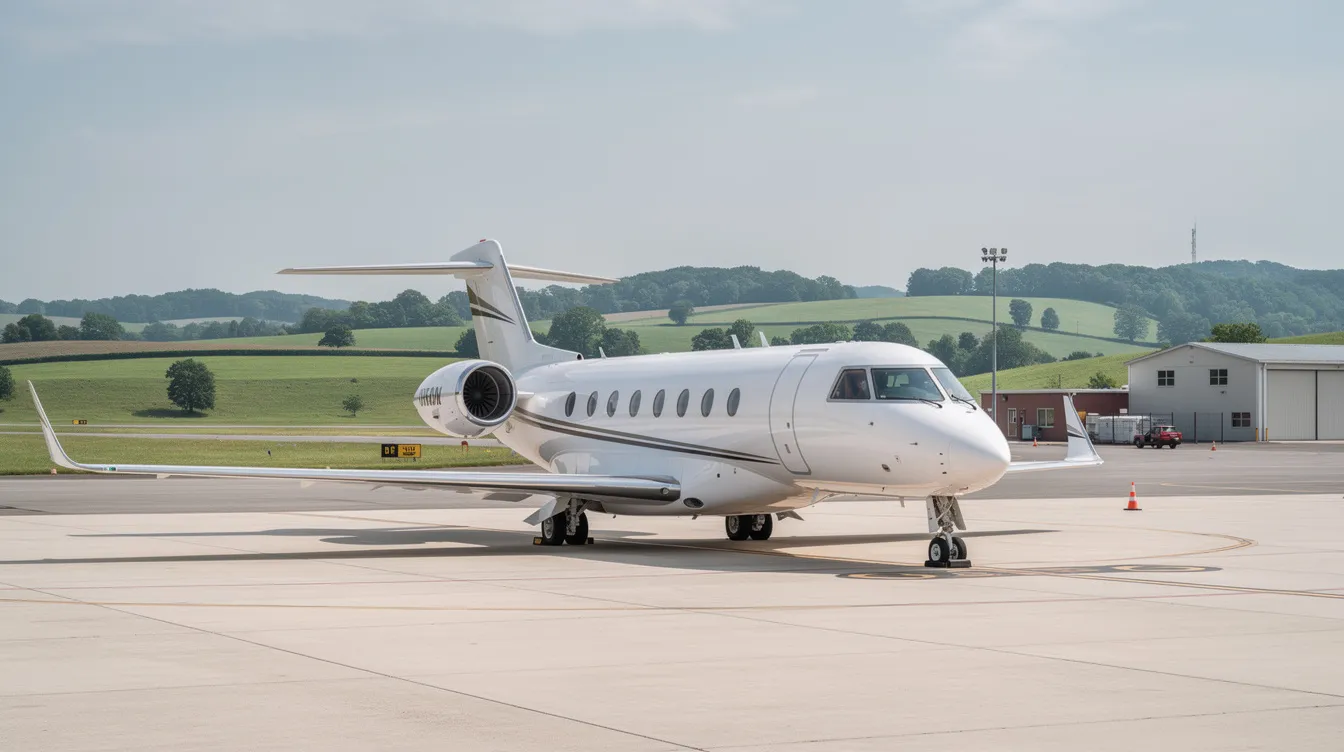
Private jet travel has become more accessible than ever, and if you’re wondering how to charter flight options that fit your trip, the process is straightforward: define your route, dates, and passenger count, choose the right aircraft, compare charter operators and safety standards, review quotes, confirm the booking, and prepare to depart from a private terminal. For frequent flyers, corporate executives, high-net-worth travelers, and families who want the flexibility and luxury of private aviation without owning an aircraft, chartering offers more control over schedule, more privacy, and access to airports commercial airlines often can’t serve.
Whether it’s a same-day business trip or a family vacation to a remote island, chartering a private plane can cut travel time, streamline departures, and tailor the experience to your needs. This guide walks through the full process, including what a charter flight is, how to define trip requirements, how to choose aircraft types, booking options such as on-demand and membership access, how to research operators, compare pricing, book the flight, prepare for departure, and get the best value from platforms like Jettly.
Charter flights let travelers rent an entire aircraft for their exclusive use, offering flexible scheduling, access to smaller regional airports, and a tailored experience that commercial airlines simply cannot match. Charter flights provide access to over 5,000 airports worldwide, and private jets can save up to 50% of travel time compared to commercial flights.
Booking charter flights through Jettly can be done entirely online in minutes - from instant pricing to a confirmed itinerary - without long-term jet card commitments or fractional ownership.
The basic process to charter a jet is:
Define your trip and travel needs
Compare aircraft types and charter operators
Get quotes and verify safety standards
Confirm pricing and sign the agreement
Prepare for departure day
Travelers can choose from over 20,000 aircraft on Jettly's platform, from small jets and light jets to VIP airliners and corporate shuttles, matching group size, distance, and budget.
Understanding how charter flight service works starts with a simple definition. A charter flight means renting an entire aircraft for a specific route, date, and time, rather than buying a seat on a scheduled commercial airline. Chartering a flight involves a personalized process that offers flexibility and privacy that flying commercial cannot replicate.
Air charter service covers private jets, turboprops, helicopters, and even airliners configured for groups, medical flights, or cargo. Charter flights offer flexibility in scheduling and destination choices, and chartering allows for direct flights without layovers or connections.
The differences from commercial flights are significant:
No fixed schedules - departure times are set by the traveler
Access to thousands of airports - smaller regional airports can be used to facilitate closer access to final destinations
Minimal check-in - often 15 to 30 minutes before departure
Personalized service - the flight crew adjusts everything from catering to cabin temperature
Consider this example: a same-day New York (Teterboro) to Miami (Opa-Locka) round trip would typically require an overnight stay when flying commercial. Charter it privately, and an executive can depart in the morning, attend meetings, and return the same evening. For a deeper introduction to charter flights, Jettly's resource library covers the fundamentals.
Charter operators must meet the same core safety oversight as commercial airlines - FAA Part 135 certification in the US or EASA regulations in Europe - while providing far more flexible scheduling and routing; understanding how Part 135 charter companies operate can give extra confidence when reviewing operators.

The first step in chartering a private flight is defining the trip parameters before requesting quotes. Clear details lead to accurate pricing and better aircraft recommendations.
Trip requirements include departure and destination airports, travel dates, and passenger numbers. Gather these essentials:
Origin and destination cities or airports
One-way vs. round-trip
Preferred dates and departure times
How many passengers will fly (adults, children, infants)
Choosing the right aircraft depends on group size and trip distance. Private jets can accommodate 4 to 19 passengers, depending on the aircraft. Short hops like Los Angeles to Las Vegas favor turboprops or very light jets. Coast-to-coast routes like Toronto to Vancouver call for midsize jets. Transatlantic journeys like New York to London demand heavy or ultra-long-range jets.
Luggage and special cargo also matter. Skis for Aspen, golf clubs for Scottsdale, musical instruments, or bulky medical equipment may push the choice toward a larger cabin or other aircraft with more cargo space.
Trip purpose shapes the experience too. Business meetings may require onboard Wi-Fi and conferencing. Family vacations need child-friendly seating. Corporate shuttles call for consistent cabin configurations. Urgent medical travel may need specialized equipment.
Also note pet travel requirements, preferred in-flight catering, and whether overnight crew stays are needed for complex itineraries.
Choosing the right aircraft is central to getting the best prices and a comfortable journey. Here are the main aircraft class categories:
Turboprops (e.g., Beechcraft King Air 250): Ideal for 1–8 passengers on trips under 600–800 miles. Lower hourly rates and the ability to access very short runways make them practical for regional travel.
Light jets (e.g., Cessna Citation CJ3): Light jets typically seat 4 to 8 passengers with a 3–4 hour range. Perfect for routes like Chicago to New York or London to Geneva where speed and cost efficiency matter. Learn more about small aircraft and their uses.
Midsize and super-midsize jets (e.g., Challenger 350, Citation Longitude): Typically 7–9 passengers with stand-up cabins and range for coast-to-coast or moderate transcontinental flights. Often chosen by executive teams for trips like New York to Denver.
Heavy and ultra-long-range jets (e.g., Gulfstream G-550, Global 6000): The Gulfstream G-550 can carry over 12 passengers on intercontinental routes like Los Angeles to Tokyo or New York to Dubai. These aircraft offer beds, separate zones for work and rest, and full galleys.
VIP airliners (e.g., Boeing 737 BBJ, Airbus A320 corporate configurations): Used for 20–100+ passengers. The ATR 72-201 accommodates 66 to 72 passengers, making it suitable for corporate shuttles, product launches, and sports teams.
Helicopters: For short city-to-city or airport-to-resort transfers. The Mil Mi-26 helicopter can carry up to 83 passengers, though most charter helicopters serve smaller groups. Some travelers combine helicopter transfers with fixed-wing charter for a seamless experience.
Jettly's platform shows aircraft photos, seat maps, and range data so customers can compare private charter aircraft across over 20,000 options visually before booking.

There are multiple ways to access charter services, each with different cost structures and commitments, and these sit alongside broader aircraft rental options for business and personal travel.
On-demand charter: Pay per trip with no long-term contracts. Best suited to travelers who fly private a few times per year or have irregular schedules. Maximum flexibility, no upfront commitment.
Membership-based models: Platforms like Jettly offer membership options with lower commissions or flat service fees, access to a global fleet, and added support services. Frequent flyers get potential savings without owning an aircraft.
Jet card programs: Pre-purchasing a block of flight hours at fixed hourly rates, often with guaranteed availability and 24–48-hour notice periods. Best for executives flying 25–50 hours per year, and tools like a jet card flight cost estimator can help benchmark expected hourly pricing. Compare the best jet card programs to see how they stack up.
Ownership and fractional ownership: Buying or co-owning an aircraft involves maintenance, hangar fees, and crew costs that make charter more cost-effective when flying under roughly 200–300 hours annually; exploring fractional jet ownership companies and costs can clarify when shared ownership becomes a smart alternative.
Jettly positions itself as a digital-first alternative that delivers some jet card-style benefits - predictable pricing, dedicated support - without large upfront commitments or long-term contracts. It suits both first-time and frequent private charters.
Safety and operator quality matter more than chasing the lowest possible price. This step is non-negotiable.
A charter operator is the charter company that holds the air operator certificate and is responsible for aircraft maintenance, pilot training, and regulatory compliance. Operators must hold a valid FAA Part 135 certificate for safety compliance in the United States, with equivalent certifications required under EASA in Europe.
Basic checks include verifying the operator's safety ratings and aircraft certifications. Key safety markers to look for:
Third-party audits: Private jet safety ratings include ARGUS, WYVERN, and IS-BAO. ARGUS Platinum designation indicates high safety standards in aviation. IS-BAO Stage 3 is a recognized safety standard for charter operators. Wyvern Wingman certification adds another layer of verification.
Pilot experience: Minimum flight hour requirements and whether the operator uses two-pilot crews on jet aircraft
Maintenance: Safety checks include crew training and aircraft maintenance evaluations
Charter companies must comply with FAA regulations for safety. A marketplace like Jettly pre-screens charter operators, consolidating safety records and certifications so customers do not have to vet every operator individually. For a broader industry view, explore an ultimate list of charter airlines and private operators. For a list of vetted operators, see Jettly's guide to charter airline companies.
Data security also matters. Reputable platforms protect personal information, travel plans, and payment details - especially important for corporate and high-profile clients.
Once trip details are clear, the next part of how to charter a flight service is collecting and comparing detailed quotes. Obtain quotes by providing travel details to charter companies or a marketplace like Jettly.
Core information needed for an accurate quote:
Route (origin and final destination)
Travel dates and times
Number of passengers
Preferred aircraft category
Special handling (pets, extra baggage, medical equipment)
A typical quote includes: aircraft type and tail number (when available), charter operator name, estimated flight time, hourly rate, repositioning charges, landing and handling fees, crew costs, and estimated taxes. Charter pricing typically reflects flight time, aircraft type, and additional service fees.
Charter prices vary based on aircraft size and distance. Here are approximate hourly ranges:
|
Aircraft Category |
Hourly Rate Range |
|---|---|
|
Turboprops |
$1,000–$4,000 |
|
Light / very light jets |
$3,500–$7,000 |
|
Midsize / super-midsize |
$6,500–$12,500 |
|
Heavy jets |
$11,000–$16,000 |
|
Ultra long range |
$15,000–$25,000+ |
Charter costs for small jets start around $4,000 per hour. A short 40-minute flight in a small plane costs about $2,800. Midsize jet flights can cost around $34,500 for 1.5 hours. International flights may exceed $10,000 per hour in total, and broader guides to affordable aeroplane rental costs and options can help contextualize these ranges against other rental models.
Extras that influence total cost include de-icing in winter, overnight crew stays, short-notice bookings, and surcharges during peak travel days like Art Basel Miami or Davos; Jettly also outlines affordable private jet charter strategies for keeping these expenses under control.
Jettly's instant pricing tool lets customers see and compare charter options in real time through its private jet cost calculator, rather than waiting on email chains with multiple brokers.
Weigh not just best prices but also aircraft age, cabin layout, amenities, and operator safety track record before choosing.
Once a traveler selects a quote, the booking process formalizes the agreement between the client, the marketplace, and the charter operator. Book your flight by signing a service contract and making payment.
The charter agreement typically covers:
Route and airports
Dates and times
Aircraft type
Total price and payment terms
Cancellation and change policies
Liability limitations
Reviewing the charter contract includes checking cancellation terms and additional fees. Standard payment methods include credit card, bank wire, or approved corporate account. Payment is usually required in full before departure, especially for first-time clients.
Travelers often receive full flight details - including FBO terminal addresses and flight crew contact numbers - within 24 hours of contract signing, or sooner for urgent trips.
Review passenger names and ID details carefully. Passports, visas, and any overflight permits must match the booking exactly for international itineraries. Research charter companies for safety and service records before finalizing.
Jettly's platform centralizes all confirmations, documents, and receipts in one digital dashboard, useful for corporate travel managers and finance teams tracking air charter expenses.
One of the biggest advantages when you charter jet flights is the simplified day-of-travel experience compared with a commercial airport terminal.
Prepare for your flight at a Fixed Base Operator (FBO) terminal. Arrival at a Fixed Base Operator terminal is recommended 15-30 minutes before departure. Show ID to staff, and walk directly to the aircraft once it is ready.
An FBO is a private terminal offering:
Comfortable lounges and meeting rooms
Wi-Fi and business services
Complimentary refreshments
Ground support and ground transportation coordination
What passengers should bring:
Valid government ID or passport
Required visas for international travel
Special documentation for minors traveling with one parent
Veterinary records for pets crossing borders
Baggage is loaded directly by ground crew or the flight crew, with fewer restrictions on size and weight than commercial airlines - though still subject to aircraft safety and performance limits.
Pre-arranged ground transportation (black cars or limousines) can be coordinated with the FBO so customers can be driven directly from car to cabin in minutes. Jettly or its partners can organize this as part of the seamless travel experience.
For international private flights, many countries allow private jets to use dedicated customs and immigration clearance facilities on arrival, saving significant time compared to commercial terminals.

Boarding begins with a greeting by the flight crew at the aircraft steps, immediate luggage loading, and a quick safety briefing once passengers are seated.
Pilots handle flight planning, weather monitoring, and route adjustments. Cabin service is tailored: adjusting temperature, lighting, and catering to passenger preferences. This personalized attention is a hallmark of private aviation.
Cabin amenities vary by aircraft class:
Light jets: Club seating, small galleys, compact lavatories
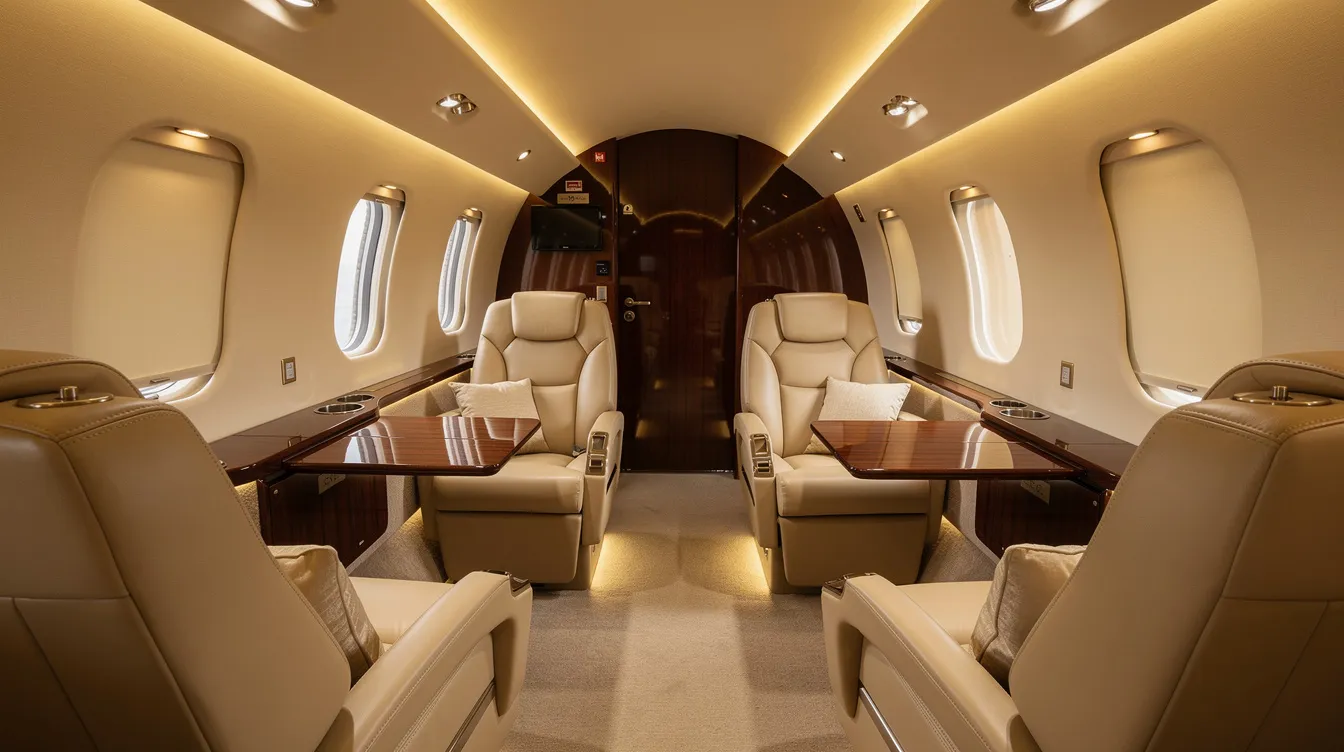
Midsize and heavy jets: Stand-up cabins, enclosed lavatories, full galleys, lie-flat beds
Large cabin / ultra long range aircraft: Separate conference areas, multiple seating zones, full inflight Wi-Fi, shower facilities on some models
The schedule remains flexible on the day. If a meeting runs late, departure can often shift within the crew's duty limits - unlike a fixed commercial airline schedule.
Travelers can work privately, hold onboard meetings, or relax with family without sharing the cabin. This productivity and privacy often justify the cost for business travelers. Special requests - specific catering brands, child seats, or onboard branding for corporate shuttles - can usually be arranged in advance through the charter services team or via the Jettly platform, with dedicated services like Jettly Eats in-flight catering handling bespoke menus.
Charter prices vary widely, driven by aircraft type, distance, time on the ground, airport fees, and regional demand. For travelers comparing charter against ownership or leasing, a broader look at how much a private jet really costs can be helpful. For a detailed breakdown, explore Jettly's charter cost estimator.
Realistic example price ranges:
Short turboprop hops (e.g., Dallas–Houston): Starting around a few thousand dollars one-way
Light jet (e.g., Los Angeles–Las Vegas): Mid-four figures
Cross-country midsize jet: Tens of thousands of dollars
Long-range heavy jet (e.g., New York–London): Often exceeds $70,000+ depending on aircraft and season
Repositioning affects cost. When the aircraft must fly empty to reach the departure airport or return to base, that dead-head leg gets factored in.
Empty leg flights are repositioning flights that can be offered at significant discounts - sometimes 50–75% off standard rates. These are one-way charter flights created when an aircraft moves without passengers and can be an efficient way to buy a single seat on a private jet rather than paying for the whole aircraft. Jettly displays available empty leg flights on its platform, though flexibility in timing and routing is required.
Flexible scheduling and routing help too. Leaving midweek instead of peak Friday afternoon, or using alternate airports, can improve pricing. Travelers who don't need the whole aircraft can consider sharing empty seats on private jet flights to reduce per-passenger costs compared with chartering solo. Compare charter quotes against the cost of multiple last-minute business-class tickets on commercial airlines plus hotel nights, lost productivity, and added travel time.
Use Jettly's online tools to generate ballpark estimates before speaking to a charter specialist. For broader context on providers and pricing, review top private jet charter companies and their services. For more on managing cost, see how much to rent a private jet.
Charter flights serve business, leisure travel, and specialized missions where time, flexibility, or access matters more than pure ticket price, and travelers can choose between shared charter flights and full charters depending on their priorities for privacy and budget.
Corporate executives and leadership teams who need to visit multiple cities - Toronto, Chicago, New York, back to Toronto - in a single day for board meetings, investor presentations, or factory visits. Private jets can save up to 50% of travel time compared to commercial flights.
Corporate shuttles: Regular private routes moving employees between hubs (e.g., San Francisco to Seattle weekly), replacing multiple individual airline tickets and hotel nights.
Families and groups traveling to remote vacation destinations like ski resorts in the Rockies or islands in the Bahamas, where commercial connections are inconvenient or seasonal.
Sports teams, entertainment tours, and event organizers who charter airliners or large business jets to move dozens of people and equipment on tight schedules.
Medical and emergency transport: Rapid access for medical teams, urgent organ transport, and last-minute flights when commercial options are unavailable or too slow.
Frequent flyers who want to fly private without owning an aircraft often find Jettly's digital marketplace and membership options an efficient way to manage recurring private jet travel across the world.
Understanding a few insider strategies can improve both pricing and the overall charter experience.
Book early for peak periods. Booking early generally provides more options and better pricing for private flights. Late December holiday travel, major sporting events, and conferences like Davos can tighten aircraft availability and push rates higher during increased demand periods.
Be flexible with airports. Consider nearby smaller airports - Van Nuys instead of LAX, Teterboro instead of JFK - to reduce congestion, handling fees, and repositioning costs.
Adjust dates and times slightly. Flexibility in scheduling can lead to lower charter costs by 15-25%. Moving a flight by a few hours or one day can unlock better aircraft options or available empty legs.
Group travel over individual tickets. Instead of buying multiple premium-cabin commercial airline tickets, price a single charter flight and factor in avoided hotel nights, per diem costs, and lost working time. The buying power of grouping travelers together often makes charter competitive.
Build a relationship. Using a platform like Jettly consistently helps the team learn traveler preferences, negotiate repeat-customer value with operators, and identify the right aircraft rather than defaulting to larger, more expensive jets.
Be transparent about budget. Share must-have features and budget limits upfront so specialists can eliminate unsuitable options early and focus on cost-effective solutions - delivering a seamless experience at the right price point.
Digital charter platforms modernize how to charter a flight, replacing manual quote-gathering with instant, data-driven comparisons and often serving as a flexible NetJets alternative for flying private.
Breadth of inventory: Jettly provides access to over 20,000 unique aircraft worldwide - jets, turboprops, helicopters, cargo aircraft, and VIP airliners - across North America, Europe, the Middle East, and Asia-Pacific.
Instant pricing and online booking: Customers search by origin, destination, travel dates, and passengers, then compare multiple aircraft types and operators on a single screen. No phone tag with multiple brokers.
Transparent pricing models: Clear breakdowns of aircraft cost, estimated flight time, taxes, and additional fees help avoid surprise charges. This transparency makes it easier to compare against jet card programs or fractional ownership. For deeper comparisons, see what a jet card is.
Integrated services: In-flight catering, ground transportation, special handling for pets, and coordination with FBOs - all managed centrally through the platform and support team.
Impartial matching: As a charter broker and marketplace (not an operator), Jettly matches traveler needs with the best available aircraft from its network of safety-vetted operators across the world.
Ready to see what's available for your next trip? Learn more about Jettly's charter options at jettly.com.

These FAQs address common questions that go beyond the core steps for how to charter flight service covered above. Each answer is designed to be practical and focused on real traveler concerns about safety, documentation, and schedule.
Charter passengers usually depart from private FBO terminals without TSA-style lines, shoes-off screening, or long queues. The experience at a commercial airport is very different from the streamlined process at private terminals.
That said, security checks still occur. Staff verify identities, and local or national authorities may conduct random inspections as required by law. Luggage is screened according to the operator's security program. The overall process is faster and more discreet than commercial travel, but air safety protocols are still firmly in place.
For routine trips, booking 7–14 days in advance typically yields more aircraft choices and competitive pricing. This lead time allows operators to plan crew schedules and position aircraft efficiently.
Urgent charters can sometimes be arranged within a few hours at a moment's notice - especially on popular routes - subject to aircraft and crew availability plus any required permits. Peak seasons and events (Christmas, New Year, Monaco Grand Prix, major sports finals) may require booking several weeks ahead to secure preferred aircraft types during periods of increased demand.
One major benefit of air charter is flexible scheduling, though changes depend on crew duty limits, aircraft availability, airport curfews, and permit requirements.
Small time shifts on the same day are often possible at little or no extra cost. Major route changes or date moves may trigger re-quoting and additional fees. Contact your charter specialist or adjust details within the Jettly platform as soon as plans evolve to keep options open and extra costs manageable.
Typical requirements include:
Domestic flights (US, Canada): Government-issued photo ID
International flights: Valid passport plus any necessary visas or ESTA/ETA approvals
Minors: Parental consent forms when traveling without both parents
Pets: Veterinary documentation and vaccination records for border crossings
Jettly or the charter operator can advise on destination-specific rules, but travelers remain responsible for having correct documentation at departure.
Per-passenger emissions on small jets can be higher than on full commercial airliners, especially when flying with only one or two passengers. This is an important consideration for environmentally conscious travelers.
Steps that can reduce impact include choosing efficient aircraft, combining legs to avoid empty repositioning, and using sustainable aviation fuel (SAF) where available. Some platforms, including Jettly partners, offer carbon offset options and route optimization to minimize fuel burn. Shared flights - where multiple parties split a charter - can also improve the per-passenger efficiency.
The end-to-end process is straightforward: define your trip needs, understand aircraft types, compare charter operators and prices, book through a trusted platform, and enjoy a streamlined departure and in-flight experience.
Learning how to charter a flight opens up real advantages - time savings, flexible scheduling, privacy, and access to airports and routes that commercial airlines cannot conveniently serve. Every step, from selecting the right aircraft to confirming your schedule, can be handled digitally.
Jettly simplifies every step as a digital marketplace - searching inventory, instant pricing, safety-vetted operators, and coordinated services - for both first-time and frequent private flyers. Learn more about aircraft types and charter flight benefits to make informed choices.
Ready to experience private travel on your terms? Explore flight options or request a quote at jettly.com to plan your next trip.
Share this post:
Jay Franco Serevilla
Aug 2, 2026
|
5
min read
Discover tips and trends in the industry.

5
min read
Jettly Cloud Fractional Jet Ownership Pricing Guide
The Jettly Cloud Fraction program offers a unique fractional jet ownership model, allowing access to entire aircraft classes with fixed pricing over a 36-month term. This guide details the costs, fees, and inclusions for Light, Midsize, and Super-Mid jets, helping buyers make informed decisions without hidden fees. Understanding the full cost structure is essential for comparing Cloud Fraction with traditional ownership and jet card options.
Read More
5
min read
When Is the Best Time to Buy Airfare? (And When to Book Private Jets Instead)
Knowing the best time to buy airfare can save you money on flights. For domestic trips, booking 1 to 3 months in advance is ideal, while international flights are best booked 2 to 8 months ahead. This guide also explores when private jet charters may be a more convenient option, especially when commercial flights become costly or inconvenient.
Read MoreStay updated with our latest insights and tips to elevate your journey with us.
MEMBERSHIPS AND ASSOCIATIONS



Disclaimer: Jettly operates as a charter broker, offering access to a global digital jet charter marketplace. Jettly is not a direct air carrier and does not own or operate aircraft. All advertised flights are conducted by third-party air carriers that are fully licensed and hold the appropriate Part 135 or Part 121 certifications issued by the Federal Aviation Administration (FAA) or equivalent regulatory authorities under U.S. or foreign law. Jettly complies fully with the U.S. Department of Transportation's Part 295 and Part 298 Charter Broker regulations. Jettly does not carry additional liability insurance. Passengers are covered by aircraft operator insurance. TICO: 50023770


