



Login
Get Instant Pricing On 23,000+ Aircraft

>

The cheapest planes in 2026 are typically older two-seat trainers and vintage taildraggers priced from about $15,000 to $40,000 on the used market. Common entry-level aircraft are often priced between $15,000 and $50,000.
Specific models worth watching include the ERCO Ercoupe, Cessna 150, Aeronca Champ, Taylorcraft BC-12D, and the Stinson 108, each filling a different role from flight training to family flying.
"Inexpensive" means more than a low sticker price. Annual costs for fuel, maintenance, insurance, and hangar or tie-down fees add up quickly and must be factored into any purchase decision.
Pilots can reduce expenses further through flying clubs, co-ownership, or hourly rentals. For occasional point-to-point travel, on-demand private jet charter through platforms like Jettly can avoid the fixed costs of owning altogether.
When most people search for inexpensive planes for sale, they picture something costing less than a new car. In 2026, that usually means older two-seat trainers and vintage taildraggers priced from about $15,000 to $40,000, with many affordable used piston-powered planes still available under roughly $90,000. Models like the ERCO Ercoupe, Cessna 150, and Aeronca Champ are typical entry-level options, along with older single-engine and experimental aircraft, most built between the 1940s and 1980s.
These aircraft have stayed popular for decades because parts are still available, owner communities are active, and simple systems can keep maintenance manageable. They appeal to new pilots shopping for a trainer, current pilots and aviation enthusiasts buying on a budget, families looking at inexpensive four-seat airplanes, and even travelers weighing ownership against charter. Owning a small plane usually makes the most sense for pilots who fly frequently on short regional hops, but the purchase price is only part of the math: maintenance, inspections, storage, insurance, and fuel can quickly change what “cheap” really costs. For occasional, longer, or time-critical trips, charter platforms like Jettly can be more cost-effective than carrying the fixed expenses of ownership year-round.
This article breaks down specific low-cost aircraft models, realistic 2026 prices, total ownership costs, storage options, used-plane buying tips, safety and budgeting advice, and lower-commitment alternatives such as flying clubs, partnerships, and chartering.
Budget-friendly airplanes can be found in the used market if you know where to look. Below are ten models that consistently appear among the cheapest planes available, along with realistic 2026 price ranges drawn from active listings on platforms like Trade-A-Plane and Hangar67.
|
Model |
Seats |
Primary Role |
Typical 2026 Price Range |
|---|---|---|---|
|
ERCO Ercoupe 415 |
2 |
Local flying, easy handling |
Under $20,000–$30,000 |
|
Aeronca Champ |
2 |
Tailwheel training, personal flying |
$22,000–$35,000 |
|
Taylorcraft BC-12D |
2 |
Low-cost stick-and-rudder flying |
~$20,000–$32,000 |
|
Cessna 140 |
2 |
Weekend cross-country |
$28,000–$55,000 |
|
Cessna 150 |
2 |
Flight training, first trainer |
$20,000–$35,000 (older models) |
|
Luscombe 8 |
2 |
Sport flying, vintage appeal |
$20,000–$30,000 |
|
Grumman AA-1 |
2 |
Fast trainer, responsive controls |
Under $25,000 |
|
Piper PA-38 Tomahawk |
2 |
Flight school rental |
$30,000–$50,000 |
|
Beechcraft Skipper |
2 |
Training, solid performance |
$30,000–$45,000 |
|
Stinson 108 |
4 |
Cheapest family aircraft, camping |
$25,000–$40,000 |
The ERCO Ercoupe is priced under $20,000 in 2026 for many entry-level examples, making it arguably the cheapest certified airplane you can buy cheap planes with and actually fly home the same day. Its tricycle gear and simple systems make it a hidden gem for new pilots who want easy handling without the complexity of a classic taildragger.
The Cessna 150 is widely used for flight training and has an enormous parts network thanks to over 23,000 units produced. Cessna 150 prices range from $20,000 to $35,000 for older airframes, though later models and low-time examples push higher. Aeronca Champion airplanes can be found for under $30,000, and Aeronca Champion prices have remained stable around $25,000 for airworthy examples in recent years.
The Taylorcraft BC-12D can be found for about $20,000, and the Luscombe 8 is priced between $20,000 and $30,000, both offering rare and vintage aircraft character at a relatively low cost. The Stinson 108, priced between $25,000 and $40,000, stands out as one of the least expensive options with four seats and a cabin large enough for a family or camping gear. The Grumman American AA-1 is priced under $25,000 and delivers responsive controls and solid performance for the money.
Every price on this list is shaped by engine time since overhaul, avionics condition, corrosion history, and cosmetic wear. Expect bargains to involve trade-offs. A cheap airplane at the bottom of its range may need a larger investment in the engine or panel before it flies reliably.
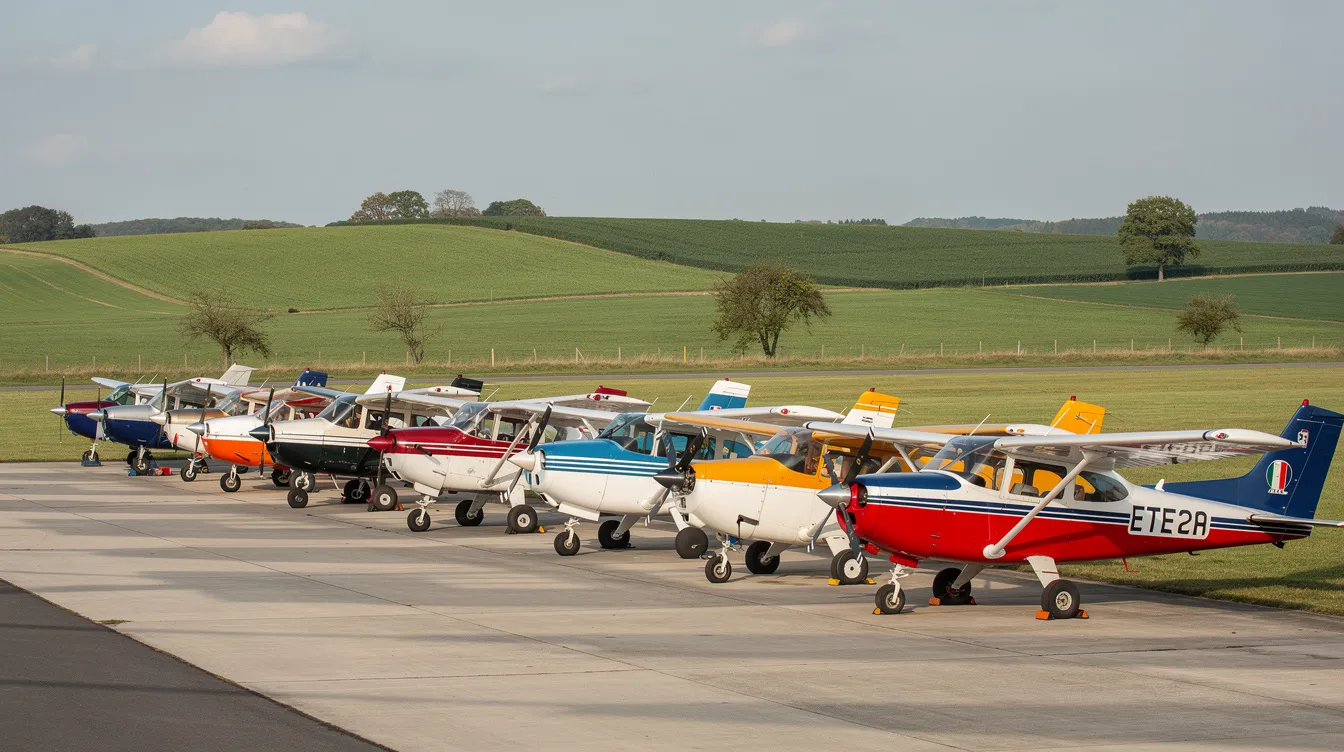
A low asking price may indicate potential for high future maintenance costs. Key factors to consider in airplane ownership include total cost of ownership, not just the sale price. Here is what to expect for a lightweight aircraft flown 50–100 hours per year in North America:
Fuel: Most two-seat trainers burn 5–8 gallons per hour.
At $6–$8 per gallon, fuel costs $35–$60 per hour.
Maintenance and inspections: Annuals, oil changes, and minor repairs typically cost $1,500–$3,000 per year.
Engine overhaul reserve: Set aside $5–$10 per flight hour for engine overhaul.
Over a 2,000-hour TBO, budget $15,000–$25,000 for overhaul.
Insurance: Premiums for a two-seat trainer run $1,200–$2,500 per year.
Four-seat vintage aircraft cost more to insure.
Storage: Outdoor tie down or basic T-hangars cost $600–$3,600 annually.
Metro-area hangars can be much higher.
Operating costs include fuel, maintenance, insurance, and storage. Annual costs for maintaining a lightweight aircraft can be $12,570 when all line items are combined for a modest flight schedule. The Cessna 150 has a low hourly cost of $50–$70 including fuel, which is one reason it remains so popular.
Older planes with simpler systems are cheaper to maintain.
Simpler aircraft may need more frequent small fixes.
Buying a Cessna 150 for $25,000 with an engine near TBO could require a $20,000 overhaul.
Avionics upgrades can add $5,000 or more.
A higher-priced, better-equipped plane may save money over five years.
Operating costs include fuel, insurance, storage fees, and maintenance.
Ignoring any one of these categories can quickly wreck a budget.
Not every cheap plane suits every pilot. Here are deeper profiles of standout models and the pilots they serve best.
ERCO Ercoupe: This light flyer is a great option for new pilots who want to focus on flying rather than fighting the rudder pedals. The Ercoupe's design, lacking rudder pedals entirely, makes ground operations and slow flight remarkably simple. It carries two adults comfortably on local hops, though payload and crosswind capability are limited. Think of it as the aviation equivalent of an automatic-transmission car among cars with manual gearboxes.
Aeronca Champ: The ideal first trainer for anyone drawn to stick-and-rudder skills and aviation history. It is a classic taildragger with forgiving stall characteristics, excellent forward visibility, and a community of owners who keep parts in circulation. Its demand among tailwheel enthusiasts has kept prices stable.
Cessna 150: Still the benchmark affordable aircraft for flight training. Flight schools worldwide have relied on it for decades, and the type's availability of parts and A&P familiarity make it cheaper to operate than almost anything else in its class. The Cessna 150 is widely used for flight training, making it easy to find mechanics and insurance quotes.
Taylorcraft BC-12D and Luscombe 8: Both reward pilots willing to learn tailwheel technique in exchange for low fuel burn and low-cost operations. Interiors are spartan, but the flying experience is pure. These are airplanes that connect you directly to the air.
Stinson 108: Positioned as the cheapest realistic family aircraft with four seats, a useful cabin, and enough useful load for weekend camping trips. Fuel and hangar costs are higher than two-seat trainers, but it remains a rare opportunity to carry a family in a vintage aircraft without spending six figures.

Nearly all inexpensive planes for sale live on the used market. Here is how to find them and avoid costly mistakes.
Online aviation classifieds like Trade-A-Plane and Controller.
Bulletin boards and hangars at local airports.
Type-club forums for models like the Ercoupe, Champ, or Stinson.
Complete logbooks are vital for aircraft valuation and history verification.
Gaps in logbooks raise red flags.
Maintenance history is critical for assessing budget airplanes.
Maintenance records help avoid future surprises in older aircraft.
Check engine time since major overhaul and propeller condition closely.
An engine with 200 hours remaining until TBO is worth far more than one at limits.
Corrosion repairs in older aircraft can be costly and should be inspected.
Pay special attention to wing spars, fuselage skins, and control surfaces.
Pre-purchase inspections are essential for evaluating an aircraft's condition.
Budget $500–$1,500 for a thorough inspection by an A&P mechanic experienced with the specific model.
A bargain Cessna at $22,000 with an engine near TBO, outdated radios, and no ADS-B compliance could cost $25,000+ in upgrades, making a $40,000 plane with recent overhaul and modern avionics the smarter purchase. Always look beyond the sticker price to find genuinely airworthy examples in flyable condition.
Where a small plane lives has a direct impact on its long-term value and maintenance expenses.
Outdoor tie-down: The cheapest option at $50–$300 per month, but exposure to sun, rain, hail, and humidity accelerates paint fade, interior cracking, and corrosion. For very cheap planes in dry climates, this can work.
Shared or community hangar: Mid-range cost with moderate protection. Scheduling access can be a trade-off.
Private T-hangar: The gold standard for preservation. Monthly costs of $300–$800+ are justified for refurbished or higher-value vintage aircraft.
Pilots in coastal or humid regions should strongly consider indoor storage. A slightly more expensive plane kept in a hangar will almost always maintain better resale value than the absolute cheapest aircraft left outside year-round.
Practical low-cost protection tips include quality canopy and engine intake covers, regular washing to catch corrosion early, and secure control locks for windy conditions. These small expenses pay for themselves many times over.
For many pilots, owning even the cheapest planes is not the most economical path. Annual costs for maintaining a lightweight aircraft can reach $12,570 or more whether you fly 10 hours or 100. If you fly fewer than 50 hours per year, alternatives often save money.
Flying clubs spread purchase, maintenance, and storage costs among members, often cutting individual expenses by 50–70%.
Hourly rentals from flight schools let you fly popular trainers like the Cessna 150 or Piper Tomahawk without any fixed ownership burden.
Co-ownership with trusted partners divides hangar, insurance, and annual inspection costs evenly.
For travelers focused on efficient point-to-point transportation rather than personal flying for recreation, on-demand private jet charter is a different but powerful option. Jettly's digital private charter aircraft platform connects travelers to a global fleet of over 20,000 aircraft with transparent, instant pricing and includes an airport locator tool to find convenient departure and arrival points. For occasional business trips or family travel, chartering through Jettly avoids the fixed costs of owning a plane entirely, and tools like a private jet charter cost estimator help you budget specific trips accurately. Options like empty leg flights, understanding how much to rent a private jet, and learning about one‑flight private jet costs and private jet memberships can further reduce per-trip costs compared with traditional brokers.
Many pilots mix strategies: own a low-cost small plane for local weekend flying, then charter a larger aircraft for long-distance or poor-weather missions where speed and comfort matter. Others skip ownership entirely and rely on affordable airplane rental options or explore budget-friendly aircraft choices before buying. Travelers who prefer premium service may compare top private jet charter companies, study how much a private jet really costs, or choose world-class jet card programs and use a dedicated jet card flight cost estimator to plan frequent missions. Those looking to lower per-seat costs can crowdsource private jet flights and share empty seats, buy a single seat on a private jet, or get a private jet seat easily, using guides that explain shared charter flights versus full charters and the wider list of private and charter airlines; frequent flyers considering long-term solutions may even compare Jettly as a NetJets alternative.
Choose proven designs with strong parts support.
Cessna or Ercoupe models are cheaper to maintain than rare or experimental types.
Perform owner-allowed preventive maintenance where regulations permit.
Leave complex work to licensed mechanics.
Fly regularly to prevent problems from aircraft sitting idle.
Shop insurance premiums aggressively.
Additional training, such as a tailwheel endorsement or instrument rating, can reduce insurance quotes.
Build a dedicated maintenance reserve fund to cover unexpected repairs.
Conduct thorough preflight inspections on every flight.
Pay close attention to older fabric coverings, control cables, and fuel systems.
Respect density altitude and operating limitations, especially in underpowered taildraggers on short strips.
Invest in periodic refresher flights with an instructor after buying any new-to-you aircraft.
Never cut corners on safety, even when trying to save money.

The lowest-cost aircraft are typically single-seat or two-seat ultralights and simple experimental designs, sometimes available used for under $15,000. Very basic vintage two-seaters like stripped-down Champs or older Quicksilver models also fall into this range. While these are the cheapest planes by purchase price, they are limited in range, speed, and weather capability, making them best for local fair-weather personal flying.
Because fixed costs like hangar or tie-down fees, insurance, and annual inspections accrue whether the plane flies or not, ownership typically becomes more economical when flying at least 50–100 hours per year. Those flying fewer hours may save money with rentals, club membership, or using a charter platform for specific trips.
Yes, provided they choose well-supported types with strong parts networks, invest in a thorough pre-purchase inspection, and work closely with an instructor experienced in that model. Beginners should avoid "project" planes or heavily modified experimental aircraft as a first airplane and instead focus on airworthy, simple trainers with proven safety records.
Many basic trainers and iconic vintage aircraft have held their value well, especially since 2020, as demand for affordable aircraft has stayed strong and production of new low-cost models is limited. Good maintenance, hangar storage, and modest avionics upgrades help maintain or slowly increase resale value over the average ownership period.
Charter makes more sense for travelers who fly infrequently but need to cover long distances quickly, who value business productivity or multi-city trips, or who prefer to pay only when they fly. Jettly lets travelers compare on-demand charter options and pricing online, providing a low-commitment alternative to plane ownership for many missions.
Inexpensive planes for sale in 2026 span a wide world of options, from the ERCO Ercoupe and Aeronca Champ under $30,000 to the four-seat Stinson 108 for pilots seeking the cheapest family aircraft. The right choice depends entirely on whether the priority is a first trainer, weekend adventures, backcountry flying, or hauling the family.
Buyers should look beyond the purchase price and account for storage, maintenance, fuel, insurance premiums, and engine reserves. A plane that looks cheaper on paper can quickly become the more expensive option once hidden costs surface.
For travelers who care most about efficient, flexible transportation rather than the joy of owning and operating their own aircraft, on-demand private jet charter removes every fixed cost from the equation. Jettly provides instant pricing, global aircraft access, and membership options that make private aviation accessible without long-term commitments.
Ready to explore your options? Request a quote at https://www.jettly.com.
Share this post:
Jay Franco Serevilla
Jul 22, 2026
|
5
min read
Discover tips and trends in the industry.

5
min read
Private Jet Membership: How Jet Memberships Work, Costs, and Smarter Alternatives
Private jet memberships offer fixed pricing and guaranteed access to aircraft, but they often require significant upfront deposits and long-term contracts. Alternatives like Jettly provide flexible, pay-per-flight options without hefty commitments, making private travel more accessible. This guide explores the workings, costs, and smarter alternatives to traditional jet memberships.
Read More
5
min read
Group Charter: How to Plan Seamless Air Travel for Large Teams
Planning seamless air travel for large teams can be complex, but a group charter simplifies the process by providing full control over scheduling and routing. This guide outlines the steps to effectively plan a group charter, including aircraft selection, decision-making, and best practices for execution. Ideal for corporate travel planners and team leaders, it emphasizes treating travel logistics like a structured project.
Read MoreStay updated with our latest insights and tips to elevate your journey with us.
MEMBERSHIPS AND ASSOCIATIONS



Disclaimer: Jettly operates as a charter broker, offering access to a global digital jet charter marketplace. Jettly is not a direct air carrier and does not own or operate aircraft. All advertised flights are conducted by third-party air carriers that are fully licensed and hold the appropriate Part 135 or Part 121 certifications issued by the Federal Aviation Administration (FAA) or equivalent regulatory authorities under U.S. or foreign law. Jettly complies fully with the U.S. Department of Transportation's Part 295 and Part 298 Charter Broker regulations. Jettly does not carry additional liability insurance. Passengers are covered by aircraft operator insurance. TICO: 50023770


