


Login
Get Instant Pricing On 23,000+ Aircraft

>
Jet fuel powers every commercial airliner, cargo plane, and private business jet in the sky. But few travelers think about what that fuel actually looks like. Understanding jet a color is more than a curiosity - it is a practical safety topic that connects directly to how aviation professionals verify fuel quality before every flight. This guide breaks down what Jet A should look like, what abnormal colors signal, and how fuel quality fits into the private jet experience.
Standard Jet A aviation fuel is naturally water-white to straw colored. Unlike avgas, it is not intentionally dyed with a specific color.
Noticeable color changes in Jet A - such as a brown, hazy, or layered appearance - can signal contamination, oxidation, or water issues that must be resolved before any aircraft departs.
Fuel color inspection fits into broader jet fuel quality control, including ASTM D1655 compliance, filtration, and regular testing performed at FBOs and charter operators worldwide.
Proper Jet A color and clarity underpin safe, reliable private jet operations. When travelers book through digital charter platforms such as Jettly, certified operators handle these checks behind the scenes as part of standard safety protocol.
Jet A is a kerosene based fuel designed for use in turbine engines. It powers airliners, business jets, and many turboprops, making it the dominant aviation fuel across domestic U.S. airports. Jet A fuel must meet ASTM specification D1655, which controls properties like flash point (minimum 38°C), freezing point (maximum −40°C), sulfur content, and thermal stability - but does not prescribe a specific dye color. The result is fuel that typically appears colorless to pale straw in a transparent sample.
Jet A fuel is widely available in the U.S.A. and is suitable for turbine engines across various aircraft types. Pilots perform visual fuel checks to confirm Jet A is free of contamination before every flight, drawing a small sample into a clear cup and inspecting it in daylight. For private jet travelers using platforms such as Jettly, these behind-the-scenes fuel checks are just as critical to safe charter operations as crew qualifications and aircraft maintenance.

Properly handled Jet A should look water-white to slightly straw colored in a transparent container. When held against a white background in natural daylight, the sample should appear essentially colorless or carry just a faint pale amber tone.
Here is what inspectors look for during a standard check:
Clarity: No haze, cloudiness, or visible particles. The standard requires that Jet A be clear and free of solid matter.
Brightness: The fuel should appear shiny or sparkling, with light passing through cleanly - not dull or flat.
Swirl test: Inspectors gently swirl the sample to look for sediment, "streamers" (thin filaments from microbial growth), or any settling material at the bottom.
Slight color variation between batches or refineries is normal and comes from differences in crude oil feedstock and refining process. These subtle shade differences do not affect performance as long as all measured specifications - density, distillation range, flash point, freeze point - fall within approved limits. For a broader perspective on formulations, operators distinguish among different types of jet fuel such as Jet A, Jet A-1, Jet B, and TS-1. Contaminated Jet A appears cloudy or discolored, indicating potential issues that require immediate attention.
The most visible difference between aviation turbine fuels and aviation gasoline is color. Avgas grades are intentionally dyed to help prevent dangerous misfueling incidents, while Jet A is not.
Avgas 100LL - the most commonly used aviation gasoline today - is dyed blue to indicate its grade. The older Avgas 100 was dyed green. These colors exist because avgas is used in piston engines, and putting jet fuel into a gasoline-only aircraft (or vice versa) can cause engine failure or fire. Aviation gasoline grades are dyed to help distinguish them from turbine fuels. Avgas contains tetraethyl leadAvgas contains tetraethyl lead for higher performance and carries a low lead designation, with Avgas 100LL having a freezing point of −58°C (-72°F), far lower than Jet A's freezing point of -40°C (-40°F). Jet A is a kerosene-based fuel specifically designed for turbine engines, while Avgas is used in piston engines. Jet A fuel is widely available worldwide, especially in the United States, whereas Avgas is less common globally. Jet A-1, a variant of Jet A, has a minimum flash point of 38°C and a maximum freezing point of -47°C, making it suitable for long-haul international flights. Jet A-1 meets ASTM D1655 and DEF STAN 91-91 specifications and is widely available outside the U.S.A. Unlike Avgas 100LL, which is dyed blue to indicate its grade and prevent misfueling, Jet A has no dye and appears clear to light straw or pale yellow in color. Pilots perform visual fuel checks to confirm Jet A is free from contamination, as the standard requires it to be clear and free of solid matter. Contaminated Jet A appears cloudy or discolored, signaling potential issues. Visual inspections of Jet A are complemented by lab tests and filtration as part of comprehensive fuel quality control. Both Jet A and Jet A-1 must meet ASTM specification D1655, ensuring consistent performance and safety in turbine engine operations. Aviation gasoline grades like Avgas are dyed to help distinguish them from turbine fuels and prevent misfueling incidents. for higher performance and carries a low lead designation, with Avgas 100LL having a freezing point of −58°C - far lower than Jet A's. It also carries a specific octane rating that determines its suitability for high-compression piston engines.
Jet A has no dye while Avgas 100LL is dyed blue to indicate its grade. Because Jet A and Jet A-1 look like very light diesel, ground crews rely on labeling, equipment segregation, and training - not fuel color - to prevent misfueling, especially since avgas is less common globally while Jet A is the fuel crews can more consistently obtain for turbine aircraft.
Jet B is a wide-cut aviation fuel (a kerosene and gasoline blend) used in very cold climates like northern Canada and Alaska. Its appearance is also water-white to pale, not a bright dyed color, but it carries higher volatility and different handling requirements. Pilots planning operations into remote or secondary fields often rely on tools like Jettly's airport locator for private jet flights and FBOs worldwide to confirm fuel types and services in advance.
Charter flights arranged via Jettly use professional operators that follow strict fuel handling and labeling practices to avoid misfueling incidents at airports of all sizes, drawing on a vetted network of private charter aircraft across multiple categories and sizes.
While Jet A does not have a fixed dye color, significant changes in its appearance are warning signs that trigger further investigation or outright fuel rejection.
Typical abnormal appearances and their likely causes include:
Brown or dark amber color is often linked to oxidation and aging, especially if fuel has been stored for long periods or in poorly maintained tanks. Oxidized aromatic compounds produce "color bodies" that darken the fuel over time.
Milky or hazy appearance is potentially caused by suspended water droplets or fine particulate matter. When temperatures drop, dissolved water can come out of solution and create visible cloudiness.
A distinct layer or "bubble" at the bottom of the sample indicates free water sitting beneath the fuel - a serious hazard for aircraft fuel systems.
Microbial growth - bacteria and fungi living at the fuel-water interface - can produce slimy strands or dark specks. While this is more about texture and contamination than pure color, it often changes the fuel's visual appearance noticeably.
Any doubt about Jet A color or clarity leads crews to perform additional tests, such as water detection paste or filter monitor checks, or to reject that batch of fuel altogether. In aviation, the standard is clear: when in doubt, don't use it.
Several international specifications ensure that jet fuel performs consistently regardless of where it was refined or where it is burned.
These standards also shape fuel handling in commercial aviation, where consistent specifications govern what fuel operators can obtain and use across airports.
ASTM D1655 governs aviation turbine fuels in the United States, covering both Jet A and Jet A-1. DEF STAN 91-91 serves as the state standard for Jet A-1 across the UK and many international markets. Jet A-1 meets ASTM D1655 and DEF STAN 91-91 specifications, carries a minimum flash point of 38°C (100°F), and a maximum freezing point of −47°C (−52.6°F). These specifications define measurable properties - density range, sulfur limits, distillation characteristics, and allowable additives - rather than prescribing a mandatory color. In the broader private aviation market, travelers encounter these standards across a wide range of charter airlines and private operators worldwide.
In the field, FBOs and charter operators rely on practical checks: many, like Dexter Air Taxi and similar private jet operators listed on Jettly, build detailed fuel-handling protocols into their standard operating procedures.
Clear-and-bright visual inspection of fuel samples
Water detection using filter monitors and chemical detectors (sensitive down to 5–30 ppm)
Routine filtration through micron-rated elements and water-separating coalescers
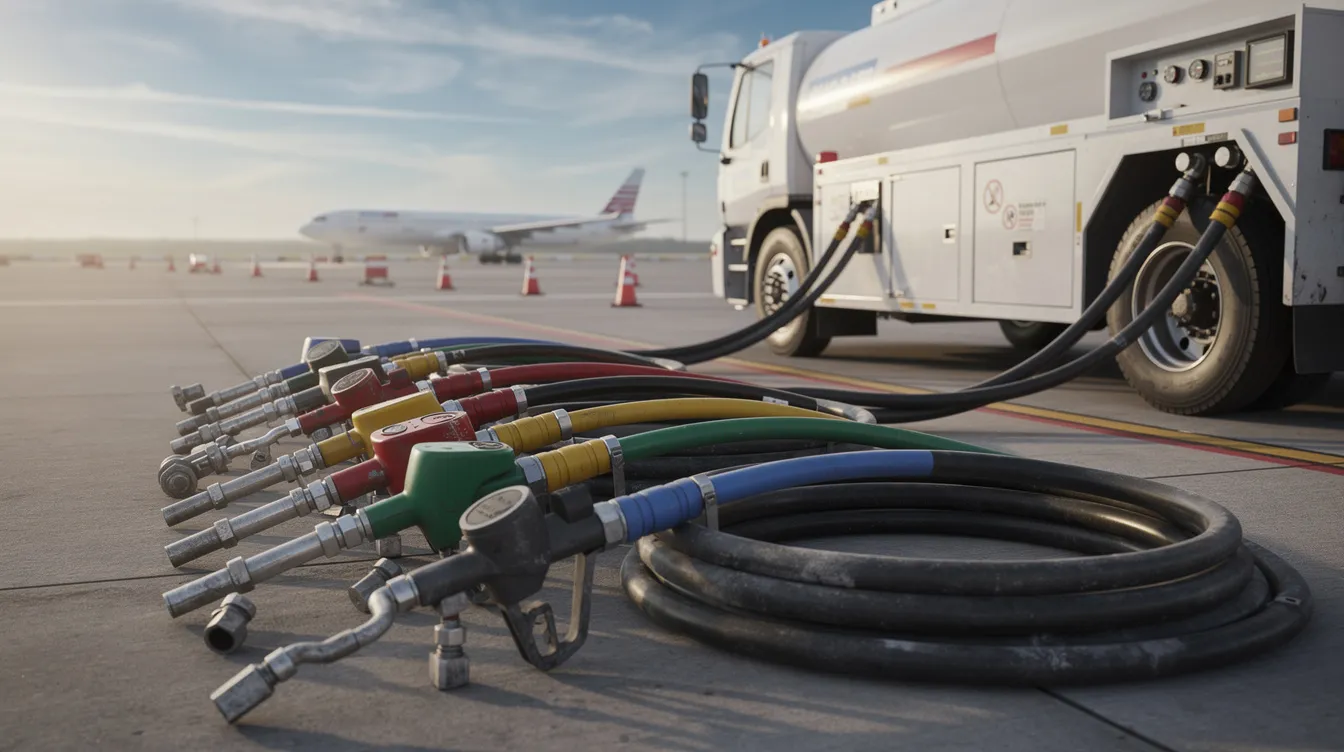
Visual inspections are complemented by lab tests and filtration in fuel quality control, creating multiple layers of protection. From refinery to wing, the supply chain includes dedicated aviation fuel trucks, color-coded hose nozzles, sealed fueling systems, pipelines, and regular sampling from storage tanks.
When customers choose a private jet through Jettly, they fly with operators that comply with these aviation fuel quality requirements, audited as part of broader safety oversight and ratings programs.
Jet A is predominantly used in the United States, while Jet A-1 is the standard kerosene aviation fuel across most of the rest of the world. Both are identical in appearance - clear to pale straw - but differ in their freeze point limits, which matters for long haul international flights and polar routes.
Key differences:
Jet A: Kerosene grade, freeze point max −40°C (−40°F), specified under ASTM D1655, commonly produced and available at U.S. airports.
Jet A-1: Kerosene grade, lower freezing point max −47°C (−52.6°F), specified under ASTM D1655 and DEF STAN 91-91, widely available outside the U.S.A. and suitable for most turbine engine aircraft. Both Jet A and Jet A-1 meet ASTM D1655 specifications.
Jet B: Wide-cut fuel with roughly half kerosene and half gasoline fractions, a very low freeze point around −60°C, used mainly in very cold climates like northern Canada. It has a higher freezing point tolerance but is more flammable, with higher volatility that makes it harder to handle.
Other regional jet fuels - such as Russian TS-1 and Chinese RP-type fuels - have different specifications but are also typically clear to pale in color, not brightly dyed. Their availability varies by country and airspace, which is one reason platforms like Jettly promote flexible private jet charter as a NetJets alternative that can match aircraft and fuel types to specific routes.
When arranging trips through international hubs on Jettly, travelers may encounter aircraft fueled with Jet A-1 instead of Jet A, but performance and the cabin experience remain present and indistinguishable to passengers. The difference in degrees of freeze point simply ensures the fuel stays liquid on cold climates and high-altitude routes, while Jettly's private jet membership programs focus on giving customers predictable access to these aircraft and fuel standards worldwide.
Fuel appearance connects directly to safety in day-to-day operations. Pilots and ground crews visually verify Jet A color and clarity before fueling private jets, particularly at smaller general aviation airports, remote locations, or even naval settings such as aircraft carriers, where jointly operated systems or shared fuel facilities make disciplined fuel verification especially important.
Consider a realistic scenario: a business jet chartered via Jettly for a New York–Miami flight receives a pre-flight fuel sample check on the ramp. If the Jet A looked darker than expected or showed haze, the crew would halt fueling and coordinate with the FBO for further testing or a different fuel source - even if it meant a short delay.
Reputable charter operators manage fueling by following strict protocols, whether they are flying a fully private mission or listing open legs and seats through Jettly's crowdsourced private jet flights and empty-seat sharing platform:
Use only certified aviation fuel suppliers
Follow aircraft manufacturer and fuel producer guidelines
Maintain logs for each fuel delivery and periodic tank inspection
Passengers rarely see these procedures because they happen before boarding, but these checks underpin the reliability and on-time performance that private travelers expect. Whether the jet is a light aircraft or a heavy-cabin model, the fuel quality process is developed to be consistent.
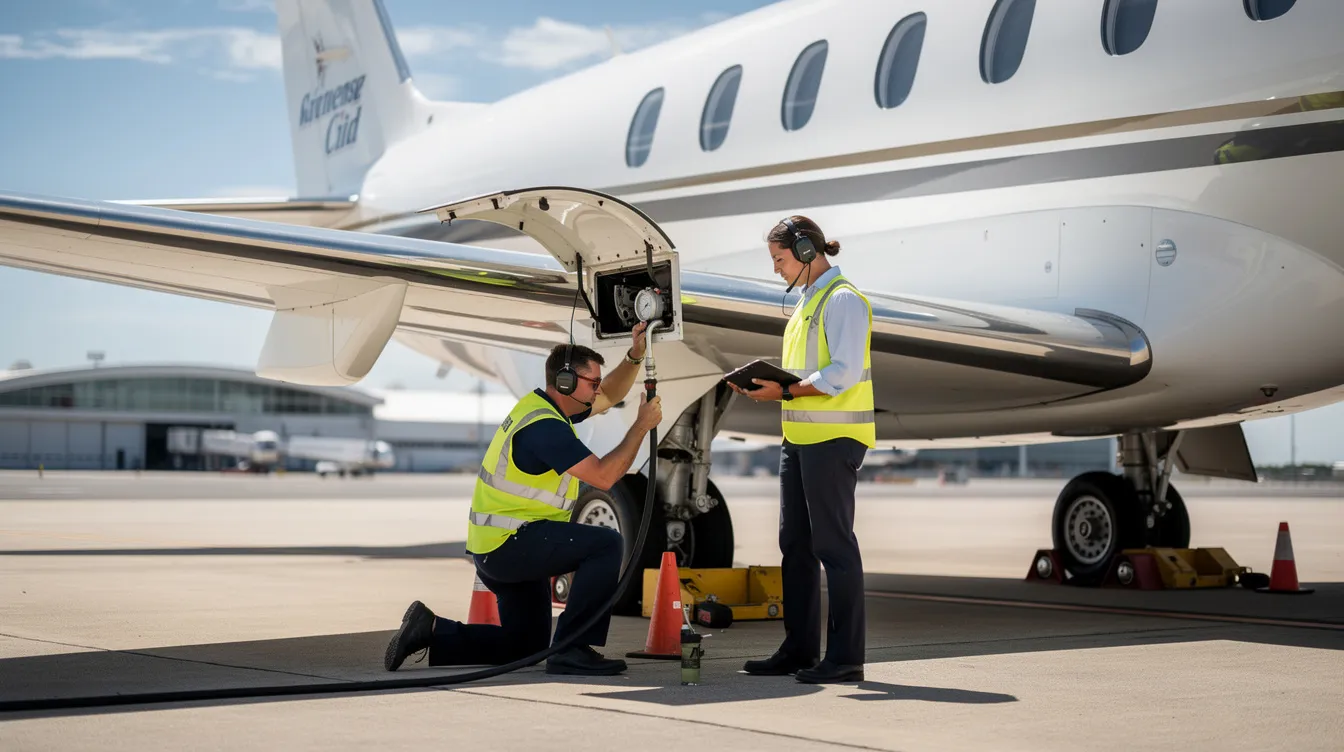
One of the most serious fuel-related risks in aviation is misfueling - putting the wrong fuel type into an aircraft. The classic example is pumping Jet A into a piston airplane that requires avgas, or the reverse.
While avgas dyes help (Avgas 100LL is blue, for example), Jet A's largely undyed, water-white appearance means crews cannot rely solely on color. They must also check nozzle types, fuel truck labeling, documentation, and aircraft fuel placards. Avgas is colored to prevent misfueling with differently dyed grades, but jet fuel offers no such visual shortcut.
Standard safeguards include:
Different nozzle sizes and shapes for avgas vs jet fuel trucks
Strict fueling checklists and cross-verification between pilot and line technician
Operator training and recurrent safety programs
Charter providers using platforms like Jettly work with professional operators under FAR Part 135 whose internal procedures and insurance requirements demand robust misfueling prevention. These same operators often coordinate extras such as in-flight catering for private jets through Jettly Eats, but safety checks around Jet A quality remain central. Jet A color is one useful cue, but it is always part of a larger safety system - never a standalone guarantee.
Sustainable Aviation Fuel (SAF) is a growing family of alternative jet fuels derived from waste oils, biomass, or synthesized through processes like Fischer-Tropsch. These fuels are designed to work as drop-in blends with conventional Jet A or Jet A-1.
Many SAF blends (such as HEFA-SPK and FT-SPK) are actually very clear and can appear even lighter than some conventional jet fuels. Visually, they may be indistinguishable from standard Jet A when blended up to approved limits - commonly 50%. Their lower aromatic content means they are less likely to develop the "color bodies" that can darken conventional fuel over time.
Major airlines and business aviation operators have already flown thousands of commercial and private flights with SAF blends, approved by bodies like ASTM International. For more on how SAF fits into modern aviation fuel strategies, the future points toward wider availability at airports globally. For travelers, tools like Jettly's private jet charter cost estimator help quantify how fuel choices and route lengths influence charter pricing. Platforms such as Jettly can route customers through operators and selected airports where SAF can be easier to obtain, and because it enters supply as a blended fuel pathway rather than a visually distinct product, its other uses in broader fuel blending do not change how it looks on the wing. The price per gallon is still generally cheaper for conventional Jet A, but the gap is narrowing as production scales up.
Consistent Jet A quality helps ensure smooth engine performance across jet turbine engines, predictable range on every route, and fewer delays due to technical issues. For travelers, this translates directly into reliability and underpins the value of structured solutions like Jettly's jet card programs with fixed hourly rates and benefits.
Jettly operates as a digital charter marketplace, connecting users to a global inventory of more than 20,000 aircraft - all operated by certified carriers that adhere to national aviation regulations and fuel handling standards. This global fleet of private charter aircraft spans everything from light jets to long-range models, all fueled according to the same underlying Jet A specifications. Whether flying domestic or international, the fuel grades used are produced to minimum specifications that keep engines running safely.
Practical benefits for travelers include, especially when combined with tools like Jettly's instant private jet charter cost estimator and flexible private jet membership options:
On-demand access to flights without long-term jet card commitments, alongside optional jet card flight cost estimates for one-way trips
Instant pricing that factors in real-world jet fuel costs on routes like Los Angeles–Las Vegas or Toronto–Vancouver, supported by Jettly's guidance on affordable private jet charter pricing and cost drivers
Coordinated ground handling at FBOs that manage Jet A storage, filtration, and fueling
Learn more about Jettly's charter options at https://www.jettly.com.
These FAQs address common questions about fuel appearance and quality that go beyond the main sections above. If you're interested in sharing this knowledge and Jettly's services with others, their ULTRA high ticket affiliate program offers a way to earn commissions by referring new private fliers.
While Jet A at different airports all falls within the same specification, its exact shade can vary slightly from nearly water-clear to very pale straw. This depends on the refinery source, crude oil batch, and refining process used. Crews focus on clarity - no haze or sediment - more than exact shade when judging whether the fuel is acceptable.
Fuel sampling and visual inspections are typically done by ground crews and pilots on the ramp, well before passengers arrive at the aircraft. At some smaller airports, travelers might notice a pilot briefly drawing fuel into a clear cup from a wing sump, but this is routine and part of standard safety practice, whether the flight is a traditional charter or a seat on one of Jettly's crowdsourced shared private jet flights.
Aviation fuel is checked at multiple points: at the refinery, during transfer to bulk storage, when delivered to airport tanks, and again before fueling aircraft. Many FBOs perform daily or pre-shift checks on their fuel supply. Charter operators partnering with platforms like Jettly typically require documented quality control programs from their fuel suppliers. Platforms such as Zenflight, a private jet operator available through Jettly, emphasize these standards in their safety messaging. These checks are especially important in commercial aviation, where operators must obtain fuel that matches the required specification at each stop.
Long-term storage - particularly in poorly maintained tanks - can lead to oxidation and slight darkening. It may also allow water accumulation and microbial growth. Airport and operator procedures usually limit storage time and require periodic tank draining, filtration, and sampling to ensure aged or suspect fuel is removed before it reaches an aircraft, regardless of whether the tanks hold Jet A, Jet A-1, or other jet fuel types with different freezing points and volatilities.
Most approved SAF blends are visually similar to conventional Jet A and Jet A-1, often appearing very clear and light in a sample cup. Some SAF pathways may also support other uses in the broader fuel market, but in approved aviation blends they are judged by specification and documentation rather than by color. Pilots and engineers rely on documentation, delivery records, and lab testing - not just color - to confirm the exact fuel type and blend ratio in the aircraft's tanks, just as they do across the wider ecosystem of private and charter airlines.
Jet A is a kerosene-based aviation fuel that should appear clear and nearly colorless. Any unexpected darkening or cloudiness is a red flag for aviation professionals - one that triggers additional testing or fuel rejection before an aircraft ever leaves the ground.
Fuel color is just one part of comprehensive quality control involving international standards, rigorous testing, and disciplined procedures followed by FBOs and private jet operators worldwide. Understanding jet a color gives travelers a glimpse into how much detail goes into every safe flight.
Ready to experience private travel on your terms? Explore flight options or request a quote at https://www.jettly.com.
Share this post:
Jay Franco Serevilla
Jul 29, 2026
|
5
min read
Discover tips and trends in the industry.
5
min read
NY to Aruba Flight Time: How Long It Takes & The Fastest Ways to Get There
The flight time from New York to Aruba typically ranges from 4 hours 30 minutes to 5 hours, with an average of about 4 hours 43 minutes. Factors such as departure airport and flight type can significantly affect total travel time, especially when considering connecting flights. For those seeking convenience, private jet charters can offer similar in-air times while reducing overall travel duration.
Read More
5
min read
NYC to Miami Flight Duration: How Long Is the Flight & How to Save Time
Traveling from New York City to Miami typically takes about 3 hours on a nonstop flight, making it a convenient option for both business and leisure travelers. Understanding flight durations and booking strategies can help optimize your travel experience, whether you choose commercial flights or private jet charters. With multiple airlines offering direct services, planning ahead can lead to significant time and cost savings.
Read MoreStay updated with our latest insights and tips to elevate your journey with us.
MEMBERSHIPS AND ASSOCIATIONS



Disclaimer: Jettly operates as a charter broker, offering access to a global digital jet charter marketplace. Jettly is not a direct air carrier and does not own or operate aircraft. All advertised flights are conducted by third-party air carriers that are fully licensed and hold the appropriate Part 135 or Part 121 certifications issued by the Federal Aviation Administration (FAA) or equivalent regulatory authorities under U.S. or foreign law. Jettly complies fully with the U.S. Department of Transportation's Part 295 and Part 298 Charter Broker regulations. Jettly does not carry additional liability insurance. Passengers are covered by aircraft operator insurance. TICO: 50023770


